
7 Florida Native Plants That Bring Hawks In to Hunt the Squirrels Raiding Your Bird Feeder
Follow us on Google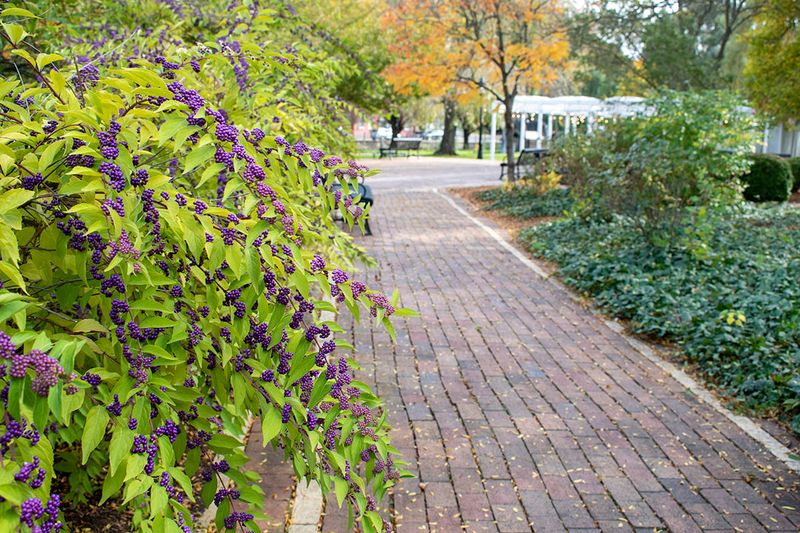
You step onto the patio with your coffee, and the feeder you filled last night is already swinging, empty, with a gray squirrel hanging upside down and chewing like it owns the place. The fix might be sitting on the edge of your yard, waiting for a hawk to land on it.
In Florida, red-shouldered hawks and other raptors already hunt squirrels in neighborhoods every day. They just need the right perches, clear sightlines, and a reason to stay.
These seven native plants can help you build that setup, one layer at a time.
1. Live Oak Gives Hawks a Front Row Seat
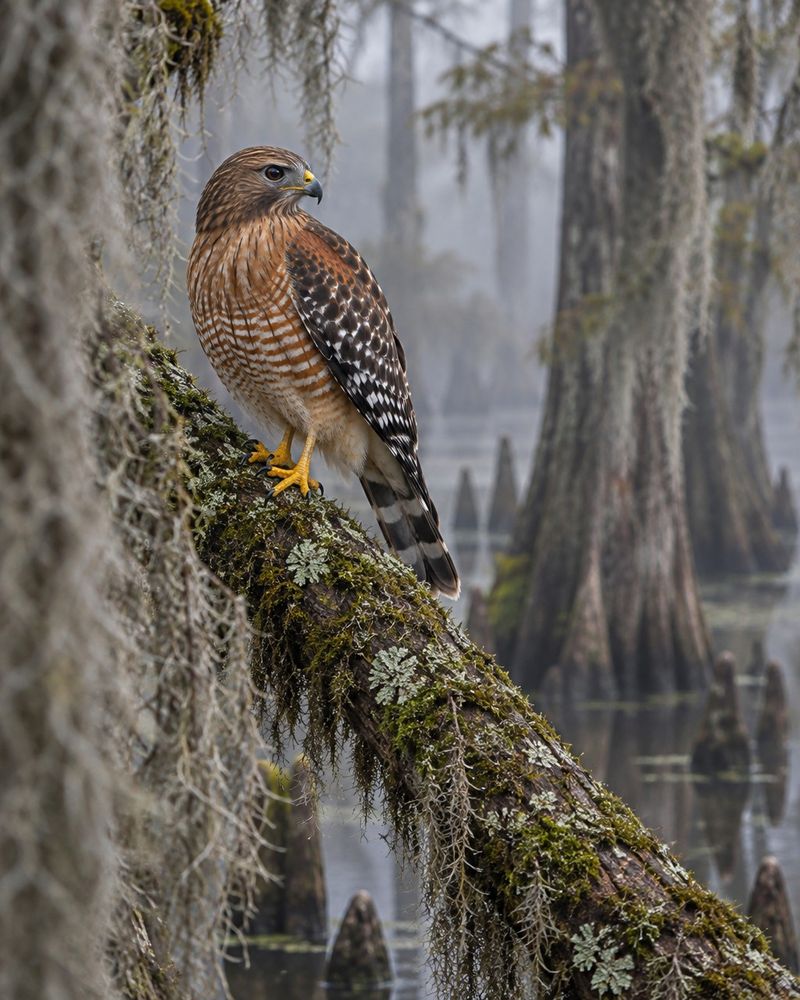
Picture a red-shouldered hawk sitting dead still on a low, wide oak limb, head turning slowly toward your feeder. That is the whole plan in one image.
Live oak, Quercus virginiana, grows the long horizontal branches hawks love, and those limbs often hold a hunter 20 to 40 feet above the ground.
Here is why it works. Hawks hunt mostly by sitting and watching, what biologists call perch hunting, and a squirrel crossing open ground under a quiet oak is easy to spot.
The tree is the lookout tower, the lawn below is the stage.
Plant a live oak at least 20 to 30 feet from your house, since the canopy can eventually spread 60 feet or more. Keep the ground under the outer branches fairly open, with mulch or low groundcover instead of thick shrubs.
Live oaks handle much of Florida, from the Panhandle to South Florida, and they shrug off drought once established.
It is a slow start, honestly. But a young oak planted this fall becomes a real perch within a handful of years, and the feeder crowd starts to look over its shoulder.
2. Slash Pine Turns Your Yard Into a Watchtower
Tall is good. Taller is better.
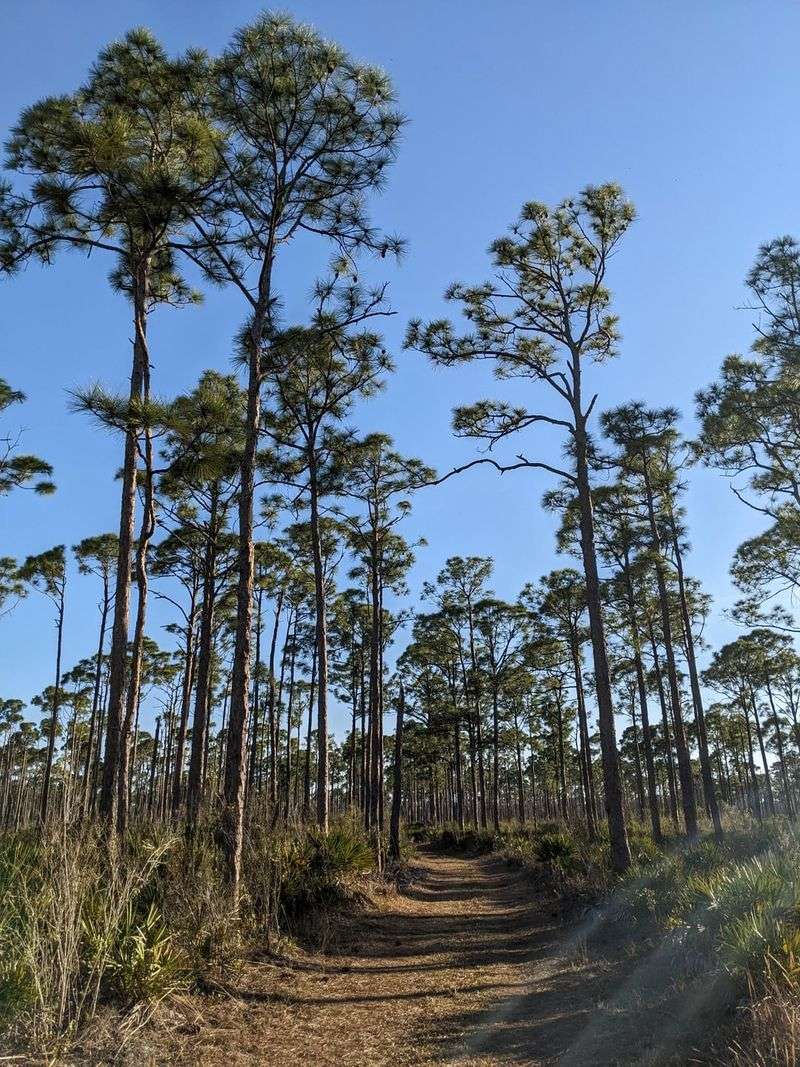
Slash pine, Pinus elliottii, can reach 60 to 100 feet, and its open, airy crown gives hawks a clear view down into the yard with almost nothing blocking the angle.
Many North Florida and Central Florida homeowners already have one or two in the back corner without realizing what they are. Red-tailed hawks especially like high, exposed perches like these, the kind that feel like a lifeguard chair at the beach.
Here is the bonus. Pines drop a carpet of needles, and that pine straw keeps the ground fairly bare underneath.
Squirrels chasing pinecones or spilled seed have nowhere to hide, so every dash becomes a risk.
Plant slash pines in full sun and well-drained, acidic sandy soil, at least 15 feet from the house and driveway. Do not limb them up aggressively.
A single dead upper branch left in place, if it is safe and away from the roof, can become a favorite hawk post.
Leave the pine straw where it falls. It saves you mulch money and keeps the hunting floor open.
3. Sabal Palm Handles Coastal Wind and Still Holds a Hunter
Most people think palms are useless to birds. Not this one.
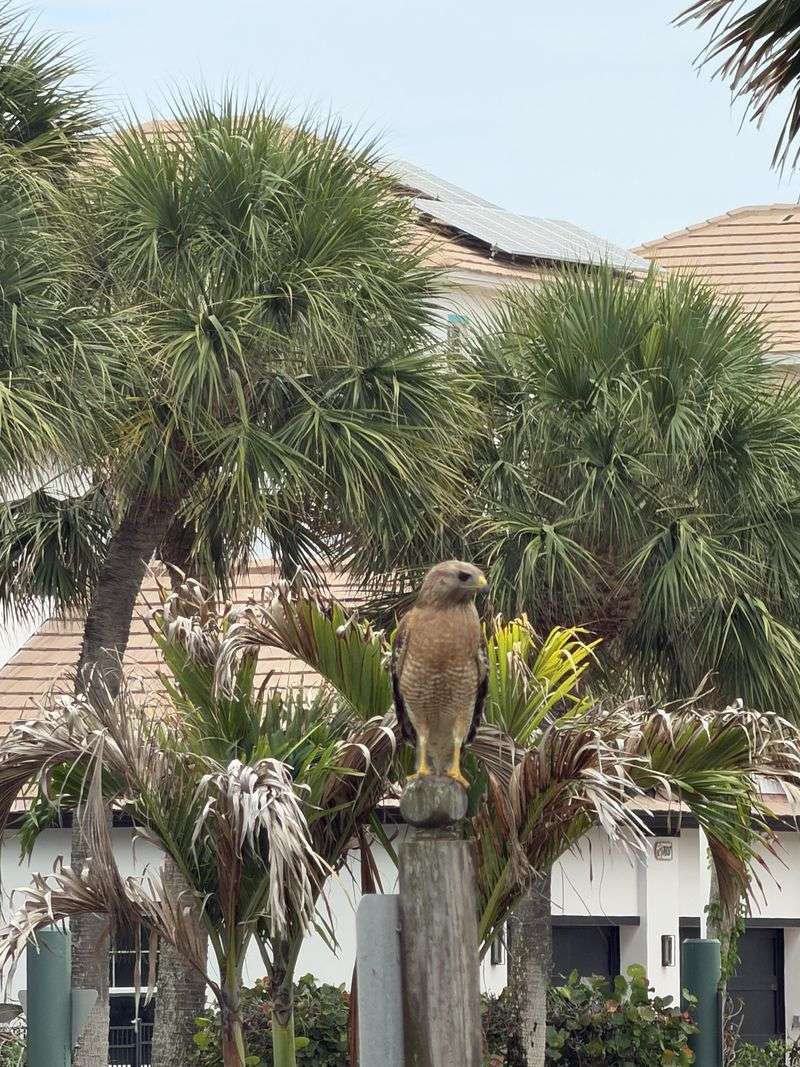
The sabal palm, Sabal palmetto, is Florida’s state tree, and hawks regularly perch in its crown along both coasts.
The palm’s real gift is a clean trunk with nothing at the bottom for a squirrel to duck behind. A hawk in the fronds 25 to 40 feet up looks straight down a bare column of trunk and open ground.
Sabal palms also feed songbirds with small black fruit in fall, and a busy yard tends to catch a predator’s attention. That is one layer, not a guarantee, but it adds up.
These palms take salt spray, hurricane winds, and the shallow limestone soil common in parts of South Florida. Plant them 8 to 10 feet apart in a loose group, water two or three times a week for the first few months, then let rain take over.
Avoid hurricane cutting, the habit of stripping all but a few fronds, because it weakens the palm and removes the perch.
A small trio of sabals near the edge of your lawn looks like a postcard, and works like a watch post.
4. American Beautyberry Pushes Squirrels Into the Open
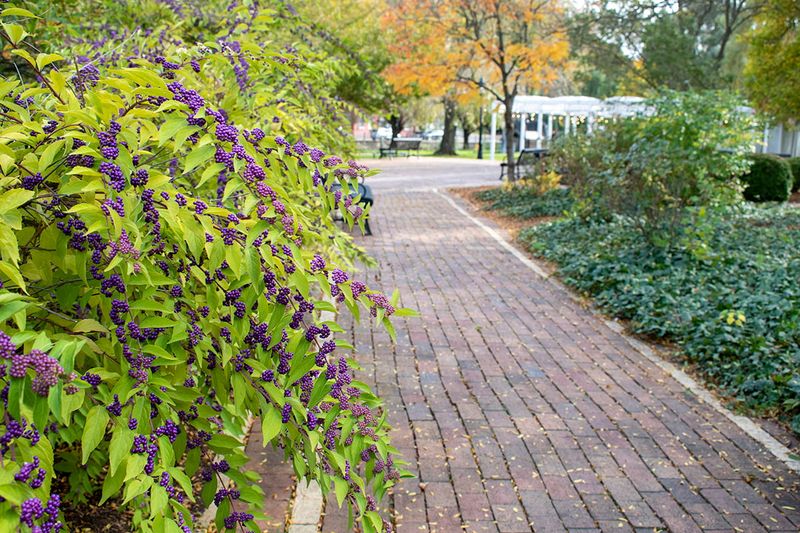
Squirrels have a trick. They rarely cross a yard in a straight line, they hop from cover to cover like kids playing tag.
American beautyberry, Callicarpa americana, lets you decide where that cover stops.
This loose shrub grows 4 to 8 feet tall and wide, with purple berry clusters that mockingbirds and cardinals strip in fall. Plant it along the outer edge of your yard, not near the feeder.
That leaves a gap of open lawn, about 15 to 25 feet, that a squirrel has to cross in plain view.
Think of it as moving the furniture so the party has to walk through the hallway. The hawk in the oak gets a clean look every single time.
Beautyberry grows across Florida in sun or part shade. Cut it back to about 12 inches in late winter, around February, to keep it tidy and full of berries.
It dies back in North Florida freezes but regrows fast in spring.
Watching a squirrel freeze at the edge of that gap, then think twice, is surprisingly satisfying.
5. Simpson’s Stopper Builds a Clean Hedge With No Hiding Spots
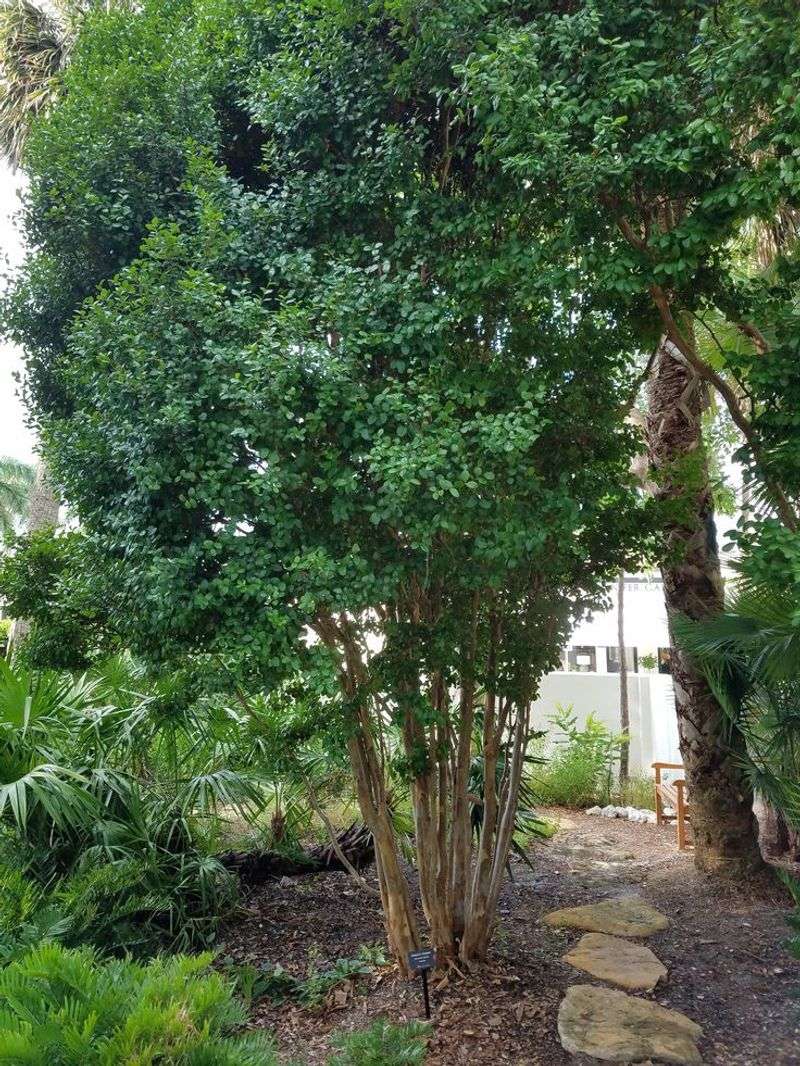
A messy hedge is a squirrel highway. Simpson’s stopper, Myrcianthes fragrans, gives you a dense, tidy border instead, one that defines the yard without creating a hidden tunnel to your feeder.
This evergreen grows naturally in Central Florida, South Florida, and the Keys, and it handles salt and drought once settled. Small white flowers smell sweet in spring, then orange berries feed songbirds.
The key is keeping the base tight. Space plants 3 to 4 feet apart and trim the hedge so it is slightly wider at the bottom than the top, so light reaches the lower leaves.
Leave a 3 foot strip of mulch or bare ground in front, which turns every squirrel exit into a moment of exposure.
Allowed to grow up, a stopper can also become a small multi-trunk tree around 15 feet, with low branches where a Cooper’s hawk might pause. Either form works, just do not let it become a thicket that touches the feeder pole.
It is the polite neighbor of the list. Quiet, neat, and doing more than it looks.
6. Saw Palmetto Islands Keep Cover Far From the Feeder
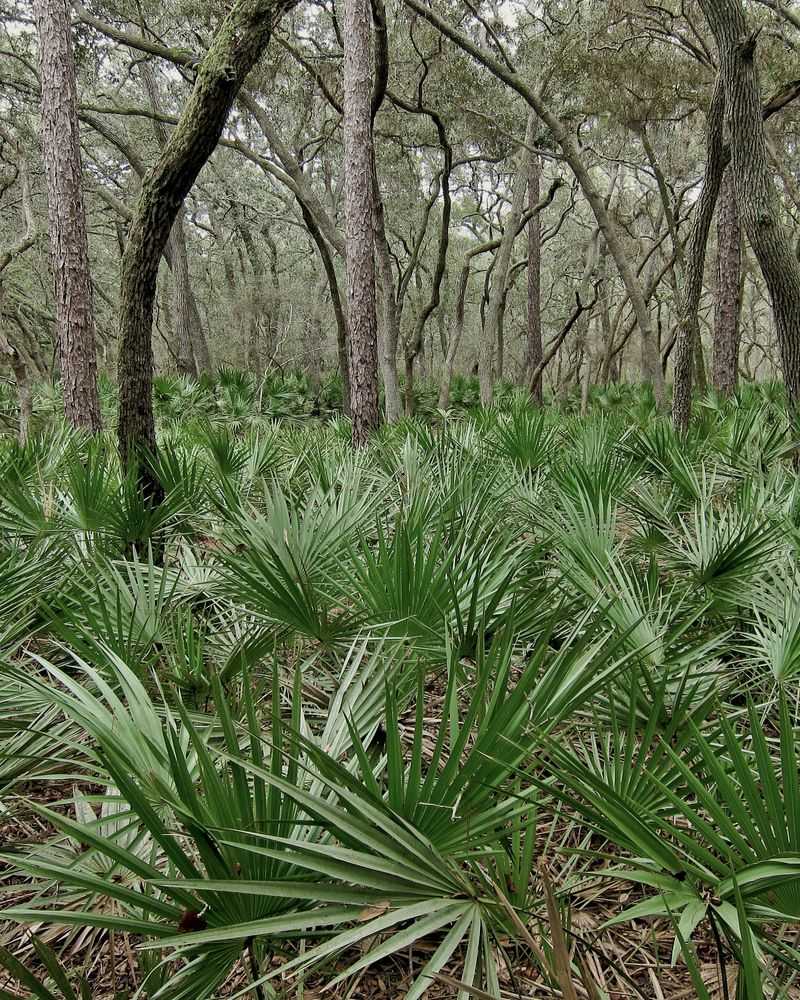
Here is where it gets tricky. Saw palmetto, Serenoa repens, is thick, low cover that squirrels genuinely like.
So why put it on a hawk list.
Because placement is everything. Grouped in a single island at the far side of the yard, saw palmetto gives wildlife shelter while leaving a wide, open middle.
Squirrels that live in that clump have to cross bare ground to reach your feeder, and the hawk knows the route as well as they do.
Saw palmetto grows 4 to 8 feet tall and wide across nearly all of Florida, from Panhandle flatwoods to coastal scrub. It is slow, so buy plants in 3 gallon pots or larger and space them 5 to 6 feet apart.
Water deeply once a week for the first summer, then leave it alone.
Keep the island at least 30 feet from the feeder. That distance is what makes the trip risky.
You are not banishing squirrels. You are just making them earn every seed, and that alone can change their habits.
7. Wax Myrtle Limbed Up Opens the Final Sightline
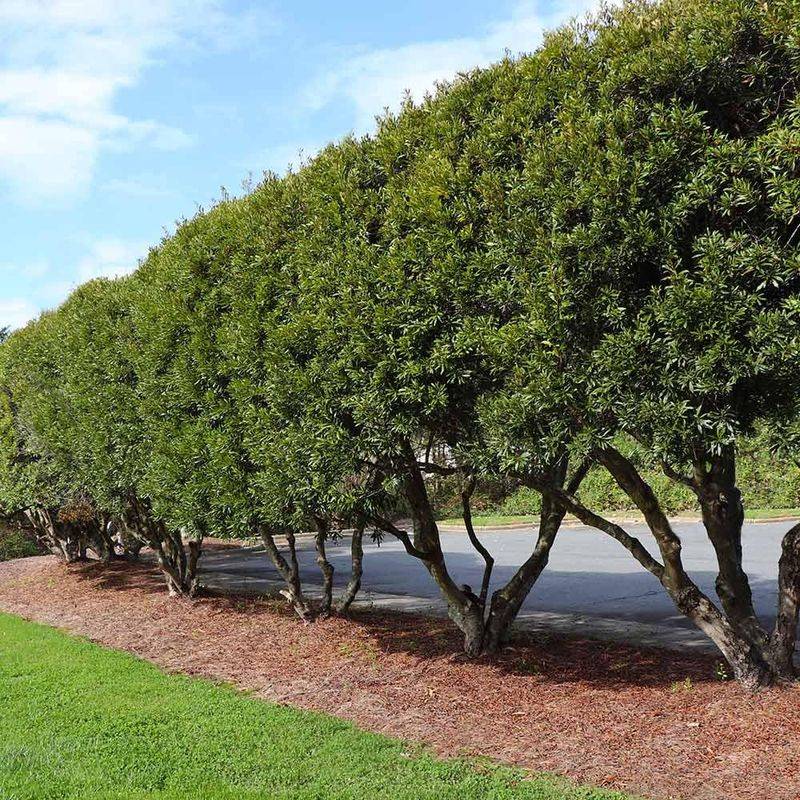
Many Florida gardeners plant wax myrtle, Morella cerifera, as a fast privacy screen, then wonder why the backyard feels like a jungle. The fix is a pair of loppers.
This native grows 10 to 20 feet and handles wet low spots and dry sand alike. Limbed up, meaning you remove the lowest branches up to about 5 feet, it turns into a small tree with twisting trunks and a clear view beneath.
Hawks gain a mid-height perch, and squirrels lose their shadowy shortcut.
Winter berries feed yellow-rumped warblers and bluebirds, which keeps the yard lively. UF/IFAS Extension notes wax myrtle can sucker and spread, so pull new shoots at the base a couple times a year.
Space trees about 10 feet apart, or 4 feet apart along a back fence as a screen that steers traffic into your open lawn. Trim after the spring growth flush, not in late summer.
Step back after that first pruning and look across the yard. You will see what the hawk sees, a clear stage, a full feeder, and nowhere left to hide.
That view is your work, and it is a good one.
