
Your Zucchini Keeps Dropping Its Baby Fruit While The Plant Looks Perfectly Healthy, And One Habit Starts It
Follow us on Google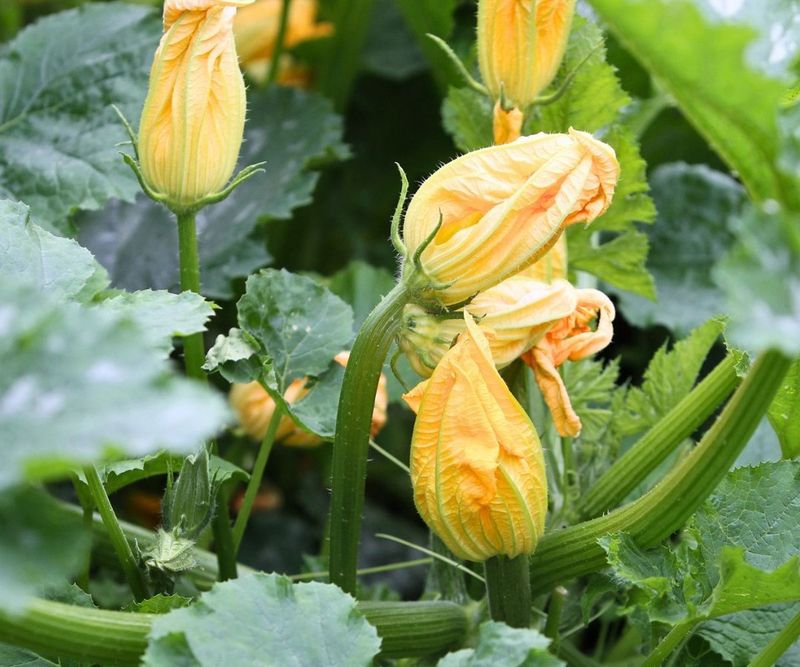
You walk out to the garden expecting a fat zucchini and find a shriveled, yellowing nub where one was forming yesterday.
The plant looks great, the leaves are huge, the flowers are everywhere, so what went wrong?
Most of the time, the answer comes down to pollination, and one avoidable habit can quietly make the problem worse.
Understanding why it happens puts you back in control before the whole growing season slips by.
A Healthy Vine Can Still Lose Its Fruit
Big leaves and strong vines feel like proof that everything is working, but zucchini (Cucurbita pepo) keeps its reproductive business separate from the rest of its growth.
A plant can push out lush foliage and still fail to set fruit if pollen never reaches the right flower at the right moment.
That gap between looking healthy and actually fruiting trips up a lot of backyard gardeners every summer.
Zucchini produces male and female flowers on the same plant, but they do not work together automatically.
University of Minnesota Extension guidance on growing summer squash explains that bees and other pollinators must carry pollen from a male flower to the stigma inside a female flower for fruit to develop.
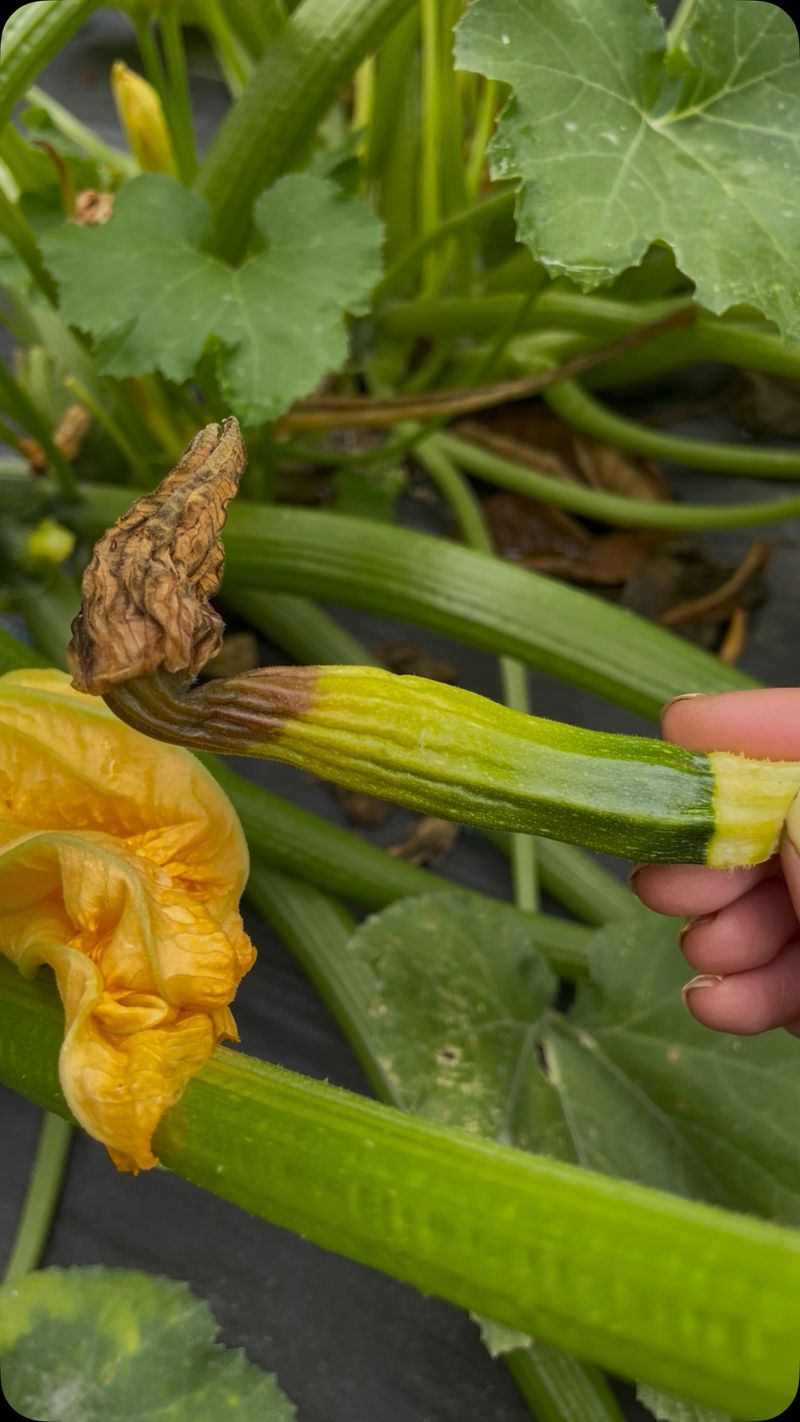
When that transfer does not happen, the tiny zucchini attached to the female flower stops growing, turns pale or yellow, shrivels, and drops.
The plant has no way to rescue it once pollination fails.
A few early losses do not always signal a lasting problem.
Minnesota Extension notes that the first flush of female flowers sometimes goes unpollinated simply because the planting is new and pollinators have not found it yet, and the situation can improve on its own as the season progresses.
What you want to watch is a pattern of repeated failure across multiple flowers over several days, which points to something more consistent getting in the way.
Utah State University Extension’s pollination guide confirms that inadequate pollination can result in no fruit at all, small fruit that aborts early, or fruit that develops an irregular shape.
Poor pollination is the most direct explanation for a baby zucchini that disappears while the rest of the plant looks fine, though weather, bee activity, row covers, and plant stress can all contribute in their own ways.
The Bloom-Time Habit That Can Make Losses Worse
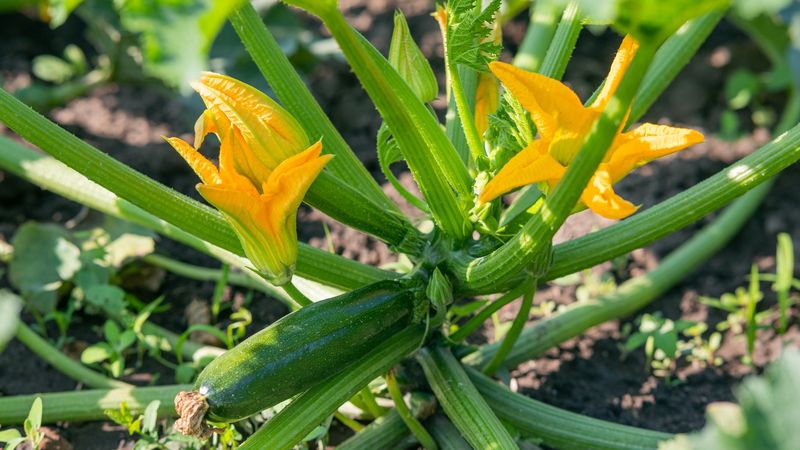
Spraying insecticide on or near your zucchini while it is blooming is a habit that can quietly undercut your harvest without ever looking like a problem.
The connection is straightforward: pollinators need to visit open flowers for fruit to set, and insecticide applications during that window can reduce or interrupt those visits.
You may never link the spray to the shriveled fruit that appears a day or two later.
This is a preventable contributor, not a presumed diagnosis for every dropped fruit.
Before reaching for any spray, identify what pest you are actually dealing with and consider whether a nonchemical approach, like hand-picking cucumber beetles or using row covers before bloom, can handle it instead.
EPA guidance on pollinator protection recommends avoiding applications to blooming plants and nearby flowering weeds whenever pollinators are active, reducing spray drift, and always following the specific product label.
The label is the legal document that controls what you can and cannot do with that product around pollinators.
EPA pollinator label guidance outlines bloom-time restrictions that vary by product, which is why no single time of day is universally safe for spraying around open flowers.
Squash bees, which are important zucchini pollinators, may forage at or before dawn, so the idea that early morning spraying is always safe does not hold up.
Organic and lower-toxicity options like neem oil or insecticidal soap are not automatically safe during bloom either.
Direct contact or residues from these products can harm pollinators just as conventional treatments can.
EPA applicator certification guidance is consistent on this point: the product label and local conditions determine when and how to apply any pesticide, not a general rule of thumb about timing.
Read the Flowers Before You Treat the Plant
Before you change anything in the garden, spend two minutes reading the flowers.
Not every dropped bloom is a symptom of trouble, and misreading the difference between male and female flowers leads a lot of gardeners to worry about the wrong thing entirely.
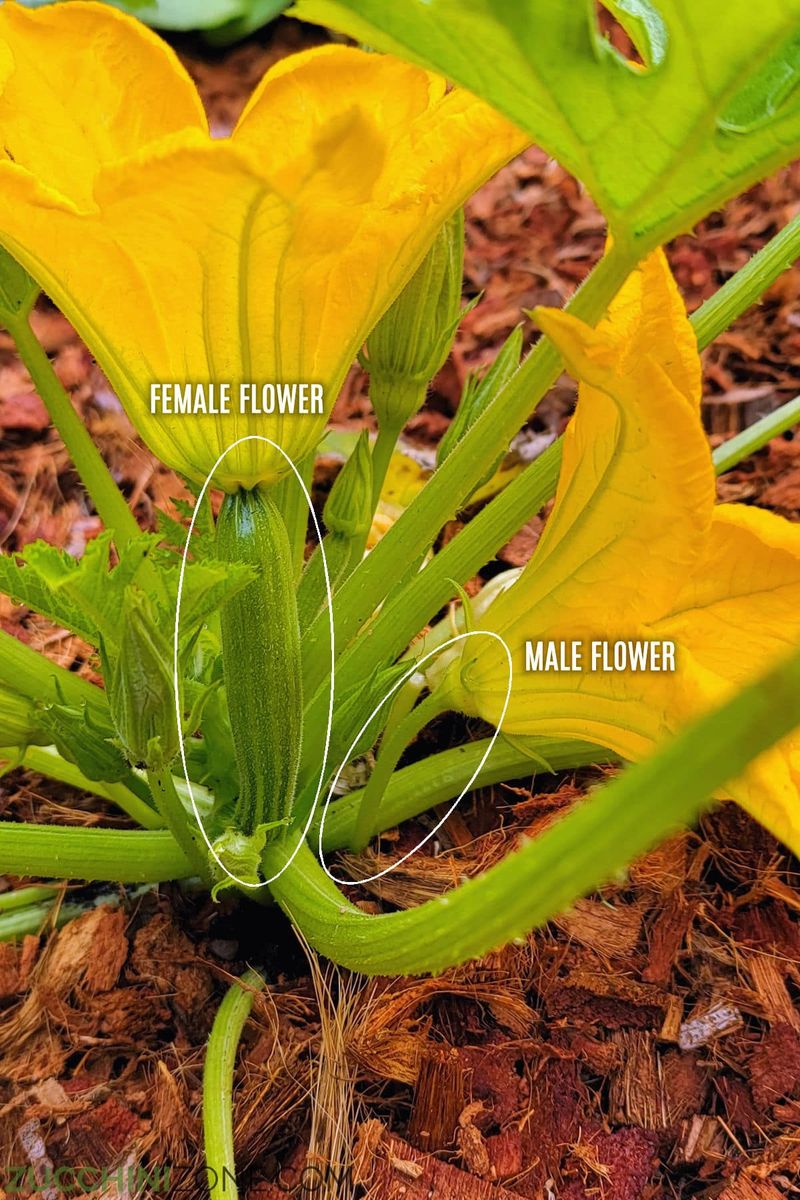
Male flowers appear first and sit on long, thin stems with no swelling at the base.
Their job is to release pollen, and once they do, they close and fall.
That is completely normal.
Minnesota Extension’s squash-growing guide makes clear that male flower drop is a routine part of the plant’s cycle, not a sign that something is wrong.
You can lose dozens of male flowers and still get a full harvest, as long as female flowers are getting pollinated while males are present and open.
Female flowers are the ones to watch.
They have a small, swollen base behind the petals, and that swelling is the developing fruit.
Ohio State University Extension’s overview of cucurbit flower biology explains that the stigma inside the female flower must receive adequate pollen for that tiny fruit to continue growing.
When pollination falls short, the attached baby zucchini stops enlarging, fades to pale yellow, shrivels, and drops within a day or two of the flower opening.
The receptive window for a female flower is short, often just one morning or a matter of hours.
Utah State University Extension’s pollination guide notes that pollen must reach the stigma during that open period for fruit set to occur.
Once the flower closes, the opportunity is gone for that particular fruit.
Catching this timing is the key to understanding why even a well-tended plant can drop baby fruit on a regular basis.
Weather, Bees, and Row Covers Change the Outcome
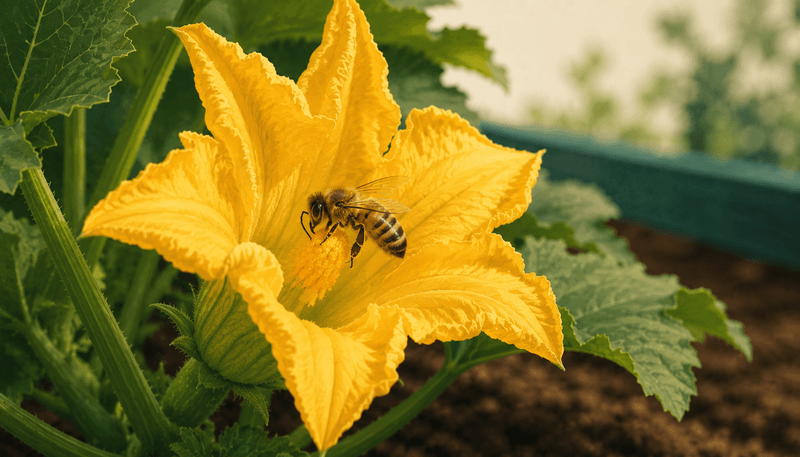
Pollination does not happen in a vacuum, and weather is one of the most common reasons an otherwise well-managed plant keeps losing its fruit.
Cool, rainy, cloudy, or windy days can keep bees from flying, and very hot weather can cause flowers to abort before a bee ever reaches them.
Colorado State University Extension’s vegetable garden guidance lists extreme heat, wind, and poor soil conditions among the stresses that can reduce flowering or trigger early fruit abortion in vine crops.
Too few male flowers open at the same time as female flowers is another obstacle that does not get enough attention.
If your plant is young or stressed, the timing between male and female bloom cycles can be off, leaving female flowers with no pollen source during their brief receptive window.
Planting several zucchini plants close together improves the odds that male and female flowers overlap on any given morning.
Squash bees deserve more credit than most gardeners give them.
Oregon State University Extension’s profile of squash bees describes how these native pollinators are specialists on Cucurbita crops and often forage early in the day, sometimes before honey bees are active.
Not seeing large honey bees working your flowers does not mean pollination failed.
Squash bees may already have done the job before you poured your morning coffee.
Row covers protect young plants from cucumber beetles and other early-season pests, but they also block every bee that would otherwise visit.
Utah State University Extension’s row-cover research is direct on this point: covers should come off when flowering begins if you are relying on insects to pollinate.
Leave them on only if you plan to hand-pollinate every female flower yourself.
Penn State Extension’s vegetable garden diagnostic guide also flags covered or isolated flowers as a common reason fruit fails to set even on otherwise healthy plants.
One Colorado source notes that daytime temperatures consistently below 55 degrees Fahrenheit can limit bee activity in vine crops, a useful reference for cool-spring gardeners in mountain states, though exact thresholds vary by region and bee species.
Hand-Pollinate Only When the Window Needs Help
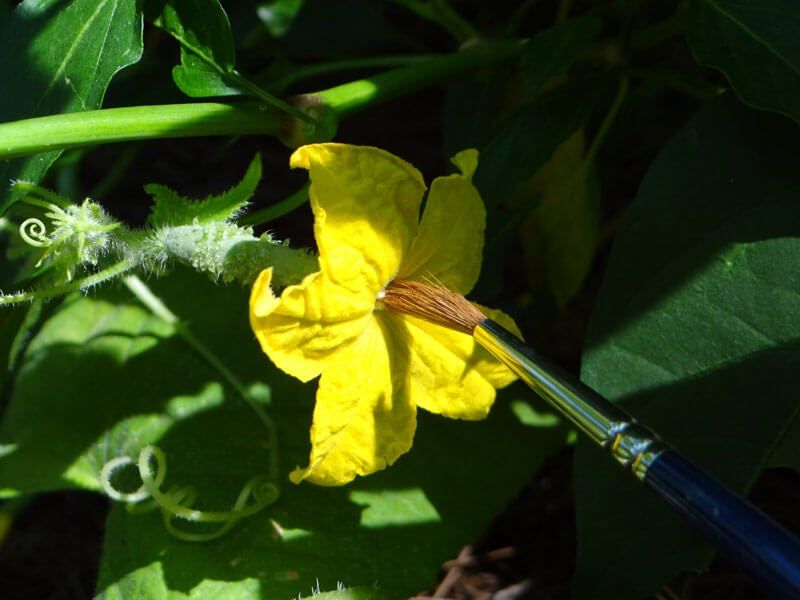
Hand-pollination is a practical backup, not a daily chore for every plant in the yard.
Reach for it when bee activity seems low, weather has been cold or rainy for several days in a row, flowers are just coming out from under row covers, or you have watched multiple female flowers abort in sequence.
It gives the next receptive flower a real chance without waiting on conditions to improve on their own.
Timing matters more than technique.
Both flower types need to be open at the same time, which usually means working early in the morning while the blooms are fresh.
Colorado State University Extension’s vegetable gardening tips recommend identifying a fresh male flower, removing its petals so you can handle it easily, and then gently pressing or rolling the pollen-bearing anther against the central stigma inside the female flower.
The stigma is the small, slightly sticky structure at the center of the female bloom.
A small artist’s paintbrush works just as well if you prefer not to pick the male flower.
Oregon State University Extension’s gardening newsletter describes the paintbrush method as an effective way to transfer pollen without disturbing the plant, which is handy when male flowers are scarce and you want to use each one carefully.
Hand-pollination supports the next flower that opens.
University of New Hampshire Extension’s guide on zucchini fruit set is clear that fruit already yellowing or shriveling will not recover once the pollination window has closed.
Do not spend time on a baby zucchini that has already started to shrink.
Move to the next fresh female flower and give that one your attention instead.
Support Growth Without Confusing It With Pollination
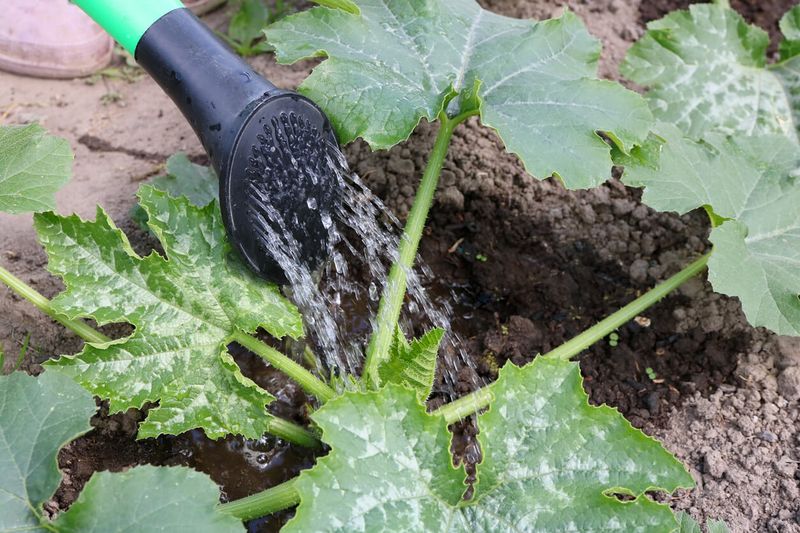
Good plant care creates the conditions where pollination can succeed, but it cannot substitute for pollen reaching a female flower.
Keeping that distinction clear helps you avoid spending time and money on fixes that cannot solve the actual problem.
Even soil moisture is one of the most straightforward things you can control.
Minnesota Extension’s summer squash guide uses about 1 inch of water per week from rainfall or irrigation as a general growing-season reference, with more frequent watering needed in sandy soil or during hot, dry stretches.
Consistent moisture supports root health and steady flower production, but it will not repair a flower that closed without receiving pollen.
Harvest zucchini regularly once fruit is forming and sizing up.
Colorado State University Extension’s squash and melon guide notes that fruit left on the plant to grow oversized can slow or inhibit additional fruit set until it is picked.
That is a real production issue, but it is a different problem from a tiny baby zucchini that yellows and falls before it ever gets a chance to size up.
Blossom-end rot is another condition sometimes confused with pollination failure.
Penn State Extension’s vegetable problem diagnosis guide describes blossom-end rot as a dark or sunken lesion at the tip of a developing fruit, most often connected to uneven water availability or root problems affecting how calcium moves through the plant.
Adding calcium products to the soil will not fix it if the root system cannot take up what is already there.
Excess nitrogen is worth a brief mention as a separate issue.
Minnesota Extension’s fertilizing guide explains that too much nitrogen can push heavy leaf growth at the expense of flowering, but that is not the default explanation when a plant is already producing female flowers that begin forming fruit and then abort.
Colorado State Extension also flags overfertilization as a possible stress factor in vine crops, worth checking if your plant is all vine and very few flowers.
A Simple Plan for the Next Flowers
When the next round of female flowers opens, you have a clear checklist that covers the most likely causes without overcomplicating things.
Start by watching for the swollen base that marks a female flower, and check whether it shrivels within a day or two of opening.
That pattern, repeated across several flowers, confirms that pollination is the problem to address.
Stop any bloom-time insecticide use that is not addressing an identified, active pest.
EPA pollinator protection guidance is consistent: avoid applying to open flowers, follow label restrictions, and reduce drift.
If a pest genuinely needs treatment, choose the least disruptive option and apply only as the label directs.
Pull back row covers as soon as flowering begins if you want bees to do the work.
Hand-pollinate when weather has been poor, bee visits seem absent, or you have had several failed fruits in a row.
University of Georgia Extension’s pollination guide reinforces that successful vegetable gardens depend on consistent pollinator access during the bloom window, and removing physical barriers is one of the simplest ways to restore that access.
Keep moisture steady and harvest any developing zucchini before it turns into a baseball bat.
Minnesota Extension’s fertilizing guidance is clear that soil amendments, including calcium products, cannot repair a pollination failure.
Eggshells and other folk remedies belong in the compost pile, not on a plant whose baby fruit is dropping because a bee never showed up.
Colorado State Extension notes that a few early failures sometimes resolve on their own as pollinators discover a new planting, so patience is part of the plan too.
The zucchini plant is genuinely trying to produce for you, and most of the time, clearing the path is all it needs.