
The One Thing North Carolina Beautyberry Does That Makes It The Native Shrub Worth Planting Now
Follow us on Google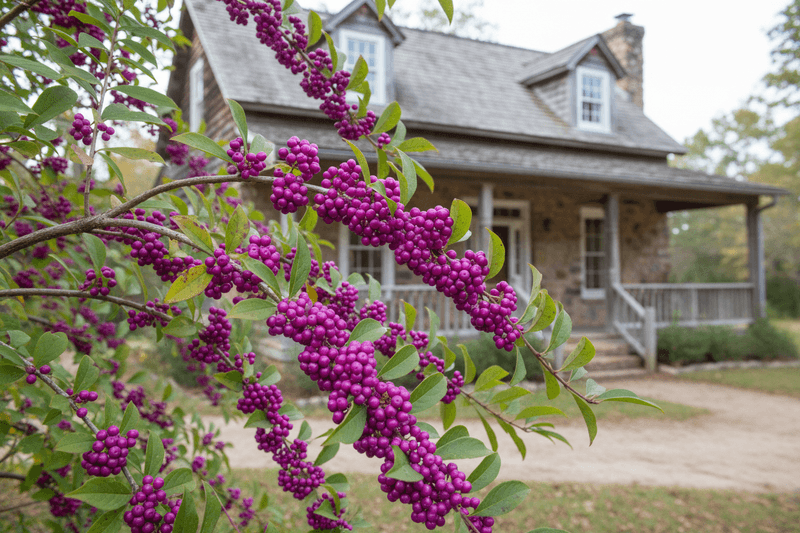
Walk past the shrub section at any North Carolina nursery and you might overlook a plant with arching stems and nothing flashy to catch your eye in June. Come back in September, though, and those same stems are wrapped in clusters of purple berries so vivid they look almost unreal.
American beautyberry, Callicarpa americana, is a native shrub that quietly earns its space by feeding songbirds and lighting up the yard when most other plants are winding down. It is not the only native shrub worth growing, but its combination of conspicuous fall fruit, wildlife value, and straightforward care makes it genuinely worth a closer look.
Consider The Native Shrub Behind Those Purple Berries
American beautyberry earns a place in North Carolina yards not because it beats every other shrub at every job, but because it combines things that are genuinely hard to find in one plant: a conspicuous fall berry display, real wildlife food value, and relatively low day-to-day care. The title above makes a singular claim, and the plant deserves an honest correction before anything else: beautyberry is a strong native option to consider, not the one shrub every homeowner must plant immediately or the only native worth your time.
NC State Extension’s plant profile lists Callicarpa americana as native to North Carolina and adapted to the Coastal Plain, Piedmont, and mountain regions. The typical size runs about 3 to 8 feet tall and 3 to 6 feet wide, so this is not a tidy little accent shrub you tuck beside the mailbox without planning.
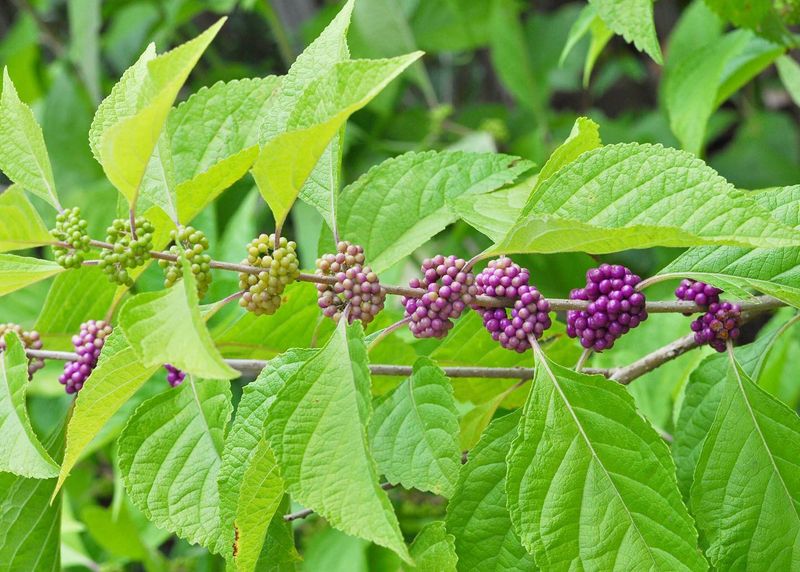
It grows with long, arching stems and opposite leaves, giving it a loose, relaxed shape that reads as wild in the best sense when it has room to move.
At a nursery, look for those opposite leaves arranged in pairs along each stem, and check the tag for the botanical name. The stems themselves have a slightly coarse texture, and the plant does not look particularly showy in spring.
That changes by late summer, when berry clusters form directly around the stems at the leaf nodes in a way that no other common landscape shrub quite replicates.
Mountain gardeners should know that elevation, cold exposure, and sunlight can affect how the plant performs. USDA NRCS guidance describes the species as adapted to hot, humid summers and moderate winters, so performance at higher elevations may vary more than it does in the Piedmont or Coastal Plain.
The shrub is worth trying in the mountains, but go in with realistic expectations rather than assuming identical results across every site.
The Berry Display Carries The Fall Interest
Beautyberry opens its season quietly. Small, pale pink to lavender flowers appear along the stems in late spring or early summer, easy to miss among the leaves.
Most people walk right past them without a second glance, which makes the September reveal feel almost theatrical.
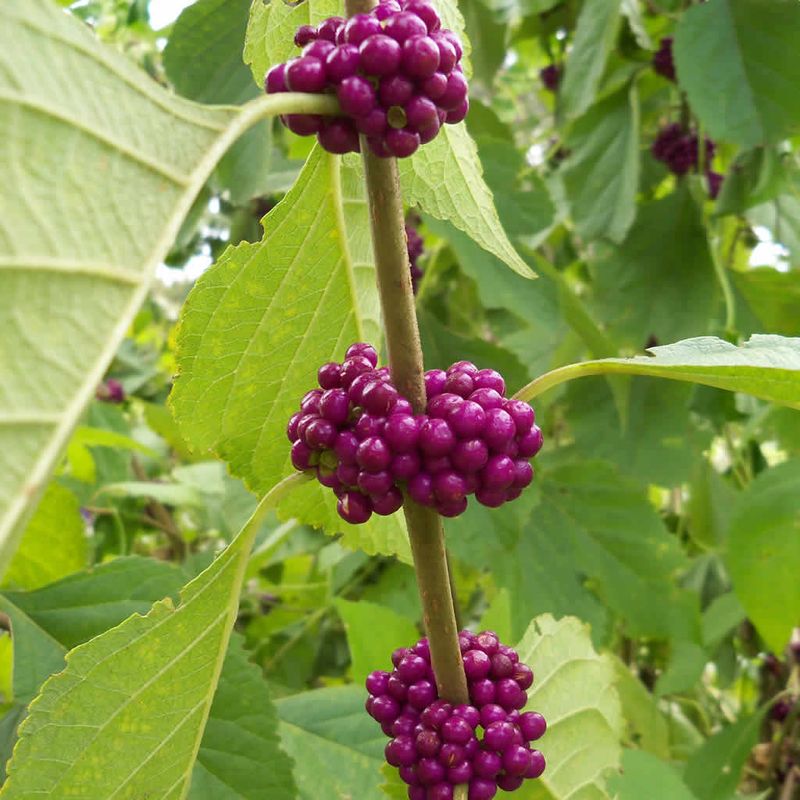
By August, those flower clusters have become tight rings of purple to bluish-purple berries wrapped directly around the stem at the leaf nodes. The display typically runs from about August through October and can linger into early winter, especially after the leaves fall.
NC State Extension and USDA NRCS both describe the fruit as capable of persisting after leaf drop, which is when the plant arguably looks its most striking: bare stems ringed with bright color against a gray November sky.
How long the berries last and how heavy the clusters run can vary by site, season, and how much wildlife pressure the shrub gets. Do not treat beautyberry as the yard’s guaranteed longest-lasting or most reliable fall display.
Call it what it actually is: a conspicuous and often striking late-season feature that few commonly sold shrubs match for sheer visual novelty.
The wildlife connection is real and documented. NC State Extension lists American robins, brown thrashers, purple finches, and eastern towhees among the songbirds that eat the fruit.
Small mammals, including foxes, raccoons, squirrels, and opossums, take the berries too. USDA Forest Service FEIS research notes the fruit can remain available as a food source into winter, which matters in a North Carolina yard when other food sources have thinned out.
On fall foliage: the leaves may turn pale yellow or chartreuse before they drop, a soft secondary color that is pleasant but not the reason to plant this shrub. The berries are the main event, and that is worth saying plainly so nobody feels misled when the foliage does not put on a red-orange show.
Use Beautyberry As One Layer Of Wildlife Habitat
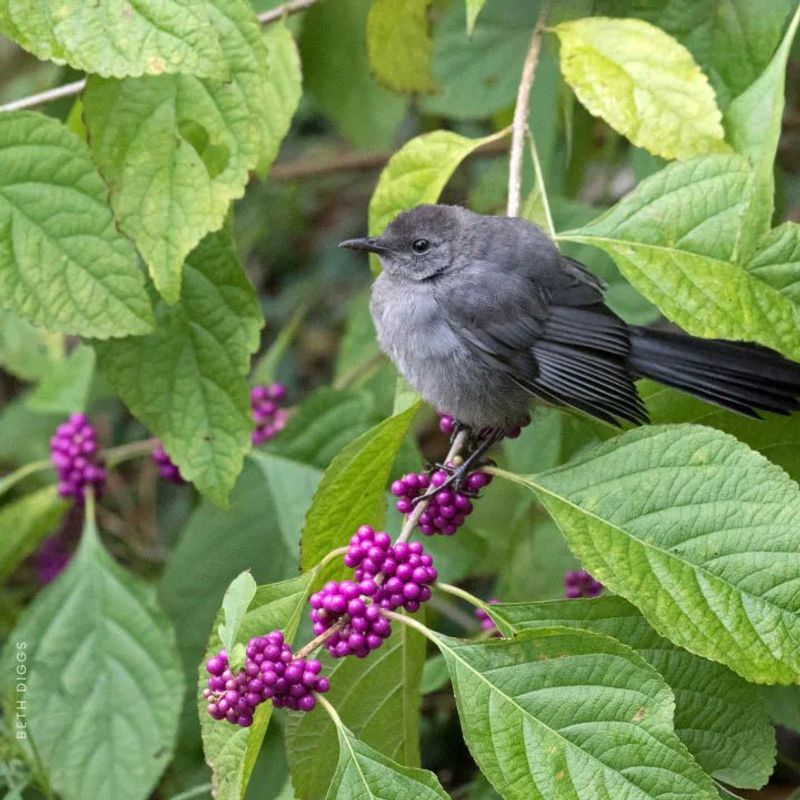
One beautyberry shrub can feed a brown thrasher working through the yard on a cool October morning, but it cannot do every job a bird needs across a full year. Birds need places to nest, spots to shelter from cold snaps and predators, insects to feed their chicks in spring, and water.
A single shrub, however productive its berry clusters, does not cover that whole list.
USDA NRCS backyard habitat guidance recommends using a variety of native plants that provide food, shelter, flowers, and fruit at different times of year. That is the honest framework for thinking about beautyberry: it is a useful piece of a varied native planting, not a complete solution on its own.
Where beautyberry earns its spot in that mix is in what it adds without much fuss. Most gardeners already have azaleas for spring color, maybe a dogwood for early fruit, and some hydrangeas for summer interest.
Beautyberry steps in at late summer and fall, a window when the yard often goes quiet and the bird activity slows. Audubon’s native plant profile highlights its value as a fruit source for migratory and resident birds during that shoulder season.
The advantage is not that beautyberry outperforms every other ornamental shrub for wildlife. The honest claim is simpler: few shrubs you can buy at a North Carolina nursery combine such a visible late-season berry display with that kind of documented food value, while also growing without demanding complicated care.
UGA Cooperative Extension’s native plant guide echoes this framing, describing beautyberry as a reliable food source for wildlife in southeastern landscapes. Pair it with native plants that offer spring flowers, summer insects, and dense cover, and the yard starts working harder for wildlife without looking like a science project.
Give It Sun, Room, And Time To Establish
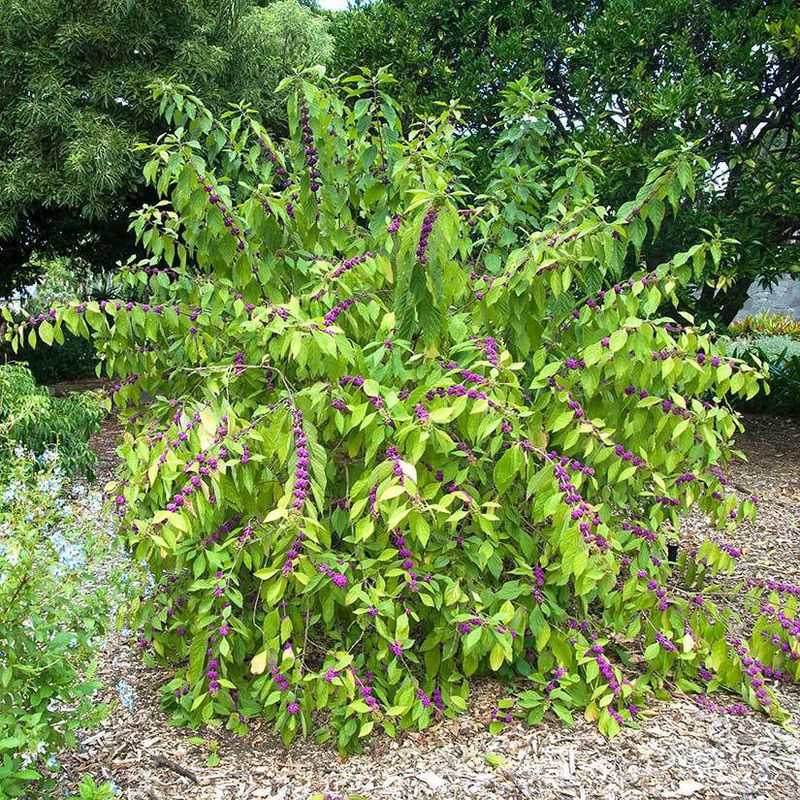
Placement is where many beautyberry plantings go wrong before the first berry ever forms. The shrub wants full sun to part shade, and NC State Extension is clear that it does not tolerate deep shade well.
A spot under a dense tree canopy that blocks most of the afternoon light will give you a leggy plant with sparse fruit. Stronger light generally means better flowering and heavier berry clusters, so a spot that gets at least 4 to 6 hours of direct sun is a reasonable target.
Light shade can work, especially in hotter Coastal Plain sites where afternoon relief helps the soil stay moist longer.
Soil adaptability is one of beautyberry’s genuine strengths. USDA Forest Service FEIS documentation and NC State both describe the shrub as tolerant of clay, loam, and sandy soil, as long as drainage is adequate.
That covers a lot of North Carolina ground, from Piedmont red clay to the sandy soils of the Coastal Plain and Sandhills. Standing water after rain is the condition to avoid.
If a spot stays soggy for more than a day or two after a storm, choose a different location or improve drainage before planting.
UF/IFAS lists a practical spacing range of 36 to 60 inches, and NC State gives a mature width of 3 to 6 feet, so plan for that full spread. The arching habit means the plant reaches outward as much as upward, and crowding it against a fence or other shrubs limits air circulation and can reduce fruiting.
On timing: NC State Extension’s woody ornamentals guidance recommends late fall or early spring for container-grown woody plants because cooler temperatures reduce transplant stress and let roots establish before summer heat arrives. Planting during the hottest stretch of a Piedmont or Sandhills summer is possible but puts the burden of consistent watering squarely on you at the worst possible time of year.
Water consistently during establishment, but skip the universal gallons-per-week prescription because container size, soil type, and weather vary too much for one number to be reliable. Instead, push a finger or a trowel several inches into the root zone every few days.
When that soil starts to feel dry, water deeply enough to wet the full root ball and a few inches beyond. Once the shrub is established, usually after one full growing season, it handles dry spells considerably better.
Prune According To The Shape You Want
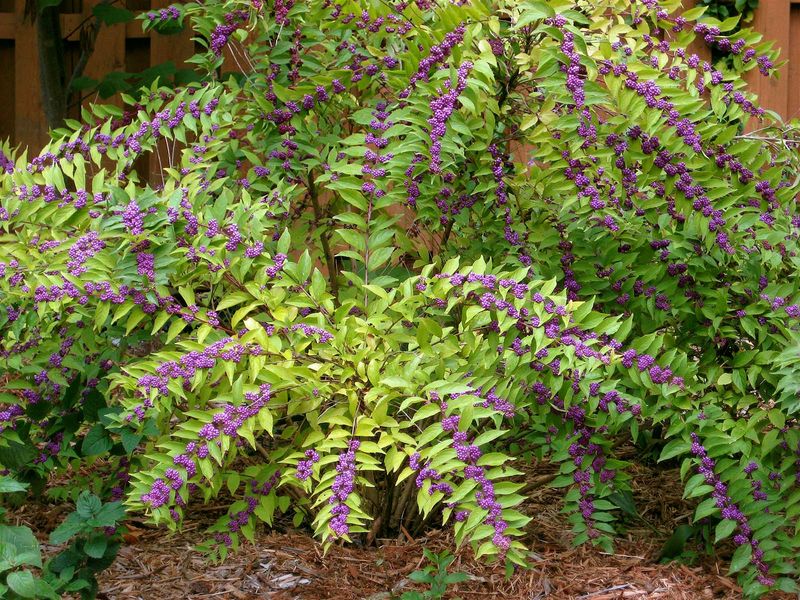
Here is where beautyberry’s growth habit becomes genuinely useful information rather than background detail. The shrub flowers and fruits on new growth produced in the current season.
That single fact determines almost everything about when and how hard to prune.
Late winter or early spring, before new growth pushes out, is the safest general window for pruning. NC State Extension lists cutting back to about 1 foot as an option for managing the plant, and Mississippi State Extension notes that severe pruning on vigorous or overgrown plants can encourage a compact shape and heavier flowering and fruiting on the fresh stems that follow.
But that hard cut is an option, not a requirement every plant needs every year.
If your beautyberry is young, well-proportioned, and fits its space, lighter pruning to remove dead or crossing wood and shape the outer edge of the canopy is perfectly reasonable. That approach preserves more height and keeps the natural arching form that makes the plant look graceful rather than stubby.
NC State’s general pruning guidance supports matching the pruning approach to the plant’s current condition and your goals, rather than applying one method universally.
Summer shearing is the move to avoid. Removing new growth after the plant has leafed out and before it flowers strips away the very stems that would carry the fall berry clusters.
Many Piedmont gardeners have tidied up a beautyberry in July only to wonder in October why the berry display was thin. The timing matters more than the tool or the technique.
Prune in late winter, let the new growth run through spring and summer, and the berries will follow on their own schedule.
Check The Botanical Name And Skip The Myths
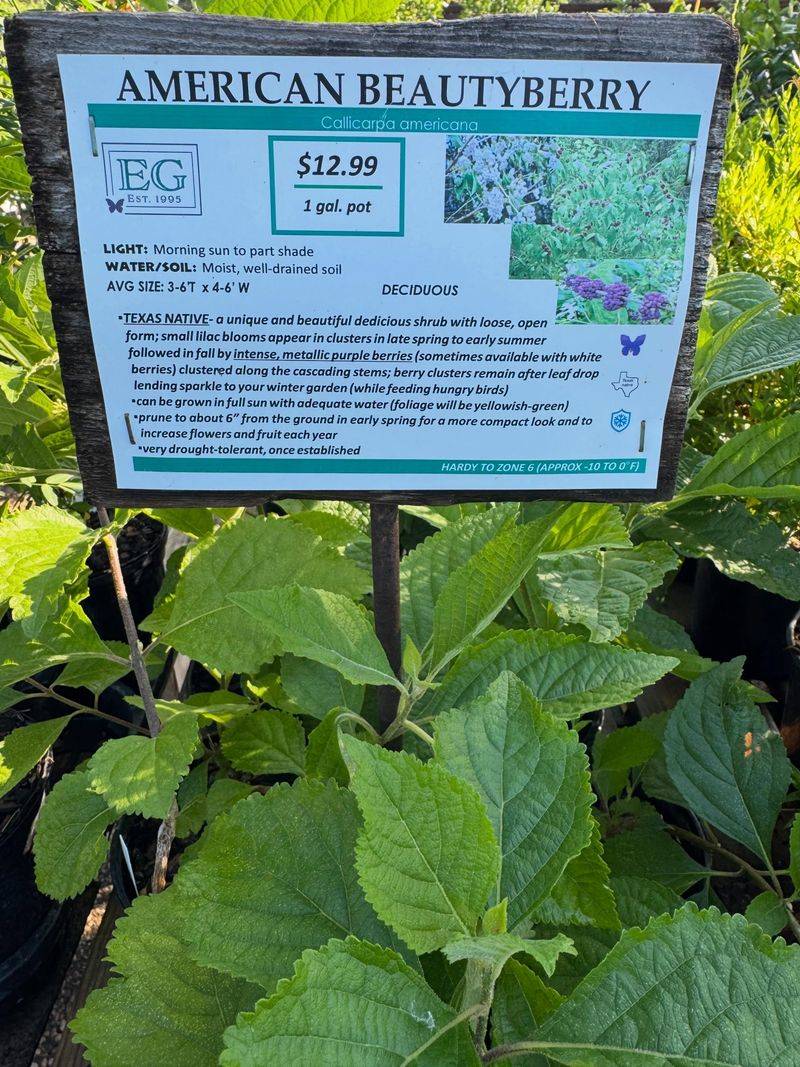
Before you pull a beautyberry off the nursery shelf, check the tag for Callicarpa americana. Nurseries across North Carolina also sell Japanese beautyberry, Callicarpa japonica, which is native to East Asia.
Both produce colorful berries and can look similar at a glance, but Japanese beautyberry does not carry the same native-plant or local habitat credentials as the American species. If supporting North Carolina wildlife with a plant that genuinely belongs here matters to you, the botanical name on the tag is the only way to be sure.
On fruit production: several sources suggest that grouping two or more American beautyberry plants together may support a fuller berry display, and that is a reasonable approach when space allows. Mississippi State Extension and Missouri Botanical Garden both mention the value of planting multiples.
The evidence does not support a rigid rule like “you must plant two,” and a single well-sited plant can still produce a respectable display. Think of grouping as a way to increase your chances of a fuller show, not a non-negotiable requirement.
Deer resistance comes up often with beautyberry, and the honest answer is complicated. NC State Extension lists the shrub as particularly resistant to deer and rabbits, but USDA documentation also notes that deer browse the leaves and consume the fruit.
In a year when other food is scarce, hungry deer will eat plants they typically ignore. Treat deer resistance as a relative advantage, not a guarantee.
The berry identification question deserves a direct answer. Beautyberry can be confused with pokeweed and other berry-producing plants in a North Carolina yard.
A useful field distinction is that beautyberry fruit clusters form in tight rings close against the stem at the leaf nodes, while pokeweed berries hang on elongated stalks and the entire pokeweed plant, including its berries and seeds, is poisonous. UF/IFAS guidance on distinguishing the two plants is worth reading if you find purple berries in the yard and are not certain what you are looking at.
Do not eat unidentified berries. UF/IFAS notes that beautyberry berries are edible but can be astringent, and Ask Extension cautions that some people may experience stomach upset.
Never identify a plant for consumption from a photograph alone, and keep children from snacking on any backyard berry without a confirmed identification from a qualified source.
Let The Shrub Offer Beauty Without Promising Protection
American beautyberry can add a genuinely striking late-summer-through-fall berry display to a North Carolina yard and feed a surprising variety of songbirds and small mammals along the way. Those are real, documented benefits that make the shrub worth including in a varied native planting.
What it cannot do is replace a thoughtfully layered habitat garden or stand in for proven pest protection.
The mosquito and tick angle comes up whenever beautyberry is discussed online, and the underlying research is real but limited. USDA Agricultural Research Service studies on callicarpenal and related compounds found in beautyberry leaves showed laboratory repellency against certain mosquitoes, and follow-up USDA ARS research extended that preliminary work to ticks.
A peer-reviewed study hosted by USDA ARS used extracted compounds and cloth-strip or laboratory assays, not a planted shrub in a real yard. None of that research establishes that growing beautyberry near your patio reduces the mosquito or tick population your family encounters.
Do not rub crushed beautyberry leaves on children or pets. Mississippi State Extension specifically warns that crushed leaves may cause an allergic reaction.
For actual mosquito and tick protection, follow CDC guidance on preventing mosquito bites and CDC tick prevention recommendations, which cover EPA-registered repellents and practical yard habits that actually have evidence behind them.
Plant beautyberry during late fall or early spring, give it the room its arching habit needs, water it consistently through its first growing season, and treat it as one useful layer of a North Carolina yard that also includes other native plants offering flowers, shelter, and food at different times of year. USDA NRCS backyard habitat guidance frames that varied approach as the foundation of a yard that genuinely supports wildlife.
Beautyberry earns its place in that mix by doing one thing better than almost any other shrub at the nursery: it turns an ordinary September yard into something a robin and a passing neighbor will both stop to look at.