
What It Really Means When A Mockingbird Sings From The Same Spot In Your North Carolina Yard
Follow us on Google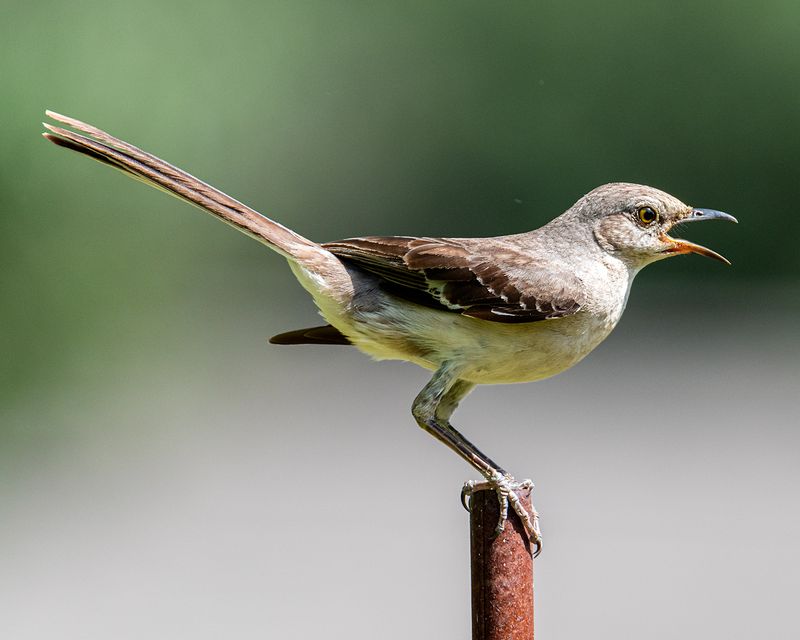
Every morning, the same bird lands on the same fence post or rooftop edge and fills your North Carolina yard with a rolling chain of songs before the coffee finishes brewing. If that bird is a Northern Mockingbird, that repeated spot is telling you something real about your landscape.
Understanding what it actually means, and what it does not mean, can help you make smarter choices about your yard without disturbing a bird that is just doing its job.
First, Make Sure It Is A Mockingbird
Plenty of birds in North Carolina pick a favorite perch and use it morning after morning, so the repeated spot alone cannot tell you what species you are watching. Before any of this article’s interpretation applies, you need a reliable visual or vocal identification.
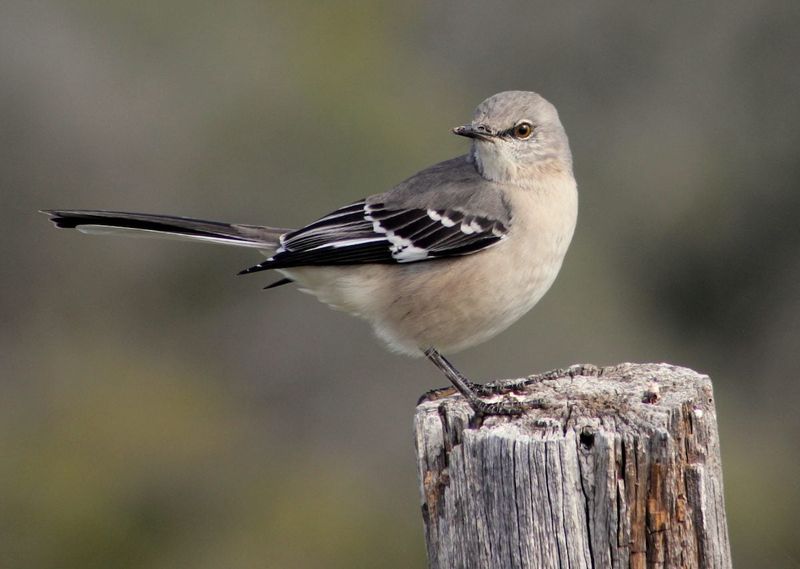
A Northern Mockingbird (Mimus polyglottos) is a medium-sized songbird with gray upperparts, whitish underparts, and bold white wing patches that flash when it flies. Those patches are one of the easiest field marks to catch even from a kitchen window.
The voice is the other giveaway. Cornell Lab of Ornithology describes Northern Mockingbird songs as long sequences of repeated phrases, with each phrase typically sung two to six times before the bird switches to the next.
You will hear imitations of other birds, frogs, car alarms, squeaky gates, and more, all strung together in a performance that can last 20 seconds or longer without a real pause. Once you hear it, you will not confuse it with much else.
Once you have a confident identification, the repeated perch makes much more sense. Field research on mockingbird life history shows that territorial males commonly return to favored song posts, and a study published in Animal Behaviour found that singing direction and post selection relate to territorial and courtship functions rather than random habit.
The post most likely sits inside or near a defended territory. It gives the bird an elevated, exposed place to broadcast song, watch for rival mockingbirds, and keep a clear view of the landscape around it.
That is not a message aimed at you personally, it is a bird using good real estate.
Why That Post Works So Well
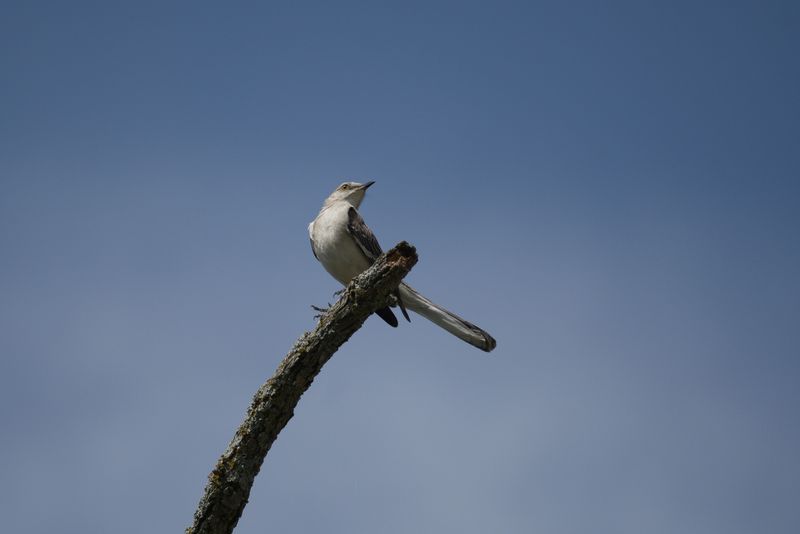
Height matters more than almost anything else when a mockingbird picks a perch. An elevated spot lets sound travel farther across open ground, so the bird’s song reaches rival mockingbirds and potential mates across a wider area.
A fence top, utility line, roof ridge, or the crown of a small tree all accomplish the same thing: the bird gets above the noise and clutter of ground-level vegetation.
Open sightlines matter just as much as height. Northern Mockingbirds commonly use shrubs, trees, utility lines, fences, poles, and roof edges as song posts, and the common thread is exposure.
A post tucked inside a dense hedge does not work as well as one at the hedge’s edge or above it, where the bird can see approaching rivals from multiple directions. This is also why the same post can seem almost perfectly placed, it probably is, from the bird’s point of view.
Nearby cover is the third piece. Research on mockingbird singing behavior supports the idea that birds select posts that combine visibility with access to escape cover and foraging space.
A shrub or tree within a quick flight gives the bird somewhere to go if a hawk appears. Open lawn or bare ground nearby gives it somewhere to land and run after insects.
The post that looks arbitrary to you likely sits at the intersection of all three advantages. And the best spot might actually be just across your property line, in a neighbor’s yard or along a shared fence row, which means the bird’s territory extends further than your garden beds suggest.
The Song Marks Territory And Courtship
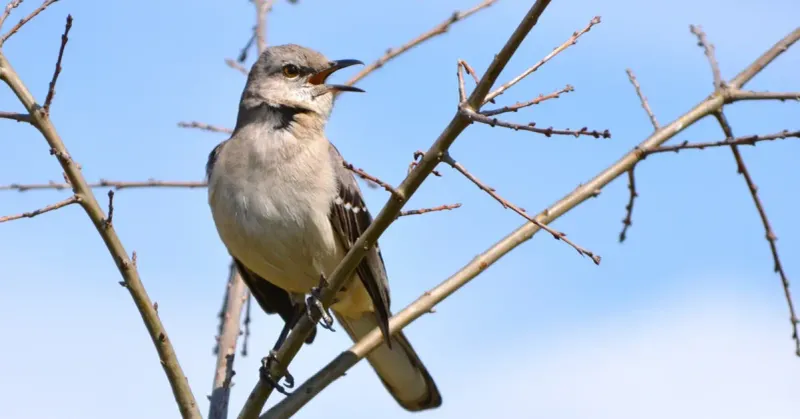
Morning is prime time for mockingbird song, and that timing is not accidental. The dawn chorus, when many songbirds sing before and just after sunrise, is one of the most reliable events in a North Carolina yard from late winter through midsummer.
Audubon explains that bird song carries two primary functions: defending a territory from rivals and attracting a mate. A mockingbird on a rooftop at 6 a.m. is doing both at once.
The song itself is genuinely remarkable. Cornell Lab reports that individual mockingbirds can learn and perform hundreds of distinct song types, including imitations of other birds, frogs, and mechanical sounds, with each phrase repeated several times before the bird moves to the next one.
An exposed perch helps all of that sound travel. Broadcasting from height and open air gives the song acoustic reach that a bird singing from inside a shrub simply cannot match.
A few things are worth clearing up. Both male and female Northern Mockingbirds can sing, although males generally sing more persistently and for longer stretches.
The song is not proof that the bird is singing only to find a mate. Territory defense continues even after a pair is established.
And the bird is not singing at you or trying to communicate with the household. The song is aimed at other mockingbirds in the surrounding landscape, and an elevated, open post is simply the best tool for the job.
Think of it as a neighborhood broadcast tower, not a personal serenade.
The Yard Offers Cover And Foraging Space
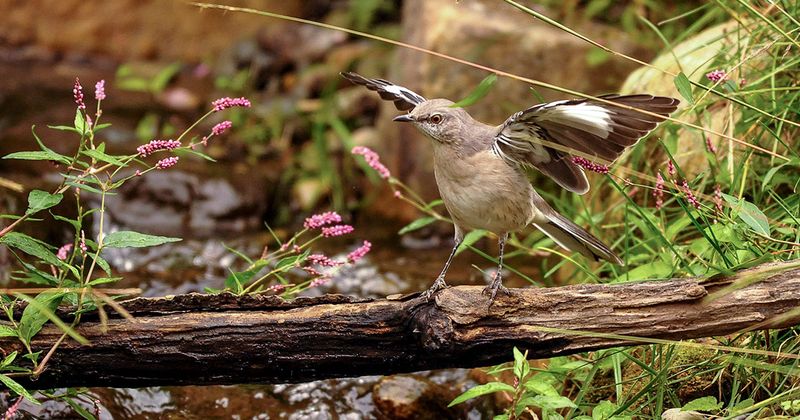
The repeated perch is actually a clue about the yard below it, just not a precise one. A mockingbird that keeps coming back to one spot is almost certainly finding a useful combination of open ground and nearby cover within its territory.
Open lawn, a gravel path, or a bare patch of soil gives the bird somewhere to walk and run, which is how it hunts. Northern Mockingbirds often drop from a low perch to capture insects on the ground, and they need enough clear space to spot and chase prey effectively.
Summer brings the insect-heavy part of the diet. Beetles, grasshoppers, caterpillars, ants, wasps, spiders, and earthworms all show up on the menu during warm months in North Carolina, where muggy afternoons and afternoon thunderstorms keep invertebrate activity high from May through September.
As fall arrives and insect numbers drop, fruit takes over. Shrubs and trees that hold berries into late fall and winter become genuinely important food sources, not just decorative additions.
What the perch does not tell you is which specific plant or soil condition the bird prefers. The yard does not need a particular nutrient, a hidden insect hotspot, or one special shrub to attract a mockingbird.
The bird is responding to a combination of habitat features spread across a larger territory. Mockingbirds are highly adaptable and use a wide range of suburban and rural settings across the Piedmont, Coastal Plain, and elsewhere in North Carolina.
A mockingbird’s presence also does not mean your yard is free of mosquitoes or ticks. Those concerns need their own management, separate from what any one bird is doing.
A Song Post Does Not Locate The Nest
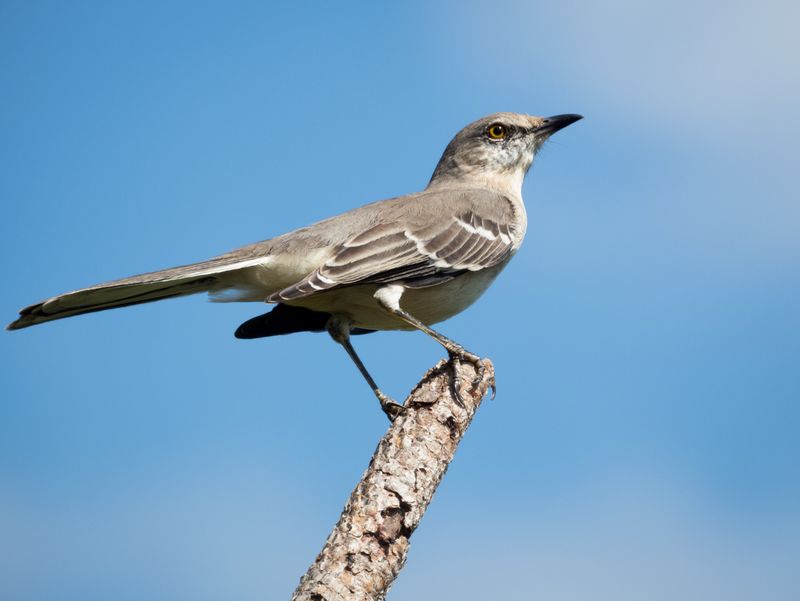
Here is where a lot of people make a well-meaning mistake. The spot where the mockingbird sings every morning is almost never where the nest is.
A singing bird uses a visible, exposed perch precisely because it wants to be seen and heard. The nest is the opposite: hidden, tucked into dense cover, and usually several feet off the ground inside a shrub or small tree.
Northern Mockingbirds typically nest 3 to 10 feet above ground, often in thorny or dense shrubs where the structure is hard to see from outside. The male may patrol and sing across the entire territory rather than hover near the nest.
In fact, mockingbirds may build several partial nests before the female chooses one, so there could be more construction activity in the yard than you realize. The territory itself may cross your property line and include parts of neighboring yards, which means the nest could be anywhere within that wider area.
Watch quietly from a distance if you want clues. Repeated trips by an adult to one shrub, a bird carrying twigs or dried grass, or an adult flying in with insects are all quiet signals worth noting.
Do not approach the shrub, move branches, trim around the perch area, or search repeatedly. Mockingbirds become highly defensive near nests and will alarm-call loudly or dive at people and pets that get too close.
Keep children and dogs away from any area where adults are behaving this way. The U.S.
Fish and Wildlife Service advises seeking guidance when an active nest creates a conflict, and most active bird nests are protected under federal law.
Improve Habitat Without Chasing A Perfect Yard
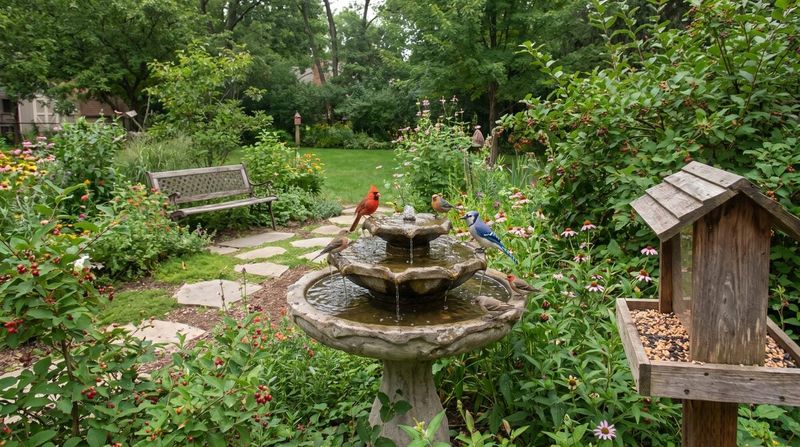
You do not need to overhaul the yard to support a mockingbird. The most useful thing you can do is keep some open lawn or other clear foraging ground while also retaining or adding shrubs, fruiting plants, and layered vegetation.
NC State Extension recommends a mix of vegetation layers, including trees, understory plants, shrubs, herbaceous plants, and ground cover, as the foundation for bird-friendly habitat. Native plants earn their place here because they support the insects and fruit that birds actually need, not because they are a trend.
Pruning is one place where timing genuinely matters. NC State Extension identifies early March through late July as the period when pruning shrubs and trees is most likely to disturb or expose active nests.
If a mockingbird is singing near a hedge or dense shrub during that window, leave it alone. A hard trim can remove nesting cover or expose eggs and chicks to predators and heat.
Wait until late summer or fall to do any significant shaping near areas where you suspect nesting activity.
A shallow birdbath can be a worthwhile addition. Use a basin about 2 to 3 inches deep with a rough or textured surface so birds can grip it without slipping.
Clean it weekly and refill with fresh water, a step that matters more in North Carolina’s warm months when standing water can become a mosquito breeding site if neglected. A birdbath supports many yard birds generally but will not guarantee that the mockingbird uses its particular song post more often.
Seed feeders are mostly beside the point for this species. Mockingbirds rarely visit seed feeders, so if attracting this bird is the goal, maintaining open foraging space and fruiting plants will do far more than filling a hopper.
If you use feeders for other birds, clean them at least every two weeks, remove any spoiled food promptly, and keep feeders positioned where outdoor cats cannot use nearby cover to stalk birds approaching the feeder.
Treat The Perch As A Clue, Not A Diagnosis
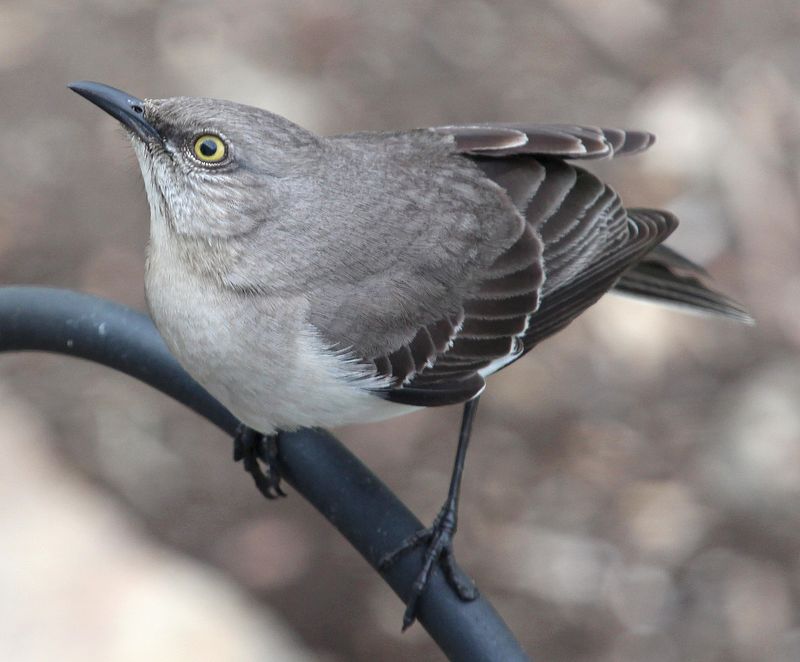
A favored song post is a useful signal, but it is not a permanent fixture. Mockingbirds may shift perches during active courtship, territorial disputes, nesting, or changes in vegetation.
A hedge that gets trimmed, a tree that leafs out and blocks the sightline, or a rival bird that pushes the territory boundary can all move the morning concert to a new address. Research on mockingbird singing behavior describes favored posts as repeatedly used locations, not permanent or exclusive ones.
The bird you see this spring may not be the same individual that used the same post last year. A Smithsonian species account on Northern Mockingbirds notes that a perch site can remain attractive to successive males or different territory holders.
A post with good height, clear sightlines, and nearby cover will appeal to any mockingbird that holds territory in that area, not just one particular bird. The territory itself may cross your property line and reach into two or three neighboring yards, so the bird’s range is wider than your garden fence suggests.
Night singing comes up a lot in North Carolina neighborhoods, especially in spring. It is more common during nesting season and in suburban settings with ambient light.
Audubon notes that bright artificial light is one possible factor in nighttime mockingbird song, but experimental research has produced mixed results. One controlled forest study found no consistent effect of light color on dawn singing onset, and broader reviews of artificial light effects on fauna note that responses vary by species and context.
A porch light may be a factor, but blaming it confidently overstates what the evidence actually shows.
Keep a sensible mix of open ground and cover, protect the areas where nesting might be happening, and let the song be what it is: good evidence that your yard is genuinely usable habitat, not a prescription for one plant or a promise of a pest-free summer.