
Your Peace Lily Keeps Wilting Even Though You Water It, And These 9 Habits Are Why
Follow us on Google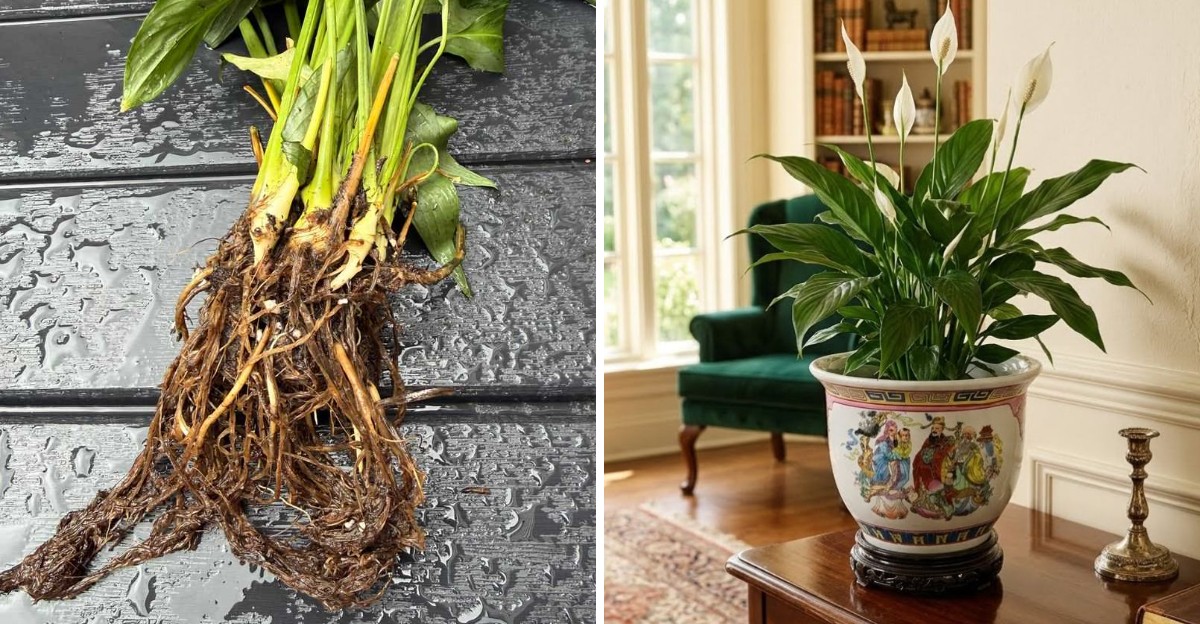
It’s Sunday morning, coffee in hand, and your peace lily is slumped over the rim of its pot like a tired kid after a long day. You watered it on Thursday.
The soil still feels damp. So what gives?
Peace lilies (Spathiphyllum wallisii and its hybrids) droop dramatically when something is off, and thirst is only one possible cause. Here are nine everyday habits that make a well-watered peace lily wilt, plus the simple fix for each one, so you can get those glossy leaves standing tall again.
1. Watering On A Schedule Drowns The Roots
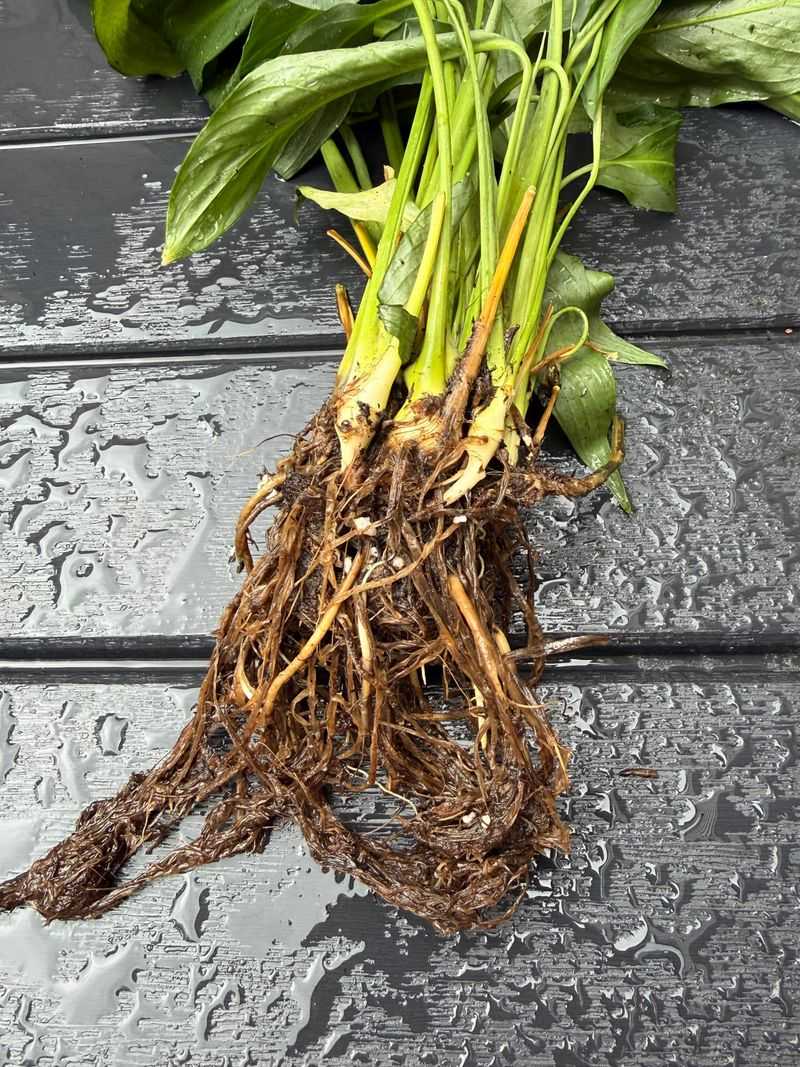
Here is the twist most people miss. A peace lily sitting in soggy soil can wilt exactly like one that is bone dry, because rotting roots cannot drink.
Roots need air as much as water. When soil stays wet for days, oxygen runs out, the roots suffocate, and they turn brown and mushy.
Watch for yellow lower leaves, a sour smell, and tiny fungus gnats hovering over the pot.
So check before you pour. Push a finger into the mix and water only when the top 1 to 2 inches feel dry.
In a heated winter home that might be every 7 to 10 days, and in a humid Gulf Coast summer it may stretch longer.
If rot has already set in, slide the plant out and trim every soft, dark root with scissors wiped in 70 percent rubbing alcohol. Repot into fresh mix and hold off watering for about a week.
Firm, white roots are the goal, and they usually return faster than you expect.
2. Pretty Pots Without Holes Trap Water Below
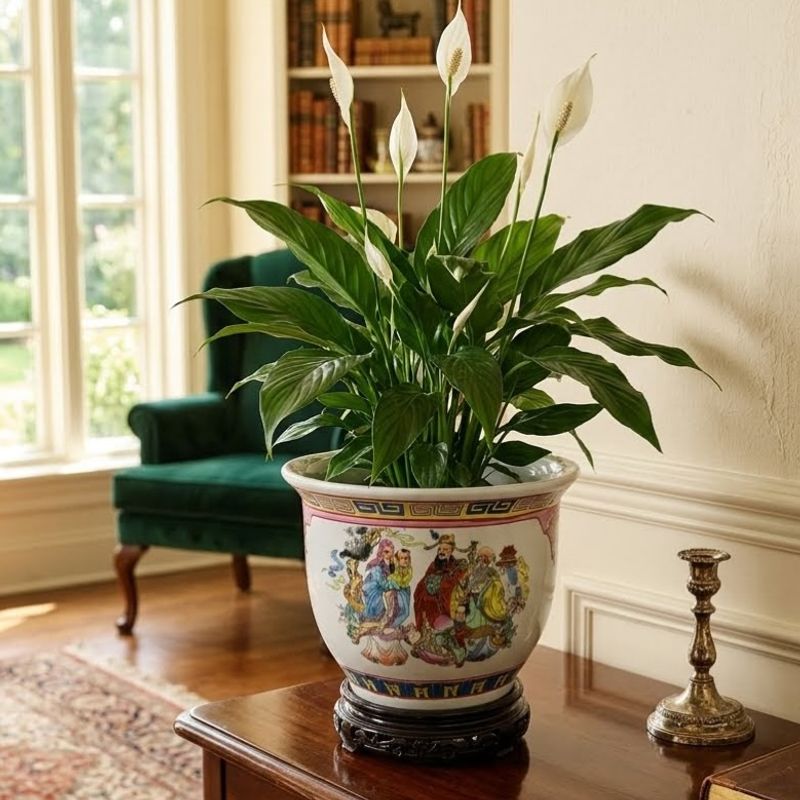
That glazed ceramic pot from the garden center looks great on the side table. But without a drainage hole, it works like a bathtub with the plug stuck in.
Extra water pools at the bottom where you cannot see it. The lower roots sit in that puddle day after day, and rot creeps upward.
A layer of gravel does not solve it either. It actually raises the soggy zone closer to the roots.
The fix is easy and keeps the look you love. Grow the peace lily in a plain plastic nursery pot with holes, then set that inside the decorative one as a cover, often called a cachepot.
On watering day, lift the inner pot out and water it in the sink. Let it drain for 20 to 30 minutes before tucking it back.
The University of Maryland Extension recommends well-drained potting mixes for houseplants, and a hole is where good drainage starts.
3. A Crowded Pot Dries Out Within Days
Picture a peace lily that drinks deeply on Monday and droops again by Wednesday. You are not imagining it.
The plant may have simply outgrown its home.
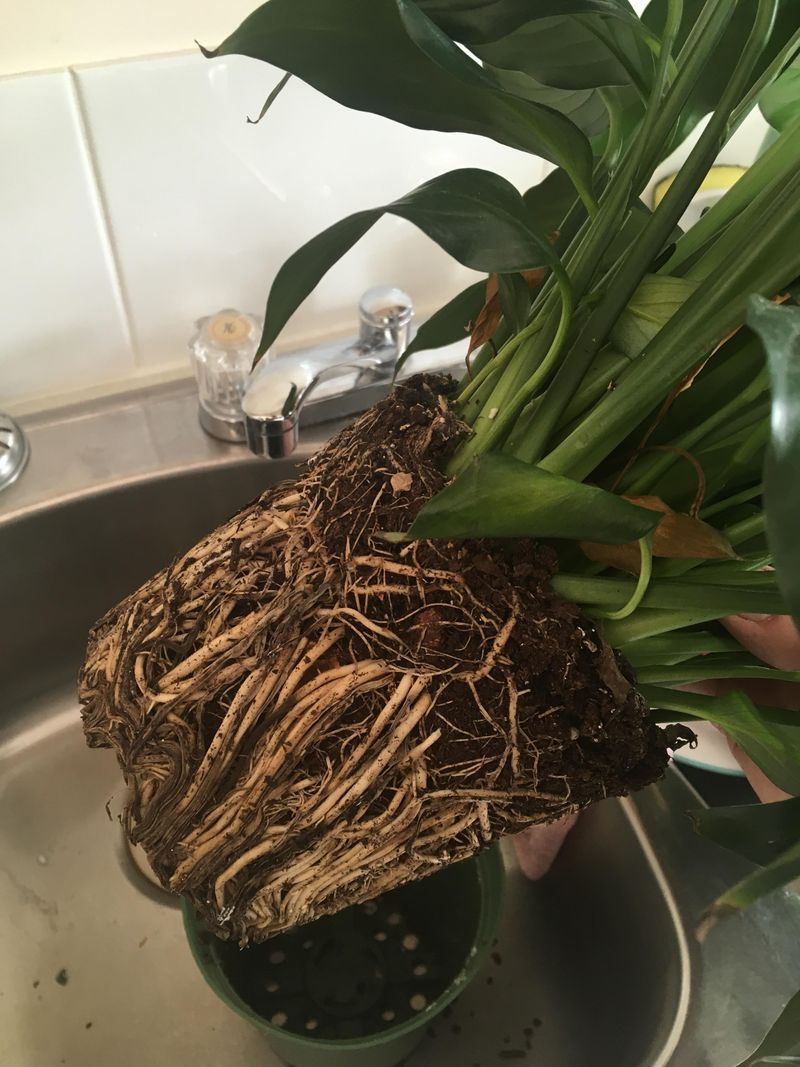
When roots fill the pot, they circle tightly and crowd out the soil. Less soil means less stored water, so the plant runs dry fast.
Roots poking out of the drainage holes are a loud hint.
Move up only one size, about 1 to 2 inches wider. A pot that is too big holds extra wet soil the roots cannot reach, and that brings you right back to rot.
Gently tease apart circling roots with your fingers, set the plant at the same depth it grew before, and fill around it with fresh mix. Spring and early summer are easy times to do this, since the plant is growing hard and settles in quickly.
Within a few weeks, those midweek slumps should fade.
4. Drafty Spots Shock Leaves Into Drooping
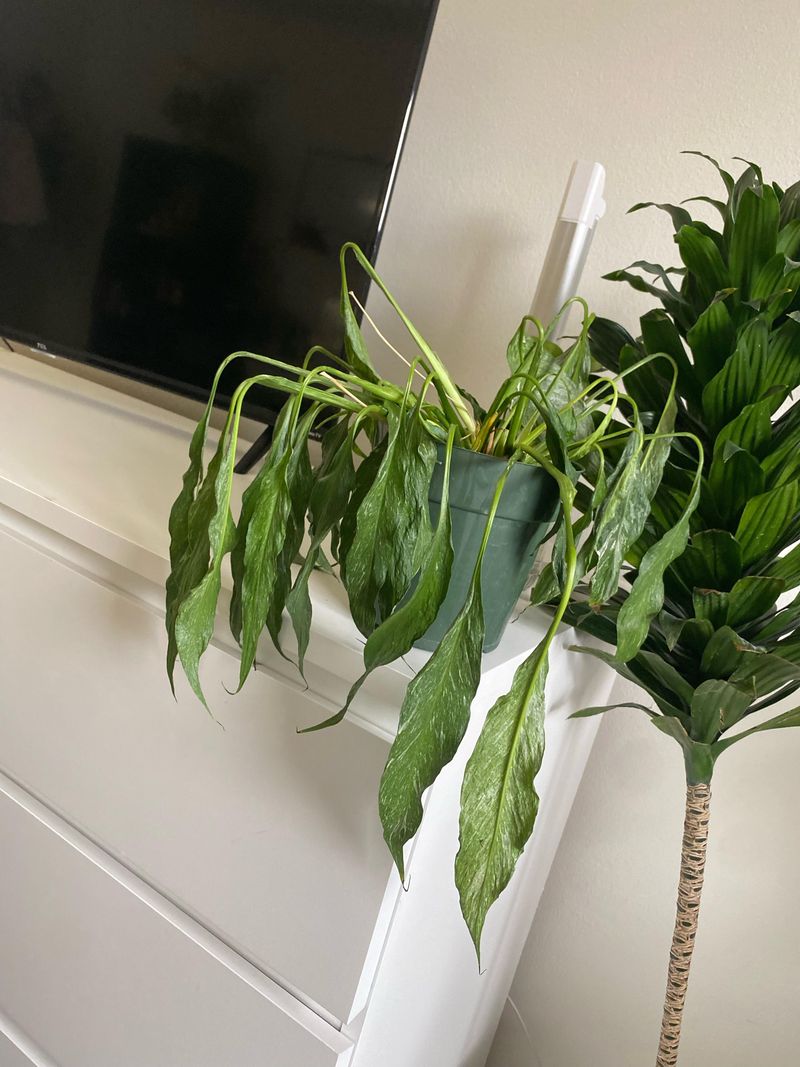
Many Northern homeowners notice it in January. The peace lily by the front door collapses after a week of the door opening to 20 degree air.
These plants come from warm tropical forest floors in Central and South America. They are happiest between about 65 and 80 degrees F.
Cold drafts below 55 degrees, or a blast from a heat vent, stress the cells until the leaves lose their stiffness and flop.
Summer brings the flip side in places like Arizona or Texas. A plant parked under an air conditioning vent, or in a room that tops 85 degrees, can wilt just as fast.
Move the pot a few feet away from doors, single-pane windows, and vents. Think of it like choosing a spot where you would enjoy reading a book.
If a few leaves stay dark and limp after two days, snip them at the base so the plant can push out fresh ones.
5. Dry Winter Air Pulls Water From Leaves
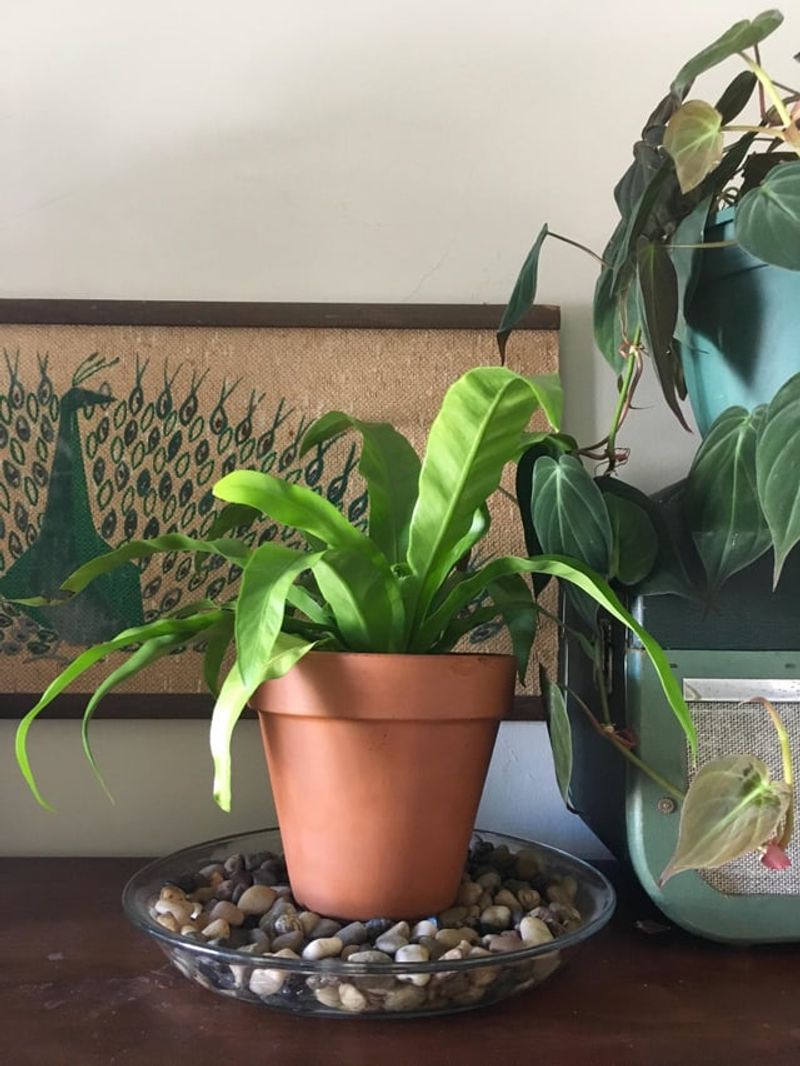
Moist soil and droopy leaves at the same time can feel like a riddle. The answer is often floating in the air around you.
Furnaces dry indoor air fast, sometimes down to 20 or 30 percent humidity in cold-winter states like Minnesota or Colorado. Peace lilies prefer 40 to 50 percent or more.
When air is that dry, leaves lose water faster than roots can replace it.
A pebble tray helps a little. Fill a saucer with gravel and water, then set the pot on top so its bottom stays above the waterline.
Grouping houseplants also builds a small humid pocket, like friends huddled together for warmth.
Misting feels nice but fades within minutes, so treat it as a small extra. A room humidifier does the most work, and your dry winter skin will thank you too.
Humidity is one layer of the fix, not the whole answer, so keep checking the other habits.
6. Bright Afternoon Sun Scorches Shade Lovers
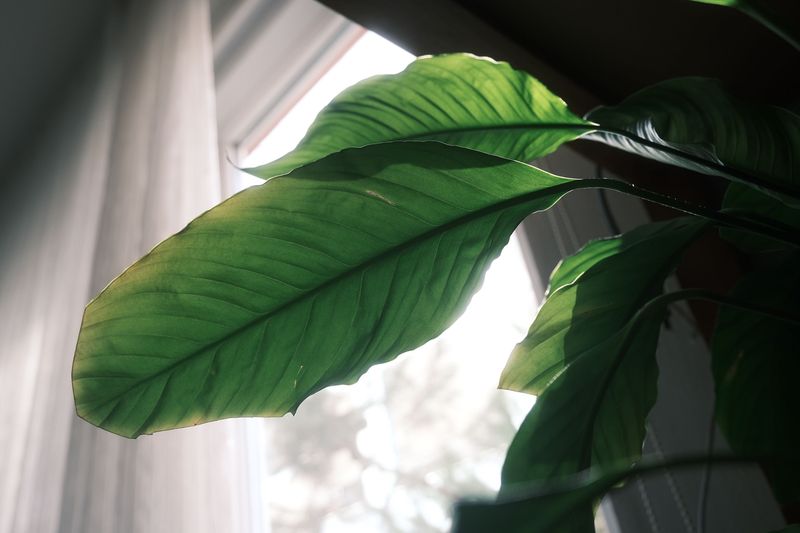
A sunny windowsill seems like a gift for any plant. For a peace lily, hot afternoon rays feel more like a sunburn at the beach.
In the wild, these plants grow under a thick tree canopy where light arrives filtered and soft. Direct sun through a south or west window can bleach leaves, brown the edges, and make the plant wilt from heat stress even when the soil is wet.
The damage usually shows first on the side facing the glass.
Move it to bright, indirect light. An east window is often perfect, giving mild morning sun and nothing harsh after lunch.
If only a sunny window is available, set the pot 3 to 6 feet back or hang a sheer curtain.
Burned leaves will not turn green again, so trim them once new growth appears. The good news is that peace lilies handle lower light well, so a calmer spot is an easy win.
7. Fresh Repotting Can Cause Weeks Of Sulking
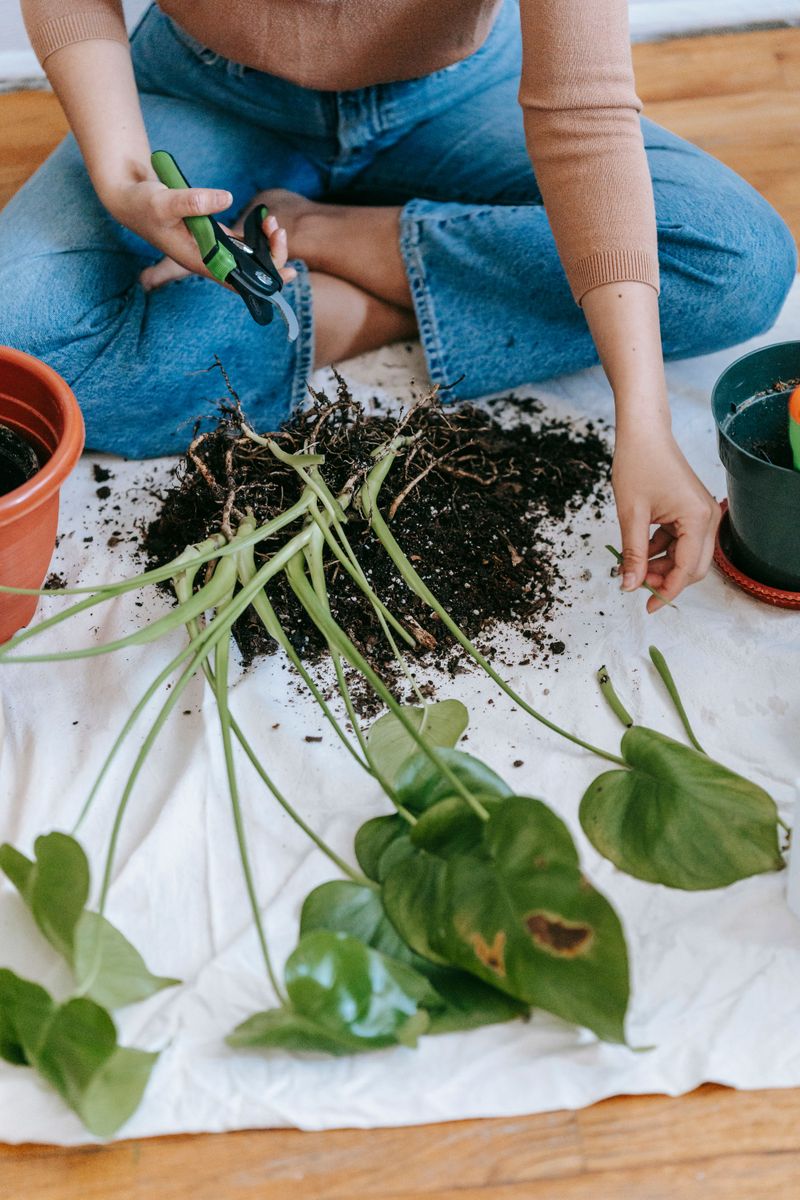
You did everything right. New pot, fresh mix, careful hands.
And the next morning, your peace lily looks worse than before.
That slump is called transplant shock. The fine, hair-like feeder roots that soak up water get torn during the move, so the plant cannot drink well for a while.
The Maryland Home and Garden Information Center notes that transplant shock comes from root injury and the plant’s reduced ability to take up water.
Most peace lilies bounce back in 3 to 7 days, though some sulk for up to 2 weeks. Keep the soil lightly moist, never soggy, and give bright indirect light with steady temperatures.
Skip fertilizer for 2 to 4 weeks. Feeding a plant with injured roots is like handing a big meal to someone with the flu.
Patience is the real fix here, and a new leaf poking up is your signal that recovery is underway.
8. Straight Tap Water Builds Up Harmful Salts

Brown, crispy leaf tips that spread over time often trace back to the kitchen faucet. Peace lilies are more touchy about tap water than many houseplants.
Many US cities add chlorine and fluoride, and hard-water areas across the Southwest and Midwest carry heavy minerals too. Those build up in the potting mix over months, stressing roots so they work less efficiently.
A white crust on the soil or pot rim is a common clue.
Filtered, distilled, or collected rainwater is the gentlest choice. If that is not practical, fill your watering can and let it sit uncovered for 24 hours.
Some chlorine escapes, though fluoride and minerals stay put.
Every 2 or 3 months, flush the pot in the sink. Run water through slowly for a couple of minutes so it carries built-up salts out the drainage holes, then let it drain fully.
Tips that already browned will not heal, but new leaves should come in clean.
9. Old Tired Soil Starves And Smothers Roots
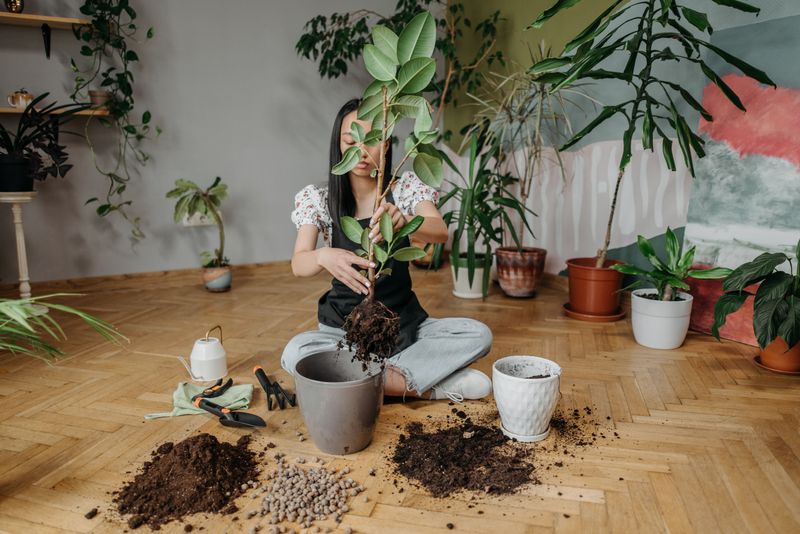
Potting mix does not last forever. After a couple of years, it quietly slumps into something closer to packed mud.
Bark and peat break down, air pockets collapse, and nutrients wash away with every watering. Dense, worn-out soil holds water around the roots and squeezes out oxygen, so your plant wilts even when your watering habits are spot on.
It is like trying to breathe through a wet towel.
If your peace lily has sat in the same mix for more than 1 to 2 years, give it a fresh start. Choose a quality indoor potting mix and stir in perlite, roughly 1 part perlite to 3 parts mix, for better airflow.
A handful of compost or worm castings adds gentle nutrients.
After that, a light feeding with diluted houseplant fertilizer every 6 to 8 weeks in spring and summer keeps it steady. Put these nine habits together and that dramatic droop becomes a rare event, and you will know exactly what to check when it happens.
