
Why Pruning Your Texas Oak Trees In Summer Heat Is A Costly Mistake To Avoid
Follow us on Google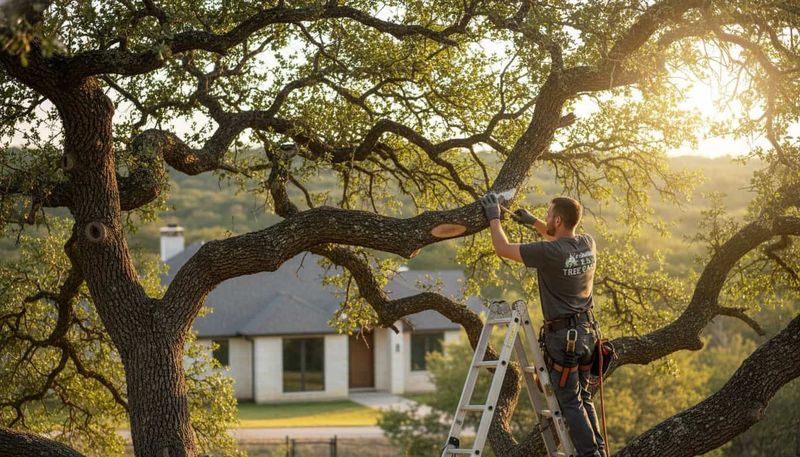
You step outside on a July morning and the patio already feels like an oven, but that overgrown oak branch is hanging lower than ever and you are wondering if today is the day to grab the saw.
Before you do, there is something worth knowing: not all summer pruning is the same kind of mistake, and the timing that genuinely matters most for oak wilt is not midsummer.
The real danger window runs from February through late June, when the biology lines up against you in ways that July heat actually tends to shut down.
Getting this straight can save your tree, your shade, and a whole lot of money.
Summer Is Not Automatically the Wrong Time
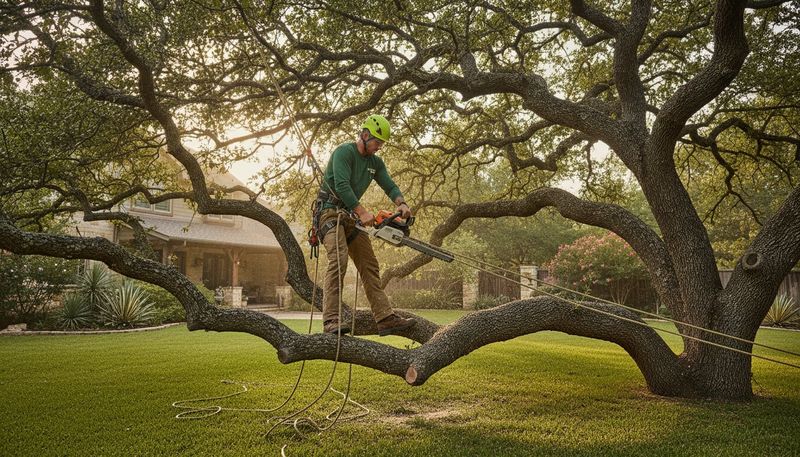
Plenty of Central Texas homeowners have stood in the yard on a scorching August afternoon, stared at a tangled mess of crossing branches, and figured the responsible thing was to grab the loppers and get to work.
The instinct makes sense.
The tree looks rough, the summer has been brutal, and something needs to happen.
But the right move depends entirely on what kind of pruning you are actually considering.
Here is the part the headline gets a little wrong.
Texas Oak Wilt guidance is clear that July and August pruning is generally less hazardous for oak-wilt transmission than pruning in late winter or spring.
High temperatures and dry conditions tend to reduce the beetle and fungal-mat activity that drives overland disease spread.
So the idea that midsummer is the most dangerous season for your oak is not accurate, and believing it could leave you paralyzed when a branch genuinely needs to come down.
That said, unnecessary pruning during extreme heat is still a real problem.
Removing healthy live branches in triple-digit temperatures adds stress to a tree that is already working hard just to stay hydrated.
The practical line to draw is this: cosmetic shaping, thinning for looks, and any cuts that can wait should wait.
A branch that is threatening your roof, blocking a utility line, or cracking under its own weight after a storm is a different situation entirely, and the calendar does not override safety.
Think of it this way.
The oak does not need you to improve its appearance right now.
It needs you to leave it alone unless something is actually dangerous.
That distinction is the whole game.
Use the Calendar as a Precaution
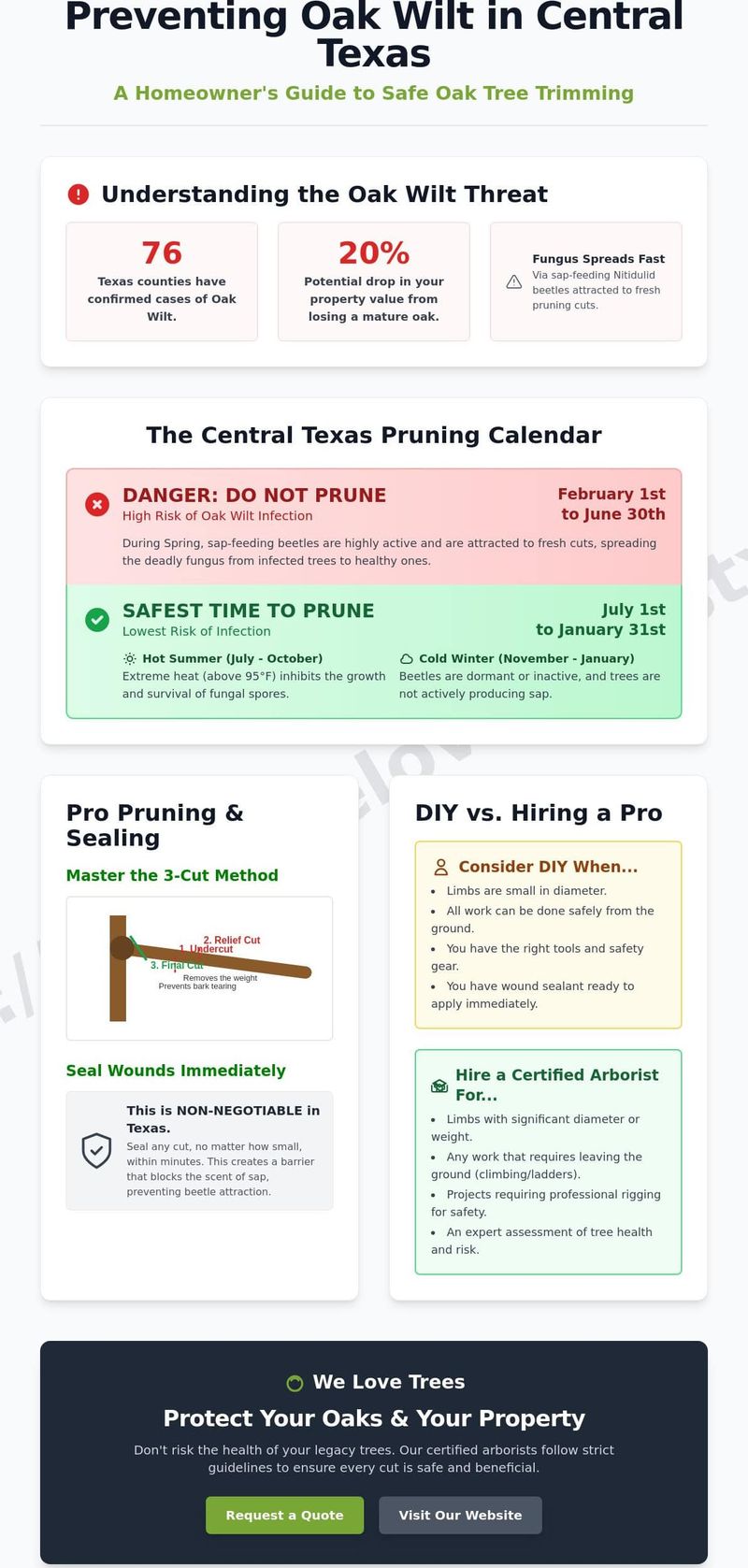
The February 1 through June 30 window is the period Texas oak-wilt authorities recommend avoiding routine pruning, and understanding why that window exists helps you use it as a real tool instead of just a rule to memorize.
It is not that every single day in that span carries identical risk.
The window is a precaution that covers the period when conditions are most likely to line up against your tree.
Late winter and spring are when fungal mats beneath infected red-oak bark are most active in Texas, and when the sap-feeding beetles that can carry oak-wilt spores are moving around most freely.
Oak-wilt spread research points to this overlap of active mats and active beetles as the primary overland transmission mechanism.
A fresh pruning wound during that period is essentially an open invitation at exactly the wrong moment.
By July and August, the Texas heat has generally pushed beetle activity down and dried out the fungal mats that would otherwise be producing spores.
The Texas Oak Wilt pruning guidelines acknowledge that midsummer pruning carries lower transmission risk than spring pruning, even though it can still stress the tree in other ways.
For routine work, the safest window is late fall through winter.
Texas Oak Wilt FAQ guidance identifies November through January as the preferred pruning period, with the coldest winter days carrying the lowest disease risk of the year.
If your oak needs shaping, a crown cleaning, or any non-urgent structural work, that is your target.
Mark it on the calendar now so you are not tempted in April.
A Fresh Wound Creates the Opportunity
Oak wilt does not come from summer heat.
It does not come from drought or a bad pruning job on its own.
The disease travels, and understanding exactly how it moves is what makes the seasonal advice make sense instead of feeling like an arbitrary rule.
The fungus behind oak wilt is called Bretziella fagacearum.
It disables the vascular tissue that carries water up through the tree, and it can infect every oak species in Texas.
Texas Oak Wilt background information notes that Texas red oak, Shumard oak, blackjack oak, and water oak are particularly susceptible to rapid decline, while live oaks face serious risk through a separate pathway described below.
The overland transmission mechanism works like this.
Fungal mats form beneath the bark of infected red oaks, most often in spring.
Small sap-feeding beetles called nitidulids are attracted to the mats and to the smell of fresh tree wounds.
Research on oak-wilt spread shows that a beetle carrying spores from a mat can land on a fresh pruning cut on a healthy tree and introduce the fungus directly into the wound.
No wound, no entry point.
That is why every unnecessary cut matters.
Live oaks face an additional threat that beetles cannot explain.
Their root systems often grow together underground, and once one tree in a grove is infected, the fungus can travel through those shared roots to neighboring trees.
This root-to-root pathway is why you sometimes see infection centers expanding outward through a yard or a neighborhood, one tree at a time, even when no one has touched a saw.
Knowing both pathways helps you understand why managing infected trees, not just avoiding pruning wounds, is part of the full picture.
Heat Still Raises the Cost of Unnecessary Pruning
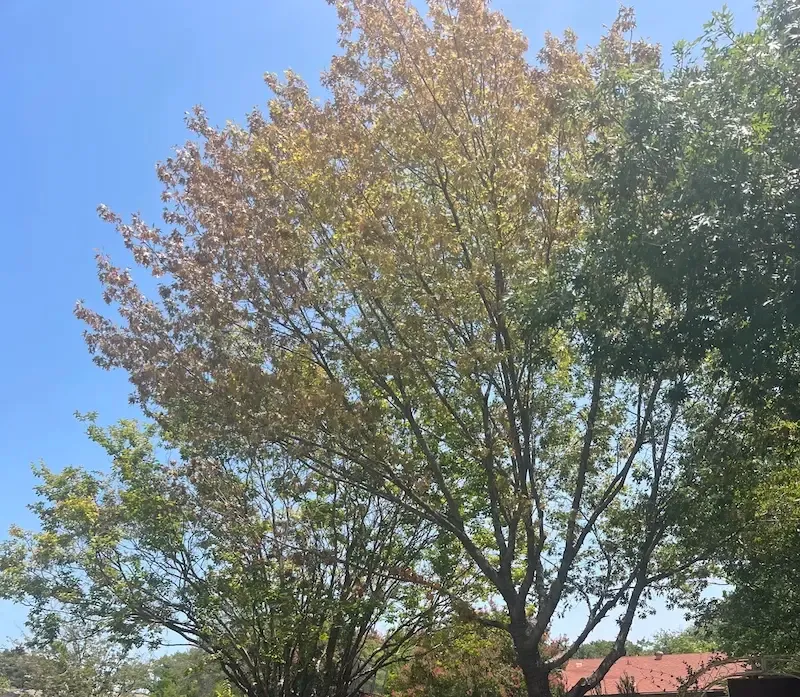
Even when beetle-borne oak-wilt transmission risk is lower in July and August, the Texas summer itself has a way of punishing trees that get worked on unnecessarily.
These are two separate problems, and mixing them up leads to bad decisions in both directions.
Texas Oak Wilt management guidance describes summer pruning as stressful to the tree even when disease transmission risk is reduced, and the reasoning is straightforward.
An oak’s leaves are its food factory.
Remove a large portion of the living canopy during triple-digit heat and the tree has less capacity to produce the energy it needs to handle drought, push water to the crown, and fight off opportunistic pathogens that move in when a tree is already struggling.
The practical guidance from Texas A&M AgriLife Extension tree pruning guidance uses about one-quarter of the living crown as a general upper limit for any single pruning session, and that ceiling exists for good reason even in the best conditions.
In August, with soils cracked and temperatures sitting above 100 degrees, removing even a modest amount of healthy canopy adds a burden the tree did not need.
Cosmetic shaping, heavy thinning to let in more light, topping, and large live-branch reductions are all jobs that belong in late fall or winter.
The oak is not going to look better for having them done in a heat wave, and it may look considerably worse by September.
Postponing that kind of work is not inaction.
It is the right call for the tree and for your shade.
Storm Damage Overrides the Schedule
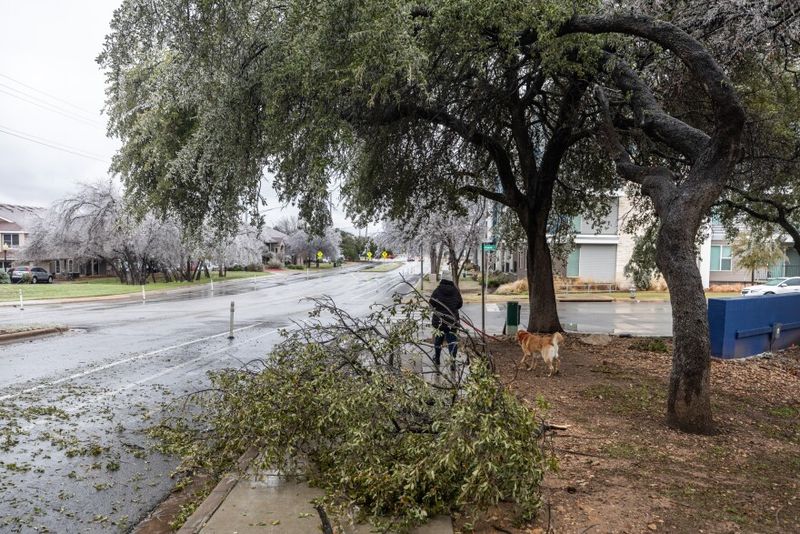
A Hill Country thunderstorm can drop a major limb on your roof in about thirty seconds flat, and when that happens, the pruning calendar becomes irrelevant.
Safety exceptions are not a loophole in the guidance.
They are an explicit and recognized part of it.
Texas Oak Wilt pruning prevention guidelines make clear that branches threatening people, structures, vehicles, or utility lines should be addressed regardless of the time of year.
Leaving a cracked limb hanging over a bedroom window because it is June is not a reasonable trade-off.
Remove the hazard, then manage the wound correctly.
The key discipline is limiting yourself to only the cuts the situation actually requires.
Storm cleanup is not an invitation to do the shaping work you have been putting off.
Cut what is broken, what is hanging, and what poses a direct risk.
Leave the rest alone.
Once the cut is made, cover the fresh wound promptly with a wound paint or dressing.
Texas Oak Wilt management guidance says any latex, oil-based, spray-on, or brush-on product can be used for this purpose, and recommends applying it immediately to any unavoidable wound regardless of season.
That said, the protection is uncertain.
A review published by the U.S.
Forest Service found that wound painting reduced infection in a Texas study but the reduction was not statistically significant, meaning paint may reduce exposure without reliably preventing disease.
Paint is one layer of protection, not a guarantee.
It does not cure an infection already moving through roots, and it does not fix a poor cut.
Use it promptly, but do not let it replace good judgment about when and how to prune.
Timing and Technique Work Together
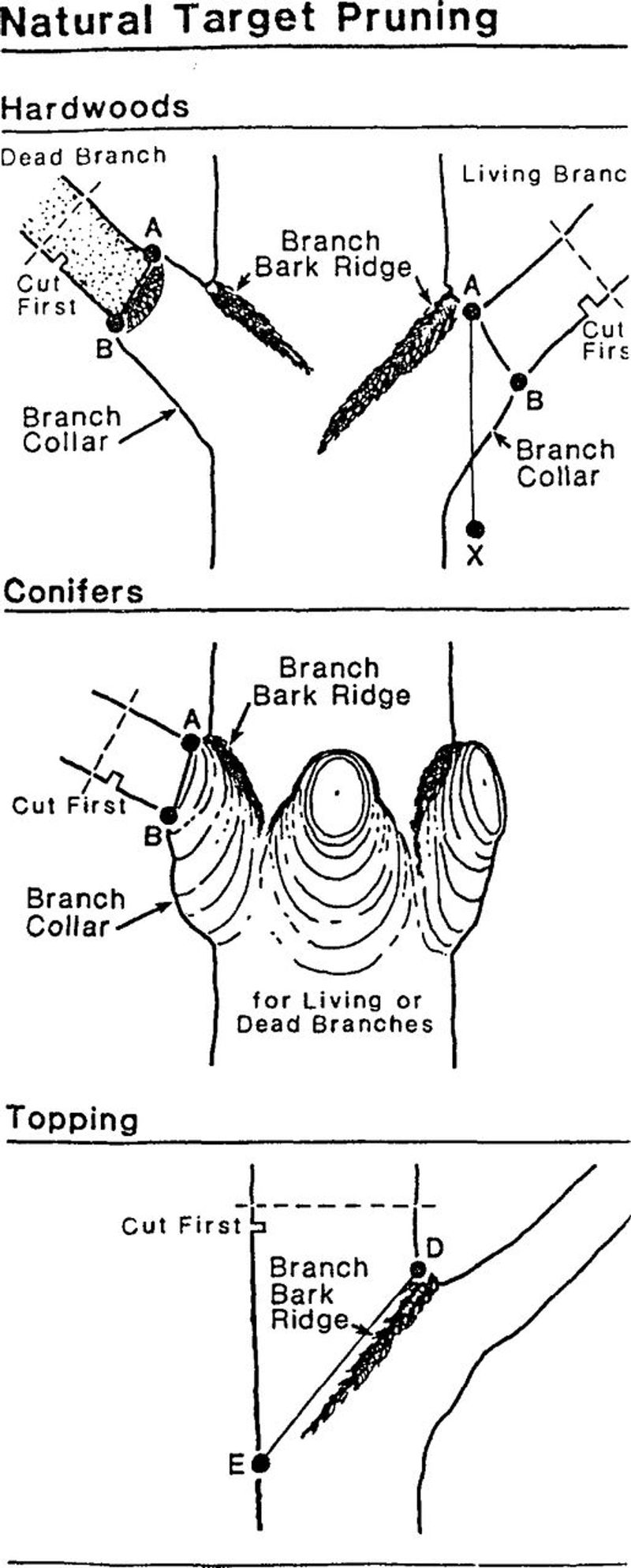
Getting the timing right matters, and so does where exactly you put the blade.
These two things work together, and neglecting one while focusing only on the other still leaves the tree worse off than it needs to be.
The branch collar is the swollen area where a branch connects to the trunk or to a larger limb.
OSU Extension guidance on ornamental trees explains that the correct cut goes just outside this collar, preserving the specialized tissue the tree uses to seal the wound.
A flush cut removes that tissue entirely, exposes a larger wound surface, and leaves the trunk more vulnerable to heat injury, decay, cankers, and the kind of weak sprouting that creates new problems down the road.
Topping is a related mistake that shows up often in Texas neighborhoods after a hot summer when a tree looks crowded or overgrown.
Removing the central leader or cutting major branches back to stubs does not make the tree healthier or more manageable.
It stresses the tree, triggers a flush of weak regrowth, and leaves large unprotected wounds.
Texas A&M AgriLife Extension pruning guidance uses about one-quarter of the living crown as a reasonable upper limit for a single session, and that limit applies even to well-timed winter work.
Tool sanitation between trees is worth doing as a habit because it can reduce the spread of other tree pathogens.
Texas Oak Wilt FAQ guidance notes that tool transmission of oak wilt itself is considered unlikely, so do not overstate that risk.
And never spray alcohol onto a hot or running chainsaw.
For any work near power lines, on large limbs, or in situations that require climbing, hire a qualified arborist.
The ANSI Z133-2026 safety standard governs arboricultural operations in the United States, and a certified professional working under those standards is the right call when the job has real physical risk.
Browning Alone Does Not Confirm Oak Wilt
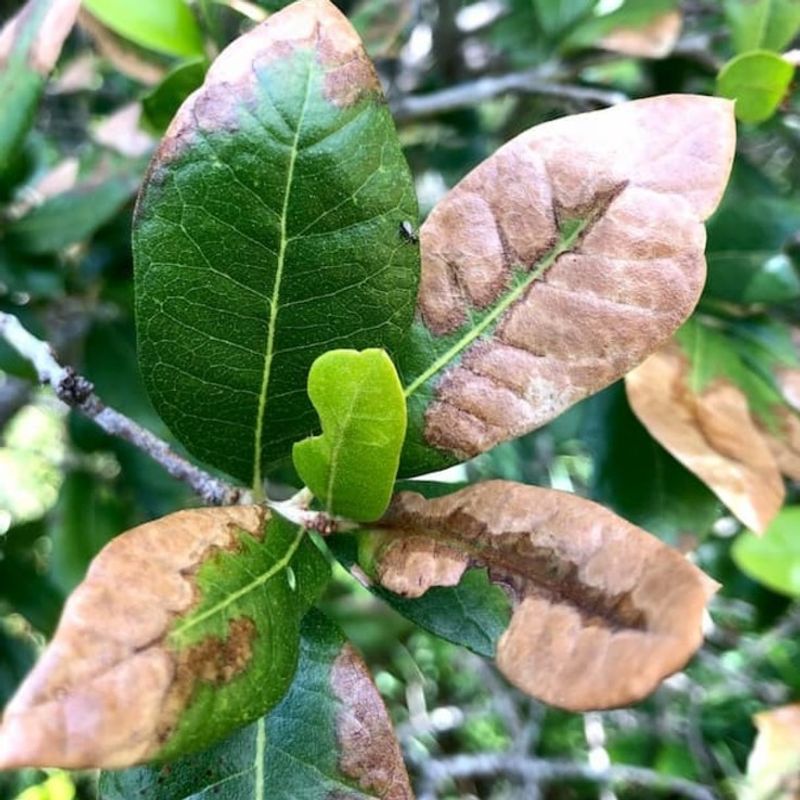
Every August, Texas homeowners notice their oaks looking rough and reach the same conclusion: oak wilt.
Sometimes they are right.
Often they are not, and acting on a wrong diagnosis can lead to removing trees that did not need to go, or missing a problem that actually needed professional attention.
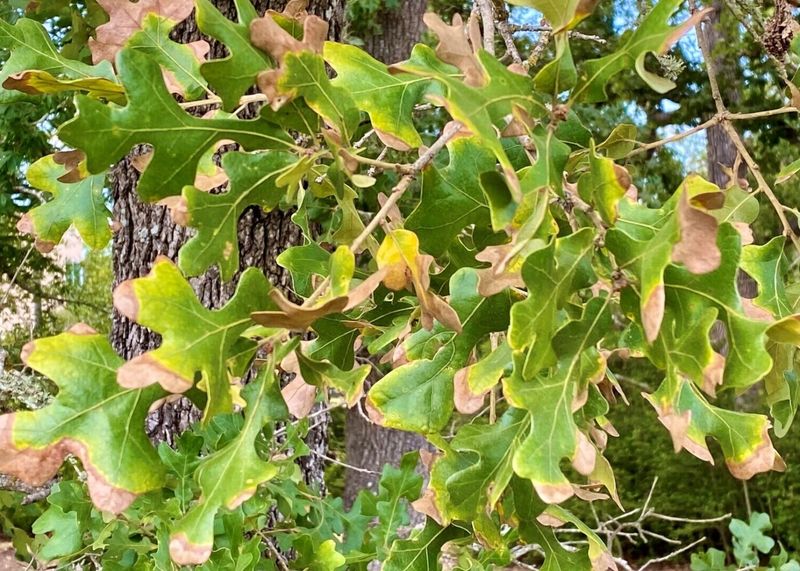
Drought stress, heat injury, hail damage from a spring storm, late-season freeze damage from the previous winter, root disturbance from construction, insects, and fungal diseases like hypoxylon canker can all produce browning, sparse growth, and early leaf drop.
Texas A&M AgriLife Extension notes on oak decline point out that live-oak decline often involves a combination of drought, environmental stress, disease, and insects rather than a single cause.
A brown canopy in August is not a diagnosis.
Oak wilt does have specific warning signs.
On live oaks, the strongest visual clue is veinal necrosis, where leaf veins turn yellow and then brown while the surrounding leaf tissue may remain green at first.
Rapid, widespread defoliation in an otherwise healthy-looking tree is another signal worth taking seriously.
Texas Oak Wilt identification guidance notes that red oaks can die within roughly 4 to 6 weeks after symptoms appear, while live oaks commonly decline over 3 to 6 months, though some survive longer.
Fungal mats, which can smell like fermenting fruit, form beneath the bark of infected red oaks, not live oaks.
Their absence does not rule out the disease.
Oak-wilt spread data shows that infection centers expand an average of about 75 feet per year through root connections, with reported variation from no spread to 150 feet in one direction.
That range matters when you are trying to understand why neighboring trees are declining.
If something looks wrong beyond ordinary summer stress, contact a Texas A&M Forest Service forester, a county Texas A&M AgriLife Extension agent, a Texas Oak Wilt Qualified Arborist, or the Texas Plant Disease Diagnostic Laboratory.
Laboratory confirmation is the only reliable way to know what you are dealing with.
Make the Least Risky Next Move
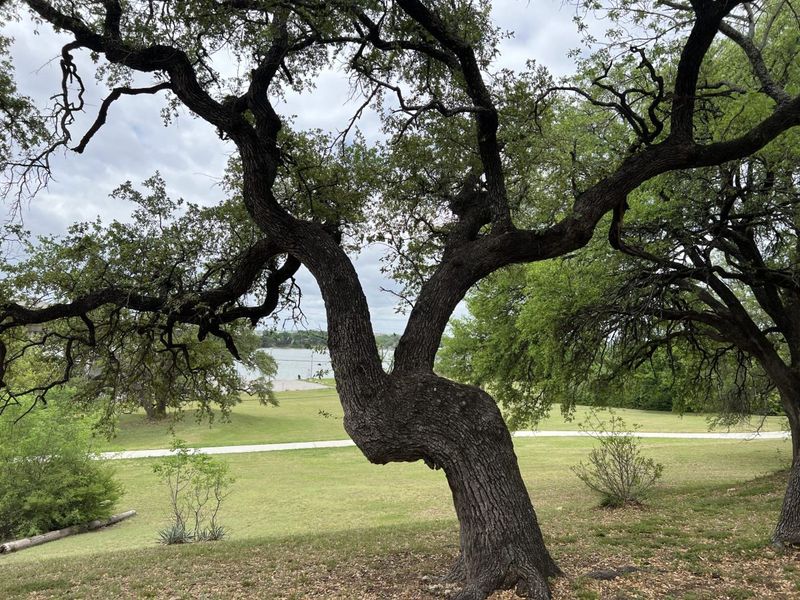
When you are standing in the yard in August trying to decide what to do, the decision tree is actually pretty simple.
Cosmetic work, shaping, thinning, and anything that can wait should wait until November at the earliest, with late fall through January being the target window for routine pruning.
If a branch is creating an immediate hazard, address it.
Make only the cuts needed, place each one just outside the branch collar, and cover every fresh wound with a paint or dressing product right away.
Texas Oak Wilt management guidance recommends prompt painting for any unavoidable wound regardless of season, while acknowledging that the protective effect is uncertain.
Use the paint as one precaution among several, not as a reason to feel covered.
If the tree is looking stressed, water it during dry stretches.
Deep, infrequent watering can help a drought-stressed oak get through the summer.
Texas Oak Wilt FAQ guidance is direct that watering cannot prevent or treat oak wilt.
It supports the tree against drought stress, which is a real and separate problem worth managing on its own terms.
If the canopy looks thin, the leaves are showing unusual patterns, or trees in the area are declining in ways that drought alone does not explain, get a diagnosis before assuming anything.
Texas Oak Wilt identification resources can help you recognize the difference between summer stress and disease, and a qualified professional can tell you what is actually happening in your yard.
The oak that shades your porch has been through Texas summers before.
Give it the right kind of help, and mostly just give it room.