
Sunshine Mimosa: The Florida-Friendly Ground Cover That Limits What Your HOA Can Do About Your Front Lawn
Follow us on Google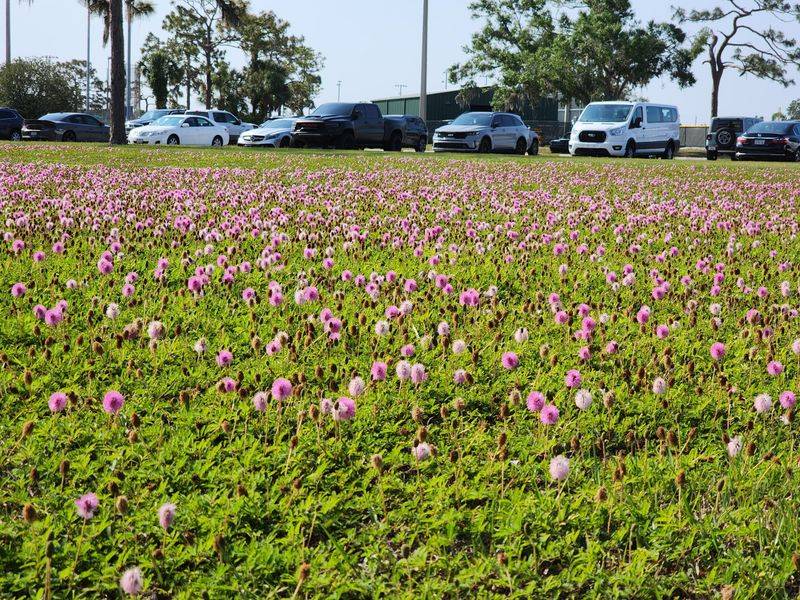
Mowing a Florida front lawn in July heat is a chore most homeowners would happily give up.
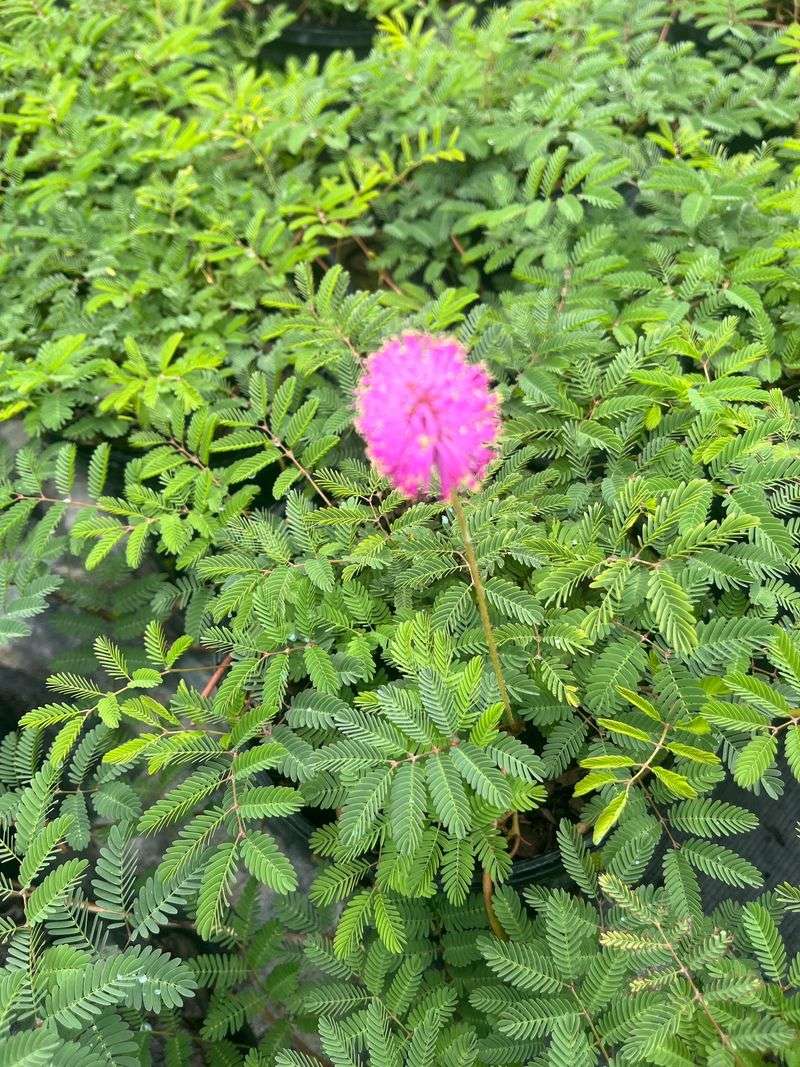
Sunshine mimosa, a low-growing native ground cover with pink powderpuff flowers, has become a real alternative for homeowners who want something softer and easier than turf.
Florida law actually limits what an HOA can do when a landscape genuinely qualifies as Florida-Friendly, though the protection is more precise than the rumors suggest.
Understanding exactly what the plant can do and what the law does and does not cover is the difference between a successful front yard and a fine notice.
Sunshine Mimosa Offers a Low Lawn Alternative
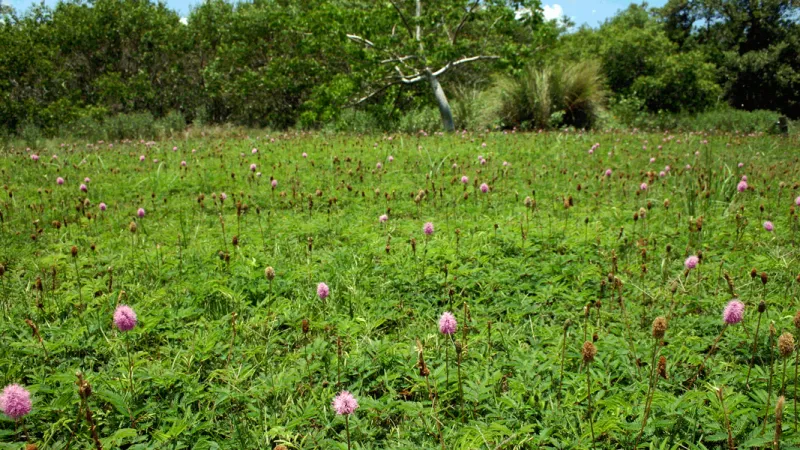
Sunshine mimosa, known botanically as Mimosa strigillosa and sometimes called powderpuff, grows close enough to the ground that many Florida homeowners mistake it for a fancy turf at first glance.
UF/IFAS Extension research on common lawn plants describes it as a low-growing perennial with foliage reaching about 3 inches tall and pink flowers that can rise to roughly 6 inches during its bloom window from spring into summer.
The Florida Native Plant Society and UF/IFAS both present it as a plant that can replace or blend with turf in the right setting, which is why it keeps appearing in conversations about Florida-Friendly front yards.
The plant spreads by creeping stems that root at the nodes, slowly filling in open soil without needing to be reseeded each season.
It handles full sun well and tolerates light shade, which matters on a front yard where a live oak or sabal palm might cast a partial shadow across part of the lawn.
After it establishes, it can manage dry conditions that would stress a St. Augustine lawn, making it genuinely attractive during Florida’s winter dry spells.
That said, sunshine mimosa is a designed ground cover, not a maintenance-free carpet.
It does not tolerate heavy foot traffic, so a path from the driveway to the front door needs an actual surface, not just mimosa.
The plant may look sparse or go partially dormant in late fall and winter, especially in North Florida, and it still needs weed control, occasional trimming, and management to stay tidy.
The Florida Native Plant Society’s profile for Mimosa strigillosa is a practical starting point for understanding what the plant actually delivers before you pull up the first square foot of grass.
Florida-Friendly Protection Does Not Mean HOA Immunity
Here is where a lot of homeowners get tripped up.
Florida law does limit what an HOA can do, but the protection is narrower than most people assume from reading a social media post about it.
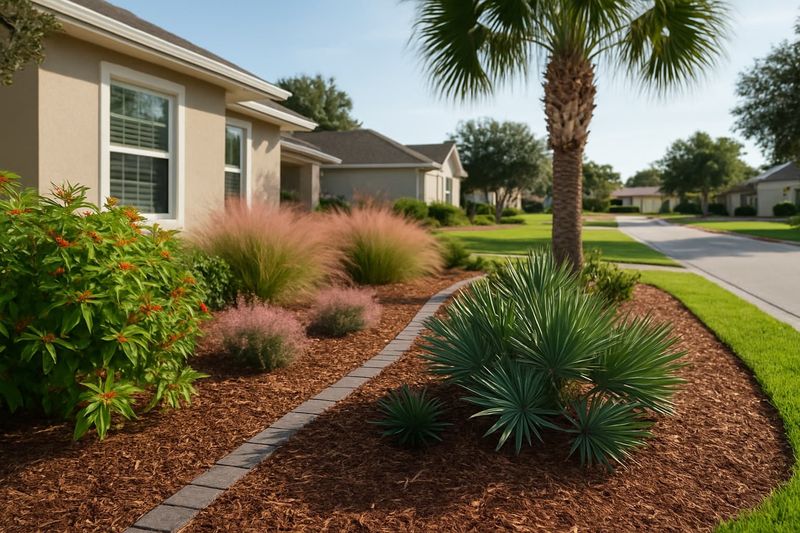
Section 720.3075(4)(b) of the Florida Statutes says that HOA documents may not prohibit, or be enforced to prohibit, Florida-Friendly landscaping.
That is a real and meaningful limit on HOA authority.
The definition of Florida-Friendly landscaping comes from a separate statute.
Section 373.185 describes it as a set of practices built around water conservation, right-plant-right-place selection, efficient irrigation, appropriate fertilization, mulching, wildlife value, pest management, and runoff reduction.
The protection attaches to a landscape that genuinely follows those principles, not automatically to any native plant or to sunshine mimosa simply because it has a Florida origin.
That distinction matters more than most homeowners realize.
An HOA may still review a proposed landscape change for appearance, drainage, maintenance, visibility, and compliance with its own approval process.
UF/IFAS guidance on the 2009 Florida-Friendly landscaping legislation states clearly that the law did not eliminate HOA review procedures.
A board may also identify specific plant, turf, or mulch options when those choices genuinely fit the site and the right-plant-right-place principle.
Going in with the assumption that the statute gives you blanket permission to plant whatever you like, wherever you like, without submitting anything for review, is the kind of thinking that leads to a violation notice and an expensive dispute.
Match the Plant to the Front-Yard Site
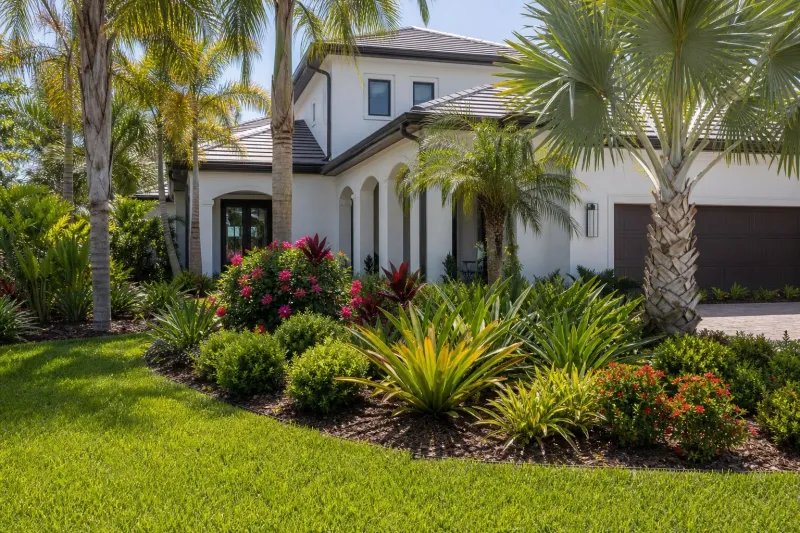
Before you buy a single plant, walk your front yard at different times of day and be honest about what you see.
Sunshine mimosa performs best in full sun or light shade, and it needs soil that drains well after Florida’s sudden afternoon downpours.
UF/IFAS Extension lists its moisture tolerance as moist to very dry after establishment, but that range does not include waterlogged conditions or low pockets that stay wet for days after a storm.
Sandy or loamy soil that moves water through quickly is a better match than a compacted clay area or a spot where water pools near a downspout.
Reflected heat from a concrete driveway or a south-facing wall can stress young plants before their roots spread.
Severe drought, compacted soil, and standing water are each capable of undermining a planting that looked promising on paper.
Regional variation is real and worth taking seriously.
The Florida Native Plant Society and UF/IFAS both list sunshine mimosa for hardiness zones 8A through 11, which covers most of Florida, but the Panhandle can see harder freezes than Central or South Florida.
In North Florida, the plant may go dormant or look noticeably thin in late fall and winter.
Coastal placement adds another layer of caution.
The sources are not perfectly aligned on salt tolerance, so the safe approach is to avoid sites with direct salt spray or regularly flooded conditions on exposed Atlantic Coast, Gulf Coast, and Keys properties.
The UF/IFAS Florida-Friendly plant guide reinforces the right-plant-right-place principle that the statute itself depends on, so evaluating your specific soil depth, drainage, light, and exposure is not just good gardening, it is also part of building a legally defensible design.
Establish Dense Coverage Before Weeds Take Over
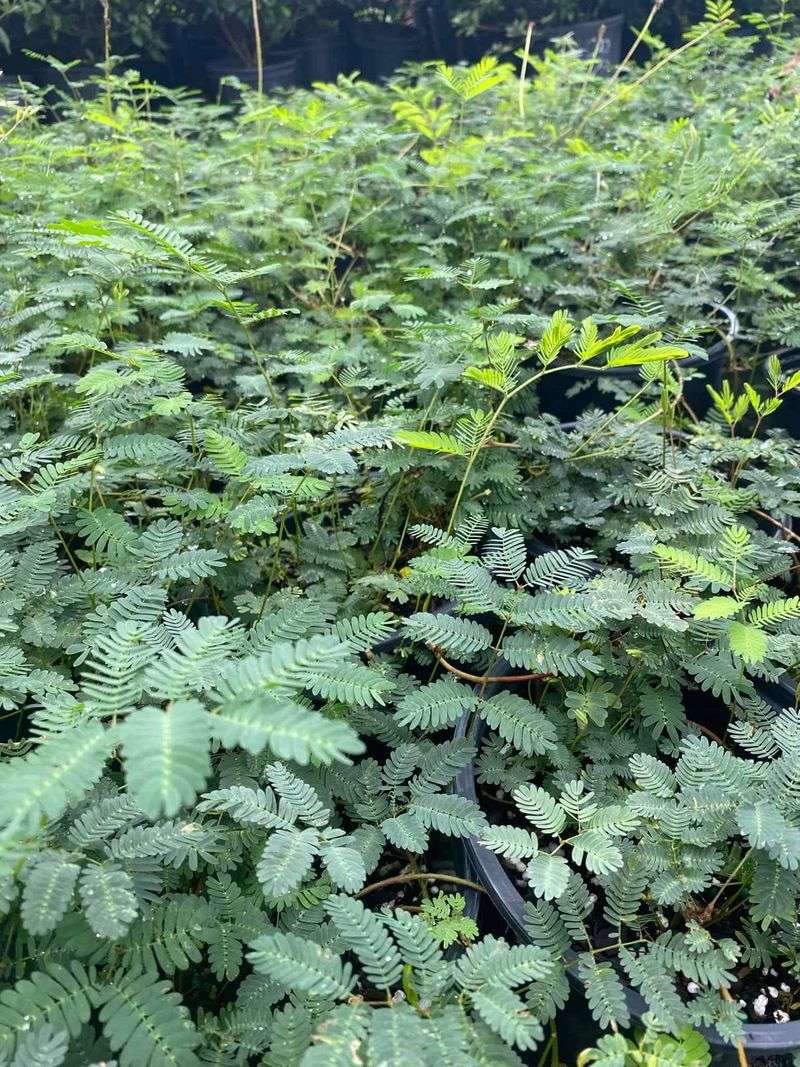
Weeds move faster than ground covers, and a patchy installation gives them every opening they need.
Starting with the right spacing and enough plants per square foot is the single best way to avoid a front yard that looks abandoned three months after you removed the turf.
For potted plants, a practical spacing of 2 to 3 feet apart works well, with Florida Native Plant Society guidance on sunshine mimosa suggesting a broader range of 2 to 4 feet depending on how quickly you want coverage.
Four or five 1-gallon plants can cover roughly 200 to 300 square feet under favorable conditions, so map out your square footage before you shop.
Wider spacing costs less upfront but leaves more bare soil exposed during establishment, which is exactly where weeds will settle in.
Tighter spacing fills in faster and reduces the weed pressure you have to manage by hand or with a shallow cultivation pass.
Starting in summer, when the plant grows fastest, gives you the best establishment window, though potted plants can go in at other times of year if you are prepared to water consistently.
If you want to start from seed, lightly scarify the seed before sowing it about one-quarter inch deep.
Plan to irrigate the seeded area for 2 to 4 weeks if rainfall does not cooperate.
New plantings need evenly moist soil without saturation, and then you reduce irrigation as roots spread and the plants become self-sufficient.
UF/IFAS guidance on Florida-Friendly landscape steps and UF/IFAS irrigation management research both support calibrating your irrigation to apply about one-half to three-quarters of an inch per event rather than running short, frequent cycles.
Local water-management restrictions apply regardless of what your plants need, so check your district’s rules before you set a schedule.
Design Edges and Paths Into the Planting
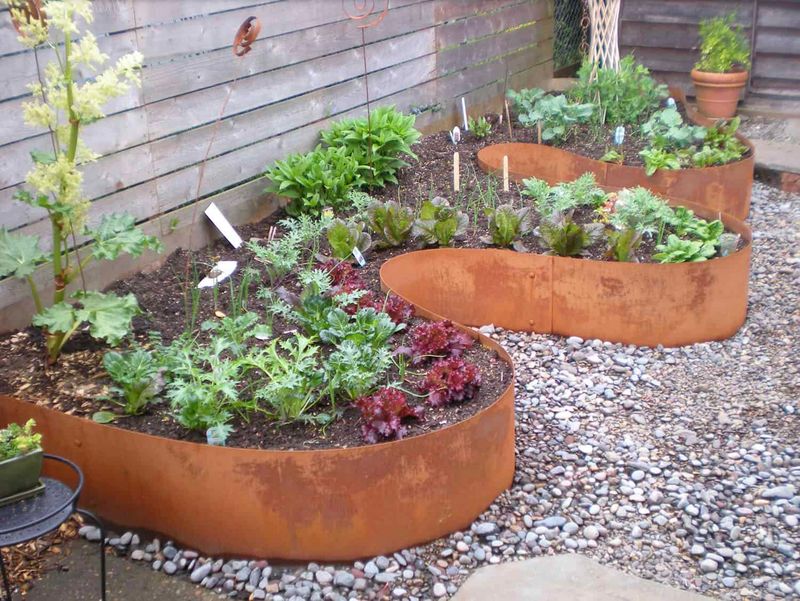
Sunshine mimosa spreads by creeping stems that root wherever they touch the soil, which is exactly what makes it good at covering ground and exactly what makes containment a real consideration.
Without a physical edge or regular runner trimming, it will cross into adjacent beds, push toward a neighbor’s yard, or creep onto the sidewalk.
Installing a clean border, whether a metal landscape edge, a concrete mow strip, or a defined mulch line, does two things at once: it keeps the plant where you want it and it signals to any HOA reviewer that the planting is managed, not abandoned.
Trim runners several times during the growing season when containment matters.
Mowing is an option for keeping the planting tidy, but UF/IFAS notes that mowing removes the flowers, so you are trading the pink blooms for a neater look.
That is a reasonable trade if your HOA’s architectural guidelines emphasize a uniform appearance.
The foot-traffic problem needs a real solution, not optimism.
A defined path of stepping stones, pavers, or compacted gravel from the driveway to the front door keeps the mimosa intact and gives the planting a finished look.
UF/IFAS Florida-Friendly landscape guidance and related irrigation management resources both support using mulch around new plantings, with about 2 to 3 inches of mulch recommended in landscape beds.
Keep the mulch away from plant crowns and runners, and away from the foundation of the house.
UF/IFAS mulching guidance reinforces that a properly mulched bed holds moisture, reduces weed pressure, and looks intentional, which is exactly the impression you want a review board to have when they look at your submission.
Build an HOA Application Around Site Evidence
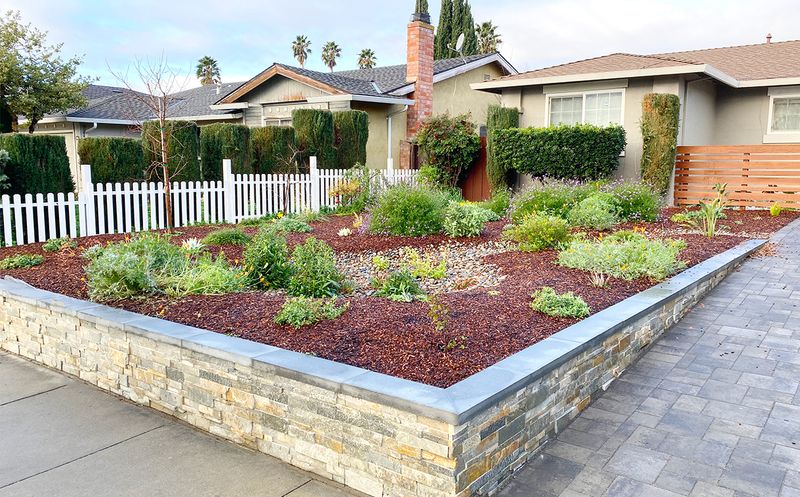
Reading your HOA’s declaration and architectural guidelines before you pull up a single square foot of turf is the move that separates homeowners who get approval from homeowners who get fined.
The declaration tells you whether landscape changes require prior written approval and what the review board is authorized to evaluate.
Architectural guidelines often go further, specifying setbacks, edge treatments, maintenance expectations, and sometimes even acceptable plant lists.
Getting those documents in hand before you design anything means you can shape the plan around the actual requirements rather than argue about them later.
Document the site conditions that support your plant selection.
Photographs showing the sunlight pattern across the yard at different times of day, a simple drainage observation after a rain event, a soil description, and a note on any existing irrigation zones all become evidence that your design follows the right-plant-right-place principle that the Florida-Friendly definition requires.
UF/IFAS guidance on Florida-Friendly landscaping and HOA law confirms that the board may still review spacing, edging, drainage, maintenance, and appearance, and may offer alternative plant or mulch options when those choices fit the site.
Submit a landscape plan that includes the plant name and botanical name, spacing, edging or containment method, path treatment for foot-traffic areas, irrigation approach, and a brief maintenance description.
The Florida-Friendly landscape guidance model for covenants and restrictions assumes that homeowners submit design changes for approval, and that the review process is the normal path.
Keep written records of every submission, every response, every requested revision, and every approval or denial.
Cooperation and documentation do not weaken your position under section 720.3075, they strengthen it.
Treat a Dispute as a Financial Risk
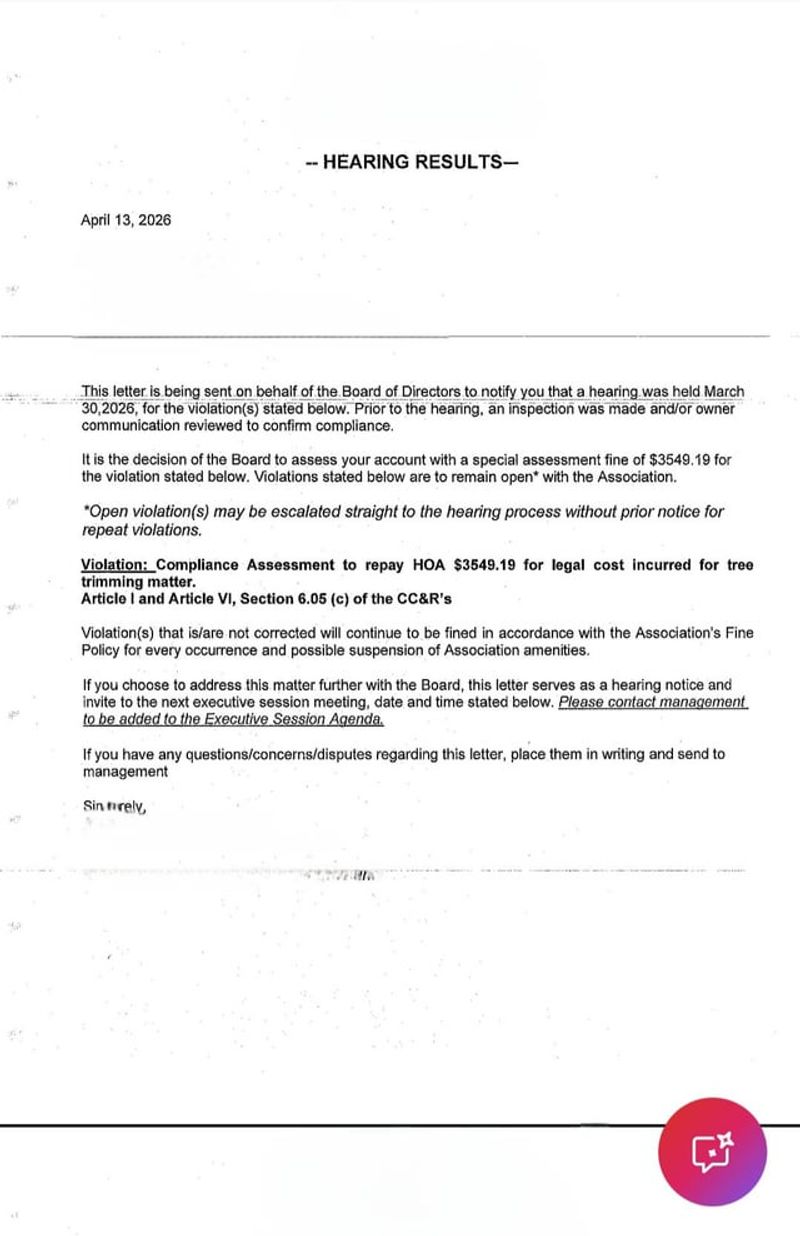
An August 27, 2025 decision from Florida’s Fourth District Court of Appeal is worth understanding before you assume the statute gives you a clear path to plant whatever you want.
The case involved homeowners who replaced much of their front lawn with mulch and more than 135 plants, which the association said violated their declaration.
The court affirmed an injunction and an attorney-fee award against the homeowners.
The decision did not determine whether sunshine mimosa or all Florida-Friendly landscapes receive statutory protection, but it does show clearly what can happen when a homeowner proceeds without resolving the covenant and approval questions first.
Attorney fees in HOA litigation can reach amounts that dwarf the cost of the plants, the sod, and any fine combined.
The statute limits HOA authority, but it does not eliminate the association’s right to enforce its declaration through its review process, and it does not automatically protect a design that has not been submitted, reviewed, or shown to qualify as Florida-Friendly under the actual definition.
A Florida Bar analysis of the Florida-Friendly landscaping statute describes the legal question as genuinely ambiguous in some situations, and notes that no specific plant is expressly protected by name in the statute.
If you receive a violation notice, preserve every document you have, including the notice itself, photographs, your original submission, and any written responses from the association.
Request the specific covenant language the board is relying on.
Use the association’s own review or dispute process before escalating.
UF/IFAS is clear that it can provide technical and educational guidance but cannot determine your legal rights or resolve an HOA dispute.
When penalties, liens, or court action become a real possibility, consult a Florida attorney who handles HOA matters.
Use Sunshine Mimosa as One Part of a Florida-Friendly Plan
Sunshine mimosa works best as one component of a thought-out front-yard design rather than a single plant dropped in to replace turf everywhere.
Pair it with defined paths for foot traffic, clearly edged planting zones, appropriate mulch depth, and an irrigation approach that supports establishment without overwatering.
The UF/IFAS Florida-Friendly green stormwater infrastructure plant guide reinforces that right-plant-right-place selection means matching each species to its actual site conditions, which is the same principle the statute’s definition relies on.
The plant does carry genuine wildlife value.
UF/IFAS identifies sunshine mimosa as a nectar and pollen source and as a larval host for the little sulfur butterfly.
That is a real contribution to a habitat planting, but a front yard that supports monarch migration, zebra longwings, or gulf fritillaries needs additional nectar plants and the specific larval food plants those butterflies require.
UF/IFAS community butterflyscaping guidance describes the broader mix of plants needed to support a functioning butterfly habitat, and sunshine mimosa is one piece of that picture, not the whole thing.
Account for winter honestly when you plan.
In North Florida and parts of Central Florida, the planting may look sparse or partially dormant for several months, and a neighbor or reviewer who sees it in January might not recognize it as an intentional landscape.
Building in a few evergreen native companions and keeping the edges clean through winter helps the design read as managed year-round.
A documented, maintained, site-appropriate Florida-Friendly plan is what actually gives both the planting and the homeowner the strongest footing, with the HOA and with the law.