
This Pennsylvania Native Fern Fills A Shady Corner Better Than The Hostas You Keep Losing
Follow us on Google
You walk out to the shady corner of your Pennsylvania yard one July morning and find your hostas chewed down to stubs again, slugs glistening on the stems.
It happens every year, and by August the bed looks more like a disaster than a garden.
Ostrich fern, Matteuccia struthiopteris, is a native Pennsylvania plant that can fill that same corner with bold, sweeping fronds and generally far less deer and slug pressure.
The catch is that it works best under specific conditions, and knowing those conditions before you plant is what makes the difference.
Ostrich Fern Fits One Kind of Hosta Problem
Picture a shaded slope at the back of a Pennsylvania yard, the kind of corner where nothing seems to thrive except weeds and wishful thinking.
That is exactly where ostrich fern was built to live.
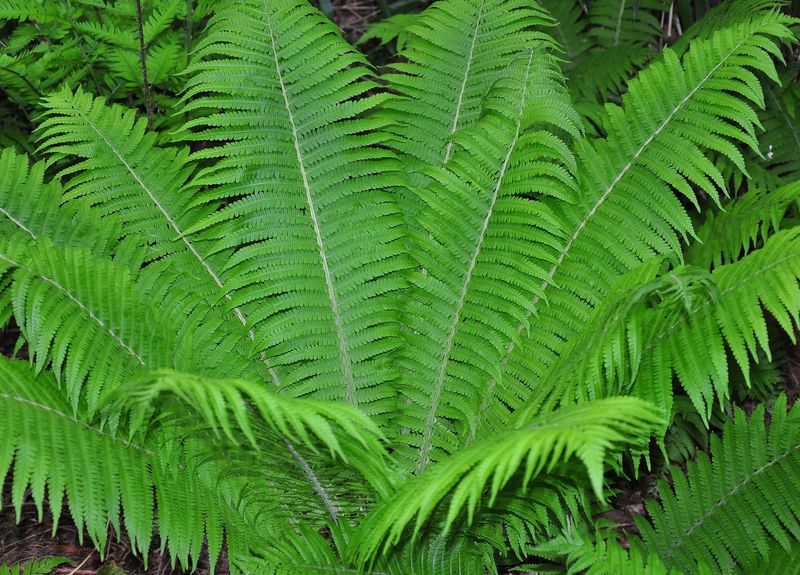
Penn State Extension identifies ostrich fern as native throughout Pennsylvania, easy to establish, generally deer-resistant, and capable of forming thick, spreading colonies through underground stems called rhizomes.
The fronds are genuinely impressive.
Mature plants can reach anywhere from 2 to 6 feet tall, and a single clump can spread 2 to 3 feet wide.
The shape is that classic vase form, wide at the top, narrowing at the base, the kind of silhouette that makes a shady corner feel designed instead of forgotten.
But the headline needs a qualifier before you get too excited.
Ostrich fern can outperform hostas in a large, cool, consistently moist shady site where broad coverage and reduced deer or slug pressure are the main goals.
That is a specific set of conditions, not a universal trade.
If your shady corner dries out every August, or if you have a tidy little foundation bed with a mix of delicate woodland plants, this is not automatically the better choice.
The promise here is real, just narrower than the headline suggests.
Give ostrich fern the right corner, and it will fill it more completely than most hostas ever could, spreading on its own terms, season after season, with less of the heartbreak that deer leave behind.
Deer And Slugs Give Hostas Trouble
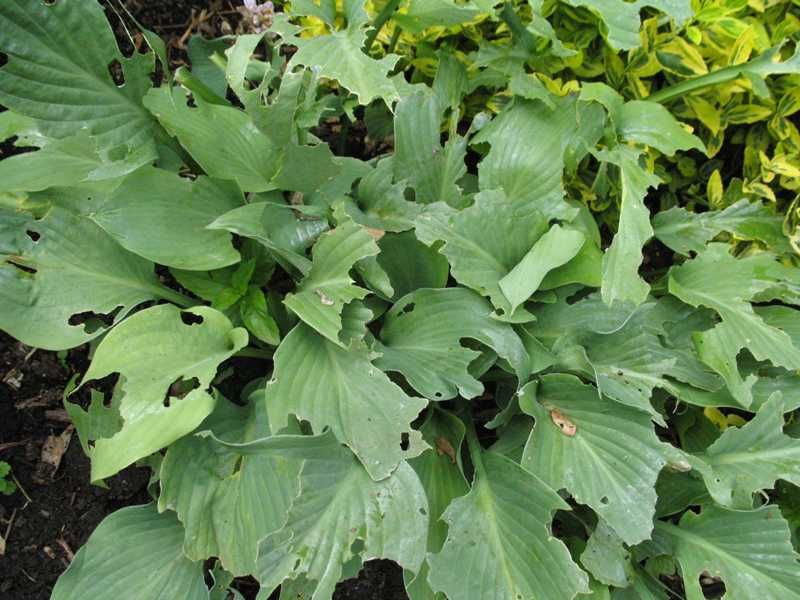
Many Pennsylvania gardeners know the feeling of planting a fresh flat of hostas in spring, watching them fill out beautifully through June, and then finding them stripped or riddled with holes by mid-July.
The culprits are usually deer or slugs, sometimes both working the same bed on the same night.
University of Minnesota Extension notes that deer commonly damage hostas and that slugs treat them as a preferred food source.
Slugs tend to feed at night, leaving ragged holes in the leaves that can make a full, healthy hosta look tattered within a week of wet weather.
Deer can clear a whole planting in one visit, and they often return to the same spot once they know food is available.
Slug populations spike in cool, wet conditions, which Pennsylvania’s humid summers and frequent thunderstorms provide reliably.
The Susquehanna Valley and the central valleys can see stretches of warm, damp nights that are nearly perfect slug weather.
Add deer pressure from nearby woodlots, and hostas in those settings can feel like a losing battle.
Ostrich fern is generally less attractive to both.
Penn State describes it as deer-resistant, and its texture and growth habit make it a less appealing target for slugs than the broad, smooth hosta leaf.
But “less attractive” is not the same as immune.
Penn State Extension notes that hungry deer will browse plants they normally avoid, especially in late winter or during a dry summer when other food runs short.
The fern reduces pressure, it does not eliminate it.
Rhizomes Turn A Few Crowns Into Coverage
Here is where ostrich fern actually earns its reputation.
Most shade plants stay where you put them, clumping up slowly and requiring you to buy more if you want more coverage.
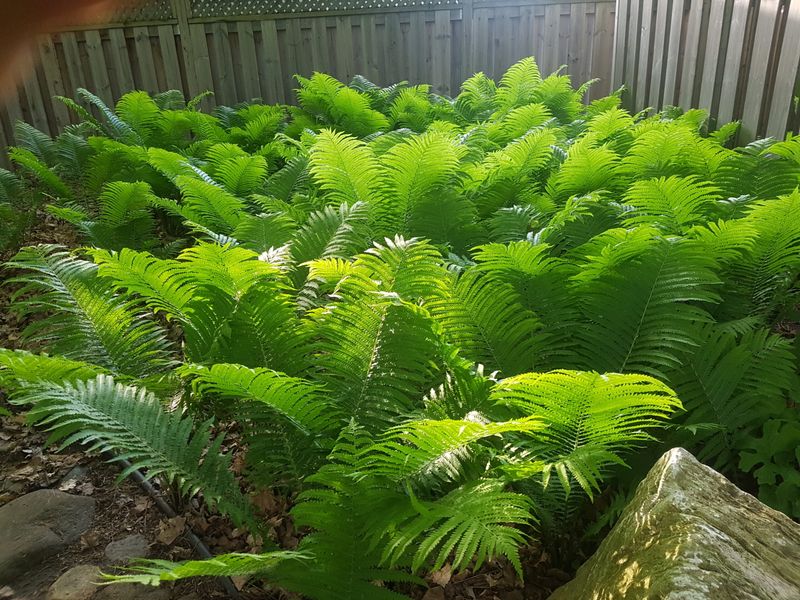
Ostrich fern works differently, it sends out underground stems called rhizomes that push through the soil and send up new crowns a foot or two away from the parent plant.
Penn State Extension describes this rhizomatous spread as the source of the fern’s mass-planting appeal, and it is easy to see why.
A handful of crowns planted in a moist shaded corner can, over several growing seasons, expand outward and fill space that would otherwise require dozens of individual plants purchased and installed all at once.
That is a single backyard account, not a controlled experiment, and your results will depend on your soil, your moisture levels, and how many good growing seasons you get.
But it gives a useful sense of scale for what patient establishment can produce.
The phrase “comes back free” that gardeners often use for this plant means self-expansion after the initial purchase, not instant or cost-free coverage.
You still buy the first crowns, you still water them through their first season, and you still manage the colony once it matures.
Rhizomes do not clock out.
A colony that fills your problem corner in year five can start pushing into the lawn or crowding a neighboring shrub in year seven.
Plan for future division or selective removal, because this plant will keep moving if given the moisture and shade it prefers.
Moisture Decides Whether It Thrives
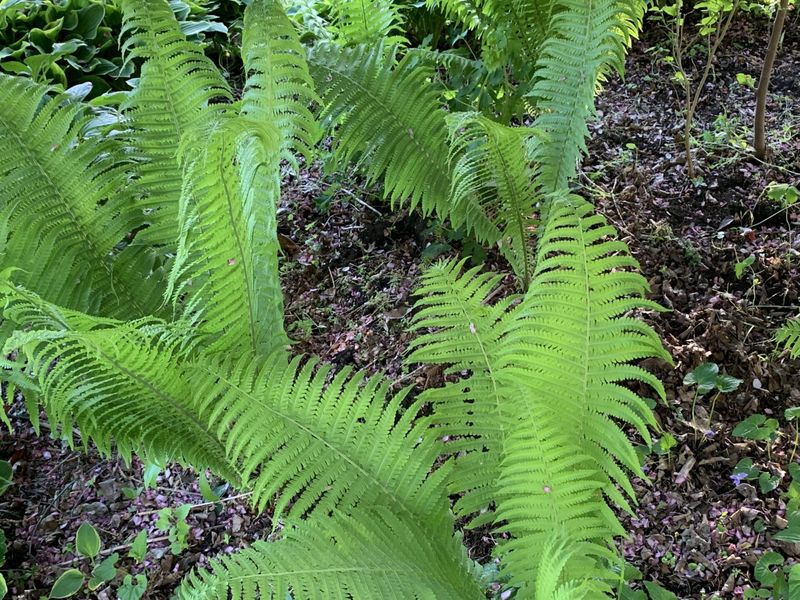
Walk the corner you have in mind on a hot afternoon in late July, after two weeks without meaningful rain.
If the soil there feels dry and powdery an inch below the surface, ostrich fern is going to struggle.
This plant is not a drought-tolerant native that can tough out Pennsylvania’s summer dry spells on willpower alone.
Penn State’s plant guide lists ostrich fern for wet to moist soil conditions, and the best natural sites mirror a cool woodland edge, a streambank, or a shaded slope where moisture collects and holds.
Full, hot afternoon sun is a poor fit unless the soil stays reliably wet.
Penn State Extension specifically notes that deep shade and consistent moisture become especially important in the warmer parts of Pennsylvania.
Gardeners in the northern tier, the Allegheny Plateau, and the Laurel Highlands often find that cooler temperatures and higher rainfall make establishment easier.
In southeastern Pennsylvania and the Delaware Valley, summer heat and the tendency for soil to dry out quickly between thunderstorms mean you need to pay closer attention, particularly in beds near foundations or under roof overhangs that block natural rainfall.
University of Maine Extension recommends planting ostrich fern crowns about 1 foot apart and applying approximately 3 inches of organic mulch to hold moisture and slow weed growth.
That mulch layer genuinely matters during the first summer, when the crowns are still building their root systems and have no canopy overhead to shade the soil.
Plan on about 1 inch of supplemental water per week when rainfall does not provide it, and water more often during the first growing season and during any hot, dry stretch.
Penn State’s fern guidance reinforces that consistent moisture is the single biggest factor in whether a planting thrives or merely survives.
Think of moisture as the non-negotiable entry fee.
Pay it, and the fern rewards you.
Skip it, and even the most promising corner will disappoint.
Give This Fern Room To Roam
A small foundation bed packed with astilbe, bleeding heart, and a few Solomon’s seal is not the right home for ostrich fern.
Penn State Extension describes ostrich fern as strongly competitive and capable of pushing out less vigorous shade plants once its rhizomes get moving.
Put it in a tight mixed bed and you will spend the next few years rescuing everything else from its creeping advance.
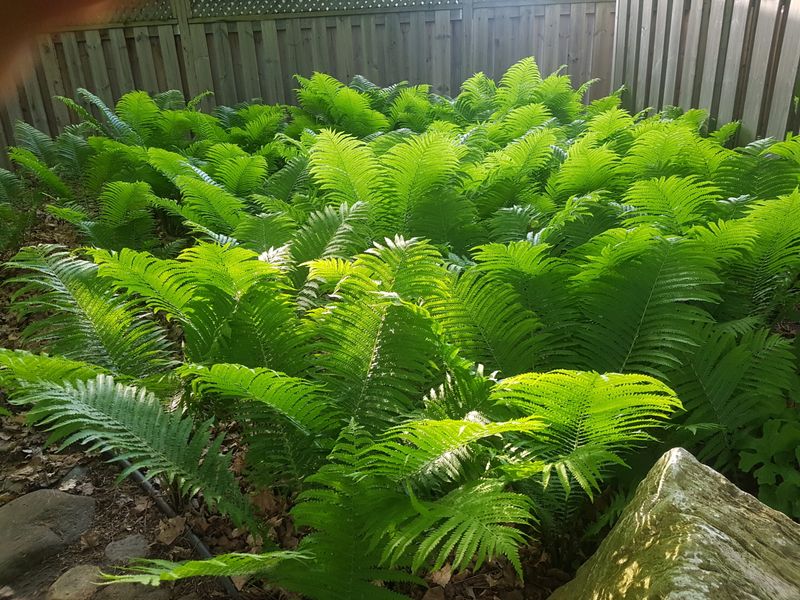
The right sites are generous ones: a long shaded boundary along a fence or property line, the space beneath a canopy of mature oaks or maples, a moist slope that you want covered without mowing, or a contained corner where the fern can expand in two or three directions without reaching anything you want to protect.
Those are the spots where its competitive nature becomes an asset instead of a problem.
University of Maine Extension suggests starting crowns about 12 inches apart for faster coverage of a large area.
Wider spacing, say 18 to 24 inches, slows the initial fill-in but can give you more control over how quickly the colony expands.
This is a design choice, not a fixed rule, and it depends on how soon you want coverage versus how much management you are willing to do later.
Penn State’s perennial care guidance generally recommends 2 to 3 feet between plants that mature above 3 feet tall, but ostrich fern’s rhizomatous habit makes final spacing a site-planning question more than a by-the-book measurement.
The crowns will move regardless of where you set them.
Plan for division from the start.
After three or four years, the colony’s outer edges may reach places you did not intend, and the center can become crowded enough to reduce vigor.
Dig and relocate the extras, share them with a neighbor, or simply remove them.
This plant is not permanently self-managing, it is self-expanding, which is a different thing entirely.
Winter Changes The Deal
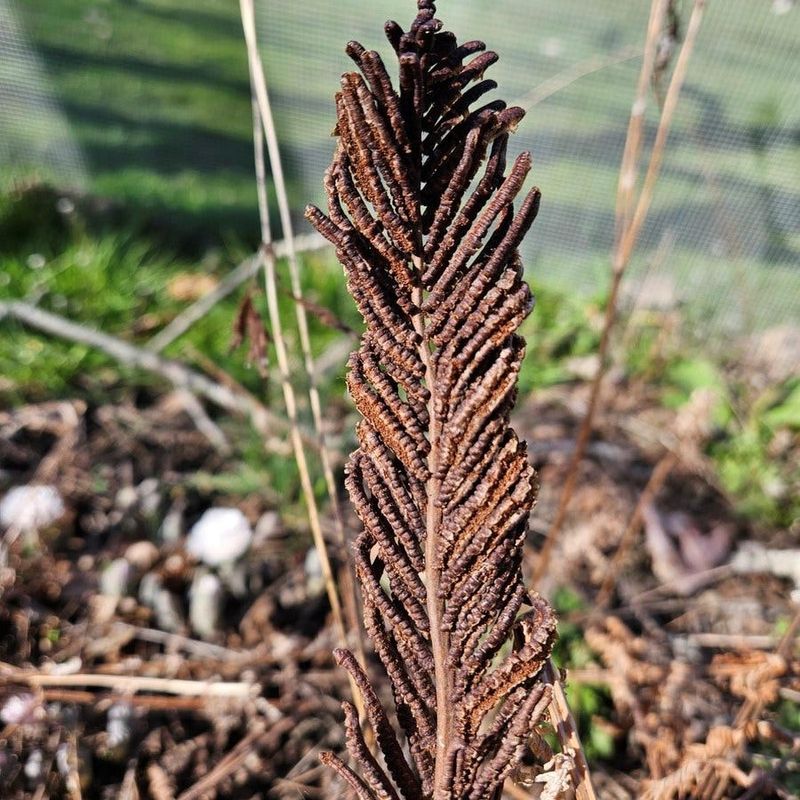
Come October in most of Pennsylvania, the ostrich fern starts its retreat.
The tall green sterile fronds, the ones that gave the corner its lush, full look all summer, begin to yellow and collapse.
By the time a hard frost arrives, they are flat on the ground or gone entirely.
What remains are the shorter, darker, brown fertile fronds that stand through winter like dried seedpods.
Penn State Extension confirms that ostrich fern dies back in fall, with the showy green fronds fading while the brown fertile fronds can persist.
The timing of that dieback varies by site and year, so a warm fall in the Delaware Valley might keep the fronds green a few weeks longer than a site at higher elevation in the northern tier.
That variation is normal, not a sign of a struggling plant.
The corner that looked dramatic from June through September will look bare and brown from November through April.
If that matters to you, and for many Pennsylvania gardeners it does, ostrich fern is not the full answer on its own.
Planting a border of Christmas fern along the edge of an ostrich fern colony can give the bed some winter presence without sacrificing the summer drama.
Think of the seasonal retreat as the fern doing what it was built to do, storing energy underground for a strong return in spring, not failing you in November.
Choose The Fern Only If The Site Agrees
Hostas are not the enemy.
University of Minnesota Extension notes that hostas offer an enormous range of cultivars, foliage colors, flower interest, and reliable clumping forms that suit many shade garden designs.
If you can manage deer with fencing or repellents, and you stay ahead of slugs with iron phosphate bait or early morning hand-picking, hostas remain one of the most dependable shade plants available.
Keep them where they actually work for you.
For dry or rocky shade, ostrich fern is the wrong answer regardless of how shady the spot is.
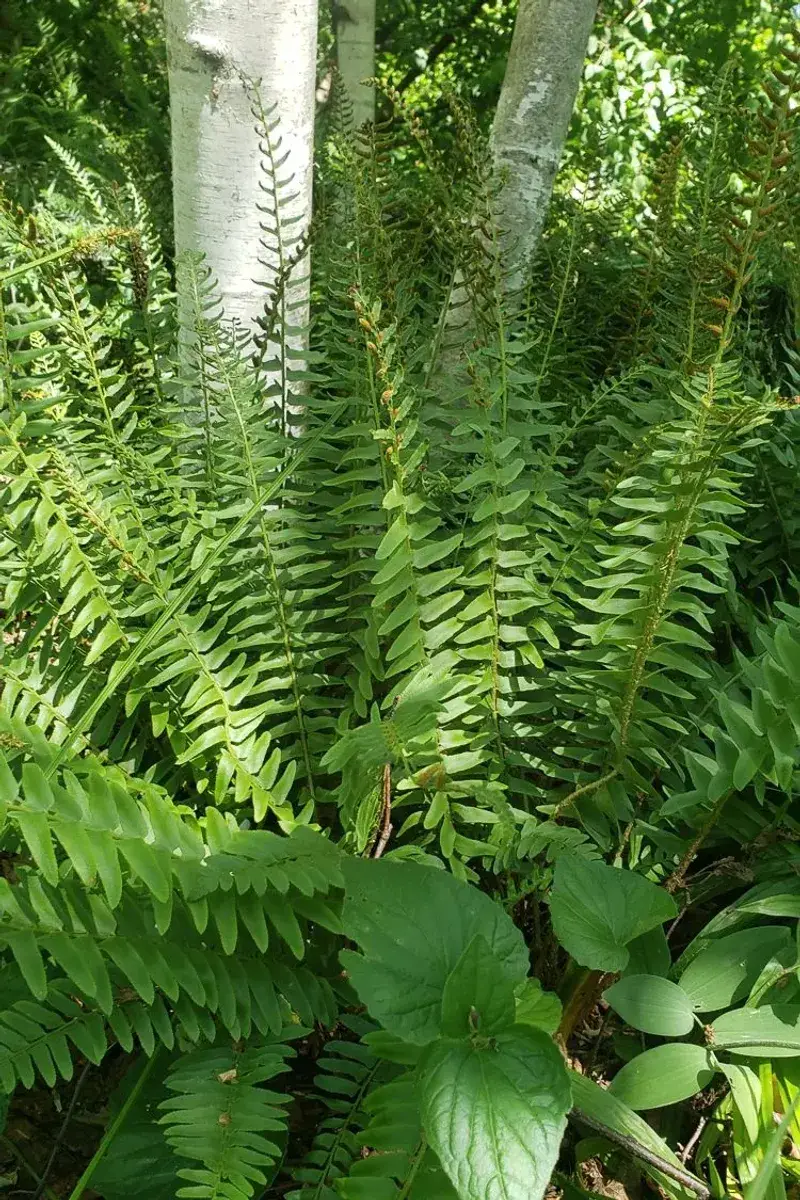
Christmas fern typically reaches 1 to 2 feet tall, spreads slowly by clumping rather than rhizomes, and stays evergreen through Pennsylvania winters.
It will not fill a large corner quickly, but it will survive where ostrich fern would fade and sulk.
Marginal wood fern, Dryopteris marginalis, is another well-behaved native for small or dry shade beds.
It is semi-evergreen, stays compact, and does not push into neighboring plants the way ostrich fern will.
Penn State’s ostrich fern profile makes clear that the plant’s competitive spread is a feature in the right setting and a problem in the wrong one.
Penn State’s evergreen perennial guidance reinforces that winter interest and site moisture are the two questions that separate the right fern from the wrong one for any given Pennsylvania yard.
The simple test: choose ostrich fern when you have a spacious, consistently moist, shaded Pennsylvania site where a spreading colony is welcome and future containment feels manageable.
Choose something else when the site is dry, the bed is small, or the planting design calls for plants that stay where you put them.
The corner will tell you which one it wants, if you spend a July afternoon paying attention to it.