
Why North Carolina Gardeners Should Grow Star Jasmine Where A Fence Feels Too Harsh
Follow us on Google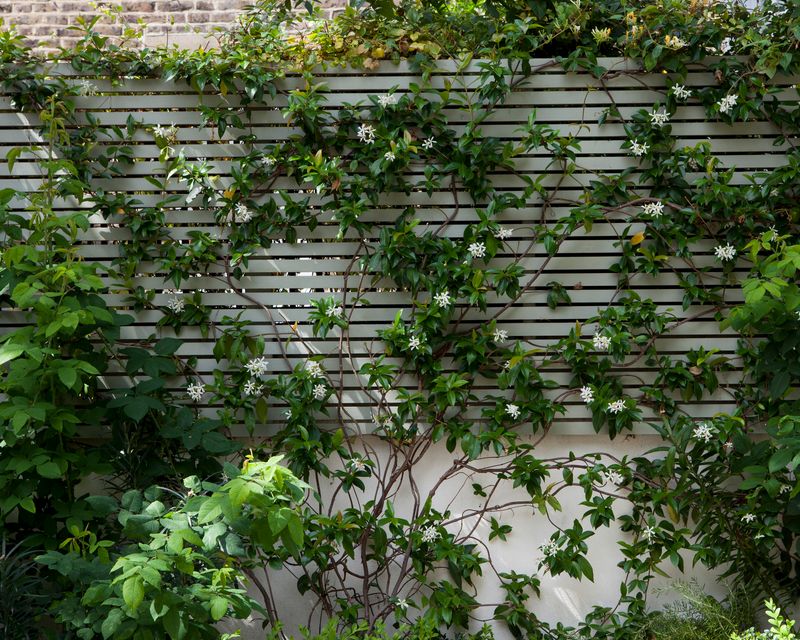
A bare wood fence running across the back of your yard can feel more like a wall than a garden feature, especially on a hot afternoon when the whole yard looks bleached and flat.
Star jasmine, Trachelospermum jasminoides, is a glossy evergreen vine that can change that picture for warmer Coastal Plain and Piedmont homeowners in North Carolina.
It climbs, it screens, and on a still evening near your porch, it fills the air with a sweet, honeyed scent that stops you mid-step.
The catch is that it works best in the right spot, with the right setup, and it takes a season or two to really get going.
Why Star Jasmine Can Soften a Fence
A rigid fence does its job, but it can make a yard feel more like a storage lot than a living space.
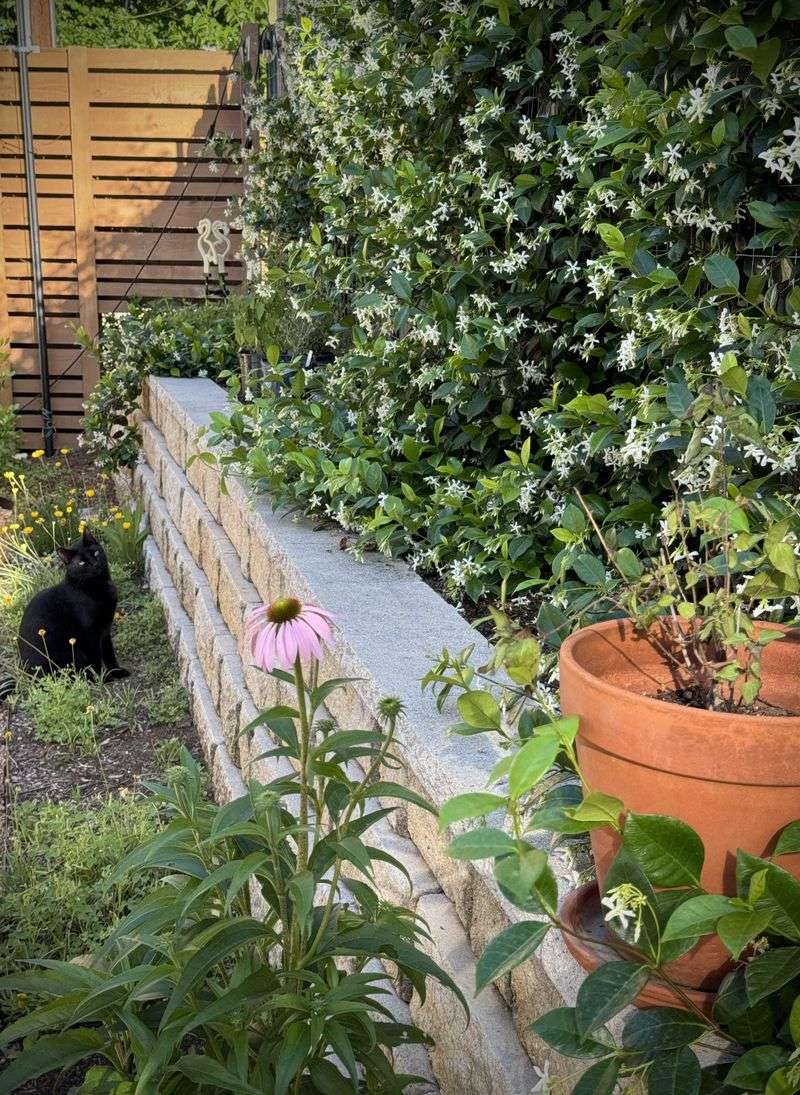
Star jasmine, Trachelospermum jasminoides, can gradually change that impression by weaving glossy dark-green leaves and twining stems across the vertical surface until the hard line starts to disappear into something that looks and feels like a garden.
This is a landscape-design judgment, not a guarantee, and the result depends on your fence, your site, and how much time you give the vine.
The plant is not a true jasmine, despite the common name.
It is an evergreen woody vine native to Japan and China, and NC State Extension recommends it for trellises and fences in North Carolina’s warmer regions, noting that a supported mature vine can reach approximately 20 feet.
That height means a fence section can eventually disappear under a curtain of foliage, though “eventually” is doing real work in that sentence.
The creamy-white, star-shaped flowers arrive mainly in late spring and scatter through early summer, and they carry a fragrance that is genuinely hard to ignore up close.
That last detail matters for placement.
You will not catch the scent from across the yard, so the vine earns its keep when it grows near a porch railing, a gate, a path you walk every evening, or a seating area where you actually spend time.
According to the Royal Horticultural Society’s growing guide for trachelospermum, the plant is best described as a low-maintenance climber suited to warm, sheltered locations, and the RHS specifically recommends placing it where people sit or pass so the fragrance registers.
That advice translates directly to a fence beside a Piedmont deck or a Coastal Plain porch where a family actually gathers.
Check the Climate Before You Plant
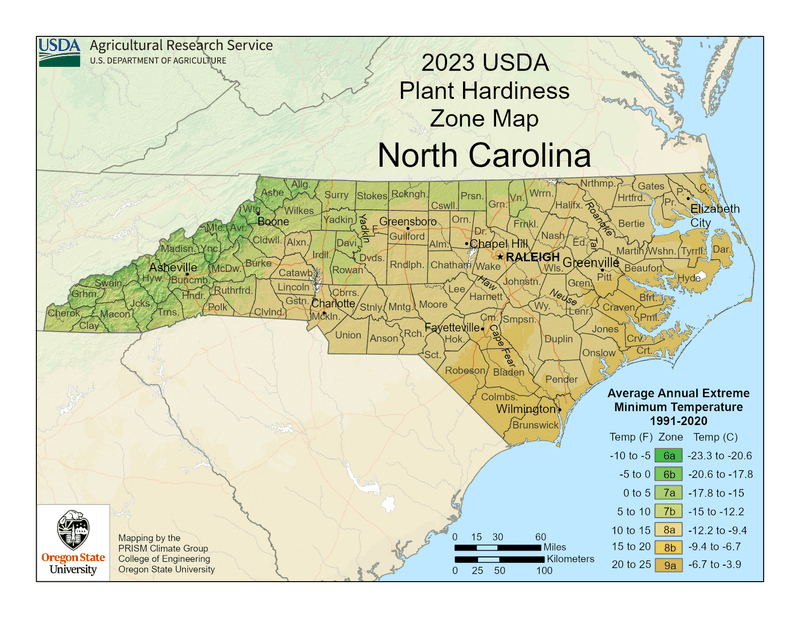
Before you buy a single plant, pull up the USDA hardiness map and type in your ZIP code.
Broad labels like “Coastal Plain” or “Piedmont” can cover a lot of ground, and the fence that feels warm and sheltered to you might sit in a zone where star jasmine takes a hard hit every few winters.
The 2023 USDA Plant Hardiness Zone Map is based on average annual extreme minimum temperatures from 1991 through 2020, and your ZIP code will tell you more than a regional label ever can.
NC State lists star jasmine for North Carolina’s Coastal and Piedmont regions and USDA Zones 8a through 10b.
That means the vine is genuinely well-suited to the coast, the Sandhills, and warmer Piedmont towns where winter lows rarely drop below 10 to 15 degrees Fahrenheit for extended stretches.
A sheltered south-facing fence can create a warmer microclimate, but it does not rewrite the zone entirely, and an unusual cold snap, the kind that sneaks into North Carolina in late January, can still damage or kill a vine that looked fine all December.
Mountain gardeners in zones 6a and 7a should treat a blanket star jasmine recommendation with real skepticism.
A vine that sails through a Wilmington winter may struggle badly in Asheville or Boone, where temperatures can drop into the single digits.
The vine is not the right default choice for those elevations, and the article will return to better-suited native alternatives in a later section.
Even within the Piedmont, microclimates vary.
A fence that faces north and sits in a frost pocket behaves differently from one that catches afternoon sun along a brick wall.
Check your exact hardiness zone using the USDA map’s how-to guide, then walk your fence line and think honestly about how much winter protection that spot actually offers.
Build the Support the Vine Requires
Here is where many first-time fence-vine projects go sideways.
Star jasmine does not grip, cling, or stick to a surface the way ivy does.
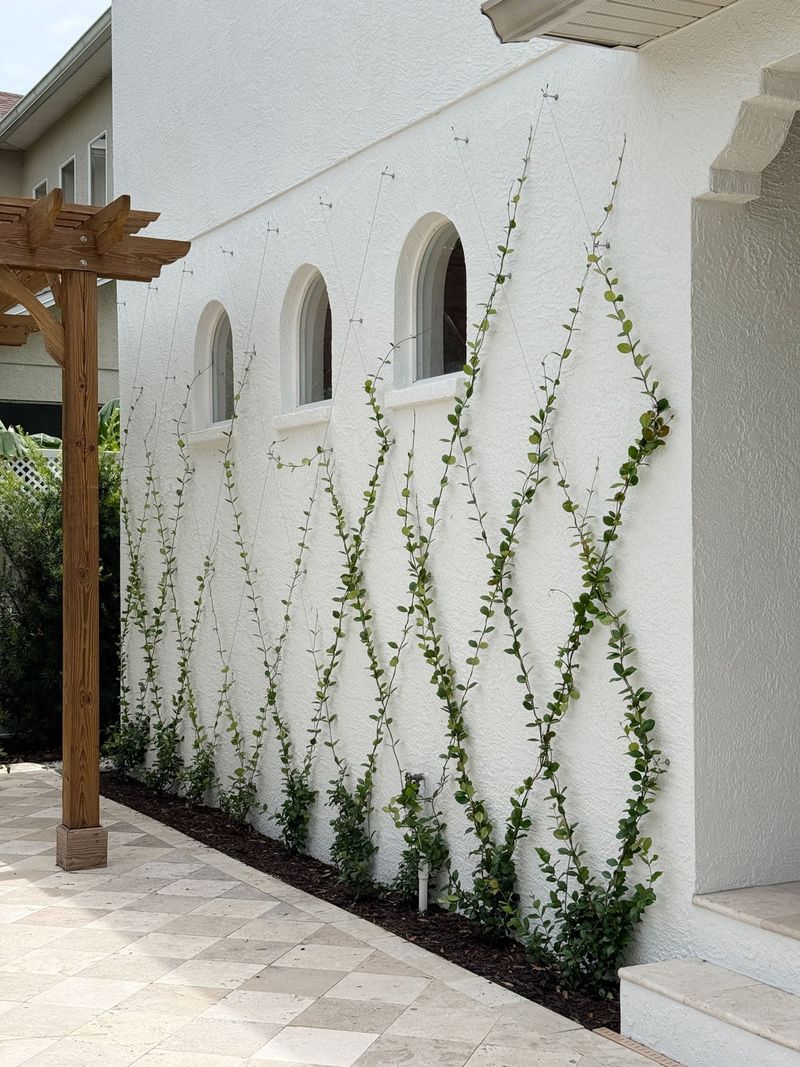
It climbs by twining, wrapping its stems around whatever is in reach, and a smooth solid-board fence gives it almost nothing to grab.
If you plant the vine and walk away, it will flop, sprawl along the ground, or pile up at the base of the fence without going anywhere useful.
The fix is straightforward but it has to happen before or at planting, not after.
Run horizontal wires across the fence face at intervals of roughly 12 to 18 inches, attach a wooden or metal trellis panel, or use another structure the stems can actually wrap around.
The RHS growing guide for trachelospermum is clear that the vine needs a support system and that young stems should be guided and tied in as they grow.
Plan for a vine that can eventually reach approximately 20 feet in height with adequate support, and a mature width of 3 to 6 feet, though those are long-term dimensions, not what you will see at the end of the first season.
One detail that surprises many gardeners: do not plant the vine flush against the fence.
RHS guidance on training climbers at planting advises leaving a small gap between the plant and the fence or wall so the vine does not sit in the rain shadow, that dry zone where the structure blocks rainfall from reaching the root zone.
The exact gap depends on your fence and overhang, but even a few inches helps.
As new stems extend, loop them loosely toward the wires and tie them in with soft garden twine or plant clips.
The vine will not figure out the support on its own at first.
Think of the first season as teaching it which direction to go, and the second season as watching it remember.
Choose a Site That Delivers Flowers and Fragrance
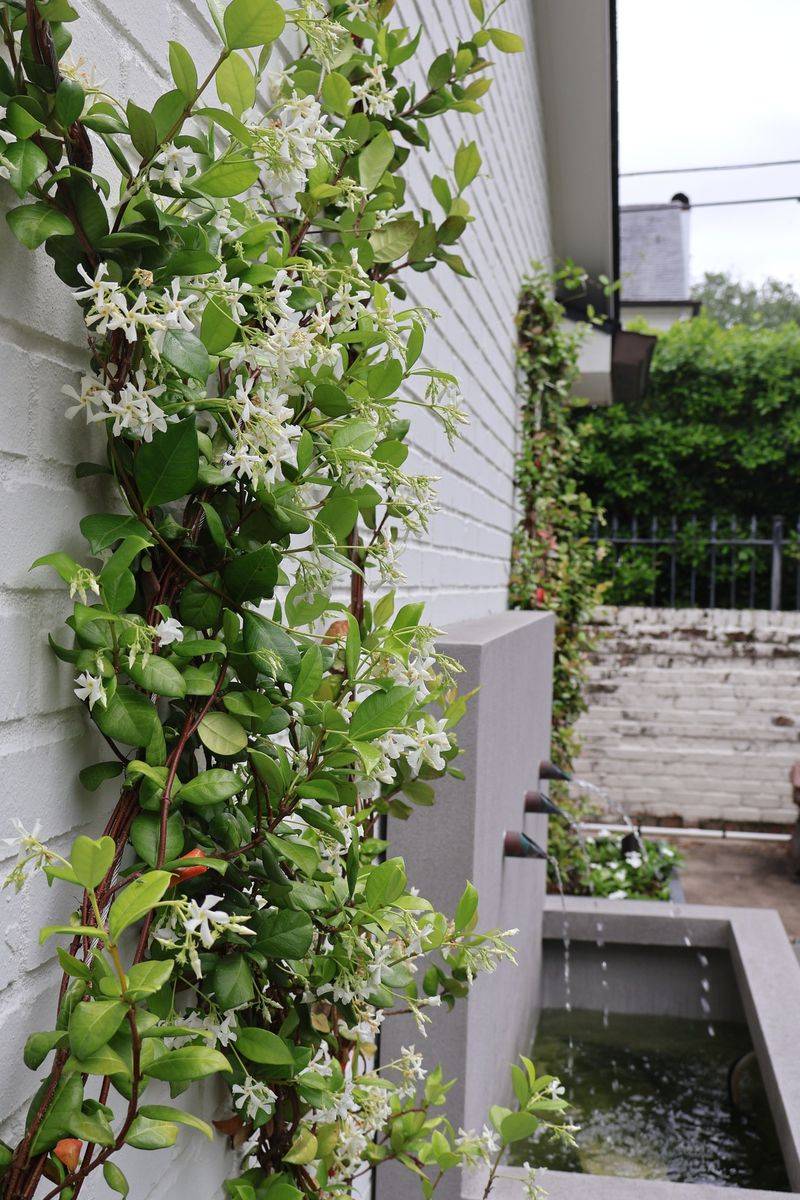
Placement is the decision that determines whether star jasmine pays off or just sits there looking adequate.
The vine tolerates partial shade, but more light generally supports denser growth and better flowering.
NC State recommends a sunny, sheltered site with fertile, well-drained soil, and that combination is worth taking seriously.
A fence that gets four to six hours of direct sun per day gives the vine enough energy to push strong stems and a decent flower load.
Heavier shade changes the picture.
According to Missouri Botanical Garden, plants grown in significantly shaded spots tend to produce thinner, more open growth and noticeably fewer flowers.
Partial shade, the kind you get from a nearby tree canopy in the afternoon, is workable.
A north-facing fence that barely sees direct sun all day is a harder ask, and you should expect the vine to be more foliage than flower in that situation.
The bloom timing matters for placement decisions.
NC State notes the main flush comes in late spring, with Missouri Botanical Garden listing the primary bloom period as May through June, followed by sporadic flowers into summer.
That window lines up almost perfectly with the season when North Carolina families start eating outside, opening the back door more often, and dragging chairs onto the porch in the evening.
Put the vine where those moments happen.
A fence section beside an outdoor dining area, a gate you pass through every morning, or the railing along a screened porch will reward you with fragrance you can actually smell.
A vine at the far end of a half-acre lot softens the view, but the scent stays with the plant.
Position it close enough to the action and it becomes part of the evening.
Define Low Maintenance Honestly
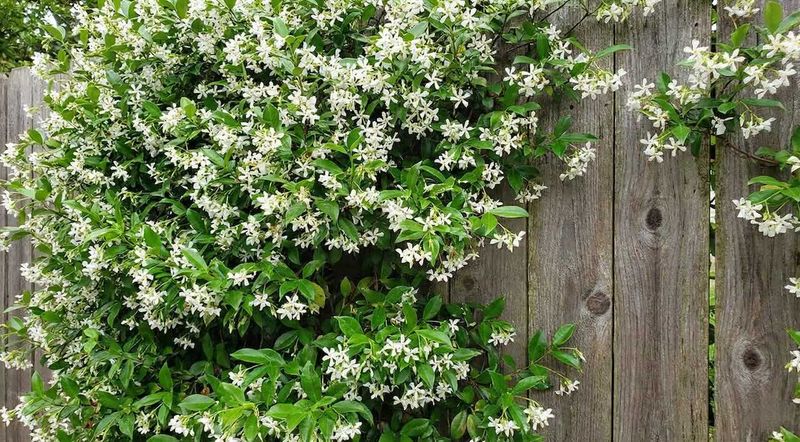
“Low maintenance” is one of the most overused phrases in gardening, and star jasmine earns it only after it is established.
The first season is a different story.
Young vines need consistent watering, regular checking, and hands-on training to get them climbing in the right direction.
The RHS notes that star jasmine should not be allowed to dry out during summer, and that guidance applies directly to a newly planted vine on a sunny North Carolina fence, where July heat and sandy Coastal Plain soil can pull moisture away faster than you expect.
Once the vine has settled in, usually after the second full growing season, established plants can become drought-tolerant.
That does not mean you stop watching them, but it does mean you stop worrying about them through every dry week.
NC State recommends spring fertilizer only when the soil is not already fertile, so skip the routine heavy feeding unless a soil test tells you the ground is genuinely depleted.
Pushing too much nitrogen can favor leafy growth at the expense of flowers.
Pruning is light but real.
NC State recommends pruning after flowering to control size and remove damaged growth.
For vines that have gotten away from you over several seasons, RHS guidance on renovating climbers supports cutting back hard, by up to two-thirds, in spring when renovation is genuinely needed.
That is a useful reset option, not a regular task.
On pests, NC State reports no serious insect or disease problems, but flags Japanese beetles as something to watch for during summer.
The vine is not pest-proof, just reasonably resilient.
One honest safety note: NC State labels star jasmine as poisonous in its plant database, while the ASPCA lists Trachelospermum jasminoides as non-toxic to dogs, cats, and horses.
Those sources do not fully agree, so the safest path is to prevent children and pets from chewing plant material, wear gloves when pruning because the stems contain a sticky milky latex, and clean your tools after cutting.
Neither declaring the plant completely safe nor treating it as highly dangerous fits the available information.
Weigh Nonnative Beauty Against Native Value
Star jasmine comes from Japan and China, and that origin matters when you are thinking about what your fence vine does beyond looking attractive.
The flowers attract bees and other pollinators, which is a genuine benefit, but nectar for bees does not make a nonnative plant the ecological equivalent of a vine that evolved alongside North Carolina’s insects, birds, and soil systems over thousands of years.
NC State’s plant profile does not designate star jasmine as invasive in North Carolina, so “nonnative” is the right word here, not “invasive,” but the distinction between nonnative and native still matters if your goal includes supporting local habitat.
If you garden in the mountains, or if native wildlife value is a priority anywhere in the state, Carolina jessamine is worth a serious look.
NC State lists Carolina jessamine, Gelsemium sempervirens, as suitable across USDA Zones 6a through 10b, which covers the mountains, Piedmont, and coast.
It can cover fences, trellises, and arbors with yellow trumpet flowers in late winter and early spring, and it is native to North Carolina, meaning it has a much longer relationship with local pollinators and the broader yard ecosystem.
Coral honeysuckle is another option worth naming.
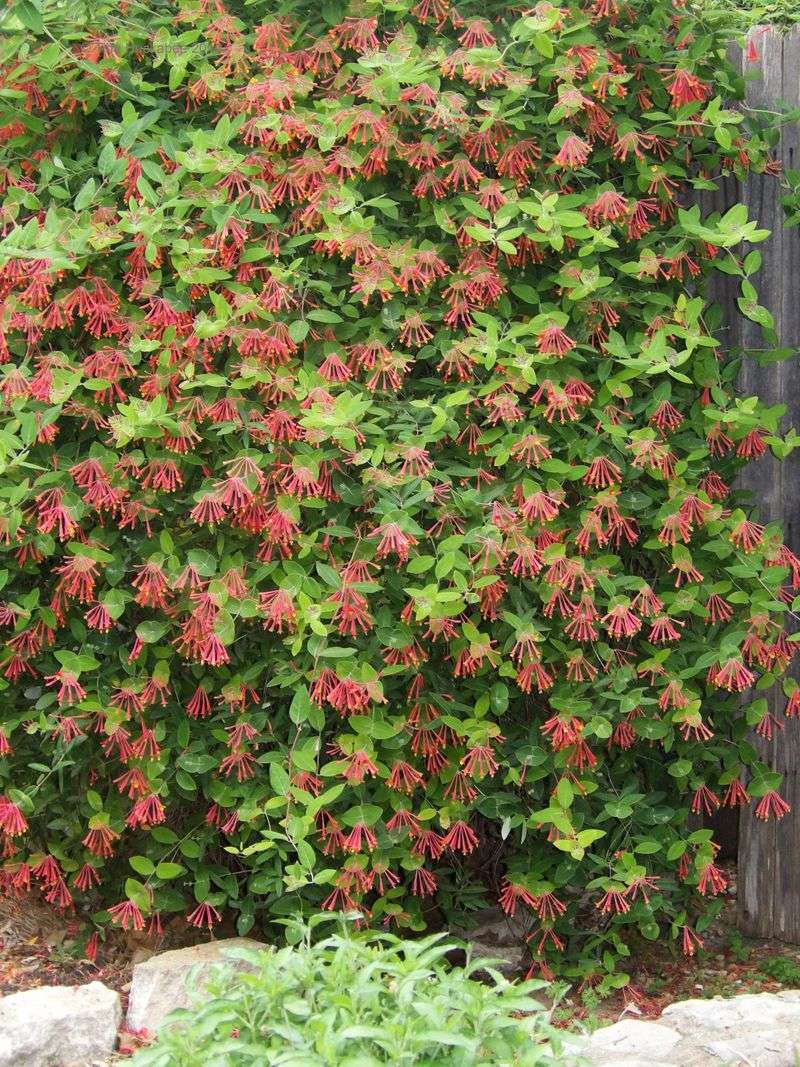
NC State describes coral honeysuckle, Lonicera sempervirens, as a twining native vine that can reach 10 to 20 feet and needs support, much like star jasmine.
Its red and orange tubular flowers are a known draw for hummingbirds, and it is native to the state.
The comparison is not meant to talk you out of star jasmine if your site fits it well.
A warmer Coastal Plain fence in full sun is genuinely good territory for the vine.
But if you are in a colder zone, or if you want the fence vine to do more than look good, the native alternatives offer a different kind of payoff.
Use a Simple Fence-Vine Decision Rule
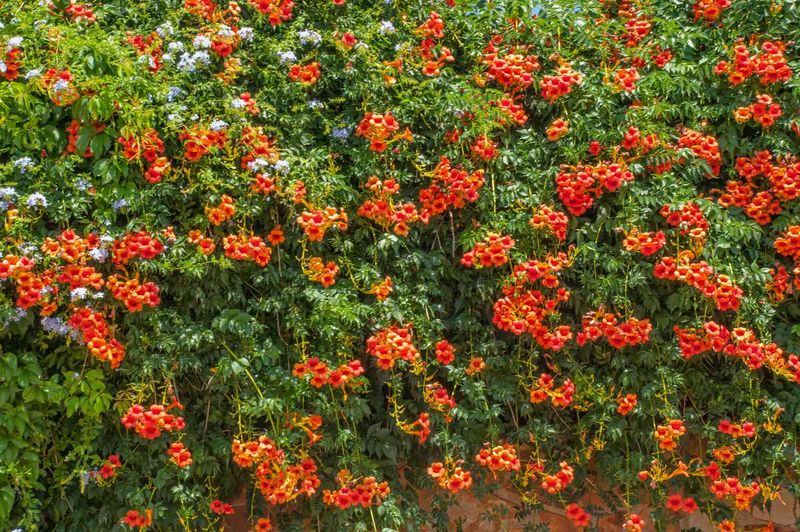
Run through this short checklist before you buy the plant.
Your site should fall in USDA Zone 8a or warmer, which you can confirm in under a minute at the USDA hardiness zone map.
The fence location should receive at least several hours of direct sun and offer some shelter from hard northwest winds, the kind that push through the Piedmont and Coastal Plain during January cold snaps.
The soil should drain well, because star jasmine planted in a low spot that holds water after a summer storm is set up to struggle.
You also need a real support structure in place, wires, a trellis, or another framework the twining stems can actually grip.
And there should be somewhere nearby where people spend time outdoors, a porch, a path, a dining area, a gate, so the late-spring fragrance has an audience.
The RHS is direct about this: place the vine where people sit or pass, because the scent is a close-range experience.
If those conditions line up, NC State’s profile for star jasmine supports it as a strong fence and trellis choice for the Coastal and Piedmont regions.
Expect the vine to soften the fence gradually over two to three seasons, not immediately.
It is not a privacy screen you install in May and enjoy by July.
It is a plant you establish this year and genuinely appreciate in year three.
Do not expect it to reduce ticks, repel mosquitoes, or deliver broad wildlife habitat.
Those outcomes belong to a different set of yard choices.
If your zone is colder, or if native habitat value matters more than fragrance and evergreen foliage, Carolina jessamine and coral honeysuckle are the vines to reach for instead.
A fence that fits the plant is the real starting point, and a fence that fits the plant is actually a pretty good one to have.