
When Green Anoles Start Showing Up All Over Your East Texas Yard, Something Is Going Right
Follow us on Google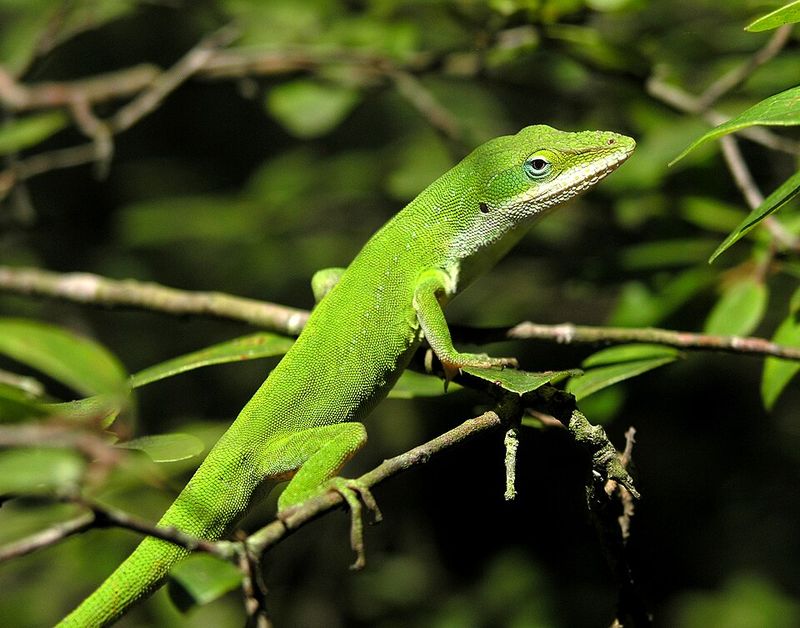
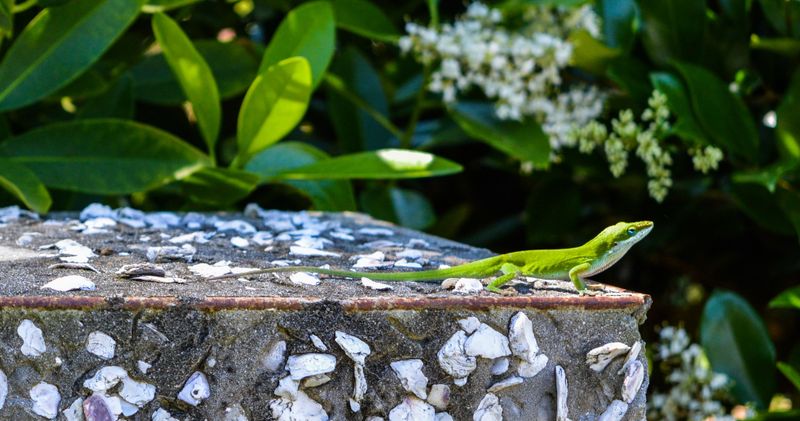
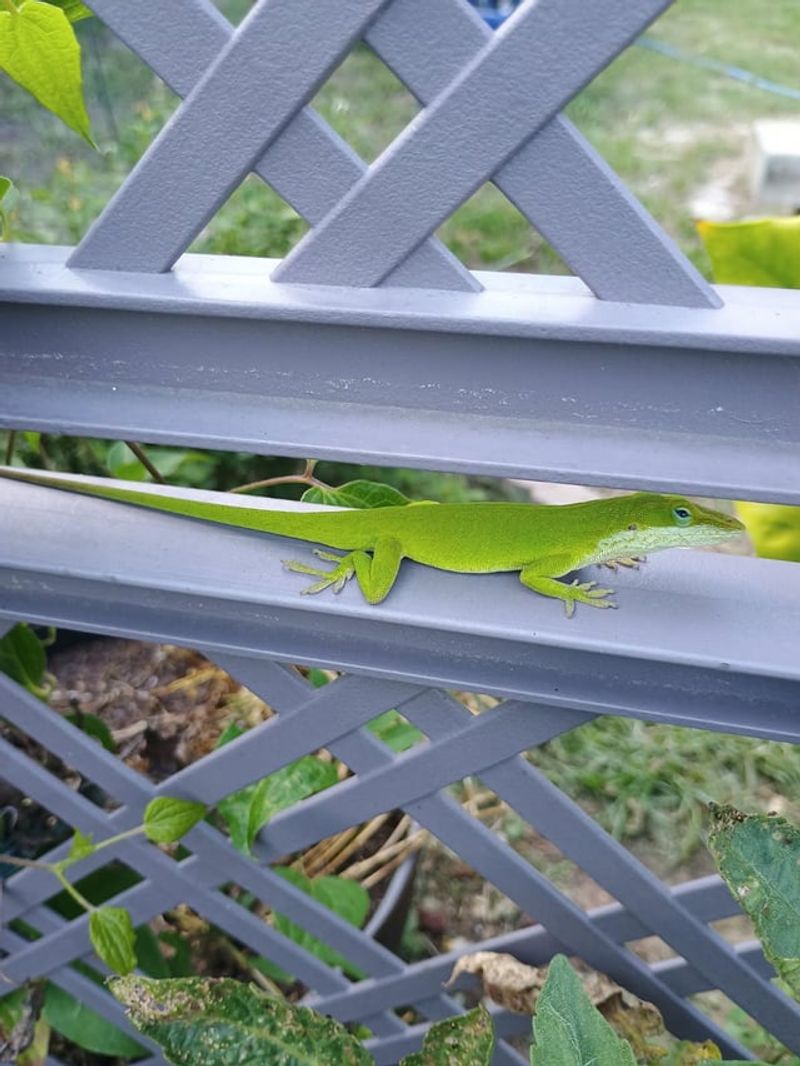
You step onto the porch with your coffee, and a small green lizard is already watching you from the fence rail. If you live in eastern Texas, that visitor is probably a green anole, and it is a welcome sight.
These little lizards do not show up just anywhere, so a regular fence-post guest says something useful about your yard. Here is what it says, and just as important, what it does not say.
Fence Post Regulars Have a Name
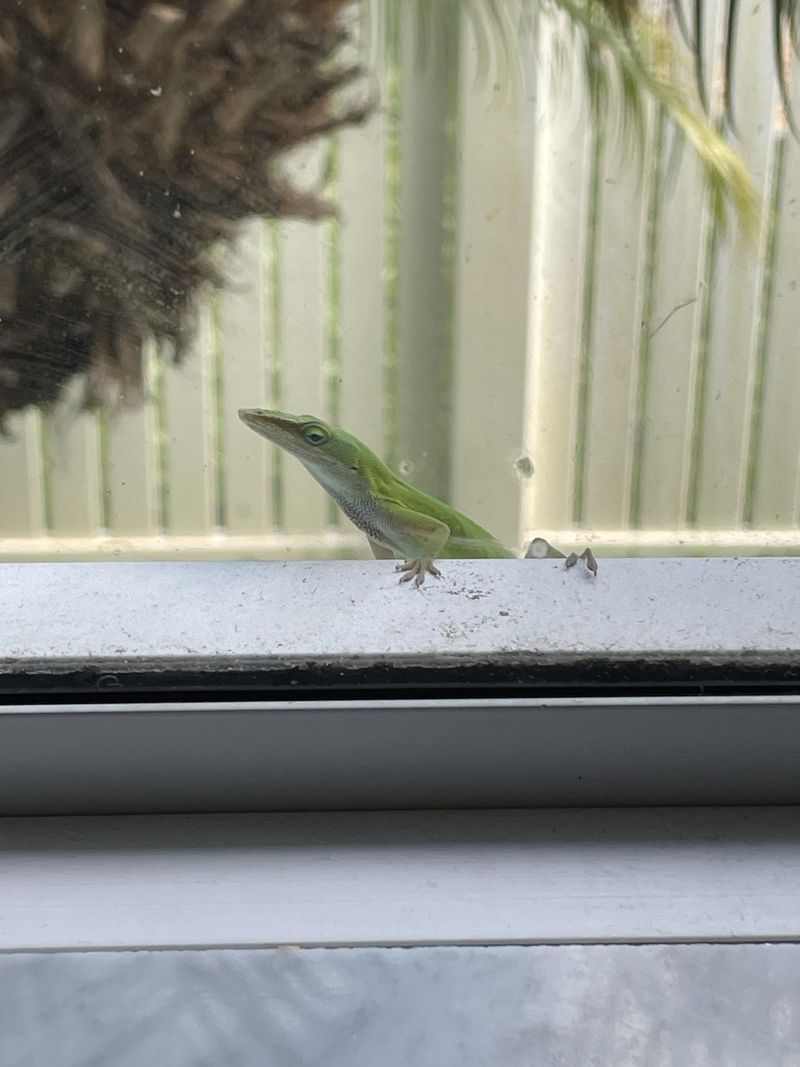
That slim green lizard doing push-ups on your fence rail is a green anole, known to scientists as Anolis carolinensis. It is a small native lizard, and it has been sharing Texas yards far longer than any of us.
Here is the part that surprises people. You might expect a wild lizard to stay deep in the woods, but Texas Parks and Wildlife Department says green anoles prefer trees and shrubs, yet they also use walls and fences.
So a lizard on your fence post is not lost or odd. It is simply using a handy perch, the way you might claim the best chair on the porch.
Now for the geography, because it matters. Green anoles live across the eastern third of Texas, not the whole state.
If your yard sits in East Texas or along the eastern edge of the Gulf Coast plain, this is a neighbor you can reasonably expect. If you live in the Panhandle or out in West Texas, a green lizard on your fence is likely something else, and this story is not about your yard.
For readers inside that eastern range, the headline holds up with one small adjustment. A busy fence is a clue, not a grade.
The next few sections show what the clue means, and the kicker is a good one: you have made room for a small native animal, and it noticed.
Repeated Sightings Point to Useful Cover
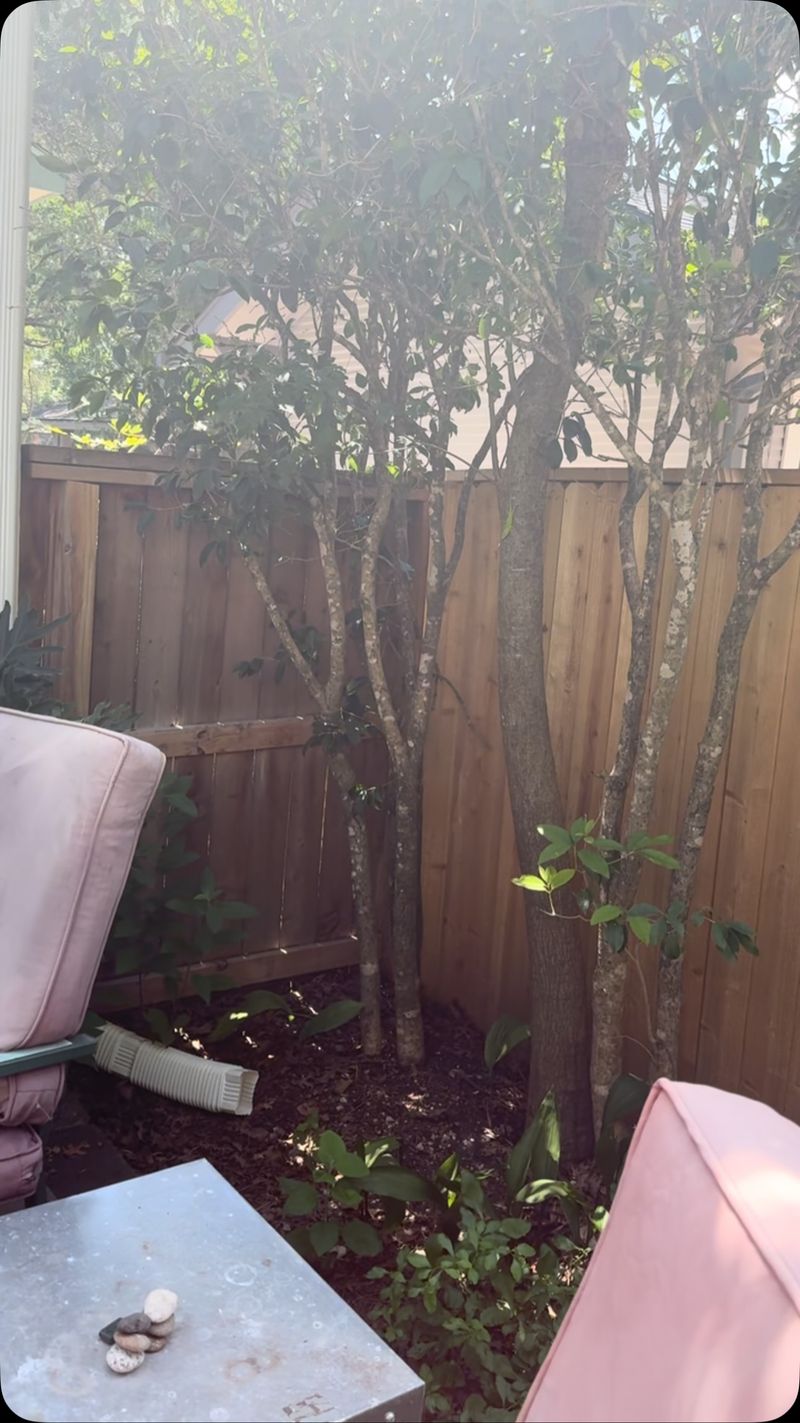
Anoles are not random about where they hang out. When you see one on the same fence or porch rail day after day, some part of your yard is giving it something it can use.
Think of what a small lizard needs in practice. It wants greenery nearby, shrubs or trees to climb, a bit of shade when the afternoon turns hot, some moisture in the air or on the leaves, and a good perch to watch from.
Since TPWD describes green anoles as tree and shrub lovers that also use fences and walls, a fence next to a leafy shrub is almost a perfect setup.
So what does a regular visitor tell you? It says one corner of your yard works for a small native insect-eater.
Maybe it is the hedge by the porch, the crape myrtle by the gate, or the vines climbing the shed wall.
Here is where it gets tricky. A sighting is a local clue, not a verdict on the entire yard.
Seeing many anoles does not tell you how many live there, how well they are breeding, how many insects are around, or how varied your yard is overall.
Treat it the way you would treat a neighbor waving from a porch. It is a friendly sign that something works, and a good reason to notice which spot they favor.
That spot is worth protecting, and it is worth feeling a little proud of.
Brown Color Does Not Settle Identification
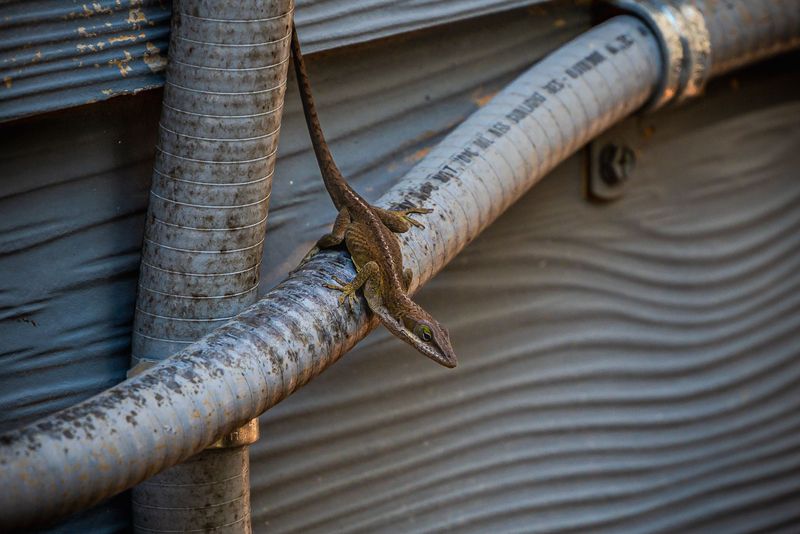
Many people see a brown lizard on a fence and decide it must be a different species. That guess is understandable, but color alone will not settle it.
The UT Austin Biodiversity Center explains that green anoles can look green, brown, or gray-brown. Their color changes for several reasons, including social signaling, stress, and activity.
They do not simply copy the surface underneath them, so the old story about turning brown to match your fence is too simple.
That means a brown anole on your rail may well be the same green anole you saw yesterday, just in a different mood. A lizard warming up or feeling nervous may look quite different from one relaxing on a leaf.
There is another anole in Texas, the Cuban brown anole, Anolis sagrei. A 2022 peer-reviewed review gathered Texas records from 21 counties.
But the authors cautioned that those records do not all mean the species is established, and the map is not a final range map.
So what should you do? Watch carefully, notice features beyond color, and avoid leaping to conclusions.
Please do not catch, handle, or move any lizard. Simply enjoying the show is the best way to learn who is actually living on your fence.
Texas Research Makes the Signal Smaller
It would be lovely if lizard counts worked like a report card. More anoles, healthier yard, done.
Texas research says the picture is messier than that.
One Texas field study, Battles and colleagues in Herpetological Conservation and Biology, looked at green anoles in six plots at Palmetto State Park in Gonzales County. That is a state park, not a survey of home gardens across the state, so it cannot speak for every yard.
The results were mixed. Insect and other arthropod numbers did not line up neatly with how disturbed a plot was.
Female body condition was higher in natural plots than in disturbed ones, but the authors said the reasons behind the differences were unclear.
The study also noted that green anoles turn up in natural, disturbed, and urban habitats. Its most-used plot was a moderately disturbed spot near a lake and trail.
So anoles are not picky pristine-woods animals, and a human-shaped yard can suit them just fine.
What does that mean for your fence? Your lizard sighting is a real but small clue.
It shows that part of your yard has something an anole can use. It does not measure how healthy your whole yard is, and that honest limit makes the good news feel more genuine.
An Insect-Eater Is Not Pest Control
Picture a summer evening on the patio with mosquitoes whining around your ankles, and a lizard on the rail. It is tempting to think the lizard is on duty.
It is not.
Green anoles do eat small insects and other arthropods, including spiders, according to the UT Austin Biodiversity Center. Gardeners also list them among helpful garden visitors, as the Galveston County Master Gardeners do.
But a broad menu is not the same as dependable pest control. An anole snaps up what happens to pass within reach.
It will not target aphids, work through a mosquito problem, or clear the bugs from your cookout.
So keep your expectations kind and realistic. If aphids are chewing your roses or something is bothering your tomatoes, the lizard is not your solution, and you will want other tools.
What the anole gives you is something different. It is a small wild neighbor that eats what it finds and adds a little life to the fence line.
That is a quiet kind of pride, and it does not need to pay rent.
Layered Shelter Gives Anoles More Options

If you want to keep your anoles around, the best move is mostly to protect what already works. Start by looking at the shrubs, vines, and trees near the fence where you see them.
Those are likely doing the job.
Then think in layers. TPWD Wildscapes certification centers on food, shelter, and water for wildlife, and recommends plants native to your local ecoregion.
East Texas is not the same as the Gulf Coast, so choose plants that suit your own soil and conditions, and ask your county extension office if you are unsure.
The TPWD Wildscapes design tips suggest a range of plant heights and densities, which gives small animals more places to hide, perch, and find shade. They also mention logs or rock walls as shelter for lizards and other small wildlife.
Keep the promise modest. This is general wildlife advice, not a recipe that guarantees anoles.
No single plant is a magnet, and a water source is part of TPWD’s broader wildlife guidance, not something anoles specifically require.
Still, a yard with layers is a yard with options. Leaving a shrub unclipped for another season or tucking a log by a fence line costs almost nothing, and it feels good to build a little shelter.
Treat Broad Insecticide Use With Caution

The simplest way to enjoy your anoles is to watch them. Sit on the porch, notice which post they favor, and keep the shelter they seem to like.
No catching, no moving, no fuss.
When it comes to sprays, a little caution is sensible. Anoles eat arthropods, and UF/IFAS guidance on insecticides and wildlife explains that pesticide exposure can reach wildlife through treated insects, plants, soil, or direct contact.
That is a good reason to think twice before spraying broadly.
To be clear, this is a precaution, not a proven way to improve habitat. Nobody can say that a certain application will harm a certain lizard.
So if you do use a product, read the label and follow it exactly.
It also helps to match your effort to the problem. Spot treating one trouble area is different from fogging the whole yard, and the leafy edges where anoles hang out do not need to be part of it.
The TPWD design tips remind us that wildlife-friendly yards work as a whole.
A busy fence cannot grade your entire yard. But it does mean there is room here for a small native animal, and that is worth a quiet smile at the end of the day.
