
What Pennsylvania Gardeners Plant In Late Summer For Blooms That Carry Straight Through October
Follow us on Google
You step onto the porch on a heavy August evening and spot the first hint of gold on the old maple.
The heat still lingers, but the light is changing, and the garden feels like it is winding down.
But it does not have to.
Plant the right things right now, in late summer, and your Pennsylvania beds can push out color straight through October and past the first cold mornings.
1. Asters: The Fall Garden’s Star Performers
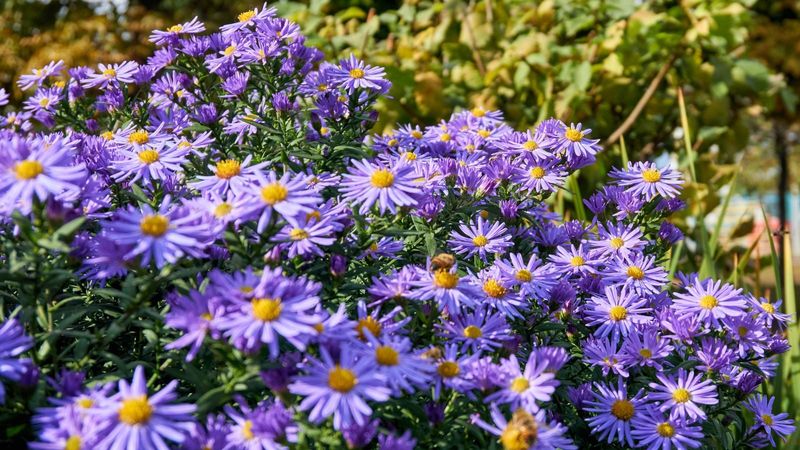
Those little purple flowers that seem to appear from nowhere in fall are actually the quiet stars of the late-season garden.
Asters, Symphyotrichum spp., bloom fiercely from August straight through October, or until a hard frost finally calls time.
Many southeastern Pennsylvania gardeners lean on them as summer softens.
They are a genuinely reliable stand-in for those non-native mums, offering purples, blues, and whites that light up tired beds.
Here is where it gets tricky.
Planting in late summer gives them a head start, because the soil stays warm while the air cools, which pushes strong root growth before winter.
Aromatic Aster, Symphyotrichum oblongifolium, in selections like October Skies grows three to four feet tall in full sun.
Shadier spot?
The White Wood Aster, Eurybia divaricata, thrives in dappled light at about two feet tall.
Give them six hours of sun and steady moisture without soggy roots, and they will carry you into fall.
2. Black-Eyed Susans: Sunny Faces Against Autumn’s Chill
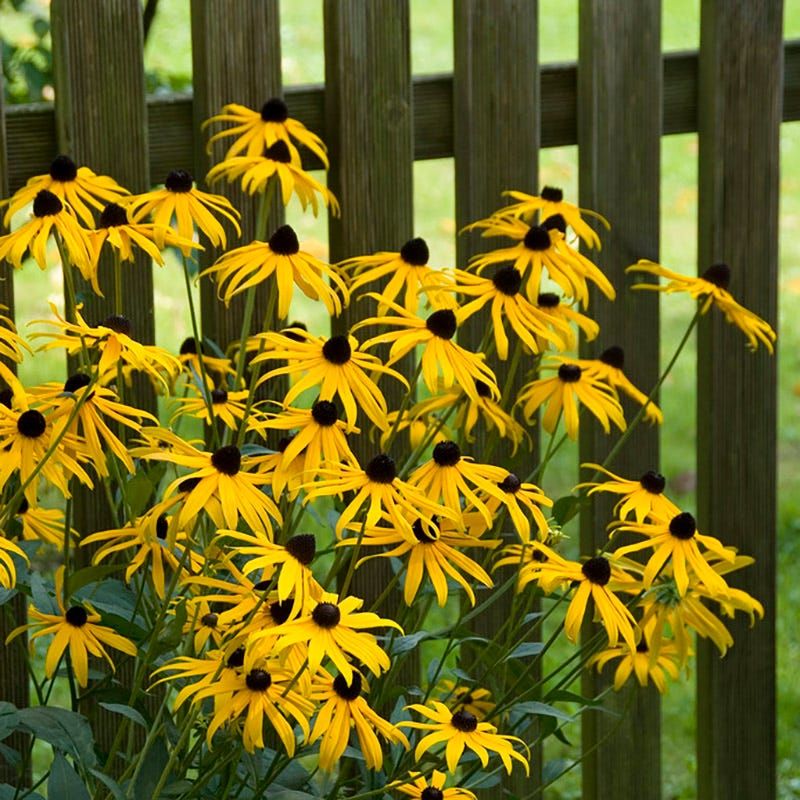
There is something stubbornly cheerful about a Black-Eyed Susan, Rudbeckia hirta, even as the days shorten and shadows stretch long across the lawn.
These hardy natives push yellow petals from June well into September, often holding until the first hard frost.
Gardeners from the Susquehanna Valley to the Laurel Highlands treat them as a staple.
Late-summer planting lets roots settle into still-warm soil before the ground freezes, so they come back with even more force next season.
The Goldsturm variety, Rudbeckia Goldsturm, grows about two feet tall and blooms mid-summer into fall.
It likes full sun but forgives a little afternoon shade, which is a mercy during our humid Pennsylvania summers.
Late pollinators love them, bringing a final flurry of buzzing to the backyard.
Just know Goldsturm can spread, so give it room or divide it every few years to keep it honest.
3. Sedum Autumn Joy: A Sculptural Statement
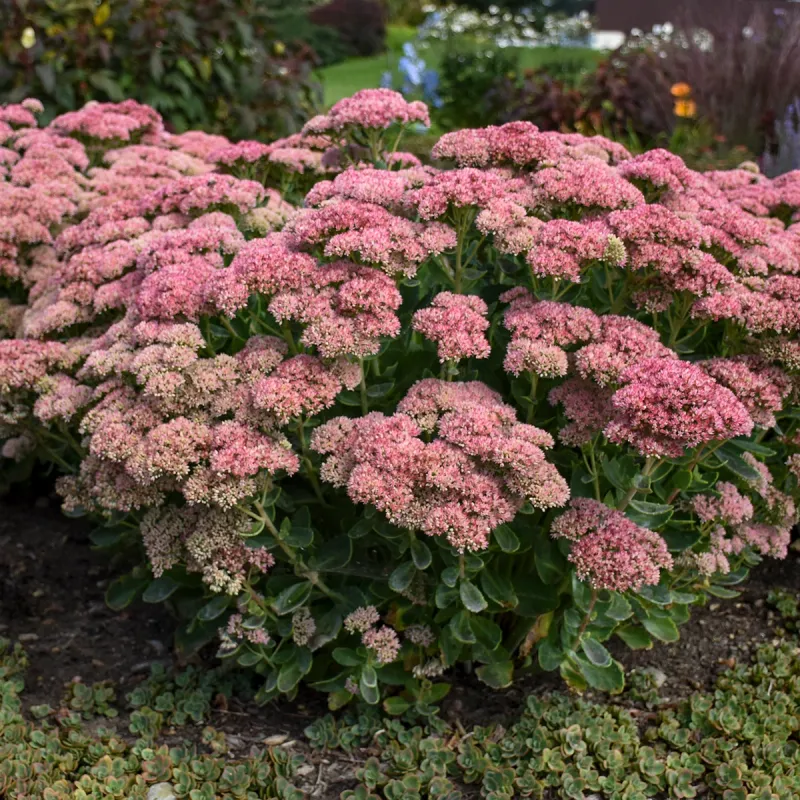
Picture stepping outside in early October, the air crisp, and finding fat domes of pink and bronze still standing tall while everything else fades.
That is Sedum Autumn Joy, or Hylotelephium spectabile Autumn Joy, doing exactly what its name promises.
Its buds start green and broccoli-like in summer, open pink, then deepen to red and bronze as fall rolls on.
Color runs from August straight through October.
The surprise for many folks is how little this plant asks.
It actually thrives on neglect, preferring poor, well-drained soil and full sun.
That makes it a solid pick across much of Pennsylvania, even in heavier clay, as long as you amend with compost or grit for drainage.
Autumn Joy grows about two feet tall in sturdy clumps that hold their shape even after blooms brown.
Plant it in late summer and it settles in before winter, returning stronger next year.
Bees work it hard during its long run.
4. Goldenrod: Misunderstood, Yet Marvelous
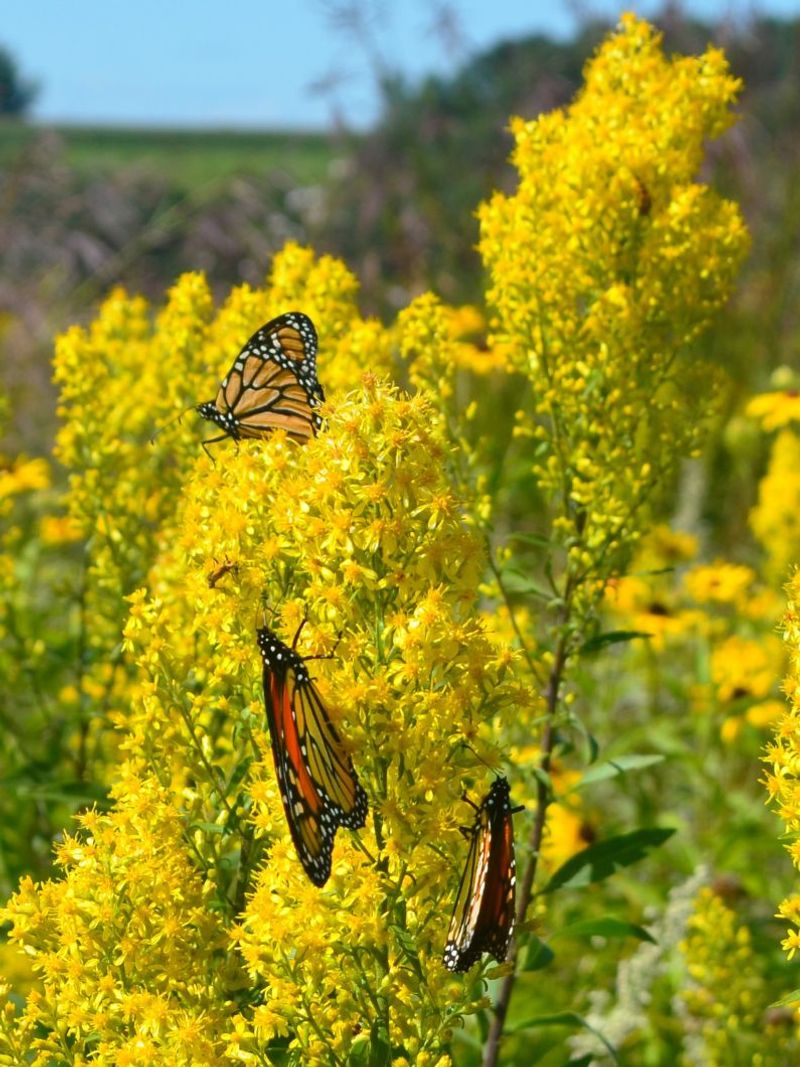
Plenty of Pennsylvania gardeners eye goldenrod, Solidago spp., with suspicion, blaming it for fall sniffles.
That is a myth.
Goldenrod pollen is heavy and sticky, carried by insects, not the wind.
The real culprit is ragweed, blooming quietly at the same time.
Goldenrod is genuinely a powerhouse.
It throws a spectacular yellow show from late summer into fall and feeds pollinators as they fuel up for cold weather.
Set it out in late summer and it establishes before winter, ready to blaze next season.
It adapts to almost anything, from the rocky glacial soils of the northern tier to the shale of the central-west.
With dozens of species, you can find a compact form or a tall one for the back of a border.
Once established, goldenrod shrugs off the dry spells that still hit between our sudden thunderstorms.
Give it sun and watch native bees and butterflies pile on for the nectar.
5. Coneflowers: Resilient and Rewarding
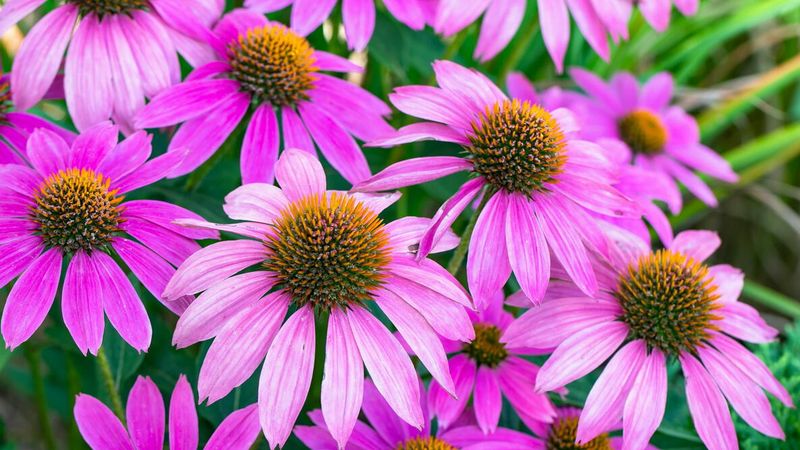
Coneflowers, Echinacea spp., are practically shorthand for a summer garden, all pink and purple petals around a bold cone.
What gets overlooked is how far past summer they carry, often blooming into October in warmer southeastern pockets where the season can top 200 days.
Most summer bloomers fade by mid-August.
Coneflowers keep giving.
Plant them in late summer so roots dig in while the ground is still warm, ready before an early cold snap arrives.
They love direct sun and turn genuinely drought-tolerant once settled, a real help during those intermittent late-summer dry stretches.
After the petals drop, the seed heads become winter food for goldfinches and other birds, so the interest lingers.
Pick a species to suit your height and color needs.
Every one delivers that unmistakable daisy-like face and a long welcome for bees.
6. Japanese Toadlilies: Shade’s Secret Autumn Gem
Those shady corners that go dull after the spring ephemerals fade have a fix, and it is an unexpected one.
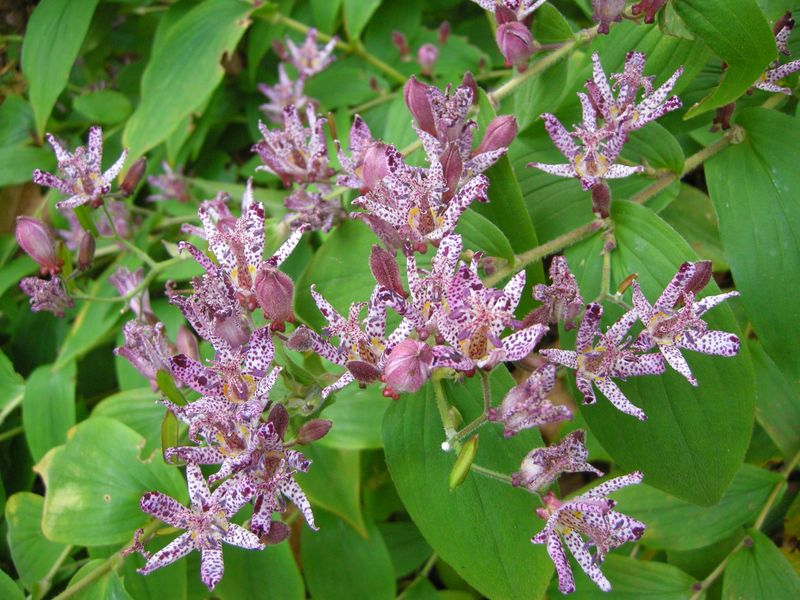
The Japanese Toadlily, Tricyrtis hirta, opens orchid-like white flowers speckled with purple-black spots in late summer and early fall.
Nobody expects something this elegant blooming in the shade in September.
Gardeners across the Allegheny Plateau and Poconos who wrestle with wooded lots treasure it for exactly that reason.
The usual story for shade gardens is dwindling color after July.
The toadlily rewrites it.
Plant in late summer and it settles before the ground cools, promising a strong show next year and maybe a few blooms this season if you get it in by August.
It wants moist soil and dappled shade, perfect under trees or along a north-facing wall.
Blooming through October, it offers a late nectar stop for hummingbirds as the fall migration begins.
Keep the soil consistently moist during dry spells.
7. Ironweeds: Towering Sentinels of Fall
Want stature with your late color?
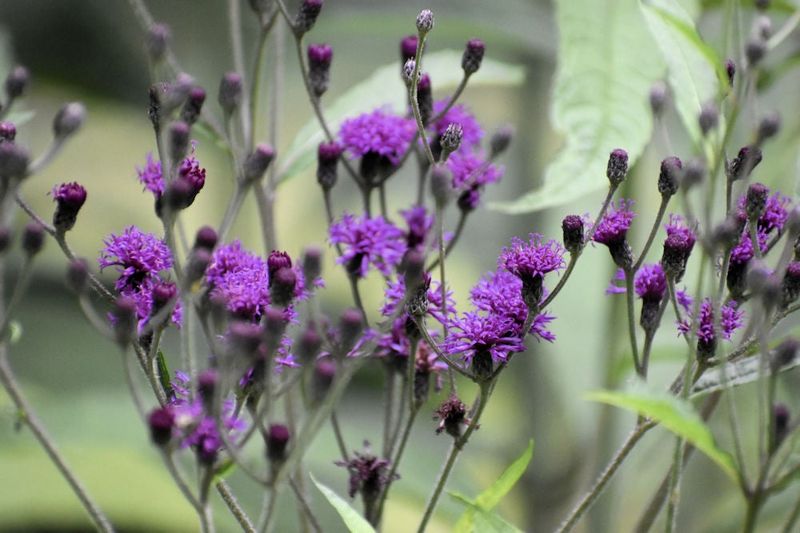
Native ironweeds, Vernonia spp., command attention with deep purple flower clusters and serious height.
Depending on the species, they run from compact two-footers to giants topping twelve feet.
The assumption is that tall plants are strictly summer performers.
Ironweeds ignore that.
They flourish from late summer into early fall, their purple blooms striking against changing foliage.
Set them in late summer and they build a strong root system for impressive growth next year.
They are genuinely tough, often called urban tough, riding out long dry spells once established.
New York Ironweed, Vernonia noveboracensis, reaches five to seven feet, thriving in the fertile limestone soils of some central valleys.
For a tidier look, Vernonia lettermannii Iron Butterflies offers narrow foliage that turns golden-yellow in fall under delicate purple blooms.
Both draw a steady crowd of late-season pollinators.
8. Pansies and Violas: Cheerful Pockets of Color
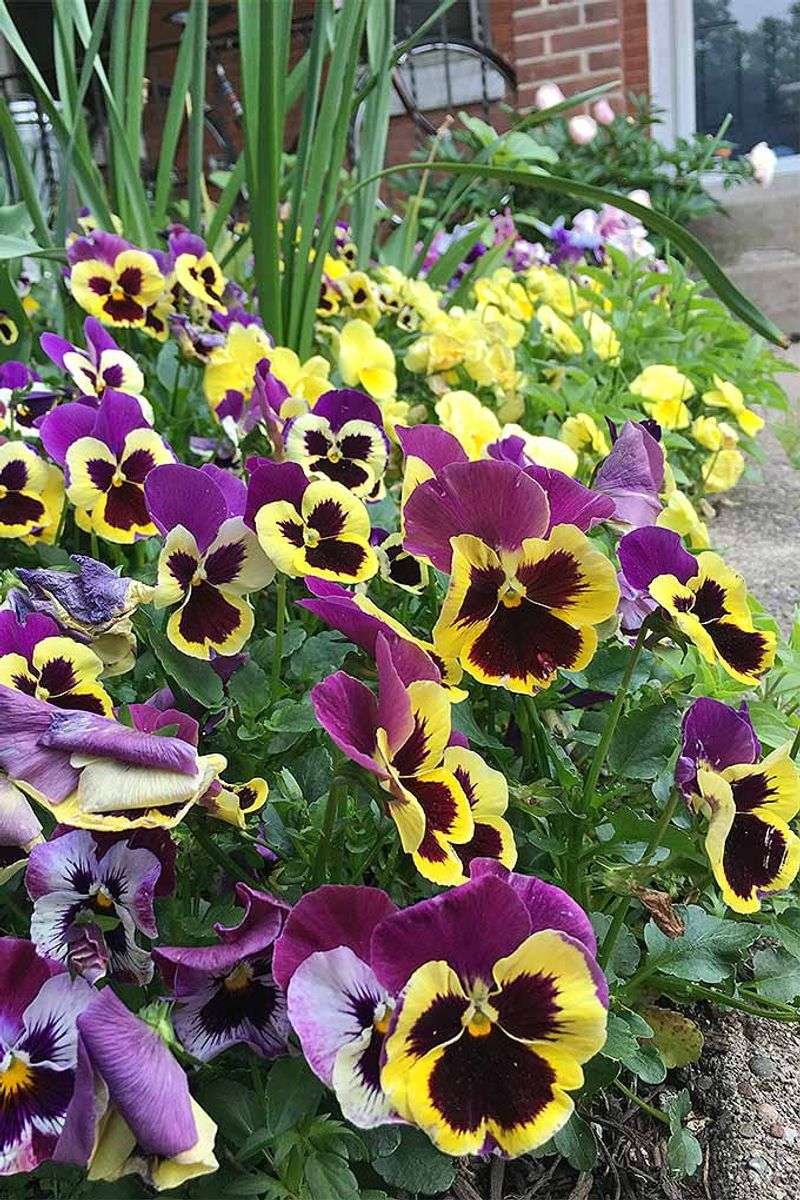
Sometimes the garden does not need a grand tall perennial.
It needs small, cheerful bursts tucked into the gaps.
Pansies, Viola x wittrockiana, and violas, Viola cornuta, deliver blues, purples, yellows, and whites that shrug off a light frost.
Homeowners in the Lake Erie region, where the season runs short, and around warmer urban Philadelphia both lean on them to stretch color late.
The common belief is these are spring-only flowers.
They are actually built for late summer and early fall planting.
Slip them into containers, window boxes, and bed edges for instant color that carries through October and often into November.
First fall frost dates in Pennsylvania span from early September at higher elevations to around November 1 in the warmest southeastern pockets.
Plant now so they root before the deep cold.
Give them well-drained soil, some sun, and regular water, and they stay tough against the creeping chill.
9. Mums Planted Early Enough To Actually Root
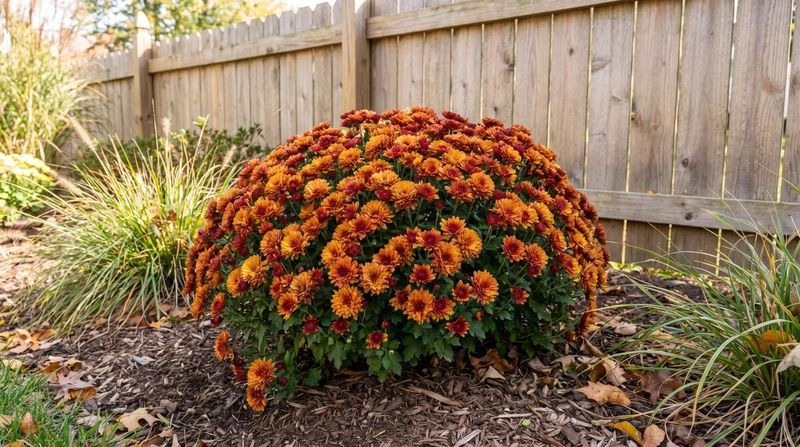
Everybody grabs a grocery-store mum, Chrysanthemum morifolium, in September, watches it bloom two weeks, then tosses it.
That is the trap.
The turn is timing.
Hardy garden mums bought and planted in late August, not late September, get the four to six weeks of root growth they need before hard frost.
Rooted mums have a real shot at overwintering and returning, especially in the milder Delaware Valley.
Plant them at least six weeks before your area’s first hard freeze.
Space clumps about eighteen inches apart in full sun with well-drained soil.
Water deeply, about one inch a week, until the ground chills.
Mulch two to three inches after the first freeze to steady the soil through winter’s freeze-and-thaw swings.
Handled this way, that porch mound stops being disposable decor and starts becoming a plant that shows up again next fall.
10. Ornamental Grasses That Glow In Low Light
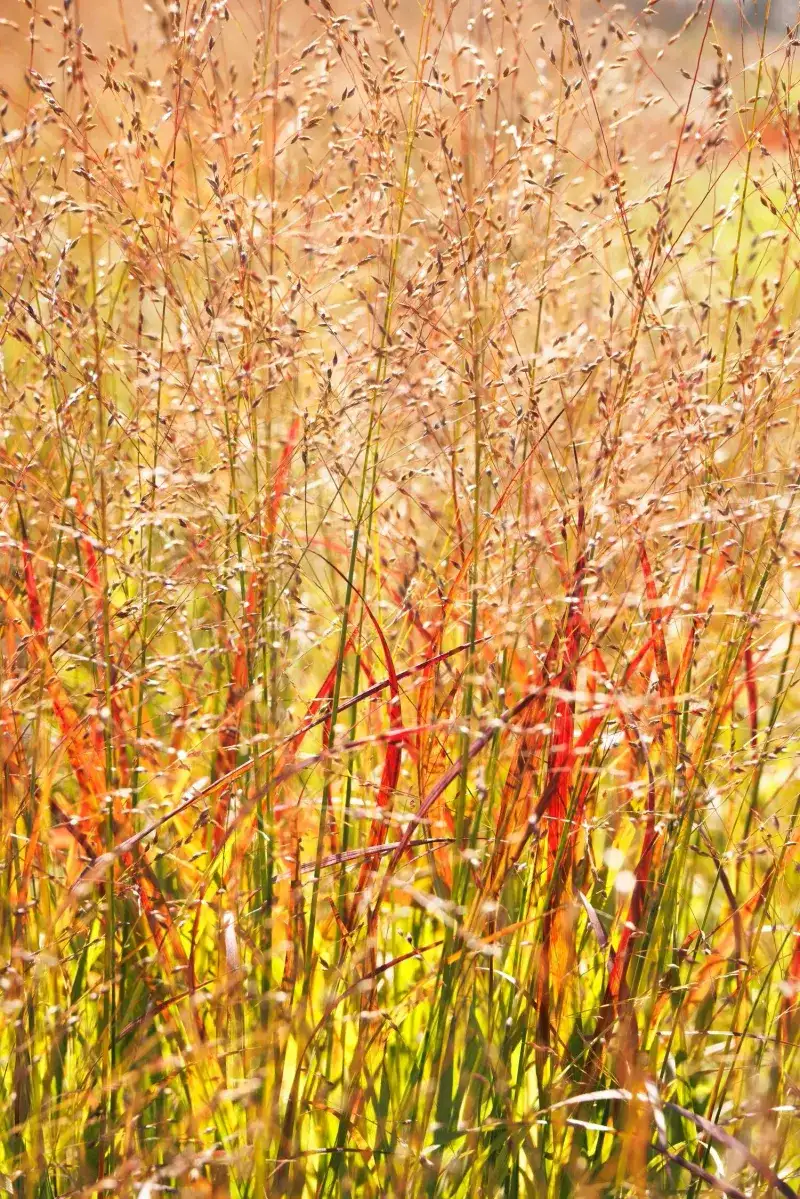
Late-day October sun hits an ornamental grass and the whole plant seems to catch fire from the inside.
That glow does more late-season work than most flowers.
Native switchgrass, Panicum virgatum, is a quiet hero here.
It sends up airy seed heads in late summer that hold color and movement well into fall and stand through winter snow.
Varieties run three to five feet tall.
The surprise is that grasses are not just filler.
They give structure when the blooms fade, and they feed and shelter birds through the cold months.
Switchgrass adapts across Pennsylvania, from clay-heavy southeastern lots to the shale of the west.
Plant in late summer in full sun, spacing clumps about three feet apart, and water weekly until established.
Leave the seed heads standing.
Come the fall bird migration, sparrows and finches will work them over while the grass sways like it means it.
11. Joe Pye Weed For A Late Pollinator Feast
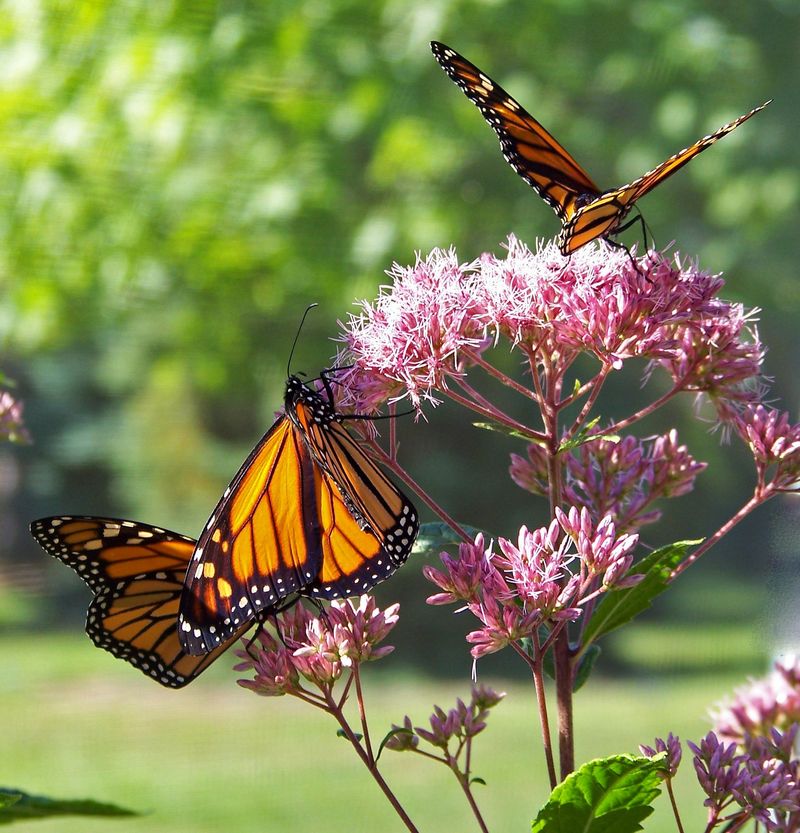
A stand of Joe Pye weed, Eutrochium purpureum, in full flower looks less like a plant and more like a landing strip.
Butterflies stack up on those dusty-rose clusters like they cannot help themselves.
Blunt truth: few late bloomers pull in as much life.
This native runs from late summer into early fall and works as one of the last big nectar stops before the monarch push south.
It gets tall, five to seven feet depending on the type, so give it the back of a border or a damp low spot.
It genuinely prefers moist soil, thriving in wetter ground along the central valleys and northern tier where other plants sulk.
Plant in late summer, space clumps three to four feet apart, and keep the soil moist through the first year.
Give it part to full sun.
Then step back and let the monarchs make their case.
12. What Else Actually Helps
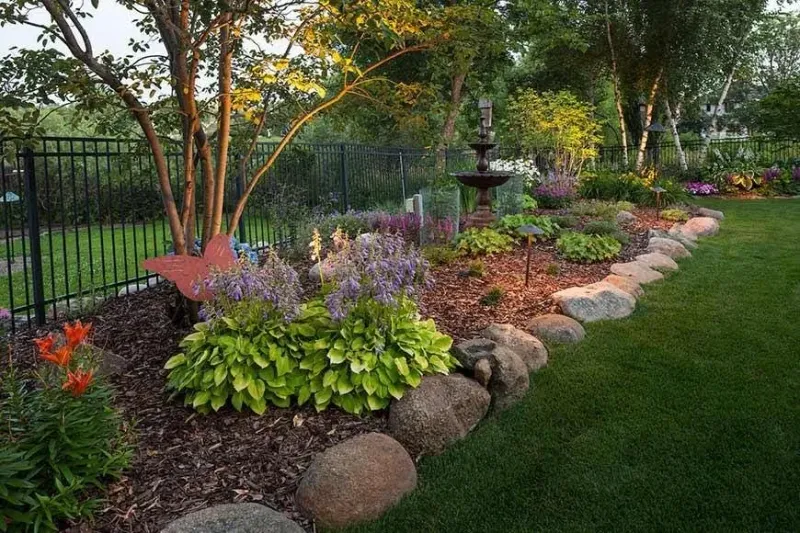
Stretching bloom season into October takes more than a good plant list.
Late summer is also when a little care pays off big for everything already in the ground.
Mulch is your friend.
A two to three inch layer of organic mulch holds soil moisture through late-summer dry spells and steadies temperature as nights cool.
It also smothers weeds, so your fall bloomers face less competition.
Watering stays critical even as the heat backs off.
New plantings especially need steady moisture to root.
Aim for about one inch of water per week, from rain or the hose, soaking at least six inches deep.
In the heavier clay soils common across central and western Pennsylvania, work compost in before planting to protect against root rot as fall rains pick up.
Penn State Extension recommends matching plants to your actual soil and frost dates rather than guessing.
Pair smart choices with these basics, and your backyard keeps blooming while the days grow short.