
What It Really Means When Fence Lizards Keep Showing Up In Your North Carolina Yard
Follow us on Google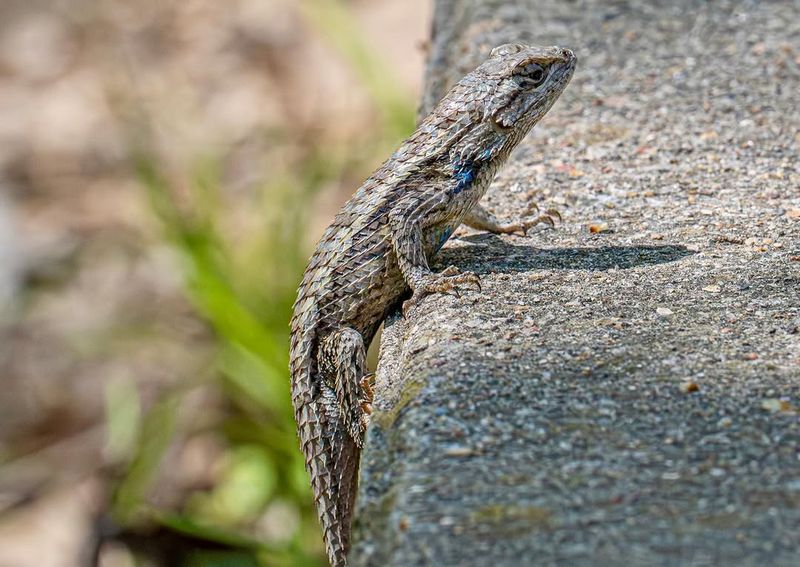
You step onto the back porch one morning and catch a quick gray blur disappearing behind a fence post, and by the end of the week you have seen it three more times. That little lizard is not lost, and it is not there by accident.
Repeated sightings of an eastern fence lizard in a North Carolina yard are actually a quiet signal about your outdoor space, and once you understand what the lizard is responding to, you can make smarter choices about both wildlife and family safety.
A Repeated Sighting Offers A Habitat Clue
Spotting the same small lizard near your fence or patio a few days in a row is genuinely telling you something, just not the thing most people assume. The animal you are likely seeing is the eastern fence lizard, known to scientists as Sceloporus undulatus, a native North Carolina reptile that turns up regularly in suburban yards, especially along the Piedmont and into the Sandhills and Coastal Plain.
NC State Extension lists it as one of the more common reptiles homeowners encounter, and its presence in a residential setting is not unusual.
Repeated sightings may be consistent with a yard that offers this species what it needs: a warm, sunlit surface for basking, some nearby cover to retreat into, and enough insects or other arthropods to hunt. Those are the documented habitat requirements for this lizard, and when all three come together at a yard edge, a fence lizard can use that spot regularly.
Research in southeastern forests found that eastern fence lizards were more associated with canopy openings, disturbed edges, and coarse woody debris than with closed, uniformly shaded forest, which helps explain why suburban yards with open patches beside shrubs or logs can suit them well.
What the sighting cannot do is diagnose your yard the way a lab test would. It is a reasonable ecological inference, not a proven homeowner tool.
The lizard is responding to usable structure it found, not filing a report on your pest levels or soil health. Think of it as a clue about one corner of your property, and a fairly interesting one at that.
Sun And Shelter Shape The Edge
Watch a fence lizard for a few minutes and a pattern becomes clear fast. It moves into the open, holds still on a warm surface, and then darts back to cover the moment something startles it.
That rhythm, out into the sun, back to shelter, is not random behavior. It reflects exactly what the species needs to function: a sun-warmed surface to raise body temperature and a quick escape route nearby.
In a North Carolina yard, those basking spots can be almost anything that absorbs heat and sits in direct light. Fence boards, flat rocks, concrete edging, old logs, tree trunks, and railroad-tie garden borders all qualify.
NC State Extension guidance on backyard reptiles confirms that suitable habitat generally pairs a basking site with shelter such as rocks, logs, leaf litter, shrubs, or trees nearby. Neither element alone is enough.
Forest research from the southeastern United States found that eastern fence lizards showed stronger associations with disturbed edges, canopy gaps, and coarse woody debris than with dense, closed-canopy forest. That finding maps directly onto the kind of conditions many North Carolina yards create without trying: a sunny fence line beside a shrub border, a wood pile at the lawn edge, or a stone wall near some overgrown native plantings.
The Piedmont’s mix of open lawn and tree cover can produce exactly this patchwork.
A single feature does not complete the picture on its own. A log pile in deep shade may provide cover without warmth.
A sunny concrete patio with nothing nearby for refuge may attract a lizard briefly without keeping it around. The combination is what matters, and when your yard happens to supply both, a fence lizard may treat it as home range.
Check The Identification Before Drawing Conclusions
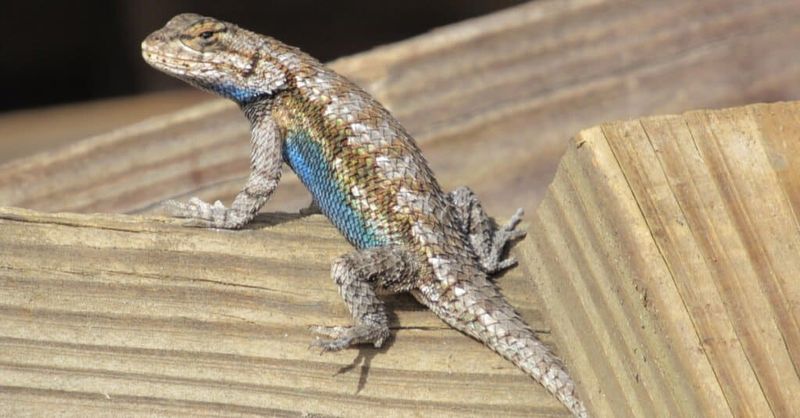
North Carolina yards host more than one kind of small lizard, and the identification actually matters before you start reading habitat clues into a sighting. The eastern fence lizard is roughly 3.5 to 7.5 inches long as an adult, counting the full body and tail together.
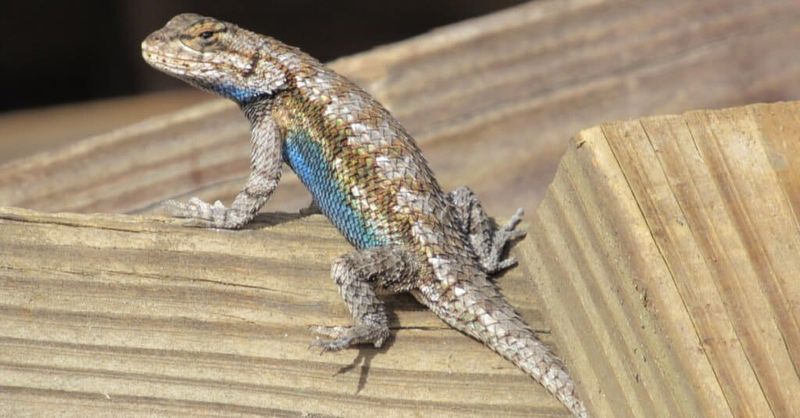
Its scales have a rough, keeled texture that gives it a slightly spiky look, and adult males often show patches of bright blue on the throat and belly, which can catch your eye when they are doing push-up displays on a fence post.
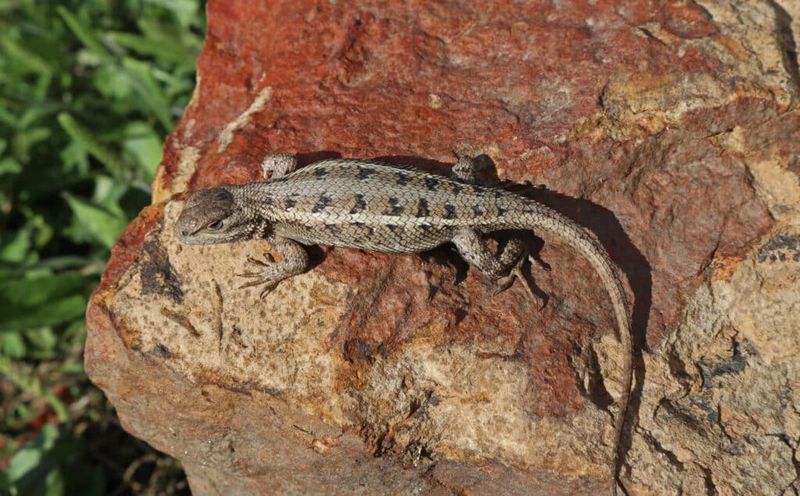
Two other lizards come up often in the same conversation. The green anole is slender, can shift from bright green to brown, and has a pink throat fan the male extends as a display.
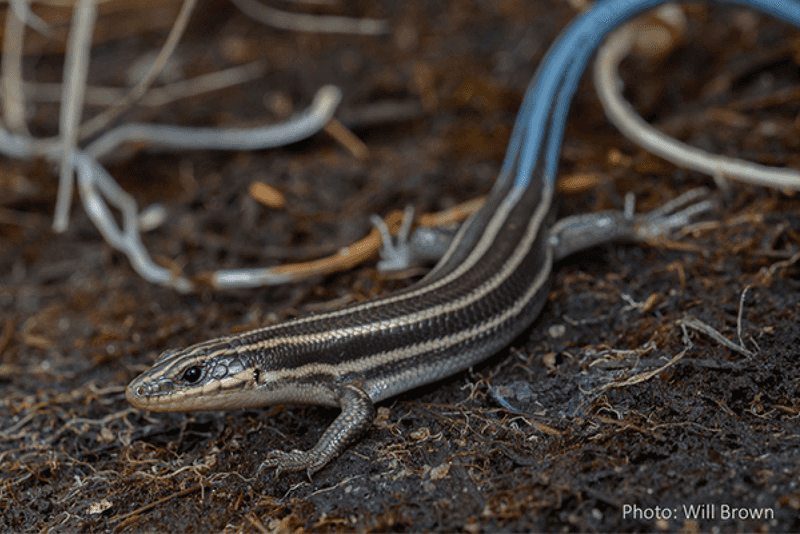
Animal Diversity Web’s profile of Sceloporus undulatus describes the fence lizard’s stockier build and rougher scales, which help separate it from the smoother, longer-bodied anole. Five-lined skinks are a third option: they are glossy, fast-moving, and the young ones have a vivid blue tail.
Skinks generally favor moister wooded cover and leaf litter rather than the open, sunny edges that fence lizards prefer.
Warm weather and longer sunny days also matter for sighting frequency. A fence lizard may use the same basking spot within a small home range for weeks, so you might be seeing the same individual several times rather than evidence of a growing population.
Sightings can increase simply because temperatures climbed or because you started paying attention after the first one.
Getting the identification right, even roughly, sharpens the habitat interpretation. If the lizard is stocky, rough-scaled, and sitting in the sun on your fence rail, the eastern fence lizard is a reasonable fit.
If it is smooth and glossy with a blue tail, you are probably watching a skink, and the habitat story shifts a bit.
The Lizard Is Not A Tick Test
Many North Carolina homeowners have heard a version of this claim: lizards eat ticks, so more lizards means fewer ticks. The eastern fence lizard does eat insects and other arthropods.
Its documented diet includes ants, beetles, spiders, grasshoppers, centipedes, and insect larvae, a broad mix that reflects a generalist hunter working through whatever it encounters. That is genuinely useful in a yard, but it does not make the lizard a targeted pest-control agent for any one species.
Here is where it gets tricky. A lot of the “lizards kill ticks” content circulating online is actually about the western fence lizard, a different species that lives in California and the West.
Studies of that species documented a specific relationship with Lyme-disease bacteria in western tick populations. That research does not apply to North Carolina, and the two lizards should not be treated as interchangeable.
For the eastern fence lizard specifically, a USGS-supported study conducted in central New Jersey found that eastern fence lizards played a minimal role in Lyme-spirochete transmission in that study area. A parasitology review on lizards and Lyme ecology reached similarly cautious conclusions about the eastern species.
Additional CDC Emerging Infectious Diseases research further underscores that Lyme-related lizard findings from western studies cannot simply be applied to eastern North America.
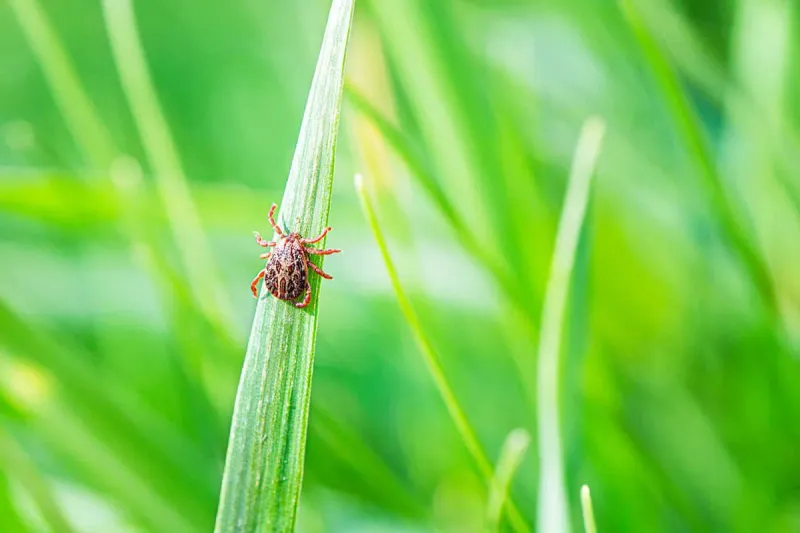
Seeing a fence lizard on your property does not tell you whether ticks are present, how many there are, or whether any are infected. The lizard’s diet is broad and opportunistic, not calibrated to your tick population.
Treating it as a living tick test would lead you to skip the prevention steps that actually work, and that is a real risk in a state where tick-borne illnesses are a genuine concern.
Create One Modest Habitat Edge
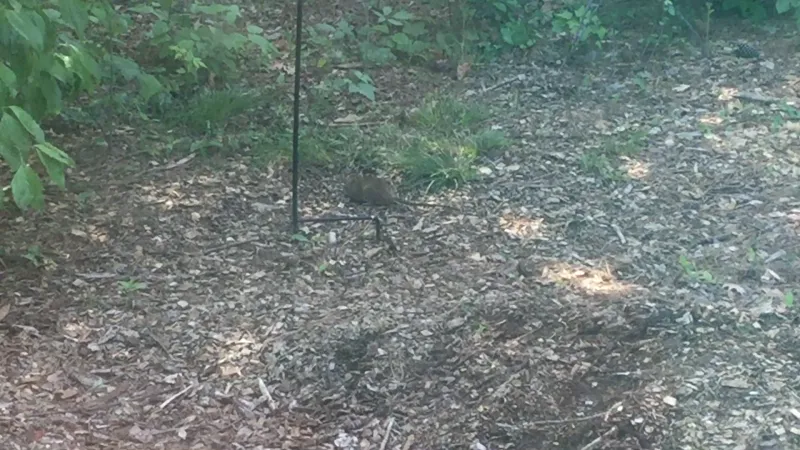
If seeing a fence lizard regularly makes you want to keep it around, the good news is that you do not need to do much. You definitely do not need to buy anything, feed the lizard, or install a water feature.
The most useful thing you can offer is structure: a warm surface near some cover, somewhere toward the lower-use edge of your property.
A practical setup might look like a flat rock or a short section of old fence board in a sunny spot beside a native shrub, some leaf litter, or an untreated brush pile. A downed log works well too, especially one that has started to weather and host the beetles and other invertebrates the lizard will hunt.
NC State Extension specifically recommends rocks, branches, downed logs, native plants, leaf litter, and brush piles as reptile habitat features worth preserving in a residential yard.
One firm caution: avoid chemically treated lumber in any brush pile or log arrangement. Pressure-treated wood contains preservatives that can leach into the surrounding soil and may affect the small invertebrates a lizard depends on, as well as the lizard itself.
The goal here is a contained edge, not a whole-property rewilding project. A strip along the back fence line, the far corner near the tree line, or a spot beside a garden bed can provide what the lizard needs without turning your lawn into something unmanageable.
Adding these features may support a lizard that is already in the area, but it will not guarantee one shows up or promise any measurable pest-control outcome. Think of it as leaving a welcome mat at the edge, not engineering a result.
Keep Family Spaces Open And Inspectable

Coexisting with a fence lizard does not mean letting the whole yard go wild, and it definitely does not mean letting brushy cover creep up to the swing set. The practical strategy is a clear separation: managed, open, easy-to-inspect space around the areas your family uses most, and a modest habitat edge somewhere farther out.
Around patios, play equipment, walkways, and the house perimeter, keep grass mowed short, remove leaf litter from the immediate area, and clear tall grass or brush that has grown close to the structure. CDC tick prevention guidance recommends all of those steps and adds one more that many North Carolina homeowners overlook: place a 3-foot-wide barrier of wood chips or gravel between your lawn and any wooded or brushy edge.
That gap makes it harder for ticks to migrate from the leaf litter zone into the mowed area where kids and pets spend time.
CDC Lyme disease prevention resources reinforce the same approach, emphasizing that habitat management around high-use spaces is a direct, recommended exposure-reduction measure. These steps address tick contact in the places it is most likely to happen.
What they do not do is compete with fence lizards for space. The lizard habitat edge you preserve at the back corner of the property is not in conflict with a tidy, inspectable patio.
The two can exist on the same lot as long as you are intentional about where each zone begins and ends. There is no established evidence that increasing eastern fence lizard numbers reduces household tick exposure, so the CDC measures are the reliable part of this plan.
The lizard is a welcome neighbor, not a substitute for mowing.
Use Targeted Pest Management Instead
A lizard sighting is not a pest diagnosis, so do not let it become one. If mosquitoes are making your evenings miserable, or if you are finding ticks on the dog after every walk, those problems need pest-specific attention, not a guess about what the local wildlife might be eating.
The approach that actually works is integrated pest management, or IPM. EPA’s introduction to integrated pest management lays out the core steps: identify the pest accurately, remove the food source or breeding habitat where you can, monitor to understand how serious the problem is, and use a labeled treatment only when monitoring shows it is necessary.
EPA’s IPM principles page adds that preventive pesticide applications have limited value when nonchemical methods can do the same job.
For mosquitoes, that means eliminating standing water first: empty saucers under pots, clean gutters, and flip anything that holds rainwater. For ticks, it means the habitat management steps covered in the previous section, plus checking yourself, your kids, and your pets after time outdoors.
EPA smart pest control guidance reinforces that targeted, problem-specific responses outperform broad applications in protecting both household health and the surrounding environment.
Broad yard spraying as a default response is worth avoiding. Unnecessary insecticide use can harm reptiles, including the fence lizard you may want to keep around, as well as beneficial insects, pets, and the waterways that North Carolina’s storm drains connect to.
If a chemical treatment is genuinely needed, choose one labeled for the specific pest, apply it only where the problem exists, and follow the label exactly. The label is the law, and it is also the clearest guide to using any product safely.
Let The Lizard Remain A Clue, Not A Cure
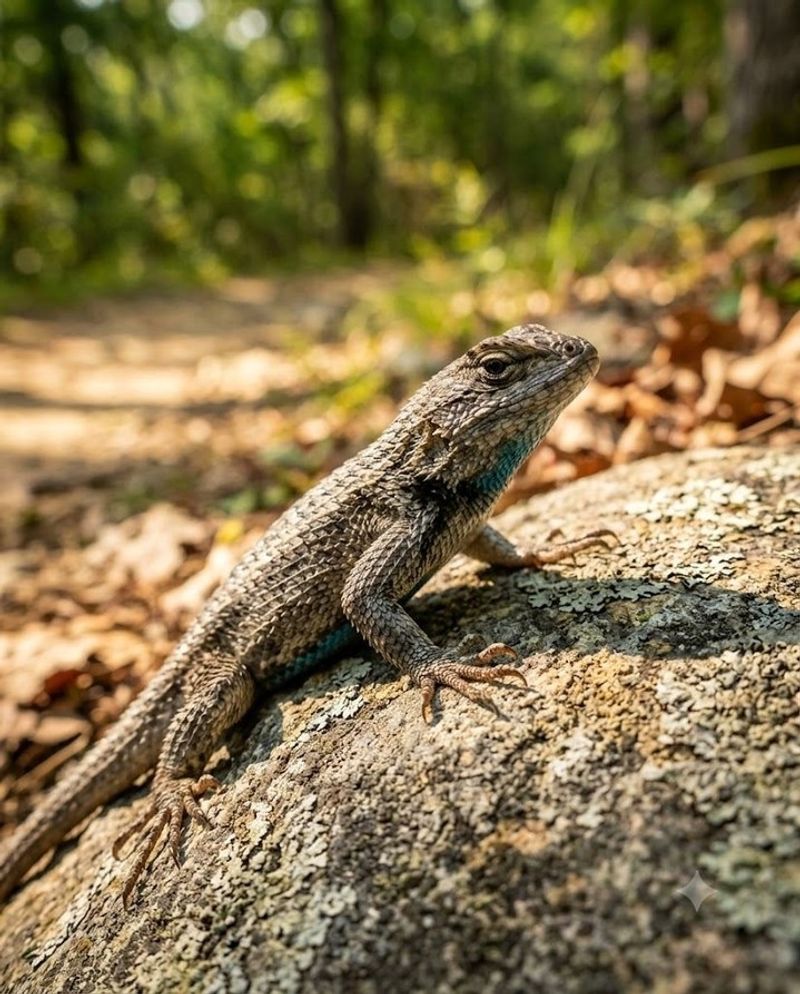
A fitting eastern fence lizard sighting tells you one corner of your property offers warmth, some cover, and enough arthropods to make foraging worthwhile. That is genuinely interesting, and it is worth appreciating.
What it does not do is grade your whole yard, confirm a tick infestation, or establish any particular disease risk for your family.
North Carolina tick surveillance data and state Lyme disease information make clear that tick-borne illness is a real concern in North Carolina, but the way to address it is through direct prevention, prompt tick checks, and the habitat management steps around high-use spaces, not through assumptions about what a lizard might be eating.
To support the fence lizards already using your property, reduce unnecessary insecticide applications where you can. Keep outdoor cats inside, since free-roaming cats are hard on small reptiles.
Supervise dogs around rock piles, logs, and leaf-litter areas where lizards shelter, especially with curious dogs that like to dig. NC State Extension notes that outdoor pets can prey on lizards and other backyard wildlife, and that yard chemicals can wash toward storm drains and harm aquatic systems.
The clearest path forward is also the simplest one: manage your high-use spaces directly with mowing, leaf removal, and the 3-foot barrier where lawn meets brush, preserve a modest habitat edge somewhere lower-traffic, and use separate evidence-based steps when a real pest problem shows up. The lizard gets to keep its sunny corner, and your family keeps a yard that is safer and more alive at the same time.
That is a genuinely good outcome for a small reptile and a North Carolina backyard.