
What It Really Means When An Owl Starts Showing Up In Your North Carolina Yard At Night
Follow us on Google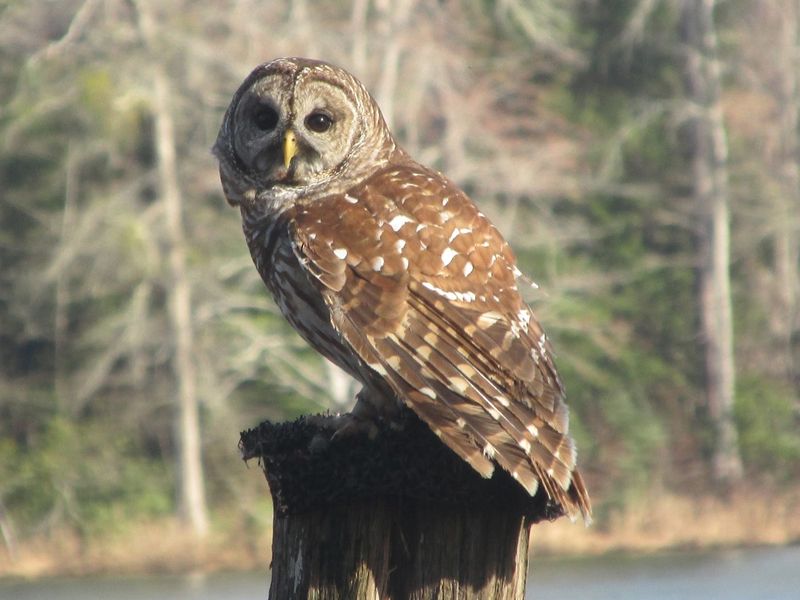
Something large and silent lands on your fence post after dark, and your first thought is that something must be very wrong in your yard.
That instinct is understandable, but an owl perching near your porch is not a guaranteed alarm bell.
North Carolina yards sit inside a living web of habitat, and an owl showing up at night usually means your property offers something useful, not that you have a crisis on your hands.
Knowing what to look for next is where the real story begins.
The Owl Is Reading Your Yard
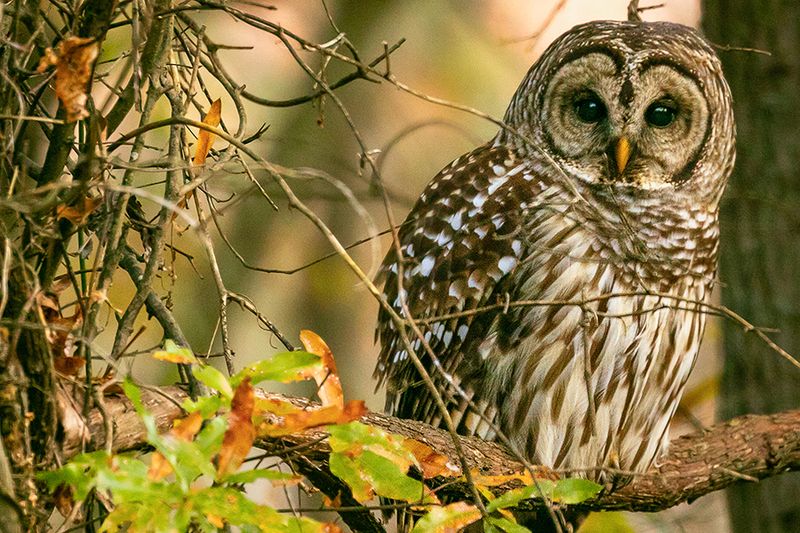
Picture your backyard the way a hunting owl sees it: a grid of open lanes, shadow pockets, perch heights, and movement below.
A fence post, a roof edge, a utility line, a dead branch, or a tall garden stake all give an owl a clear sightline to the ground.
That perch is not decoration; it is a working platform.
What pulls an owl to your yard in the first place is some combination of prey, cover, access, or a convenient spot to watch and wait.
NC State Extension’s owl resource describes owl habitat in terms of food availability, cover structure, forest openings, and cavities rather than any single backyard feature.
Your yard may be one stop in a broader local landscape the bird covers on a given night, not its permanent address.
That reframe matters.
Instead of asking “do I have an infestation,” a more useful question is: what conditions around this property make hunting possible?
Open lawn with low ground cover, mature trees nearby, a brush pile beside the shed, spilled birdseed under a feeder, a gap behind the garage siding.
Each of those is a piece of habitat information, and NC State Extension’s wildlife guidance specifically recommends identifying what a yard offers before assuming a control problem exists.
An owl reading your yard is giving you a quiet signal worth following up on, not a verdict.
The bird may fly off to hunt a neighbor’s field or the drainage corridor two streets over before you finish your coffee.
What it leaves behind is a good reason to take a closer look at your own property on your own terms.
Species Changes the Signal
Not every owl sends the same message.
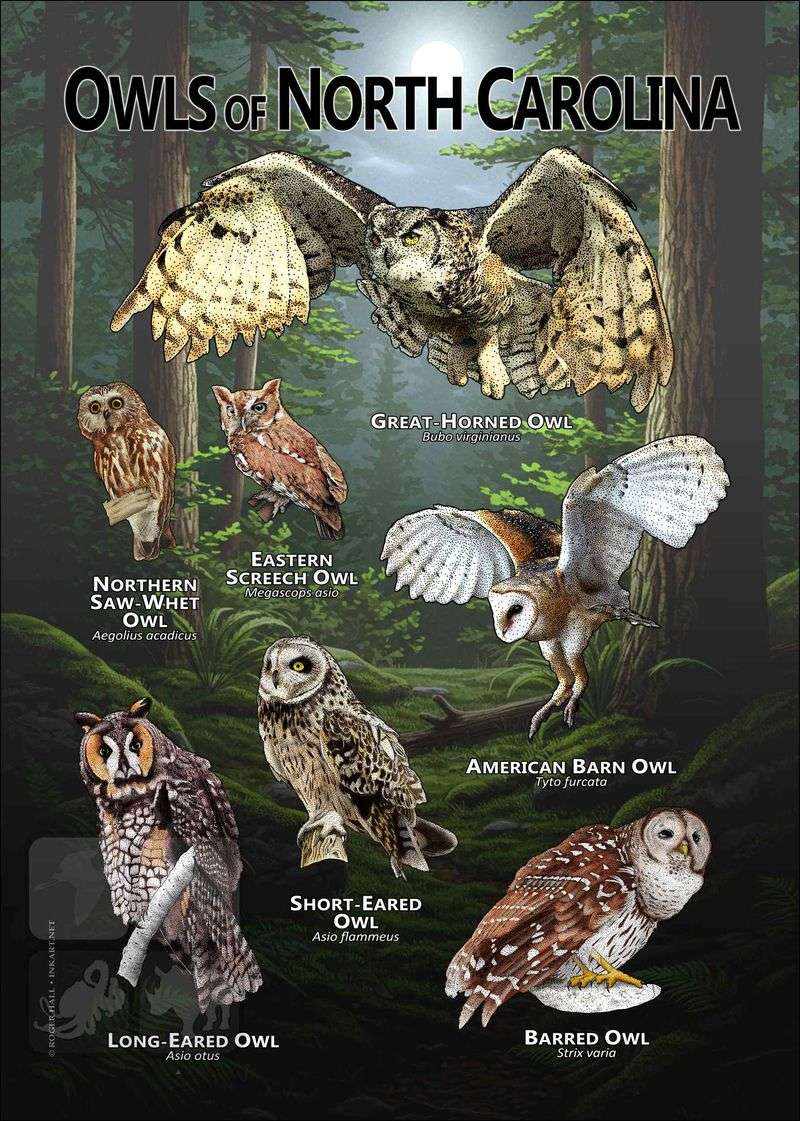
The species matters as much as the sighting itself, and North Carolina is home to several owls whose habits and habitats are genuinely different from one another.
The barred owl is probably the one most North Carolina homeowners encounter.
NC Wildlife describes barred owls as statewide birds strongly tied to wetlands, bottomlands, swamps, and waterways, though they also use nearby open areas for hunting.
If you live near a creek corridor, a wooded drainage, or a low-lying area in the Piedmont or Coastal Plain, a barred owl on your fence is almost expected.
Its call, a resonant “who cooks for you,” carries a long way on a still night.
The Eastern screech-owl is smaller and easier to miss.
It favors forest edges and tree cavities, which means a mature oak or a old pecan tree in a suburban yard can be enough to draw one in.
NC State Extension notes that screech-owls are cavity nesters and use a wider variety of prey than most people expect, including insects, small birds, and amphibians along with small mammals.
Barn owls prefer open habitat: fields, pastures, marshes, and the rafters of old farm buildings.
NC Wildlife’s barn owl profile notes that the species is not simply attracted to a box; surrounding habitat and food supply have to match.
If your yard backs up to a farm field or open grassland in the Sandhills or eastern Coastal Plain, a pale, heart-faced owl crossing the yard is a plausible visitor.
Great horned owls are large, powerful birds capable of taking prey considerably bigger than a mouse.
The NC Wildlife great horned owl profile notes that the species can take rabbits, squirrels, and other sizable animals.
A single dim glimpse at night is rarely enough to pin down a species with confidence, but size, call, nearby water or woods, and the general landscape around your property can all help narrow the possibilities.
One Sighting Cannot Diagnose Rodents
Here is where a lot of well-meaning yard advice goes sideways.
An owl landing on your fence does not confirm that your yard is overrun with mice.
It confirms that an owl landed on your fence.
Owls can influence rodent numbers in the right conditions.
A 2026 vineyard study found that greater barn-owl hunting pressure was associated with a 38 to 52 percent reduction in aboveground rodents, which is a meaningful finding.
But that study took place in an agricultural vineyard with nesting pairs and managed habitat, not a residential backyard with a single visiting bird.
Translating that result into a promise for your yard would be a stretch the research does not support.
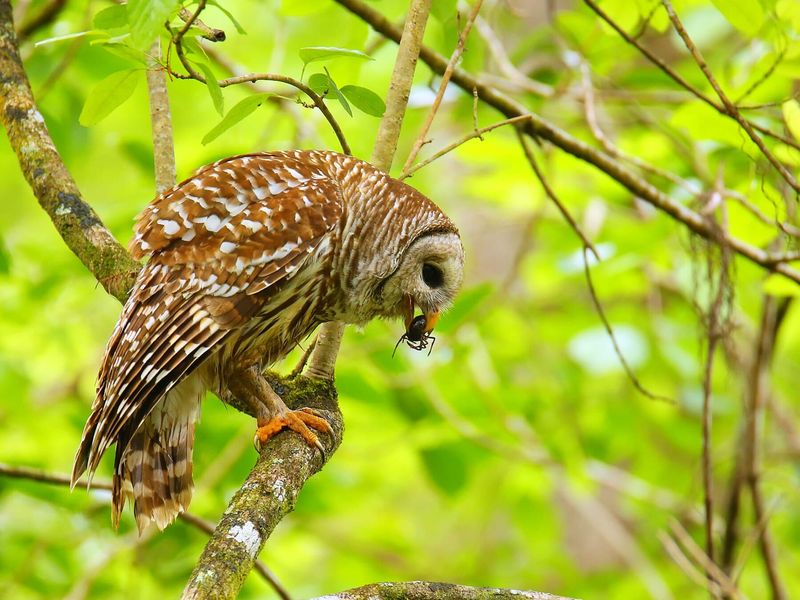
A barred owl hunting near a Piedmont creek corridor may be targeting frogs and crayfish as readily as mice.
An Eastern screech-owl working a forest edge might be snapping up beetles and moths on a given night.
NC Wildlife confirms that barred owl diets include amphibians, fish, birds, and invertebrates alongside small mammals, so the presence of an owl does not point exclusively at rodents.
Owl pellets are another thing people misread.
A pellet under a perch shows what an owl swallowed and later regurgitated, including fur, bones, and insect parts, but Cornell Lab of Ornithology explains that a pellet does not tell you where the prey was caught.
The owl could have eaten that mouse in the field behind the neighborhood and simply chosen your fence as a resting spot afterward.
The owl is a clue worth taking seriously, and NC State Extension advises identifying and monitoring a wildlife situation before assuming intervention is needed.
Go look for actual rodent evidence in your yard rather than treating a nighttime bird sighting as the diagnosis itself.
Your Yard Leaves Better Rodent Clues
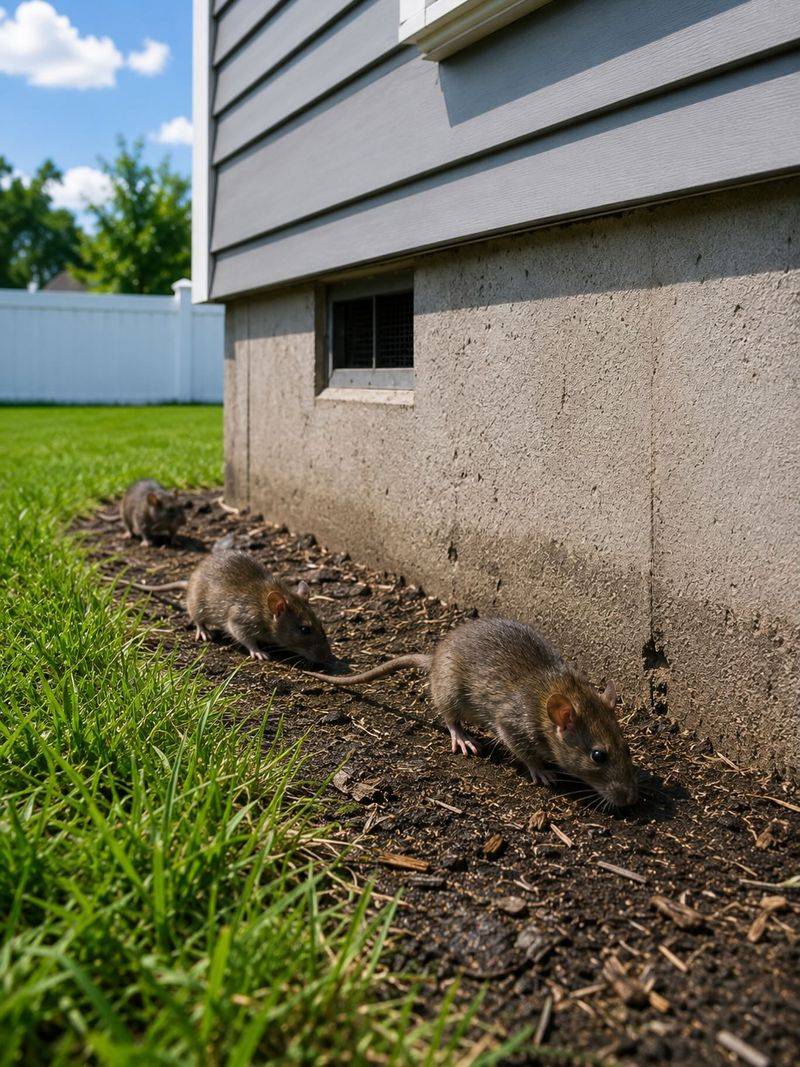
Your yard will tell you far more about rodents than any owl will.
The signs are direct, physical, and specific to your property, which makes them genuinely useful for deciding what to do next.
Start at the structures: the house foundation, the shed, the garage corners, the porch skirting, and any chicken coop or outdoor storage.
Look for droppings first.
NC State Extension’s rat management guide notes that rat droppings are typically about one-half to three-quarters of an inch long, dark, and tapered at the ends.
Mouse droppings are smaller, roughly one-quarter inch.
Finding either near a food source or along a wall line is a more concrete indicator than any bird on a fence post.
Entry gaps are the next thing to measure against.
Juvenile rats may squeeze through openings as small as one-quarter inch wide, and adults can use gaps around one-half inch or larger.
Check where pipes enter the foundation, where vents meet siding, around soffits, and along rooflines where flashing has pulled away.
A gap that looks minor to you looks like a front door to a rat.
Beyond droppings and gaps, look for gnaw marks on wood or plastic, shredded nesting material tucked into corners or insulation, grease smears along walls where animals travel repeatedly, and any disturbed or missing food in storage areas.
A persistent musky odor in a shed or crawl space is worth investigating.
NC State Extension’s wildlife chapter lists birdseed, pet food, livestock feed, grass seed, open garbage, standing water, and leaky pipes as conditions that reliably support rat and mouse activity near homes.
None of these clues alone proves a full infestation, but finding several together in the same area gives you something real to act on, and that is more than any owl sighting can offer on its own.
Remove What Brings Rodents Home
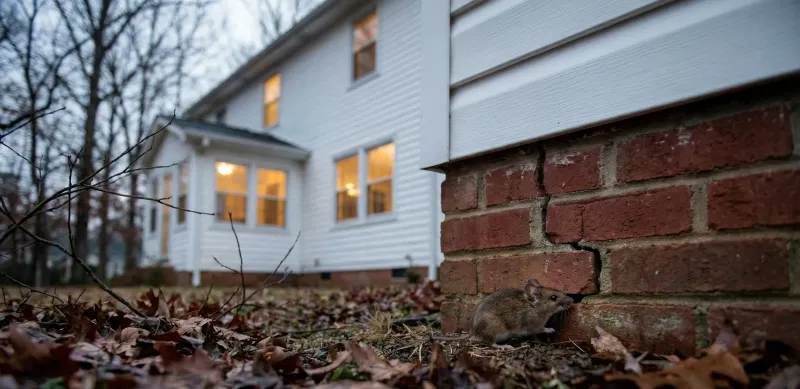
Once you know what rodents need to thrive near a building, removing those conditions becomes a straightforward project.
You do not have to strip the yard of every plant or natural feature to make progress; you just need to eliminate the specific things that bring animals against the house itself.
Food is the first target.
Bring pet food and water bowls inside at night.
Clean up spilled birdseed from under feeders regularly, because a pile of seed on bare ground is essentially a buffet sign for mice.
Store all seed, livestock feed, and grass seed in tightly sealed metal containers, not plastic bags or cardboard boxes a rodent can chew through in minutes.
Secure garbage cans with lids that actually close and latch.
NC State Extension’s rat management guidance recommends storing materials at least 12 to 18 inches off the floor and away from walls in areas where rats may be present, which applies to garages, sheds, and outbuildings as much as interior spaces.
A wood pile stacked directly against the foundation is not just a fire hazard; it is ready-made rodent cover within a few feet of your siding.
Exclusion is equally important.
Fix leaky outdoor faucets and dripping irrigation lines, because standing water near a structure attracts animals looking for a reliable source.
Seal openings around pipes, vents, soffits, and rooflines with hardware cloth, metal flashing, or appropriate caulk.
A foam sealant alone is not enough; rodents chew through it.
NC State Extension’s wildlife chapter draws a clear line between targeted sanitation near buildings and stripping natural cover across the whole yard.
You can keep a brush pile or a native plant border at the yard’s edge without parking it against the garage wall.
The goal is a buffer, not a moonscape.
Support the Owl Without Manufacturing a Pest Problem
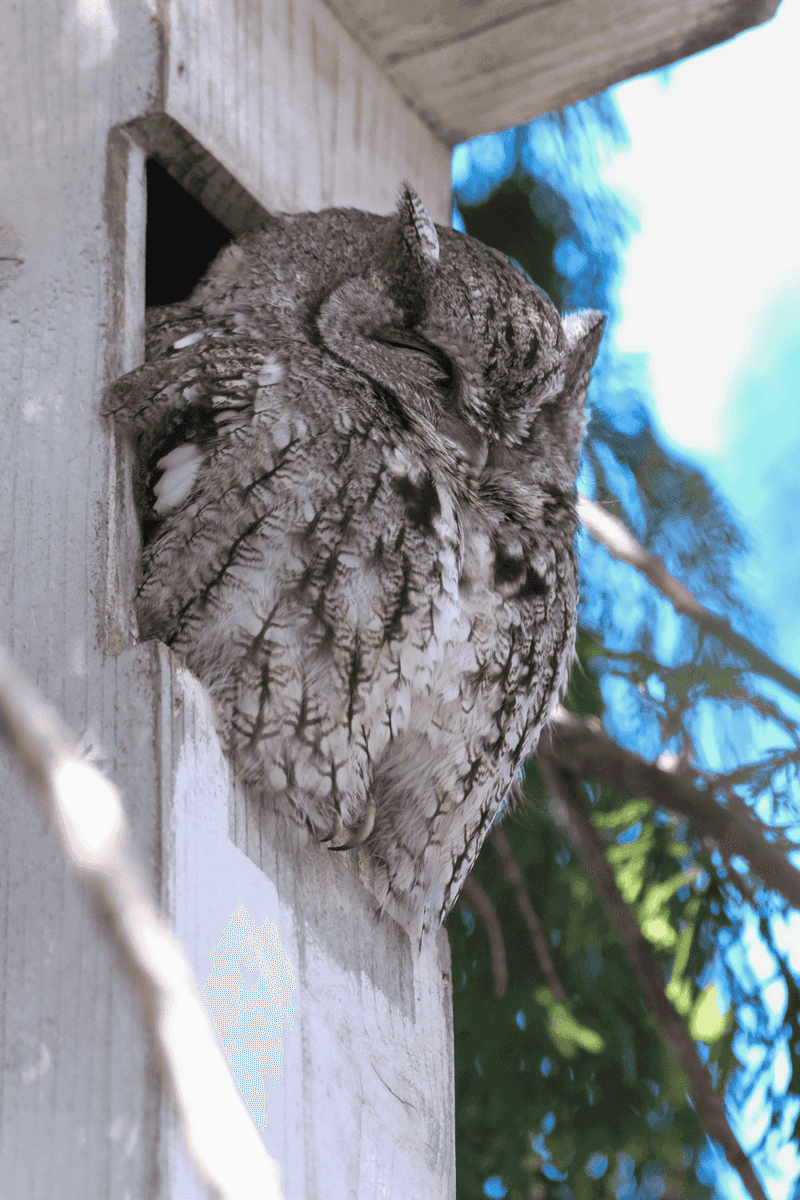
An owl that has already found your yard useful does not need you to do much.
The most effective thing you can do is avoid undoing the conditions that drew it there in the first place.
Mature trees are the foundation.
Large oaks, tulip poplars, and pecans common across the North Carolina Piedmont provide hunting perches, nesting sites, and the insect populations that support the prey an owl eats.
Dead trees and large snags, where they are not a safety hazard, can provide cavity nesting space that is genuinely scarce in managed suburban landscapes.
NC State Extension’s owl resource identifies cavities and forest structure as key habitat elements, not just open ground.
Pesticide and rodenticide use is worth reconsidering when an owl is regularly hunting nearby.
Routine insecticide applications reduce the insect populations that feed smaller animals, which in turn reduces what the owl can catch.
Rodenticides carry a separate and more direct risk.
NC Wildlife’s great horned owl materials warn that pesticides can harm owls through contaminated prey, and second-generation anticoagulant rodenticides in particular pose serious risks to raptors that eat poisoned animals.
If you want to go further, a nest box is an option worth considering carefully.
Box design is species-specific.
NC State Extension’s backyard bird habitat guide describes an Eastern screech-owl box with an 8-by-8-inch floor, a 3-inch entrance hole, and placement between 10 and 30 feet above the ground.
A barn owl box is larger, with a 4-inch entrance, and should be placed 12 to 18 feet high in suitable open habitat.
NC Wildlife notes explicitly that barn owls are not simply attracted because a box exists.
Habitat, food availability, competition from other cavity-nesting birds, and placement all factor into whether a box gets used.
A box installed without thought for those conditions may sit empty for years.
NC State Extension’s nest box guide can help you match the right design to the right site before you pick up a drill.
Let the Owl Help as One Layer
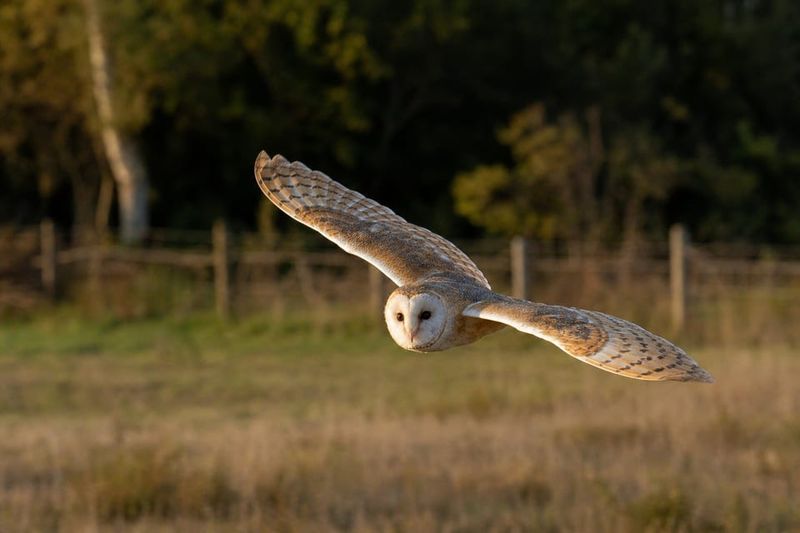
Natural predation is a real ecological process, and an owl hunting your yard is genuinely doing something useful.
But it works best when it is treated as one layer of a broader approach rather than a standalone fix.
Exclusion seals the entry points.
Sanitation removes the food and water that sustain rodents.
Snap traps placed along active travel routes can reduce populations that have already established inside a structure.
A pest control professional can assess situations where activity persists despite those efforts.
The owl complements all of those steps; it does not replace any of them.
NC State Extension is clear that rodent control is often temporary when food, water, shelter, and access conditions remain unchanged.
Rodenticides deserve a specific caution when raptors are present.
EPA risk assessment documents identify secondary exposure as a meaningful concern when raptors eat poisoned rodents, with second-generation anticoagulant rodenticides posing especially serious risks to predators.
If rodenticide use is genuinely necessary, choosing a first-generation product in a tamper-resistant station and following label directions reduces, though does not eliminate, that exposure risk.
Owls in North Carolina are protected by federal and state law.
Do not disturb an active nest, a nesting bird, eggs, or young.
Fish and Wildlife Service explains bird nest protections and the legal framework that applies.
Contact NC Wildlife before taking any action near a nest; legal protections and applicable exceptions can depend on the species, the nest status, and the specific circumstances.
If you find a young owl on the ground, give it space first.
NC Wildlife advises that young wildlife may be left alone by parents for extended periods and that animals should be left alone unless there is clear injury or serious immediate danger.
A fledgling owl sitting on a low branch or on the ground near a tree is often exactly where its parents expect it to be.
Inspect your yard, secure food and access points, avoid poison when the bird is hunting nearby, and give the owl room to do what it came to do.
A yard that is genuinely harder for rodents to live in is a yard where an owl has a real reason to keep coming back.