
What It Really Means When An Eastern Tiger Swallowtail Keeps Visiting Your Yard
Follow us on Google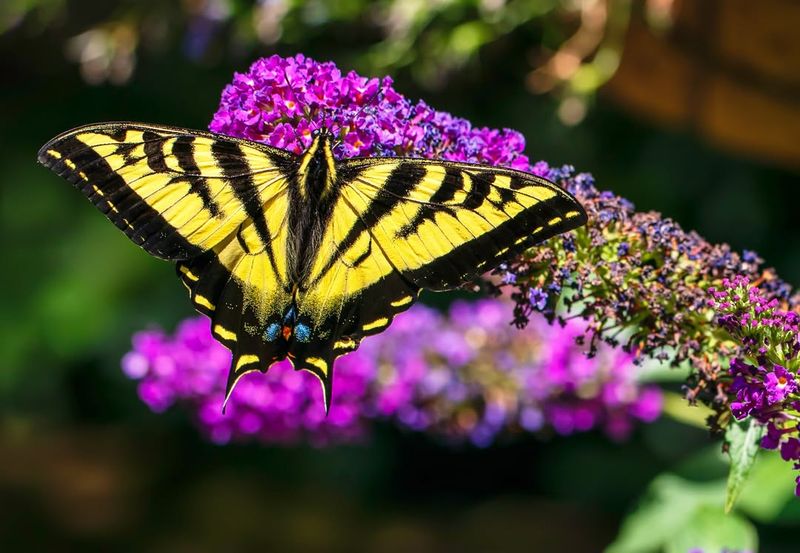
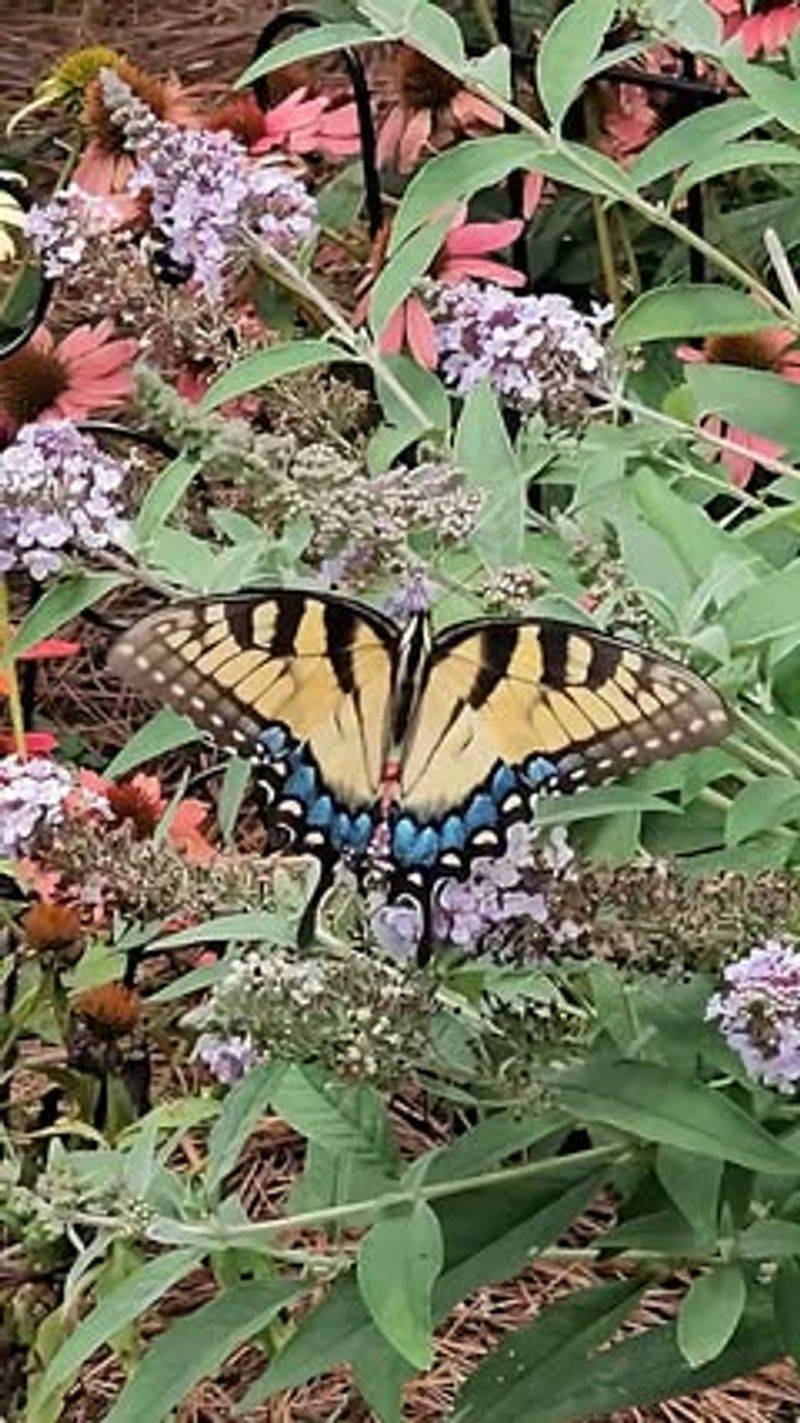
You glance out at the garden and there it is again, that big yellow-and-black butterfly drifting past the coneflowers like it owns the place.
If it keeps showing up, that is not a coincidence, and it is not magic either.
Your yard is offering something useful, and the butterfly is simply taking advantage of it.
Understanding what that something is can help you make your North Carolina yard work even better for both your family and the wildlife passing through.
Your Yard Has Become a Useful Stop
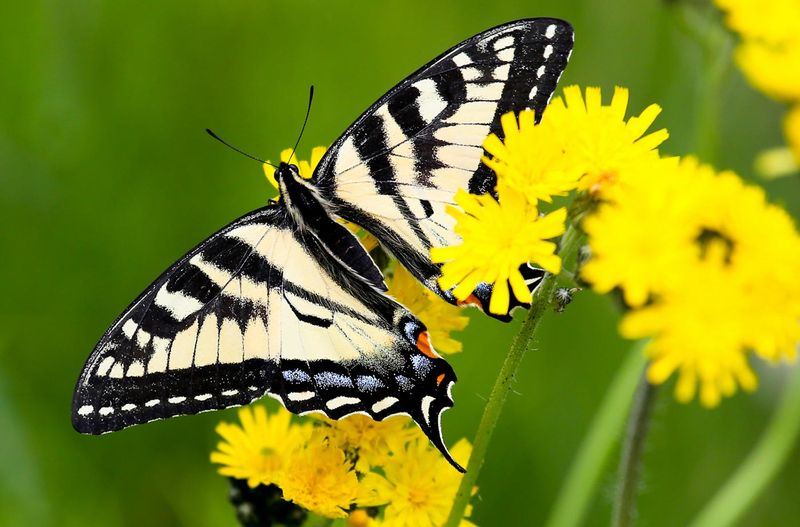
Spot an Eastern Tiger Swallowtail, Papilio glaucus, drifting through your yard more than once and the most straightforward explanation is also the most accurate: your property is offering a resource the butterfly can use.
That resource might be a patch of nectar-rich flowers, a warm sunny corner, a damp stretch of soil near a downspout, or the edge of a woodland nearby.
Butterflies and Moths of North America notes that Eastern Tiger Swallowtails are common across the continent and readily use suburban landscapes, forest edges, roadsides, and gardens.
This species is not rare in North Carolina.
The Butterflies of North Carolina database describes it as common to sometimes abundant statewide, with a flight period that generally runs from early March through early October, with occasional sightings into November.
That is a long season, and during it, adults move widely across the landscape in search of food, warmth, moisture, and mates.
What the repeat visit does not mean is that one particular butterfly has decided your yard is special and has formed some kind of attachment to it.
Different individuals may be stopping by on different days, drawn by the same reliable resources.
The yard is not being chosen the way a person chooses a favorite restaurant; it is simply functioning as a usable stop along a daily route that may cover quite a bit of ground.
That reframe is actually more useful than the romantic version.
If the yard is drawing repeated visits, it is telling you something concrete about what you have already got going for wildlife, and possibly pointing toward what a small adjustment could add.
What Is the Butterfly Doing Here?
Before you rearrange the garden or add a new plant, spend a few minutes just watching.
What the butterfly is actually doing tells you far more than the fact that it showed up at all.
A butterfly repeatedly landing on flowers and curling its proboscis into the blooms is almost certainly feeding on nectar.
That is the most common reason Eastern Tiger Swallowtails turn up in home gardens, and NC State Extension’s butterfly gardening guide confirms that adults use a wide variety of nectar sources across the season.
Watch the proboscis: if it is unfurling into a flower, the butterfly is eating.
A butterfly circling a sunny clearing, crossing the same patch of lawn repeatedly, or chasing other butterflies away is more likely patrolling.
Males do this to find mates and to assert temporary claim over a patch of territory.
It looks purposeful because it is, but it has nothing to do with your flowers.
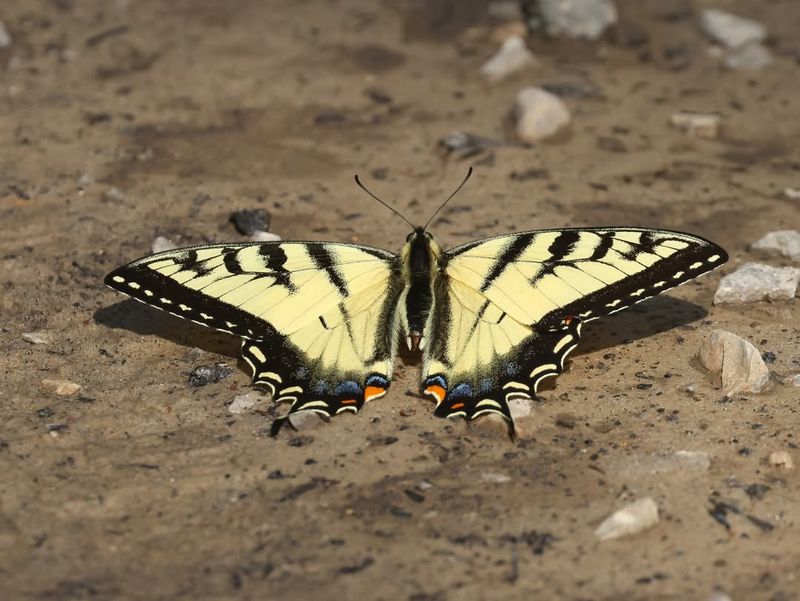
Landing on a warm flat surface, a rock, a paved path, or a bare patch of soil in full sun is consistent with basking or resting behavior.
Butterflies are cold-blooded and genuinely need warmth from outside sources to stay active, so a sunny landing spot is a genuine resource.
A butterfly probing damp soil, sand, wet gravel, or a muddy edge near a hose bib is likely puddling.
Males in particular do this to take up minerals and moisture.
Sex and behavior together matter here: males commonly patrol and puddle, while females are the ones that select host plants for egg laying.
A useful visit, in any of these forms, does not automatically mean the butterfly is preparing to reproduce in your yard.
The Resource May Be Outside Your Fence
Here is where things get genuinely interesting.
The butterfly feeding on your coneflowers may have nothing to do with your yard as a breeding site, because the plant it actually needs for its caterpillars could be standing in a neighbor’s yard, along a creek bank, or at the edge of a nearby park.
Adult Eastern Tiger Swallowtails are strong fliers that move across broad landscapes.
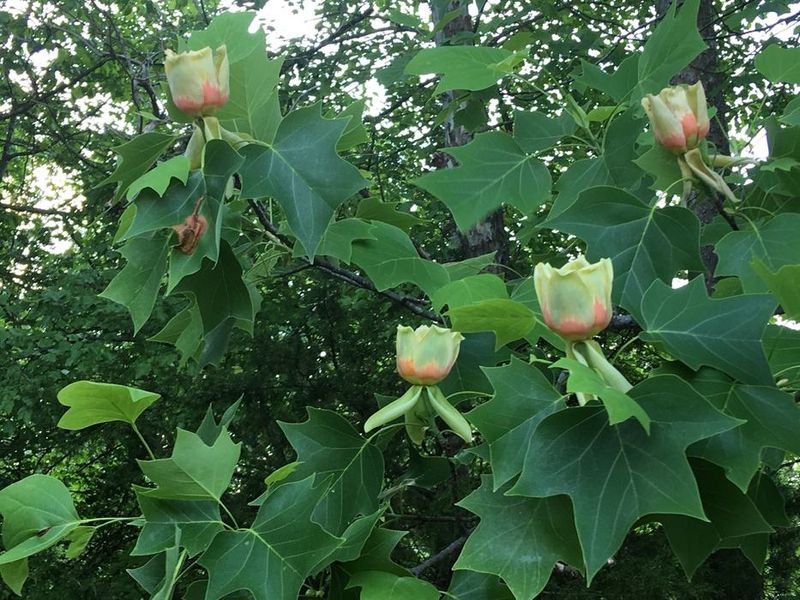
They feed from many flower types, but the caterpillar stage depends on specific woody host plants, several of which are large native trees.
According to Butterflies and Moths of North America, documented host plants include tulip tree, black cherry, wild plum, ash, and several other woody species that often grow well beyond anyone’s garden bed.
Across the Piedmont and Coastal Plain, mature tulip poplars and black cherries are common along creek corridors, fence lines, and neighborhood edges.
In the mountains and foothills, those same trees mix with river birch and ironwood in riparian zones.
A butterfly can nectar beside your patio chair every afternoon while the tree supporting its caterpillar stage stands 200 feet away in a drainage ditch or a neighbor’s back corner.
That connection matters because it shifts the way you think about what your yard contributes.
You do not have to host the entire life cycle to be genuinely useful.
NC State Extension frames butterfly gardening as building one node in a larger habitat network, and a yard that reliably offers nectar and a puddling spot is a real and valuable node, even if the nearest host tree is across the street.
A Visit Does Not Prove Caterpillars
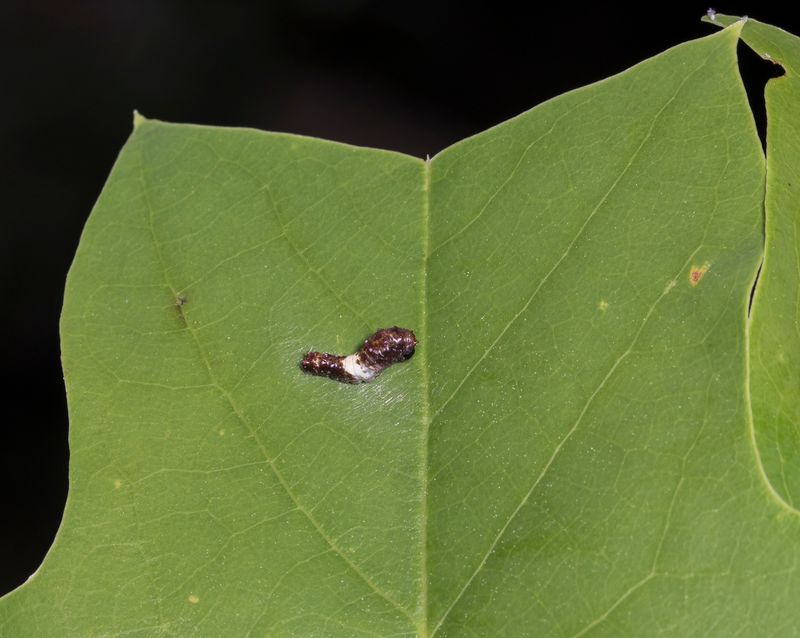
Seeing an Eastern Tiger Swallowtail land on a leaf is not the same as watching it lay an egg.
Females do lay eggs singly on the leaves of suitable host plants, but the behavior happens quickly, and a casual glance will not catch it.
Repeated adult visits, even by a female, do not prove that breeding is underway in your yard.
If you genuinely want to check for evidence of reproduction, the place to look is the foliage of host plants.
NC State Extension lists several woody plants as larval hosts for Eastern Tiger Swallowtails in North Carolina: tulip tree or yellow poplar, Liriodendron tulipifera; black cherry, Prunus serotina; wild plum, Prunus americana; ash, Fraxinus species; river birch, Betula nigra; ironwood, Carpinus caroliniana; and Carolina willow, Salix caroliniana.
Those are all trees or large shrubs, not the average flower bed.
On those plants, look for small pale eggs laid singly on the upper surface of leaves, young caterpillars that mimic bird droppings in their early stages, older caterpillars that are green with a pair of large false eyespots near the head, or silk mats where a caterpillar rests between feeding sessions.
Butterflies and Moths of North America describes caterpillars that rest on these silk pads on leaves, which can help narrow the search.
A few cautions apply.
Not every green caterpillar on a host tree belongs to this swallowtail; many species share these trees.
And if you do find caterpillars on a plant you designated as a host, some leaf damage is the intended result.
A host plant that shows no chewing at all is not doing its job.
Small Habitat Changes Can Keep It Coming
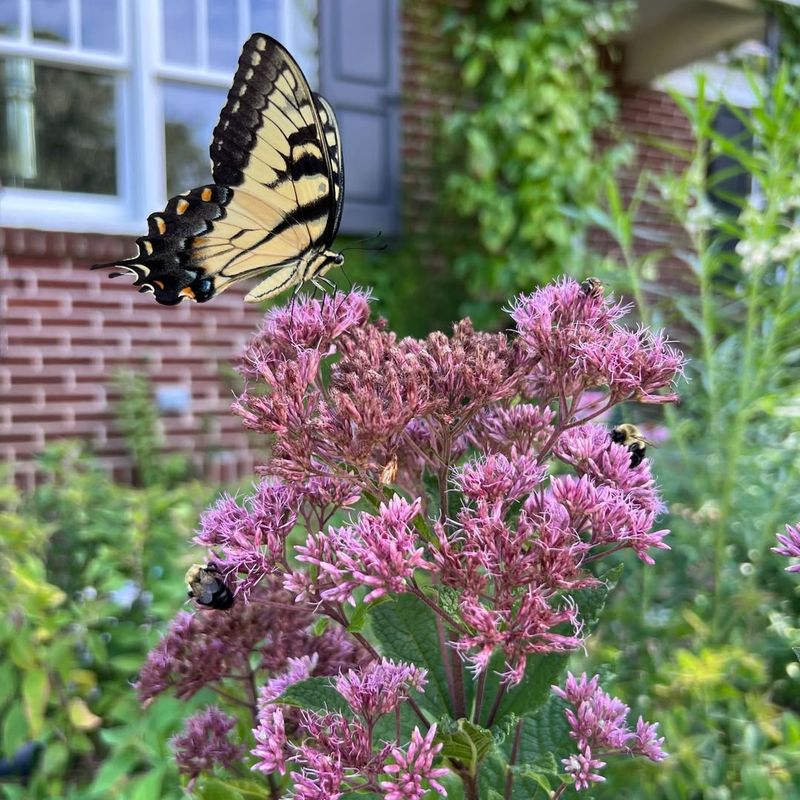
Once you know what the butterfly is using your yard for, you can make small, practical adjustments that support that use without turning the yard into something your family cannot enjoy.
The goal is a combination of elements, not a single magic plant.
For nectar, sturdy natives work best because they hold up through North Carolina’s muggy summers and afternoon thunderstorms.
Good choices include milkweed, Asclepias species; Joe-Pye weed, Eutrochium purpureum; coneflowers, Echinacea purpurea; phlox; liatris; and wild cherry.
Milkweed is worth growing for nectar and for monarch support, but it does not replace the woody host trees that Eastern Tiger Swallowtail caterpillars actually need.
NC State Extension recommends planting nectar sources in clusters large enough to be visible from a distance, since butterflies locate flowers partly by color mass.
Sun matters as much as plants do.
Butterflies need warmth to fly, and a yard that is heavily shaded through the afternoon offers less than one with at least one open, sunny patch.
A flat rock or two in that sunny spot gives the butterfly a place to warm up quickly, which genuinely increases the time it can spend active in your yard.
For puddling, a shallow dish filled with damp sand or a small patch of consistently moist soil near a rain garden or downspout works well.
Keep it family-friendly: damp sand or gravel is all you need, and it avoids the hygiene concerns that come with other mineral sources sometimes mentioned in older gardening guides.
NC State’s native landscaping guidance notes that new plantings can attract butterflies quickly, but a fully established garden with layered structure and varied bloom times may take several growing seasons to reach its potential.
One new plant is a start, not a guarantee.
Identification Matters More in the Mountains
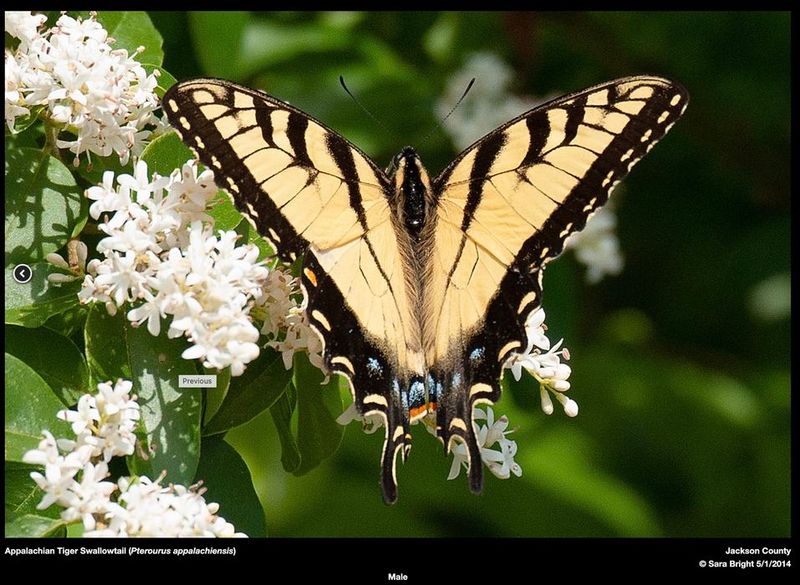
Before drawing any conclusions from a yellow-and-black butterfly in your yard, a quick identification check is worth the effort.
Across most of North Carolina, from the Piedmont to the coast, a large yellow swallowtail with black tiger stripes is almost certainly an Eastern Tiger Swallowtail.
But in the mountains, the picture gets more complicated.
The Appalachian Tiger Swallowtail, Papilio appalachiensis, overlaps with Eastern Tiger Swallowtails in the Blue Ridge and surrounding elevations.
The Butterflies of North Carolina database cautions that observers in the mountains should not automatically call every tiger swallowtail an Eastern Tiger Swallowtail, particularly during May and June when both species are active.
The Appalachian Tiger Swallowtail account in the same database describes a species that looks very similar to its eastern cousin and shares much of the same habitat.
Dark females add another layer of difficulty.
Eastern Tiger Swallowtail females can appear in a dark form that is mostly black with blue shading, which can resemble Pipevine Swallowtails, Spicebush Swallowtails, and other dark swallowtails.
Butterflies and Moths of North America notes the dark female form and the identification challenges it creates.
If the identity of your visitor matters for record-keeping or habitat planning, a clear photograph of the underside of the hindwing is the most useful piece of evidence.
Wing undersides carry markings that help separate the species.
A quick memory of a passing butterfly, even a vivid one, is usually not enough to be certain.
Protect the Visitor from Yard Chemistry
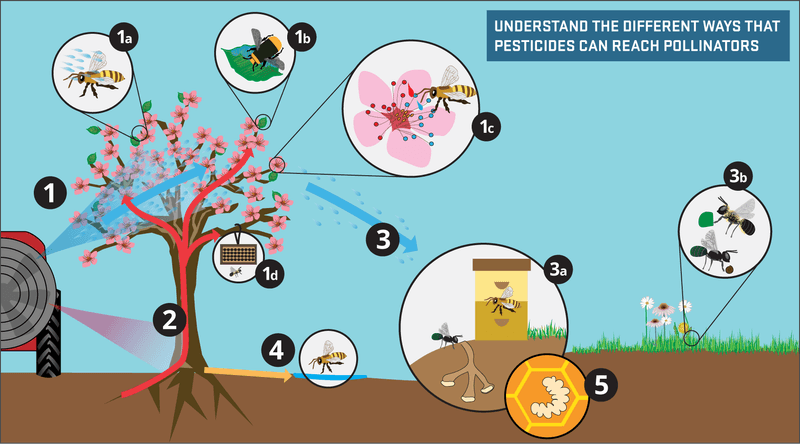
Eastern Tiger Swallowtails will not reduce the mosquitoes or ticks in your yard.
That connection gets made sometimes because people associate more wildlife with a healthier yard, and that is broadly true, but swallowtails feed on flower nectar as adults and on tree leaves as caterpillars.
They are not predators of mosquitoes, ticks, or Japanese beetles, and planting for them should not be sold as a pest-control strategy.
What the butterfly does need from you is a yard that is not routinely treated with broad-spectrum insecticides near flowering plants and host vegetation.
NC State Extension’s pesticide safety guidance advises using pesticides only as part of integrated pest management and warns that misuse can harm people, pets, wildlife, and the broader environment.
The practical translation: spray for a verified problem, use the most targeted product available, follow the label exactly, and avoid treating flowers when they are open and butterflies are active.
Bacillus thuringiensis, commonly called Bt, deserves special attention here.
It is often described as a natural or low-risk option, but NC State’s pest management resources describe Bt as selective for moth and butterfly caterpillars.
Applied to host plant foliage, it will harm swallowtail caterpillars the same way it harms any other lepidopteran larva.
It is not automatically safe around a butterfly garden.
For mosquito pressure specifically, the most effective household steps are removing standing water, using personal protection during peak hours, and reserving any spray treatment for a confirmed, localized problem.
The Xerces Society’s pollinator pesticide guidance recommends avoiding sprays when flowers are blooming and choosing the most targeted application method possible.
Xerces research on urban pesticide exposure documents how routine yard treatments can reach non-target insects well beyond the intended application area, which is a real risk in any neighborhood where butterfly habitat and treated lawns sit side by side.
The Repeat Visit Is a Useful Clue
A butterfly that keeps coming back is giving you real, readable information about your yard.
The key is matching what you observe to what you actually change.
Watch for a few minutes before doing anything else.
If the butterfly is working the flowers, the nectar supply is what drew it, and adding more bloom time or cluster size will likely strengthen that pull.
If it is circling and chasing, that is patrolling behavior and your yard happens to sit in a male’s range.
If it is landing on warm pavement or a sun-baked rock, a dedicated flat basking surface in a protected sunny spot is a genuinely useful addition.
If it is probing damp soil near the garden hose, a shallow dish of moist sand near the beds would serve the same purpose more reliably.
NC State Extension frames each of these as distinct habitat elements, not interchangeable fixes.
Your yard does not need to support every life stage to matter.
A property that offers good nectar, a warm perch, and a puddling spot is a real contributor to the broader living landscape, even if the nearest host tree is down the block.
Butterflies and Moths of North America describes Eastern Tiger Swallowtails as wide-ranging adults that move across many habitat types, which means your yard is one piece of a much larger puzzle, and a useful piece counts.
The butterfly is not delivering a verdict on your garden or sending a message.
Its return simply means something here is working, and that is a good enough reason to keep paying attention.