
North Carolina Gardeners Are Replacing Bare, Useless Lawn With Plants That Earn Their Space
Follow us on Google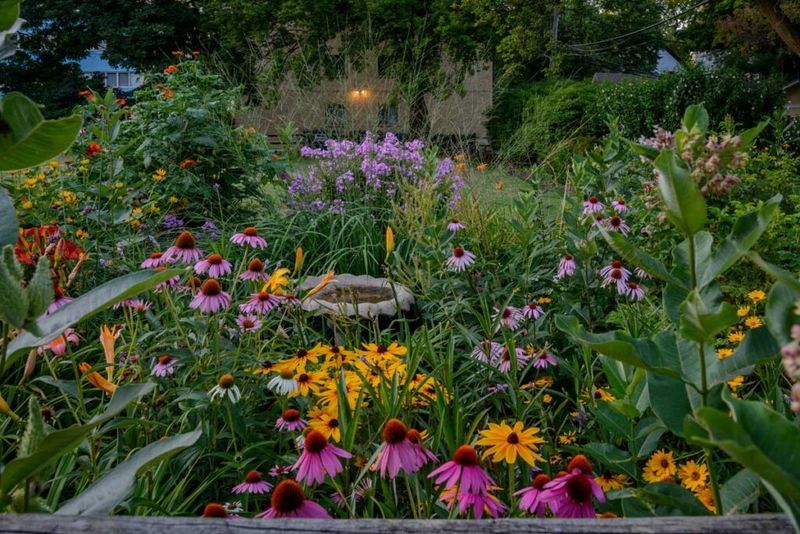
Walk the edges of your yard on a hot July afternoon and you will probably find at least one patch of grass that does nothing.
It does not get played on, it does not drain well, and the mower barely fits back there anyway.
Replacing those low-use spots with plants that actually do a job, whether that means feeding birds, anchoring a slope, or hosting caterpillars, is one of the most practical moves a North Carolina homeowner can make.
You keep the turf that earns its keep and put everything else to work.
Let the Lawn Earn Its Space
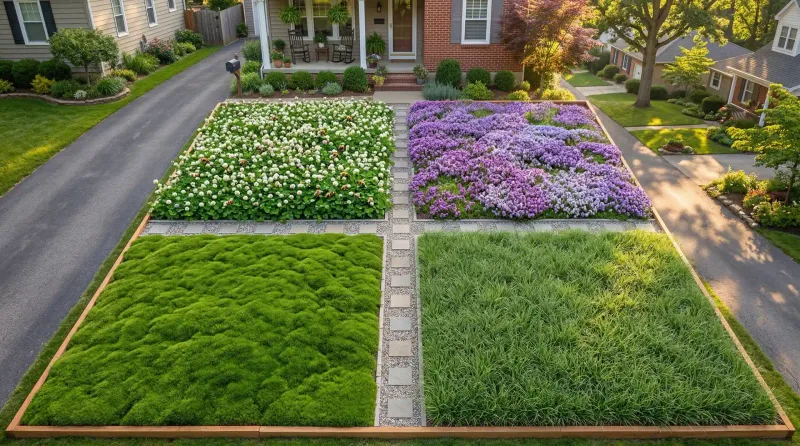
Most North Carolina yards have at least one section of grass that nobody actually uses.
Maybe it is a narrow strip along a fence that the mower barely squeezes through, a shaded slope where the turf thins out every summer, or a back corner that sees foot traffic maybe twice a year.
That grass still needs mowing, watering in a drought, and fertilizer to look halfway decent, and it gives almost nothing back.
The practical move is not to rip out every blade of turf you own.
Grass genuinely earns its place in a yard when it cushions a play area, handles foot traffic between garden beds, holds soil on a gentle slope, or gives you room to set up chairs for a cookout.
NC State Extension landscape design guidance recommends reducing lawn where it is not needed, especially in areas where turf struggles or where other plants could perform better.
The key phrase there is “where it is not needed.”
So before you order a single plant, walk your yard and ask what each lawn section actually does for your household.
Assign it a job: play surface, gathering space, access path, erosion buffer.
If a section cannot pass that test, it is a candidate for something more purposeful.
A shaded side yard might become a groundcover bed.
A sunny back corner might support a small native planting that feeds birds and pollinators.
A steep strip near the street might get stabilized with deep-rooted natives instead of fighting thin, erosion-prone turf every spring.
Landscaping for wildlife with native plants works best when each replacement planting has a clear, defined purpose rather than just filling space.
Site-Appropriate Plant Layers Can Improve Habitat
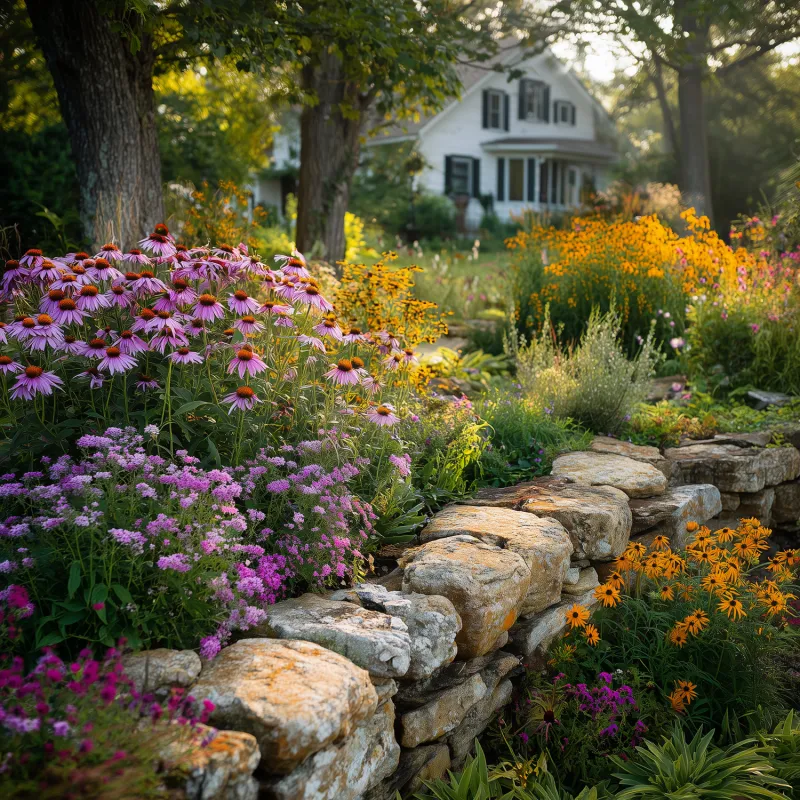
A single flower bed does not automatically become wildlife habitat just because the plants in it are native.
That is worth saying plainly, because the word “habitat” gets used loosely.
What actually supports wildlife is structural variety, the kind you get when a planting includes multiple layers working together rather than one flat mass of the same plant repeated across a bed.
Think about what different animals actually need.
Adult butterflies seek nectar from flowers, but their caterpillars often require a specific host plant to complete their life cycle.
Birds may use seeds, ripe fruits, insects hiding in stems, or dense shrub cover for nesting.
Bees need pollen and nectar across a long season, not just a two-week bloom window in late summer.
NC State Extension’s guide to landscaping for wildlife with native plants notes that habitat value improves when plantings include groundcovers, herbaceous plants, shrubs, and trees rather than a single uniform plant mass.
Practically, that means layering.
A groundcover like green-and-gold at the base, a mid-height herbaceous plant like bee balm above it, a native shrub like buttonbush behind that, and a small tree like serviceberry overhead can support far more wildlife functions than a row of ornamental grasses alone.
Native status helps because these plants have co-evolved with local insects and birds over thousands of years.
But a native plant placed in the wrong light, wrong soil, or wrong moisture level will struggle, and a struggling plant feeds almost nothing.
Herbaceous plants for wildlife identified by NC State include species chosen specifically because they match regional conditions and provide food or shelter across multiple life stages.
Site fit and structural diversity together are what make a planting genuinely useful to the animals you want to support.
Choose Plants for a Specific Job
Plant shopping goes sideways fast when you walk into a nursery without a job description in hand.
The better approach is to match the plant to the problem the spot actually has, then check whether that plant fits the light, moisture, and soil on your specific site.
For shady or moist areas where turf reliably fails, several native groundcovers listed by NC State Extension’s native plants chapter are worth considering: Pennsylvania sedge (Carex pensylvanica), heartleaf foamflower (Tiarella cordifolia), green-and-gold (Chrysogonum virginianum), and partridgeberry (Mitchella repens).
These are not interchangeable.
Their suitability shifts by region, drainage, and how much shade the spot actually gets.
Moss can work well in deeply shaded, moist, acidic spots, but it is not appropriate for play areas or anywhere foot traffic is regular.
For sunny beds meant to support wildlife, NC State’s herbaceous plants for wildlife resource points to milkweeds, Joe-Pye weed, goldenrod, bee balm, native asters, and native grasses as strong choices.
Each comes with caveats worth knowing before you plant.
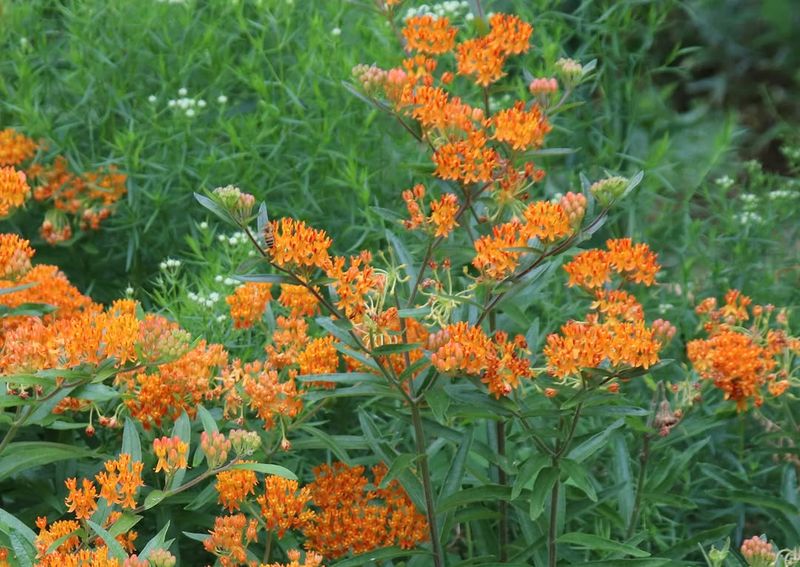
Milkweeds (Asclepias species) are monarch host plants, but the species matter.
Common milkweed spreads aggressively in loose soil.
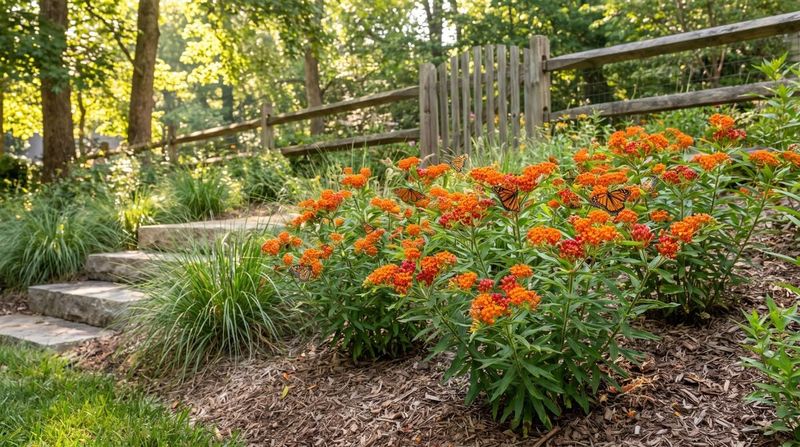
Butterflyweed (Asclepias tuberosa) stays compact and tolerates dry, well-drained sites well.
Four-leaved milkweed has low-severity poison characteristics noted in the NC State Plant Toolbox, so placement around children and pets deserves thought.
Joe-Pye weed (Eutrochium purpureum) can reach 5 to 7 feet tall and 2 to 4 feet wide, so it belongs at the back of a bed with room to grow, not tucked against a foundation.
Goldenrod (Solidago species) supports bees, beetles, butterflies, and seed-eating birds, and it does not cause hay fever.
That blame belongs to ragweed, which blooms at the same time.
Some goldenrod species spread quickly, though, so choose a site-appropriate species and give it defined borders.
Let North Carolina Conditions Choose the Plants
A plant that thrives in a Raleigh Piedmont yard can rot in the ground on the Outer Banks and sulk in the mountains above Asheville.
North Carolina spans zones 6a in the high mountains to 8b along the coast, and the soil swings just as dramatically, from dense red clay in the Piedmont to the fast-draining sandy loam of the Coastal Plain and the rocky, organic-rich soils on mountain slopes.
What works in one place can genuinely fail in another.
Before you buy anything, run your candidate plants through the NC State Extension Gardener Plant Toolbox.
You can filter by region, light, soil moisture, drainage, wildlife value, and whether a plant has invasive characteristics in North Carolina.
That last filter matters.
A plant sold as “native” at a regional nursery may still be aggressive in certain conditions or mislabeled for your specific part of the state.
Soil testing should come before any major planting or fertilizing decision.
Many homeowners skip this step and then wonder why their new plants look yellow or stall out after the first season.
NC State’s fertilizing guide recommends testing distinct landscape areas separately, combining several subsamples from each zone, and sending samples to the NCDA&CS laboratory rather than relying on inexpensive home kits, which can miss important detail about pH and nutrient levels.
A soil test tells you whether your pH needs adjustment with lime, whether you are low on specific nutrients, and whether you need to amend the soil structure before planting.
Piedmont clay, for example, often drains poorly and needs organic matter worked in before new plants have a fair chance.
Sandy Coastal Plain soil drains fast and may need organic matter too, but for the opposite reason: it holds almost no moisture on its own.
Matching plant to place is the single most reliable way to avoid expensive failures.
Remove Grass Without Leaving Soil Vulnerable
Tearing out grass and leaving bare soil is one of the fastest ways to create a new problem while solving an old one.
Exposed soil on a slope or near a drainage route can erode in a single heavy rain, and in North Carolina, heavy rains are not a rare event.
The fix is to suppress grass without uncovering the ground for long.
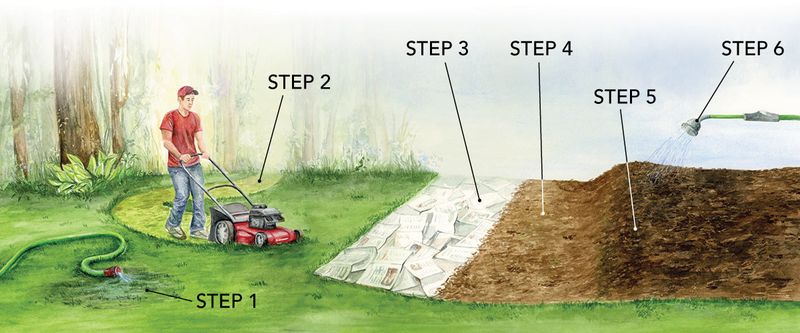
The cardboard-and-mulch method works well for most flat or gently sloping beds.
Mow the area short, mark your bed edges clearly, and lay wet newspaper or cardboard directly over the grass, overlapping the edges by several inches so grass cannot sneak through the gaps.
Cover that layer with about 3 inches of weed-free compost or mulch.
NC State Extension’s lawns handbook describes this method and notes that grass suppression can take anywhere from three months to a full year depending on the grass species and how vigorously it grows.
Bermudagrass, common in Piedmont yards, is particularly persistent.
Set realistic expectations.
You will likely see some grass pushing through at the edges during the first season.
Tuck cardboard back down and add mulch where gaps appear rather than pulling plants and starting over.
On slopes, do not leave soil bare at any point during the conversion.
NC State’s water quality and lawn care guidance warns that exposed soil is vulnerable to erosion and recommends mulch or other protective cover if soil will remain bare for more than 30 days.
Anchor mulch on steeper grades with erosion-control netting or plant low groundcovers quickly after suppression.
Protect new groundcovers from foot traffic with stepping stones or a mulched path.
NC State’s native plants chapter suggests mulched paths or stepping stones as practical ways to move through a groundcover bed without compacting soil or damaging plants during establishment.
Plant in the Right Season and Care for the First Year
Timing matters more than most gardeners expect, and getting it right can mean the difference between plants that settle in quietly and plants that spend their first summer fighting to survive.
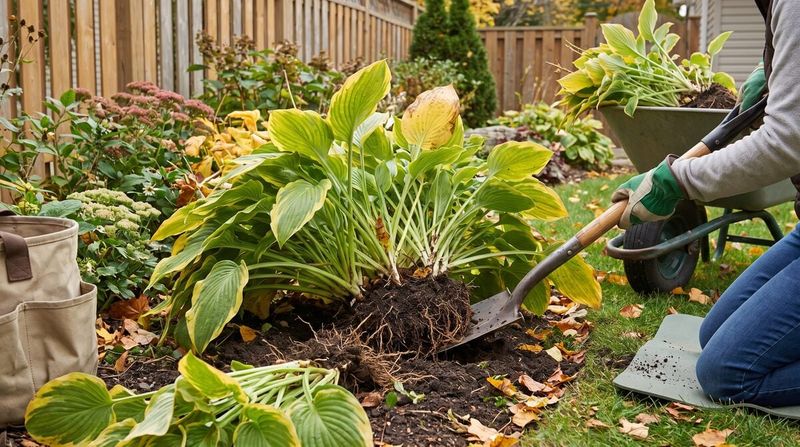
Fall is generally the best planting season for many landscape plants in North Carolina.
Cooler air reduces stress on foliage while roots still have weeks of warm soil to grow into before winter.
Spring is a solid second option, but new plants face the heat of a Piedmont or Coastal Plain summer much sooner.
Whatever season you plant, water matters most in the weeks that follow.
New plants need regular watering for roughly the first three months, or until they show signs of establishment through consistent new growth.
NC State Extension’s lawns handbook backs fall planting for this reason and notes that establishment watering is not optional, even for native species adapted to regional rainfall.
A dry October followed by a dry November can stress even well-chosen plants.
Weeds are the other first-year challenge people underestimate.
The disturbed soil of a new bed is an open invitation, and some weeds can outpace young groundcovers in a single growing season.
Pull or cut weeds before they set seed, and keep about 1 to 1.5 inches of mulch around established groundcovers to conserve moisture and slow weed germination.
Do not pile mulch against plant stems or tree trunks, and do not assume that thicker mulch is always better.
Give plants room for their mature size from the start.
NC State’s native plants guidance is clear that even well-adapted plants need correct placement, occasional pruning or division, and attention during the first year or two.
Native does not mean maintenance-free, especially while a planting is getting established.
Separate Wildlife Beds from Family-Use Areas
A yard that supports wildlife and a yard that is comfortable for your family are not opposites, but they do require some deliberate separation.
Dense groundcovers, accumulated leaf litter, and brushy edges are exactly the kind of habitat that benefits birds and insects.
Those same conditions can also increase tick exposure near spaces where your household actually spends time.
CDC guidance on preventing tick bites recommends removing leaf litter, clearing tall grass and brush near home and lawn edges, mowing frequently in high-use areas, and placing a 3-foot-wide wood-chip or gravel barrier between lawn and wooded or brushy areas.
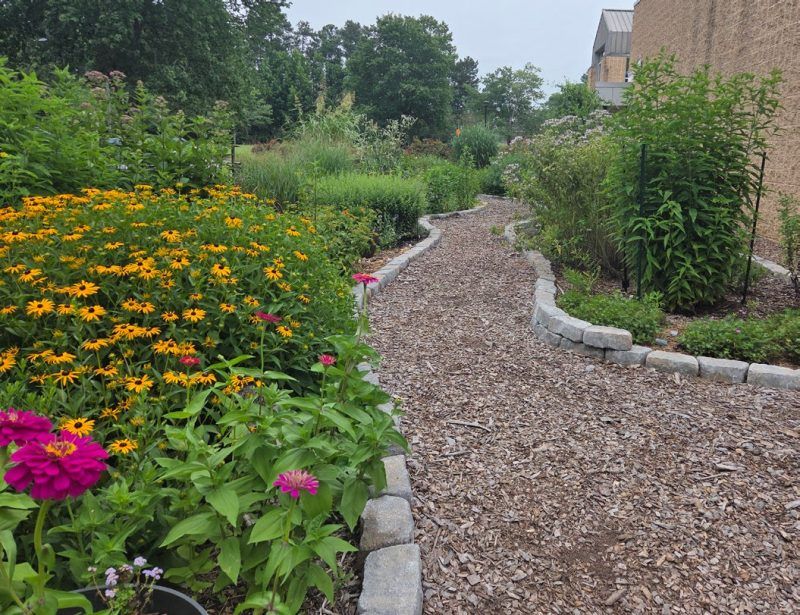
That barrier concept translates directly to native planting design: put the denser, wilder beds along back fence lines, property edges, or low-use boundaries, and keep a clear, maintained transition zone around patios, playsets, and seating areas.
Mosquitoes are a separate issue.
No plant reliably repels mosquitoes from a yard.
The most dependable household steps are removing or managing standing-water sources, using appropriate screens or repellents, and following public-health guidance.
Any container, clogged gutter, or low spot that holds water for more than a few days can produce mosquitoes regardless of what you have planted nearby.
When pest pressure genuinely requires a chemical response, targeted and label-compliant application matters.
The 2026 NC Agricultural Chemicals Manual emphasizes label compliance and avoiding spray on flowering or edible plants where applicable.
NC State’s integrated pest management guidance recommends monitoring, cultural controls, and targeted chemical use only when justified, rather than routine perimeter spraying that can harm pollinators and other beneficial insects you are trying to support.
The practical design answer is zones.
Wildlife beds belong where your household is not spending afternoons, and maintained lawn or hardscape belongs where you are.
Start with One Low-Use Patch
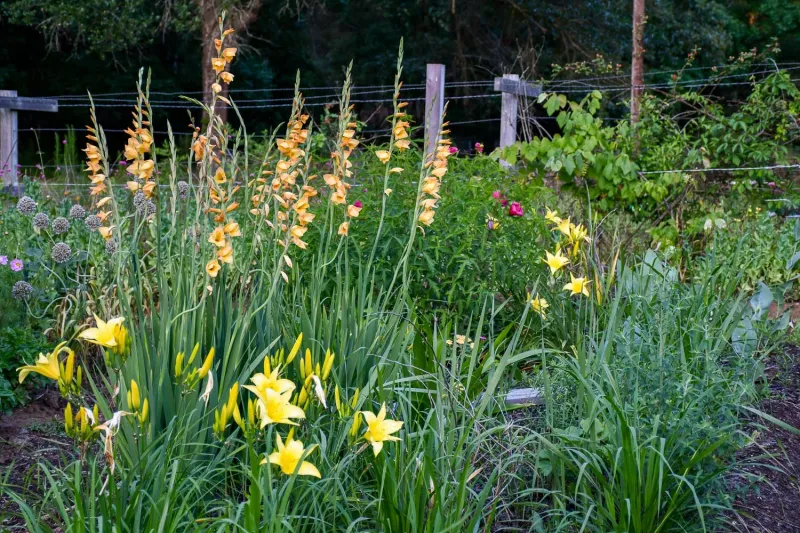
You do not need to convert your entire yard to make this worthwhile.
One well-chosen patch, matched to a real site condition and assigned a clear job, will teach you more than a dozen ambitious beds started all at once and then abandoned mid-summer.
Pick the section of lawn your household genuinely does not use.
Test its soil before you spend money on plants or amendments.
Choose plants that fit the light, moisture, and drainage of that specific spot, using the NC State Extension Gardener Plant Toolbox to filter by your region and site conditions.
Then assign the bed one clearly defined job: stabilize a slope, support caterpillars and birds, replace turf that has never grown well in heavy shade, or give you something worth looking at from the kitchen window in October.
Success in this kind of project does not look like a maintenance-free yard or a pest-proof property.
It looks like a shade-tolerant groundcover finally filling in where grass gave up every August.
It looks like a sunny back bed that draws bees through September and feeds goldfinches on dried seed heads through December.
NC State Extension’s landscaping for wildlife guide and landscape design principles both point toward the same practical standard: reduce lawn where it is not performing, keep it where it genuinely serves the household, and replace it with something that earns the space.
A yard that works harder does not have to look wilder or feel less usable.
Most of the time, it just looks more intentional, and that is a reasonable thing to feel good about.