
What Happens To Your Summer Bug Problem When Florida Anoles Move Into The Yard
Follow us on Google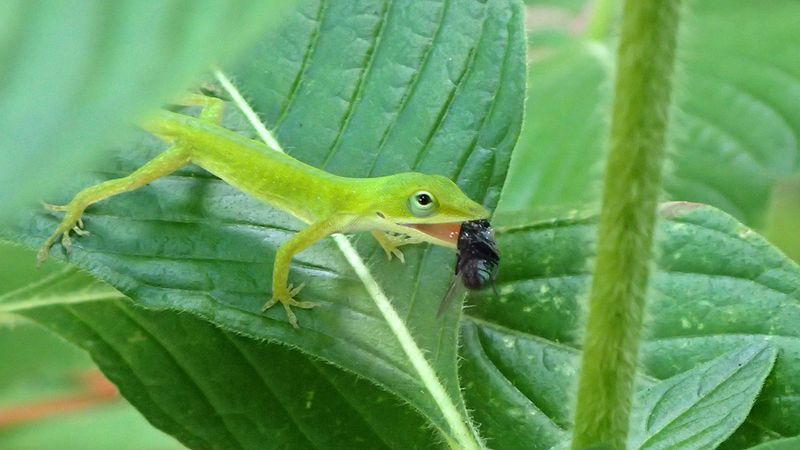
Step onto a Florida patio on a July morning and you will almost certainly spot a lizard darting across the fence before your coffee cools.
Those small, quick anoles are doing more than just sitting in the sun.
They are actively hunting the insects living in your shrubs, along your walls, and across your garden beds.
Whether their presence actually dents your summer bug problem is a fair question, and the honest answer is: a little, under the right conditions, but not nearly enough to replace a real pest plan.
Florida Anoles Add Predation, Not A Pest-Control Guarantee
Spot a lizard flicking across your fence rail on a hot Florida morning and you are probably watching either a native green anole, Anolis carolinensisAnolis sagrei, or the far more common introduced Cuban brown anole, .
Both species eat small insects and other arthropods, and UF/IFAS Extension guidance on anoles identifies both as beneficial garden predators that consume beetles, flies, spiders, roaches, and other small invertebrates.
That is a genuinely useful menu, and it means their arrival can add real natural pressure against some of the bugs crawling around your plants.
The key word is some.
Anoles may consume exposed prey before you even notice it out there, but the available research describes diet and hunting behavior, not a measured drop in total yard insect populations.
No evidence shows that anoles reliably prevent visible plant damage or solve a summer bug problem on their own.
Telling the two species apart is worth doing.
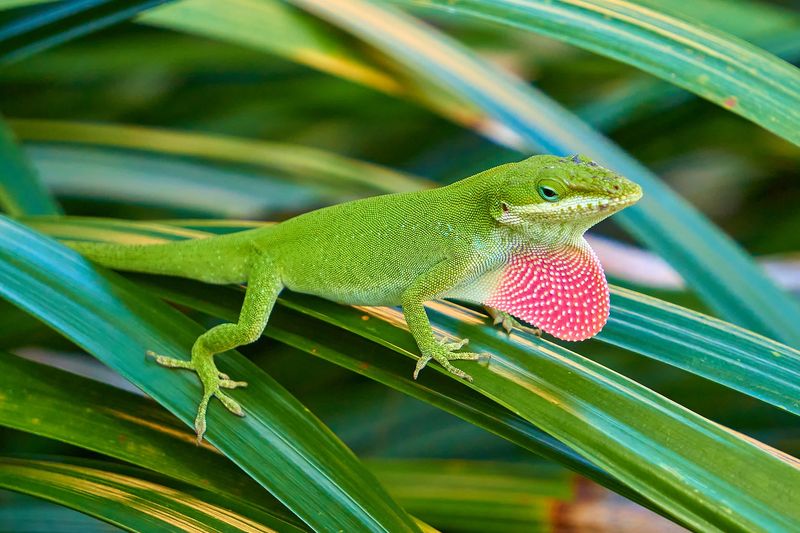
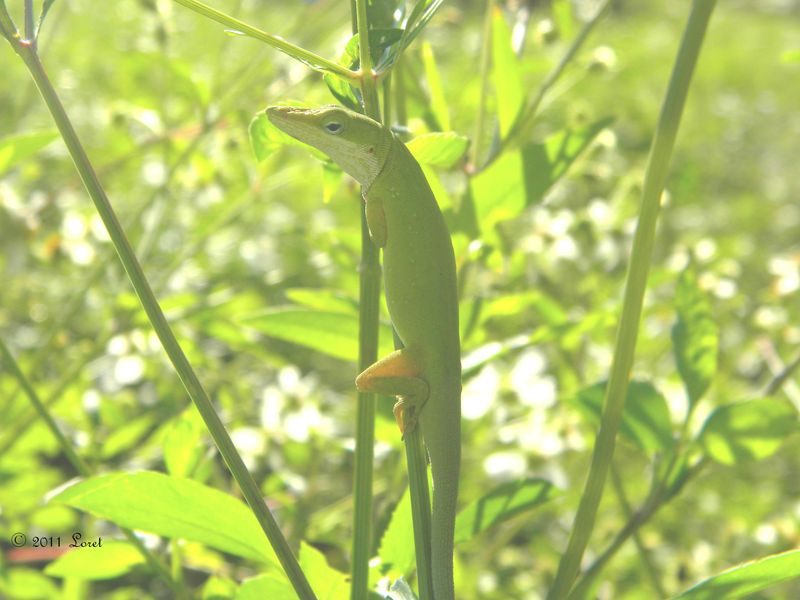
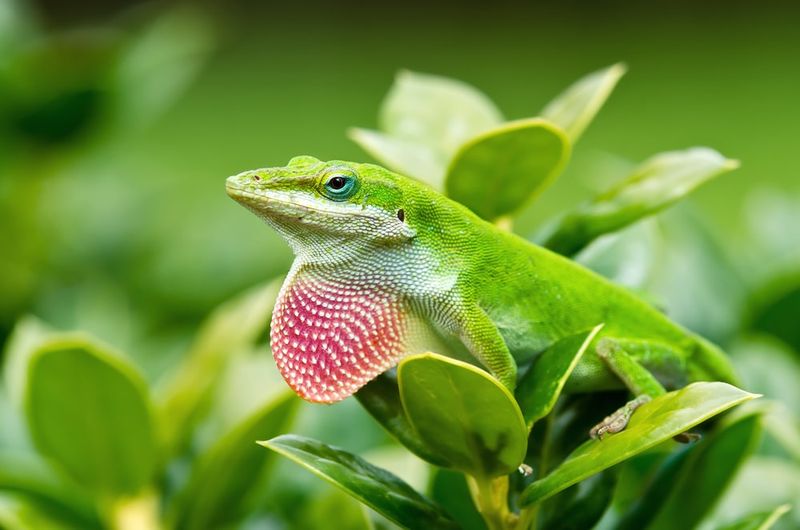
Green anoles are generally bright green or brownish, can shift color, and display a pink throat fan.
They are strong climbers and often move into the upper canopy of shrubs and trees.
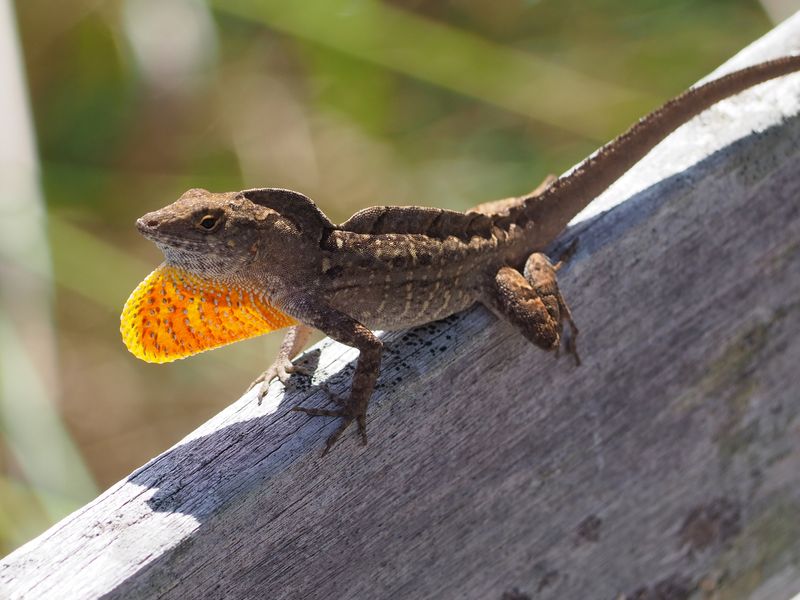
Brown anoles are usually brown or gray-brown, cannot change color the way greens can, and the males show an orange throat fan with a pale border.
Both species commonly reach about 5 to 8 inches in total length.
Knowing which one you are watching matters because the two play very different ecological roles, and that distinction shapes everything else in this article.
Their Hunting Favors Exposed Prey
Anoles are daytime hunters, and they work a specific territory rather than ranging widely across a yard.
You will most often find them patrolling ground-level vegetation, fence rails, tree trunks, garden walls, and the outer surfaces of shrubs, all places where small insects move in the open.
The UF/IFAS brown anole fact sheet confirms that brown anoles are especially drawn to sunny, open areas and lower vegetation, which puts them right where many garden pests travel.
The documented prey list is broad.
Beetles, flies, spiders, roaches, and other small invertebrates all appear on the menu.
Dietary research on Anolis sagrei shows that brown anoles consume a wide range of arthropods, though many prey types appear only occasionally rather than as regular targets.
A broad menu shows opportunity, not equal pressure against every pest in the yard.
Here is where it gets tricky.
An anole can only eat what it can reach and see.
Pests living inside leaf tissue, buried in roots, sheltering underground, or packed into dense scale colonies are simply out of reach.
Whiteflies clustered on the underside of a leaf, mole crickets tunneling through St. Augustine grass, or chinch bugs moving through a thick turf canopy are not the kind of exposed, mobile prey an anole typically intercepts.
The functional ecology of lizard foraging reinforces that sit-and-wait predators like anoles take what crosses their field of view, not what hides from it.
Anoles may genuinely help with some exposed, surface-moving insects, and that is the honest limit of the benefit.
Brown And Green Anoles Are Not The Same
Walk through almost any neighborhood in Central or South Florida and the lizard you keep flushing out of the flower bed is almost certainly a brown anole.
According to UF/IFAS, brown anoles are now the most commonly encountered lizard in much of the state, established across the Peninsula, along much of the Panhandle coast, and around Tallahassee.
They arrived from Cuba and the Bahamas and have spread steadily through urban and suburban Florida for decades.
The problem is that widespread presence does not equal native status.
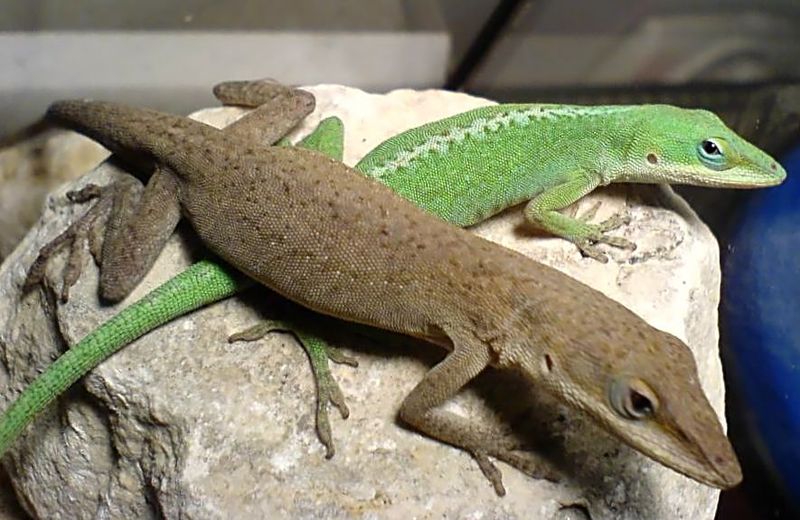
Brown anoles compete directly with native green anoles for food and space.
Research published in peer-reviewed literature, including studies on interspecific competition between Florida anole species, documents that brown anoles can displace green anoles from lower vegetation, pushing them into the canopy where they become harder to see.
Many homeowners assume green anoles have disappeared from their yard entirely, when the greens may simply be hunting 10 to 15 feet up in the live oaks overhead.
The ecological tradeoff goes further.
Brown anoles have been documented eating juvenile green anoles, adding predation pressure on top of habitat competition.
A brown anole eating a garden beetle is helpful.
That same brown anole eating a young native green anole is a different matter entirely, and UF/IFAS guidance treats the two species as ecologically distinct rather than interchangeable.
You can appreciate a brown anole catching a roach on your porch wall while still understanding that its presence reshapes the native-lizard community in your yard.
Layered Habitat Supports The Lizards Already There
A yard made almost entirely of short-cut turf grass is a poor hunting ground for any anole.
Open lawn offers little cover, few invertebrates at the surface, and almost no vertical structure for green anoles to retreat into when brown anoles move in at ground level.
Adding layers changes that equation without requiring a landscape overhaul.
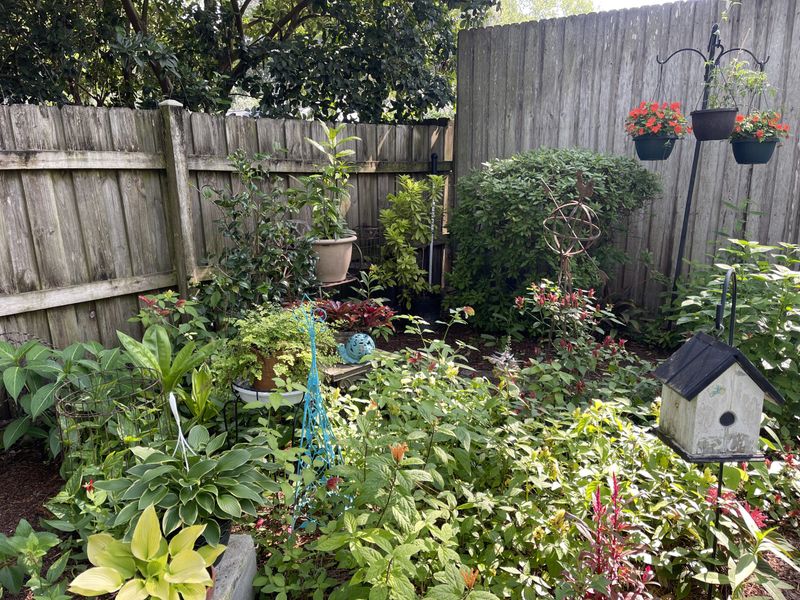
Dense shrubs, small trees, and taller plants create the vertical habitat that UF/IFAS Escambia County Extension describes as important for native green anoles.
Brown anoles tend to stay low and sunny, while green anoles move higher when the two species share a space.
A yard with groundcover, mid-height shrubs, and a canopy layer gives green anoles defensible territory above the zone brown anoles dominate.
Native plants like firebush (Hamelia patensMyrcianthes fragransCallicarpa americana), Simpson’s stopper (), and American beautyberry () fit naturally into that layered structure and support the invertebrate prey both species hunt.
Leaf litter and modest ground cover can shelter small invertebrates and provide cool refuges for lizards during the worst of Florida’s summer heat.
The UF/IFAS Indian River County wildlife habitat guidance and EDIS wildlife landscaping recommendations both support retaining suitable plant cover rather than stripping the yard bare.
One firm limit applies here: leaf piles and dense ground cover must not trap standing water, block drainage, or create pest entry points near the home’s foundation.
Mosquitoes breed in as little as a half-inch of standing water, and a habitat feature that invites lizards while breeding mosquitoes is not a net gain.
Keep the goal simple: more plant structure for the anoles already living in your yard, managed carefully so it does not create new problems.
Anoles Cannot Reach Every Summer Pest
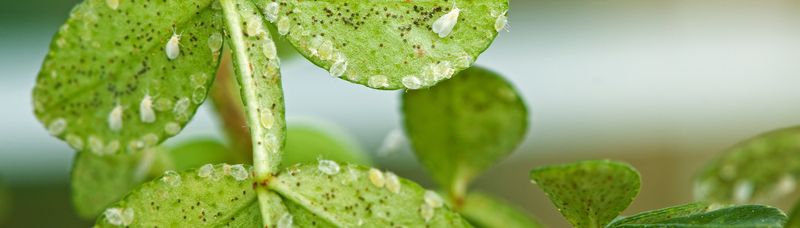
Root-knot nematodes live in the soil and attack plant roots.
Fungal leaf spots spread through moisture on leaf surfaces.
Scale insects pack themselves under protective waxy coatings on stems.
Mole crickets tunnel several inches underground through St. Augustine and Bermuda grass.
Lubber grasshoppers, those big slow-moving pests common across Florida, can weigh more than a small anole and are genuinely too large for most lizards to handle.
Anoles are not built to solve any of these problems, and that conclusion follows directly from where they hunt and what they eat, not from a controlled Florida yard trial.
Chinch bugs in a sunny South Florida lawn, thrips hiding inside flower buds, and whiteflies clustered on leaf undersides are similarly protected from lizard predation by location.
An anole scanning a fence rail for movement is not going to intercept a pest that spends its entire life cycle inside plant tissue or below the soil surface.
The UF/IFAS anole fact sheet documents diet and foraging behavior thoroughly, but it does not describe yard-level pest suppression trials, because none exist for typical Florida home landscapes.
Mosquitoes deserve a separate note.
Some homeowners hope that more lizards mean fewer mosquitoes, but that is not what the science shows.
UF/IFAS researchers are actively studying how brown anoles serve as frequent mosquito hosts, meaning mosquitoes feed on lizards instead of birds or people.
Whether that shifts disease transmission risk is still an open research question, not a proven path to fewer mosquitoes in your yard.
Count anoles as helpful for some exposed surface insects, and build a separate plan for everything else.
Protect Existing Anoles Without Spreading Them
Buying anoles at a pet store and releasing them into the yard sounds like a shortcut, but it creates more problems than it solves.
Brown anoles in particular are difficult to eradicate once established, and UF/IFAS warns that people spread them accidentally through potted plants, yard debris, boats, and other confined objects moved from one property to another.
The responsible move is to improve conditions for whatever anoles are already living in your yard, not to import more.
The bigger threat to the anoles you already have is pesticide misuse.
Broad-spectrum insecticides can strip away the very insects anoles depend on for food, collapsing the prey base that keeps lizards active and healthy in your landscape.
UF/IFAS integrated pest management guidance advises minimizing harm to nontarget organisms and avoiding indiscriminate applications across the yard.
Never spray animals directly, and follow the pesticide label exactly, because the label carries the force of law in Florida and across the country.
A word about products labeled as natural: soaps, horticultural oils, botanical extracts, and microbial pesticides can still injure plants or harm nontarget organisms when applied incorrectly or at the wrong concentration.
UF/IFAS extension resources on pesticide safety and selective pesticide use guidelines both make clear that “natural” is not a synonym for harmless.
The goal is to keep your spray footprint as small and targeted as possible, protecting the food web that supports lizards, spiders, wasps, and every other predator working quietly in your yard.
Pair Anoles With Integrated Pest Management
Anoles work the yard on their own schedule, but your pest plan needs a schedule too.
UF/IFAS integrated pest management recommendations call for scouting gardens 1 to 3 times per week during the growing season, actually walking the beds and turning leaves over to see what is living there.
Identify the pest before doing anything else.
A lot of spray goes onto Florida yards targeting the wrong insect entirely, which wastes money and removes beneficial organisms in the process.
Once you know what you are dealing with, work through the options in order.
Cultural controls come first: adjust watering, improve drainage, remove dead plant material, and choose pest-resistant varieties suited to your region.
Physical controls follow: hand-pick lubber grasshoppers early in the season when they are still small, use row covers on vulnerable plants, or apply sticky barriers on tree trunks.
Biological controls, including beneficial nematodes for soil pests or Bacillus thuringiensis for caterpillars, come before any chemical option.
UF/IFAS Extension pest management resources and selective pesticide selection guides can help you match the right tool to the actual problem when a chemical step becomes necessary.
Regional conditions matter for timing.
Freezes can interrupt anole activity in North Florida and parts of the Panhandle, while Central and South Florida generally offer longer stretches of lizard activity through the warmer months.
UF/IFAS notes that brown anole females lay single eggs repeatedly during the breeding season, so populations can rebuild quickly after a cold snap in more southern parts of the state.
Anoles may remove some exposed prey before you spot it, but the yard still needs your eyes on it regularly.
A lizard on the fence is a good sign, not a reason to skip your weekly walkthrough.