
The North Carolina Perennials You Plant Once And Never Have To Replant Again
Follow us on Google
You crouch in the July heat, sweat dripping off your nose, digging out the same dead annuals you planted three months ago.
And you wonder why you keep buying plants that quit on you every single fall.
There is a better way, and it does not cost you a weekend every spring.
Some North Carolina perennials plant once, settle into the red clay or sandy soil, and come back on their own for years, feeding butterflies and birds while you sip iced tea on the porch.
1. Black-Eyed Susan
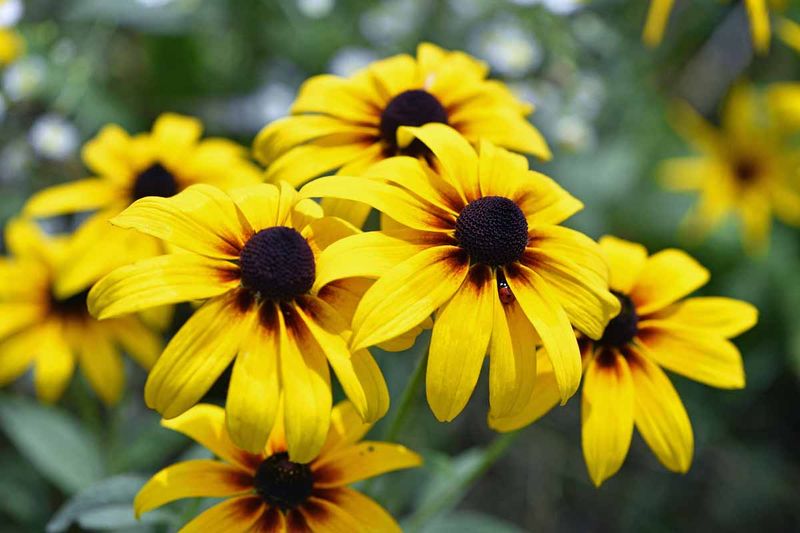
You pull into the driveway in late July and there it is, a patch of gold you do not remember planting quite that thick.
That is the trick Black-Eyed Susan (Rudbeckia hirta) plays on you.
It quietly drops seed and shows up next door to itself, year after year.
Here is where it gets interesting.
Botanists call it a short-lived perennial, sometimes a biennial, which sounds like bad news.
But its self-seeding habit means the colony never really leaves.
One plant fades, three new ones take its place.
It shrugs off the heavy Piedmont red clay and the sandier loams of the Coastal Plain without complaint.
Give it full sun, though it will tolerate a little afternoon shade.
Plants reach 2 to 4 feet tall and spread 1 to 2 feet wide.
The daisy-like blooms open in mid-summer and keep going into mid-fall if you snip the spent flowers.
Leave some seed heads standing in October, and you feed goldfinches through winter while guaranteeing next year’s show.
NC State Extension lists it as moderately deer resistant, which matters if the neighborhood herd treats your yard like a salad bar.
Bees and butterflies work it all season.
You get color, they get food, and you never buy the plant twice.
2. Purple Coneflower
Blunt truth.
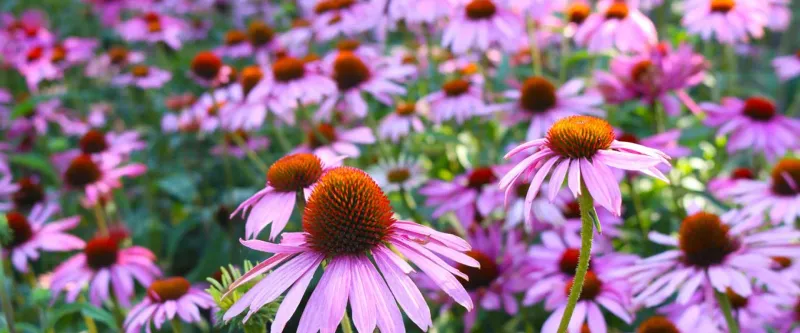
If you can only plant one perennial and want it to outlive your patience, make it purple coneflower (Echinacea purpurea).
This native shrugs off North Carolina’s muggy summers and surprise cold snaps like they are nothing.
Individual plants live 2 to 5 years, and here is the part that saves you money.
They reseed themselves so steadily that the clump never truly disappears.
You can divide every 4 years to freshen things up, but honestly, you do not have to.
Coneflower handles clay, loam, and sandy ground, though it prefers well-drained soil.
Once established, it laughs at drought.
It grows from the mountains through the Piedmont, only struggling in the heavy salt right on the coast.
Plants hit 3 to 4 feet tall and spread 20 to 28 inches, so set them 18 to 24 inches apart.
The pinkish-purple flowers with spiny cones bloom from early summer into mid-fall.
Leave the dried seed heads through winter.
Goldfinches pick them clean, and native stem-nesting bees use the hollow stalks as a nursery.
That is the coexistence payoff, fewer chores for you, more life in the yard.
3. Blazing Star
Most perennials spread out.
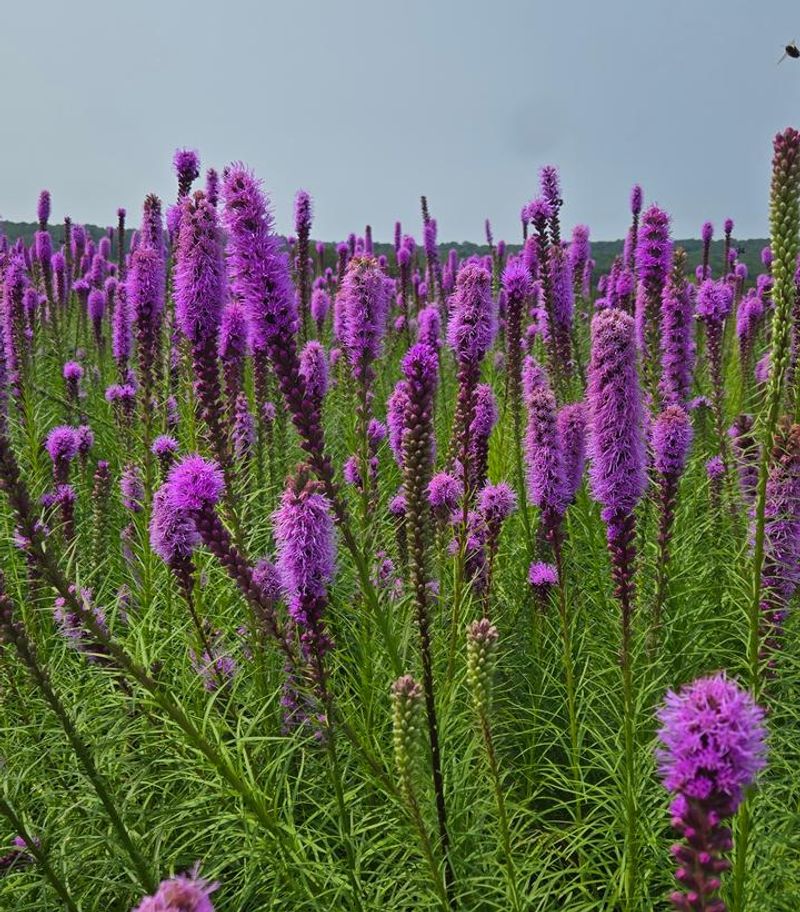
Blazing star (Liatris spicata) shoots straight up, sending purple spikes 3 to 6 feet into the air like little fireworks stuck mid-launch.
And the flowers open top-down, which is backward from almost everything else in your bed.
Underground, it forms corms, small bulb-like storage roots that let the plant expand and return reliably for many seasons.
It also drops seed.
Between the two habits, one planting slowly becomes a colony.
Native to both the Coastal Plain and Piedmont, blazing star loves full sun and handles our heat and humidity.
It wants average to moist soil with good drainage and a slightly acidic to neutral pH between 6.0 and 7.0.
Winter drainage matters most, soggy roots rot.
Space plants 12 to 15 inches apart, with 24 to 30 inches between rows if you mass them for air flow.
The spikes bloom summer through early fall.
Fall monarchs treat blazing star like a fuel station on their way south.
Bees and hummingbirds pile on too.
And the deer, for once, walk right past it.
You get drama, they get nectar, nobody replants.
4. Daylilies
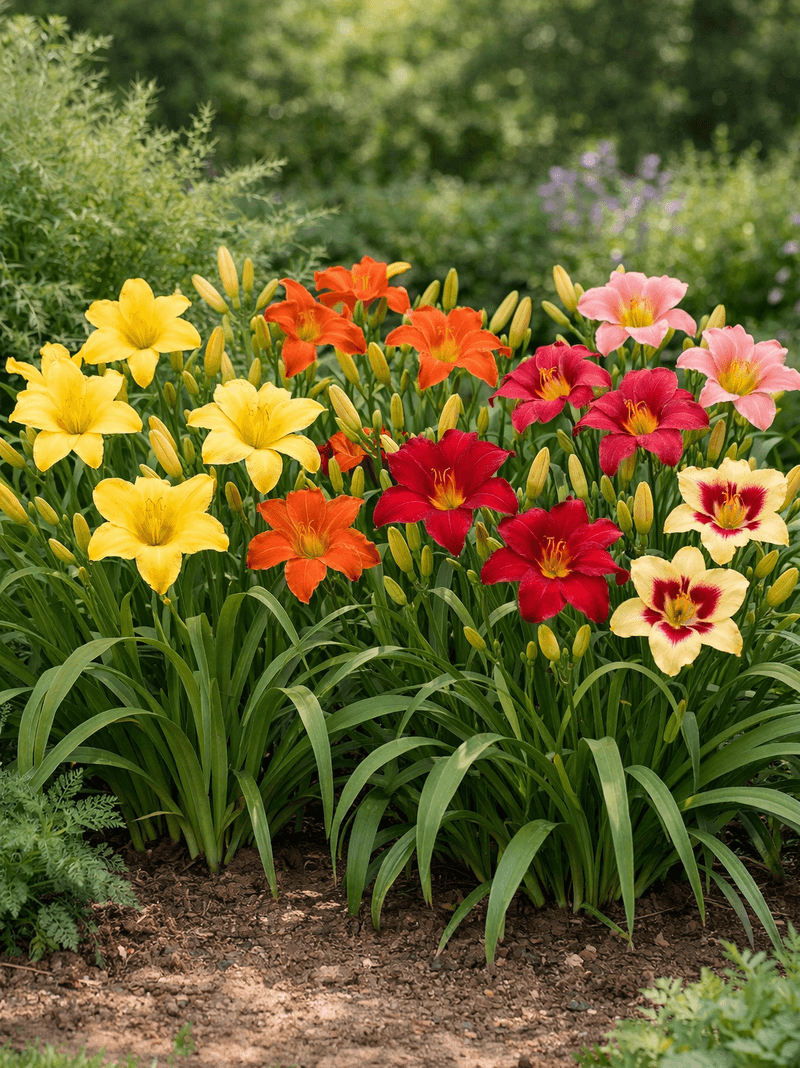
Each daylily flower lasts exactly one day.
Sounds like a raw deal until you notice the plant just keeps firing off new blooms behind it, day after day after day.
That is where Hemerocallis earns its plant-it-and-forget-it reputation.
Established clumps return dependably every spring across all of North Carolina, from the mountains to the coast, USDA zones 3 to 9.
You can divide every 2 to 5 years to boost flowering, but the plant persists and spreads happily on its own.
Full sun is best, though it tolerates partial shade with fewer blooms.
Daylilies want loamy, well-drained soil of average fertility.
They handle drought, heat, salt, and even the compacted ground near a driveway.
Most clumps stay about 1 to 1.5 feet tall and wide.
During the growing season, 1 to 2 inches of water a week keeps the flowers looking their best.
One honest catch.
Deer find daylilies genuinely tasty, so keep that in mind if browsing pressure is heavy where you live.
Butterflies and hummingbirds sip the nectar, and modern cultivars stretch the color show from spring clear to frost.
5. Catmint
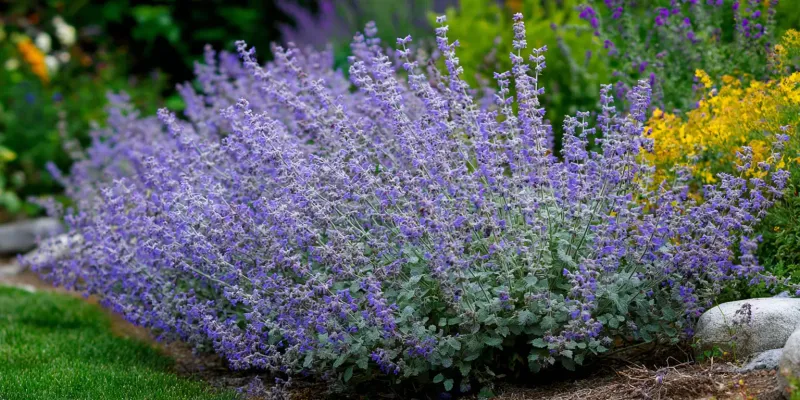
Deer have a good nose, and catmint (Nepeta) uses that against them.
Its foliage carries a compound called nepetalactone, the same pungent oil that makes the leaves smell sharp when you brush past.
Browsing animals take one sniff and move on.
That aroma may also help deter aphids and squash bugs, though think of it as one layer, not a force field.
The hairy leaf texture adds to the plant’s unpopularity at the deer buffet.
Catmint is winter hardy across every Carolina garden and thrives on neglect.
It wants at least 6 hours of direct sun and, above all, good drainage.
It grows in clay, loam, sand, or shallow rocky soil, though heavy soggy clay can cause trouble.
Depending on the cultivar, it reaches up to 3 feet tall and wide.
The variety Six Hills Giant hits that larger size and holds it well.
Masses of small lavender-blue flowers bloom from spring into fall, slowing during the peak summer heat.
A spot with light afternoon shade during a brutal July can stretch the bloom.
Bees adore it, deer avoid it, and you barely lift a finger.
6. Blanket Flower
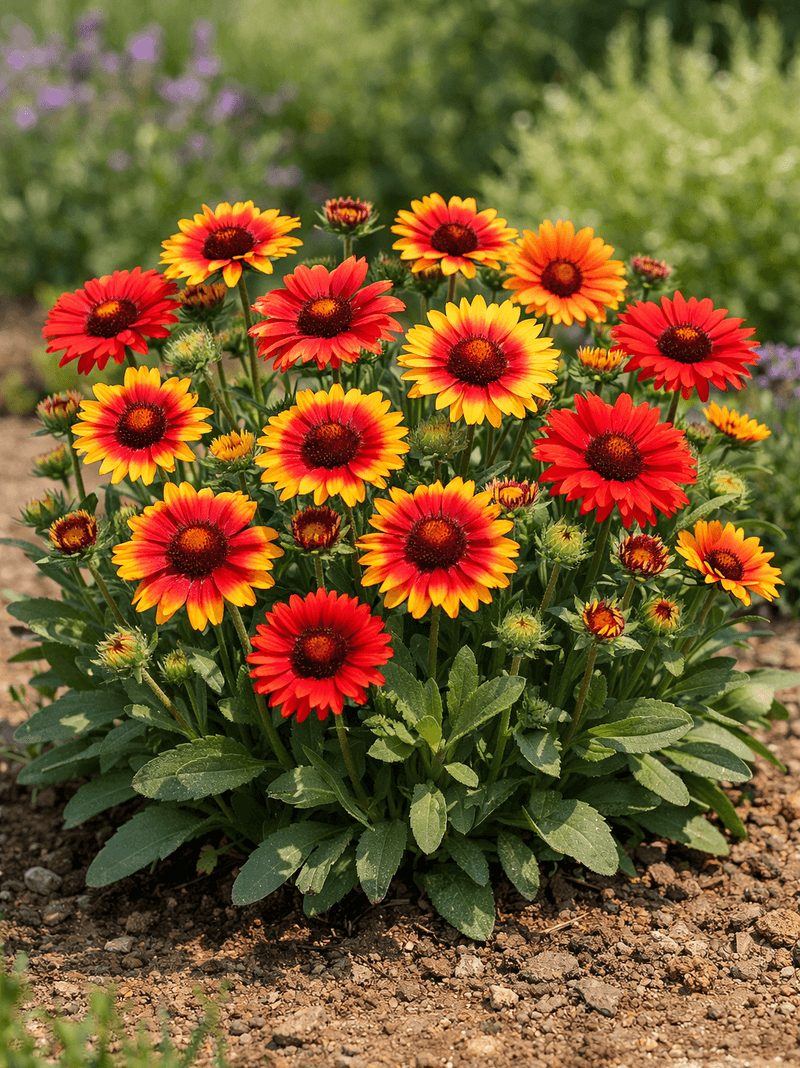
That baked, sandy strip along the fence where nothing survives?
Blanket flower (Gaillardia) treats it like prime real estate.
The harsher and drier the spot, the happier it seems.
Some types are short-lived, but the plant plays a long game through self-seeding.
It naturalizes in disturbed, open ground, so what starts as a few plants becomes a rolling patch of red and gold.
It craves full sun and well-drained sandy or rocky soil, which makes it a natural fit for the Coastal Plain and any drought-prone yard.
It handles heat and humidity without sulking and blooms from late spring until the first frost.
Skip the heavy clay, it needs loose ground.
Depending on the cultivar, blanket flower grows 1 to 3 feet tall and 1 to 2 feet wide.
The variety Mesa Peach stays around 16 to 18 inches tall.
Space plants 1 to 2 feet apart.
The daisy-like flowers in red, orange, and yellow pull in native bees and butterflies all summer.
Leave the seed heads and birds work them through winter.
Deer resistance is high.
Divide every 2 to 3 years if you want, but the seeds usually handle replacement for you.
7. Why Well-Drained Soil Beats Everything
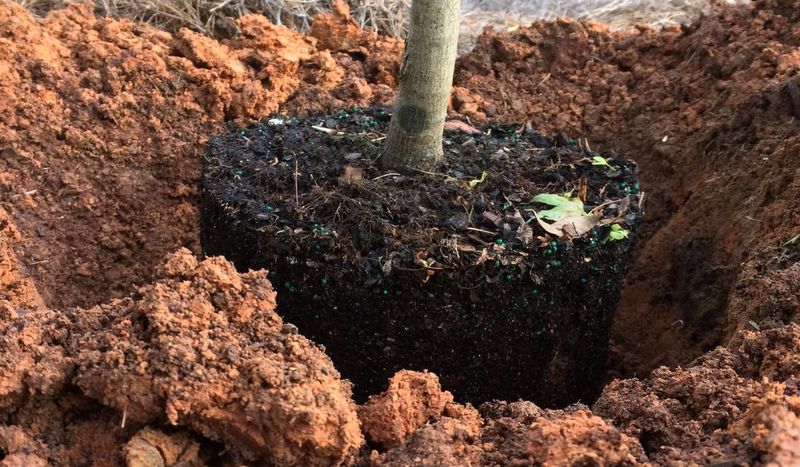
Here is the quiet killer of comeback perennials, and it is not summer heat.
It is winter wet feet.
Plants that would shrug off a July drought will rot in soggy ground during a cold February, then fail to return.
North Carolina hands you two extremes.
The Piedmont’s heavy red clay holds water like a bathtub, while the Coastal Plain’s sand drains almost too fast.
Both can be worked, you just have to know which fight you are in.
For clay, mix in 3 to 4 inches of compost or pine bark fines before planting, and consider a slightly raised bed or berm for anything that hates wet roots, like blazing star and blanket flower.
That single tweak often decides whether a plant reseeds for a decade or quits after one winter.
Sandy soil needs the opposite help.
Add compost to hold a little moisture and feed the roots, then mulch 2 to 3 inches deep to slow evaporation during those muggy stretches between afternoon storms.
NC State Extension recommends a soil test before you plant, and the boxes are free most of the year through your county Extension office.
Get the drainage right once, and the plants above do the rest for years.
8. Let The Seed Heads Stand Through Winter
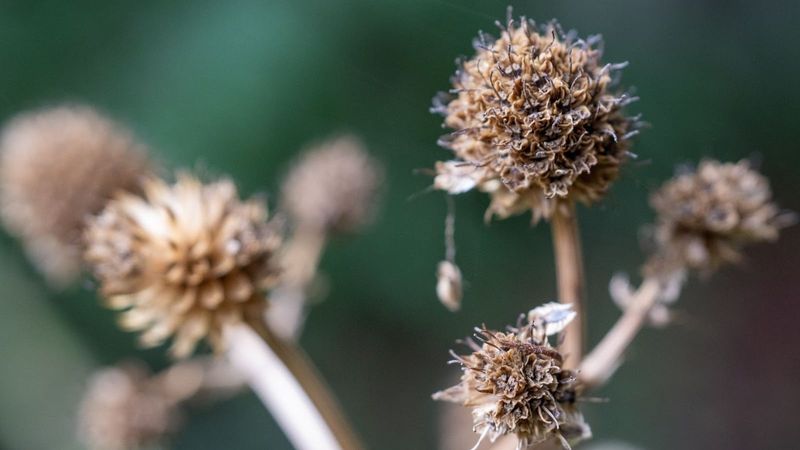
Every fall the same urge hits.
You want to cut everything back, tidy the beds, and put the yard to bed clean.
Fight that urge, at least a little, and your plant-once perennials pay you back twice over.
Those brown, crispy seed heads on your coneflower and Black-Eyed Susan are not dead weight.
They are next year’s free plants and this winter’s bird feeder rolled into one.
Goldfinches cling to the stalks on cold mornings, picking seeds while your patch quietly replants itself.
The hollow stems matter too.
Native stem-nesting bees tuck into them to overwinter, the same bees that will pollinate your garden and your neighbor’s tomatoes come spring.
Cut everything to the ground in October and you evict them.
A reasonable middle path works.
Leave the sturdy seed heads and stems standing until late winter, then cut back in February or March before new growth pushes up.
Trim spent daylily and catmint foliage whenever it flops, since those do not offer the same winter value.
So the yard looks a touch wilder for a few months.
In return, it feeds birds, houses bees, and reseeds itself for free.
That is a fair trade, and you end up doing less work while the place feels genuinely more alive.