
Those Leafy Clumps in Your Florida Oaks May Be Squirrel Nests, and Winter Can Sometimes Give Them Away
Follow us on Google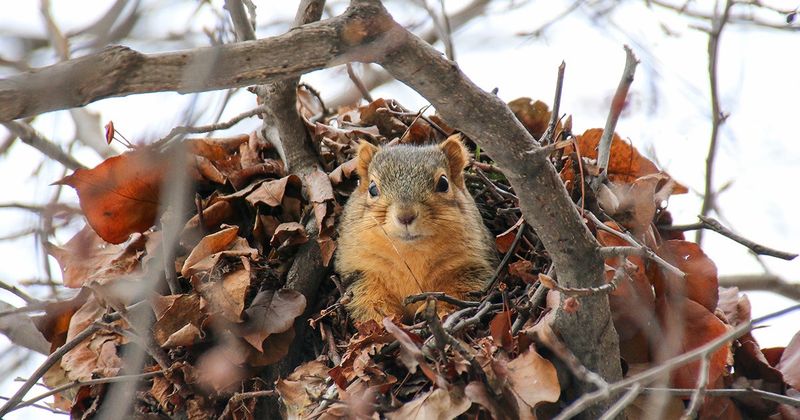
You walk the dog on a cool Florida morning and spot a bulky ball of leaves wedged in an oak branch. It could be a squirrel’s leafy nest, though a clump alone can’t prove who built it.
In some trees, winter leaf drop makes these nests easier to spot. Here is how to read the clue and enjoy it from the ground.
That Leafy Clump May Be a Drey
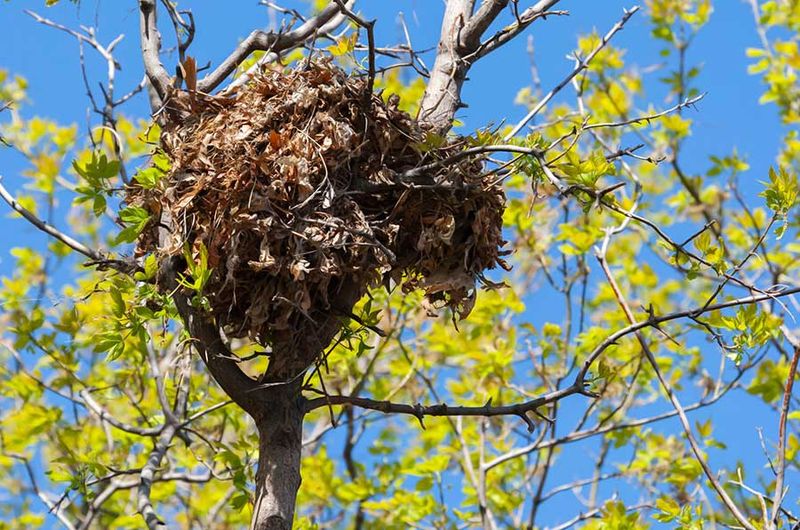
Wildlife watchers have a word for a squirrel’s leafy nest. They call it a drey.
It sounds old-fashioned, but it is handy once you know it, because a drey is exactly what that tangled ball of leaves in your oak might be.
According to the Florida Fish and Wildlife Conservation Commission, eastern gray squirrels live in woodlands and urban areas, especially near oaks and hickories, and they make nests in tree forks. So a leafy mass sitting in the crotch of an oak branch fits the pattern.
Still, fitting the pattern is not the same as being proven.
Here is where it gets tricky. Large birds also build big nests high in trees, and from the ground the two can look surprisingly alike.
Audubon notes that squirrel dreys can be mistaken for nests made by large birds, which is why careful observers say likely rather than certain.
Think of the clump as a clue, not a verdict. You are looking at a bulky, leafy structure in a likely spot, and that is a fun place to start.
Your eyes, a pair of binoculars, and a little patience will tell you more over time than any quick guess from the sidewalk.
Nobody can name the builder from the driveway, and that is perfectly fine. The mystery is part of the charm.
How Squirrels Build Leafy Nests
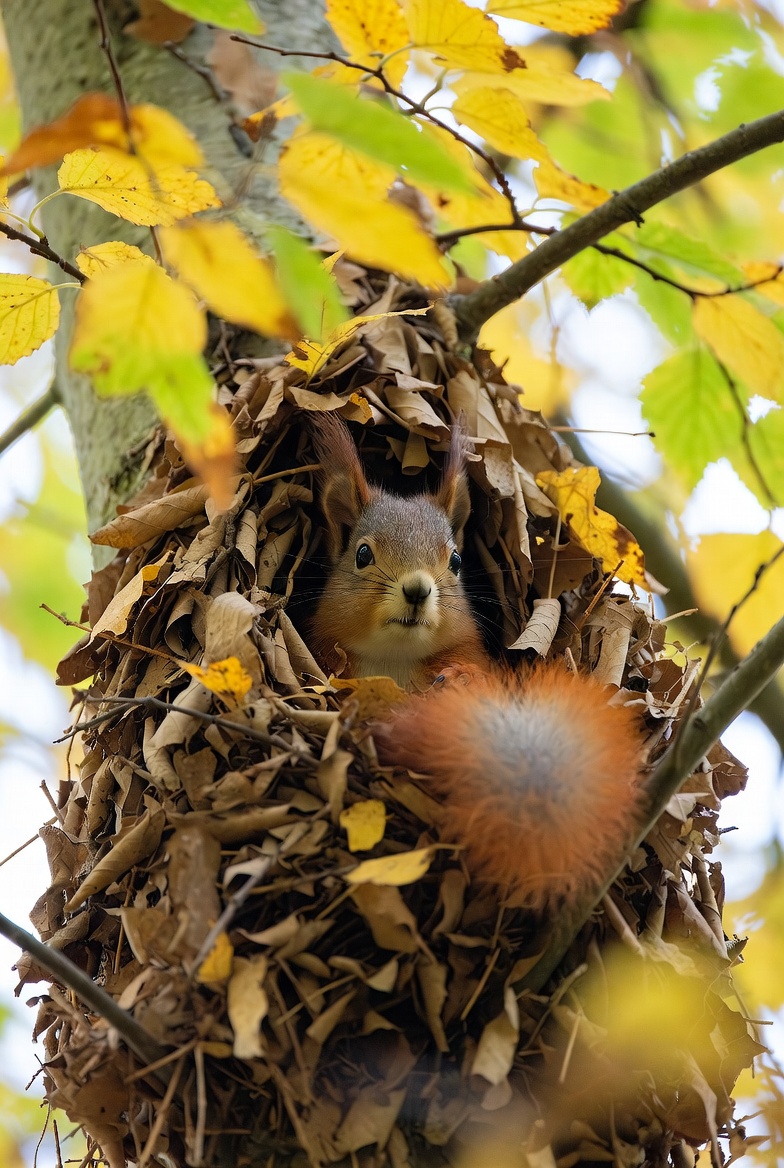
Building a drey is a bit like weaving a basket and then stuffing a pillow inside it. A peer-reviewed review of nest construction in mammals describes squirrel dreys as a framework of twigs packed with leaves and other plant material, with finer materials used as lining.
That description is general. It comes from a broad look at mammals, not from Florida squirrels alone, so it would be a stretch to say every squirrel builds in exactly the same way.
Think of it as a basic blueprint with room for variation.
For something closer to home, UF/IFAS Extension in Escambia County says gray squirrels prefer oaks, build their nests from leaves, and line them with chopped bark and leaves. That lining is the cozy part, tucked inside the rougher outer shell.
So when you look up at a drey, you are seeing mostly the outside. The soft inner layer stays hidden from view, and that is exactly how the builder wants it.
Next time you notice a squirrel with a mouthful of leaves, you may be watching a construction crew of one. Just remember that a busy squirrel and a finished nest are two different clues, and neither tells you the whole story.
Winter Makes Dreys Easier to See in Some Oaks
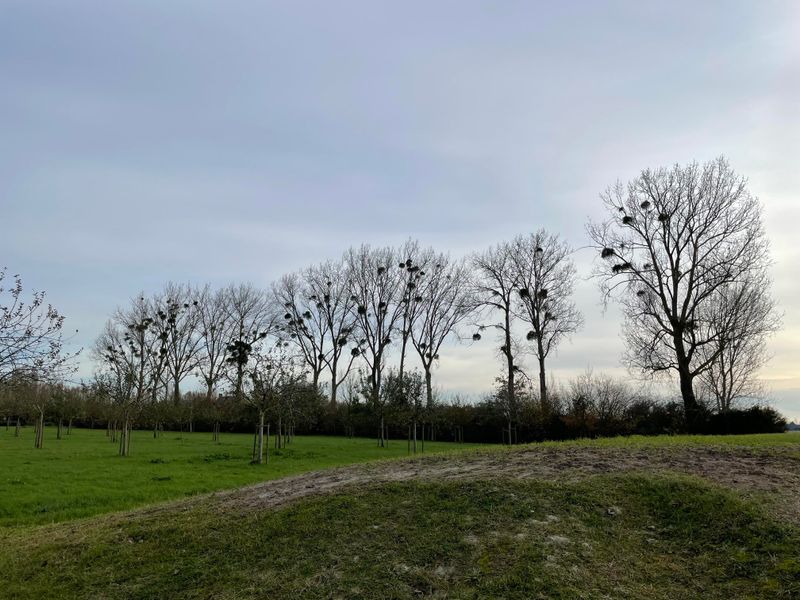
Bare branches are like a stage with the curtain pulled back. When a deciduous tree drops its leaves, a drey that was hidden all summer can suddenly stand out as a dark lump against the sky.
The catch is that not every Florida oak plays along. According to UF/IFAS Gardening Solutions, oaks vary quite a bit, and the Florida species do not all handle winter the same way.
Live oaks, the big spreading giants of many Florida yards, never lose all their leaves. A drey tucked into a live oak can stay mostly screened by foliage even in January.
Laurel oaks are only semi-evergreen, and UF/IFAS notes they typically hold their leaves until early spring.
So winter is a viewing opportunity in some trees and some places, not a statewide reveal. A neighbor with a leafless oak in North Florida may see plenty overhead, while you may see almost nothing in a live oak down the road.
If your oaks keep their leaves, do not worry. Look at other deciduous trees nearby, and stay curious.
The sky reveals what it reveals.
Dreys Are Not the Only Squirrel Shelter
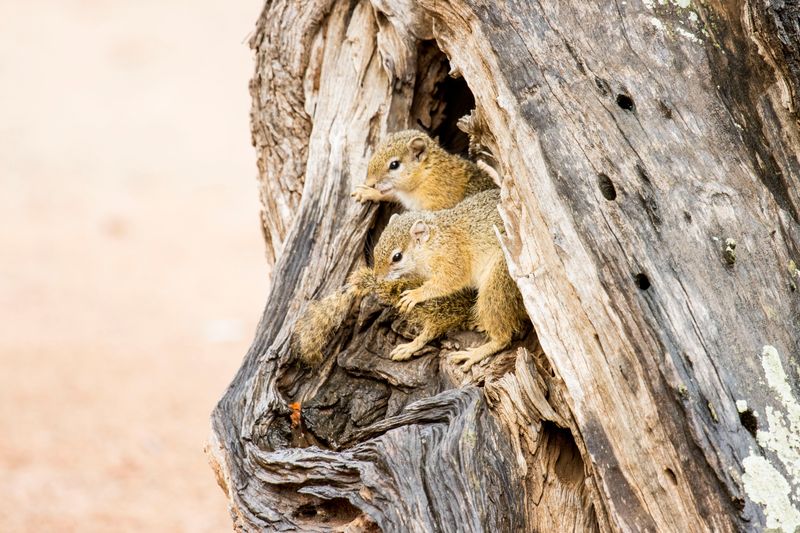
Some people assume every squirrel sleeps in a leaf ball. The truth is more varied.
Florida has three kinds of squirrels, and the Florida Fish and Wildlife Conservation Commission lists eastern gray, fox, and southern flying squirrels.
That matters because a leafy clump does not tell you which one, if any, made it. It would be a mistake to assume every leafy nest belongs to a gray squirrel.
Species can differ in habits, and a view from below cannot sort them out.
Squirrels also use shelter beyond dreys. Missouri Extension says cavities are preferred nest sites for tree squirrels in its region, and that squirrels may use multiple nests or dens.
That is general context from Missouri, not a finding about Florida squirrels.
Still, it gives you a useful idea. A squirrel may not be tied to the one nest you can see, and a hole in a trunk can matter as much as a clump in a fork.
So if you notice a drey, picture a wider neighborhood of hideouts you cannot see. The leafy ball is just the one that happens to show.
A Visible Nest Does Not Prove It Is Occupied
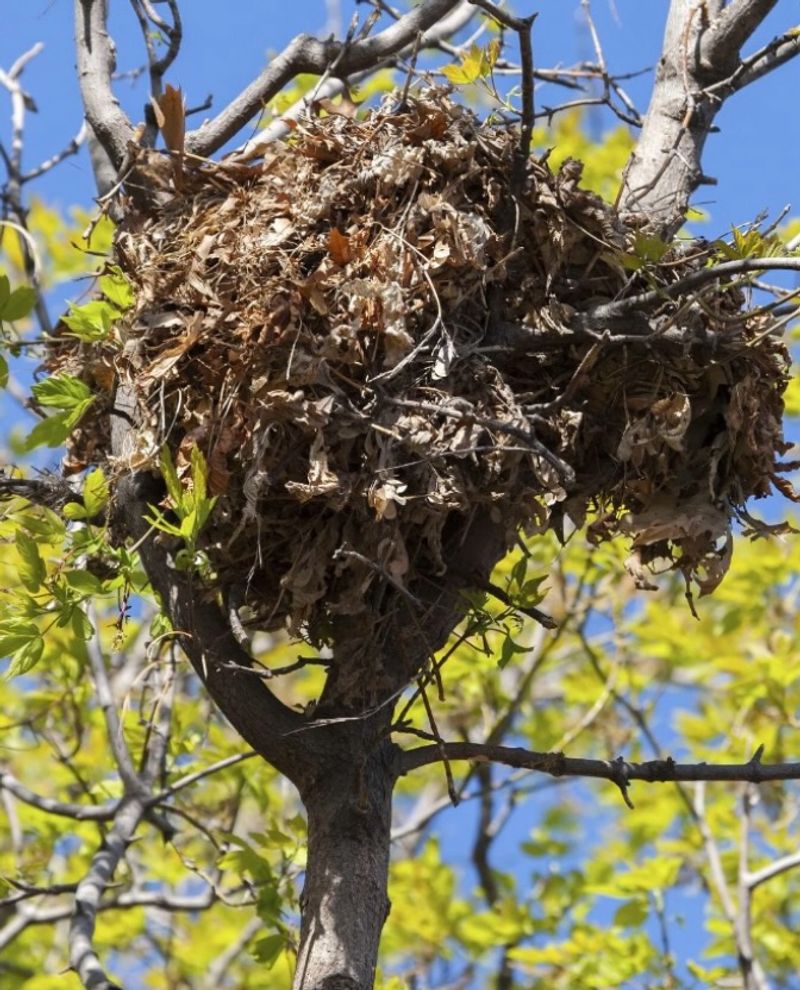
Seeing a nest and knowing who is home are two very different things. A structure spotted from below cannot tell you if anyone uses it now, which species built it, or whether young are inside.
Squirrels do nest and breed in Florida, and the FWC squirrel profile confirms as much. But it does not say every nest is occupied all year, so an empty-looking drey may be abandoned, spare, or simply quiet at that moment.
Timing helps a little, with limits. UF/IFAS Extension in Escambia County describes late-winter and midsummer nesting seasons in that part of the Panhandle.
Treat that as local guidance, not a statewide calendar, and certainly not proof that a particular drey is active.
The same goes for the reverse. A nest in winter does not prove winter use, since squirrels can use more than one kind of shelter.
So the honest answer from the driveway is usually, it might be. That is a perfectly good answer.
Plenty of good wildlife watching starts with not knowing.
Observe Without Disturbing Wildlife
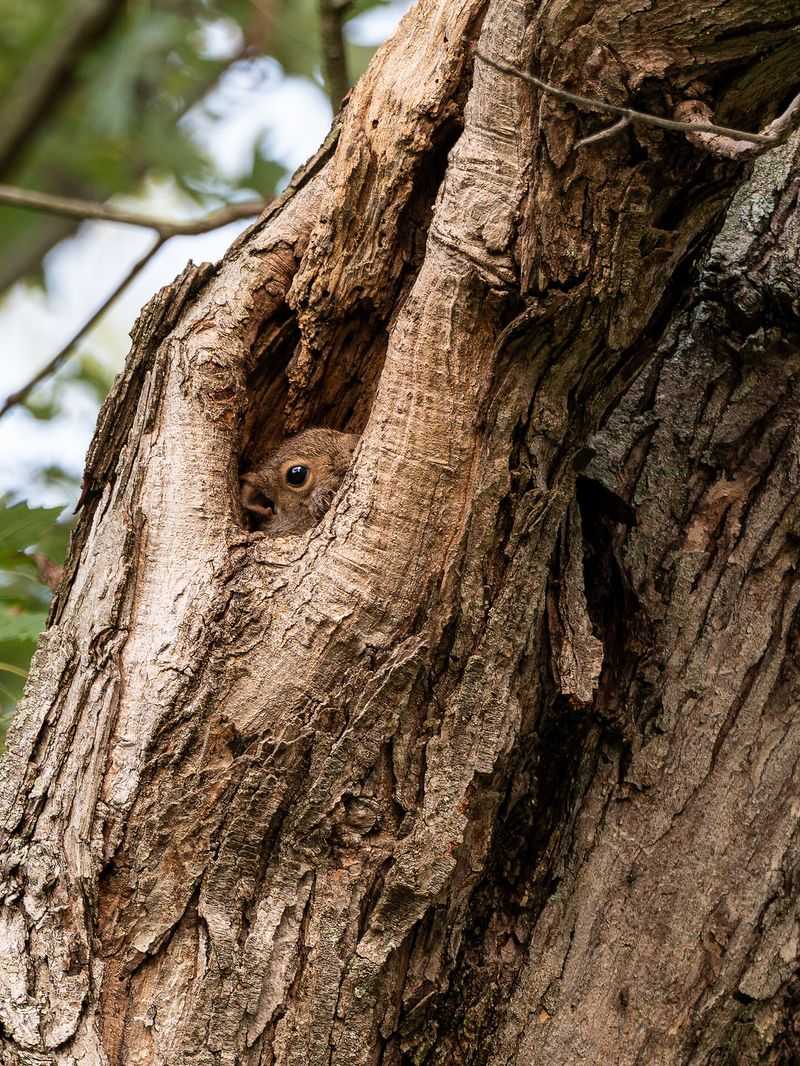
The best seat for this show is on the ground. Stand back, use binoculars if you have them, and let the tree do the talking.
Do not climb, poke, shake, or pull apart a suspected nest, however curious you feel.
If tree trimming is on your list, look first. Tufts Wildlife Clinic suggests checking trees for nests before yardwork, and putting off pruning if a nest appears to be in use.
A short delay costs you little.
Now and then you may find a baby animal on the ground that looks hurt or alone. Resist the urge to bring it inside.
The FWC advises leaving it alone and contacting a licensed wildlife rehabilitator rather than taking it home.
Most of the time, nothing dramatic is going on. A baby that seems abandoned may have a parent nearby, which is another reason to keep your distance and call the experts.
That leafy clump is a quiet invitation to look up more often. You do not need to solve it to enjoy it.
