
This Pennsylvania Native Perennial Blooms Longer Than Any Hosta You Have Ever Grown
Follow us on Google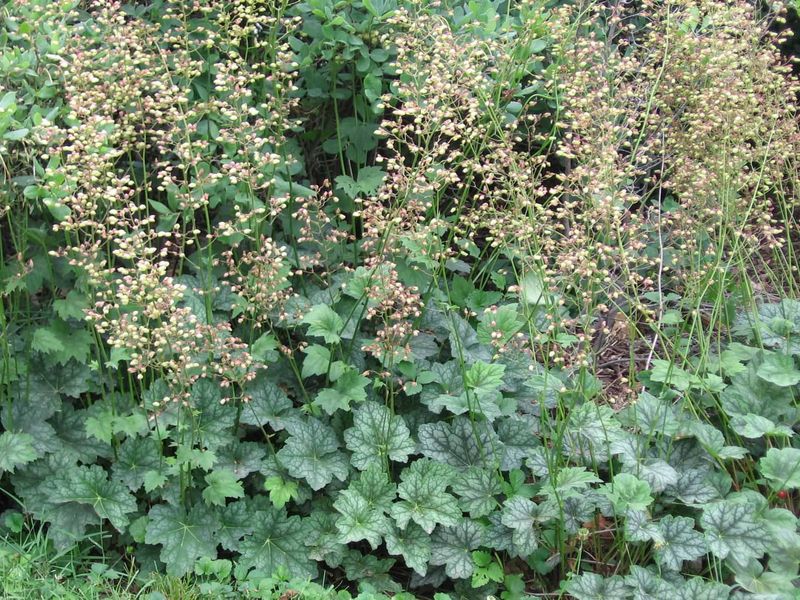
Walk past a shady corner of your Pennsylvania yard in late May and you might notice something delicate swaying above a low mound of patterned leaves, slender stalks covered in tiny bells that keep going long after your hostas have finished their few weeks of flowers.
That plant is American alumroot, Heuchera americana, a native perennial that grows wild across Pennsylvania’s rocky forests and ledges.
Its possible flowering window, running from late spring into summer, can genuinely outlast the bloom period of many individual hosta scapes, and it asks for very little once it finds a spot it likes.
Meet The Pennsylvania Native Behind The Claim
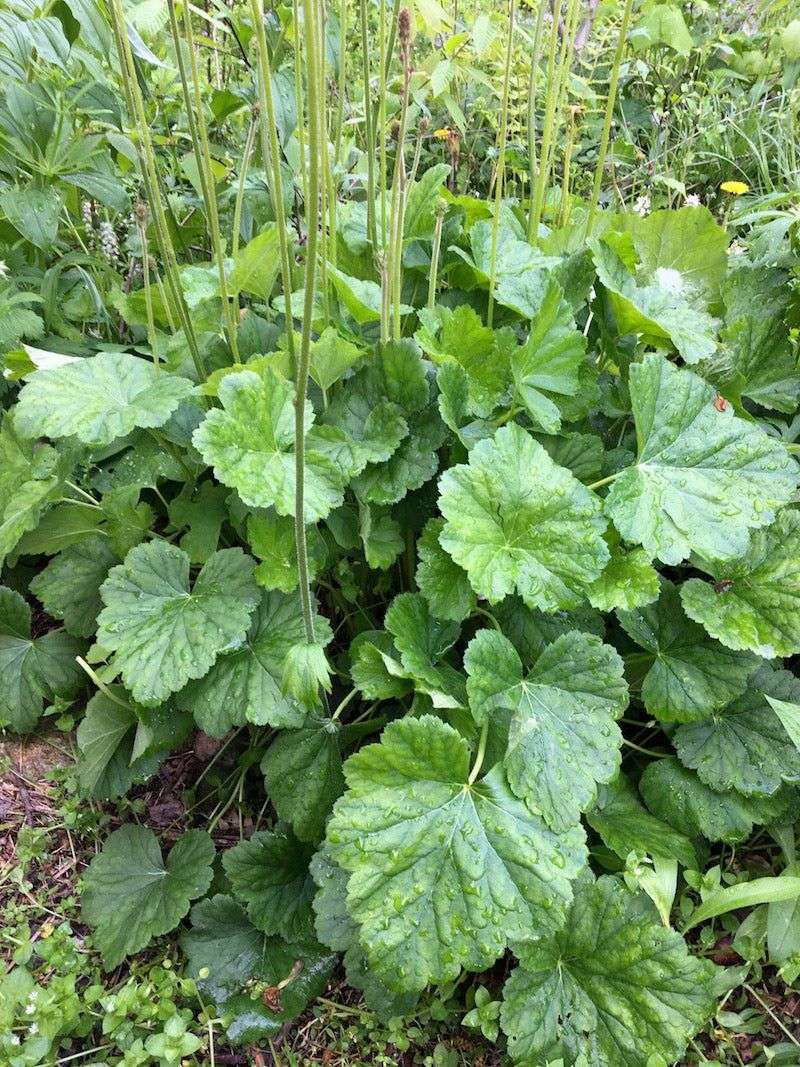
American alumroot, Heuchera americana, is the plant behind the revised headline, and it earns that spot honestly.
North Carolina Extension’s plant profile describes it as a clump-forming herbaceous perennial native to eastern and central North America, including Pennsylvania, where it grows naturally on rocky forest floors, ledges, and outcrops with good drainage.
That wild origin matters because it tells you what the plant actually expects from your yard.
The clump itself stays modest.
The basal foliage mound typically reaches about 1 to 2 feet tall and spreads roughly 1 to 1.5 feet wide, sitting close to the ground in a tidy rosette.
Above that, slender flower stalks commonly rise 18 to 24 inches, giving the plant a layered look that suits a pathway edge or the front of a shade border without crowding out neighbors.
Here is where the naming gets tricky.
You will see “coral bells” on nursery tags across Pennsylvania, but that label does not guarantee you are getting the native species.
Missouri Botanical Garden’s plant finder notes that coral bells can refer to Heuchera sanguinea, other Heuchera species, or ornamental hybrids bred for colored foliage.
If the native species matters to you, look for the botanical name Heuchera americana on the label or ask your nursery directly.
Its compact form and tolerance for shade make it a natural fit for spots where larger plants would overwhelm a border.
Think of it as a quiet anchor for a woodland edge planting, a rock garden, or a shaded pathway where you want something that actually flowers rather than just filling space with leaves.
Its Possible Bloom Window Can Outlast Many Hostas
Earning a headline about outlasting hostas takes some honest math.
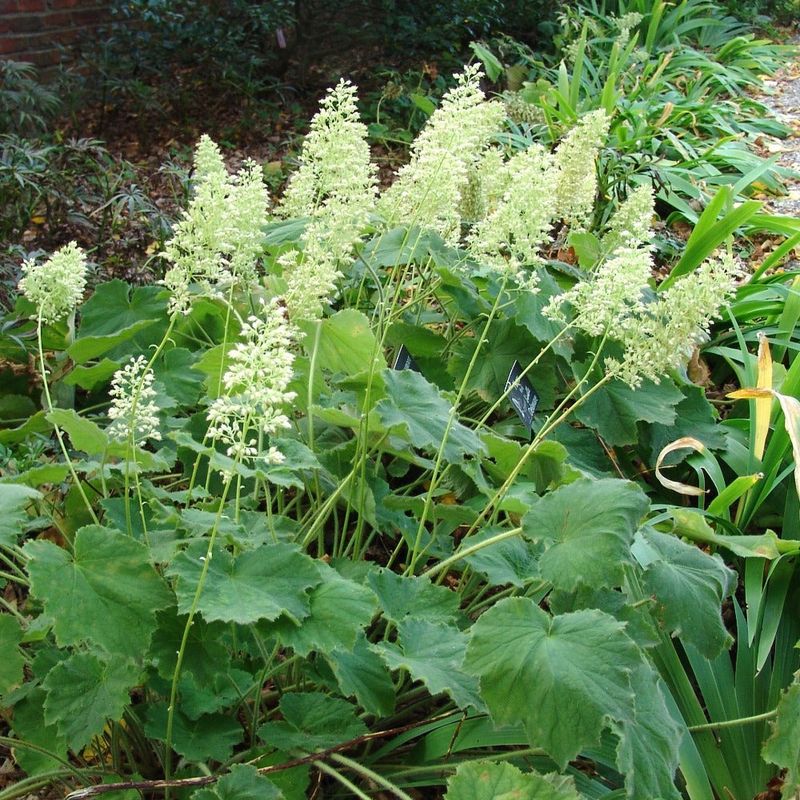
Pennsylvania DCNR’s native plant resource lists American alumroot as blooming from May through August, a possible seasonal window of roughly 3 to 4 months.
That is a meaningful range, and it is the strongest evidence behind the qualified claim.
Not every source agrees on exact dates, and that is actually useful information rather than a problem.
Penn State Extension’s Pennsylvania perennial table lists American alumroot as flowering in May and June, while Missouri Botanical Garden puts the window at June through August.
Those differences reflect real variables: the site’s shade level, soil moisture, local temperatures, the specific plant material, and the year’s weather.
A gardener in the warmer Delaware Valley may see earlier stalks than someone gardening at higher elevations in the Poconos or the northern tier.
Now compare that possible seasonal window to what a single hosta scape typically delivers.
The Greater Ozarks Hosta Society’s overview of hosta flowers makes clear that individual hosta cultivars vary widely, but many produce flowers over roughly 3 to 4 weeks before the scape finishes.
Some cultivars open in May, others not until September or October, and a carefully chosen collection can spread flowering across much of the summer.
So the honest comparison is between American alumroot’s possible seasonal window and the flowering period of many individual hosta scapes, not every hosta a gardener has ever planted.
What alumroot actually offers is a possible longer run of flower stalks, not a wall of nonstop color.
The flowers are small and airy, and some years or some sites will produce a shorter show than others.
Think of it as a plant that keeps sending up new stalks across a longer stretch of the calendar, given the right conditions, rather than one that delivers a dense floral display for months on end.
Expect Delicate Bells, Not Hosta-Size Drama
Before you rearrange your shade border around this plant, picture the flowers accurately.
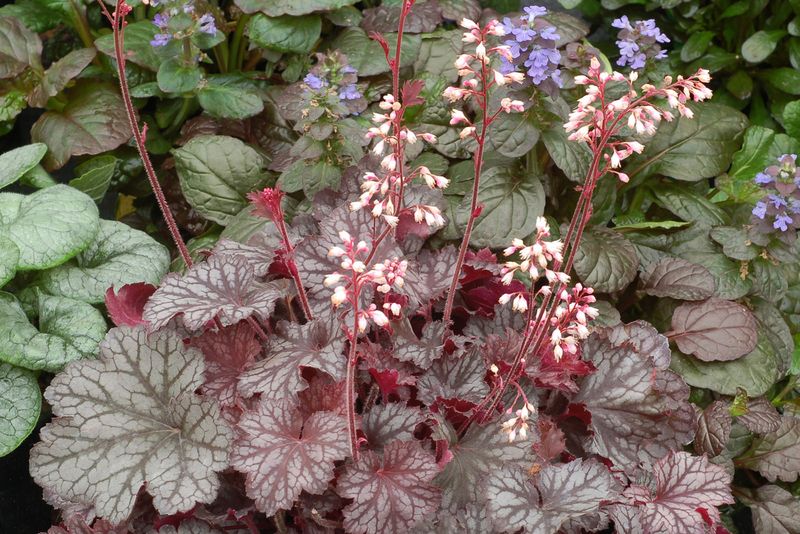
Missouri Botanical Garden describes American alumroot’s flowers as small, greenish-white to creamy, sometimes carrying pink or red tones, held on slender stalks that sway with any light breeze.
They create airy movement and fine detail rather than the bold, trumpet-shaped blooms of a large hosta cultivar.
A mature hosta in full flower is hard to miss.
American alumroot in bloom is more like a quiet conversation happening above the leaf mound, something you notice when you walk close rather than something that stops you from across the yard.
That is not a flaw, it is a different kind of ornamental value, one that rewards a closer look and suits naturalistic plantings well.
The distinction between the native species and ornamental Heuchera hybrids matters here too.
North Carolina Extension notes that cultivars are readily available in the trade and that pure wild-type American alumroot can actually be harder to find on nursery shelves.
Many of those cultivars were bred primarily for striking foliage, with marbled, burgundy, silver, or caramel-toned leaves that carry the visual weight of the planting even when the plant is not flowering.
With the straight native species, the foliage is attractive but more understated, and the flowers are the seasonal highlight.
Position American alumroot as a companion plant or a front-of-border option rather than a full replacement for hostas in deep shade.
Hostas genuinely deliver more visual mass and broader foliage color choices in low-light conditions.
Alumroot works best alongside them, adding seasonal flower detail and ecological value to spots where a hosta’s large leaves might feel too heavy for the scale of the planting.
Give It Shade And Fast-Draining Soil
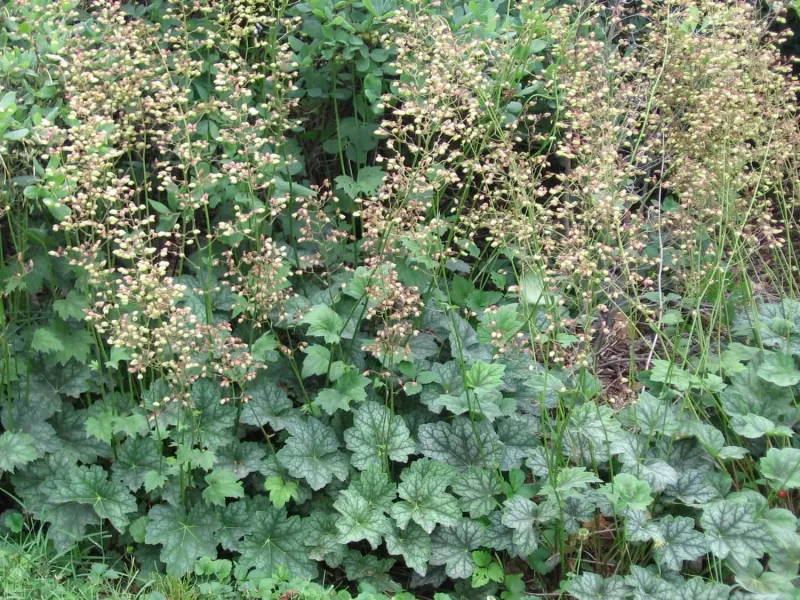
Rocky forests, ledges, and outcrops are where American alumroot actually lives in the wild.
That origin is a direct clue to what it needs from your yard: a site where water moves through the soil rather than pooling around the crown.
North Carolina Extension’s profile confirms that the strongest practical placement is part shade or shade with moist, rich, well-drained soil, and that poor drainage is a significant risk for the plant’s long-term health.
Filtered light, morning sun, or bright shade are all workable.
What you want to avoid is a spot that bakes in hot afternoon sun through a Pennsylvania July, or a low area where water collects after a summer thunderstorm and sits for days.
Heavy clay that stays saturated is the combination most likely to cause problems, and parts of southeastern Pennsylvania and many central and western areas have exactly that kind of soil.
Before you plant, spend a few minutes actually reading the spot.
Dig a hole about 12 inches deep, fill it with water, and watch how long it takes to drain.
If water is still sitting there after an hour, that location needs amendment or a raised bed before alumroot will thrive.
If it drains in 20 to 30 minutes, you are in reasonable shape.
Pennsylvania DCNR advises matching native plants to the precise conditions of the actual planting site, including shade level, soil moisture, soil reaction, and drainage, rather than assuming a broadly shady yard will suit every shade-tolerant species.
That advice applies directly here.
Two spots 10 feet apart in the same backyard can have meaningfully different drainage, especially on sloped ground or near downspouts.
Establish The Clump Before Expecting Its Best Display
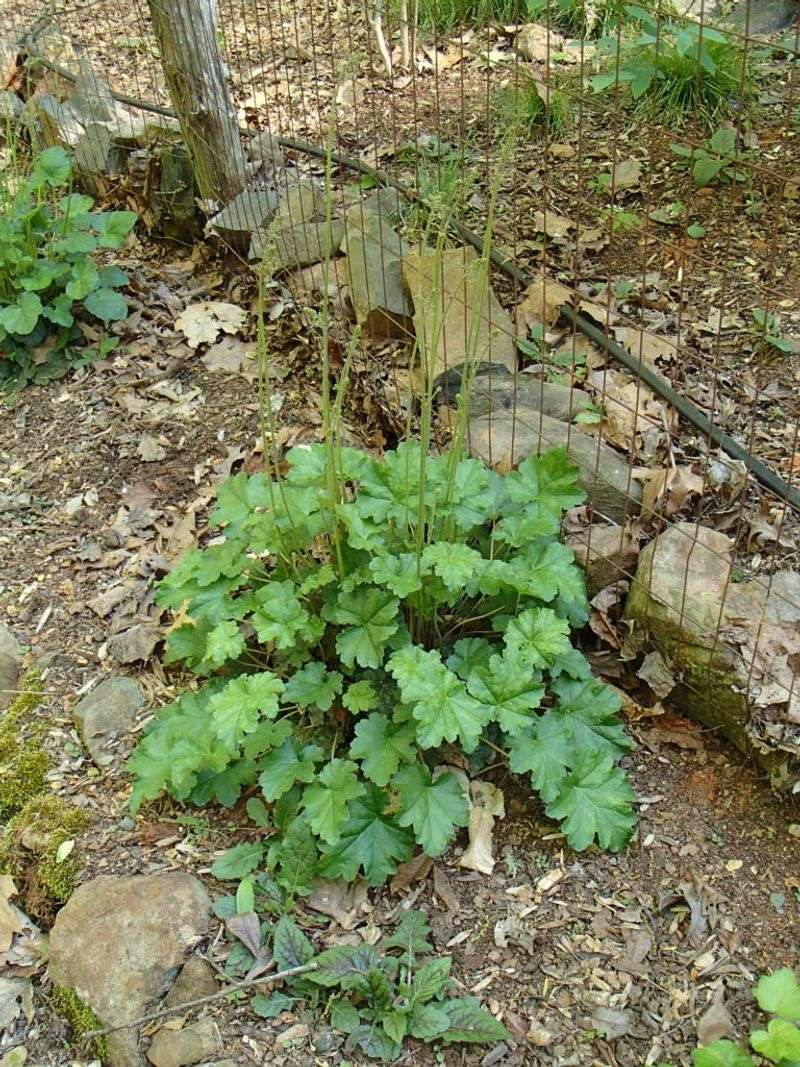
A newly planted alumroot clump is not going to immediately perform like a three-year-old established plant.
Give it a fair first season, and it will reward you with progressively better foliage and more flower stalks as the root system settles in.
Pennsylvania DCNR recommends buying nursery-propagated plants rather than removing any from the wild, both because wild collection depletes native populations and because nursery stock transplants far more reliably.
When you shop, look for Heuchera americana specifically if the native species is your goal.
Many retail coral bells are ornamental hybrids, which can be beautiful but are not the same plant.
Ask the grower or check the botanical name on the tag before you bring it home.
Spacing matters more than many gardeners expect.
University of Illinois Extension suggests placing Heuchera plants approximately 10 to 16 inches apart, depending on the cultivar and the look you want.
Closer spacing, around 10 to 12 inches, fills in faster and creates a denser grouping at the front of a border.
Wider spacing, toward 14 to 16 inches, leaves each clump room to develop its natural mounded shape without crowding.
Watering is where new plantings most often run into trouble.
Established alumroot may handle some dry stretches, but newly planted perennials still need consistent moisture during dry spells through that first growing season.
Pennsylvania summers can deliver weeks of heat between thunderstorms, and a plant that went in the ground in May genuinely needs you to check the soil and water when the top inch feels dry.
Missouri Botanical Garden’s entry on Heuchera americana is direct about drought tolerance applying to established plants, not fresh transplants.
Match your expectations to where the plant actually is in its development, and the establishment phase goes much more smoothly.
Manage Water And Winter Exposure Without Overpromising
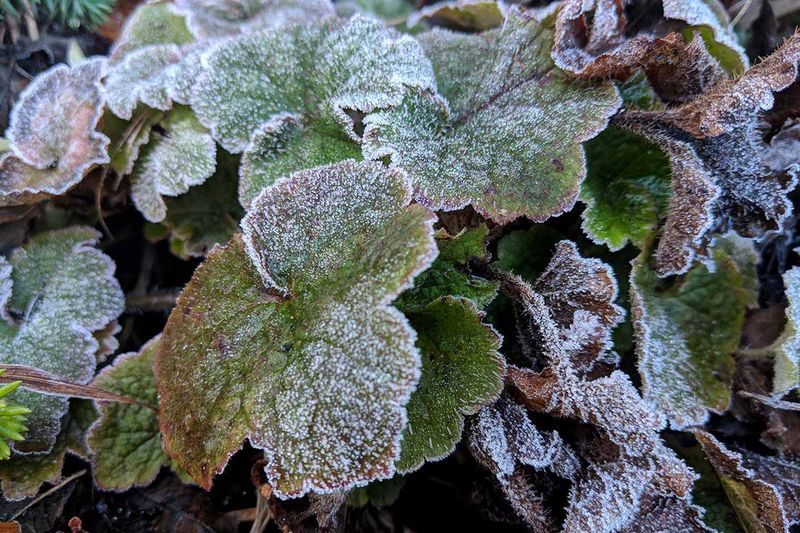
Two conditions undermine an otherwise well-placed alumroot more reliably than anything else: prolonged wetness around the crown and repeated freeze-thaw cycles that push the plant out of the ground.
Getting both of these right is less complicated than it sounds, but skipping either one is genuinely costly.
On the water side, good drainage protects the crown during wet stretches, especially through Pennsylvania’s humid summers and rainy springs.
During dry periods, particularly in the central valleys and the Susquehanna Valley where summer drought can follow heavy spring rains, keep an eye on soil moisture for plants in their first two growing seasons.
Water when the top inch of soil is dry rather than on a fixed schedule, because shaded spots can hold moisture longer than you expect.
Missouri Botanical Garden specifically flags frost heaving as a risk for Heuchera when winter temperatures fluctuate widely, which is a real pattern across much of Pennsylvania.
Freeze-thaw cycles in January and February can physically lift a plant’s crown out of the soil, exposing roots to drying air and cold.
Applying a light layer of mulch, about 2 to 3 inches, after the ground freezes in late fall reduces that risk without smothering the crown.
Not every Pennsylvania yard needs the same winter treatment.
A sheltered spot in the Delaware Valley with mild winters and stable soil temperatures is different from a north-facing slope in the Laurel Highlands or an exposed site in the northern tier where temperatures can swing 40 degrees in a single week.
DCNR’s site-matching guidance applies here too: assess your specific site’s exposure and winter conditions before deciding how much winter protection makes sense.
American alumroot is adaptable, but it cannot fix a poorly matched location on its own.
Use Simple Maintenance To Keep The Plant Useful
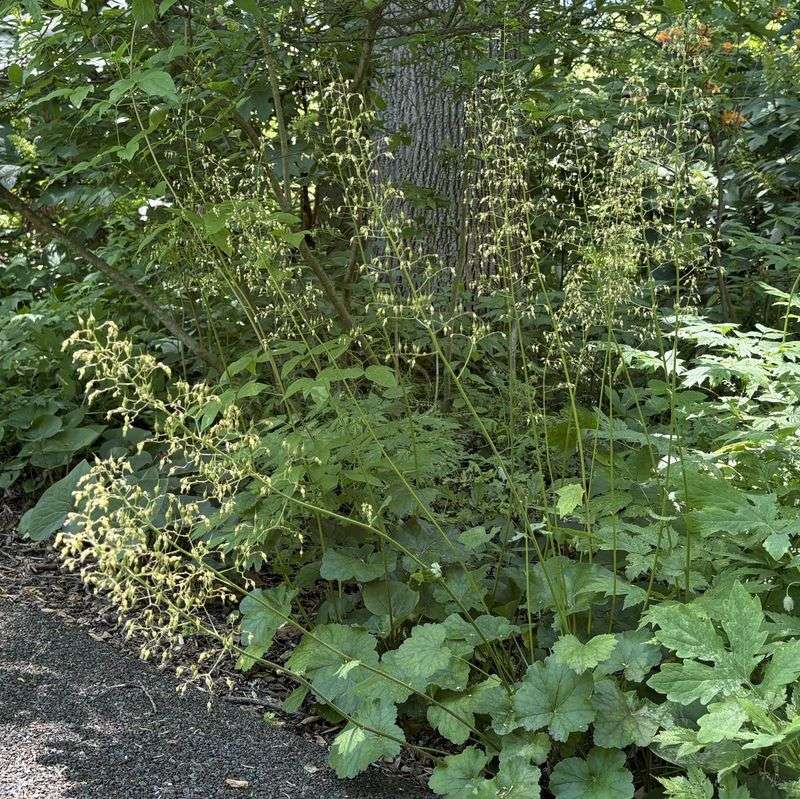
American alumroot does not need a complicated maintenance schedule to stay useful in your shade border.
The list of tasks that actually matter is short, and none of them requires specialized tools or a specific weekend in the gardening calendar.
Deadheading, which means removing spent flower stalks once the blooms have faded, is optional but worth doing.
University of Illinois Extension notes that cutting back finished stalks tidies the plant’s appearance and may encourage slight rebloom in some coral bells.
Do not expect that simple step to produce months of additional flowers, because the evidence does not support that promise.
Think of it as a housekeeping move that keeps the planting looking intentional rather than neglected.
Division is the maintenance task with the most direct impact on long-term performance.
Illinois Extension recommends dividing established Heuchera clumps every 3 to 4 years, in spring or fall, when the center of the clump starts to die out or the plant’s flowering declines.
Lift the clump, separate the healthy outer sections, replant them at the original depth, and water them in well.
That simple reset keeps the plant productive and gives you additional plants for other spots in the border at no cost.
Beyond the garden itself, Oak Ridge National Environmental Research Parks documents that American alumroot’s small flowers provide nectar and pollen for native bees, including sweat bees, which are easy to overlook but genuinely important pollinators in Pennsylvania shade gardens.
That ecological connection happens quietly while you are doing something else entirely, which is the best kind of garden work.
American alumroot earns its place in a shade border through a combination of possible seasonal bloom, attractive foliage, and low maintenance demands, and the gardener who matches it to the right site will likely find it one of the more reliably rewarding natives they have ever planted.