
This Invasive Insect Is Quietly Killing Pennsylvania Oak Trees, And Here Is What Stops It
Follow us on Google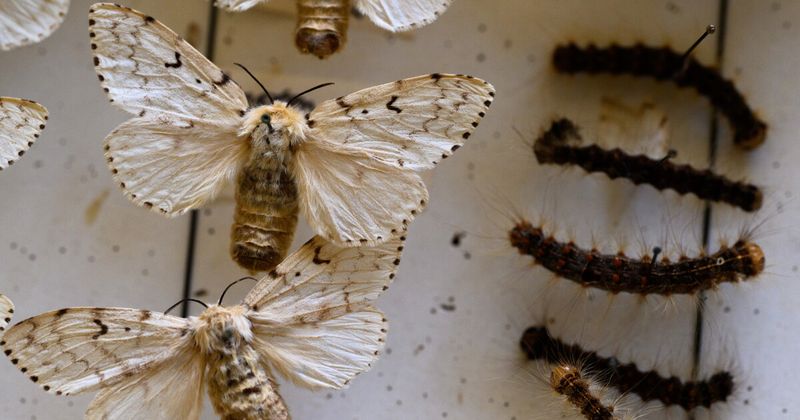
You step into the yard on a late May morning and hear a faint patter, like light rain under a clear sky. It is caterpillar droppings falling from your oak.
Spongy moth, an invasive insect, has killed millions of oaks in Pennsylvania, and its caterpillars go after oak leaves first. Here is what you can actually do about it, and what no yard trick can promise.
How to Recognize a Likely Spongy Moth
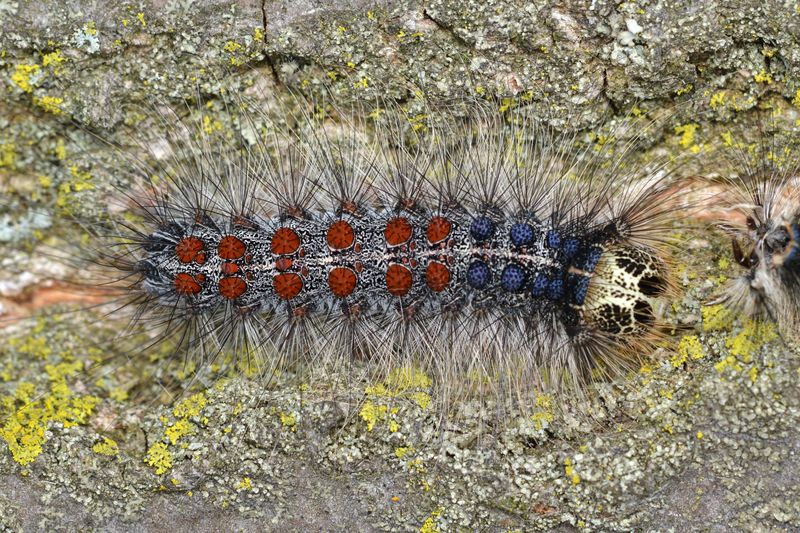
That patter under your oak has a likely suspect in Pennsylvania. It is the spongy moth, an invasive insect whose caterpillars prefer oaks.
Leaf loss alone does not confirm the cause for your tree, though, so look for the insect itself.
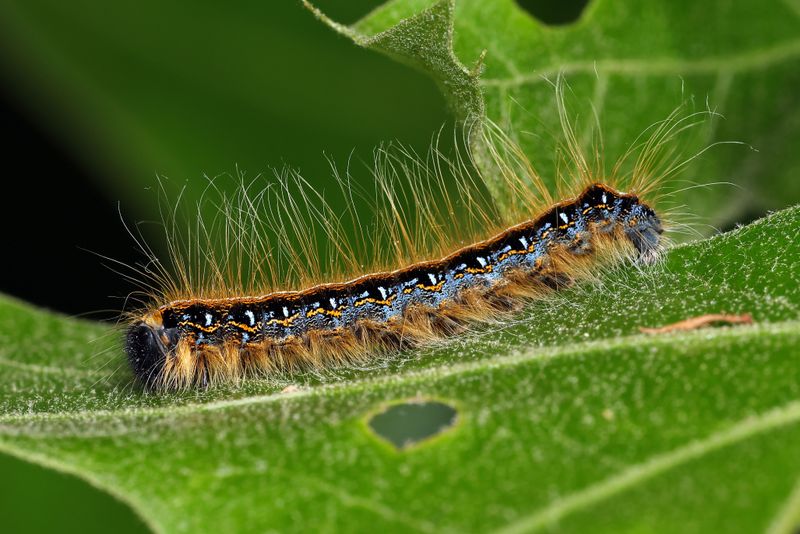
Start with the caterpillars. Pennsylvania DCNR describes a yellow-and-black head, five pairs of blue spots, then six pairs of red spots running down the back.
If you find that pattern on your trunk, the case gets much stronger. The tan, fuzzy egg masses are the other big clue.
Spongy moth has one generation per year in Pennsylvania. So the caterpillars show up in spring, feed for weeks, and then the cycle resets with new egg masses in summer.
A tree that loses leaves in midsummer with no caterpillars around may have a different story.
Two lookalike problems are worth knowing. Oak wilt is a fungal disease, not an insect, and DCNR describes leaves browning and falling from the top of the tree downward.
Spotted lanternfly is a separate insect, and Penn State Extension reports it has not been seen killing healthy established ornamental trees.
Think of it like a neighbor spotting a stranger. You need to see the face before you name the culprit.
What Defoliation Means for an Oak
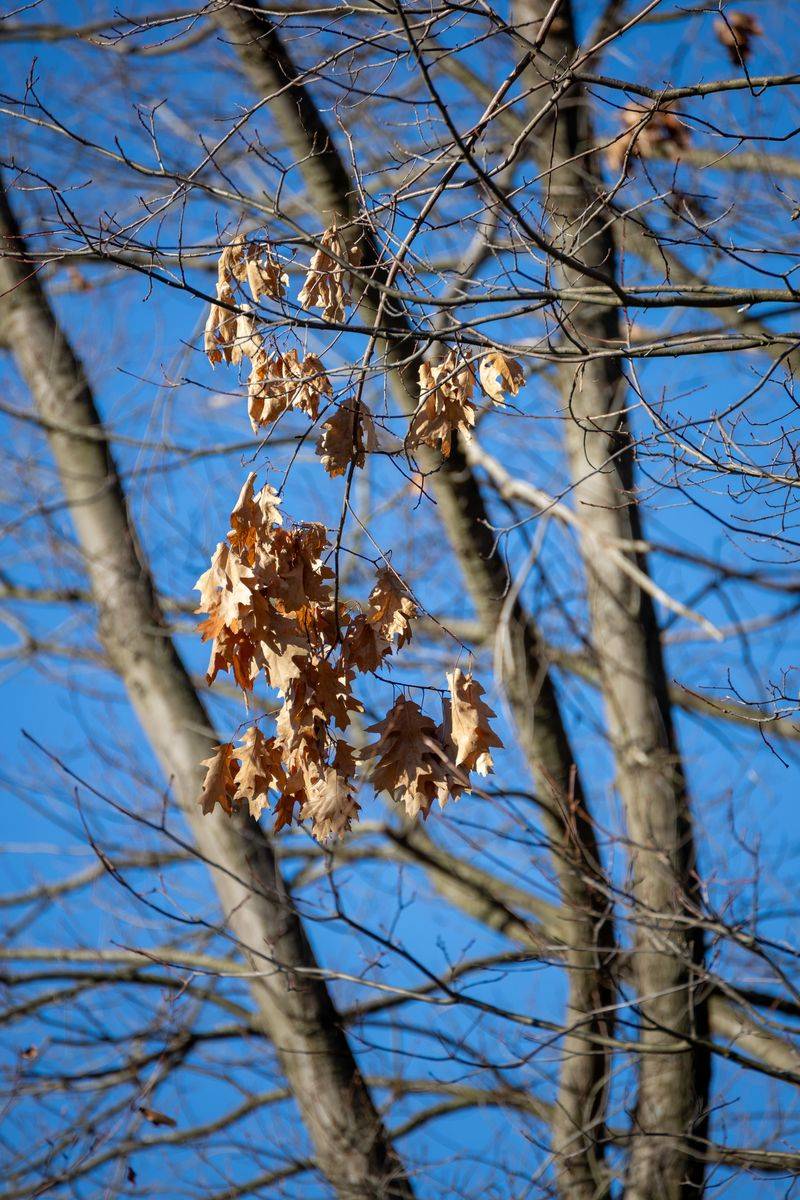
A stripped oak in June looks like a funeral. Here is the calmer truth.
Losing leaves is not the same as dying.
USDA Forest Service research finds that healthy broadleaf trees can often withstand one or two consecutive years of severe defoliation. Many oaks grow a second set of smaller leaves by midsummer, like a tree taking a deep breath and starting over.
The danger builds when things stack up. Repeated severe feeding, a thin crown, drought, and secondary pests or diseases can raise the risk of death, sometimes years after the outbreak.
So a tree that already struggles with compacted soil or a dry August has less in the bank.
That is why condition matters as much as the caterpillars. Nobody can predict the fate of your particular oak from one bad spring.
Timing helps put your worry in context. DCNR reports outbreaks in Pennsylvania from 2021 through 2024, and populations appear to be declining in 2025 and 2026.
That is not a new statewide emergency, but it is a good moment to watch your tree.
Breathe out. Then keep an eye on the crown year to year.
Inspect for Egg Masses Before Spring Hatch
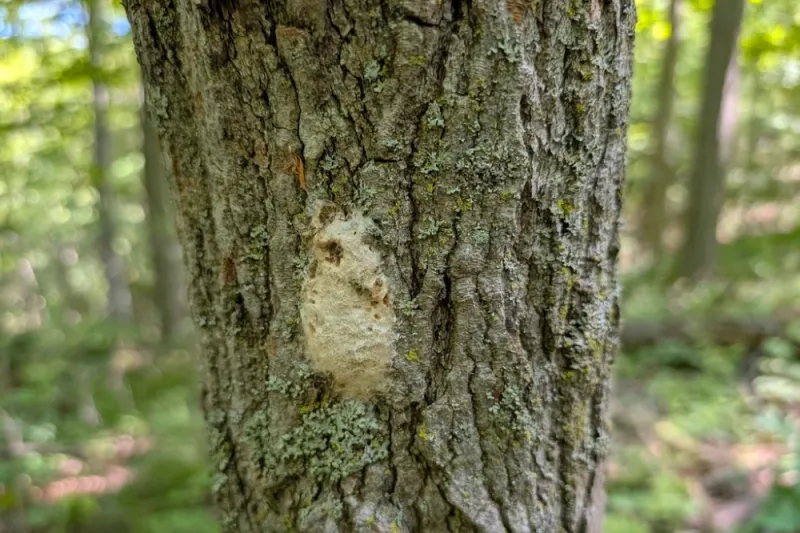
Here is a fact that surprises people. One tan, fuzzy patch the size of your thumb can hold roughly 100 to 1,500 eggs.
The female lays them in June and July, and they generally hatch from mid-April to early May the next year.
So your best window is summer and fall. Walk the yard with a flashlight and check the oak trunk, then the reachable extras.
Stones, outdoor furniture, and firewood piles are favorite hiding spots.
Scrape accessible masses off before they hatch, and dispose of them the way the state directs. DCNR’s spongy moth page explains the steps.
One caution matters. Penn State Extension warns that simply smashing a mass may leave viable eggs.
Scraping and proper disposal is the safer move.
Be honest about the limits. Removal can help your individual tree, but it cannot control a forest-wide infestation.
High branches stay out of reach, and your neighbor’s oak may still send caterpillars your way.
Still, ten minutes with a scraper on a cool October afternoon is a genuinely good trade.
Use Burlap Bands as a Limited Aid
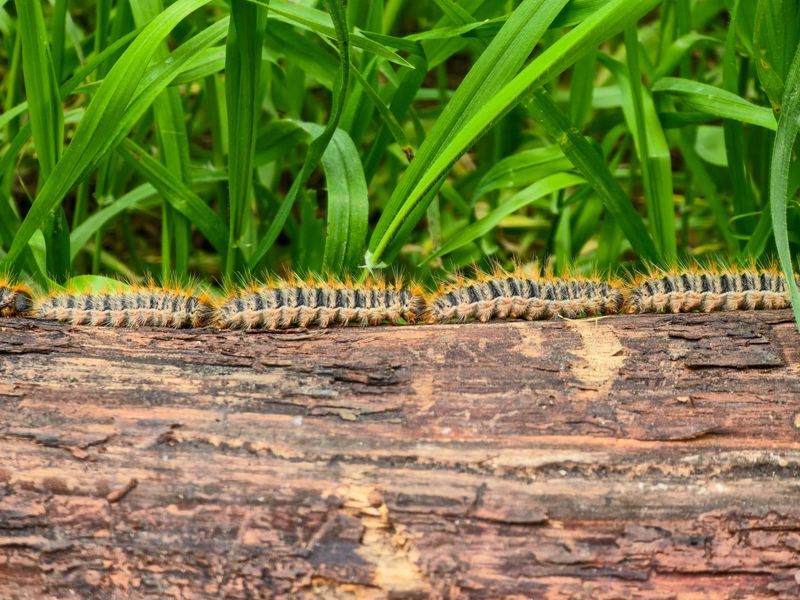
Caterpillars are night owls, more or less. When the sun climbs, many crawl down to hide, and a folded strip of burlap around the trunk makes a cozy shelter.
Then you collect them.
Penn State Extension recommends checking bands every few days and removing them after July. It helps on a few trees where you can keep up the routine.
Wear gloves. The caterpillars and the bands can irritate some people’s skin, and you do not want a rash to end your cookout plans.
Here is where it gets tricky. Banding is labor-intensive, and it has limited impact when many nearby trees are heavily infested.
If the whole street is crawling, a band on your trunk is a drop in the bucket.
So treat it as one small layer, not a stand-alone fix and not a regional answer. It will not end an outbreak.
Used well, though, a band gives you a close look at what is actually living in your tree. That is useful information whether you decide to do more or not.
Consider Treatment When the Risk Warrants It
Some people hear the word insecticide and think the problem is solved. Not quite.
Treatment may reduce defoliation, but it does not eradicate spongy moth or end an outbreak.
Timing is everything. DCNR says treatments must match caterpillar development, usually in May, and it recommends planning during the preceding fall and winter.
Waiting until you see damage can mean you are already late.
Do not expect the state to spray your yard. DCNR’s aerial program treats state and federal forest lands, not private residential properties.
Private-property care is up to you.
Use only products labeled for your site and the pest, and follow the label exactly. For a tall oak or a hard-to-reach canopy, ask a qualified professional.
One more caveat. USDA notes that Btk targets feeding caterpillars of butterflies and moths, including non-target species.
It is not harmless and not perfectly pest-specific.
So save treatment for when the risk warrants it, like a stressed tree facing heavy numbers. Think of it as a careful tool, not a switch.
Build Tree Vigor Without Promising a Repellent

Here is a myth worth retiring. Native flowers or understory plantings do not stop spongy moth caterpillars from feeding.
They do not repel, prevent, or cure it.
Native plants still earn their place for pollinators and birds. They just are not a shield for your oak.
Species choice enters the story only at the forest level. USDA discusses shifting the balance of susceptible and resistant or immune trees as a management strategy for particular stands.
That is not proof that a few shrubs protect a yard oak.
The host table is still interesting. Oak, serviceberry, and eastern redbud are classified as susceptible.
Maple is resistant, while tulip poplar, ash, and black cherry are classified as immune. Those are feeding classifications, not guarantees, and they do not make a universal planting plan for every yard.
So what helps? Keep your oak vigorous and avoid adding stress.
Water it deeply during dry spells, and keep the root zone free of heavy digging, compaction, and piled soil.
None of that stops caterpillars from eating leaves. But a well-cared-for oak is better prepared to bounce back, and that is a quiet kind of win.
