
This Heat-Loving Groundcover Keeps Blooming While The Rest Of The Bed Fries
Follow us on Google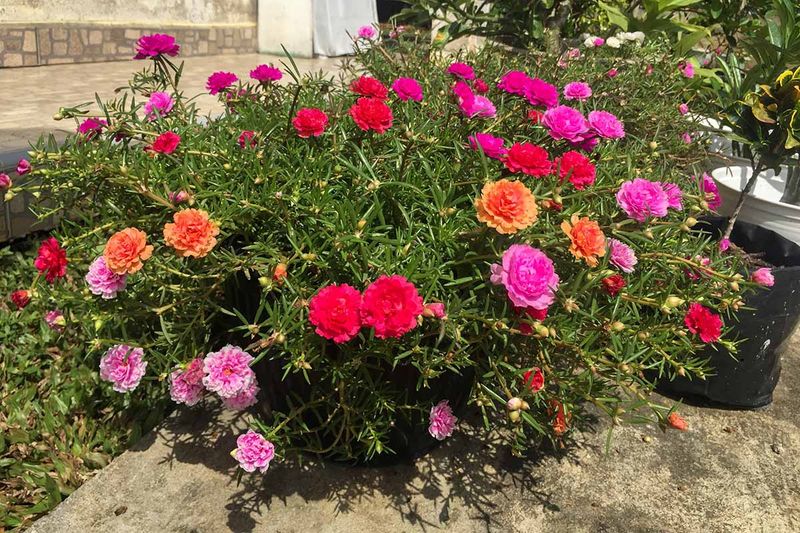
August has a way of humbling even the most confident flower bed.
Petunias droop by noon, impatiens give up entirely, and the whole border starts looking like it lost an argument with the sun.
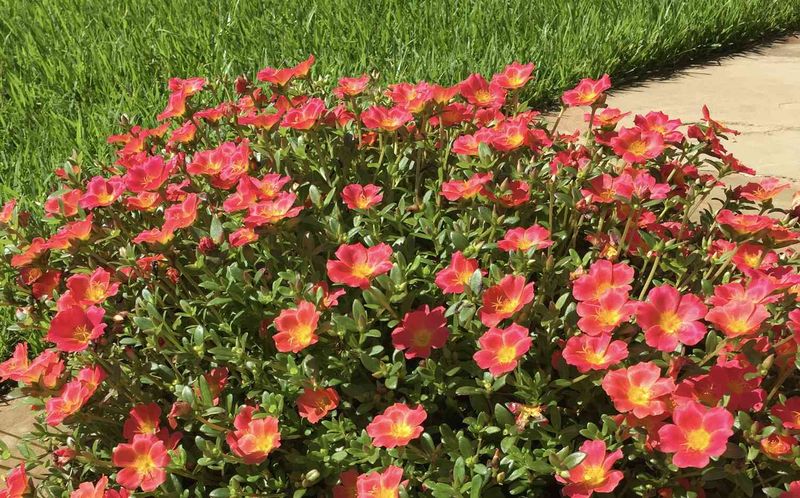
Moss rose just sits there, covered in blooms, acting like the heat is doing it a favor.
One tough little succulent annual can genuinely change how you think about summer color in the hottest corner of your yard.
Moss Rose Can Take Heat Without Promising Miracles
Portulaca grandiflora, sold under common names like moss rose, rose moss, and ornamental portulaca, is a low-growing succulent annual that earns its reputation in the hottest, driest corners of a summer garden.
It forms a spreading mat roughly 6 to 8 inches tall and about 12 inches wide, with fleshy needle-like leaves that store water the way a cactus does.
Flowers appear from early summer through fall or until frost catches up with it, and Missouri Botanical Garden describes it as native to Brazil, Argentina, and Uruguay, not the United States.
The honest version of the headline is this: moss rose can keep flowering through hot, dry weather when many shallow-rooted bedding plants decline, provided it grows in sunny, well-drained soil and receives water during prolonged dry spells.
That is a real and useful strength.
But it is not a no-water plant, and it is not an always-blooming plant under every condition.
Flowers close at night and may stay closed on cloudy or rainy days, so a gray afternoon is not a sign that something went wrong.
The plant is also not a permanent groundcover across most of the United States.
In frost-free or very mild climates it may come back, but for most US gardeners it is a seasonal annual, planted after the last frost and replaced the following year.
Treating it as one reliable layer in a hot-weather garden, rather than a guaranteed fix for every tough spot, is the most useful way to think about it.
Why It Handles Hot, Sunny Conditions
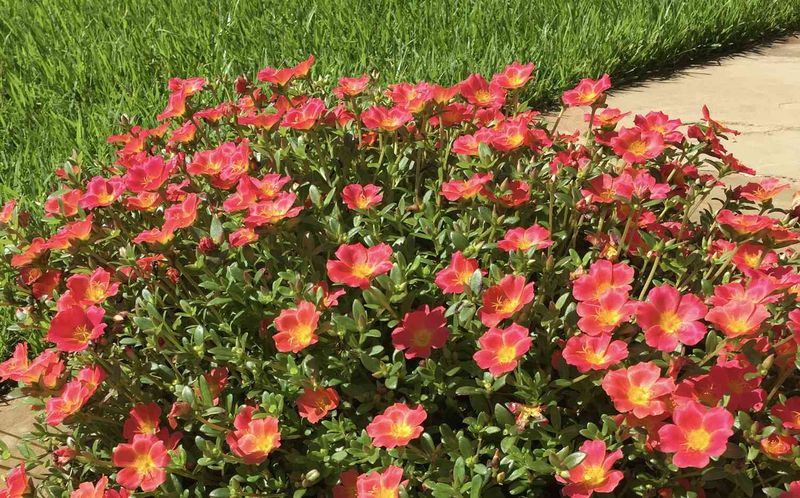
Most bedding flowers wilt in August heat because their roots cannot pull water fast enough to replace what the leaves lose to the sun.
Moss rose sidesteps that problem with two built-in advantages: fleshy, water-storing leaves and an unusual set of photosynthetic adaptations that let it keep working even when the soil dries out.
Under normal conditions, moss rose uses C4 photosynthesis, a more efficient pathway than the standard C3 process used by most garden flowers.
When drought stress builds, the plant can shift toward CAM metabolism, a strategy common in cacti and succulents that essentially closes the leaf pores during the hottest part of the day to slow water loss.
Research on Portulaca grandiflora’s photosynthetic characteristics confirms this flexible switching behavior, which helps explain why the plant keeps functioning when shallow-rooted annuals have already given up.
That resilience has real limits, though.
A study on salinity and drought in Portulaca species found that severe stress still reduced photosynthetic performance and triggered measurable stress responses, even in plants with these adaptations.
Think of it like a car with a good cooling system: it handles heat better than most, but it can still overheat if you push it hard enough in the wrong conditions.
So the plant is genuinely more resilient than a petunia or a begonia in dry heat, but it is not immune to extreme drought, waterlogged roots, or poor establishment.
Give it the right site and a fair start, and its physiology does the rest of the heavy lifting through summer.
Give It Sun And Fast Drainage
Choosing the right spot is more than half the battle with moss rose.
The plant wants at least 6 hours of direct sun per day, and it actually performs better in poor to average soil than in the rich, moisture-holding mix you might prepare for tomatoes or dahlias.
Sandy, rocky, or gritty soil that drains quickly after rain is close to ideal.
The spots most gardeners struggle with are exactly where moss rose tends to thrive.
A strip along a hot south-facing walkway, a rocky slope that bakes all afternoon, a bed edged against a concrete wall, or a container on a sun-drenched patio all suit it well.
North Carolina Extension lists it as a good choice for rock gardens, dry borders, and hanging baskets where stems can spill over the edge, and that matches the plant’s natural preference for open, fast-draining ground.
Wet soil is the one condition moss rose genuinely cannot work around.
A soggy pocket after rain, a low spot where water pools, or a bed with compacted clay underneath can cause crown rot or root disease even during a dry summer.
The plant’s drought tolerance does not protect it from standing water, and overhead irrigation that keeps foliage wet for long periods can add to the disease pressure.
If a spot stays wet for more than a day after a normal rain, either improve the drainage before planting or choose a different plant for that location.
Missouri Botanical Garden recommends rapidly draining soil as a basic requirement, and no amount of sun or heat tolerance compensates for roots sitting in water.
Water It While Roots Establish
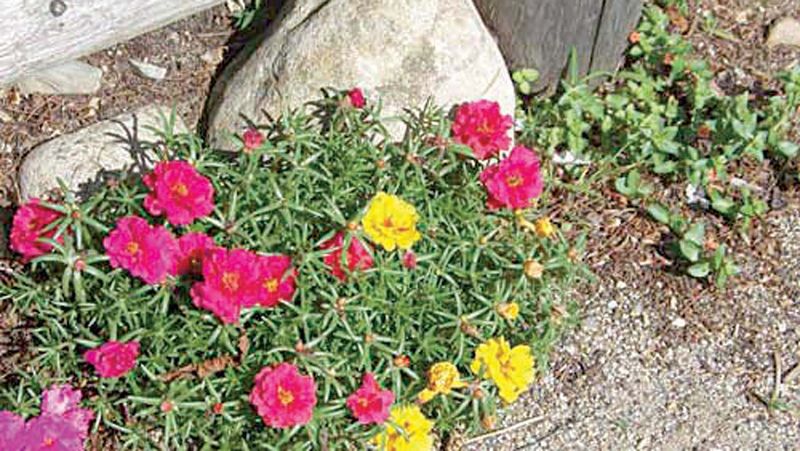
Drought tolerance kicks in after a plant has settled into the soil and built a working root system.
Before that happens, moss rose is as vulnerable as anything else you put in the ground during a hot week in June.
For the first couple of weeks after planting, water newly placed moss rose regularly, keeping the soil consistently moist enough that roots can grow outward and downward.
Once the plant shows new growth and looks at home, you can ease off and let the soil dry out between waterings.
At that point, deep and infrequent watering serves the plant better than a light sprinkle every day, because deeper water encourages roots to reach further down where soil stays cooler and holds moisture longer.
University of Georgia Cooperative Extension guidance on flowering annuals suggests roughly 1 to 1.5 inches of water per week as a broad reference for many annuals, with adjustments for local rainfall, soil type, and individual plant needs.
Drought-tolerant species like moss rose will often need less once established, but during a stretch of extreme heat or two or more weeks without meaningful rain, supplemental irrigation is still worth doing.
Drip or trickle irrigation is a better choice than overhead sprinklers when practical.
It delivers water directly to the root zone, keeps foliage and flowers dry, and reduces the disease pressure that overhead watering can create.
If you only have a hose and a watering can, water at the base of the plant rather than over the top, and do it in the morning so any splash dries quickly.
The goal after establishment is not to keep the soil constantly wet, just to step in before the plant runs short during an unusually long dry spell.
Space The Plants For A Mat Or A Cascade
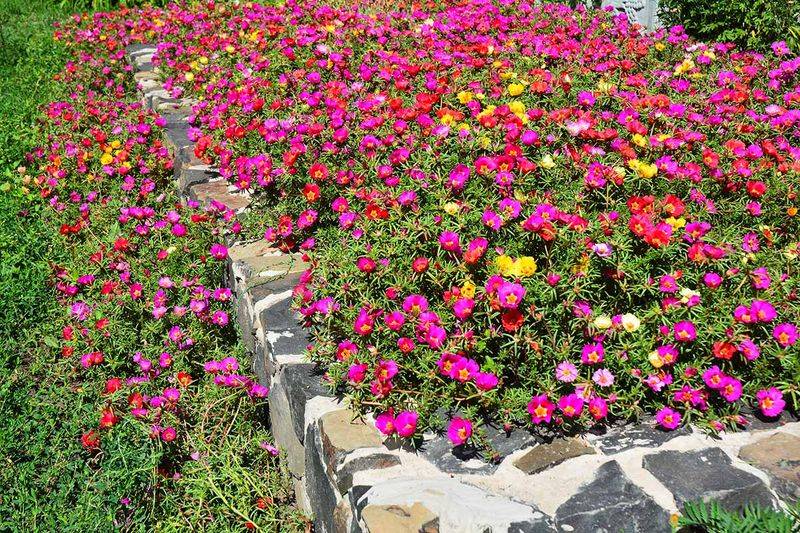
Spacing decisions for moss rose come down to what you want the planting to look like and how quickly you want it to fill in.
For a dense, connected mat that covers bare soil and crowds out weeds by midsummer, placing plants roughly 8 to 12 inches apart gives them enough room to spread without leaving obvious gaps for too long.
Wider spacing, somewhere between 12 inches and up to 3 feet in some situations, makes more sense when you are working with larger transplants, using moss rose to cascade over a wall or spill from a hanging basket, or mixing it with other low plants rather than filling a bed on its own.
University of Georgia Extension materials on annuals treat spacing as a practical variable that shifts with cultivar size and planting goal, which is the right way to approach it.
Cultivar matters here.
Compact varieties sold in small cell packs fill in faster and work well at the tighter end of that range.
Larger, more trailing types in 4-inch or quart pots may need more room to sprawl without overcrowding.
When in doubt, check the tag or ask at the nursery, since a 6-inch plant and a 12-inch trailing variety behave differently in the same bed.
One thing moss rose does not do is replace a traffic-tolerant lawn or a permanent, winter-hardy groundcover.
Missouri Botanical Garden places it firmly in the ornamental annual category, useful for color and coverage during the warm season, not as a year-round structural groundcover across most of the United States.
Plan to replant each year after frost and think of the spacing as a seasonal design choice rather than a permanent installation.
Expect Flowers To Follow The Sun
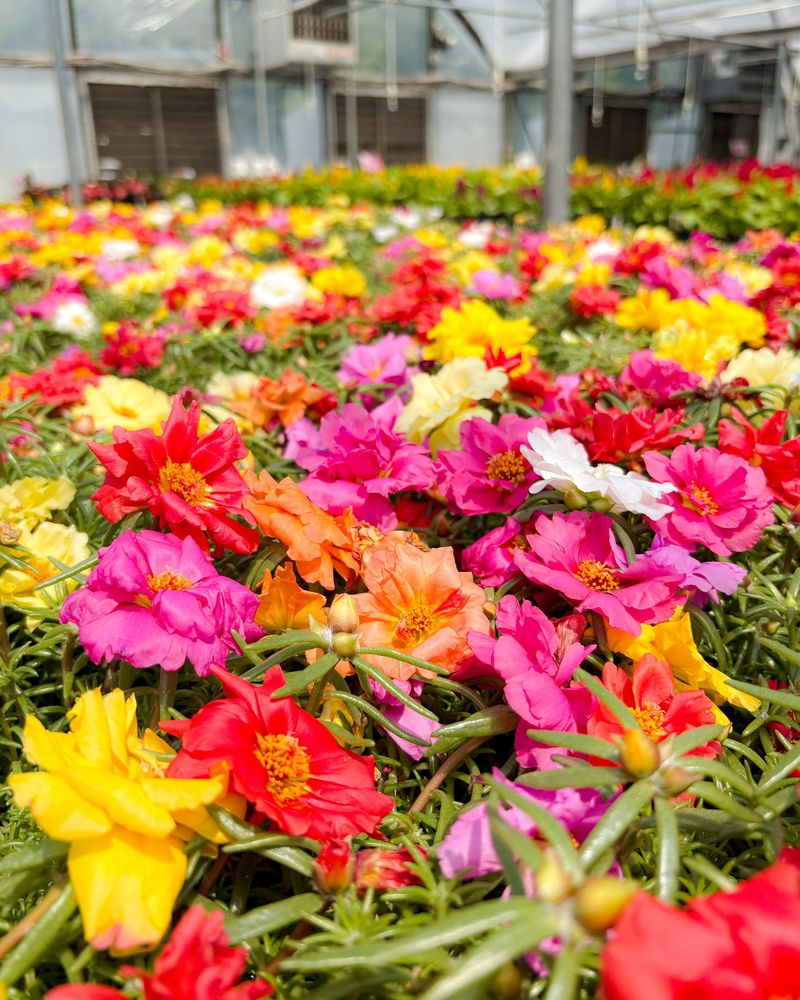
A first-time grower checking on moss rose at dusk might worry that something went wrong.
The flowers close from sundown to sunrise, and they may stay closed on overcast or rainy days.
That is normal behavior, not a sign of stress or failure.
The strongest display happens during bright daylight, so judge the planting on a clear morning or midday, not on a cloudy afternoon.
Flower size varies by cultivar.
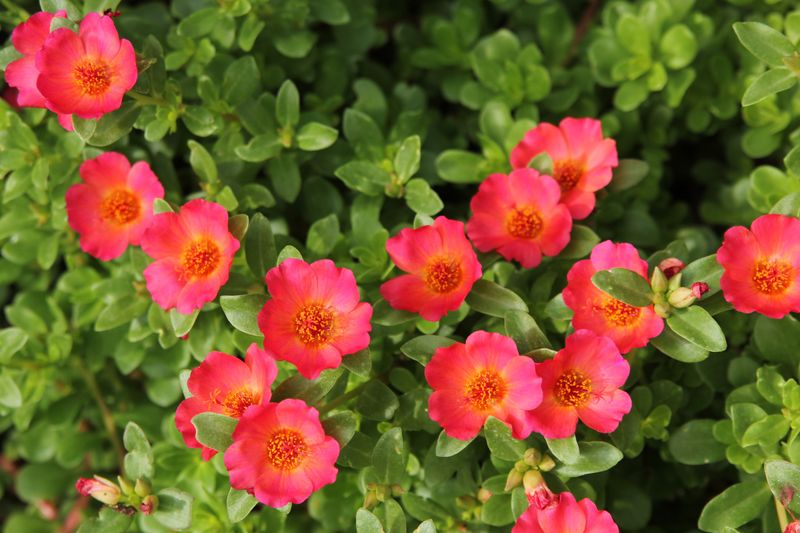
Missouri Botanical Garden describes blooms at about 1 inch across, while North Carolina Extension notes that some cultivars can produce flowers up to 3 inches depending on the plant and growing conditions.
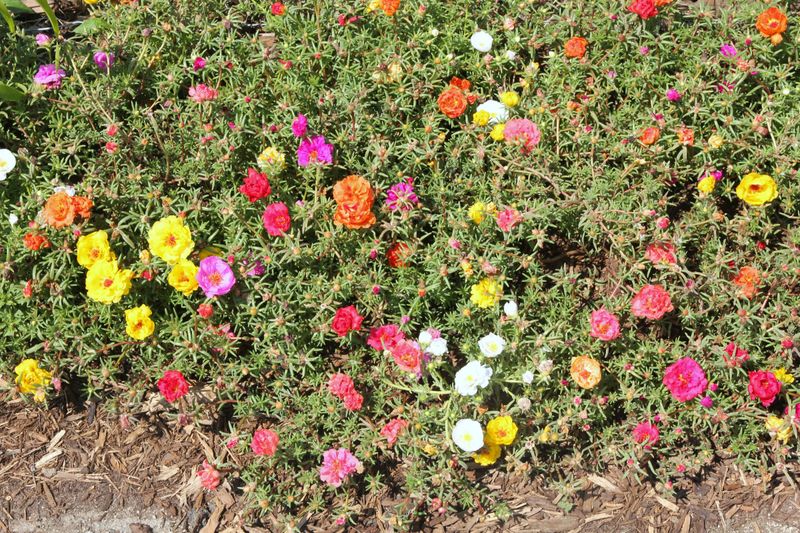
Colors run from white through yellow, orange, red, and pink, often with a silky, rose-like texture that looks more refined than you might expect from a plant this tough.
Deadheading spent flowers keeps the bed looking tidier and slows self-seeding.
If you prefer a low-maintenance approach and want the plant to fill back in on its own next year, leaving some flowers to go to seed is a reasonable choice.
North Carolina Extension describes moss rose as self-seeding without becoming invasive under its listed conditions, though that behavior can vary by region, soil, and how much bare ground is available nearby.
If you leave seeds, pull any seedlings that come up in spots where you do not want them before they have a chance to establish.
A small seedling is easy to remove, a sprawling mat takes more work.
Either way, the flower-closing habit is part of the plant’s design, not a flaw, and it does not affect how well the plant performs through the rest of the season.
Check The Label: Moss Rose Is Not Common Purslane
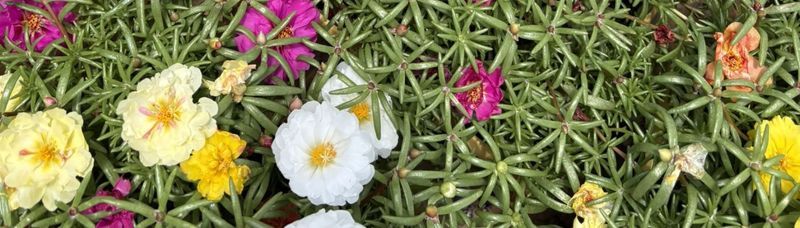
The word purslane causes real confusion at the nursery and in the garden, and it is worth sorting out before you buy, remove, or do anything else with either plant.
Ornamental moss rose, Portulaca grandiflora, and common purslane, Portulaca oleracea, are different species.
They share a genus and a family resemblance, but they are not interchangeable.
Common purslane is a low-growing summer annual weed with small yellow flowers, thick fleshy leaves, and stems that radiate outward along the ground.
Utah State University Extension describes common purslane as capable of producing seed throughout the growing season and able to reroot from older stem fragments left on moist soil.
That is why weed management guidance recommends removing it before it sets seed and taking pulled plants out of the bed rather than leaving them on the surface.
Ornamental moss rose has much larger, showier flowers in red, orange, yellow, pink, and white, and it is sold intentionally as a bedding or container plant.
The two plants look similar enough when young that pulling the wrong one is an easy mistake, especially if a previous gardener grew moss rose and it reseeded the following year.
The safest habit is to verify the botanical name on the label rather than relying on any version of the word purslane.
The species distinction also matters for pet owners.
ASPCA identifies Portulaca oleracea as toxic to dogs, cats, and horses because of soluble calcium oxalates.
That finding applies specifically to common purslane, not automatically to every ornamental Portulaca cultivar, so do not extend it or any edibility claim across the entire genus without checking a species-specific source.
When the label says Portulaca grandiflora, you have the ornamental.
When it just says purslane, ask for more information before assuming either safety or weed status.
Plant After Frost And Judge The Site Honestly
Timing the planting right is straightforward.
Moss rose goes in the ground after your local last frost date, once nighttime temperatures are reliably above freezing.
If you want a head start, seed can be started indoors 6 to 8 weeks before that date, though direct sowing outdoors after frost works fine and saves the indoor setup.
Missouri Botanical Garden recommends either approach, with outdoor direct sowing listed as a practical option for most gardeners.
Before you plant, take a clear look at the site.
Does it get at least 6 hours of direct sun?
Does water drain away within a day of rain?
If both answers are yes, moss rose has a real shot at performing well there.
If the spot holds moisture, sits in partial shade after noon, or has heavy compacted soil, the plant will struggle regardless of its heat tolerance, and Georgia Extension guidance on annuals makes clear that even tough drought-tolerant species need appropriate conditions to deliver on their potential.
One more thing worth keeping in mind: hardiness zone numbers describe winter cold tolerance, not summer heat, humidity, rainfall, or soil drainage.
A plant rated for Zone 9 might still fail in a Zone 9 bed that stays soggy or sits in afternoon shade.
Zones are useful for one narrow question and not much else.
Moss rose is grown as an annual across most of the United States, replaced each season after frost ends the show.
It may persist as a short-lived perennial only in frost-free or very mild climates.
Used honestly, with good drainage, full sun, establishment water, and a little patience during dry stretches, it is one of the most dependable sources of summer color you can put in a hot spot.
A garden that works with the heat instead of fighting it is a quieter, more satisfying place to spend an August evening.