
This Heat-Loving Container Flower Opens Fresh Blooms Day After Day
Follow us on Google
Most annuals wave a white flag when summer really turns up the heat, but one plant seems to thrive on it.
Portulaca, a low-growing succulent flower, keeps pushing out fresh color on the hottest, sunniest days of the year, right in a pot on your porch or patio.
The secret is a daily rhythm of flowers that close and reopen, giving your container a renewed look each morning.
Get the setup right and this little plant can carry your outdoor space all the way through the dog days of August.
Portulaca Fits the Daily-Blooming Promise
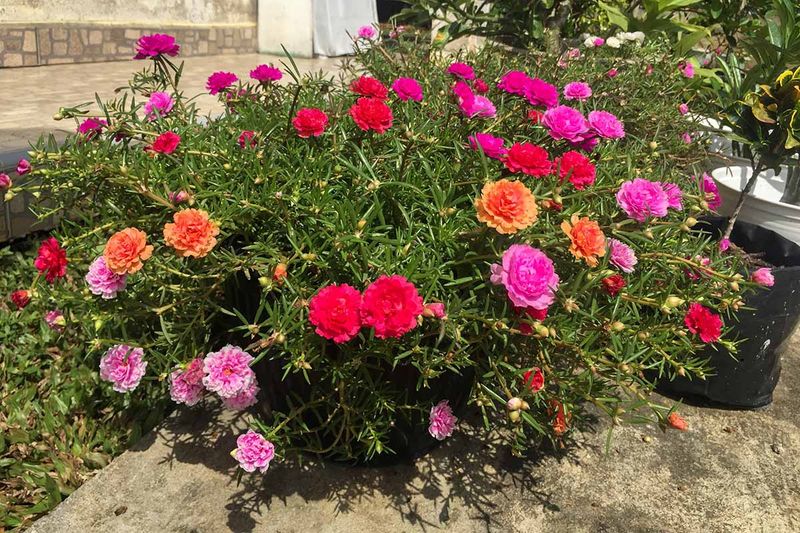
Portulaca is the broad plant group that earns the title, and the University of Florida Extension documents the daily close-and-reopen rhythm most clearly for common purslane, Portulaca oleracea, describing it as a heat-loving container plant whose individual flowers close in the late afternoon and reopen the following morning.
That daily cycle is what gives a well-placed pot its sense of constant renewal, not a single bloom that stays open around the clock.
Within the portulaca family, the plant most gardeners bring home from a nursery is moss rose, Portulaca grandiflora.
According to Mississippi State University Extension, moss rose is well suited to containers, full sun, heat, and dry conditions, and it offers a wider range of flower colors and larger blooms than its common purslane cousin.
Ornamental hybrids sold simply as portulaca also exist, and their bloom behavior can differ from either named species.
The practical appeal across all of them is the same: portulaca handles hot, sunny containers and tolerates relatively dry conditions better than many popular annuals.
Its spreading, low habit lets stems spill over the rim of a pot in a way that looks deliberately designed.
But “day after day” in the title means a recurring display of new or reopened flowers each morning, not uninterrupted bloom every hour.
North Carolina Extension notes that portulaca flowers can close in low light and reopen in bright conditions, so the show is tied to sunshine, which is exactly the kind of summer you are probably trying to decorate.
Morning Light Renews the Color
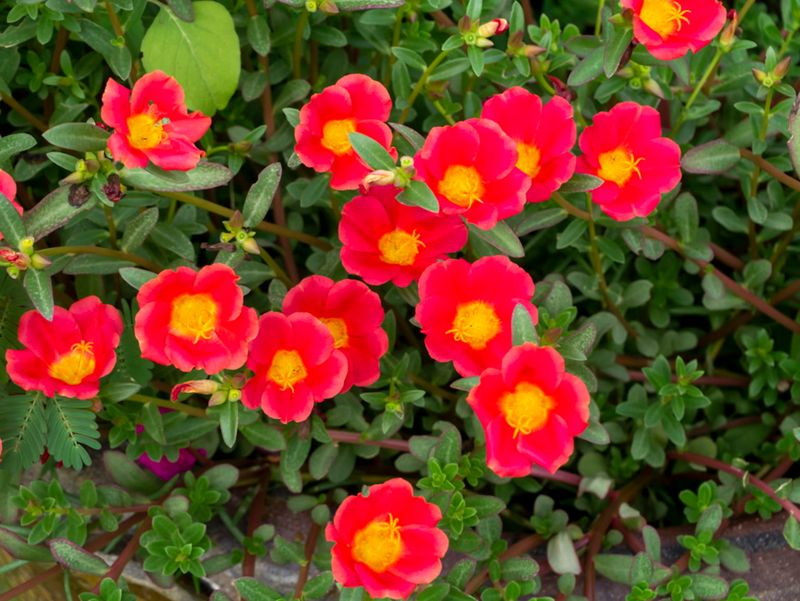
Walk out to your porch at seven in the morning on a clear July day and the pot looks like it was just replanted overnight.
That is the bloom cycle at work.
For common purslane, University of Florida IFAS container gardening guidance describes individual flowers closing in the late afternoon and reopening the following morning when light returns, so what feels like an endlessly fresh display is actually a well-timed relay of individual blooms.
Clouds interrupt the show.
On overcast days, many portulaca flowers stay partly or fully closed, which surprises gardeners who expect the same color they saw on a sunny Tuesday.
This is not a sign that anything is wrong, it is simply how the plant responds to light intensity.
Come back on a bright morning and the flowers open again.
Some newer ornamental hybrids have been selected to remain open longer than older types, so the behavior you see depends partly on the cultivar you chose.
Clemson Cooperative Extension includes portulaca among plants suited to sunny hanging baskets and window boxes, locations where the morning light hits early and the flowers respond quickly.
Think of the plant as a solar-powered display: point it toward the sun, and it delivers.
The promise of the title holds up best on the kind of bright, hot mornings that send most other annuals into a wilt.
The Portulaca Label Hides Useful Differences
Not every plant sold as portulaca behaves the same way, and knowing the difference saves you from a surprise at the nursery.
Common purslane, Portulaca oleracea, is the species with the most clearly documented close-and-reopen rhythm, but it tends to produce small yellow flowers and a fleshy, mat-forming stem.
UC IPM notes that common purslane is also a widespread summer annual weed, capable of spreading rapidly and rerooting from stem fragments, so it occupies a dual identity that the showier ornamental forms do not share.
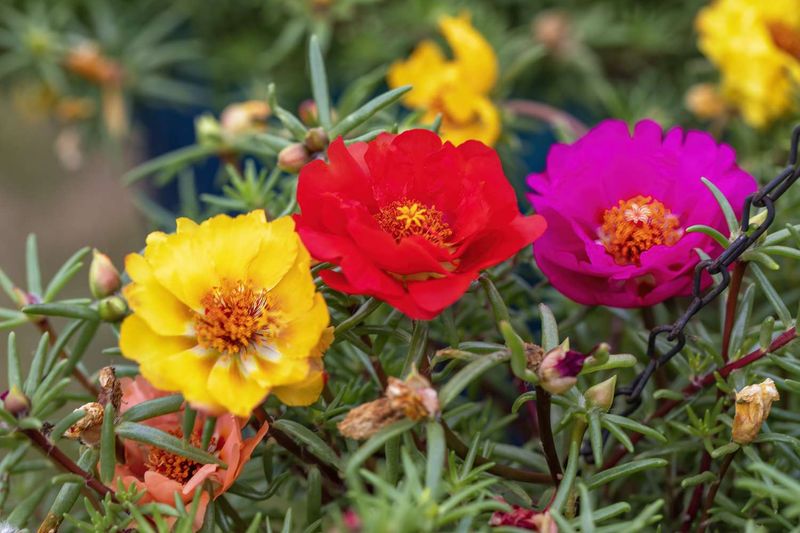
Moss rose, Portulaca grandiflora, is the version most commonly sold for ornamental containers.
Mississippi State University Extension describes moss rose as the showier ornamental form, with larger flowers in colors ranging from yellow, orange, and red to pink, white, and lavender.
Flowers across the portulaca group can measure roughly 1 to 3 inches across depending on type, so what you see in the pot at the garden center is a reasonable preview of what you will get at home.
Ornamental hybrids add another layer of variation.
Some are sold under brand names and may be crosses between species, with bloom timing, spread, and heat response that differs from both common purslane and classic moss rose.
When you shop, read the plant tag rather than relying on the genus name alone.
North Carolina Extension lists flower colors, typical size ranges, and bloom characteristics that vary by cultivar, making the tag your most reliable guide to what that particular plant will actually do in your container this summer.
Choose Drainage Before Decorative Features
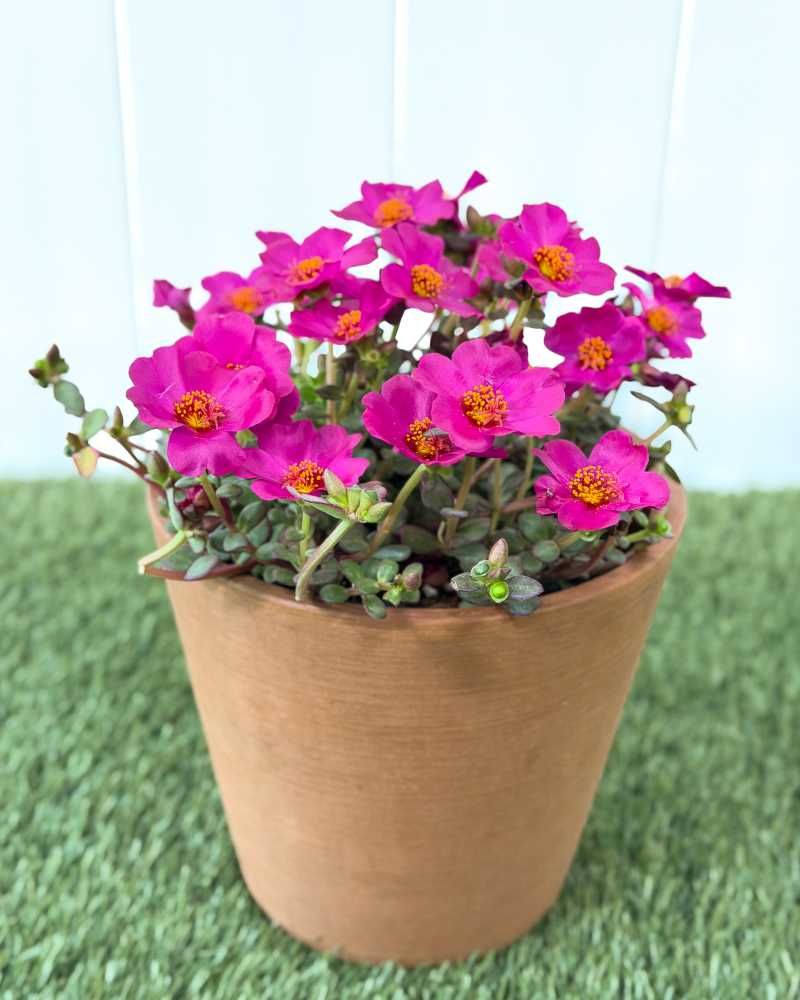
A good-looking pot that holds water like a bathtub will undo everything else you do right.
Portulaca’s succulent roots are built for dry conditions, and sitting in soggy soil cuts off the oxygen they need to function.
Texas A&M AgriLife Extension connects persistently wet soil with oxygen-starved roots and the stem and root rot that follows, which is a fast way to lose a plant that was otherwise doing fine.
Start with a container that has clear, unobstructed drainage holes, not a single small hole partly blocked by the pot’s base.
Then fill it with a commercial fast-draining potting mix rather than garden soil or a mix designed for moisture retention.
Rutgers Cooperative Extension recommends a well-drained potting medium for container annuals, and portulaca’s preference for dry to moderately moist conditions makes that guidance especially relevant here.
One common shortcut is placing a layer of gravel in the bottom of the pot before adding soil.
Skip it.
That layer actually raises the point where water stops draining freely, leaving roots in wetter conditions than the soil alone would create.
The fix is drainage holes plus the right mix, not a gravel workaround.
Portulaca is generally low-growing and spreading, but mature size varies by species and cultivar.
Texas Tech University Plant Resources and Clemson Cooperative Extension both document portulaca as a suitable trailing or spreading plant for containers, but the plant tag for your specific cultivar will give you the most accurate mature spread to use when sizing your pot.
A container wide enough for the plant to spill naturally will look better and stay healthier than one where stems pile up in the center.
Give It Six Hours of Direct Sun
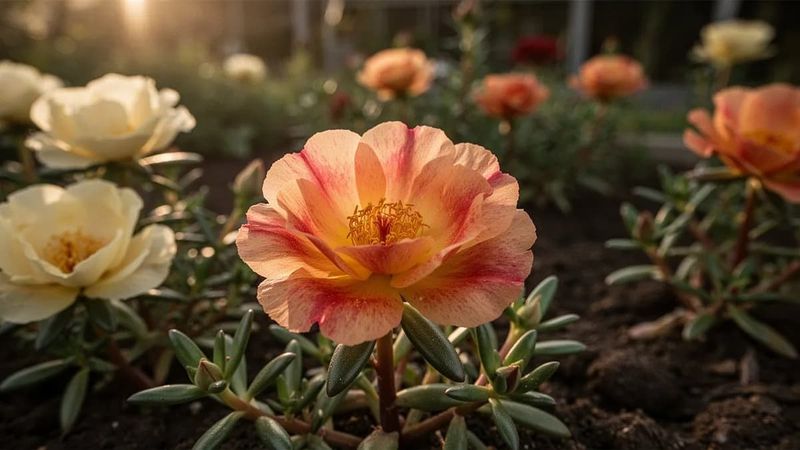
Placement is the simplest decision you make, and it matters more than almost anything else for portulaca.
Aim for at least 6 hours of direct sun each day.
North Carolina Extension recommends full sun for strongest flowering, noting that less light tends to produce weaker, more stretched growth and fewer blooms.
Put the pot in a shady corner and the plant survives but rarely puts on the show you expected.
Portulaca actually earns its keep in the spots that defeat other annuals.
A south-facing patio with concrete underfoot, a west-facing porch where afternoon heat bounces off a brick wall, or a balcony railing in full exposure are exactly the environments where University of Florida IFAS summer planting guidance highlights portulaca as a heat-tolerant choice.
Many moisture-loving annuals wilt and drop in those locations, portulaca opens wider.
In the hottest parts of the country, such as the desert Southwest or the Deep South in late July, full sun all day can push a small container to dry out faster than you can keep up with watering.
Morning sun with some late-afternoon protection is a reasonable adjustment in those regions, and it can reduce stress without cutting flowering significantly.
Mississippi State University Extension notes that portulaca suits the Southern landscape’s intense summer conditions, but wind, concrete, pot material, and pot size all affect how fast a container dries.
A small dark metal pot on a rooftop in Phoenix is a very different environment than a large glazed ceramic planter on a covered porch in Nashville.
UC Cooperative Extension container flower guidance reinforces that pot material and exposure together determine actual heat and moisture conditions, not sun hours alone.
Water by the Pot, Not the Calendar
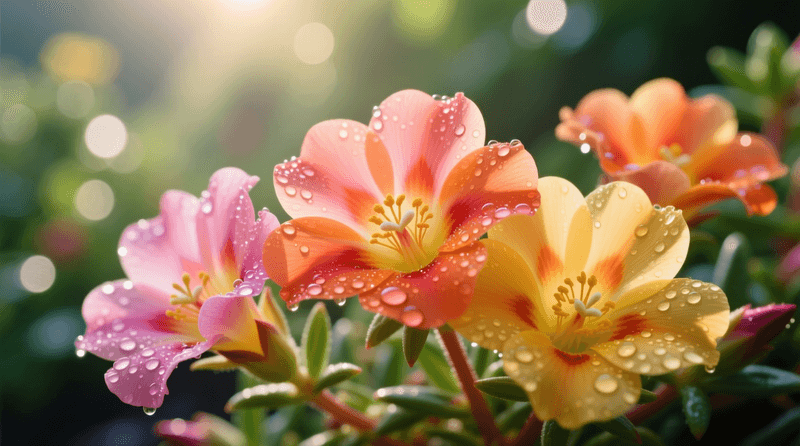
Drought tolerance is real, but it is not a hall pass for ignoring your pots.
Portulaca’s succulent foliage stores water more efficiently than many annuals, yet a small container sitting on hot concrete in a dry wind can go from moist to bone-dry in a few hours.
Iowa State University Extension recommends checking the soil rather than watering on a fixed schedule, and that advice fits portulaca especially well because the right interval changes with weather, pot size, and location.
The method is straightforward.
Press a finger about 1 to 2 inches into the potting mix.
If it feels dry at that depth, water thoroughly until excess drains freely from the bottom holes.
Oregon State University Extension describes this soak-and-drain approach as the standard for container plants, and it serves two purposes: it wets the entire root zone and it flushes out any salt buildup from fertilizer.
In a small pot during a heat wave, once-daily watering may not be enough.
Oklahoma State University Extension acknowledges that containers in hot, windy weather may need water once or twice a day, which sounds like a lot but is just the reality of a small soil volume exposed to summer air on all sides.
A larger pot buffers against that cycle because it holds more moisture per watering.
New transplants need more consistent moisture than established plants do.
Iowa State University Extension guidance on drought-tolerant annuals makes clear that even low-water plants need regular moisture while roots are developing, and University of Connecticut Extension echoes that annuals benefit from consistent care during establishment before their full drought tolerance kicks in.
Let the soil tell you when to water, not the date on the calendar.
Keep Maintenance Light but Seasonal
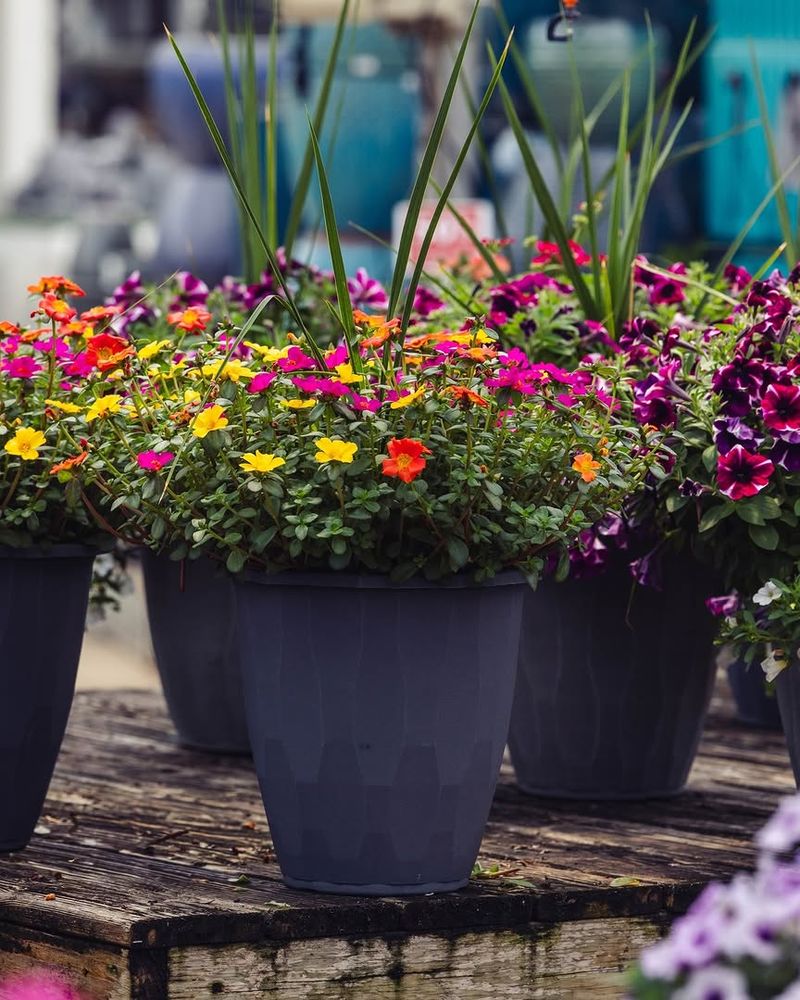
One of portulaca’s genuine selling points is how little grooming it asks for.
Many types are self-cleaning, meaning spent flowers drop on their own without leaving behind a cluttered mess of brown petals.
K-State Research and Extension describes deadheading as optional for portulaca, useful mainly if you want to tidy the appearance rather than something the plant requires to keep blooming.
Skipping it on a busy week will not cost you the display.
Feeding deserves a lighter touch than many gardeners expect.
Container plants do benefit from occasional fertilizer because watering gradually flushes nutrients from the mix, and a light application of a complete, balanced fertilizer following the product label is reasonable.
Oregon State University Extension and Iowa State University Extension both recommend fertilizing container annuals as part of routine care.
That said, pushing too much nitrogen into any annual can encourage leafy growth at the expense of flowers, so follow label rates rather than doubling up.
Frost timing is the one seasonal task that is not optional.
Portulaca is a warm-season annual in most of the United States, and a container sitting on an exposed porch faces colder conditions than a plant in the ground would.
Virginia Cooperative Extension ties outdoor planting of warm-season annuals to the local last frost date, and North Carolina Extension notes that seeds can be started indoors 6 to 8 weeks before that date if you want a head start.
Colorado State University PlantTalk lists portulaca among heat-loving annuals worth considering for containers in the warmest months.
The whole payoff of this plant comes from matching its sun, drainage, and moisture needs to what you can actually provide, then letting cultivar-specific bloom behavior do the rest.