
These Native Pennsylvania Groundcovers Replace The Grass You Are Tired Of Mowing
Follow us on Google
You step out on a humid August morning, dew still hanging on the grass, and you feel that tired sigh coming.
Another weekend, another wrestle with the mower over the same green patch that never quite thanks you for the effort.
But your Pennsylvania yard does not have to be this way, and neither do your Saturdays.
Native groundcovers are ready to take over the parts of the lawn you have grown to resent, from the Allegheny Plateau to the Delaware Valley, and they ask for almost nothing in return.
Here are ten quiet heroes that thrive in our humid summers, sudden storms, and freeze-and-thaw winters while you finally sit back on the porch.
1. Pennsylvania Sedge Softens The Shade Under Your Trees
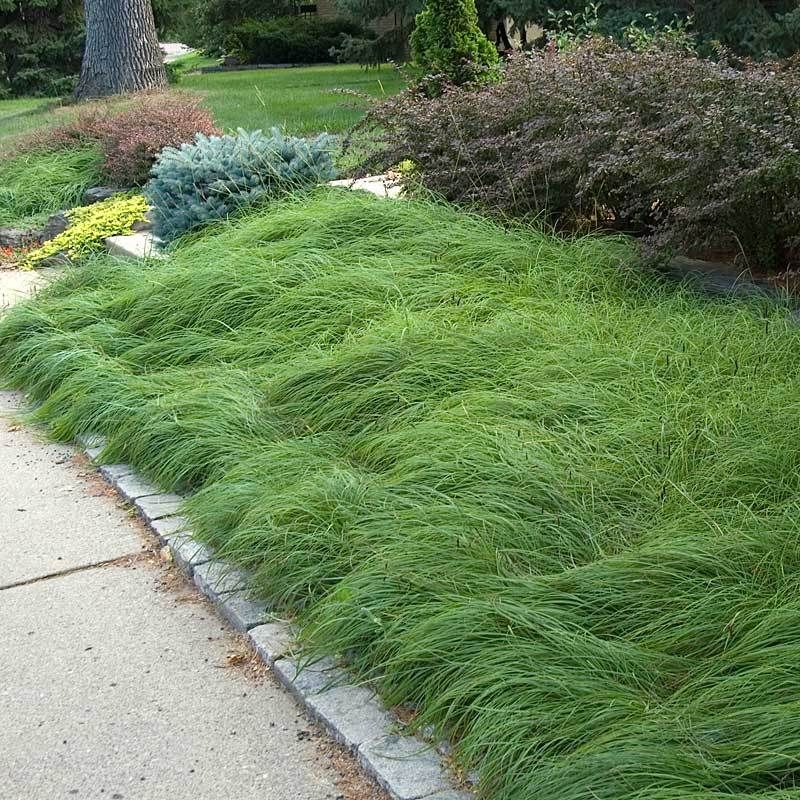
That patch under the old oak, thin and patchy no matter what you seed it with, has a name every mower knows.
Grass loses that fight every single summer.
Pennsylvania sedge, or Carex pensylvanica, walks in and wins it without trying.
Turf demands full sun and steady water.
This grass-like native does the opposite, thriving in dappled light and deep shade across Pennsylvania woodlands.
It forms soft, flowing mats about 6 to 10 inches tall that sway like a slow green tide.
Spreading gently by underground rhizomes, it knits itself together instead of galloping off across the yard.
Set plugs roughly 12 inches apart and let them close the gaps over a season or two.
Once established after that first year, it tolerates dry to medium soil and wants no fertilizer at all.
Many folks never mow it.
But if you like a tidy look, trim to about 3 inches in late winter, maybe two or three times a year.
That is genuinely the whole job.
Deer tend to leave it alone too, which matters in the Laurel Highlands and central valleys where browsing is a nightly raid.
You get a soft carpet where grass gave up, and you get your quiet back.
2. Allegheny Spurge Holds Its Color Through Winter Snow
Most groundcovers vanish or brown out the second the cold arrives.
Allegheny spurge does not read that memo.
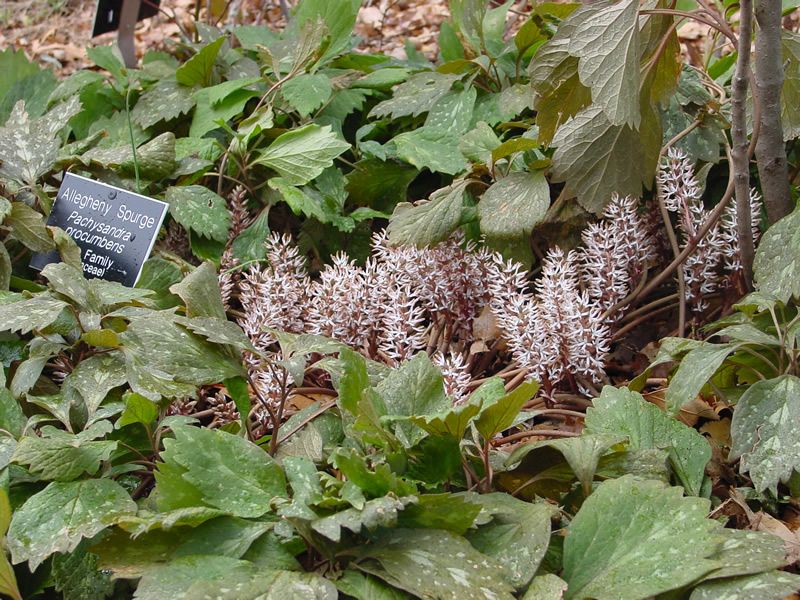
Pachysandra procumbens keeps its handsome leaves through the snow and ice of a Pennsylvania winter, and that alone earns it a spot.
Here is where it gets useful.
It is the native cousin of the invasive Japanese pachysandra so many yards are fighting to remove, and it delivers the same shady coverage without escaping into the woods.
That makes it a smart pick for the richer, clay-heavy soils common across southeastern Pennsylvania and the Susquehanna Valley.
Standing 4 to 9 inches high, it carries bluish-green leaves marbled with silver and purple.
In mid-April, fragrant pinkish-white flower spikes push up before the new foliage unfurls, feeding early pollinators when little else is open.
Once settled, it shrugs off drought and heavy clay, and deer generally pass it by.
It spreads slowly by rhizome into dense colonies that smother weeds without turning pushy.
One honest caution.
The plant can be mildly toxic if a curious pet chews it, so place it thoughtfully near patios where dogs roam.
Beyond that, it is a low-effort layer of year-round green.
3. Foamflower Turns Deep Shade Into A Springtime Cloud
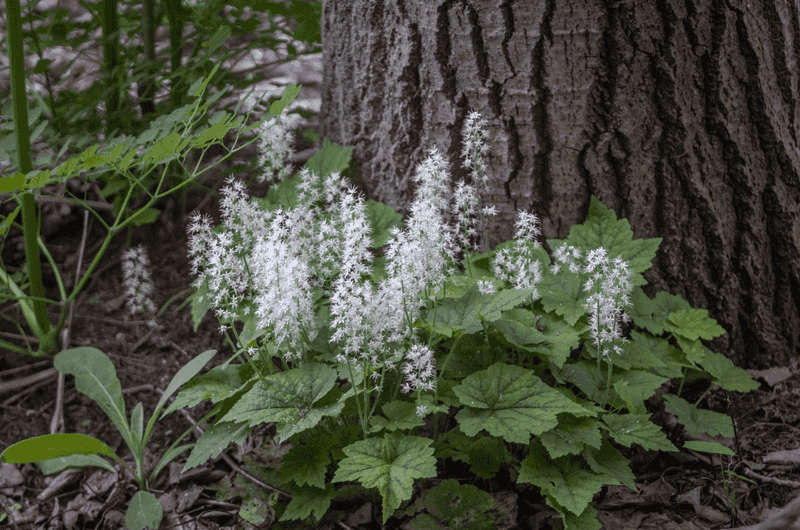
Picture stepping outside in late April to find a shady corner frosted in delicate white, like foam left behind by a wave.
That is foamflower, Tiarella cordifolia, doing what deep shade rarely allows.
It brings a soft, airy show to the exact spots where grass sulks.
Growing about 6 to 12 inches tall, it sends up spiky flower stalks reaching up to 18 inches.
The heart-shaped leaves form a low clump that blushes red and bronze in autumn and stays semi-evergreen through milder winters.
Those frothy white or pale pink blooms are more than pretty.
They hand early butterflies and native bees a reliable nectar source when the season is still waking up.
It spreads gently by runners, drawing natural-looking colonies without staging a takeover.
Give it rich, well-drained soil and steady moisture, the kind you often get in the Poconos after spring rains.
It handles clay and slopes gracefully, so it doubles as a quiet erosion controller along a shaded bank.
Tuck it under trees or beside a shaded path and let it drift.
Come spring, that dead-grass corner reads like a small pocket of woodland you did not have to buy.
4. Wild Ginger Chokes Out Weeds In The Coolest Corners
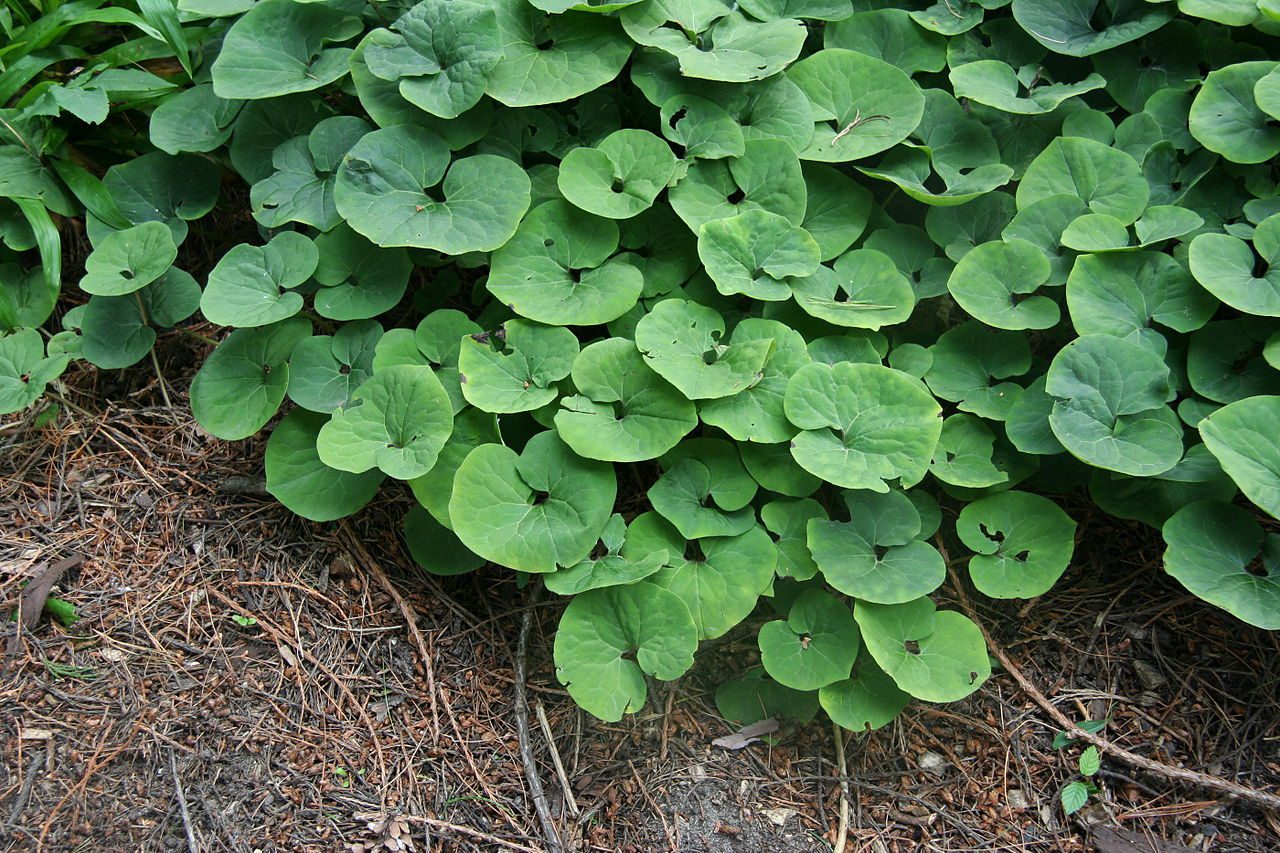
Some pockets of a yard stay so cool and dim that even shade lovers throw up their hands.
Wild ginger, Asarum canadense, moves right into those spots and settles in like it owns the place.
The reward is a dense carpet of glossy, heart-shaped leaves that genuinely smothers weeds.
Reaching just 4 to 6 inches tall, it spreads low and steady across the organic, humus-rich soils found in the northern tier and parts of western Pennsylvania.
Unlike spring ephemerals that disappear by July, its forest-green leaves hold their looks all season.
Down beneath the foliage in early spring hides an oddity worth crouching for.
Small reddish, cup-shaped flowers sit right at the soil line, quietly serving early crawling insects.
Most people never notice them, which is half the charm.
Deer are the antagonist in so many Pennsylvania stories, and here the plant simply refuses to be dinner.
They pass it by for tastier options nearly every time.
It wants full shade and evenly moist, well-drained soil, and it spreads slowly.
But a single planting can live around 10 years, patiently building a naturalized understory.
You do almost nothing, and the ground fills itself in.
5. Moss Phlox Blankets A Sunny Slope You Cannot Safely Mow
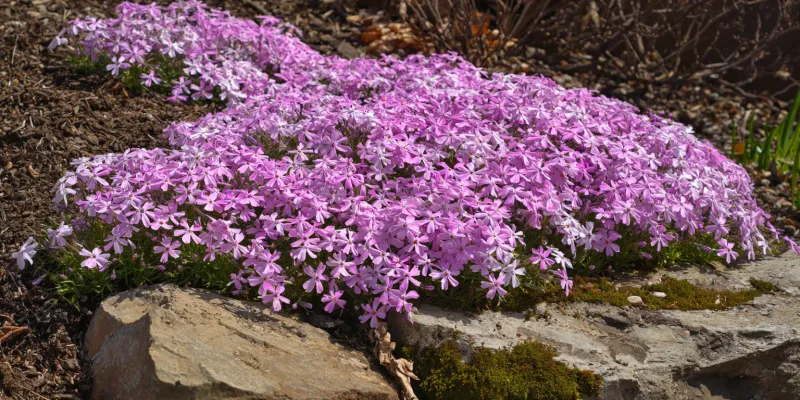
You know that bank by the driveway, steep enough that dragging a mower across it feels like a bad idea waiting to happen.
Moss phlox, Phlox subulata, was built for exactly that spot.
It turns a dangerous chore into a spring spectacle you actually look forward to.
Forming a dense mat up to 6 inches tall and spreading 2 to 3 feet wide, it carries needle-like evergreen leaves for year-round texture.
Then April and May arrive and it disappears under a blanket of fragrant pink, purple, or white flowers.
Toughness is its whole personality.
It thrives in full sun, tolerates some shade, and shrugs off our hot, humid summers.
Give it well-drained, sandy, or rocky soil, the kind common in the glacial ground of northern Pennsylvania, and it turns drought-tolerant once established.
Bees, butterflies, and even hummingbirds work the blooms while the deer keep walking.
That combination makes it one of the least demanding sun groundcovers you can plant.
Set plants about 15 inches apart on the slope and water deeply for the first season.
After that, the hillside handles itself, and your mower stays parked where it belongs.
6. Creeping Phlox Handles The Morning Sun, Afternoon Shade Spots
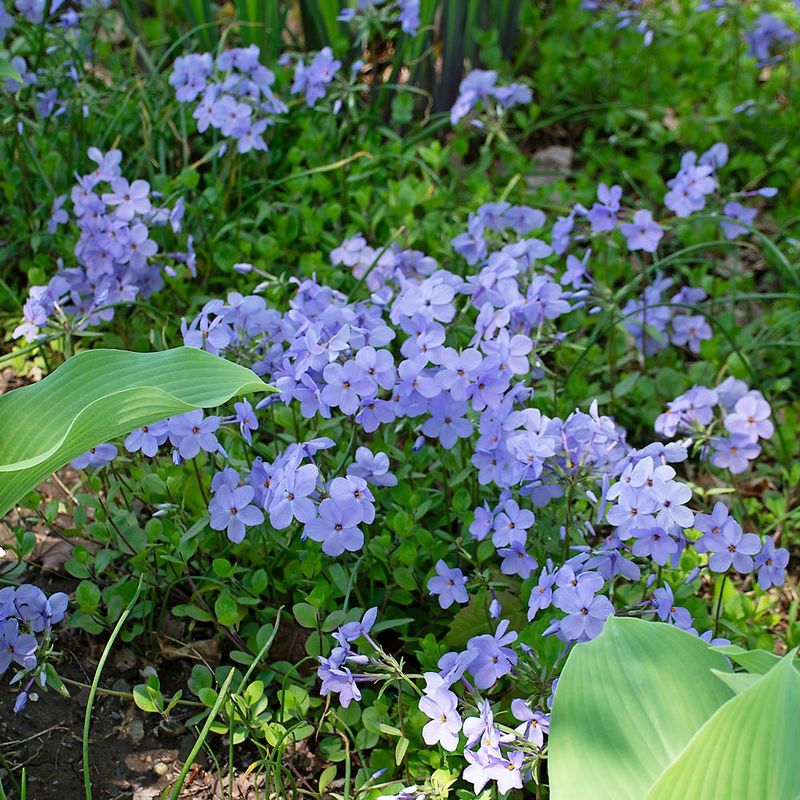
Plenty of Pennsylvania yards have that in-between spot, bright in the morning and shaded by three in the afternoon.
Grass grows thin there and moss phlox wants more sun than it gets.
Creeping phlox, Phlox stolonifera, is the answer to that tricky middle ground.
It is the softer, woodland-leaning cousin.
Foliage stays around 3 inches high while the flowers rise 6 to 12 inches above, giving it a looser, more relaxed shape than its rocky-slope relative.
That means it reads well along a shaded path or the edge of a bed rather than a blazing bank.
Blooms show up in spring in shades of blue, lavender, pink, and white, drawing early native bees and butterflies.
It prefers a bit more moisture and takes partial shade far better, which suits many central Pennsylvania backyards under a high tree canopy.
Deer generally leave it be, one more nightly raid you do not have to plan around.
It spreads by gentle runners into a low, tidy colony.
Plant it in rich, evenly moist soil and it fills in without much fuss.
You end up with color in a spot that used to just look sad and half-bare.
7. Golden Ragwort Lights Up Your Soggy Problem Corner
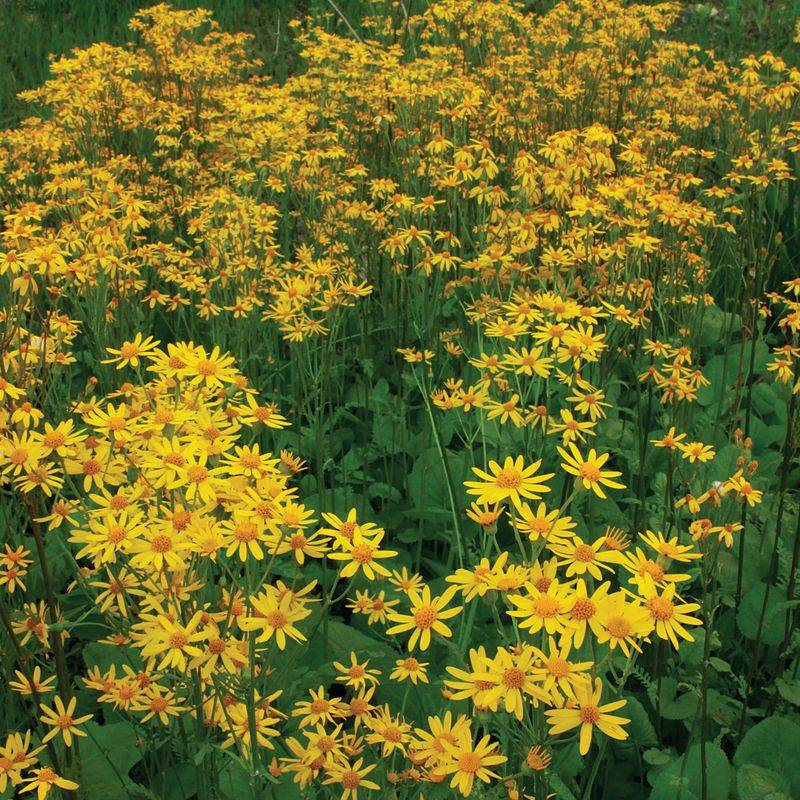
Every property seems to have one perpetually damp, shady corner where the lawn looks defeated by June.
Golden ragwort, Packera aurea, actually prefers that spot the rest of your grass hates.
It turns a soggy eyesore into a sheet of cheerful yellow.
Reaching 1 to 3 feet in bloom, it opens bright, daisy-like flowers in May, handing emerging native bees and flies a crucial early meal.
Below the flowers, heart-shaped basal leaves form a semi-evergreen mat that stays green most of the year and blocks weeds from moving in.
It works beautifully in the wetter Lake Erie region and along stream banks in the central valleys.
It is fond of moist soil but adapts to average garden ground once its roots take hold.
Now the honest part.
It spreads by both rhizome and self-seeding, and it can get enthusiastic.
The fix is simple, just cut the flower stalks back before they set seed and you keep it in bounds.
Deer and rabbits both tend to skip it, which is a small mercy.
Use it under shrubs, along a woodland edge, or in that low spot, and let the early color do the heavy lifting.
8. Green And Gold Keeps Blooming Long After Others Quit
Most groundcovers give you one big spring show and then coast on foliage the rest of the year.
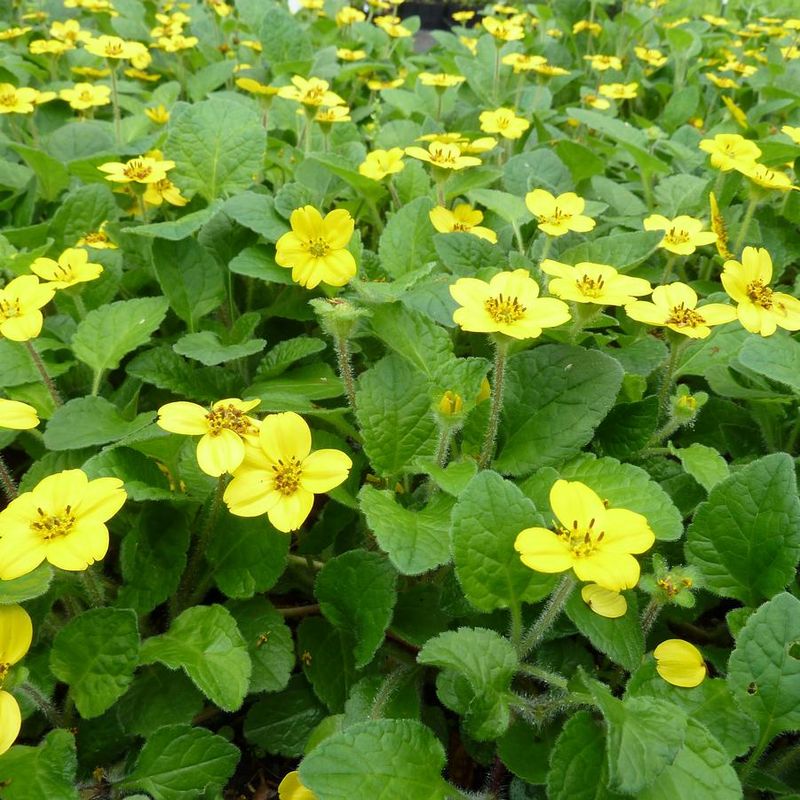
Green and gold, Chrysogonum virginianum, does not settle for a single act.
It opens sunny yellow flowers in spring and keeps sending up scattered blooms into fall.
Low and mannerly, it stays around 4 to 8 inches tall and spreads by short runners into a neat, weed-suppressing mat.
The soft, slightly fuzzy green leaves stay semi-evergreen through milder Pennsylvania winters, so the ground never looks bare.
It is genuinely happy in part shade with morning sun, which describes a lot of yards along woodland edges in the Delaware Valley.
Give it moist, well-drained soil rich in organic matter and it settles in quickly.
Those long-running star-shaped flowers keep small native bees fed across a stretch of the season when many plants have already closed shop.
That extended bloom is the whole reason to choose it over a one-and-done cover.
Set plants about 12 inches apart and water through the first summer while roots establish.
After that, it needs little more than the occasional watchful glance.
You get color that shows up in April and is still popping up when you are raking leaves.
9. Wild Strawberry Feeds The Birds While It Covers Ground
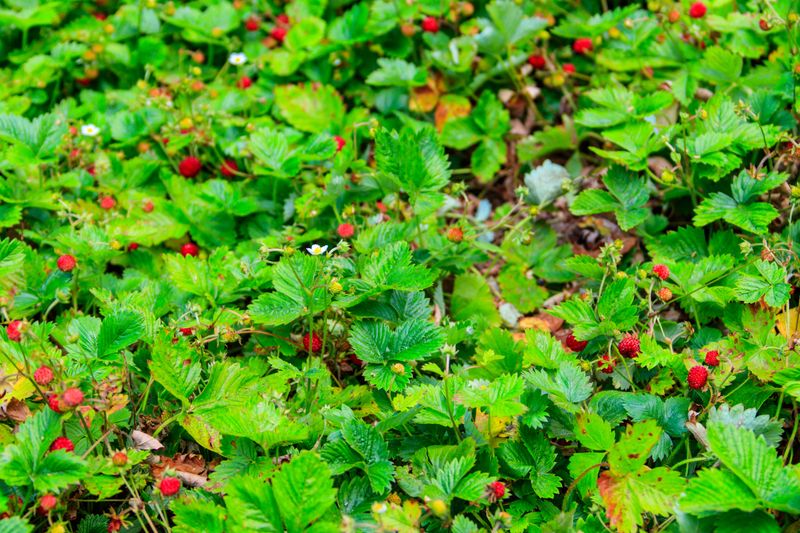
A groundcover that pays you back in fruit sounds too good to be a native workhorse, but wild strawberry, Fragaria virginiana, is exactly that.
It runs low across sunny and part-shade ground and hands out small, intensely flavored berries in early summer.
The birds notice first, and so will you.
Standing just 3 to 6 inches tall, it spreads fast by runners, stitching bare patches shut in a single season.
White five-petaled flowers open in April and May, feeding pollinators before the berries follow.
It also happens to be the parent of the grocery-store strawberry, which is a fun thing to mention over the fence.
It handles a range of Pennsylvania soils, from the shale-based ground of western areas to average backyard dirt, as long as drainage is decent and sun is plentiful.
Full sun brings the most fruit, though it tolerates light shade.
Here is the trade honestly stated.
It spreads with real ambition, so it belongs in a bank, a meadow strip, or a defined bed rather than tucked against a prim border.
Edge it and you keep the peace.
Space plants about 12 to 18 inches apart and water through establishment.
You get coverage, spring flowers, summer berries, and a small parade of birds.
That is a lot of return for a plant that mostly runs itself.
10. Barren Strawberry Stays Evergreen And Nearly Bulletproof
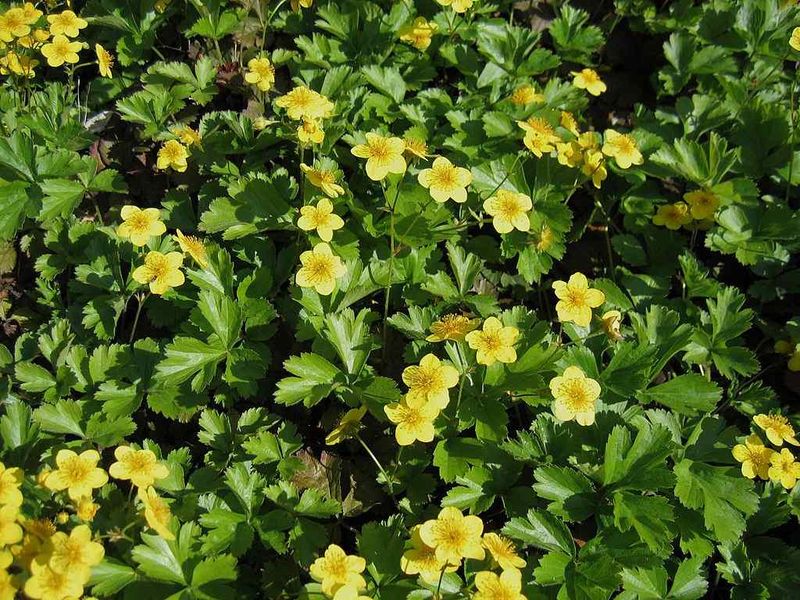
If you want the look of a strawberry patch without berries and without the wandering, barren strawberry, Waldsteinia fragarioides, is the tidy one to trust.
It keeps its glossy, three-part leaves through most of a Pennsylvania winter, staying green when the yard looks tired.
That evergreen backbone is exactly why it closes out this list.
Low and dense at 4 to 6 inches tall, it forms a tight, weed-choking mat that behaves itself far better than its running cousins.
In April and May, bright yellow flowers dot the foliage, though the fruit that follows is dry and inedible, hence the name.
It takes full sun to part shade and adapts to the clay and shale soils spread across central and western Pennsylvania.
Once established, it tolerates dry spells and the freeze-and-thaw cycles that heave lesser plants right out of the ground.
Deer and rabbits usually ignore it, and it asks for almost no upkeep beyond an occasional glance.
Penn State Extension regularly points homeowners toward native groundcovers like this one as low-maintenance turf alternatives, and it is easy to see why.
Set plugs about 12 inches apart and water through the first season.
After that, you can genuinely walk away.
The mower stays in the shed, the ground stays green, and your weekends stay yours.