
A Native Texas Groundcover Worth Knowing, But Fire Ants Will Not Simply Leave
Follow us on Google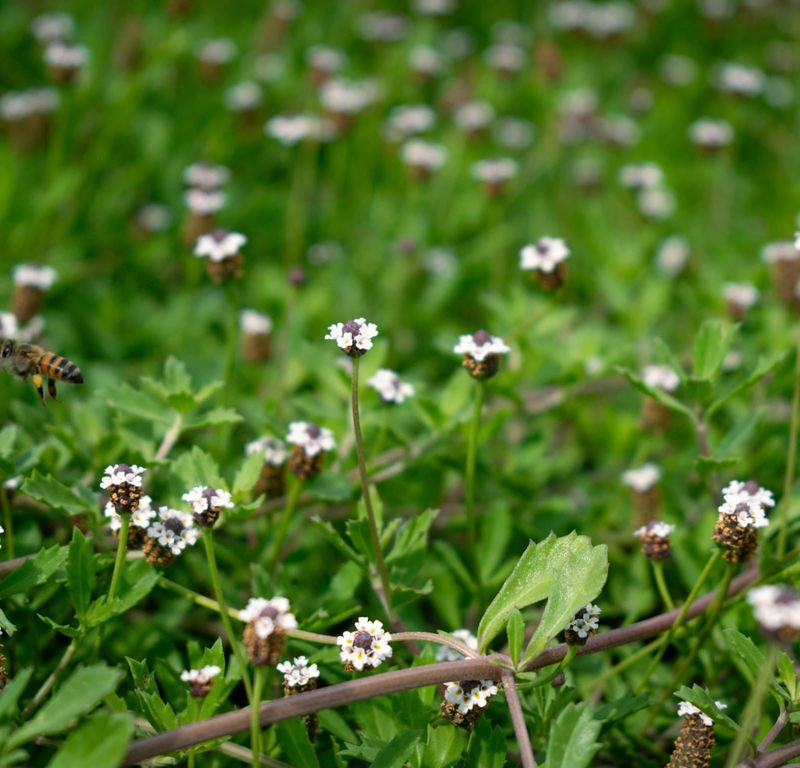
Somewhere online, a headline promises that one native Texas plant will make fire ants pack up and move on for good.
It sounds exactly like what every barefoot Texas homeowner wants to hear after stepping onto a mound in the backyard.
The plant most often linked to that claim is frogfruit, Phyla nodiflora, a low-growing native groundcover with real landscaping value.
But the promise of ants simply leaving on their own deserves a closer look before you start digging.
The Headline Makes A Promise The Evidence Does Not
You have probably seen the headline shared in a Texas gardening group, promising that one native plant sends fire ants packing.
It travels fast because the idea is genuinely appealing, a beautiful groundcover doing pest-control work while you sit on the porch.
But after checking the authoritative sources, that promise does not hold up.
The reviewed sources, including Texas A&M AgriLife Extension’s fire ant FAQ, do not identify a single native Texas plant that reliably repels established fire-ant colonies or makes them relocate.
No documented study among the sources reviewed showed a living Texas native driving colonies away from a yard.
The claim of exclusivity, direct repellency, and reliable colony relocation is not supported by the evidence examined here.
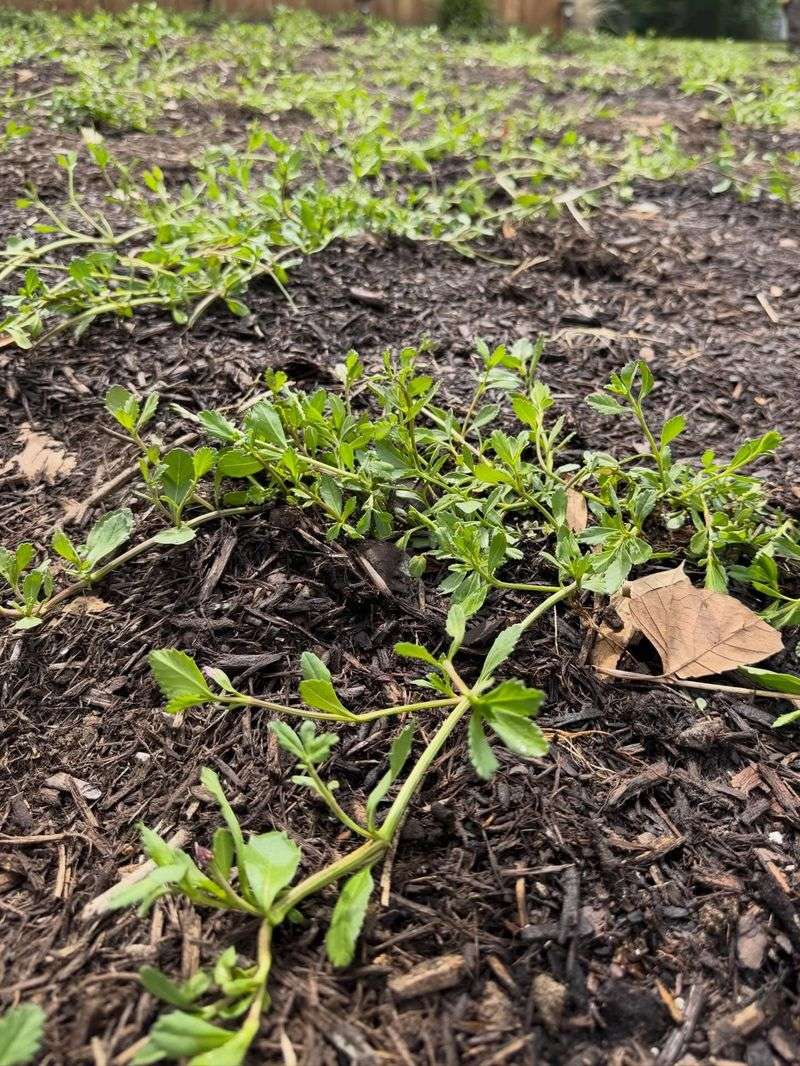
The plant most often associated with the idea is frogfruit, Phyla nodiflora.
Texas SmartScape lists frogfruit as a Texas-native spreading groundcover that tolerates sun, partial shade, drought, and even flooding.
That is a genuinely useful plant profile for many Texas yards.
What frogfruit is not, according to any source reviewed here, is a pesticide, a fire-ant repellent, or a colony killer.
The article you are reading now will explain what frogfruit actually does well, where the “ants move on” idea may have come from, and what evidence-backed steps actually reduce fire-ant populations in a Texas yard.
Those two things, good groundcover and real suppression, can work together, but they are not the same job.
Frogfruit Covers Soil Instead Of Repelling Ants
Here is where the idea gets a little more interesting, and a little more honest.
Research does connect disturbed, exposed soil with fire-ant persistence and invasion.
A study on habitat and fire-ant population persistence supports the role that soil disturbance and open ground play in keeping colonies established.
Separately, research on human impacts and fire-ant invasions found that disturbance drives invasion patterns.
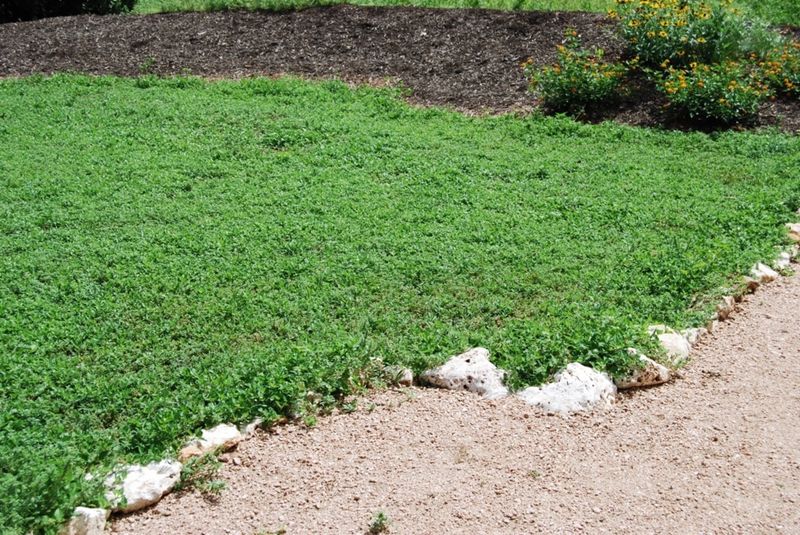
So a dense groundcover that reduces bare, churned-up soil may make a yard slightly less hospitable to new colonies getting started.
That is a habitat-management benefit, not direct repellency.
There is a real difference between the two.
Frogfruit covering bare soil may reduce one condition that fire ants favor.
It does not emit a chemical that drives away existing colonies, and no reviewed study shows that a living frogfruit planting alters fire-ant behavior or population levels in a yard.
The bigger complication is that fire ants are not limited to bare dirt.
Texas A&M’s fire ant biology page explains that colonies prefer open, sunny locations but can establish in lawns, ornamental beds, mulched areas, around tree bases, under structures, and in almost any soil type.
The impact overview from Texas A&M reinforces that these ants occupy a wide range of environments across the state.
Planting frogfruit over a bed will not create a barrier that existing colonies cannot cross or live beneath.
Think of dense groundcover as one layer of a broader approach, a way to reduce unnecessary bare patches while you handle the actual ant problem with labeled treatments.
That is a realistic and useful role, just not the starring one the headline advertised.
A Disappearing Mound Does Not Prove Control
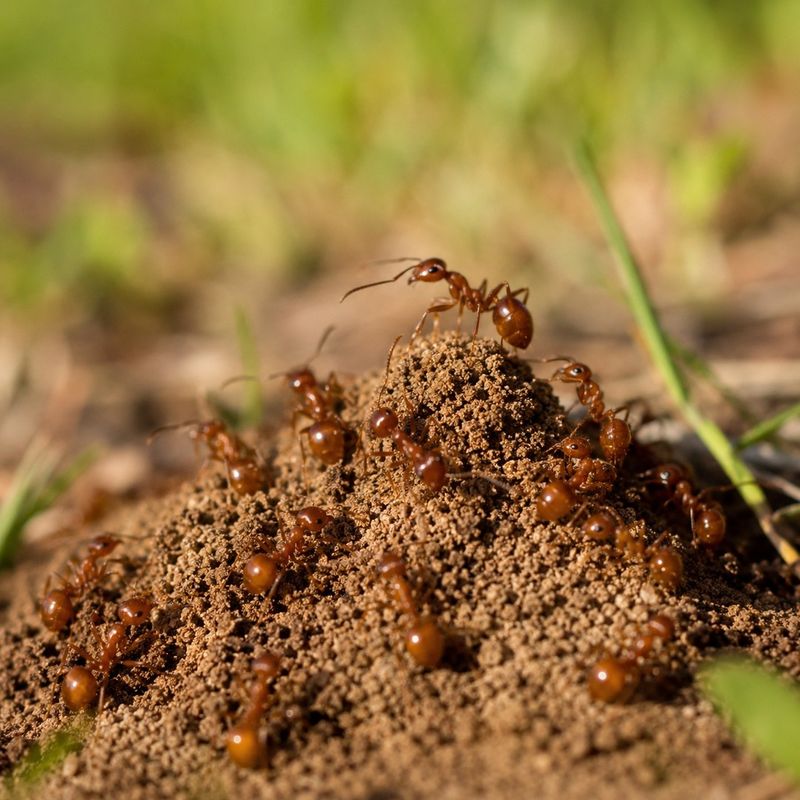
Many Texas homeowners have watched a mound disappear after a good rain or a hot dry stretch and assumed something in the yard chased the colony off.
That feeling of relief is understandable.
But a missing mound is not the same as a controlled infestation.
According to Texas A&M’s fire ant biology research, colonies can migrate several hundred feet and establish a new mound very quickly.
During flooding, fire ants link together and float as a living raft until they reach higher ground, which might be your raised bed, your porch edge, or your neighbor’s yard.
The colony does not die.
It relocates.
Weather, disturbance, and heat can all trigger that same movement.
A mound treated with boiling water, disturbed by a lawn mower, or flooded by a summer downpour may simply vanish from one spot and reappear 10 feet away within a few days.
Texas A&M’s fire ant FAQ warns that colonies can re-invade after rain and may reappear within a year even after treatment.
This distinction matters when evaluating any plant-based claim.
If someone planted frogfruit in spring and noticed fewer visible mounds by fall, the mounds may have moved rather than collapsed.
Seasonal foraging patterns, rainfall, and soil temperature all shift mound locations throughout the year in Central and South Texas without any help from a groundcover plant.
Actual population suppression means reducing the number of colonies and worker ants across a defined area over time, not watching one mound go quiet.
That requires a different kind of tool than a groundcover, and the next several sections cover what that looks like in practice.
Choose Frogfruit For The Right Texas Site
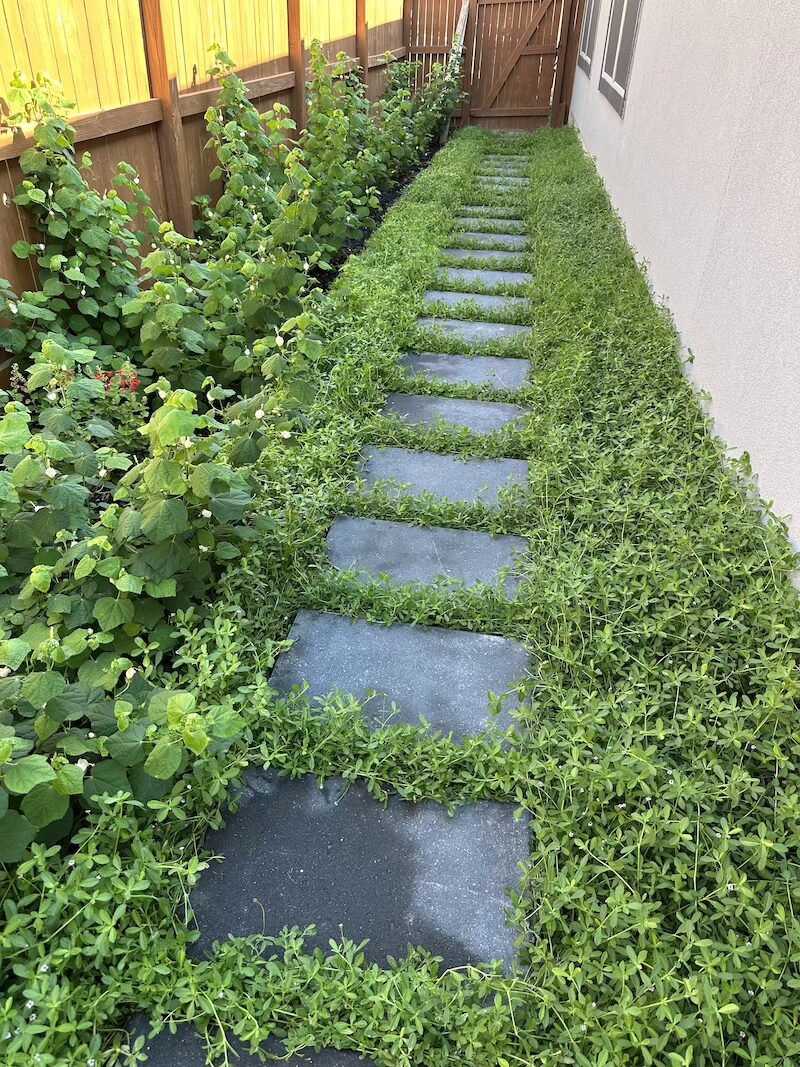
Frogfruit genuinely earns a place in a Texas yard, just not for fire-ant control.
Texas SmartScape’s frogfruit listing describes a plant that grows 0 to 1 foot tall with a spread of 1 to 2 feet, carries low to medium water demand, and provides documented value for butterflies, bees, hummingbirds, and birds.
It handles sun, partial shade, drought, and occasional flooding, which covers a lot of difficult Texas microclimates.
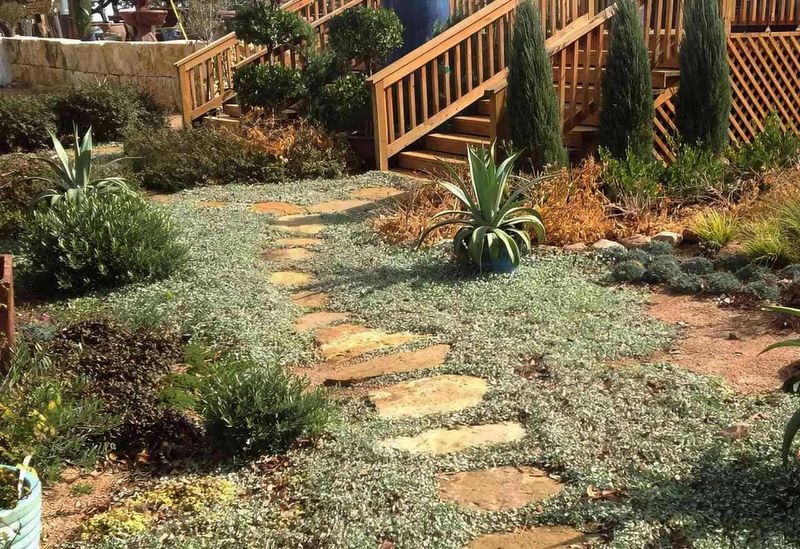
Practical uses include planting between stepping stones, filling moist low spots that stay soggy after rain, or replacing struggling turf grass in shaded or transitional areas in North Central Texas.
Many homeowners in the Dallas-Fort Worth corridor and the Austin area have used it successfully as a lawn substitute in spots where St. Augustine or bermuda grass give up.
It fills in over time and reduces the kind of patchy bare ground that makes a yard look unfinished and, as noted earlier, may support conditions where new ant colonies get started.
Before you plant, check whether frogfruit actually suits your specific site.
The SmartScape listing addresses North Central Texas specifically.
Texas A&M’s Earth-Kind plant selector divides the state into distinct regions, and a plant that thrives in the moist, heavy blackland clay of North Texas may struggle in the shallow alkaline caliche of the Hill Country or the sandy acidic soil of East Texas.
West Texas gardeners working with minimal rainfall and intense heat should verify local suitability before committing to a large planting.
When you do plant, aim for a dense enough coverage to reduce exposed soil, but leave enough open access along edges and beds to inspect for new mounds and apply treatments if needed.
Texas A&M Earth-Kind landscaping guidance emphasizes matching plant selection to regional soil, climate, water availability, and sun exposure rather than applying one solution across the whole state.
Essential Oils Are Not Living Pest Barriers
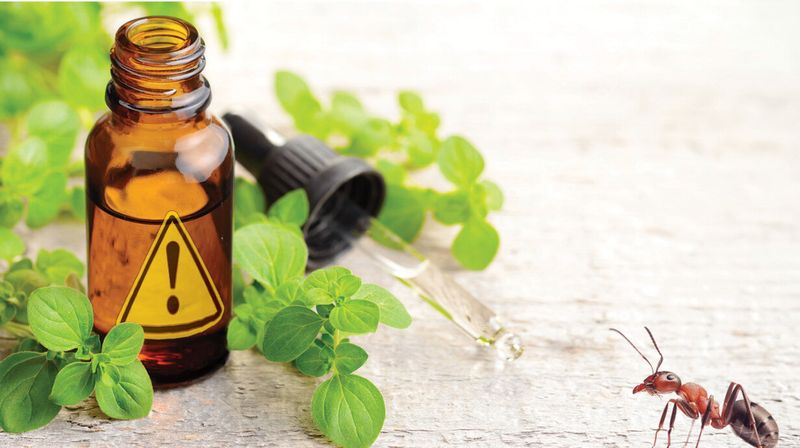
A lot of the online chatter about plants repelling fire ants traces back to real science, just science that does not mean what the headlines say it means.
Researchers have found genuine repellency from concentrated compounds.
A study on carvacrol and thymol against imported fire ants found measurable repellent effects, and research on oregano essential oil and carvacrol analogs showed similar results in controlled settings.
Those are real findings from real experiments.
The problem is what those experiments actually tested.
Researchers applied measured concentrations of purified compounds or extracted oils directly to ants or controlled test arenas.
They were not growing oregano or thyme beside a patio and measuring colony behavior in a Texas yard.
A comprehensive review of fire-ant repellent research notes that many findings are laboratory-based, that persistence in field conditions is poorly documented, and that effectiveness varies with concentration, formulation, weather, and how the compound is delivered.
A living plant releases trace amounts of volatile compounds into the air around it.
That is a very different situation from a measured dose of concentrated extract applied directly to an ant.
The gap between those two scenarios is where the headline promise falls apart.
A plant-derived biopesticide review and a separate look at naturally occurring compounds for fire-ant management both emphasize that field validation remains limited and that translating laboratory repellency into durable, yard-scale protection is an open and active research question.
That is not a dead end, it is simply where the science currently stands.
Growing fragrant herbs near your patio may have other benefits, but counting on them to hold a fire-ant perimeter is not something the evidence supports yet.
Use The Two-Step Method For Meaningful Suppression
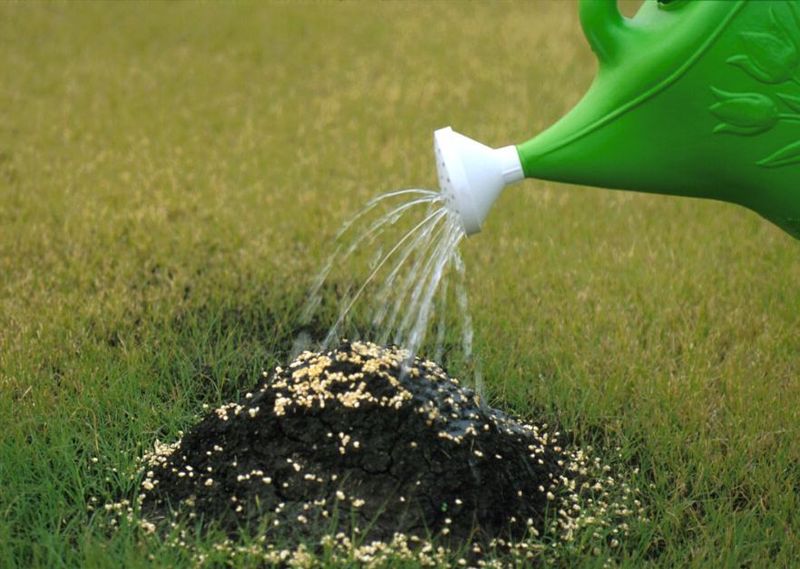
When fire ants are genuinely thick across a lawn or set of garden beds, the most reliable approach Texas A&M recommends is the Two-Step Method.
It works in two distinct moves, and the order matters.
Step one is broadcasting a labeled fire-ant bait across the entire infested area, not just around visible mounds.
Bait products work slowly because foraging workers carry the material back to the colony and share it with nestmates and the queen.
Texas A&M’s Two-Step Method page reports that this program can provide roughly 80% to 90% reduction in fire-ant populations for heavily infested turf.
That is meaningful suppression, not complete elimination, and it is not permanent.
Step two comes about three to five days after broadcasting bait.
Treat individual mounds that are still active or that pose an immediate risk near walkways, play areas, or pet spaces.
You can use a labeled drench, granule, individual mound bait, or dust product.
Product labels control the final application rate, timing, and any site restrictions, so read the label for the specific product you buy.
Timing the bait application correctly makes a significant difference.
Texas A&M’s fire ant FAQ recommends applying bait only when ants are actively foraging.
A simple test: place a small amount of bait near a mound and check whether ants find it within 30 to 60 minutes.
General conditions for effective baiting run about 65 degrees Fahrenheit to 95 degrees Fahrenheit, with dry ground and no rain expected for 24 to 48 hours after application.
For timing across the Texas calendar, Texas A&M’s fall fire-ant management guidance identifies late August through mid-October as a particularly useful broadcast-bait window in many parts of the state.
Ants are still foraging actively, temperatures are more predictable than midsummer, and a fall treatment can reduce the population heading into winter.
Spring baiting is also effective once soil temperatures at a 1-inch depth reach around 70 degrees Fahrenheit.
Protect People, Plants, And Native Ants
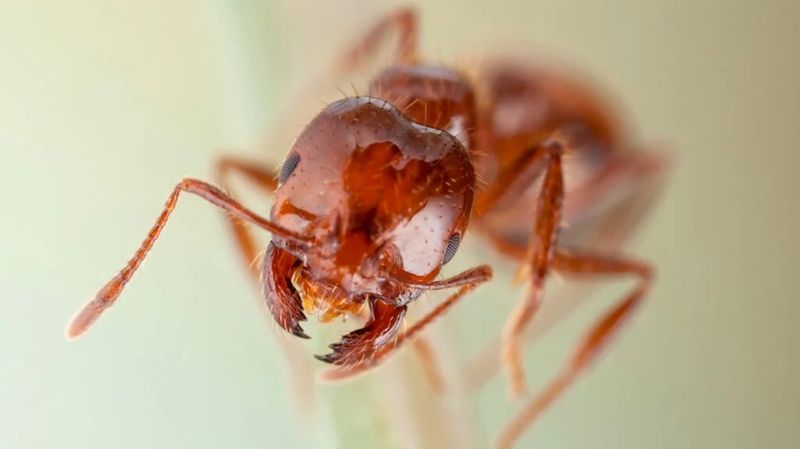
Before any mound treatment, the first rule is simple: do not approach a mound in bare feet, sandals, or with children or pets nearby.
Fire ants do not sting once.
They grip the skin and sting repeatedly in a circular pattern, and for people who are hypersensitive, a large exposure can trigger a severe allergic reaction.
Texas A&M’s fire ant identification page describes the sting and its effects clearly, and the risk is real enough to take seriously every time you work near a mound.
For individual mound treatment without chemicals, boiling water gets mentioned often.
Texas A&M’s Two-Step control page reports that 2 to 3 gallons of very hot or boiling water eliminates a colony about 60% of the time.
That also means it fails roughly 4 times out of 10.
The water can burn the person pouring it, and it can kill nearby grass or plants.
It is not a reliable prevention method and is not practical at scale.
Some products that get labeled “natural” or “organic” deserve the same label caution as any other pesticide.
Texas A&M’s FAQ notes that some plant-derived products are registered pesticides, and natural origin does not mean harmless to people, pets, aquatic life, or native insects.
Always read the label before applying anything to a mound or broadcasting it across a lawn.
Products to avoid entirely: gasoline, diesel, chlorine bleach, ammonia, and other petroleum or corrosive materials.
Texas A&M’s fire-ant control publication strongly discourages these methods as dangerous and potentially contaminating to soil and groundwater.
Texas actually has many native ant species worth protecting.
Texas Parks and Wildlife’s native versus invasive ant resource explains that some native ants prey on or compete with fire ants.
Broad, repeated insecticide use across a yard can affect those beneficial species along with the target pest.
Texas A&M’s site-specific management guidance and their seasonal tackle page both recommend matching treatment intensity to the actual level of infestation and preserving native ant populations where you can.
Targeted treatment protects more of the yard’s natural balance while still addressing the fire-ant problem.
Build A Layered Yard Strategy
A yard that handles fire ants well is not built around one magic plant or one single treatment.
The strategy that actually works combines a few honest layers, and each one does its specific job without being asked to do someone else’s.
Start with the landscaping layer.
Choose frogfruit or another region-appropriate groundcover for the genuine benefits it delivers: soil coverage, reduced bare patches, wildlife habitat, and a more finished yard.
Pick plants that suit your specific region, whether that is the moist Gulf Coast, the rocky Hill Country, the blackland clay of North Texas, or the sandy soils of East Texas.
Let the groundcover do that landscaping job well, and do not ask it to also be a pesticide.
Keep inspection access as you plant.
Dense coverage is useful, but you need to be able to walk the yard edges and bed perimeters every few weeks during warm months, roughly April through October in most of Texas, to spot new mounds before they grow large.
A mound caught at 6 inches across is easier and safer to treat than one that has been building for a month.
When fire ants show up despite good groundcover, reach for labeled bait and the Two-Step Method as your suppression layer.
Use Texas A&M’s site-specific guidance to match treatment choices to your yard type, whether that is a turf lawn, a raised bed, a mulched ornamental area, or a patio edge.
Earth-Kind landscaping principles from Texas A&M reinforce that a well-chosen, well-placed landscape reduces maintenance stress over time.
Frogfruit is a genuinely good plant for the right Texas site.
Fire ants are genuinely tough opponents that need real tools.
A yard that uses both well is a yard you can actually enjoy barefoot, at least most of the time.