
There Is A Dog Napping In Your Tree Right Now, And It Is The Only One In America That Climbs
Follow us on Google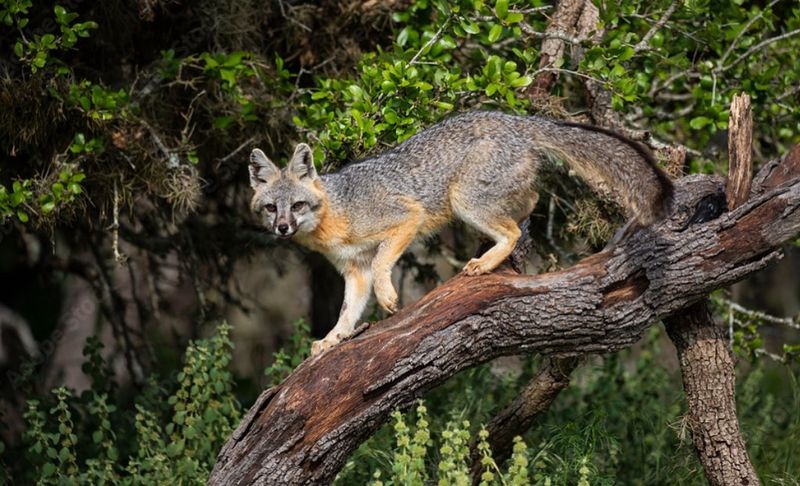
Somewhere across suburban and rural America, a small, sharp-faced animal is tucked into a crook high above the ground, and it got there entirely on its own.
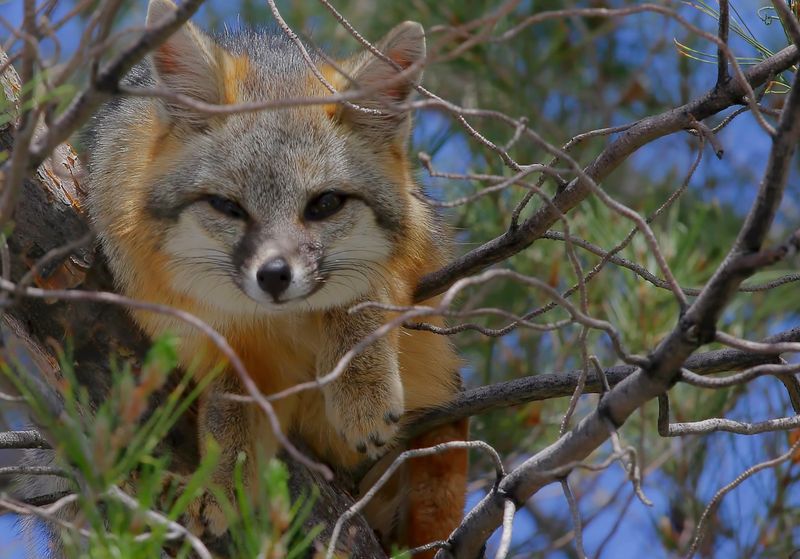
That animal is a gray fox, the only North American canid known to regularly climb trees, and its presence in a backyard oak or pine is one of the more surprising sights a homeowner can stumble across.
Knowing what it is, why it climbs, and how to share the yard calmly makes the difference between a cool wildlife moment and an unnecessary scramble for a ladder.
The Tree-Climbing Canid Is a Gray Fox
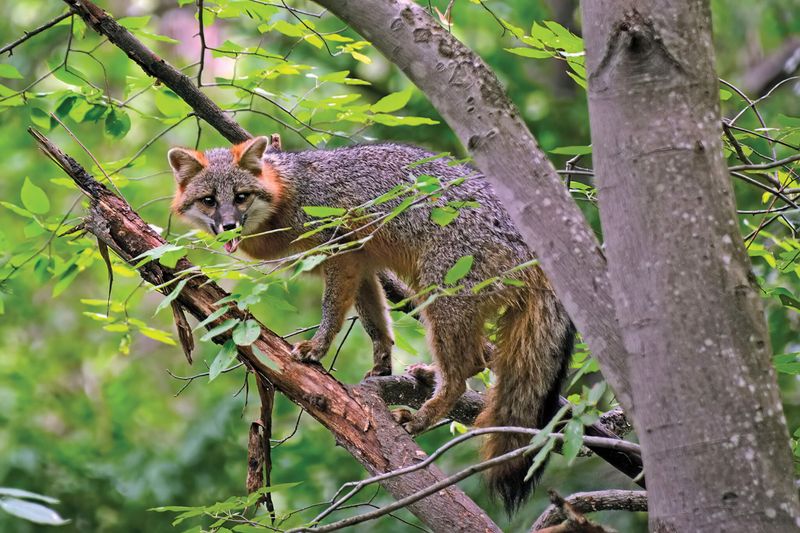
Look up into that backyard tree and you are almost certainly looking at a gray fox, Urocyon cinereoargenteus.
It belongs fully to the dog family, Canidae, but it has earned a reputation that no other North American canid can claim.
Colorado Parks and Wildlife notes that the gray fox is one of only two canid species worldwide known to climb trees, which makes the headline claim worth a small but real correction: the accurate phrasing is the only North American canid known to regularly climb trees, not the only climbing canid anywhere on earth.
The animal itself is smaller and stockier than most people expect.
Adults commonly weigh between 7 and 14 pounds and measure roughly 31 to 45 inches from nose to tail tip, putting them closer in size to a large house cat than to a coyote.
Indiana DNR describes the coat as salt-and-pepper gray across the back and sides, with rusty or tawny coloring on the neck, chest, and legs.
Two field marks set it apart quickly.
A dark stripe runs from the base of the skull straight down the back and continues along the top of the tail, which ends in a black tip.
That black tail tip is the fastest way to separate a gray fox from a red fox, which carries a white tail tip, and from a coyote, which has a taller, leggier build and a much shorter, thinner tail relative to its body.
Its Body Comes With Climbing Gear
Most members of the dog family are built for running flat ground, not scaling vertical bark.
The gray fox took a different evolutionary road.
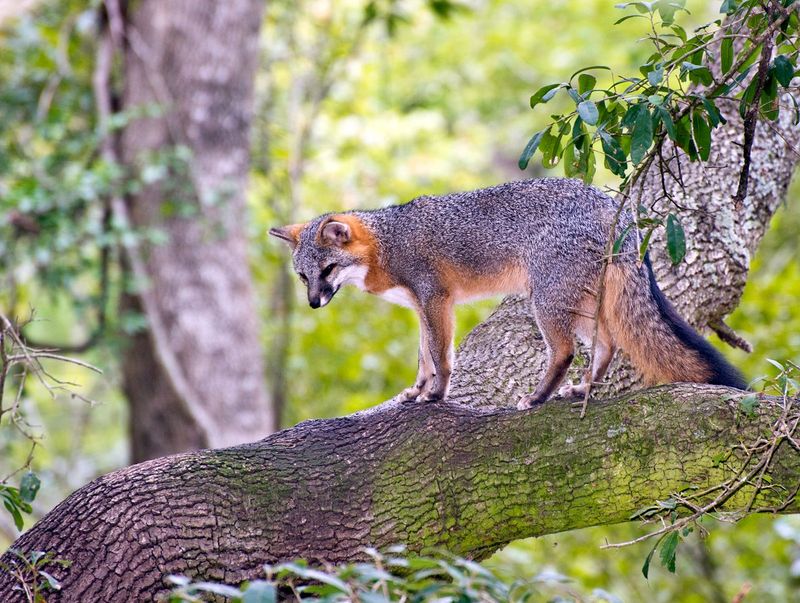
Zion National Park’s wildlife notes describe curved, semi-retractable claws that hook into bark the way a lineman’s spikes grip a telephone pole, and forelimbs that can rotate with a range of motion unusually wide for a canid.
The mechanics look something like this: the front limbs reach forward and grip the trunk while the hind legs push upward in short, powerful bursts.
The fox moves in a hugging motion on nearly vertical surfaces, which is why a homeowner watching from a window sometimes does a double-take before accepting what they are seeing.
Once in the canopy, the animal can move branch to branch with reasonable ease, and it can descend backward down the trunk or find a sloping limb and trot down at an angle.
Georgia DNR’s naturalist column on fox climbing makes the comparison to a cat clear while keeping the taxonomy straight: the gray fox climbs because of unusual anatomy within the dog family, not because it shares ancestry with domestic cats.
Think of the cat comparison as a helpful visual shorthand, not a biological claim.
The curved claws, the stocky torso, and the rotating forelimbs are all canid features that happen to solve the same physical problem that feline anatomy solves in a different way.
Thirty Feet Is Possible, Not Typical
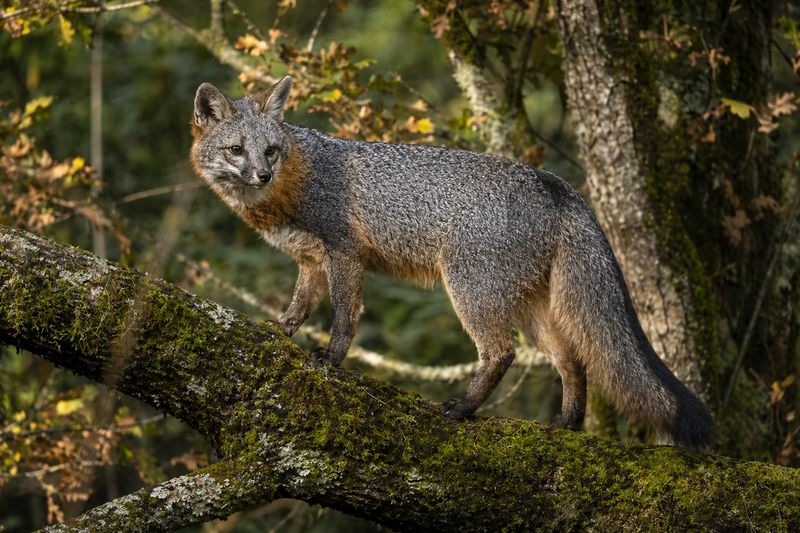
The image of a fox snoozing exactly 30 feet above every American backyard is a better headline than it is a field observation.
Forest Service Fire Effects Information System review documents tree hollow dens at heights up to roughly 20 feet, while some other wildlife materials cite dens as high as around 30 feet.
So the accurate way to say it is that documented tree dens can reach 20 to 30 feet in some cases, not that a gray fox is routinely parked at that elevation above any given yard.
Gray foxes use a wide range of resting and denning sites.
Environment and Climate Change Canada’s gray fox account lists hollow logs, rock crevices, dense brush, abandoned burrows dug by other species, woodpiles, sheds, and spaces beneath buildings as documented sites.
A Virginia Tech field study of gray fox habitat selection in southwestern Georgia found animals resting on the ground and found no evidence that gray foxes routinely rested in trees during the day.
That single study does not settle the question for every region, but it does show that ground resting is a real and documented pattern.
Coyotes are genuine gray fox predators and competitors, and tree cover does appear to matter in landscapes where both species live.
North Carolina State University research found that tree cover helped gray foxes coexist with coyotes in rural landscapes.
But that connection works at a habitat scale, meaning wooded areas provide cover and refuge broadly, not that every gray fox climbs a tree the moment a coyote appears nearby.
Predator avoidance is one plausible reason for climbing, alongside reaching food, accessing den sites, and simply resting.
No single explanation covers every sighting.
A Healthy Fox in a Tree Usually Needs No Rescue
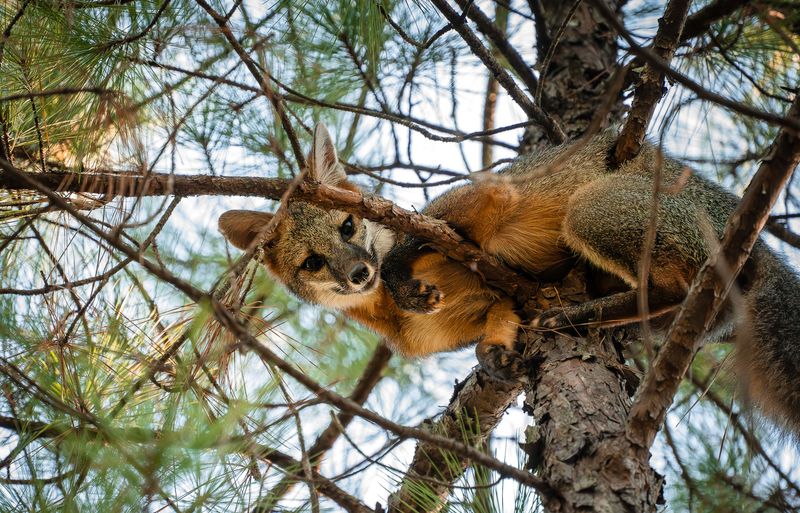
Spotting a fox high in a tree tends to trigger a very human instinct: the animal must be stuck, frightened, or in trouble.
Most of the time, none of that is true.
New York State DEC guidance on gray foxes is clear that a healthy animal may be using the height as a den entrance, a resting spot, a food route through the canopy, or a place to watch the surroundings.
The fact that it is 15 or 20 feet up does not mean it cannot get down.
The right response is to watch from a comfortable distance and keep people and pets away from the base of the tree.
Give the fox a quiet exit, and it will usually take it on its own schedule.
Georgia DNR’s naturalist writing on fox climbing reinforces this: the animal can grip bark, move through branches, descend backward, or use a sloping trunk to walk down.
A ladder, a shaken branch, a crowd of curious people at the base, or any attempt to corner or handle the animal creates risk for the fox and for the person.
There are real exceptions.
A fox that is visibly injured, tangled in wire or netting, clearly trapped with no exit, orphaned and calling, or behaving in ways that suggest danger to people or pets is a different situation entirely.
For those cases, contact your local wildlife rehabilitator, state wildlife agency, or animal control office rather than attempting any intervention yourself.
Healthy and untrapped foxes genuinely need no rescue, but the right authorities can assess and help animals that do.
Your Yard Can Turn Wildlife Into Conflict
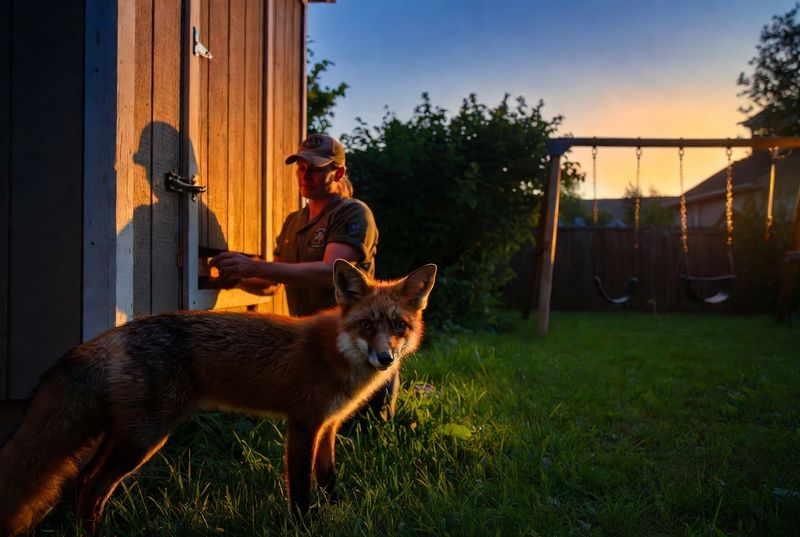
A single tree sighting is usually just a sighting.
Repeat visits, bold behavior, or a fox lingering near the house in the middle of the afternoon often trace back to something the homeowner is providing without meaning to.
Food and shelter attractants do more to shape fox behavior than the novelty of a climbable tree.
Massachusetts wildlife guidance on living with foxes recommends securing garbage in containers with tight-fitting lids, cleaning up fallen fruit from the ground promptly, removing spilled birdseed from beneath feeders, and bringing pet food and water bowls indoors before dark.
Feeding a fox on purpose, even once for a photograph, works against both the animal and the neighborhood.
Michigan DNR’s fox management guidance explains that a fox that associates people with food loses the wariness that keeps it out of trouble.
A bold, food-conditioned fox is more likely to approach pets, poultry, and children, which tends to end badly for the animal.
Den caution is worth a separate mention.
New Jersey Fish and Wildlife’s fox resources note that gray foxes use spaces beneath sheds, woodpiles, and buildings as den sites, especially when adults are raising young.
Before blocking a hole, filling a gap, or sealing a crawl space entrance, spend a few days confirming the space is unused.
Blocking an active den can trap adults inside or separate young from a parent, turning a manageable situation into a serious one.
Protect Small Animals Without Chasing the Fox
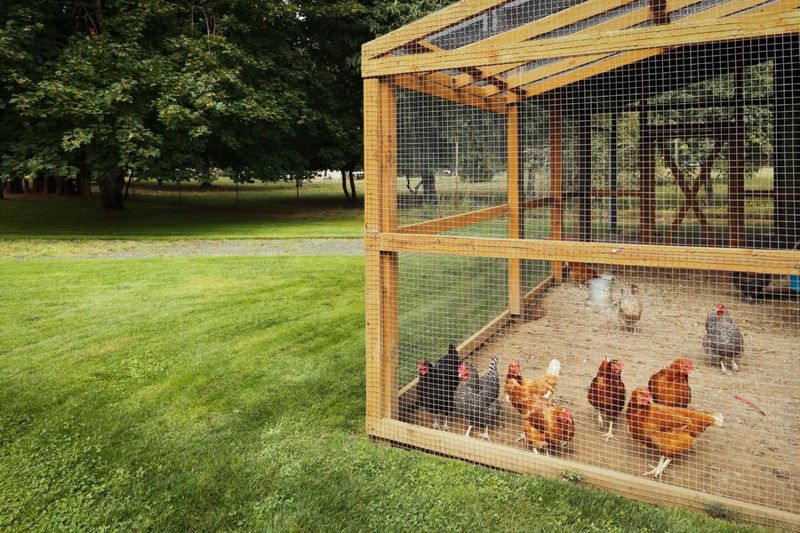
Gray foxes generally avoid people, but small dogs, cats, rabbits, chickens, ducks, and guinea fowl are a different matter.
A fox hunting near a poultry pen or a rabbit hutch is doing exactly what its instincts tell it to do, and blaming the animal misses the point.
The practical answer is supervision and secure enclosure, especially from dusk through dawn when gray foxes are most active.
New Jersey Fish and Wildlife recommends keeping small pets supervised or indoors during low-light hours and securing poultry in a fully enclosed coop at night.
Fencing can add a useful layer of protection around poultry runs or rabbit enclosures, though the right specifications depend on your location, your animals, and local regulations.
Wisconsin DNR damage guidance describes fencing roughly 6 to 7 feet high with approximately 1 foot of the bottom buried or bent outward underground to prevent digging under.
That figure comes from Wisconsin guidance and should be treated as a useful regional example rather than a universal standard.
Electric fencing can provide additional deterrence around small livestock enclosures in some situations.
Trapping or relocating a fox is not a simple fix and is regulated differently in every state.
Indiana DNR’s wildlife removal permit information is one example of how states handle this, and your own state agency will have the applicable rules.
Removing one fox from a territory rarely solves the underlying problem if attractants remain, because another animal will move in to fill the space.
Securing the animals and removing the food sources addresses the root cause rather than just the symptom.
Daylight Does Not Automatically Mean Rabies
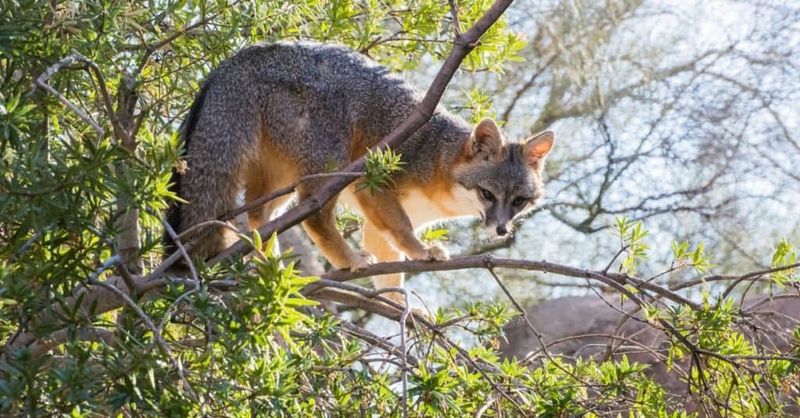
Gray foxes are primarily nocturnal and crepuscular, meaning they do most of their moving around at dawn, dusk, and through the night.
A sighting in full daylight can feel alarming, but daytime activity alone is not a sign of rabies or disease.
Michigan DNR notes that foxes sometimes move during the day, particularly when they are raising young and need to find more food, or simply when conditions favor it.
A fox trotting purposefully across a yard at 10 in the morning is often just a fox going about its business.
The behaviors that should change your response are specific.
Connecticut DEEP’s gray fox fact sheet identifies staggering, severe disorientation, repeated unprovoked aggression, and approaching people without fear as signs that warrant a call to animal control or your local wildlife or public-health authority.
Those behaviors, not the time of day, are the real indicators of concern.
Foxes are recognized rabies reservoir species in parts of the United States.
If a person or pet is bitten or scratched by any wild fox, wash the wound with soap and water for at least 15 minutes, then contact a medical professional or your local health department promptly.
CDC rabies prevention guidance and CDC public health rabies resources both outline post-exposure steps and explain when medical evaluation is needed.
Do not attempt to capture the animal yourself, call your local animal control office and let trained professionals handle it.
Build a Yard That Supports Calm Coexistence
Mature trees, brush piles, and layered cover do more for a gray fox than any single intervention.
The peer-reviewed study on gray fox interactions with coyotes, red foxes, and dogs and the NC State research on tree cover and gray fox coexistence both point to habitat at a landscape scale, not one backyard oak, as the factor that shapes how foxes and coyotes share territory.
Preserving one tree is a good thing, but it cannot promise fox survival or keep coyotes at a distance on its own.
The practical picture is simpler than the ecology.
Leave healthy wildlife alone.
Reduce attractants, secure vulnerable animals, and treat the yard as a working system rather than a stage.
The U.S.
Forest Service species review captures how wide a range of habitat gray foxes actually use, from dense forest to suburban edges, which is part of why they turn up in so many backyards in the first place.
When something goes wrong, whether the animal is injured, trapped, acting aggressively, or clearly in distress, the right call is always a local wildlife rehabilitator, your state wildlife agency, or animal control.
Massachusetts fox coexistence guidance puts it plainly: most conflicts trace back to food, not the animal’s character.
A yard that offers no easy meal and no unsecured livestock is a yard where a gray fox is just passing through, or resting quietly in a tree, which is exactly where it belongs.