
Get Your Texas Plumeria Doing This Now For Big Blooms Straight Into October
Follow us on Google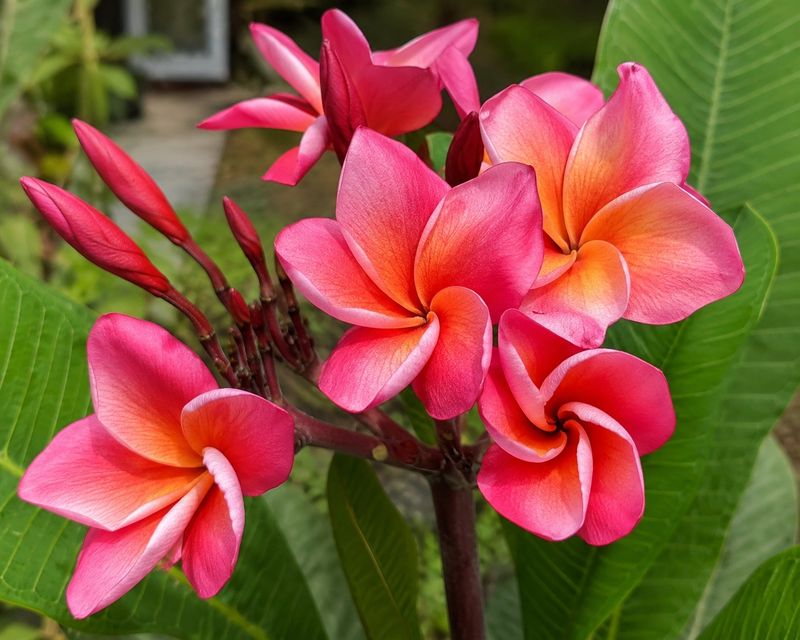
Late August in Texas is the moment that quietly decides how your plumeria (Plumeria rubra) finishes the season.
If you pick up the pruning shears right now and start shaping those branch tips, you may be cutting off the very flower clusters that are already forming.
The good news is that a handful of practical steps, starting with what you do not cut, can help preserve existing flower sites and give your plant its best shot at continued blooming as summer winds down.
Preserve Healthy Flowering Tips First
Right now, the single most useful thing you can do for a blooming plumeria is put the pruning shears down.
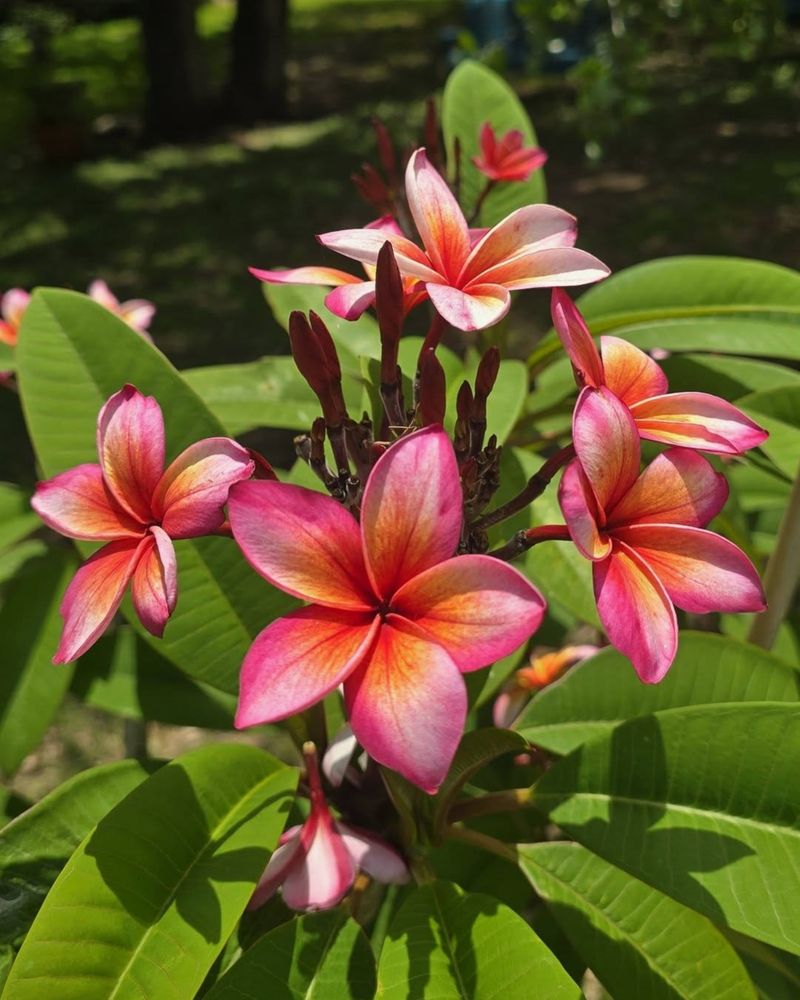
Plumeria flowers develop at the terminal portions of branches, meaning the very tips you might be tempted to trim for a neater shape.
Remove those tips during active growth and you remove the flower sites that are already forming there.
University of Hawai’i pruning guidance makes this point plainly: cutting at the wrong time can remove flower buds and reduce the following bloom cycle.
For a Texas gardener standing in the August heat, that is a real cost with no fast recovery.
Any branching that follows a tip cut may need time to mature before it carries flowers, so you are not trading one bloom for two right away.
The practical rule is straightforward.
Leave healthy tips alone, especially any tip that shows a developing inflorescence, which is the swollen stalk and cluster that will open into flowers.
If a branch is dead, clearly diseased, broken at the base, or physically damaged, remove it.
That kind of cleanup does not cost you bloom sites and actually helps the plant put energy where it matters.
Size control is a legitimate reason to prune, but late August is a poor window for major shaping on a plant that is actively carrying buds.
If a branch must come off for space or structural reasons, do it after the current flowering cycle winds down rather than now.
Protecting existing flower sites is an active, evidence-based choice, not just hesitation.
Think of it as the first layer in a broader late-season care plan, not the one move that guarantees October flowers.
Inspect The Tip Before You Cut
Here is where many gardeners get tripped up.
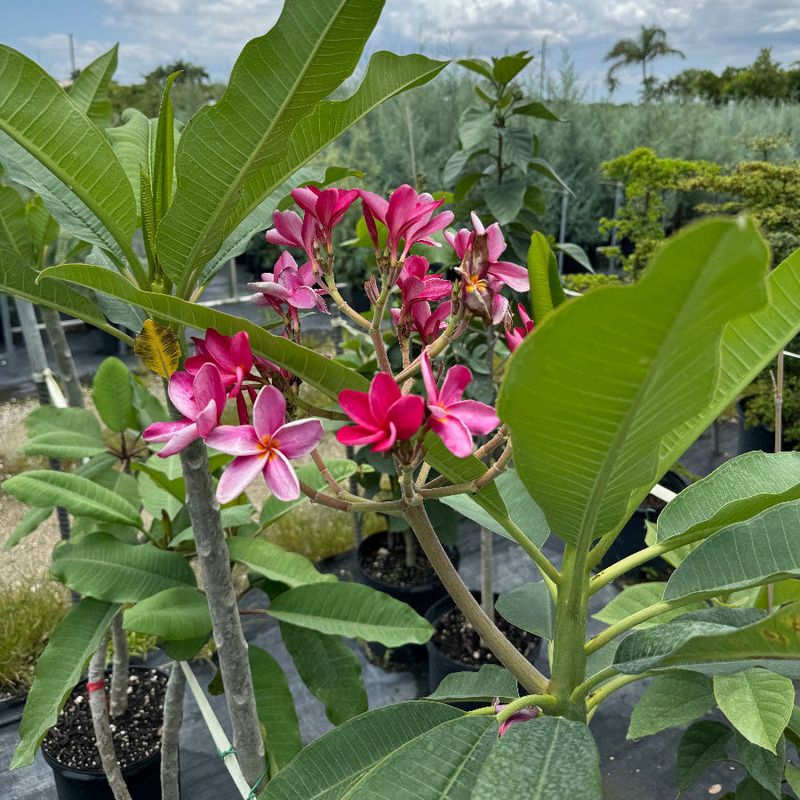
A plumeria tip that looks swollen, slightly branched, or just different from the rest of the stem is not automatically dead wood.
Leaves cluster near branch ends, and flower clusters develop at those same terminal portions, so a tip that looks unusual may actually be a developing inflorescence getting ready to open.
University of Wisconsin horticulture guidance on plumeria notes that only about 10 to 60 percent of branch tips may set flower clusters in some cultivars.
That range is wide on purpose.
Some plants are simply wired to bloom on a fraction of their tips, and an uneven bloom pattern across your plant does not automatically mean something went wrong with your care.
Before you cut anything, spend two minutes at each tip.
A firm, plump tip with a hint of a forked or clustered structure at the end is worth preserving.
A tip that is soft, shriveled, or shows no active growth and no developing cluster is a better candidate for removal.
Use a hand lens if you have one, because the early stages of an inflorescence can be subtle.
The University of Hawai’i plumeria resource confirms that cultivar differences are substantial.
Some varieties bloom readily on most of their tips across multiple flushes in a long season, while others are naturally lighter or later.
If your plant has five branches and only two are showing clusters, that may reflect the cultivar, not a failure on your part.
Preserve the active tips, remove the genuinely dead ones, and let the plant tell you what it is working on before you decide for it.
Give The Plant Strong But Heat-Aware Light
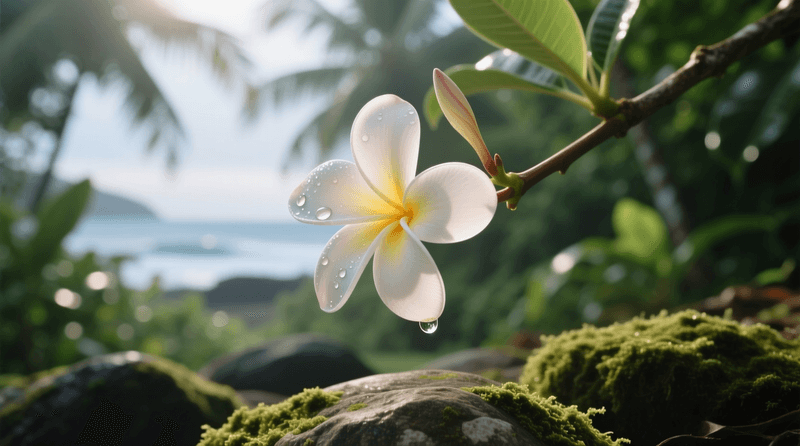
Light is the next factor to check after you have sorted out the pruning question.
Plumeria genuinely needs strong direct sun to support flowering, and most Texas Master Gardener guidance points to roughly 6 to 8 hours of sun as the target.
But August in Texas is not the same as August in Hawaii, and that distinction matters.
Ellis County Master Gardener guidance on growing plumeria in Texas acknowledges that intense summer sun can scorch plumeria leaves, particularly when a plant is moved suddenly from a shadier spot into full exposure.
If your plant has been sitting in the same location all season, it is likely already adapted.
But if you moved it recently, watch the foliage for bleaching or brown edges, which signal that the light is too intense for the current level of acclimation.
The fix is not deep shade.
Moving a plant into conditions too dim to support flowering trades one problem for another.
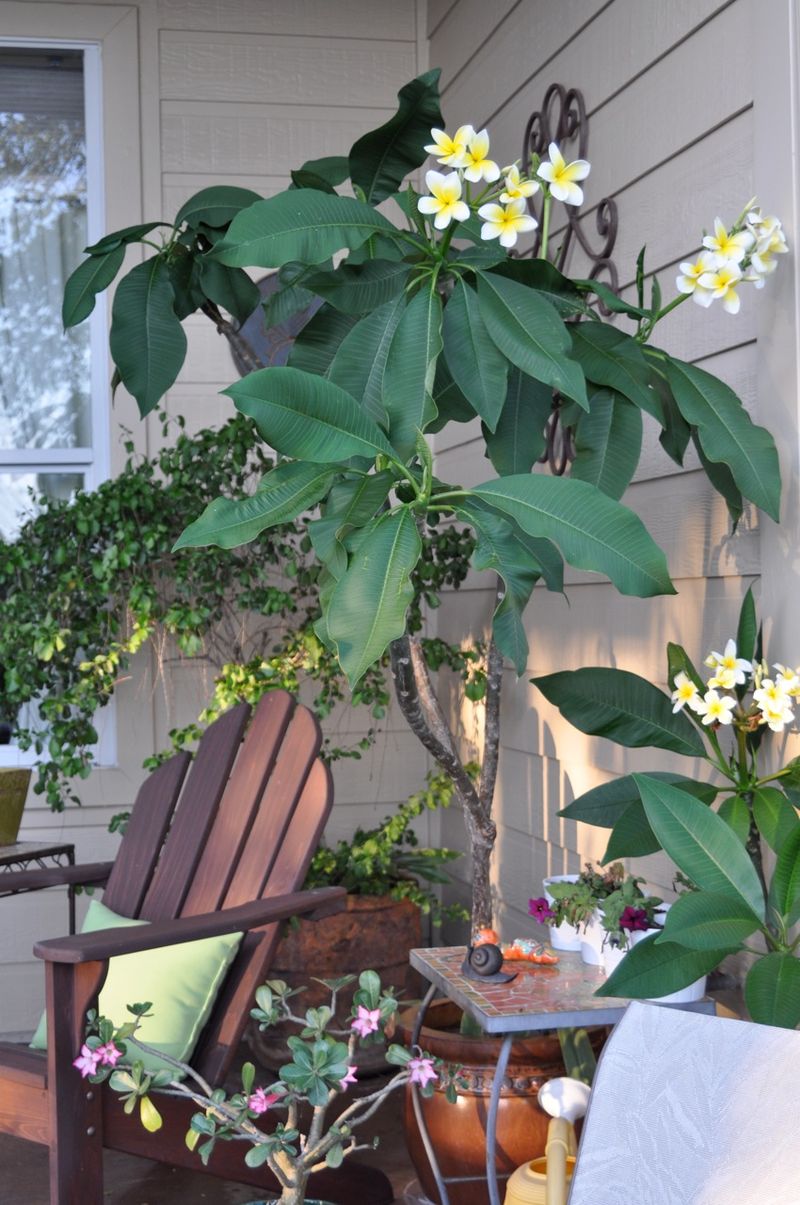
Instead, use a spot that catches strong morning sun and gets some relief from the harshest afternoon exposure, roughly after 2 or 3 in the afternoon when Central Texas and West Texas temperatures regularly push past 100 degrees Fahrenheit.
A patio overhang, a nearby tree casting partial afternoon shade, or a simple shade cloth at 30 percent can reduce scorching without dimming the morning light that actually drives growth and bloom.
Bexar County AgriLife Extension plumeria guidance reinforces the same regional caution.
Strong light is still the goal.
The adjustment is about managing the Texas-specific intensity of that light rather than retreating from it entirely.
Water Thoroughly And Let Excess Drain
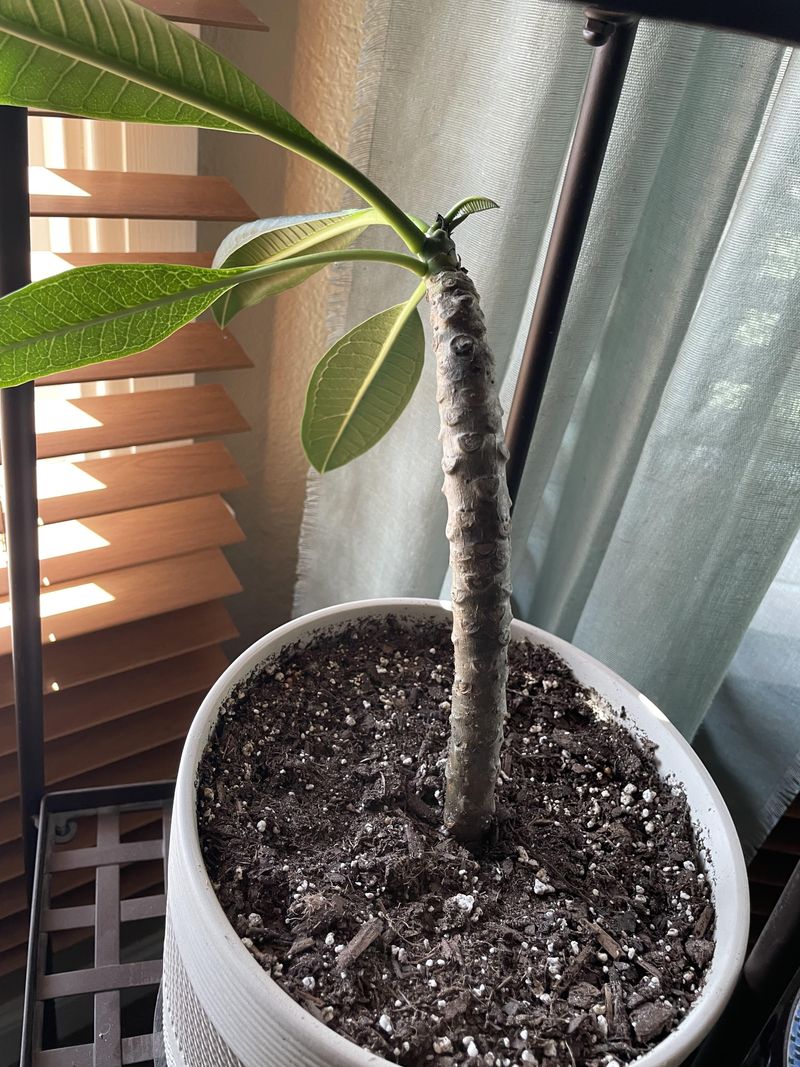
Some informal gardening advice suggests letting plumeria dry out almost completely to stress the plant into flowering.
Reliable extension sources do not support that approach, and in August Texas heat it can cause real harm.
The goal during active growth is a steady balance: water thoroughly when the upper 2 to 3 inches of the container medium feel dry, then let the excess drain fully.
Texas A&M AgriLife Extension August gardening guidance for Galveston County describes plumeria as needing ample moisture during active growth, while Bexar County AgriLife Extension plumeria notes warn that excess water can reduce roots and flowering.
Both points matter equally.
Letting the root zone stay soggy is just as risky as letting it go bone dry, and the consequences show up in plant performance and blooming.
Your container setup is the first line of defense.
Use a coarse, fast-draining mix, the kind that includes perlite or coarse sand rather than heavy potting soil alone.
Make sure the pot has drainage holes, and do not leave it sitting in a saucer full of standing water.
NC State Extension container guidance recommends watering until moisture runs from the drainage holes, then emptying the saucer so the roots are not wicking back up into standing water.
Frequency is not a fixed number.
A 5-gallon pot in direct sun on a 102-degree afternoon in San Antonio may need water every day or two.
The same pot on a covered North Texas porch might go three or four days between waterings.
Check the soil, not the calendar, and adjust for heat, wind, recent rainfall, and how quickly the specific mix you are using actually dries out.
Feed For Growth Without Chasing A Miracle Booster
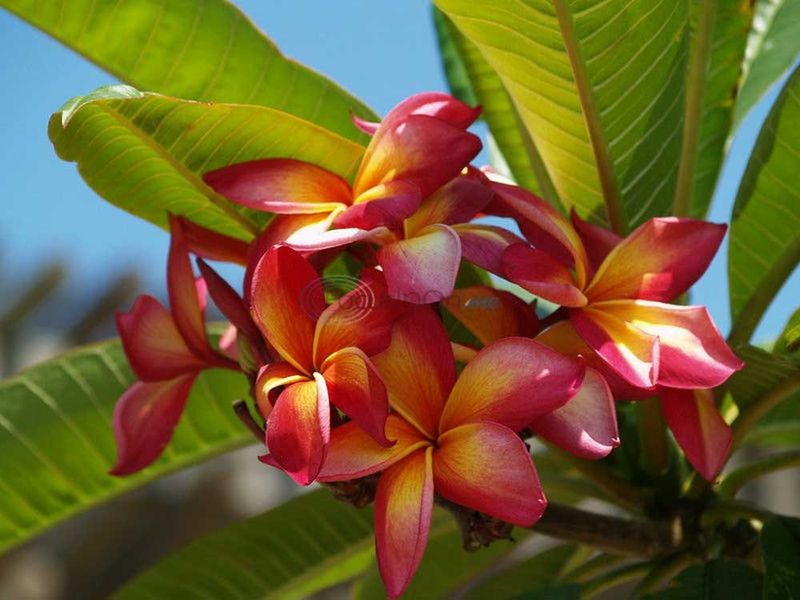
Plumeria is an active feeder during the growing season, and skipping fertilizer in late summer means the plant is working with whatever nutrients remain in the container mix from earlier applications.
That said, fertilizer supports growth, it does not override cultivar genetics or seasonal limits.
Feeding a healthy, actively growing plant is a reasonable late-summer step, but it is not a bloom guarantee.
Follow the product label for rate and frequency, and stick to a fertilizer suited to active growth.
Texas A&M AgriLife Extension Galveston County materials describe plumeria as heavy feeders and mention that many enthusiasts use lower-nitrogen products during the bloom season.
That is a reasonable preference, but the more important point is to use what you have according to the label rather than doubling down on a bloom-booster formula.
High-phosphorus fertilizers marketed as bloom triggers are a common impulse purchase in late summer.
North Dakota State University Extension guidance on phosphorus and flowering explains that adding extra phosphorus does not automatically create more blooms when soil phosphorus is already adequate.
UF/IFAS Extension phosphorus guidance reinforces that a soil test is the safer basis for any additional phosphorus application, since excess can contribute to nutrient imbalance and runoff.
As fall arrives and growth visibly slows, begin tapering fertilizer.
Aransas County Master Gardener winter plumeria guidance recommends stopping fertilizer around mid-October for coastal Texas, though inland and northern areas of the state may reach that slowdown point earlier depending on temperatures and plant behavior that season.
Check For Mite Damage On New Growth
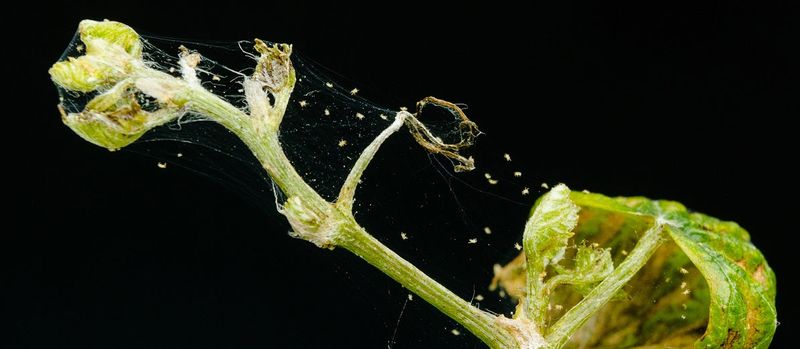
Spider mites have a trick.
They do their worst damage in exactly the conditions that define a Texas August: hot, dry, and dusty.
Sixspotted spider mites are a documented threat to plumeria, and by late summer a light infestation can quietly become a serious one while you are focused on watering and light.
UC Integrated Pest Management guidance on sixspotted spider mites on plumeria documents that these mites can deform new growth, damage leaves, distort bloom clusters, and contribute to shoot-tip loss.
That is a meaningful list of effects during a window when you are trying to protect the very tips and clusters that carry your flowers.
Pull out a hand lens and check the undersides of leaves, new growth near the tips, and any developing flower clusters.
Mite damage often appears as stippling, a fine speckling on the leaf surface, or as distorted, curled growth near the tips.
Fine webbing between leaf stems is a clear sign the population has already grown.
Early detection makes treatment much simpler.
If you find mites, treatment should follow the product label precisely.
UC IPM recommends careful use of insecticidal soap or a 1 percent horticultural oil solution.
Two conditions matter before you apply anything: the plant should be well watered, and you should not treat during excessive heat or when the plant is in direct sun.
In Central Texas and South Texas, that means waiting for a cooler morning, ideally below 85 to 90 degrees Fahrenheit, and treating in the early part of the day before temperatures climb.
Treating a heat-stressed plant with oil or soap in direct afternoon sun can cause foliage injury on top of the mite damage, which is the last thing you need right now.
Use Regional Cold Cues, Not One Texas Calendar
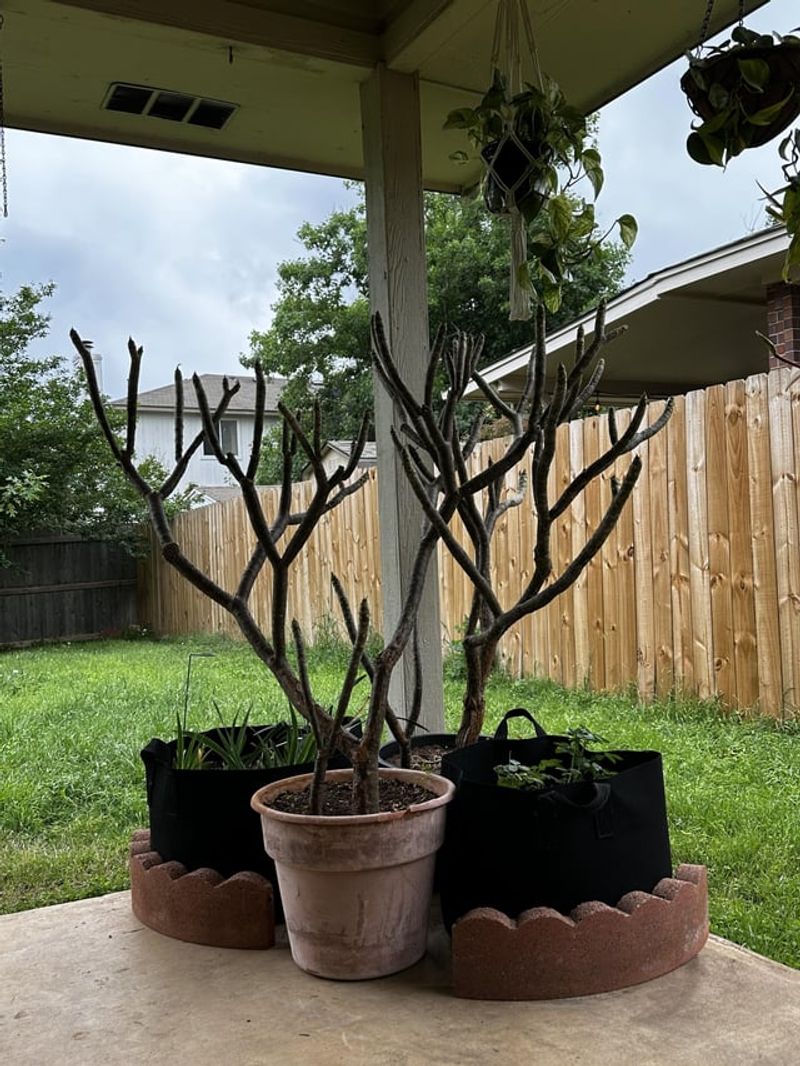
Texas is not one climate, and that fact matters more in fall than almost any other season.
A Gulf Coast gardener in Corpus Christi or Galveston may keep a plumeria outside comfortably into November, while a North Texas grower in the Dallas or Fort Worth area might be watching overnight lows drop below 50 degrees Fahrenheit by early October.
The Panhandle and higher parts of the Hill Country can see their first frost even earlier.
Ellis County Master Gardener plumeria guidance recommends moving potted plants indoors as nighttime temperatures approach 40 degrees Fahrenheit.
Henderson County Master Gardener fall guidance notes that plants may begin to show signs of dormancy as nights fall below about 60 degrees Fahrenheit, and that protection below 50 degrees Fahrenheit is a reasonable threshold for reducing cold injury risk.
These thresholds come from different sources and reflect different levels of caution, not a contradiction.
Moving the plant earlier is the conservative choice, and for a container plant in a colder inland county, earlier is usually better.
Freezing temperatures can severely damage or kill plumeria.
The plant is tropical in origin, and even a brief hard freeze can cause tissue damage that takes the following season to recover from, if the plant survives at all.
North Texas growers should plan container culture as the default, not an option.
Once the plant is indoors, adjust your care accordingly.
Aransas County Master Gardener winter guidance and UF/IFAS frangipani guidance both point to reduced or stopped watering during dormancy.
A dormant plumeria indoors needs very little water, and continuing normal watering in low indoor light can promote rot.
Let the plant rest on its own schedule, not a fixed statewide calendar.
Give October A Chance, Not A Guarantee
Pulling all of this together in late August looks less like a dramatic intervention and more like a steady, layered routine.
Leave healthy terminal tips intact to protect existing flower sites.
Maintain strong light with afternoon relief when foliage shows stress.
Water thoroughly when the upper few inches of the container medium dry, and let excess drain every time.
Feed according to the label while growth is active, and start tapering as the plant slows.
Check for mite damage on new growth and flower clusters.
Watch the overnight lows and know your region’s cold window.
None of that is a single magic switch, and University of Hawai’i plumeria research is clear that cultivar, plant age, prior growth, temperature, and regional frost timing all shape how many flowers appear and when blooming ends.
A plant that is mature, well-sited, and carrying several developing clusters in late August has a genuine chance of continued flowering into October in warmer parts of Texas.
A younger plant, a naturally sparse-blooming cultivar, or a plant in a colder inland county may finish earlier, and that reflects natural variation rather than gardener failure.
University of Wisconsin horticulture plumeria guidance notes that the percentage of tips that flower and the number of seasonal flushes vary widely by cultivar, which means uneven bloom across your plant or a shorter season than a neighbor’s is often a cultivar story, not a care story.
Your late-August inspection routine can be simple: walk the plant, check each tip for active growth or a developing cluster, look at the undersides of leaves for mite stippling, feel the top of the container medium, and note the overnight forecast.
Texas Master Gardener plumeria guidance frames this kind of attentive container care as the foundation of success in a state where the growing season is long but the variables are real.
Do the rounds, make the small adjustments, and let the plant do the rest on its own terms.