
The Wild Prairie Flower Texans Are Bringing Home To Their Yards Again
Follow us on Google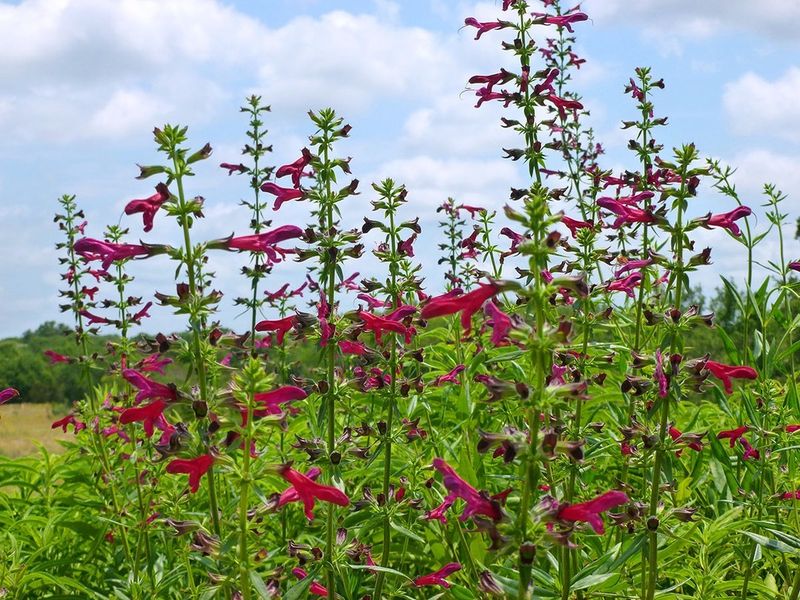
Big red sage is the Texas wildflower that’s showing up in yards again, and its tall red-purple blooms are hard to miss. Botanists once thought it was gone for good, yet nurseries now grow it for gardens.
It lives in the Edwards Plateau of Central Texas, and its story is more complicated than a simple comeback. Here is how to enjoy it the right way.
Meet Big Red Sage
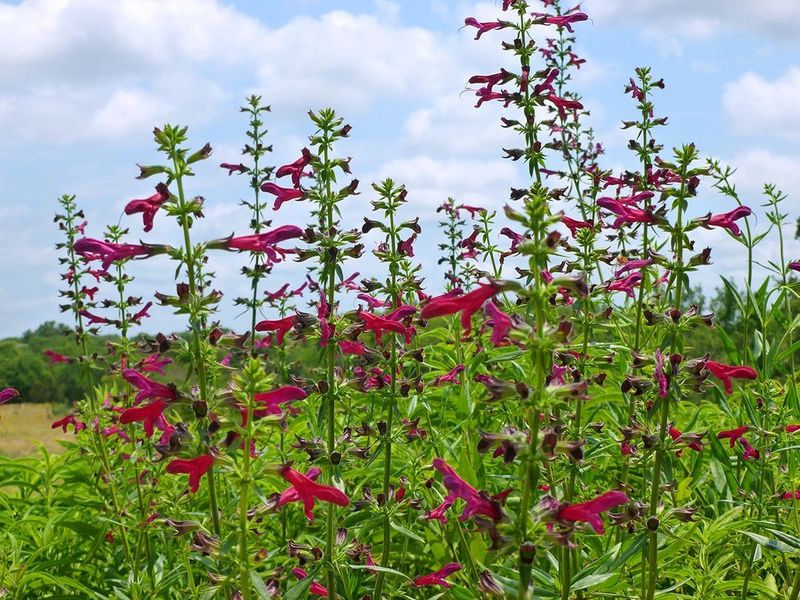
Picture a hummingbird hovering at a tall spike of reddish-purple flowers beside a shady Hill Country creek. That plant is big red sage, known to botanists as Salvia pentstemonoides.
It is a Central Texas native tied to the Edwards Plateau.
For a while, scientists believed it had vanished. The U.S.
Fish and Wildlife Service describes it as a species once presumed extinct that was later found again. Notice the careful wording.
Presumed extinct is not the same as gone entirely, because a few plants were hiding in out-of-the-way spots.
The dates depend on which account you read. Some sources point to 1980 for the rediscovery.
A Native Plant Society of Texas history says a nursery owner found a Boerne-area population in 1986, and botanists found plants in Bandera County in 1987. That account of the Boerne finds shows how a plant can slip out of sight and then return to notice.
Once people could study living plants, nurseries started growing them. That is how a rare wildflower of narrow ravines ended up in garden beds.
The plant had friends with shovels and seed trays, and that matters later in this story.
One spelling note. You will see penstemonoides on some local guides, but the accepted name is pentstemonoides.
Either way, the plant is the same quiet showstopper.
Its Wild Home Is a Limestone Ravine
Most people hear prairie flower and imagine an open field in full sun. Big red sage tells a different tale.
Its documented home is the Edwards Plateau, in the Texas Hill Country and nearby Central Texas.
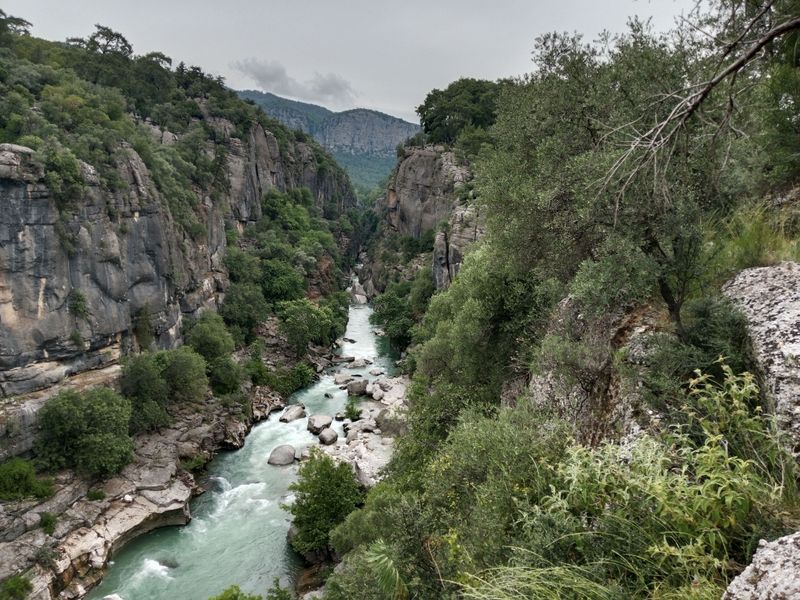
According to the Fish and Wildlife Service species profile, it grows along streams and in narrow limestone ravines. You find it on shaded, rocky slopes and near seeps, where water slowly leaks out of the ground.
That seepage keeps the soil moderately moist.
Think of a ravine as a cool pocket the rest of the landscape does not share. Cliffs and trees cast shade, rock holds some moisture, and the air stays gentler than on a bare hilltop.
A flat open prairie offers none of that.
So the plant is a wildflower, yes, but a wildflower of tucked-away places. Calling it a prairie flower is a handy hook, though the real habitat is more specific and more interesting.
Why does this matter in your yard? A garden bed is not a ravine.
Your soil, your sun and your irrigation may look nothing like a shaded limestone seep, so you cannot assume the plant will feel at home just because it is native to your region.
The next sections help you sort out what the plant needs and what it does not get from a typical lawn edge.
Garden Cultivation Is Not Wild Recovery
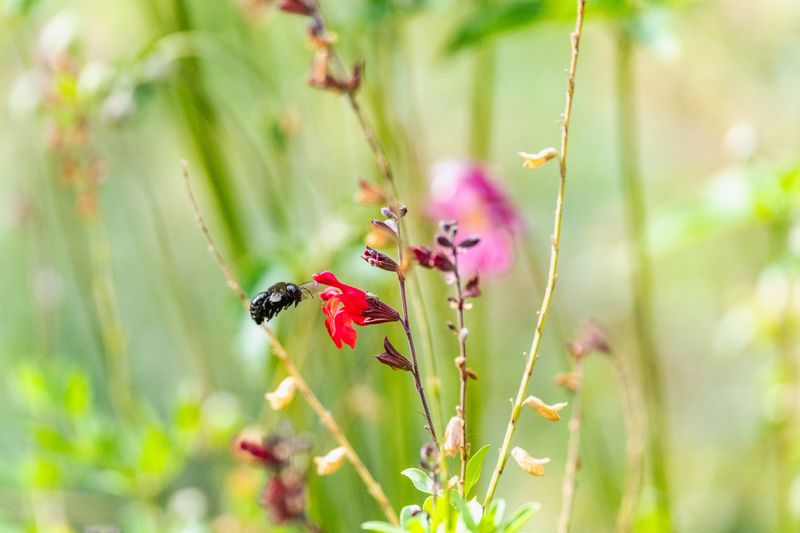
Seeing big red sage at a nursery feels like good news, and in one way it is. Commercial nurseries have propagated and sold it since 1986, so growing it in gardens is well-established horticulture.
That does not tell us how many Texans plant it today, and it is not a brand-new trend.
The wild picture is harder. In January 2025, the Fish and Wildlife Service announced a proposal for federal protection.
The agency confirmed only 7 of 14 populations known to contribute to the species’ long-term viability in 2025.
Half of the key populations confirmed is not a recovery. A plant can thrive in pots while its wild neighborhoods shrink.
The status is also worth stating precisely. Endangered status has been proposed, not finalized.
The agency species data lists it as Proposed Endangered, so it is wrong to call it federally listed as endangered right now.
Here is a quick diagnostic clue. If someone tells you a garden favorite is making a comeback, ask where the plants are growing.
Backyards and nurseries count as cultivation. Only healthy wild populations count as wild recovery.
That difference should shape every choice you make about this plant.
Choose Nursery Stock, Not Wild Plants
If you want one, buy it. Look for a responsibly propagated plant from a reputable native-plant nursery.
Ask how the nursery grew it, and skip any seller who cannot say.
Never collect seed or dig a plant from the wild. The agency species status assessment names wild collection as a continuing threat.
With so few key populations confirmed, every missing plant counts.
The same assessment raises another worry. Cultivated stock can have low genetic diversity, meaning many nursery plants come from a small set of parents.
A narrow gene pool is like a seed bank with only a few kinds of seed. It leaves a population less ready for change.
That is one more reason to buy from careful growers and not to casually spread plants or seed around natural areas. Cultivated plants can affect wild populations if they spread or are reintroduced without care.
Keep your expectations modest, too. Buying a plant does not automatically help wild populations.
It is a way to enjoy a Central Texas native and to support a nursery that does the work responsibly.
Think of it as being a good neighbor to the plant. You welcome it to your yard without taking anything from its home.
Check Whether Your Yard Fits
Walk your yard before you shop. This advice is limited to Central Texas and the Austin area, because that is where the cited guidance comes from.
It is not a promise for the whole state.
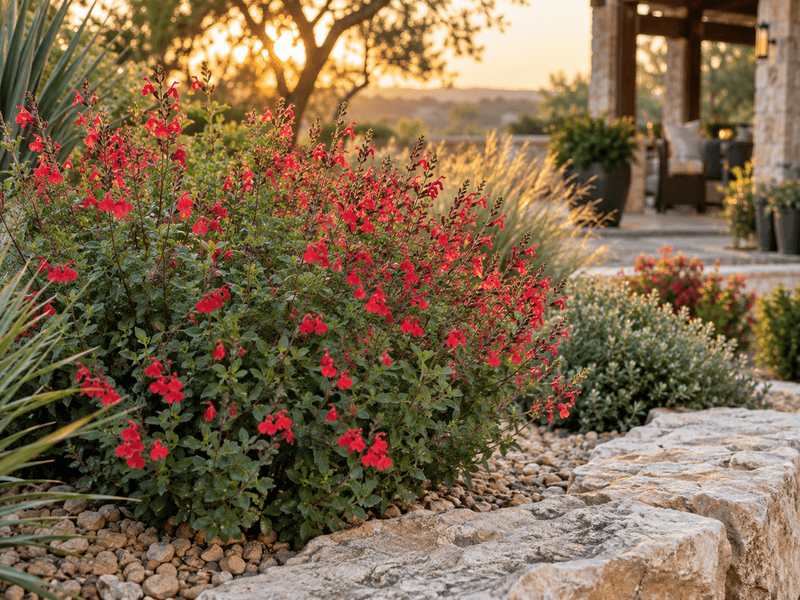
Austin Watershed Protection’s plant guide for big red sage suggests sun to part shade. Spend a day noticing where light falls.
A spot with morning sun and some afternoon relief fits that range better than a bare, baking corner.
Next, think about soil. The Lindheimer Chapter profile from the Native Plant Society of Texas, in its big red sage write-up, recommends moist but well-drained soil.
That echoes the plant’s ravine roots, where water seeps through rock instead of pooling.
So look for a spot that does not stay soggy after rain but is not bone dry either. Water that sits around roots is a red flag.
The profile also recommends protection from deer. If deer wander through your neighborhood, think about a fenced area or a spot close to the house.
I will not invent watering amounts or spacing, because the sources do not give them. Check with the nursery where you buy the plant.
If the site checks out, you have a good start. If it does not, picking a different native is a smart choice, not a failure.
Expect Tall Stalks and Moisture-Responsive Blooms
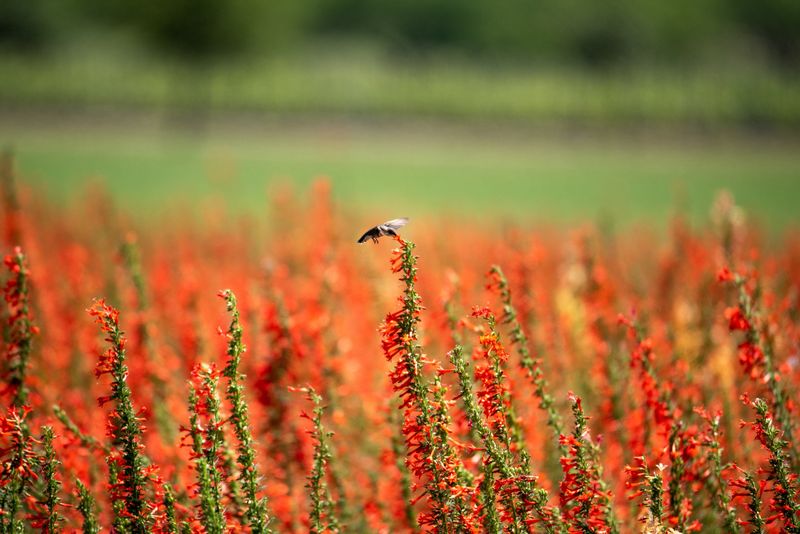
Plan for height. The Fish and Wildlife Service says flowering stalks can reach about 5 feet.
The reddish-purple tubular flowers are about 1.5 inches long, shaped for visitors with long beaks and tongues.
The agency describes flowering from May through November. The Lindheimer Chapter profile, in the local plant profile, gives June through October.
Both are reasonable, and the gap is a hint that the calendar is not fixed.
Blooming responds to moisture. In a wetter stretch you may see flowers earlier or longer.
In a dry spell, the plant may hold back, like a performer waiting for the right moment.
So do not promise yourself a bloom date. Treat the season range as a window, and watch the weather instead of the calendar.
I will skip spacing numbers, because the sources do not give any. A 5-foot stalk is a good reason to leave breathing room and to ask the nursery what they recommend.
When it does bloom, the show is worth the wait. A tall stalk of red-purple flowers in your own yard is a Texas moment you will want to point out to visitors.
Gardens Cannot Replace Wild Habitat
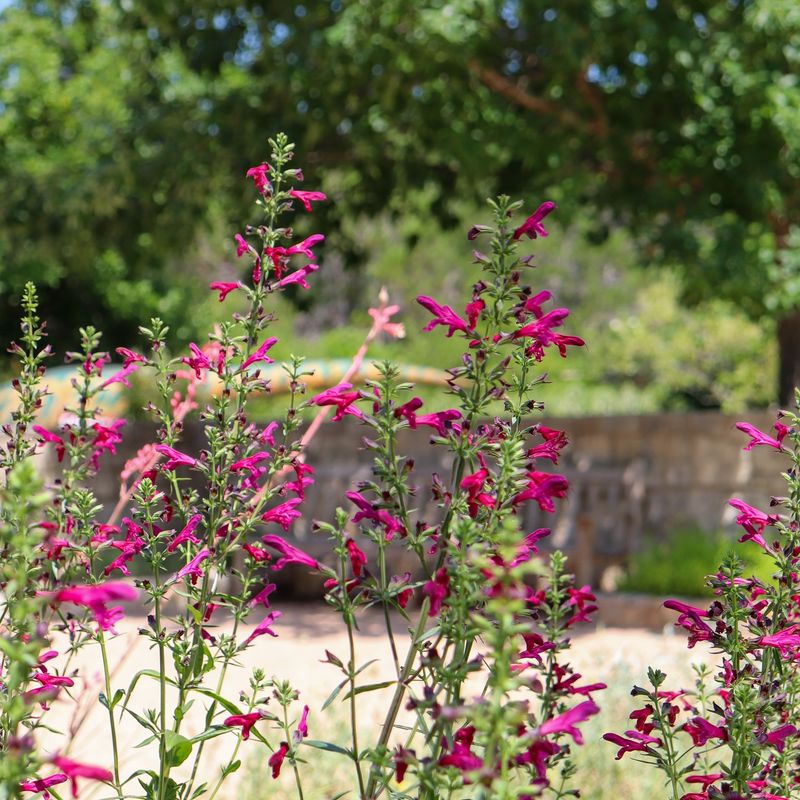
A good plant in a good spot brings real joy. Responsibly sourced big red sage lets you enjoy a Central Texas native on your own patio.
That joy is genuine, and it is worth having.
Still, a garden plant is not a rescue operation. The Fish and Wildlife Service has proposed endangered status because wild populations face real pressure.
Tending your one plant does not restore those places.
The assessment lists wild collection as a continuing threat, and the plant’s home in ravines and along streams is narrow and easy to disturb. Protecting that habitat is a different job from watering a bed.
It means keeping seeps, slopes and stream corridors intact and leaving wild plants where they grow.
If you want to do more than garden, keep your yard choices tidy and your curiosity respectful. Learn where the plant lives, and support careful nurseries that grow it.
Care for your plant, and care about the ravine. They are two different jobs.
A flower in a pot can be beautiful, but only a living ravine can keep the species wild.
