
The Venomous Saddleback Caterpillar Hiding Under Florida Hibiscus Leaves And What To Do Before You Touch It
Follow us on Google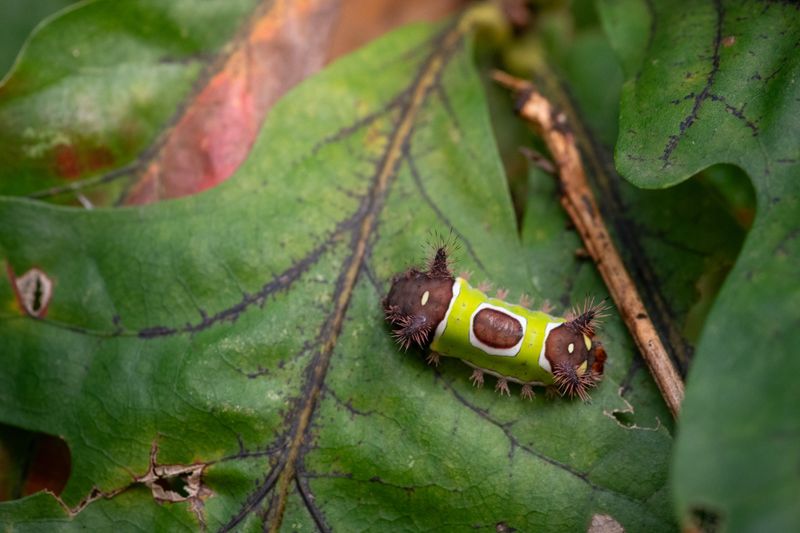
You reach into the hibiscus on a warm Florida morning, and a leaf brushes your forearm with a sharp, burning sting. The culprit may be a saddleback caterpillar, a small green and brown stinger that can look almost like a bit of leaf.
Knowing what it looks like and how to respond makes pruning calmer and safer. Here is how to spot it, avoid it, and handle contact if it happens.
Recognize the Saddleback by Its Markings
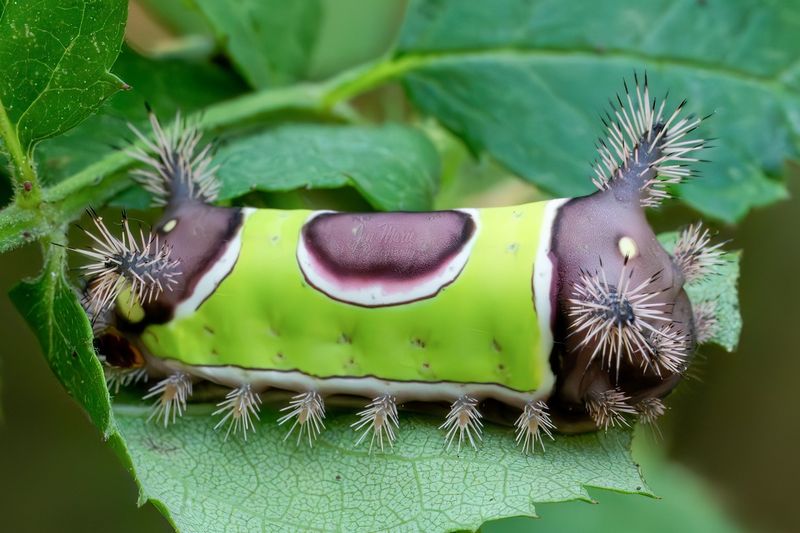
Picture a tiny, stout caterpillar that looks like it wore a costume to a leaf party. The saddleback has brown ends, a vivid green middle, and a brown patch on its back shaped like a saddle.
That saddle is often edged in white, which makes it easier to pick out once you know what to look for.
The spines are the real warning. UF/IFAS describes prominent fleshy knobs near the front and rear, each topped with stinging spines, plus smaller spiny structures along the sides.
A mature caterpillar is only about 2 cm long, roughly the width of a large paperclip, so it is easy to miss if you are not looking.
Here is the useful part. Recognizing those markings is about keeping your distance, not about getting a closer look with your fingers.
A caterpillar with a green middle, brown saddle, and spiny knobs is one to leave alone.
Bright color by itself does not settle the question, so check the full pattern. Look for the saddle, the brown ends, and the knobs together.
If most of those match, treat it as a saddleback, step back, and let your eyes do the work while your hands stay in your pockets.
Many Florida gardeners spend years around hibiscus without a single run-in. Learning the look now means that if one turns up, you will recognize it calmly instead of by accident.
Hibiscus Does Not Confirm an Identification
Here is a myth worth clearing up. Seeing a caterpillar on your hibiscus does not mean it is a saddleback, and a saddleback is not secretly living under every hibiscus leaf.
Nothing documents leaf undersides as its signature hiding spot.
What is true is that Chinese hibiscus is on the list of plants it feeds on. UF/IFAS notes that the saddleback eats a very wide range of plants, so the host plant is a poor clue.
Hibiscus is one of many, not a favorite that gives the caterpillar away.
Leaf undersides are still a fair place to look, simply because caterpillars of many kinds can be hard to see from above. Think of it as a sensible precaution rather than a rule about this species.
Stems and the tops of leaves deserve a look too.
There is another reason not to fixate on the underside. UF/IFAS reports that saddleback eggs are laid in clusters on the upper surface of leaves.
So signs of this insect can show up on top, and a quick scan of only the underside would miss them.
The takeaway is simple. Identify by markings and spines, not by the plant or the hiding place, and keep your inspection wide enough to cover the whole leaf.
Inspect Before You Reach or Prune
Pruning shears make you bold. You push an arm into a thick hibiscus, snip, and never see what your sleeve just brushed.
A slow look first changes the whole outing.
Start by scanning leaves and stems from a little distance, top and bottom, before you reach through foliage. Move one branch at a time and pause on anything small, green, or oddly knobby.
This is a precaution, and it does not mean every hibiscus is hosting a saddleback. Most plants will be fine.
Gear helps too. Poison Control advises covering up and avoiding bare-hand contact with caterpillars, so wear gardening gloves and a hat while you work.
Long sleeves are a sensible extra on a plant you are reaching deep into.
Remember what does not count as proof. Hibiscus alone, a leaf underside, or a caterpillar’s bright color cannot tell you what you are looking at, as UF/IFAS explains about the saddleback’s broad host range.
Check the markings and spines instead.
None of this is a guarantee, just a good habit. A calm minute of looking costs far less than a burning forearm, and it turns pruning into something you genuinely control.
Keep Detachable Spines Away From Skin
The saddleback does not bite, and it has no stinger like a wasp. Its trick is quieter.
The spines are hollow and detachable, and UF/IFAS explains that they can break off in skin and deliver toxin. That is why the word venomous fits.
So the rule is plain. Do not pick up, brush off, or crush a suspected caterpillar with your hands.
Bare skin is exactly what those spines are built to find.
If a caterpillar is in a spot where it needs to move, use a tool such as a stick or long tongs and keep your hands well back. Often the easiest choice is to leave it and prune another branch.
Poison Control also notes that removal from skin should be done without bare hands, and the same caution applies to the garden.
UF/IFAS mentions covering skin and manual removal for landscape work, but that does not mean grabbing one yourself. If you see many caterpillars, or you are unsure what you have, call your local UF/IFAS Extension office for advice rather than reaching for a spray.
Think of the spines as a fence you cannot see. Respecting it takes almost no effort, and it keeps your afternoon from turning painful.
Use Tape and Soap After Skin Contact
If the worst happens, stay calm and follow the order. First, do not rub the spot or pull anything out with bare fingers.
Rubbing can push spines in deeper.
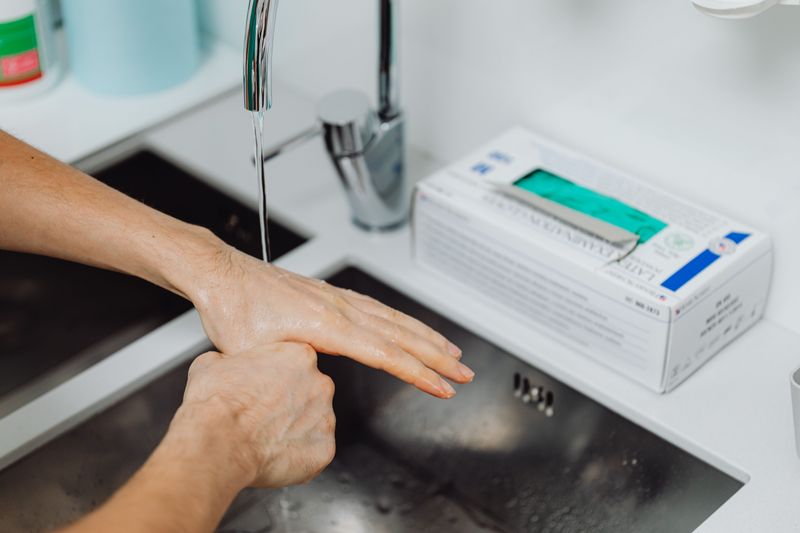
Poison Control recommends placing tape sticky-side down on the affected skin, then lifting it to pull away hairs or spines. Use a fresh piece each time and repeat as needed.
Once that is done, gently wash the area with soap and water, as Poison Control describes in its caterpillar guidance.
Next comes comfort. Ice may help with pain, and common oral pain relievers may help too.
Hydrocortisone may ease itching. None of these is a promise, and reactions differ from person to person, so treat them as options rather than cures.
People report burning, pain, redness, itching, swelling, welts, and even blisters. That range is exactly why case-specific advice matters.
You can call Poison Control at 1-800-222-1222 or use webPOISONCONTROL to get guidance for your situation.
Keep the tape and a bar of soap somewhere easy to reach, like the garage or potting bench. Then if a sting happens, you will already know your next move.
Know When to Seek Urgent Help
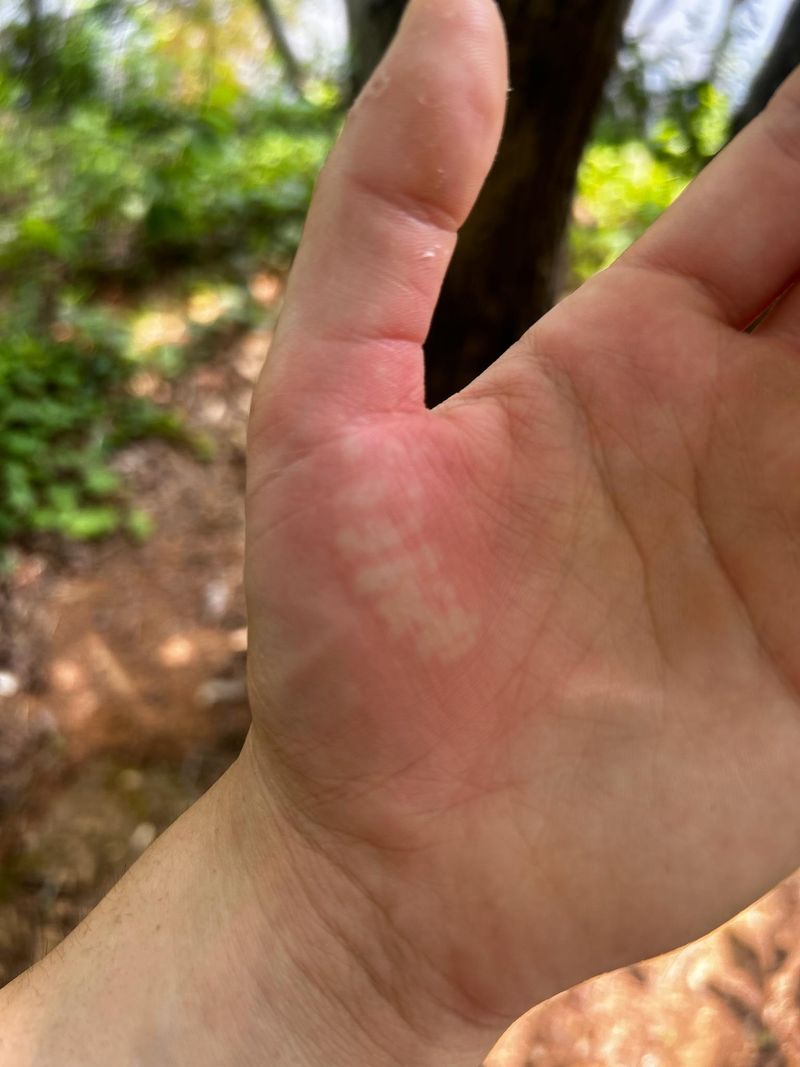
Most stings stay a nasty, local problem. A few do not, and knowing the difference is the part worth remembering.
Call 911 right away for trouble breathing, fainting, or swelling of the lips, face, or tongue. Do not wait to see if it passes.
Poison Control lists these as emergency signs, and serious allergic reactions, while rare, are possible.
Other situations call for medical advice, though not necessarily an emergency call. See a clinician about a suspected localized allergic reaction, any blistering, or eye irritation that does not go away.
If a spine or irritation reaches the eye, do not keep rubbing and get advice promptly.
One more truth keeps you honest. Reactions vary, and nobody can predict yours from a friend’s story.
One person may feel a brief burn, while another gets welts that linger. Neither outcome tells you what the next sting will do.
So watch yourself and anyone nearby for the first hour or so, especially children who may have touched a plant. If something feels off, trust it and call.
Making the call early is never a mistake, and it keeps a small garden mishap from growing.
A Single Sighting Usually Does Not Call for a Spray
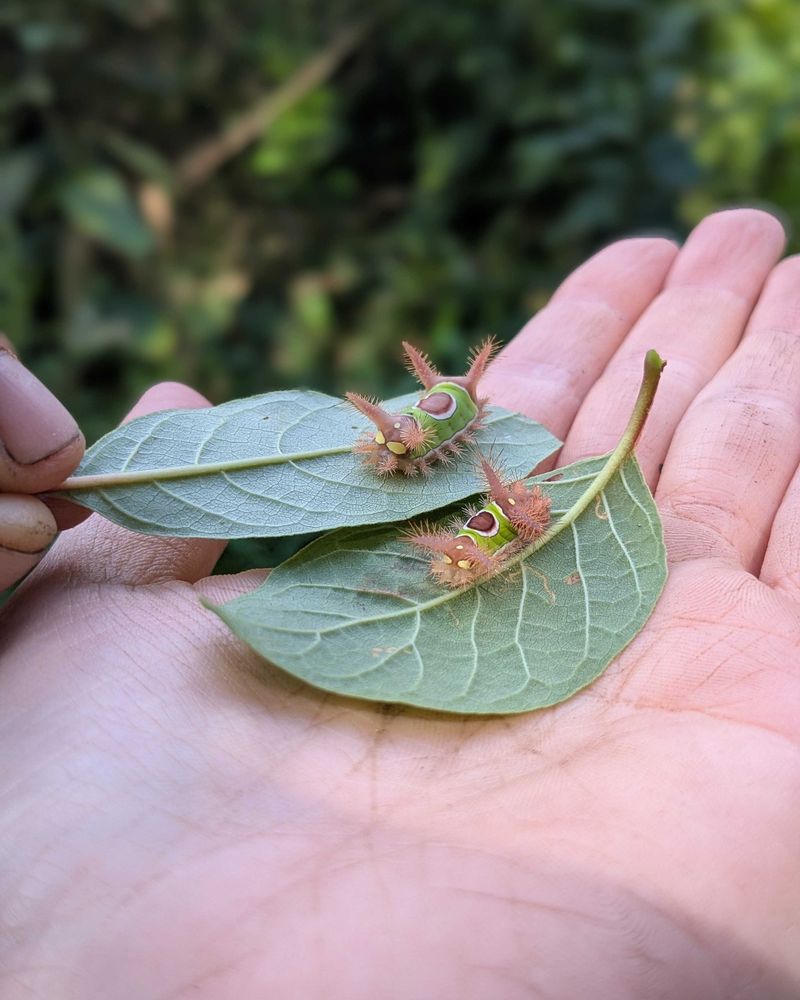
One caterpillar on a hibiscus is not a crisis. It is just a small visitor on a plant that can usually take it.
UF/IFAS calls the saddleback a minor landscaping pest, and NC State Extension reports low numbers and little harm to plants. So a broad spray is not the default answer to one sighting.
Spraying a whole shrub for a single caterpillar adds effort and may reach insects you would rather keep, including butterflies.
What works better is quiet attention. Keep a respectful distance, mark the spot in your mind, and prune around it for now.
If action is truly needed, use a tool and keep your hands away.
If you find many caterpillars, or you are not sure what you are looking at, reach out to your local UF/IFAS Extension office. They can help confirm the identification and suggest next steps for your yard.
That is the whole approach. Look first, identify by markings and spines, and keep bare skin out of the picture.
The hibiscus will keep blooming, and you can keep tending it with a steady head and a pair of gloves.
