
The Things You Should Never Do To Your Pennsylvania Hostas No Matter What The Internet Says
Follow us on Google
Hostas (Hosta spp.) have a reputation as the plant you can stick in a shady corner and forget about, and honestly, that reputation has gotten a lot of them killed.
Pennsylvania yards throw a lot at these plants: heavy clay, summer downpours, surprise late frosts, slugs, deer, and well-meaning gardeners armed with internet advice.
The problem isn’t the hostas.
It’s the shortcuts that sound reasonable until the leaves start turning brown, the crown rots out, or the slugs eat through another season.
This article replaces the most common risky moves with safer habits that actually match what’s happening in your yard.
Pennsylvania Hostas Are Tough, Not Bulletproof
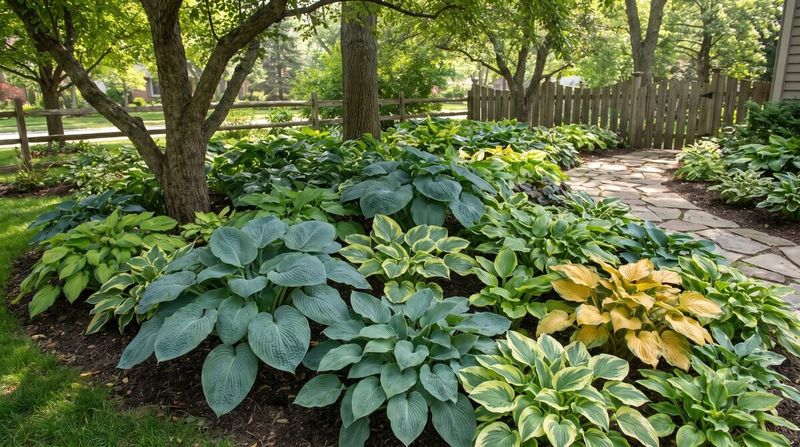
Walk through almost any Pennsylvania neighborhood in late spring and you’ll spot hostas everywhere, spilling out of shady beds, tucked under oak trees, lining porch steps from Erie to Easton.
They survive neglect that would finish off most perennials, and that reputation for toughness is exactly what gets them into trouble.
Gardeners who believe a plant is bulletproof tend to reach for shortcuts.
Salt for slugs.
Vinegar for weeds.
Extra water after a hot week.
A thick layer of mulch pulled right up to the base for winter.
Each of these moves feels logical, and each one can quietly damage a plant that was doing fine on its own.
Pennsylvania does not make things simple.
The Pennsylvania State Climatologist identifies four broad climate regions across the state, and the difference between them is real.
Average last-freeze dates range from around April 14 in Philadelphia to as late as June 7 in Ridgway, up on the Allegheny Plateau.
Those figures are examples of how wide the window is, not a planting calendar for every yard in between.
Elevation, drainage, soil type, and local exposure matter just as much as geography.
A hosta in a low, clay-heavy spot in the Susquehanna Valley faces completely different risks than one planted in well-drained, sandy soil on a slope in the Poconos.
Statewide internet advice skips all of that.
University of Illinois Extension notes that hostas can be damaged by salt injury, wet crowns, and other preventable stresses that gardeners often do not connect to their own actions.
The sections ahead name each risky shortcut and replace it with a safer move you can actually use in your yard, whatever corner of Pennsylvania you happen to be in.
More Water Cannot Rescue A Wet Hosta
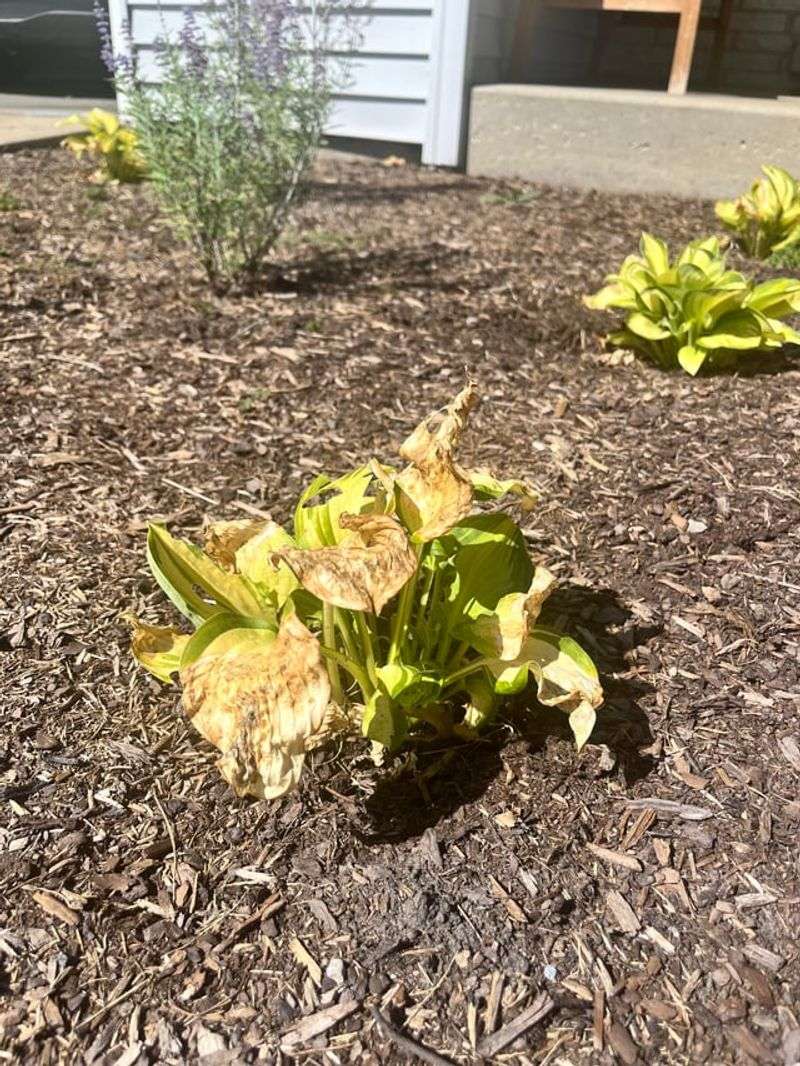
You step outside after a Pennsylvania thunderstorm and find your hosta collapsed flat on the ground, leaves draped over the mulch like wet paper.
The instinct is to check the watering schedule and add more.
That instinct is wrong, and acting on it can finish what the storm started.
A hosta that wilts while the soil around it is still soaked is not thirsty.
It may have damaged roots.
University of Maryland Extension explains that heavy, poorly drained soil and standing water create conditions where root and crown rot take hold fast, especially in low spots and compacted ground.
The plant collapses because it cannot move water through rotting tissue, not because the soil is dry.
Many yards in central and western Pennsylvania sit on shale-based or clay-heavy soils that drain slowly after hard rain.
Parts of southeastern Pennsylvania have the same problem.
Add a low spot or a compacted lawn edge and you have a setup where even a moderate storm leaves water sitting for hours.
University of Missouri Extension offers roughly 1.5 inches of water per week, including rainfall, as a planning guide for established hostas during a typical summer.
That figure is a starting point, not a Pennsylvania-wide schedule.
Sandy or rocky sites, newly planted hostas, and exposed slopes may need more attention during dry stretches.
Poorly drained spots need less supplemental water, not more.
Before you reach for the hose, push a finger two inches into the soil.
If it comes out damp or muddy, put the hose away.
If drainage is consistently poor, address the site itself with amended soil or a raised planting area.
Water the root zone during genuinely dry periods, and let the plant tell you what it needs rather than following a fixed-day routine.
The Darkest Corner Is Not Always Best
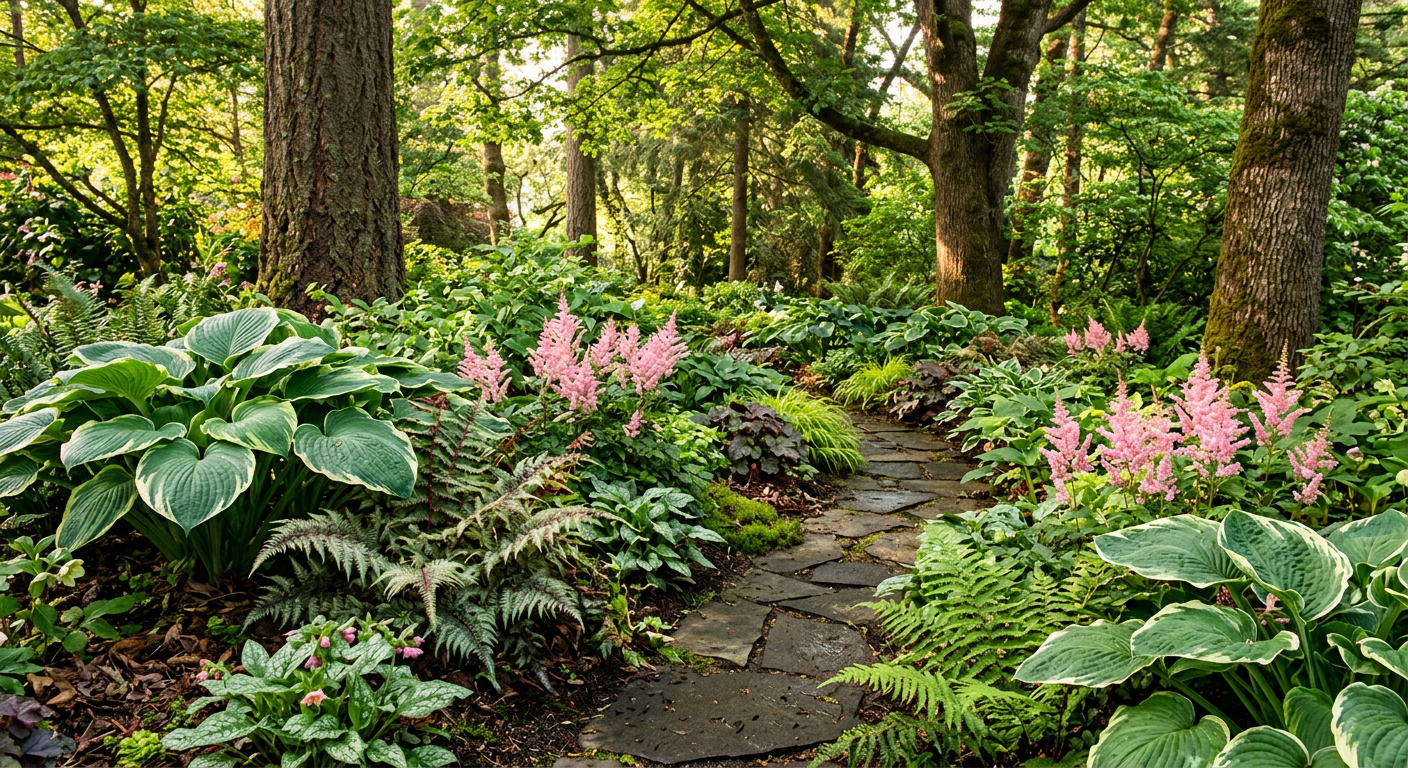
Somewhere along the way, “shade plant” turned into “plant it where nothing else will grow,” and a lot of hostas ended up in spots that are more like a closet than a garden bed.
Deep shade under a dense evergreen, against a north-facing foundation wall with zero morning light, or in a spot where reflected heat bakes the leaves by two in the afternoon.
None of those are what hostas actually want.
University of Missouri Extension describes hostas as performing well with several hours of morning sun followed by afternoon shade, rather than in full shade all day.
Morning light supports stronger, more compact growth.
Intense afternoon sun, especially the kind that bounces off a light-colored wall or a concrete driveway in July, can bleach or scorch leaves within a few days.
Cultivar traits matter here.
Blue-leaved hostas tend to hold their color better with some shade and can fade or turn green in too much sun.
Gold and chartreuse types often need a bit more light to develop their best color.
Thin-leaved varieties scorch faster than thick, heavily textured ones.
Variegated hostas vary widely, so knowing your specific cultivar helps you place it correctly.
Before you move a struggling plant, take time to watch where the strongest light actually falls.
University of Minnesota Extension notes that light stress symptoms on hostas can look a lot like drought, wet-root damage, or early disease.
Bleaching on the upper surface of leaves exposed to the strongest afternoon light is a different problem than brown spots with defined edges.
Diagnosing the pattern before you act saves the plant a second round of stress.
Salt And Vinegar Turn Folklore Into Injury
Both of these remedies show up constantly in gardening forums, and both are framed as safe, natural, and clever.
Sprinkle salt to kill slugs before they reach the leaves.
Spray a little vinegar to handle weeds creeping into the bed.
Neither one is as harmless as it sounds when your hosta is nearby.
Salt used repeatedly around garden beds does not stay where you put it.
Rain moves it, irrigation moves it, and over time it accumulates in the soil and around roots.
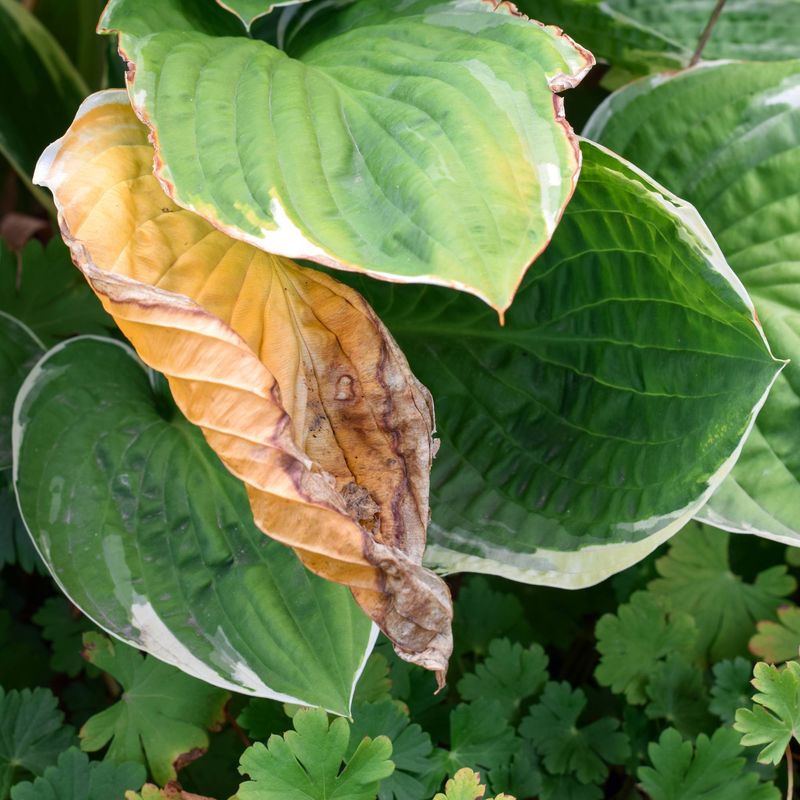
Illinois Extension specifically flags salt injury as a preventable cause of hosta damage, and the effects, brown leaf edges, wilted growth, and weakened roots, can look like drought or disease long after the salt was applied.
Do not sprinkle salt on or around hostas or into their root zone.
Vinegar is a different kind of problem.
Household vinegar at 5 percent acidity can burn the green tissue it touches.
Horticultural vinegar, which runs from about 11 to 30 percent acidity, is strong enough to cause skin burns and permanent eye damage if it contacts you without protection.
Ask Extension explains that vinegar acts as a nonselective contact herbicide, meaning it damages any green plant tissue it reaches, including your hosta’s leaves and emerging shoots.
It also does not reliably kill the roots of established perennial weeds, so it often does not solve the original problem.
If a labeled product containing either substance is genuinely appropriate for a specific use in your yard, read the full label, follow it exactly, and keep the product off desirable plants and out of the root zone of anything you want to keep. “Natural” does not mean harmless, and the label is the legal document that tells you what is actually safe.
Mulch Belongs Beside The Crown
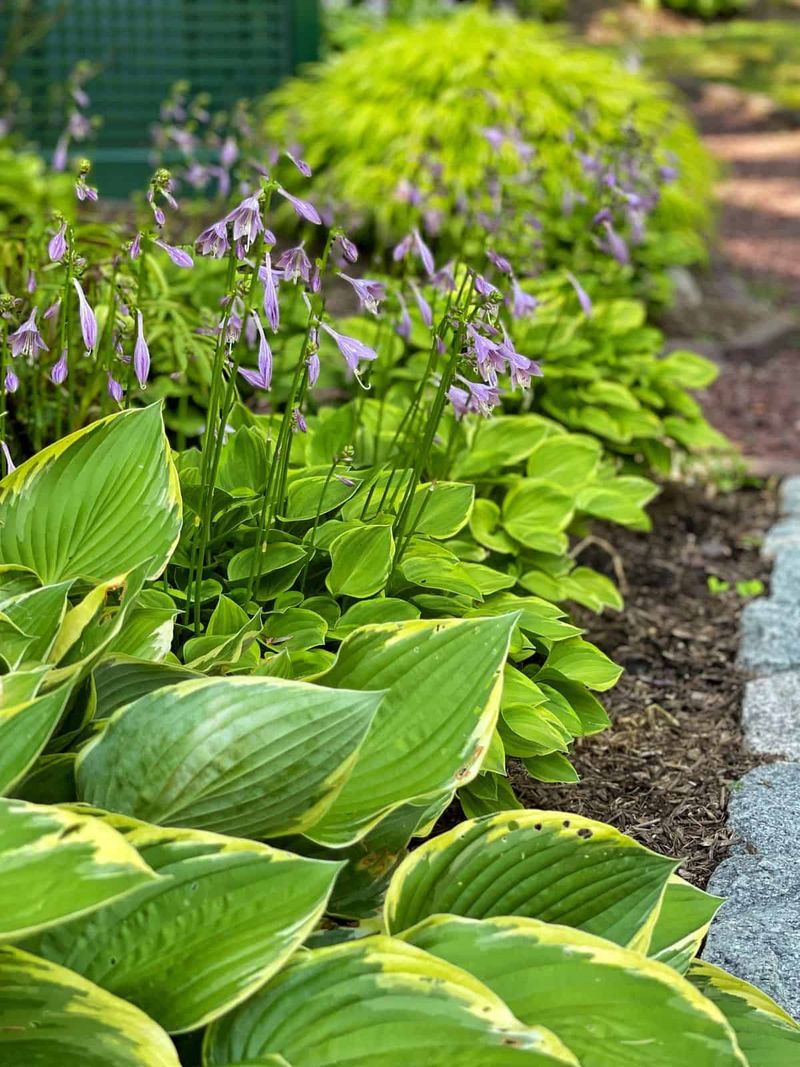
Mulching hostas is genuinely good practice.
It holds moisture, moderates soil temperature through Pennsylvania’s freeze-and-thaw cycles, and keeps competitive weeds down.
The mistake is not the mulch itself.
It’s where the mulch ends up.
The crown is the central growing point where shoots emerge from the base of the plant each spring.
When mulch or soil gets piled against it and stays wet, the conditions for petiole rot are almost perfect.
Penn State Extension specifically warns against piling mulch or soil around hosta bases because that moisture against the stem tissue is where rot begins.
Pull mulch back so the crown stays exposed and air can move around it.
Two to three inches of mulch around the plant, not on top of the base, is the right approach.
Winter mulch comes up every fall in Pennsylvania gardening conversations, and the advice gets muddled.
A light layer of straw or shredded leaves can help newly transplanted hostas resist frost heaving in their first winter, especially in colder parts of the northern tier or at higher elevations in the Laurel Highlands.
But that mulch needs to come off in spring before the crown stays wet underneath it.
Illinois Extension advises removing winter mulch in spring so the crown does not remain covered and soggy as temperatures rise.
Fertilizer fits the same theme of restraint.
Healthy soil may already provide enough nutrients, and extension guidance on fertilizing hostas recommends stopping applications after mid-July so late soft growth has time to harden before cold arrives.
Excessive nitrogen produces tender, fast-growing tissue that pests find easier to damage and that winter cold finishes off more readily.
If you fertilize, use a soil test to guide the decision, follow the product label, and treat it as a targeted response rather than a seasonal habit.
Eggshells Do Not End A Slug Attack
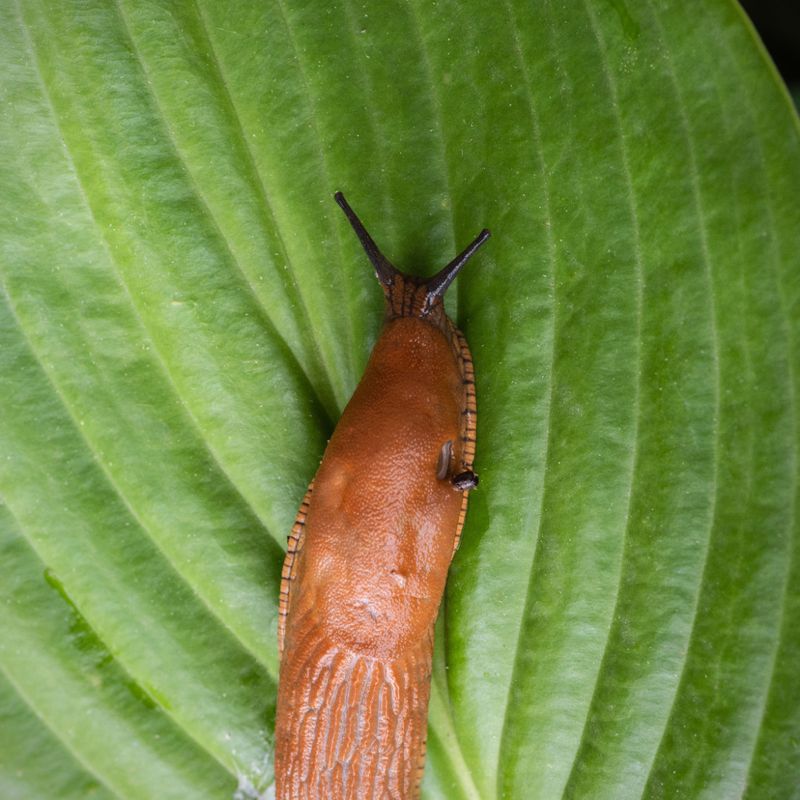
Few gardening tips travel faster than the eggshell trick.
Crush them up, scatter them around your hostas, and the slugs will supposedly refuse to cross the sharp edges.
Coffee grounds get the same treatment.
Both show up in every gardening group, every spring, without fail.
The problem is that they do not work reliably.
Extension experts answering hosta pest questions describe eggshells and similar sharp-material barriers as false solutions because slugs produce a protective slime that helps them move across rough surfaces without injury.
Coffee grounds may have some minor effect under certain conditions, but another extension response on hosta infections specifically distinguishes a possible minor barrier effect from dependable control.
Scattering either material and calling the problem handled leaves your hostas exposed.
Slugs in Pennsylvania are most active after dark and after rain.
They hide during the day under boards, dense leaf litter, pots, and anything else that stays damp and dark.
Removing those hiding places near your hosta bed is genuinely one of the most effective things you can do before reaching for any product.
Iowa State University Extension recommends going out after dark with a flashlight to inspect and handpick slugs during small infestations.
Shallow traps filled with beer can catch some slugs and help you gauge the size of the problem, but they need to be refreshed every day or two and do not reach the wider population.
Place any trap where children and pets cannot access the liquid.
When the infestation is large enough to need a bait, choose a registered product and read the full label before applying it.
The National Pesticide Information Center notes that metaldehyde is highly toxic to dogs and other animals that consume it.
Iron phosphate is less toxic than metaldehyde but still requires label compliance, and some products use ferric sodium EDTA, which carries its own precautions.
No single tactic solves the whole problem.
Layered management, habitat cleanup, nighttime inspection, traps, and labeled bait only when necessary, gives you the best outcome.
Wet Leaves Can Keep Disease Moving
On a hot July evening in the Delaware Valley or the central valleys, it feels reasonable to cool down the garden with an overhead sprinkler.
The leaves get wet, the air feels better, and the whole bed looks refreshed.
But for a hosta bed that is already showing leaf spots or irregular browning, that evening shower can make things worse overnight.
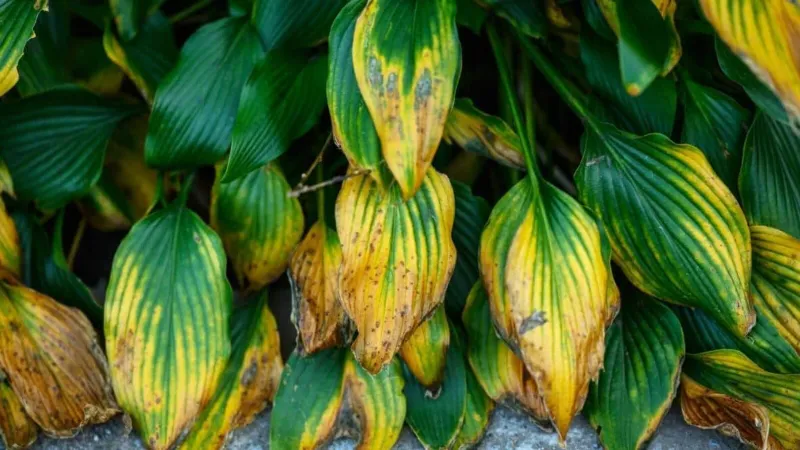
Penn State Extension identifies overhead irrigation as a way anthracnose and foliar nematodes can spread or worsen by extending the period that leaves stay wet.
Anthracnose shows up as large, irregular tan or brown areas, often with a darker border, and it spreads through water moving across leaf surfaces.
Foliar nematodes are microscopic and move in the thin film of water between leaves.
Neither one requires you to be careless.
Overhead watering during warm, humid stretches simply gives both pathogens more opportunity.
This does not mean that every wet leaf leads to disease.
Pennsylvania summers bring thunderstorms you cannot control, and a single soaking rain does not doom a healthy planting.
The issue is repeated overhead watering during periods when disease pressure is already present or conditions are right for it to develop.
A soaker hose, drip line, or careful hand watering aimed at the soil around the base keeps the root zone supplied without wetting foliage at all.
That switch is especially worth making if you have seen leaf spot patterns in previous seasons or if your bed stays humid and shaded through most of the day.
The same caution applies to dividing and sharing plants.
Do not divide, propagate, or pass along a hosta with unexplained mottling, color breaks, or distorted leaves.
Hosta Virus X cannot be confirmed from appearance alone because environmental stress, nutrient problems, herbicide drift, and other diseases can produce nearly identical symptoms.
Clean your hands and tools between plants, and if a valuable hosta shows suspicious symptoms, get a reliable diagnosis before doing anything else with it.
Brown Leaves Tell More Than One Story
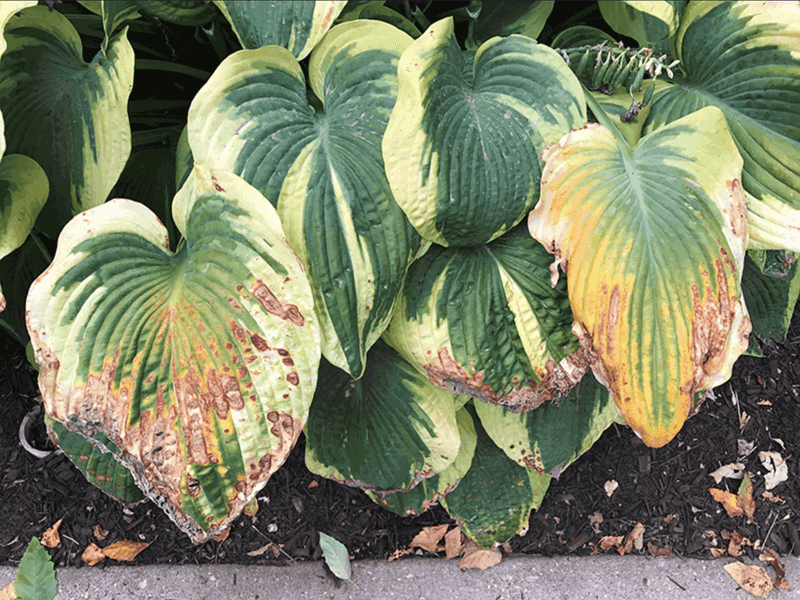
Brown hosta leaves send gardeners straight to the same two conclusions: too much water or not enough.
Both can be right.
Both can also be completely wrong, and acting on the wrong diagnosis adds a second problem to the first one.
University of Minnesota Extension describes several distinct patterns that look similar at a glance but point to different causes.
Sunscald tends to bleach or brown the portions of leaves that receive the strongest light, often in a diffuse pattern without clear edges.
Fungal leaf spots like anthracnose form more defined tan or brown areas, sometimes with a darker margin.
Salt injury from road runoff or misapplied products can produce brown leaf tips and edges that spread inward over time.
Iowa State Extension also points out that a dying center in a large, established clump is often just normal aging, not disease.
Older central tissue dies off as the plant expands outward.
That dead center can be removed during division if the surrounding growth is healthy, and it does not require any treatment on its own.
Foliar nematodes produce a different pattern, streaks of yellow or brown that follow the veins of the leaf rather than spreading in spots.
Hail and mechanical damage leave irregular tears or bruised areas.
Each of these has its own timeline and its own fix, or no fix at all if the cause is simply a rough storm.
Deer add one more layer.
Extension guidance on deer repellents is clear that any hosta may be browsed and no cultivar is reliably deer-proof, including thick-leaved or heavily textured types.
Repellents can help temporarily and must be reapplied according to their labels, especially after rain.
Physical exclusion, fencing that is at least 8 feet tall or a double-row barrier, remains the most dependable protection.
Before you change your watering routine or reach for a spray, look at the pattern, the timing, the recent weather, and the site.
Penn State Extension’s hosta disease guide can help you match what you see to the actual cause.
A Better Hosta Routine Uses Restraint
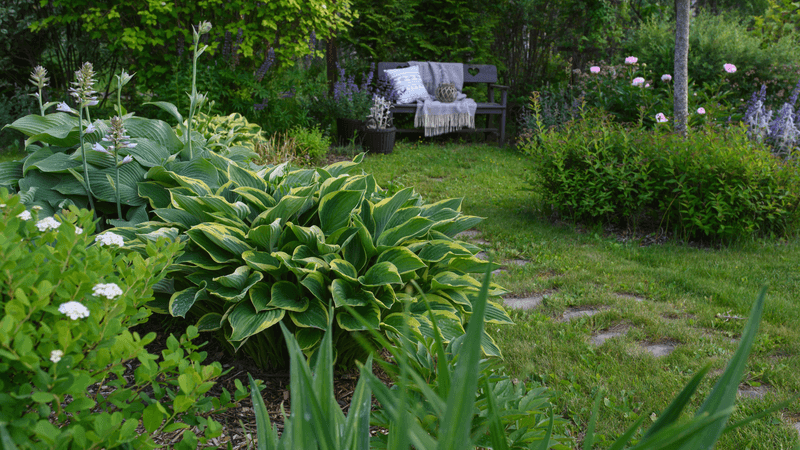
The next time you walk out to check on your hostas, try this before you do anything else.
Feel the soil two inches down.
Look at the crown to make sure mulch has not crept back against it.
Scan the leaf surfaces for pattern and timing, not just color.
Then go out after dark with a flashlight and check for slugs.
That four-step check replaces most of what the internet tells you to do automatically.
Pennsylvania’s conditions change by region, by season, and by yard.
University of Missouri Extension frames hostas as plants that prefer moist but well-drained soil and appropriate light, not a fixed schedule or a universal product.
Observation beats a routine that ignores what is actually happening in front of you.
The replacement habits are straightforward.
Improve drainage before adding water.
Match light to the cultivar.
Water at the base, not the leaves.
Keep the crown clear and exposed.
Feed only when a soil test or visible deficiency calls for it, and stop by mid-July.
Manage slugs in layers, starting with habitat cleanup.
Use only labeled products, read them fully, and keep them away from the plant.
Exclude deer with physical barriers when repellents stop working.
Clean tools and hands between plants whenever disease is a possibility.
Illinois Extension puts it plainly: most hosta problems trace back to preventable stresses, and Penn State Extension’s hosta disease resource confirms that the crown, the soil, and the water source are where most of those stresses begin.
Hostas are resilient plants.
They hold up well when gardeners stop adding problems the plant never asked for.