
The Texas Plants That Keep Hummingbirds Fueled Long After Your Feeder Rush Ends
Follow us on Google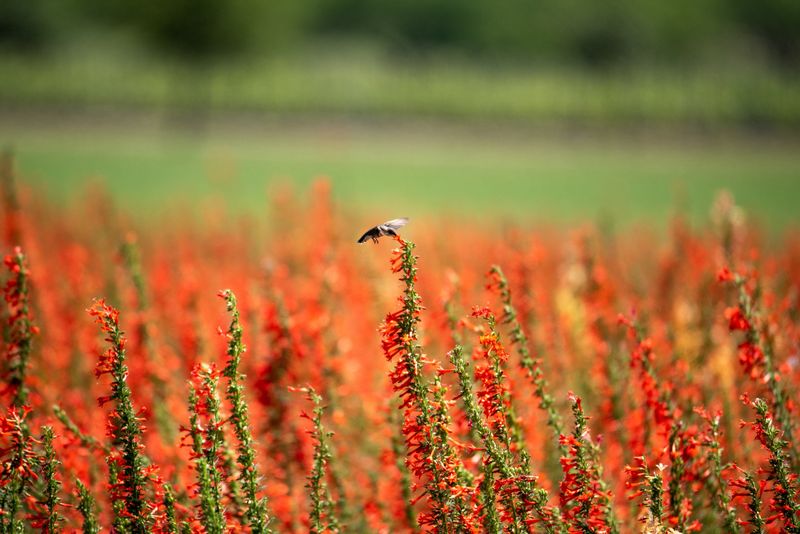
You step outside with your coffee in late September, and the feeder that was a battlefield in August hangs nearly still. Then a ruby-throated hummer zips past your ear and disappears into a red shrub by the fence, ignoring the sugar water completely.
That’s the quiet secret many Texas gardeners miss: the birds don’t stop needing fuel when the feeder rush fades, they just go looking for real flowers. These eight plants keep the nectar flowing from late summer into frost, so your yard stays alive long after the crowd thins out.
1. Turk’s Cap Blooms Right Through the Shady Spots
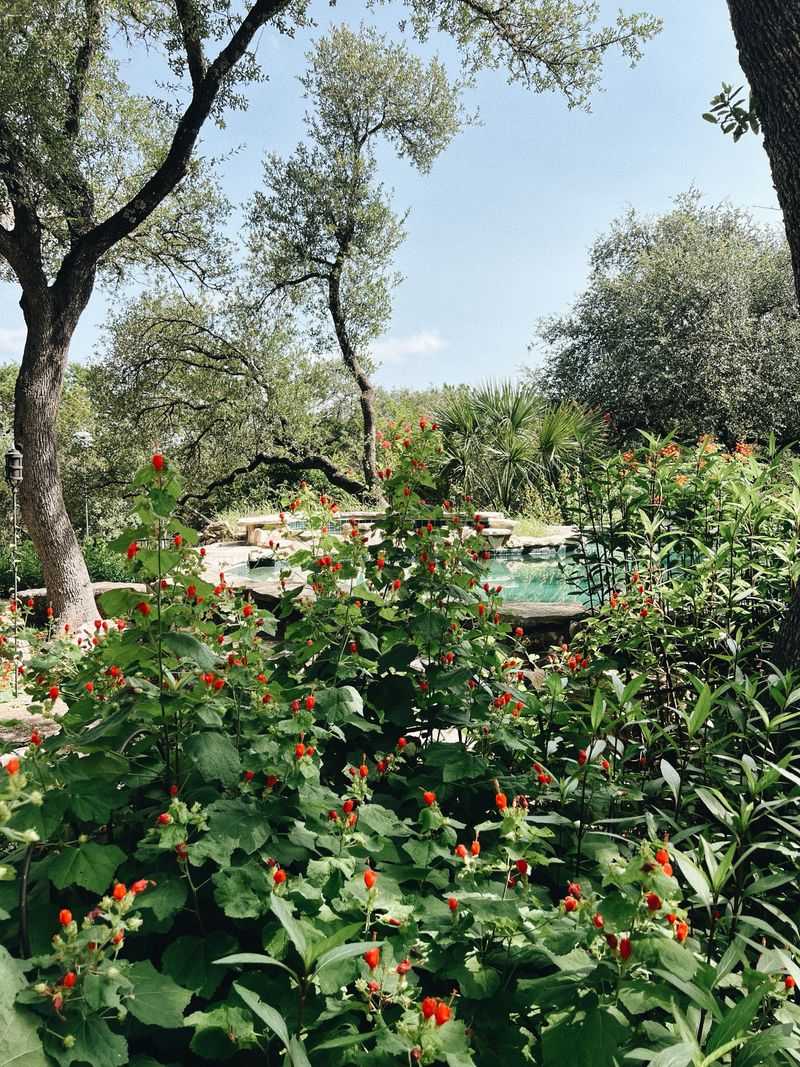
Shade under a live oak is where most flowering plants give up. Turk’s cap, Malvaviscus arboreus var. drummondii, actually seems to prefer it.
Its red blooms never fully unfurl. They stay twisted like tiny turbans, which is a perfect fit for a hummingbird beak and a poor fit for most bees.
Flowers often run from midsummer until the first hard freeze. That stretch covers the exact weeks your feeder traffic starts to drop off.
Plants usually reach 2 to 3 feet tall and spread about 4 feet, though old clumps can climb higher. Turk’s cap handles sandy loam, blackland clay, and limestone without much fuss.
After the last winter freeze, cut stems back to about 5 inches. New growth comes fast, and so do the flowers.
It is a shrub that asks for almost nothing and pays back all season.
2. Autumn Sage Refuels Hummers Before the Fall Push
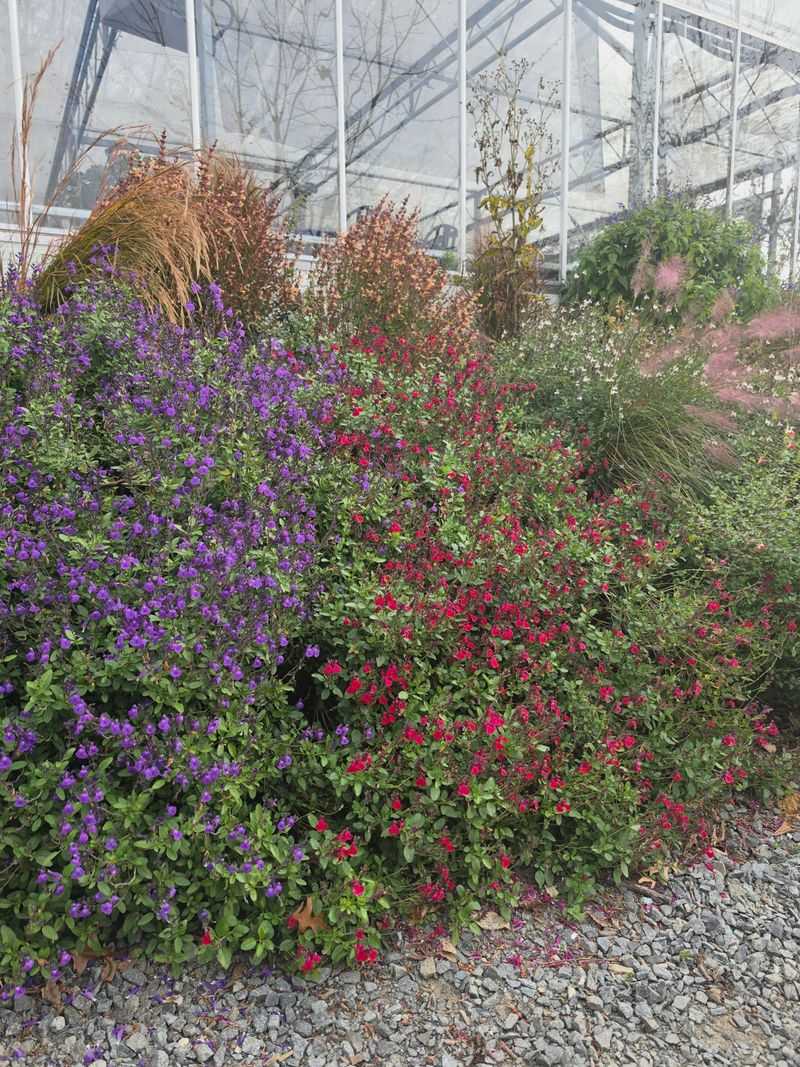
Here is a plant with a misleading name. Autumn sage, Salvia greggii, blooms from spring to frost, with its strongest flushes in spring and again as fall migration builds.
That second wave matters. Hummingbirds heading toward Mexico need to pack on weight fast, and a hedge of red salvia works like a roadside diner.
The shrub stays a tidy 2 to 3 feet tall and wide. It demands drainage, so the shallow, rocky soil of the Hill Country genuinely suits it.
Blackland clay is the trap. Many North Texas gardeners lose autumn sage to soggy winter roots, not cold, so mix decomposed granite into the planting hole.
Trim plants by half in early February and by a third in early August. Space them 18 to 24 inches apart.
Do that August trim and the fall bloom show rewards you within weeks.
3. Flame Acanthus Shrugs Off Brutal Late Summer Heat
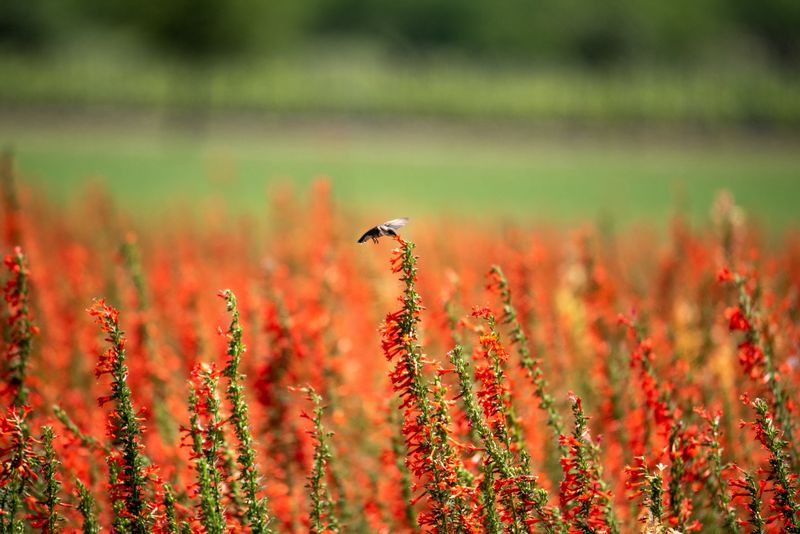
August in Texas tests everything. Lawns crisp, roses sulk, and the water bill climbs.
Flame acanthus, Anisacanthus quadrifidus var. wrightii, picks that moment to cover itself in red-orange tubes. It keeps going through fall, often until frost.
Once established, it needs very little extra water. That makes it a smart choice during long dry stretches and watering restrictions.
Expect a shrub 3 to 5 feet tall and about as wide. It takes rocky slopes, sandy loam, and heavy clay, as long as water drains.
In the Panhandle and parts of North Texas, a hard freeze may kill the top growth. The roots are tough, though.
Cut dead stems to the ground in late winter, and fresh shoots return in spring. The hummers find it again like they never left.
4. Gregg’s Mistflower Feeds Hummers and Monarchs Together
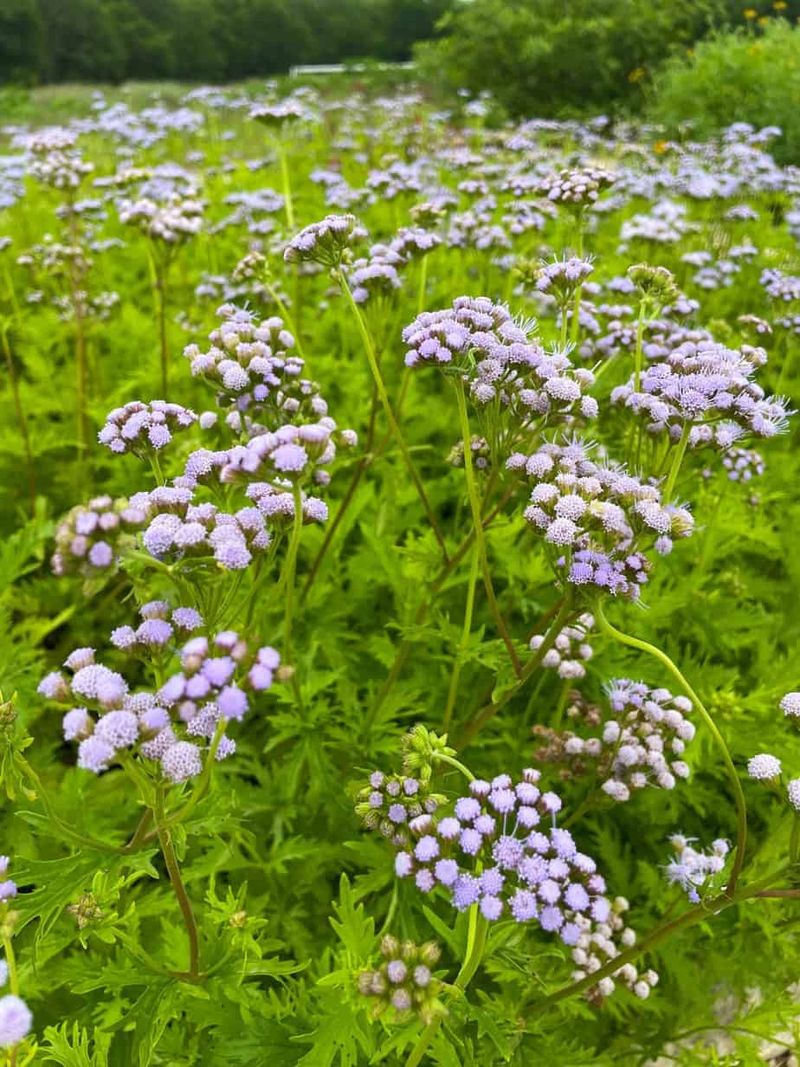
Picture a lavender cloud in October, so covered with monarchs it seems to breathe. That is Gregg’s mistflower, Conoclinium greggii, during fall migration.
It blooms from late summer into November across much of Texas. Southbound monarchs rely on it, and hummingbirds will sip from it too, though they usually favor the red tubes nearby.
Plants stay low, about 1 to 2 feet tall, and spread 1.5 to 3 feet wide. Give them full sun to part shade and good drainage.
Here is where it gets tricky. Shallow runners let it wander, so divide clumps every 2 years in smaller beds.
Plant 1 to 2 feet apart, and cut back to about 6 inches in late winter.
Pair it with salvia, and one bed feeds two migrations at once.
5. Texas Lantana Keeps Blooming Until the First Frost
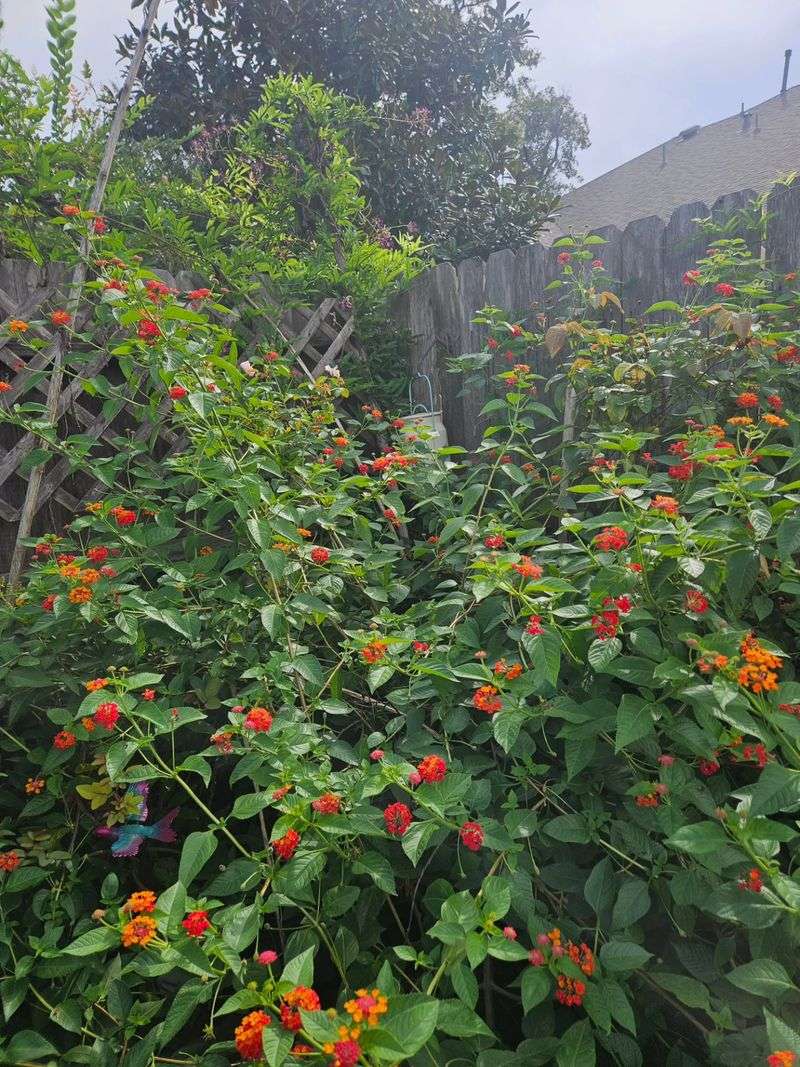
Some plants bloom politely, then quit. Texas lantana, Lantana urticoides, simply refuses to stop.
Yellow, orange, and red clusters run from late spring to the first hard frost, sometimes into November. Hummingbirds, butterflies, and bees all work it.
It needs at least 6 hours of sun, or it turns leggy and stingy. Soil barely matters, from Gulf Coast clay to rocky West Texas ground.
Water weekly the first summer. After that, it handles drought with a shrug.
If flowering slows in midsummer, the plant is busy making berries, so shear it by a third. Cut hard in late winter and space plants 4 to 5 feet apart.
One honest caution. The ripe berries are toxic to people and pets, so plant away from curious kids and dogs.
6. Coral Honeysuckle Gives East Texas Fences a Second Job
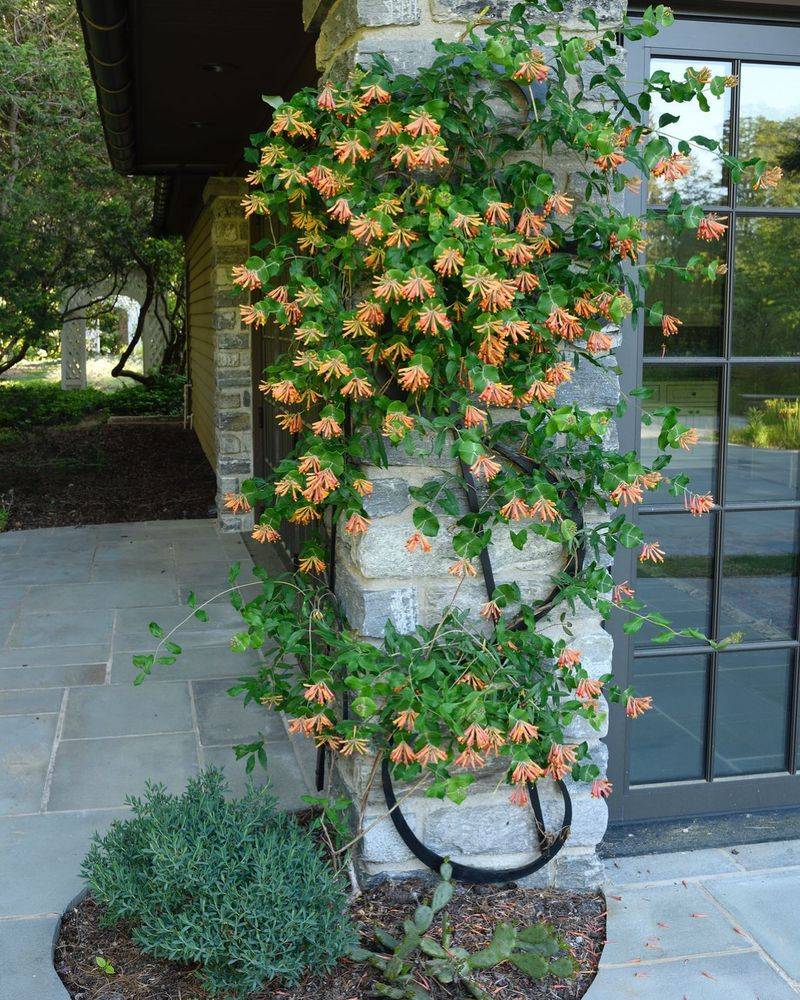
Many East Texas homeowners have a chain-link fence they would rather not look at. Coral honeysuckle, Lonicera sempervirens, fixes the view and feeds hummers in one move.
Do not confuse it with Japanese honeysuckle, the invasive bully that smothers woods. The native vine behaves, climbing 10 to 15 feet without strangling everything nearby.
Its red tubular flowers peak in spring, then rebloom on and off through summer and fall. That spring flush genuinely helps early arrivals too.
It likes the acidic sandy soil of East Texas but adapts to most well-drained ground. Give it at least half a day of sun for best blooms.
Watch for aphids on new tips. A hard spray of water usually handles them.
Prune lightly right after the spring bloom. Your fence suddenly earns its keep.
7. Cigar Plant Adds Late Season Fuel in South Texas
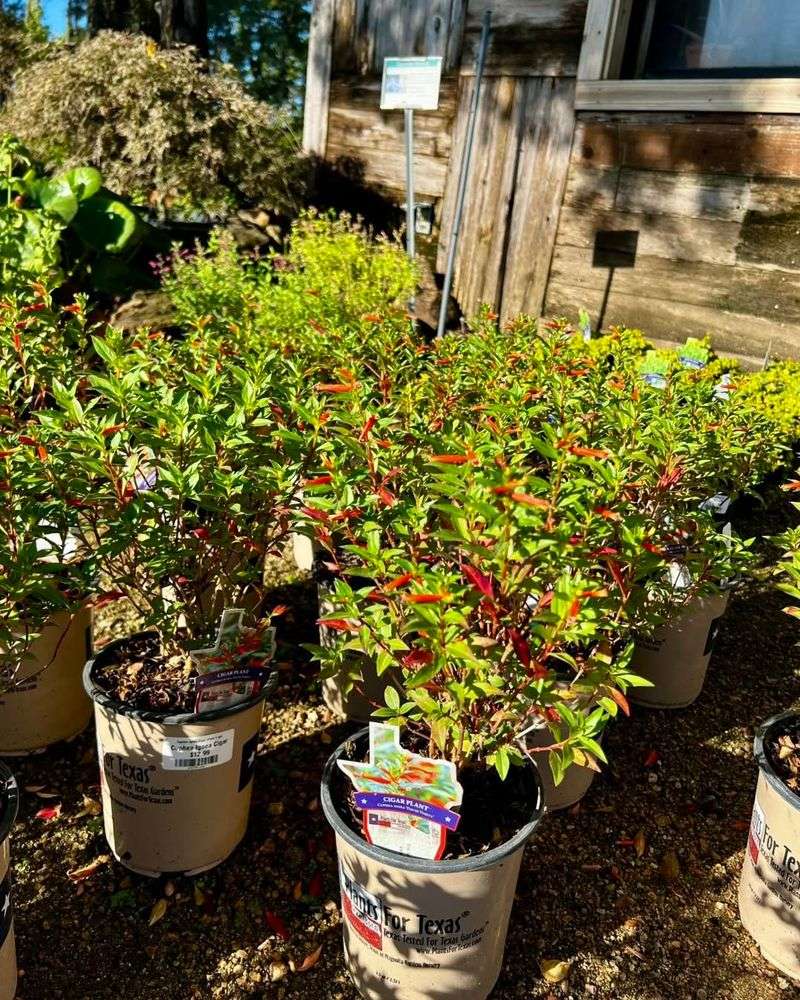
Gardeners in the Rio Grande Valley have an advantage. Winters are mild enough, around zones 9 and 10, that tender tropicals act like perennials.
Cigar plant, Cuphea ignea, is a favorite there. Its slim orange-red tubes, tipped with a dark ring like a lit cigar, keep coming into fall and sometimes all winter.
It stays compact, roughly 1 to 3 feet tall. Pots, borders, and patio edges all work.
Farther north, treat it as an annual or bring pots into a garage when nights drop below 32 degrees.
Water when the top inch of soil dries. Pinch tips in early summer for a bushier plant.
It is not a native, so let it play a supporting role beside the others. Small, cheerful, and steady.
8. Layered Planting Turns Your Yard Into a Year-Round Buffet
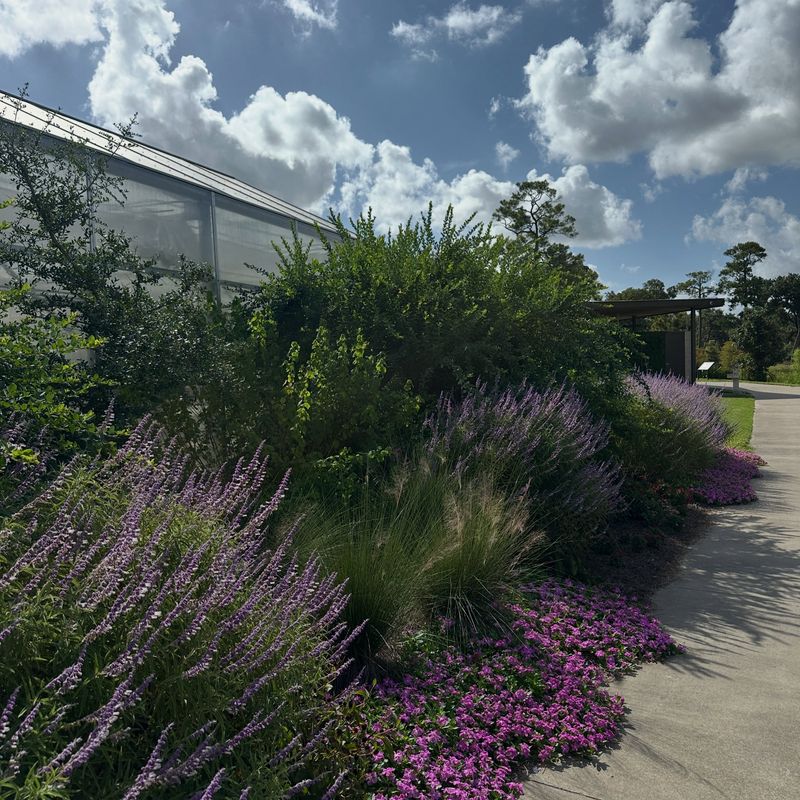
No single plant carries a hummingbird through the whole year. The real trick is overlap.
Coral honeysuckle and autumn sage open spring. Turk’s cap, lantana, and flame acanthus hold the summer line, and mistflower and salvia close out fall.
Group plants in clusters of 3 so the birds spot them quickly. Texas A&M AgriLife Extension also recommends mulch, so spread 2 to 3 inches around each plant to hold moisture.
Freezes still happen, even in Central Texas. Water deeply the day before a hard freeze, since moist soil holds heat better than dry soil.
Drape frost cloth over young plants all the way to the ground, then remove it once temperatures climb above freezing. And skip pesticides near blooms, since hummers eat tiny insects too.
Keep the feeder up if you like. But now your yard does the real feeding, and that is something to be proud of.
