
The Right Way To Prune Texas Sage For Steady Blooms All Season
Follow us on Google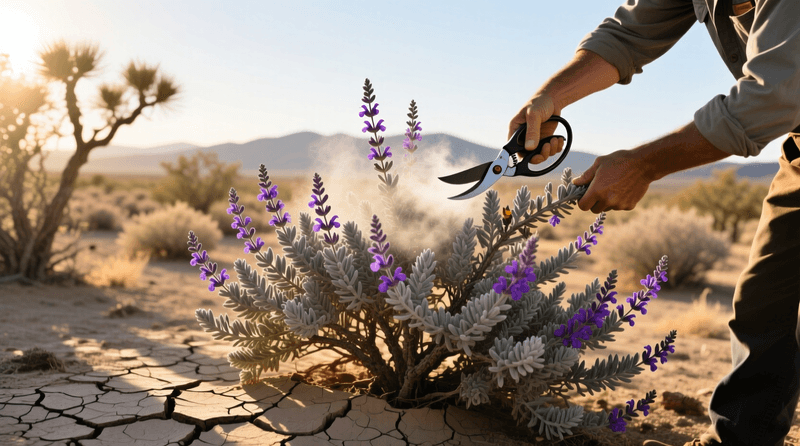
Texas sage is one of those shrubs that can stop you mid-step when it lights up with purple flowers after a summer rain.
But plenty of Texas homeowners accidentally prune away the very growth that would have produced those blooms.
Get the timing and technique right, and this tough native, Leucophyllum frutescens, can reward you with recurring flower shows from late spring through fall.
The catch is that pruning sets the stage, and weather decides when the curtain goes up.
Pruning Supports Blooms—It Does Not Schedule Them
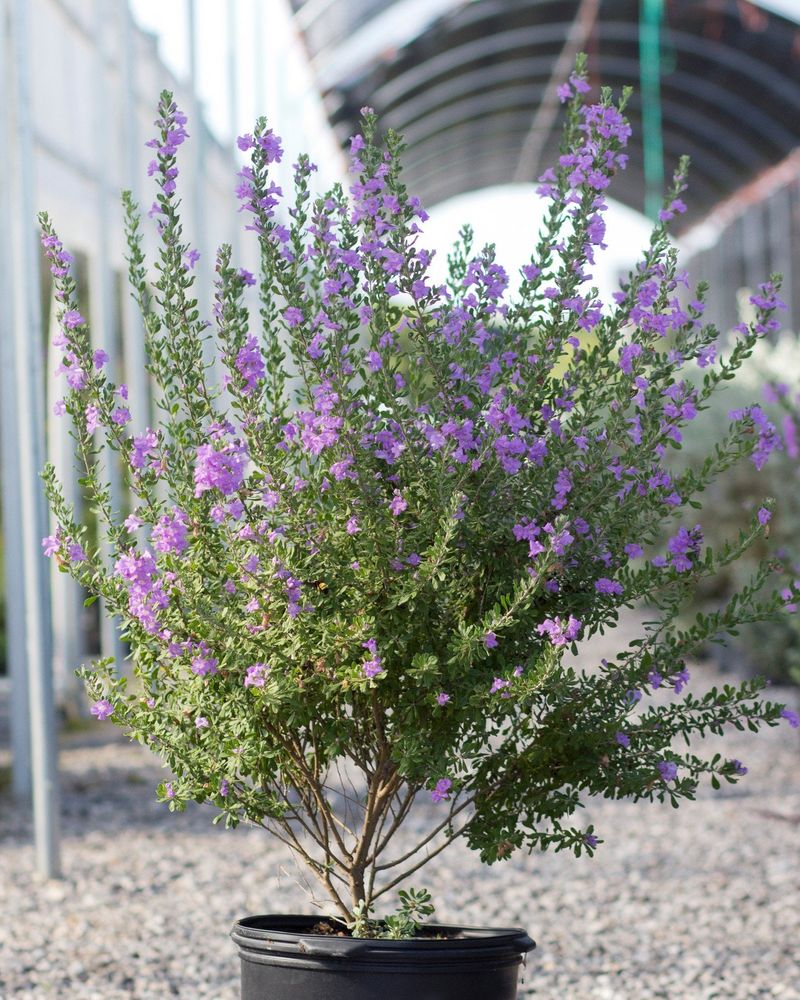
Texas sage, known botanically as Leucophyllum frutescens and sometimes called cenizo, is a woody native shrub, not a culinary herb.
That distinction matters because the two plants have almost nothing in common beyond the name.
Cenizo is built for Texas heat, rocky ground, and long dry spells, and it can grow to around 8 feet tall when left to its own devices.
Here is the part that changes how you prune: the University of Arizona Campus Arboretum confirms that Texas sage flowers on current-season wood, meaning the new growth the plant pushes out during the current growing year.
That single fact is why timing your pruning to early in the season matters so much.
Cut at the right time, and the plant has months to replace what you removed before summer flowering begins.
Cut at the wrong time, and you shorten that window or eliminate it entirely for that cycle.
What pruning cannot do is schedule your bloom dates.
North Carolina Extension notes that bloom periods arrive in batches that can last only several days, and those batches are strongly tied to rainfall, humidity shifts, and soil moisture changes.
Sunlight, cultivar, and your specific local conditions also play a major role in how often and how heavily the shrub blooms.
Texas A&M AgriLife Extension recommends light pruning and warns against shearing for exactly this reason: a well-pruned shrub in the wrong spot, or in a dry year with no humidity spikes, may still bloom less than a lightly tended shrub in ideal conditions.
Think of pruning as protecting the plant’s potential.
The rest is up to Texas weather, and anyone who has gardened here for more than one summer already knows how unpredictable that can be.
There are two kinds of pruning this plant may ever need.
Routine shaping keeps the shrub tidy and open.
Rejuvenation pruning, a much more severe approach, applies only to a badly overgrown or misplaced plant.
Knowing which one your shrub actually needs is where most gardeners go right or wrong.
Choose Late Winter or Early Spring
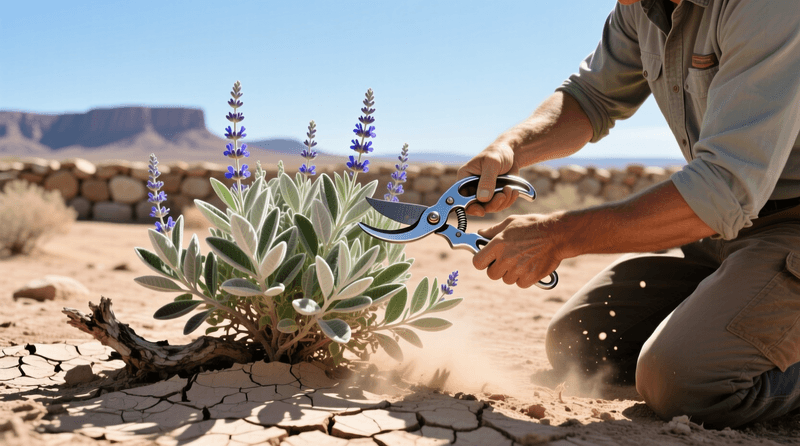
Most of Texas gets a narrow, useful gap between the last hard freeze and the moment new growth starts pushing in earnest.
That gap, roughly late February through early March in Central and South Texas and a few weeks later in the Panhandle and North Texas, is your best window for routine pruning on Texas sage.
The reasoning connects directly back to how the plant flowers.
Because blooms develop on current-season growth, any branch you remove in late winter gives the plant the full spring and early summer to replace that wood before flowering begins.
The University of Arizona Campus Arboretum documents that a spring cut can produce a rapid flush of new growth followed by late-summer flowers, which confirms that early timing genuinely preserves the plant’s ability to perform.
Late-summer pruning is a different story.
Stimulating fresh, tender growth in August or September gives that new tissue very little time to harden off before fall temperatures drop.
Texas A&M Extension freeze guidance specifically cautions against harsh late-summer pruning for this reason: soft new growth heading into a Texas winter is more vulnerable to cold damage than mature, hardened stems.
Keep the timing flexible because Texas does not run on a single calendar.
A gardener in the Lower Rio Grande Valley may be ready to prune in mid-February, while someone near Amarillo might wait until late March to feel confident that hard freezes are behind them.
Watch the plant, not just the date.
When you see the first hints of new leaf buds swelling on the stems, you are at the edge of your window and need to finish up quickly or wait until the following year.
Make Selective Cuts, Not Uniform Clips
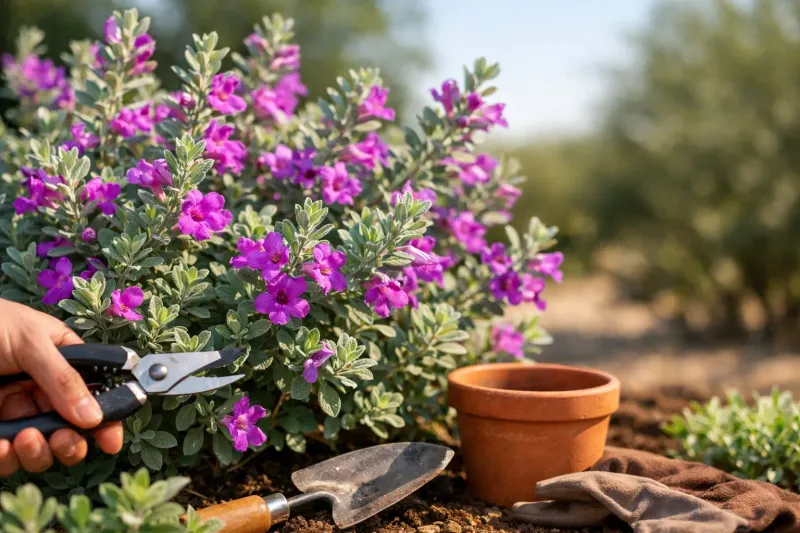
Grab a pair of sharp bypass hand pruners and, for thicker stems, a set of loppers.
Those two tools handle nearly everything a healthy, established Texas sage will ever need.
Power hedgers and electric trimmers have their place in the landscape, but not here.
Walk around the shrub first and look for four specific problems: dead stems that snap rather than bend, broken branches left ragged by wind or hail, stems that cross through the center and rub against other branches, and any shoot growing in a direction that genuinely disrupts the plant’s overall shape.
Those are your targets.
Texas A&M AgriLife Extension advises light, selective pruning to preserve the plant’s natural rounded form, and that guidance matters because Texas sage naturally wants to grow as a soft, arching mound.
Make each cut back to a healthy side branch or just above a leaf node.
Do not cut every stem to the same height.
That uniform approach is exactly what creates the flat-topped, dense outer shell that works against this shrub’s structure and airflow.
Step back from the plant every few cuts and look at the overall silhouette.
The City of Austin plant guide specifically recommends pruning for a natural look rather than shearing or hedging, and that advice reflects what the plant actually needs to stay healthy and productive.
There is no universal rule that says you must remove a fixed percentage of the plant each year.
Some shrubs need very little attention in a given season.
A young, well-sited plant in its second or third year may only need a few dead stems pulled out.
An older plant that has had a rough summer or a damaging freeze may need more work.
Let the plant’s actual condition guide how much you remove, not a predetermined number.
Skip Shearing and Post-Bloom Clipping
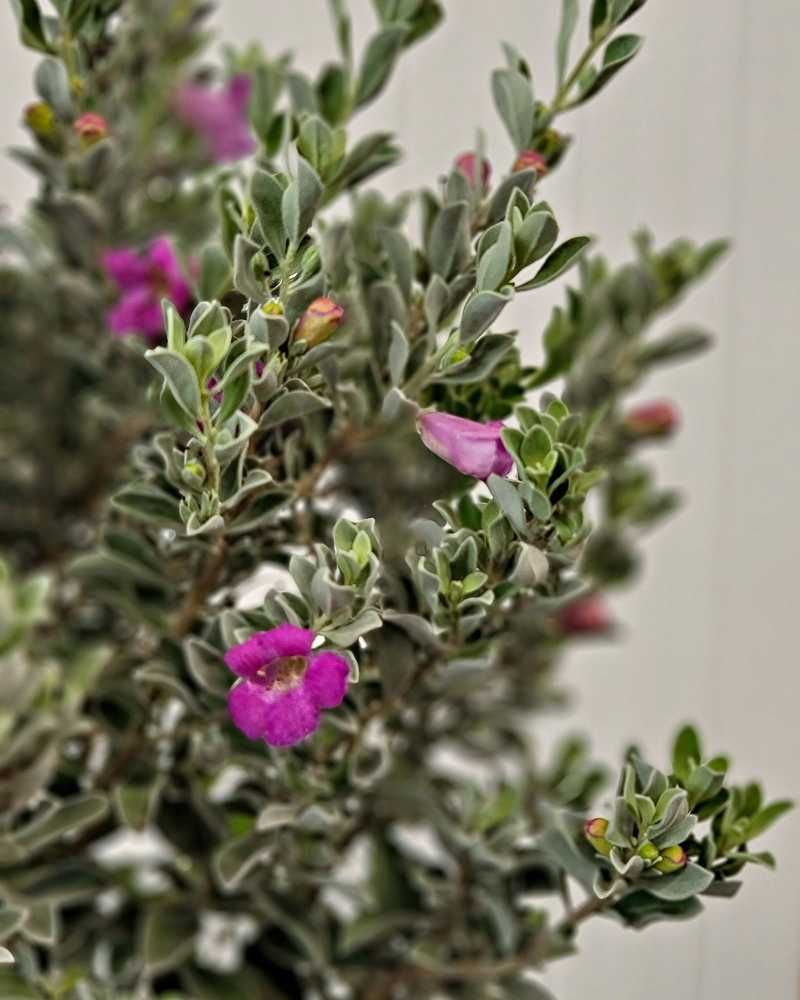
Many Texas neighborhoods have at least one Texas sage that looks like a green cube sitting in front of a house.
The homeowner probably thought they were keeping it tidy.
What they were actually doing was slowly working against the plant’s natural structure and reducing its ability to bloom well.
Shearing, meaning running a hedger across the outside of the plant to create a flat or geometric shape, clips every shoot to the same length regardless of where it falls in the shrub’s structure.
Over time, this creates a dense outer layer of foliage that limits light from reaching the interior.
Stems inside that shell weaken, and the plant ends up as a hollow-centered ball of growth that looks neat from a distance but is structurally compromised up close.
Texas A&M AgriLife Extension cautions against shearing Texas sage, and the City of Austin plant guide reinforces that recommendation by explicitly calling for a natural form rather than a hedged one.
Those are not just aesthetic preferences.
They reflect what keeps the shrub structurally sound and flowering well.
The related question is whether you should trim off spent flower clusters after each bloom period to push the plant into another cycle.
There is not strong evidence from Texas-specific sources that routine post-bloom clipping reliably triggers a new flowering round in all cultivars.
Blooms on Texas sage are driven more by weather conditions than by whether you cleaned up the last batch.
Once active flowering begins, the better approach is simply to leave the plant alone and let it do its work.
Picking up the pruners every time a flush fades can actually remove developing buds on new growth that would have been the next round of flowers.
Reserve Severe Cuts for Overgrown Shrubs
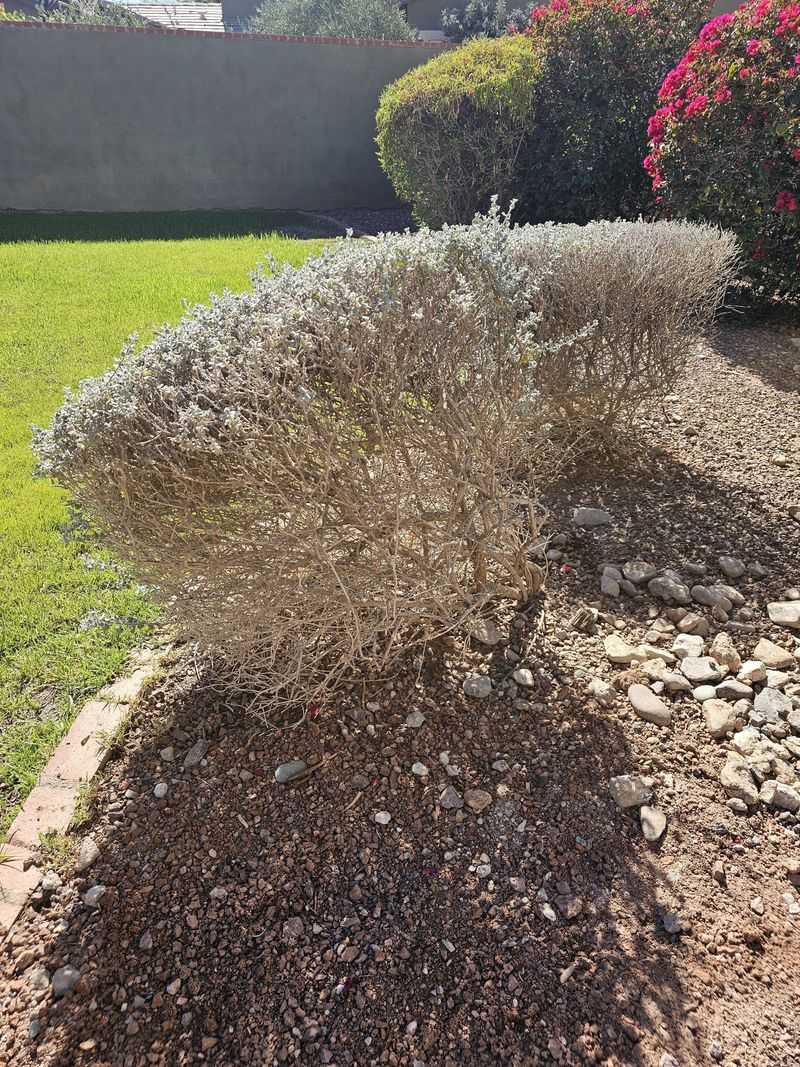
Most Texas sage shrubs never need a severe pruning.
A plant that has been shaped lightly each late winter for several years stays manageable, keeps its natural form, and does not require a dramatic intervention.
But sometimes a shrub gets away from you, or it turns out to be planted too close to a walkway, a window, or another plant.
That is when rejuvenation pruning becomes a legitimate option.
The University of Arizona Campus Arboretum documents that cutting a Texas sage back to approximately 12 to 18 inches above the ground in early spring can produce a rapid flush of new growth followed by late-summer flowers.
That range is the documented guidance, and it applies to an overgrown or badly misplaced plant, not to a healthy shrub that simply needs routine shaping.
Think of this as a major intervention, not an annual reset.
The plant will look dramatically different for months after a severe cut.
It will push new growth from the remaining stems, and if conditions are favorable, it can recover its shape within a season or two.
But whether that recovery goes smoothly depends on the plant’s overall health, the quality of the site, and what the weather does in the months that follow.
A stressed plant in poor soil or a shaded location may respond more slowly or unevenly.
Do not use structural freeze damage as an automatic reason for this level of cut.
Freeze response has its own timeline and its own set of guidelines, covered in the next section.
Rejuvenation pruning is a size and placement solution for a plant that has outgrown its space, and it works best when done in early spring so the shrub has the full growing season to recover before cooler weather returns.
Wait Before Cutting Freeze-Damaged Growth
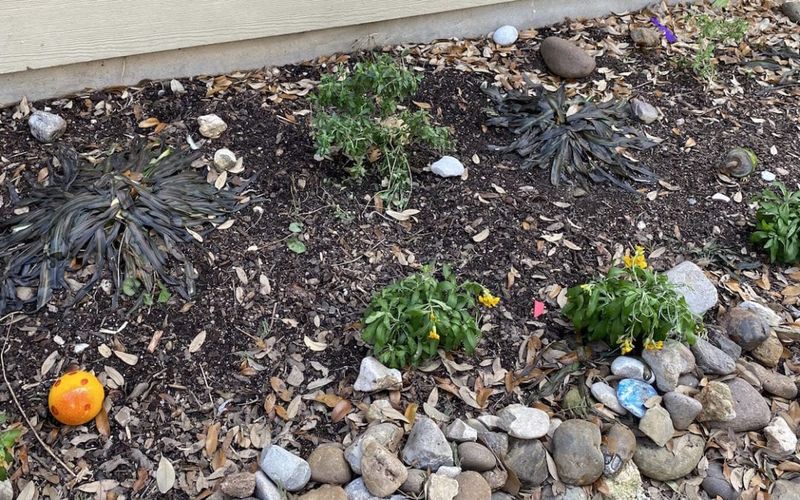
A hard freeze can turn a Texas sage from a silvery-green mound into a drooping, brown-leaved mess almost overnight.
The instinct to grab the pruners and clean it up immediately is understandable, but acting too fast can make things worse.
Texas A&M AgriLife Extension recommends waiting until the threat of additional freezes has clearly passed before removing damaged tissue.
The reason is practical: brown or limp stems that look completely dead may still be protecting living tissue lower on the plant.
Cutting them away exposes that living tissue to any cold event that follows.
In Central Texas, where a warm February week can be followed by a hard freeze in early March, that patience genuinely pays off.
Once you are confident the cold season is behind you, scratch a stem lightly with your thumbnail.
Green tissue beneath the bark means that stem is still alive, even if the leaves look terrible.
Work your way down from the tip of each damaged branch until you find where the live tissue starts, then make your cut just above that point.
Some stems may be dead all the way to the base, and those come out entirely.
Texas A&M freeze guidance notes that hardiness varies depending on cultivar, plant age, how well the plant acclimated before the cold hit, and local conditions like wind exposure and microclimate.
There is no single temperature that guarantees survival or damage across all Texas sage plants in all parts of the state.
A well-established plant on the south side of a Hill Country stone wall may come through a cold snap that damages a younger plant in an exposed North Texas yard.
Give your plant time before you write it off.
Give the Shrub Sun and Sharp Drainage
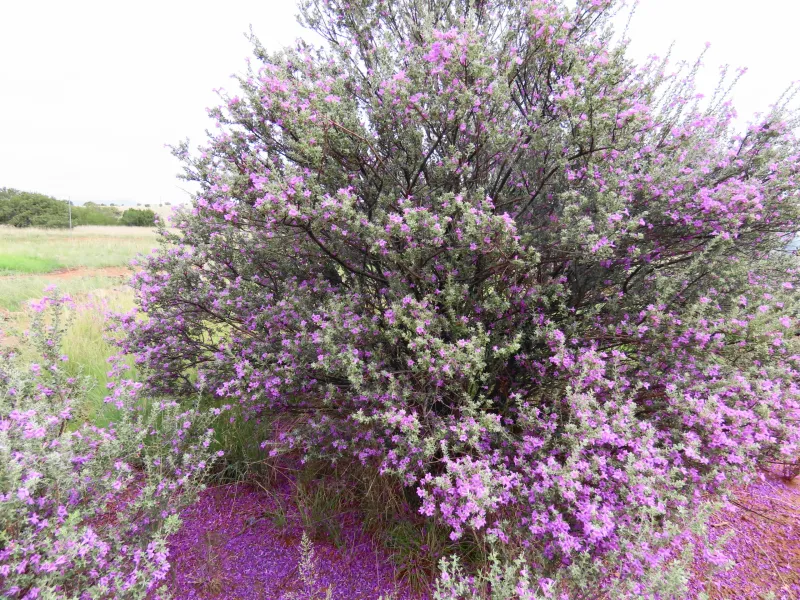
Pruning cannot fix a bad planting spot, and Texas sage planted in the wrong location will underperform no matter how carefully you cut it.
Two site conditions are non-negotiable for this plant: full sun and well-drained soil.
Full sun means at least 6 hours of direct sunlight every day.
North Carolina Extension confirms this requirement for Texas sage, and it is not a soft guideline.
A plant getting 4 hours of sun in a partly shaded East Texas yard will grow more slowly, bloom less reliably, and be more prone to problems than the same cultivar growing in full sun in the Hill Country or South Texas Plains.
Texas A&M’s rangeland database describes cenizo’s natural habitat as rocky limestone hills and other well-drained sites, which tells you a lot about what the plant expects from the ground beneath it.
In nature, excess water drains away quickly.
In a landscape with heavy soil or a low spot that holds water after rain, the roots stay wet longer than the plant can tolerate.
Texas A&M AgriLife Extension warns that overwatering and poorly drained soil can increase the risk of root problems, including serious soilborne diseases.
The specific risk depends on your soil type and local conditions, but the general principle is clear: excess moisture is a genuine threat to this plant’s health.
Do not water established Texas sage on a regular schedule just because you want to trigger flowers.
Rainfall and natural humidity shifts are what push bloom cycles, and routine supplemental irrigation does not replicate that effect reliably.
Texas sage is genuinely drought tolerant once established, typically after its first full growing season in the ground.
Newly planted shrubs benefit from supplemental water while roots are getting established, but the goal is to get the plant to a point where it largely takes care of itself.
Heavy fertilization is another thing to skip.
The plant is adapted to lean, rocky soils, and pushing it with fertilizer tends to produce lush growth at the expense of flowers and overall toughness.
Let Rain, Humidity, and Cultivar Set the Rhythm
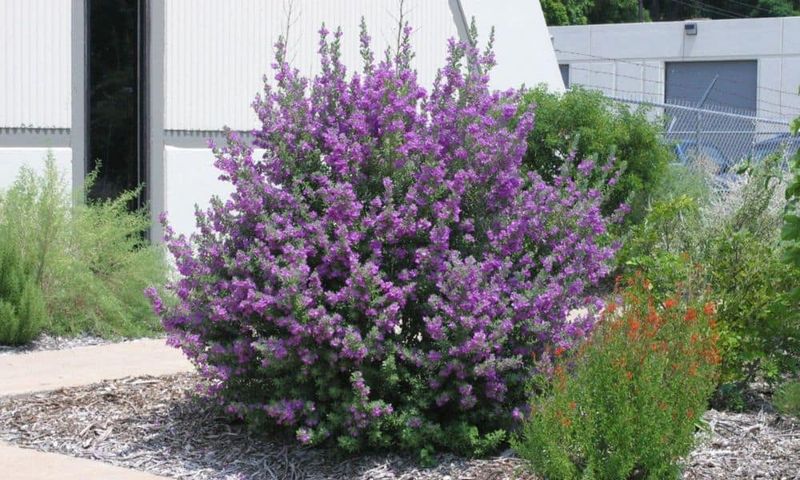
Texas sage earned the nickname barometer bush for a reason.
Many Central and South Texas gardeners have noticed the shrub erupting in purple flowers right around the time a weather system rolls in, and that pattern is real, even if it is not perfectly reliable.
North Carolina Extension describes bloom periods that arrive in batches and can last only several days, often triggered by rainfall, rising humidity, or a shift in soil moisture.
Texas A&M notes that flowering commonly runs from May through October, frequently following summer rains.
What that means practically is that the bloom rhythm is not something you control with a pruner or a hose.
Weather sets the schedule.
Your job is to keep the plant in a condition where it can respond when conditions line up.
The University of Arizona Campus Arboretum confirms that flowers develop on current-season wood, so a plant that has been lightly pruned in late winter, left in full sun, and given sharp drainage is positioned to take full advantage of every weather-driven bloom trigger that comes along.
Cultivar selection also shapes what you can realistically expect.
Some selections bloom more frequently than others.
The University of Texas at El Paso’s Florafest plant list describes ‘San Antonio Rose’ as blooming continuously through summer, while Texas A&M AgriLife Extension describes ‘Silverado’ as following summer rainstorms.
Those are cultivar-specific descriptions.
Do not expect every Texas sage to behave the same way, and do not assume a more frequent-blooming selection will perform equally well across all Texas regions or site conditions.
The full approach comes down to this: prune lightly in late winter or early spring, make selective cuts rather than uniform clips, preserve the natural rounded form, skip the shearing and post-bloom trimming, wait out freeze damage before cutting, and give the plant a sunny spot with drainage it can actually use.
After that, the best thing you can do is step back and let a good summer rain do the rest.
A Texas sage that has been treated right has a quiet confidence about it, and when the humidity finally breaks and the flowers open, you will know the pruning was worth it.