
The Mini Florida Wildflower Meadow That Saves You More Mowing Than You Expect
Follow us on Google
Saturday morning in Florida, and the mower is already hot before nine o’clock.
Many homeowners across the state have started wondering whether a patch of native wildflowers could take at least one corner of the yard off the weekly rotation.
A small, site-appropriate wildflower meadow can reduce mowing events on a converted patch after establishment, but the savings are conditional, not guaranteed.
What follows is a practical look at how that trade works, what the first year actually costs you in effort, and how to set up a planting that earns its keep.
A Small Meadow Can Break the Mowing Cycle
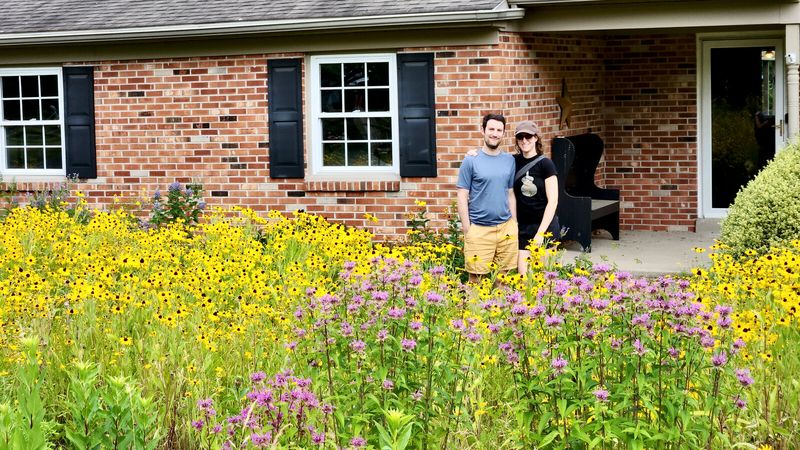
Somewhere between the third mow of the month and the realization that the gas can is empty again, a reasonable question surfaces: what if part of this lawn just did not need cutting so often?
A wildflower meadow on a selected patch of your yard can reduce how many times you run a mower over that ground after the plants establish, and that reduction is genuinely worth considering.
But the title of this article carries a promise that deserves a quick correction before anything else: the savings are conditional, not surprising or automatic.
The project works best when you treat it as a deliberate, managed planting with a visible edge, not as a corner of the lawn you stopped caring about.
UF/IFAS guidance on alternatives to turfgrass identifies reducing turf area as a practical way to lower time, energy, and lawn-care costs, while also noting that the replacement planting still needs management.
A clean boundary between your meadow and the remaining turf signals to neighbors, and sometimes to code officers, that the planting is intentional.
Converting only part of the lawn also keeps the comparison honest.
Paths, play areas, outdoor dining spaces, and any ground you actually use for walking or gathering should stay as turf.
Pick one sunny patch, give it a defined edge, and let that area carry the experiment.
If it works for your household, you can always expand later.
If it turns out to be more work than expected in year one, you have not committed the entire yard to the project.
Florida Turf Sets a Frequent Mowing Schedule
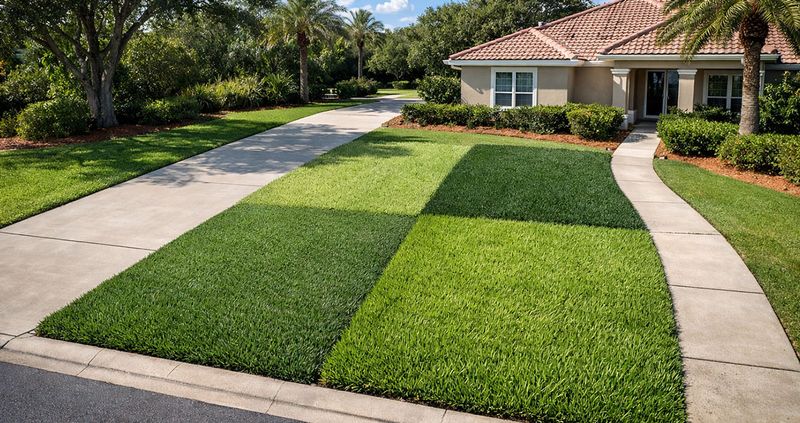
The comparison between a wildflower meadow and Florida turf is actually more favorable than most homeowners realize, because Florida grass genuinely does not rest much.
UF/IFAS mowing guidance puts the typical intervals at 7 to 17 days for bahiagrass, 5 to 14 days for St. Augustinegrass, and 10 to 14 days for centipedegrass and zoysiagrass.
Bermudagrass maintained at a low mowing height may require mowing every 3 to 5 days during active growth.
That is not a typo.
An established wildflower planting, by contrast, follows a flowering and seeding cycle rather than a growth-driven schedule.
Some compatible Florida wildflower plantings can go without a cut from January through May so plants can bloom, set seed, and return that seed to the soil before you trim.
That shift from a calendar-driven routine to a life-cycle-based one is where the reduction in mowing events actually comes from.
What those intervals do not tell you is exactly how many hours you will save, because that number depends on too many variables to pin down universally.
The grass species you are replacing, the size and shape of the converted patch, whether you use a contractor or do it yourself, how much edge trimming remains along the meadow border, and how aggressively weeds push into the planting all shape the real outcome.
The comparison is directionally meaningful, but no statewide calculation covers every yard.
Treat it as a reasonable expectation, not a guaranteed figure.
The First Year Builds the Later Payoff
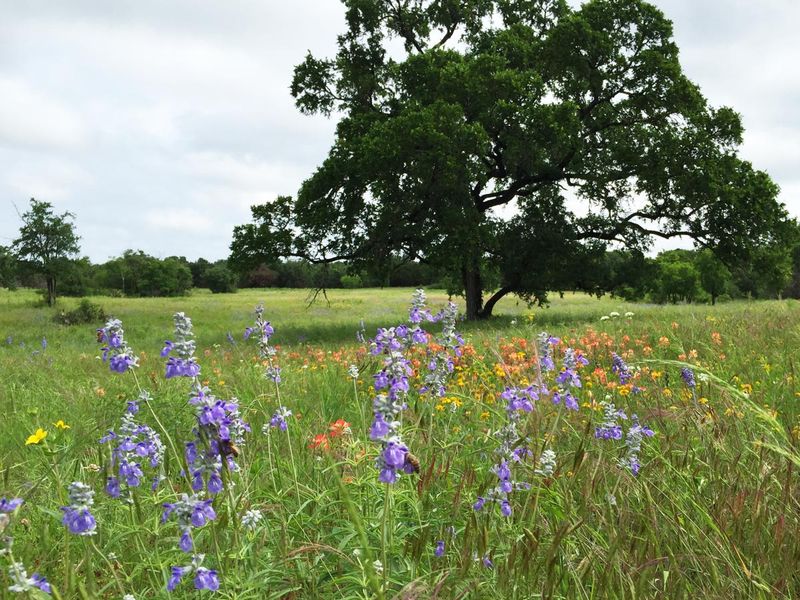
Before the lower-maintenance phase arrives, you have to earn it.
The first year of a wildflower meadow in Florida can actually be more labor-intensive than the turf it replaces, and skipping the preparation steps is the most reliable way to end up with a weedy patch instead of a meadow.
UF/IFAS wildflower planting guidance identifies competition from grasses as one of the leading reasons wildflower plantings fail or decline.
Simply stopping the mower will not create a meadow.
Existing turf, especially aggressive species like bahiagrass or bermudagrass, will outcompete young wildflower seedlings before they have a chance to establish.
You need to suppress what is already growing, prepare a surface that gives small seeds a real chance at soil contact, control weeds that emerge during and after seeding, and water seedlings during germination when rainfall falls short.
Plant identification also becomes part of the job in year one.
Young wildflower seedlings and young weeds can look remarkably similar in the first few weeks, so pulling everything unfamiliar is a mistake.
Learning what your target plants look like as seedlings, or starting with transplants instead of seed for at least part of the planting, can reduce the guesswork considerably.
Mowing or trimming may also be necessary during establishment to knock back weeds without removing the slower-growing wildflowers.
UF/IFAS tickseed establishment research reinforces that consistent early attention, not neglect, is what produces a planting that eventually needs less of your time.
Plan for a full season of active management before expecting any reduction in maintenance.
Choose a Sunny Patch and Prepare Clear Soil
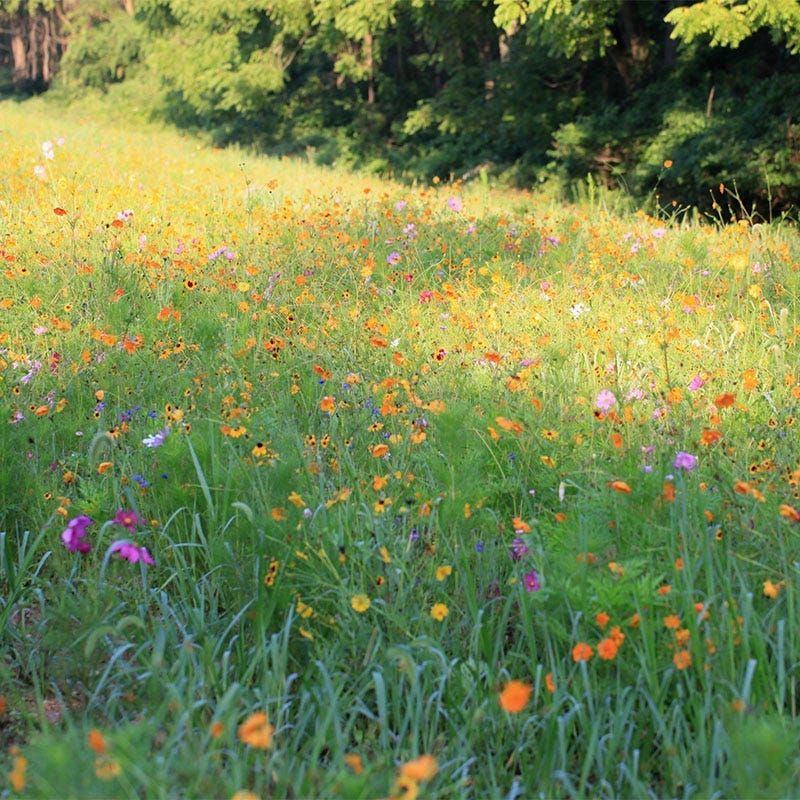
Site selection matters more than seed selection, and most wildflower plantings that struggle in Florida struggled because the site was wrong before the first seed hit the ground.
Full sun, meaning at least 6 to 8 hours of direct light daily, is the starting point.
UF/IFAS planting guidance recommends avoiding low spots that flood regularly, because standing water after Florida’s sudden summer downpours will rot seeds and young roots before the planting has a chance.
A defined boundary matters for practical and social reasons.
A visible edge, whether it is a simple mowed border, a row of pavers, or a shallow trench, tells everyone passing by that the planting is managed, not forgotten.
Keep the meadow away from driveways, sidewalks, utility access points, play areas, and outdoor dining spaces so the design fits how your household actually uses the yard.
Preparing the soil surface is where the real work begins.
UF/IFAS recommends achieving roughly 90 percent exposed soil so small seeds can make direct contact with the ground rather than landing on a thatch layer.
Tilling can disturb buried weed seeds and bring them to the surface, so it is not always the best approach.
Suppressing existing turf first, then seeding into the cleared surface, tends to produce better results.
For suppression, UF/IFAS describes a sequence that begins at least 2 months before planting, using mowing followed by herbicide treatments separated by about 2 weeks, with each product used strictly according to its label directions.
Hand-pulling or trimming small patches is a workable alternative if you prefer to avoid herbicide, though it requires more physical effort.
UF/IFAS habitat garden design guidance supports planning the planting around how the property is managed rather than trying to convert everything at once.
Match the Seed Mix to Florida Conditions
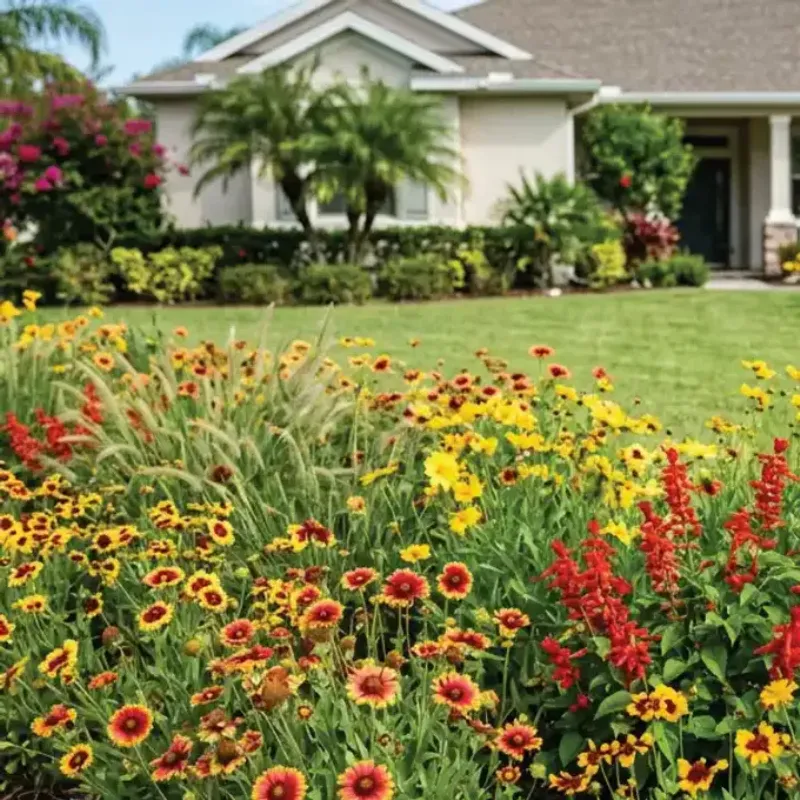
A generic wildflower mix from a national retailer is one of the most common mistakes Florida homeowners make when starting a meadow.
Many of those mixes contain species that perform poorly in Florida’s sandy, nutrient-poor soil, or that are simply not suited to the heat, humidity, and drainage patterns of a specific part of the state.
UF/IFAS guidance on native plants recommends choosing species suited to local conditions and notes that Florida-produced seed may be better adapted to the state’s specific climate and soil than seed sourced from other regions.
The plants you choose should match your site’s light, drainage, soil type, salt exposure, and the mature height you can manage.
Some well-supported options from UF/IFAS materials include Leavenworth’s tickseed (Coreopsis leavenworthii), blanket flower (Gaillardia pulchella), scarlet sage (Salvia coccinea), muhly grass (Muhlenbergia capillaris), coontie (Zamia pumila), seaside goldenrod (Solidago sempervirens), lopsided indiangrass (Sorghastrum secundum), and native milkweeds appropriate to your region.
That is not a prescription for every yard.
It is a starting list to match against your specific site conditions.
Regional differences across Florida are real enough to change your choices.
North Florida and the Panhandle experience occasional hard freezes, which eliminate some plants that grow reliably in Central Florida.
South Florida and the Keys have shallow limestone-based soil, year-round warmth, and salt exposure that favor a different plant palette entirely.
UF/IFAS wildflower habitat guidance places the general seeding window for many Florida habitats between September and January, but the precise timing depends on where in the state you live and which species you are planting.
Do not treat that range as a universal calendar.
Watering newly seeded ground is not optional, even in Florida.
UF/IFAS tickseed establishment research recommends applying 1/4 to 1/2 inch of water twice weekly for 2 to 4 weeks after sowing when rainfall is limited, with the higher end needed in sandier soils.
That guidance applies specifically to Leavenworth’s tickseed, not to every species in every meadow, but it gives you a reasonable baseline for thinking about seedling moisture during Florida’s drier stretches.
Once plants are established, additional irrigation is usually unnecessary except during drought.
The UF/IFAS Florida-Friendly Landscaping Pattern Book reinforces the value of matching plants to site rather than selecting for appearance alone.
Cut After Flowering and Seed Set
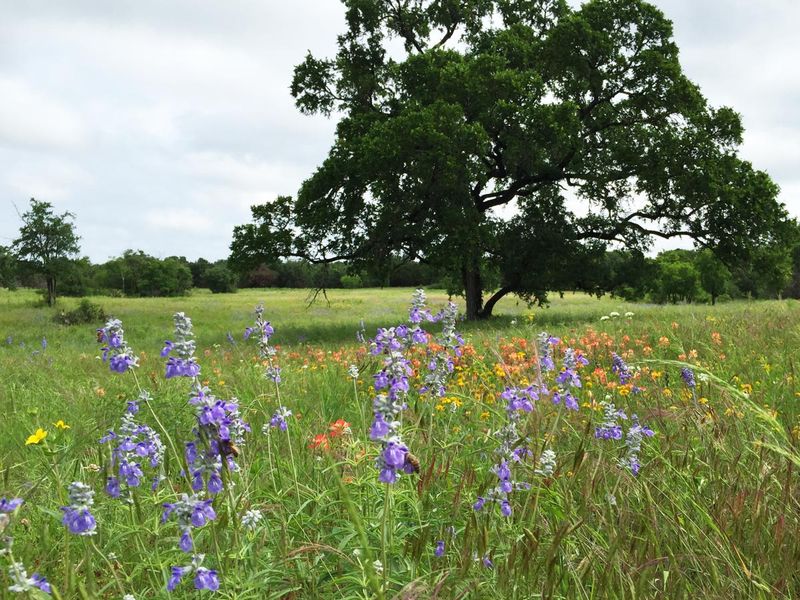
The biggest mental shift a wildflower meadow asks of you is cutting loose from the weekly turf calendar.
Turf gets mowed on a schedule because that is how it stays dense and presentable.
A wildflower planting gets cut after it completes its job, meaning after the flowers bloom, the seeds form, and those seeds fall back into the soil to fuel the next season’s growth.
Cutting too early interrupts that cycle and reduces what the planting returns to itself.
UF/IFAS Orange County’s Florida wildflower lawn guidance describes a planting that is left unmowed from January 1 through May 1, allowing spring flowers to complete their life cycle before the area is cut.
That is one example for one type of compatible planting, not a universal rule for every meadow in every county.
Mixed plantings with different species and life cycles may call for a late-fall cut or a timing that fits the regional growing season better.
Equipment is also part of the conversation.
A low-growing wildflower lawn with species that tolerate mowing can be managed with a standard mower set at a high blade height.
A taller meadow with grasses and flowering perennials may need a string trimmer, brush cutter, or flail mower to cut through heavier stems without leaving a tangled mess.
UF/IFAS wildflower planting guidance distinguishes between these two types of plantings, and the distinction affects what you need in the shed.
Ongoing maintenance does not disappear after establishment.
The meadow’s edges still need trimming where they meet turf, paths, or pavement.
Invasive or aggressive weeds, including grasses that creep back in from neighboring turf, need hand removal before they take hold.
Woody plants, shrubs, and small trees that self-seed into the planting need to be pulled while they are still small, or the meadow gradually becomes a thicket.
Plan for those tasks throughout the year, not just at the annual cut.
Keep the Benefits and Boundaries in View
A patch of diverse native wildflowers does more than reduce mowing events.
It can provide pollen, nectar, and shelter for pollinators and beneficial insects that pass through or live in your yard.
A UF study found that native plants produced more flowers and attracted more insects than nonnative comparisons under tested Florida field conditions.
That is a real and meaningful finding, but it does not guarantee that your specific planting will increase pollinator populations in your yard or eliminate pest pressure.
Think of the habitat value as a likely benefit worth having, not a certain outcome to count on.
Legal protection is another topic worth understanding before you plant.
Florida law includes provisions that limit HOA restrictions and local ordinances from prohibiting Florida-Friendly Landscaping.
Florida Statutes section 373.185 addresses those protections while also recognizing landscape standards and rules about invasive plants.
A meadow may receive that protection if it qualifies as Florida-Friendly Landscaping, but you need to verify what your HOA procedures actually require, what local standards apply to visibility, drainage, safety, and property maintenance, and whether any plants in your mix are flagged as invasive in your county.
The law does not automatically exempt every planting from every rule.
The most practical advice is also the simplest.
Retain the turf you actually use, start with one sunny patch, and watch what it requires through a full season before deciding whether to expand.
A meadow that fits your household’s routines and your site’s conditions is one you will actually manage.
One that outgrows your time or conflicts with a neighbor’s expectations tends to become the problem it was supposed to solve.
Start small, observe honestly, and let the results guide what comes next.