
The Pennsylvania Native Fern That Fills Your Bare Shady Slope And Crowds Out Weeds For Good
Follow us on Google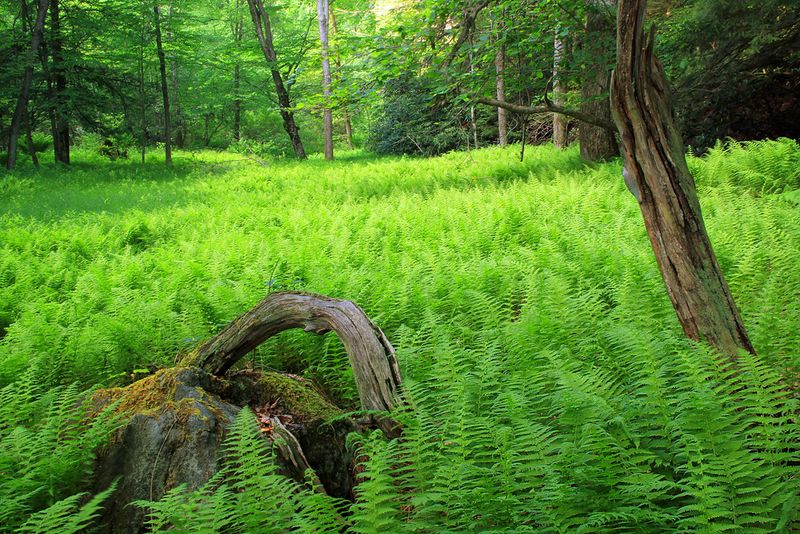
Hay-scented fern is the Pennsylvania native that can fill a bare, shady slope with a soft green carpet, and its dense colonies may restrict some of the weeds that keep sneaking in. You know the spot.
Grass gives up, mulch slides downhill after every thunderstorm, and the bank looks tired by June. This fern spreads on its own underground stems, so it is built for exactly that kind of ground.
Here is how it works, where it fits, and what it will honestly take from you.
Meet Hay-Scented Fern
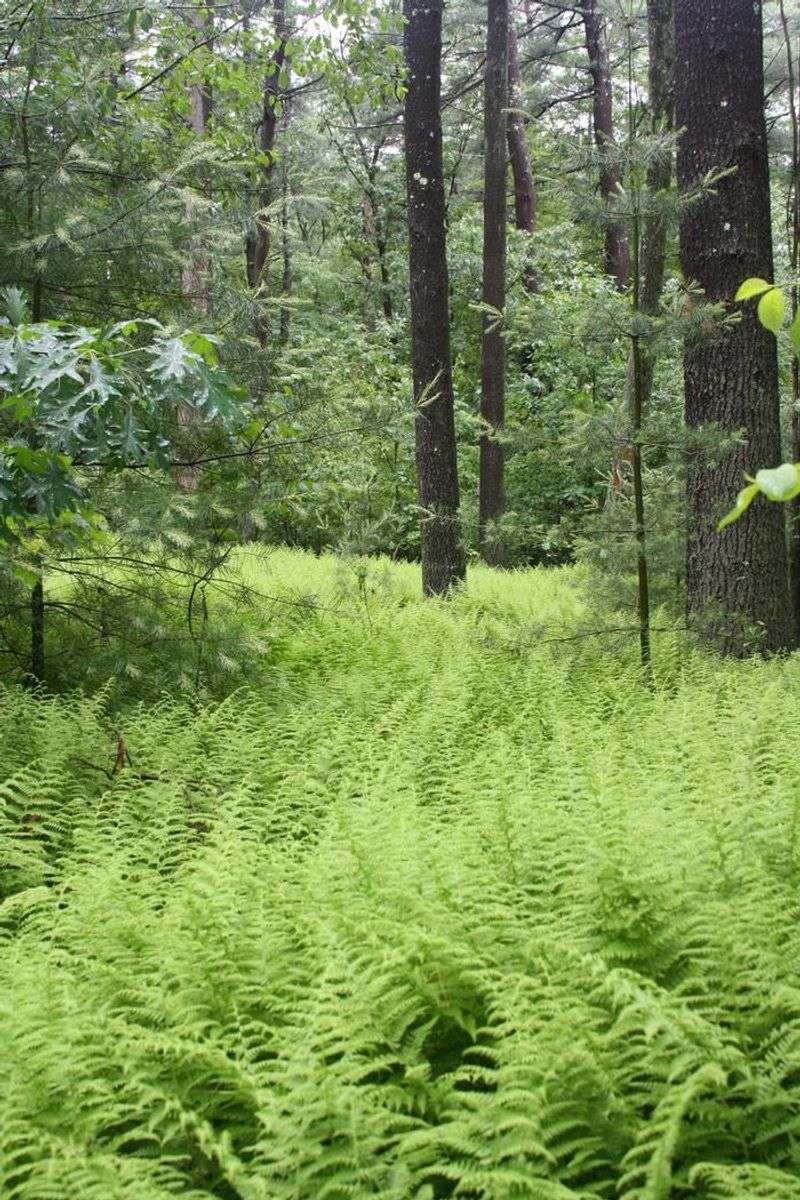
Walk a Pennsylvania woodland edge in late summer and you may catch a sweet, grassy smell like fresh hay. That is the fern doing its signature trick when its fronds are brushed or begin to dry.
Pennsylvania’s flora account lists it as Sitobolium punctilobulumDennstaedtia punctilobula. Many extension and forestry sources still call it , which the flora account lists as a synonym.
Same plant, two names, so search for both when you shop or read.
It is native here, and the Flora of Pennsylvania account describes a rapidly growing horizontal rhizome. A rhizome is an underground stem that creeps sideways and sends up new fronds.
That is how one plant becomes a colony. The same account notes it grows in partly shaded woods and even on some dry sites.
The fronds run about 15 to 30 inches long. Treat that as a size cue for how tall the carpet will look, not a promise of how fast it will fill in.
Think of it as a quiet hero with a long game. It is a strong candidate for a broad, difficult slope, but it is not the right answer for every yard, and the next section explains why.
Its Spread Can Crowd Out More Than Weeds
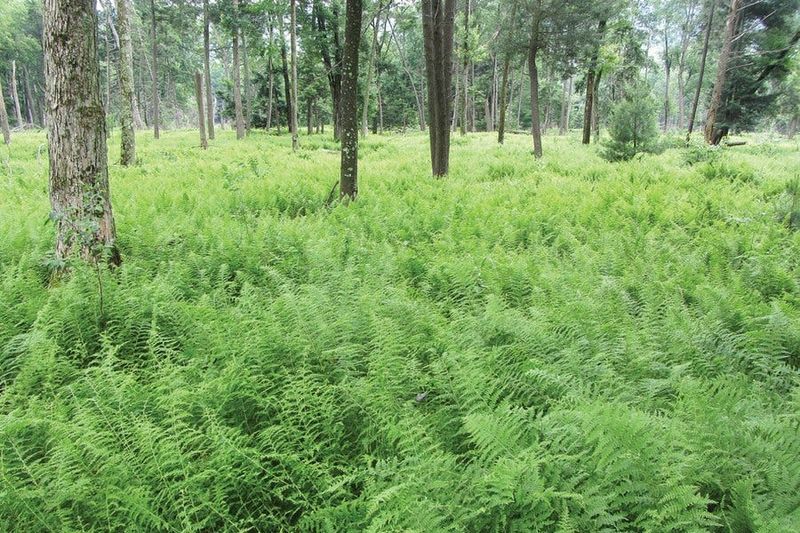
Here is the catch most fern fans skip. A plant that crowds out weeds does not check ID before it crowds.
Penn State’s forestry guidance, Controlling Understory Fern Competition for Regeneration Success, describes dense fern stands interfering with tree seedling growth and reducing understory diversity. Those findings come from forests, not backyards.
They do not prove the fern will control every weed in your garden. They do show what dense colonies can do to small plants you actually want.
Hay-scented fern is native in Pennsylvania. Native does not mean polite.
It can dominate parts of an understory, and it is not a nonnative invasive species.
You may read that the fern releases chemicals that poison its neighbors. Sources disagree.
One plant profile calls it allelopathic, but forestry research summaries and a Pennsylvania study do not back that up as a proven cause. Dense cover and plain old competition for light and space are the better-supported explanations.
So plant it where a broad colony is welcome. Keep it away from young redbuds, serviceberries, wildflower beds, and any seedlings you hope will grow into shade trees.
A fern carpet is a trade, not a freebie.
Check Whether Your Slope Suits It
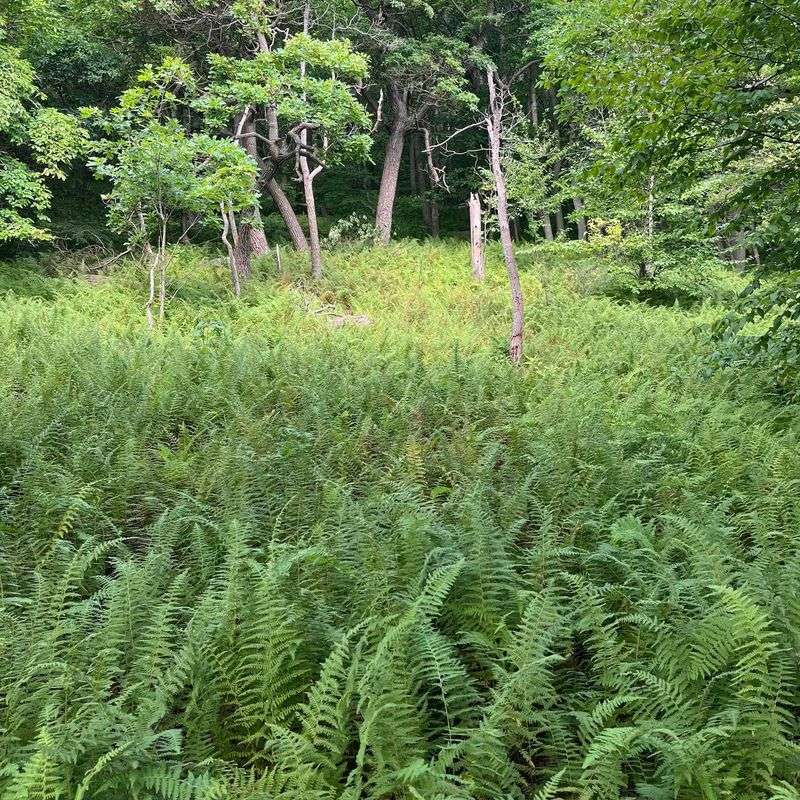
Many Pennsylvania gardeners have a bank that sits in shade most of the day, with thin grass and soil that dries out between summer downpours. That is the kind of place this fern is documented to grow.
NC State Extension lists it for slopes and banks, woodland settings, and mass planting. It likes moisture, yet it is described as drought-tolerant once mature.
Young plants are a different story, so expect to watch them through their first dry spells.
Penn State notes it occurs in damp or dry acidic soils, in shaded or open woods. That is a wide range, but it is not a guarantee.
A soggy clay hollow, a deep rocky northern tier ledge, and a sunbaked southeastern bank will not behave alike.
The listed mature width is 3 to 4 feet. Use that only as a size reference for one plant.
It is not a planting spacing rule, and no source here gives a time for covering a slope.
Before you buy, ask three things. Is the slope mostly shaded?
Do you want a big colony there? Is there nothing nearby you would hate to lose?
If all three answers are yes, you may have found your match.
Protect the Soil While Plants Establish
Ferns are a longer-term living layer. A newly planted fern does not hold soil the week it goes in, and a hard July thunderstorm does not care about your plans.
So think about protection for the first seasons. Penn State’s native groundcover guidance recommends planting through natural-fiber netting on steep slopes.
It also advises at least 2 inches of mulch after planting to help control weeds.
Those are general native groundcover recommendations, not hay-scented fern rates. Penn State also says spacing should reflect the plant’s habit and spread, so do not borrow a number from a different plant.
This article does not give a fern spacing because the sources reviewed do not supply one.
In practice, that means the netting and mulch do the early work while rhizomes slowly knit the ground together. Check after each heavy rain for washed-out spots or lifted netting, and fix them quickly.
Very steep or badly eroding ground may need extra site-specific measures. A local conservation district or extension office can look at it with you.
Patience is the price of a slope that eventually holds itself.
Expect Some Weeds and Ongoing Checks
Myth time. Once the fern fills in, you never weed again.
Not quite.
Established cover may restrict some seedlings, because dense fronds and a thick mat of rhizomes leave little light and room. But the sources do not show dependable control of every weed, and a fern colony is not a maintenance-free promise.
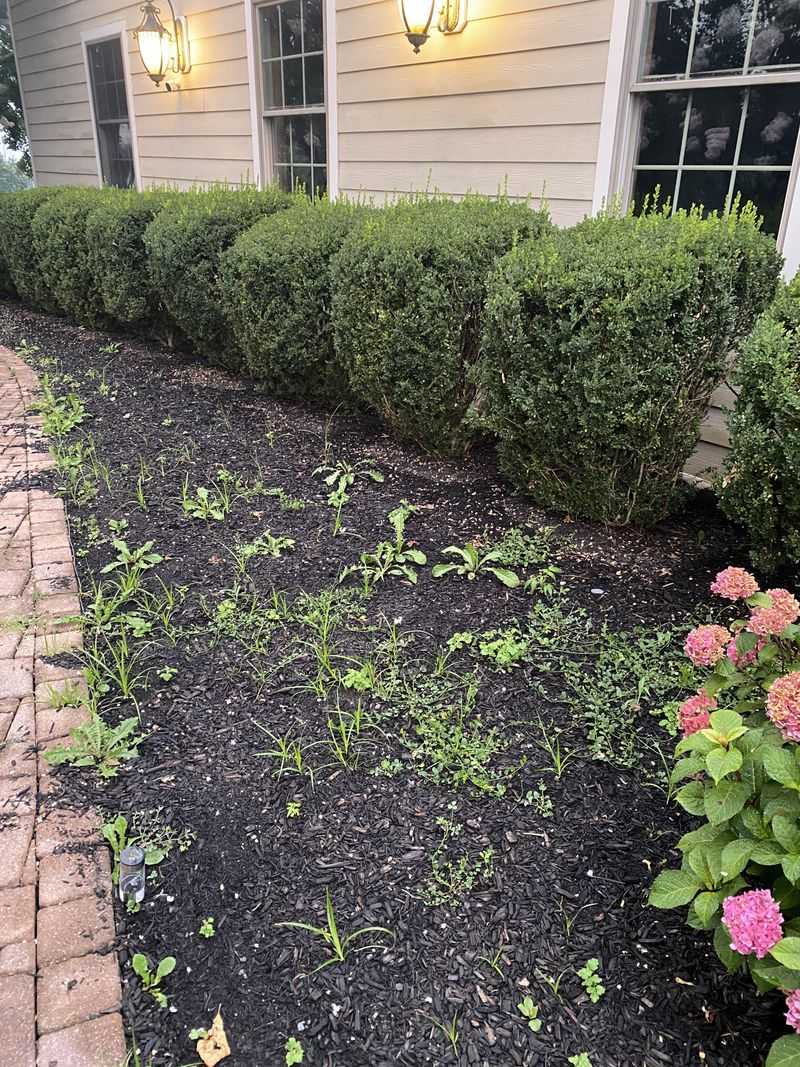
Walk the slope a few times a season while plants establish. Look for weeds poking through bare gaps, especially around the edges and where mulch has thinned.
Pull them while they are small.
Also look the other way. Are wildflowers, young shrubs, or seedlings you care about getting squeezed?
Penn State’s forestry guidance shows that dense fern cover can crowd things you want, not only things you do not.
If the colony pushes past its welcome, you can pull back the edge by hand and keep a clear border. No fern-specific schedule is established, so keep it simple and check by eye.
Also remember the mulch advice from the last section is general groundcover guidance. Top it up where bare soil shows while the ferns are still filling in.
A short walk now and then beats a big cleanup later.
Consider Christmas Fern for Slower Coverage
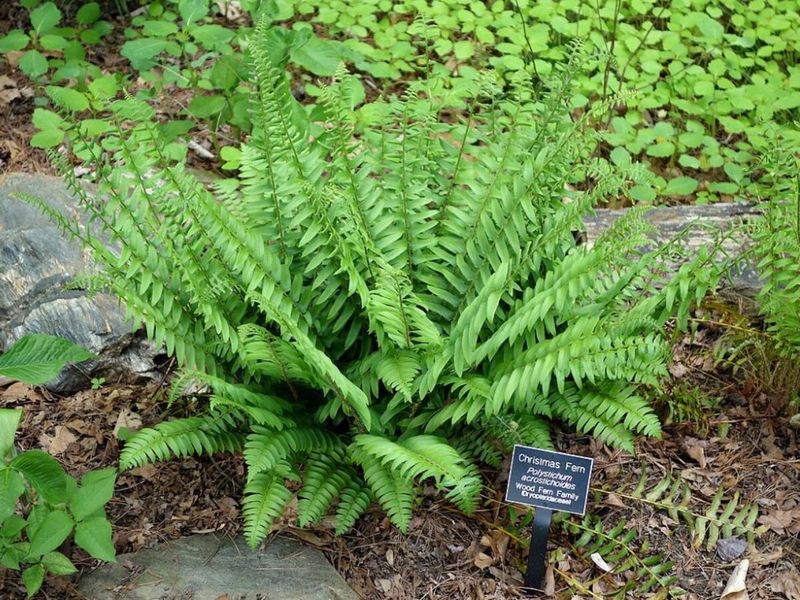
Not everyone wants a fern that roams. If you prefer something tidier, Christmas fern, Polystichum acrostichoides, grows in clumps and spreads slowly as they enlarge.
Penn State Extension says it can help control erosion when planted in groups or masses. It recommends it for slopes and suggests allowing about 2 feet for it to spread.
That spacing belongs to Christmas fern only.
Penn State also warns against heavy clay or poorly drained sites, since crown rot is a risk. Early spring is the best planting time for Christmas fern.
Do not carry that schedule over to hay-scented fern, which has no source-backed timing here.
Even this slower choice still benefits from the general groundcover steps from Penn State’s native groundcover advice, such as netting on steep ground and mulch after planting. Steep, exposed soil may need extra protection while any fern fills in.
So the choice comes down to temperament. Hay-scented fern offers a broad, fast-spreading colony with real tradeoffs.
Christmas fern offers slower, more polite coverage.
Pick the fern whose pace matches your patience.
