
The Overlooked North Carolina Native Shrub That Perfumes Your Porch on Summer Evenings
Follow us on Google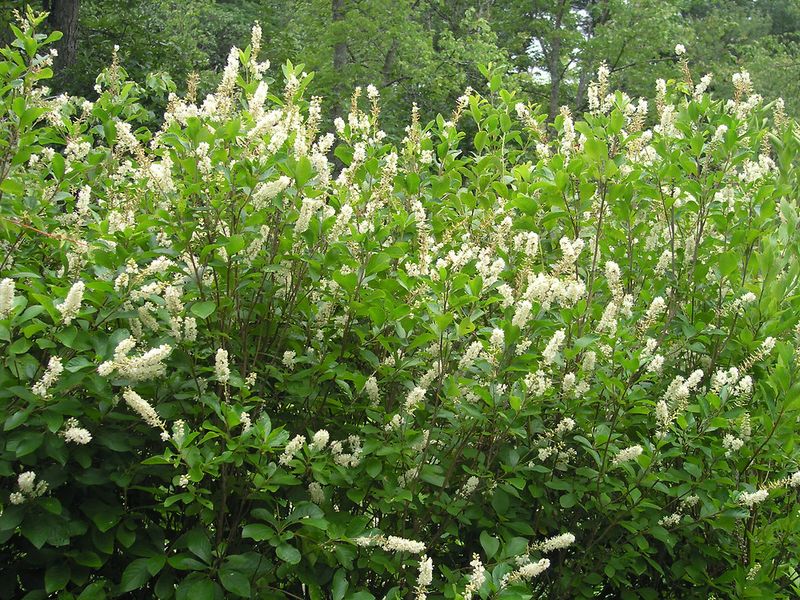
You drag your porch chair out on a muggy July evening, and something spicy and sweet drifts past your nose. It is sweetpepperbush, Clethra alnifolia, a North Carolina native shrub whose white flower spikes smell wonderful in summer.
Bees and butterflies love it too, so your porch gets a little more alive. Plant it where you sit, give it moist soil, and it can turn an ordinary evening into something you remember.
Sweetpepperbush Brings Summer Fragrance Near a Porch
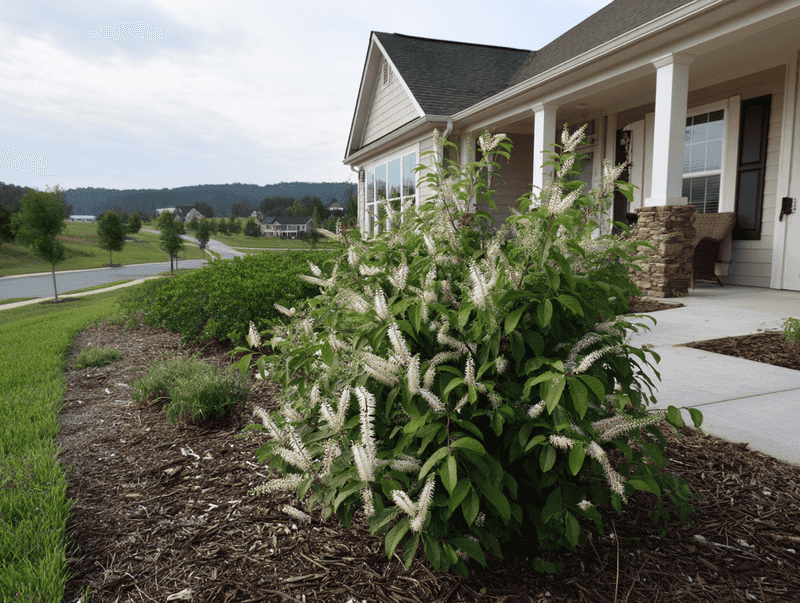
Picture a July evening in the Piedmont, the air thick and warm, a storm rumbling somewhere far off. You settle onto the porch, and a spicy-sweet smell floats over from the corner of the yard.
That is sweetpepperbush, Clethra alnifolia, doing its quiet work.
According to NC State Extension’s Plant Toolbox, the white flower spikes are very aromatic. They usually run 2 to 6 inches long and appear in summer.
Some cultivars carry pink blooms instead of white.
Here is the honest part. The sources describe the flowers as fragrant in summer.
They do not show that the scent gets stronger at dusk or peaks after dark. What a porch gives you is a front-row seat.
Plant the shrub where you actually spend your evenings, and you will notice the fragrance far more often than if it sat at the back fence.
NC State Extension’s Clethra feature makes the same point. Put it near the places people gather, so the scent can reach them.
A moist, partly shaded spot beside a porch can suit it well. Think of a corner that catches morning sun and stays damp after rain.
It is a shrub that rewards a good seat, and it asks for little more than that.
When the Flower Spikes Appear
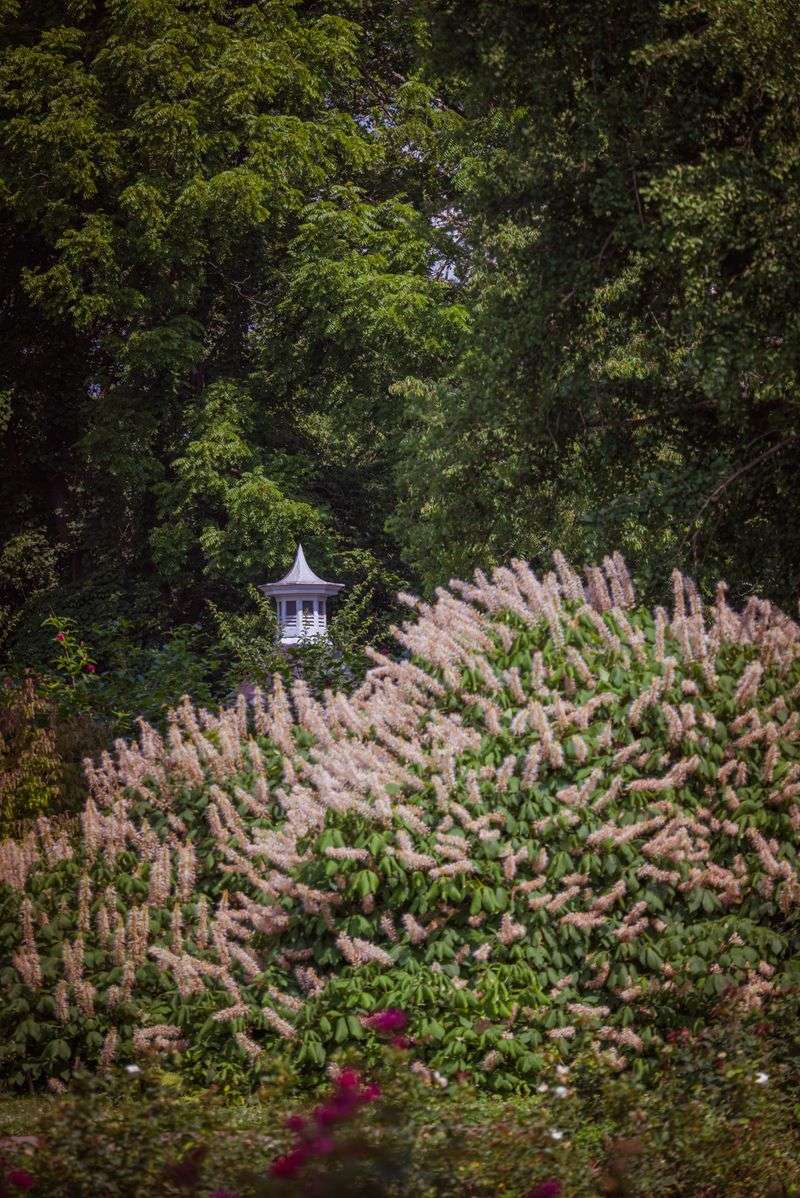
Most gardeners wait all spring for something to happen in the shady corner. Then summer arrives, and sweetpepperbush finally wakes up.
NC State sources give a bloom window of June through August, with July and August the most common months.
That window is a range, not a promise. Your site and your cultivar can shift the timing.
NC State notes that the cultivar ‘September Beauty’ blooms later than the plain species, so check the plant tag before you count on a July show.
Once the spikes open, the shrub becomes a working kitchen for wildlife. The flowers offer nectar and pollen, and NC State Extension says they attract bees, butterflies, hummingbirds, and other pollinators.
That is a habitat upside you can enjoy from a chair with a glass of tea.
Nobody can tell you how many visitors will show up at your porch. Some yards get a steady hum, and others get a few.
Surrounding plants, nearby water, and neighborhood habitat all play a part.
Still, a shrub that flowers when many other plants are tired from the heat is a gift. In the dog days of August, a fragrant, buzzing bush feels like a small act of generosity.
Native in Parts of North Carolina
Native does not mean native everywhere. That surprises people.
Sweetpepperbush is a North Carolina native, but its natural populations are concentrated in certain regions.
The state flora account in Vascular Plants of North Carolina places it mainly in the Coastal Plain and the Sandhills. It occurs only in a limited way in the lower Piedmont.
It is not a plant that naturally grows in the mountains.
Think of the places where it likes to live in the wild. Those are damp spots, low areas, and wet edges where the ground does not dry out quickly.
That habitat tells you something about what it wants in your yard.
If you live in the mountains or the upper Piedmont, you may still be able to grow it. Gardeners do plant native species outside their natural range.
But it is a garden choice there, not a plant you will find growing wild nearby.
Native status also does not guarantee success. A native shrub in the wrong spot can still sulk.
So use the range as context, then judge your own soil, light, and space before you buy.
Moist Soil Matters as Much as Shade
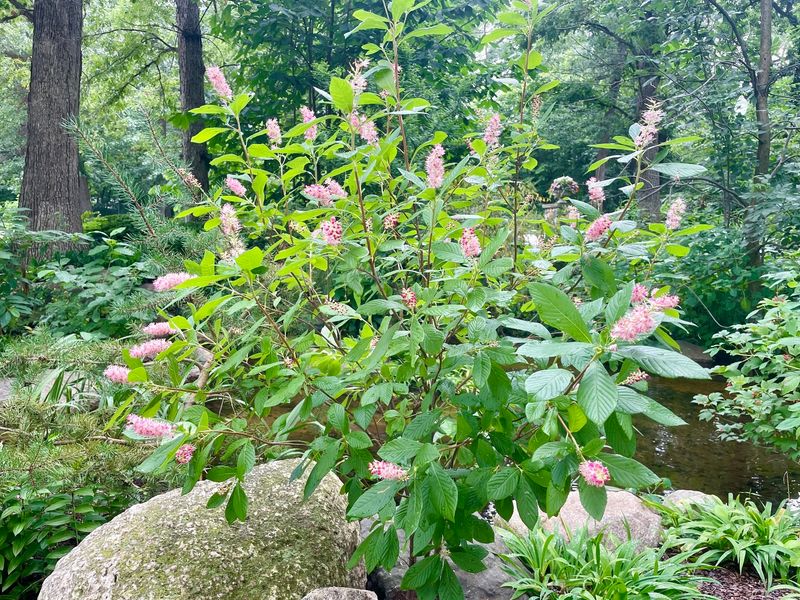
The label “shade shrub” has led plenty of gardeners astray. Sweetpepperbush will grow in full sun to partial shade, but shade is not what makes it happy.
Moisture is.
According to NC State Extension, it prefers moist, acidic soil with organic matter. The same source cautions against hot, dry sites.
Dry shade under a big oak is not the same as a damp, partly shaded corner.
Here is where soil matters. In Piedmont red clay, check drainage before you plant.
Clay can hold water, or it can bake hard and shed rain, so dig a test hole and watch how it behaves after a storm.
In sandy Coastal Plain soil, the problem runs the other way. Sand drains fast, so do not assume it will stay moist.
Mix in compost and plan to water through dry stretches.
Once established, the shrub may handle a short dry spell. That is not the same as drought-proof.
Dry conditions can invite spider mites, so if the leaves look tired, check moisture and placement first.
Get the water right, and the fragrance follows.
Give the Shrub Room to Spread
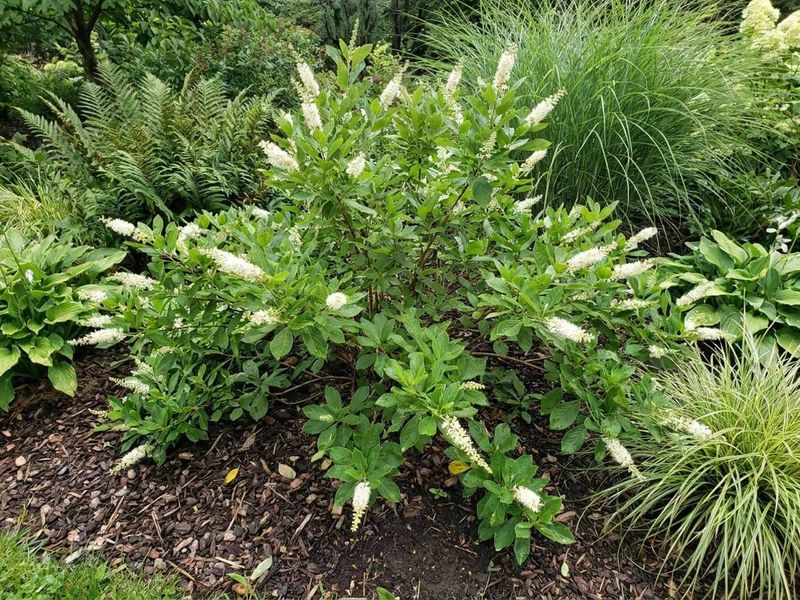
This is not a small porch pot plant. NC State Extension lists typical dimensions of 5 to 10 feet high and 4 to 6 feet wide.
Cultivars vary, so check the mature size of the one you buy rather than assuming a single number.
Sweetpepperbush can also sucker. In suitable moist conditions, it sends up shoots from the roots and may form a colony.
If you want one tidy shrub, remove the unwanted shoots as they appear.
Prune in winter or spring. The flowers grow on new-season growth, so cutting then will not rob you of summer blooms.
For planting, the guidance below comes from NC State’s woody ornamentals handbook. It is general shrub advice, not a Clethra-specific rule.
Container shrubs do best planted in late fall or early spring.
Dig the hole as deep as the root ball and two to three times as wide. Water well after planting.
Then add 2 to 3 inches of organic mulch, keeping it at least 6 inches from the crown.
Give it elbow room now, and you will not be fighting it later.
What the Shrub Can—and Cannot—Offer
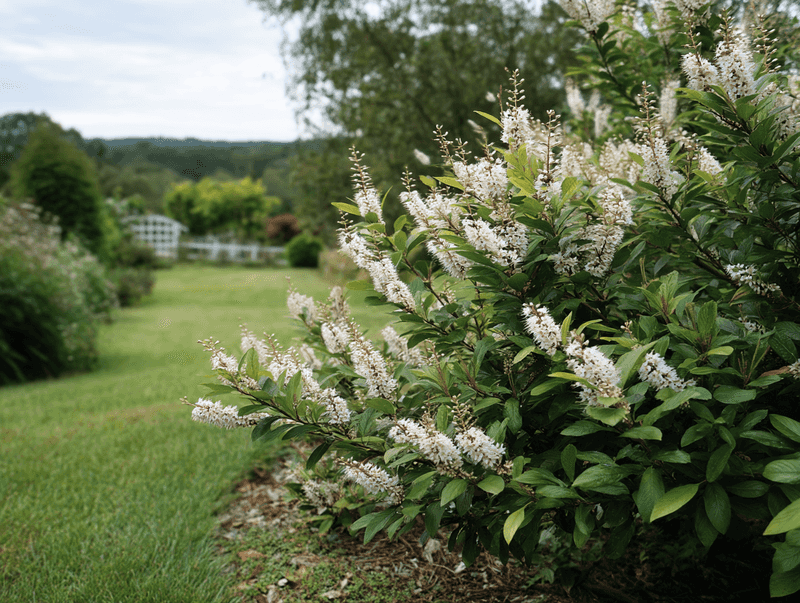
Set your expectations at the right height, and sweetpepperbush will not let you down. It offers summer fragrance and pollinator habitat.
It does not offer proven pest control.
Nothing in the sources shows that it repels mosquitoes, ticks, or Japanese beetles. So treat it as one layer of a lively yard, not a shield.
Bees and butterflies get a meal, and you get a nicer evening.
There is a bonus later in the year. NC State Extension notes that the fall capsules provide food for birds.
If you like a few songbirds around, that is a quiet extra.
Now think about your household. A shrub that can reach 4 to 6 feet wide may crowd a narrow walkway or a busy doorway.
Picture the kids, the dog, and the grill, and give the plant enough room beyond where everyone walks.
So the decision is simple. Choose a spot with reliable moisture and space to spread.
Near a porch is a good idea, but only if the ground and the room agree.
Plant it well, and one summer evening the air will smell like a reward.
