
The One Pennsylvania Native Shrub That Feeds More Birds And Bees Than Anything Else In Your Yard
Follow us on Google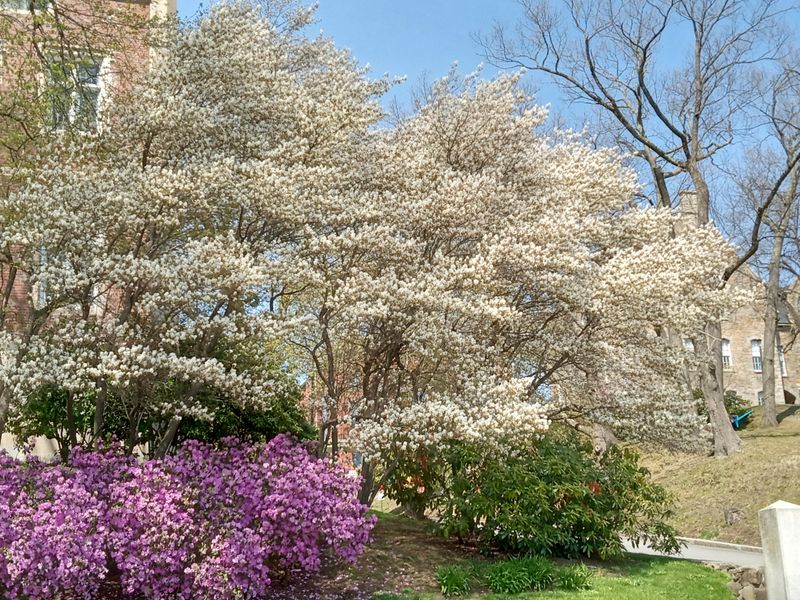
You step into the yard on an April morning and find a small tree wrapped in white blossoms while everything else still looks bare. That is serviceberry, a Pennsylvania native that feeds pollinators in early spring and songbirds when its fruit ripens.
It does both jobs in one planting, and that is why so many gardeners call it a hard worker. Here is how it earns that reputation, and how to tell if it fits your yard.
Meet serviceberry
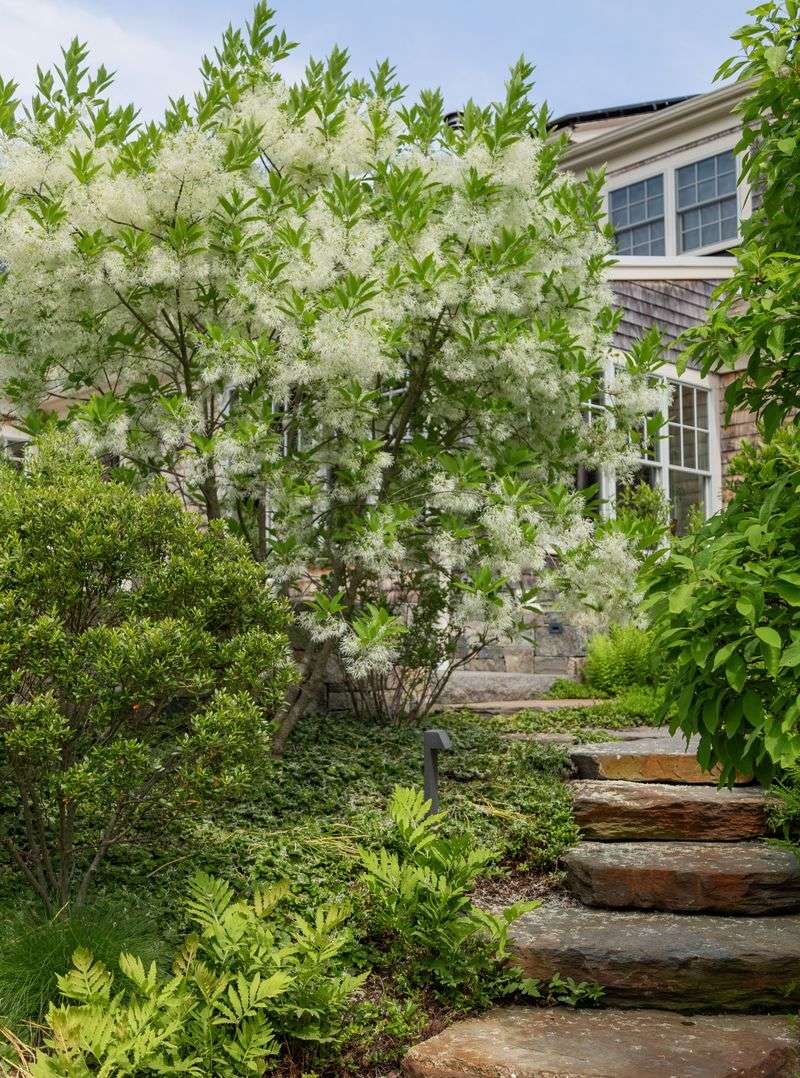
Picture a shrub that opens white flowers while the rest of the yard is still waking up. That is serviceberry, known botanically as Amelanchier, a native plant that gives wildlife two different gifts in two different seasons.
According to the Pennsylvania Conservation Planting Guide, serviceberry offers early-spring flowers for pollinators, fruit eaten by birds and other wildlife, and cover or nesting habitat. The guide rates three serviceberries as high for bird and mammal food.
That is a solid résumé for one plant.
Here is the honest part. The sources document these benefits, but they do not count bird and bee visits and compare serviceberry against every other plant in a yard.
Other native shrubs also earn high ratings, so think of serviceberry as one very useful choice rather than a winner of a contest nobody has actually run.
What you can count on is the sequence. Flowers come first and feed early pollinators.
Fruit follows and feeds birds. The plant can also give small creatures a place to hide, which matters more than most people realize.
The plant is also a Pennsylvania resident, and Penn State Extension even describes it as a plant for the kitchen as well as the garden. So the rest of this article helps you decide whether it suits your space, your soil, and your patience.
Spring flowers offer an early resource
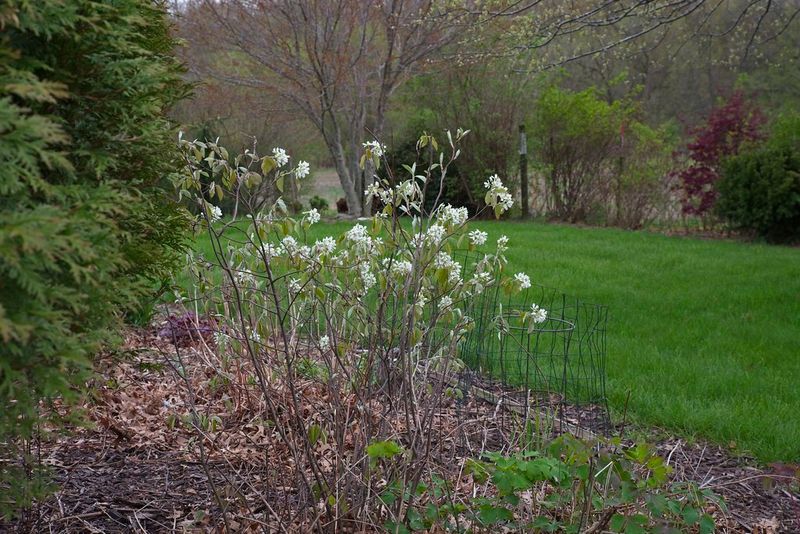
Bees do not wait for a warm porch evening. On the first mild days of spring, they go looking for food, and serviceberry is one of the few shrubs ready with open flowers.
The Pennsylvania Conservation Planting Guide lists serviceberry as an early-spring flowering plant for pollinators. That timing is the real gift.
Early flowers fill a gap when little else is blooming.
Now the catch. The bloom window is short, often just a couple of weeks depending on the weather.
In the Poconos or at higher elevations, a late frost can nip flowers, and the show may be even shorter.
So serviceberry cannot feed pollinators from spring through fall. Think of it as the opening act, not the whole concert.
Once the petals drop, bees still need somewhere to go.
That is your cue to plan the rest of the yard. Plants that bloom in early summer, late summer, and fall keep the buffet open.
Bee balm, Joe Pye weed, black-eyed Susan, native asters, and goldenrod are all Pennsylvania-friendly choices that pick up where serviceberry leaves off.
Plant the shrub for the spring welcome. Then plant its neighbors for everything after.
Fruit and leaves support other wildlife
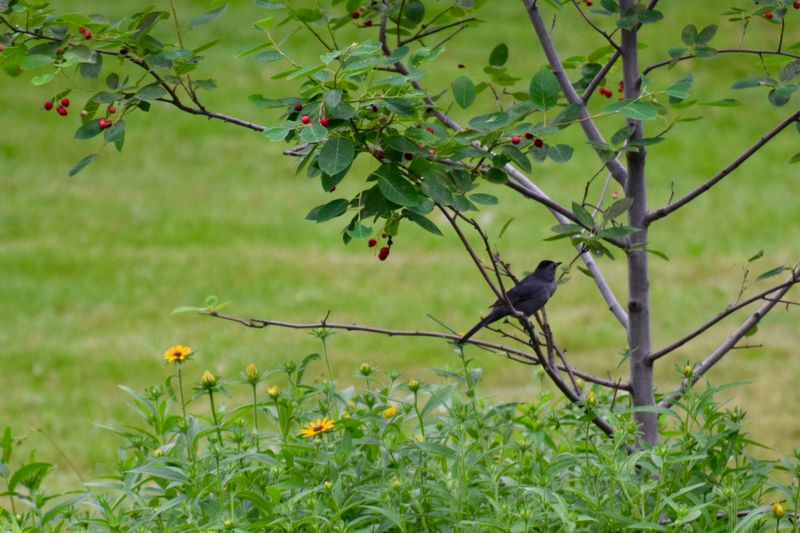
Blink, and the petals turn into berries. Once the flowers fade, small green fruits swell and slowly ripen to a deep red or purple, usually by early summer.
The Pennsylvania Conservation Planting Guide lists the fruit as food for songbirds and other animals. That is the second half of the sequence, and it arrives just when many birds are busy feeding young or fattening up.
The leaves matter too. The same guide notes that serviceberry foliage feeds several butterfly and moth larvae.
That is a separate benefit from the fruit, and it is about caterpillars, not about how many birds or bees visit.
Keep those two ideas apart. Fruit feeding birds is documented.
Leaves feeding caterpillars is documented. Neither one proves serviceberry beats every other shrub in your yard.
Also, the fruit is seasonal. Once the berries are gone, usually within a few weeks, the shrub is not a year-round feeder.
Birds in winter will need other food sources nearby.
Expect some chewed leaves and a stripped branch or two. That is not a problem.
It is the plant doing exactly what you planted it to do.
Choose a species suited to your region
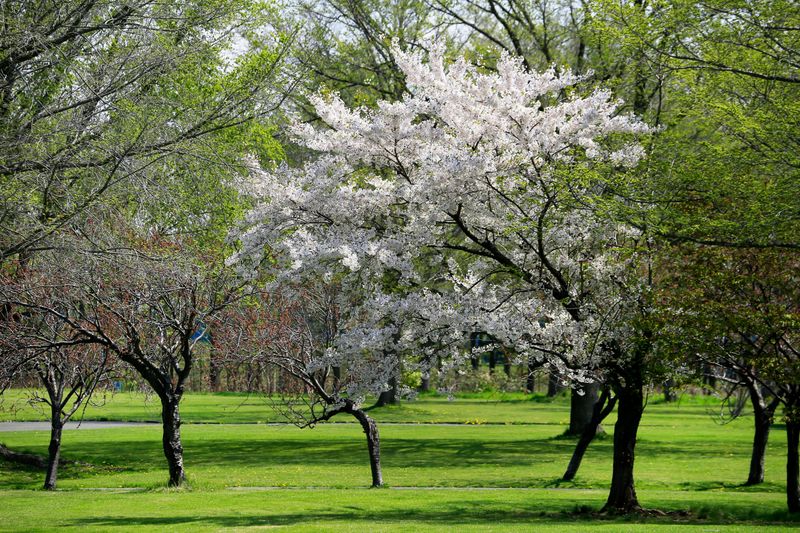
Not every serviceberry at the garden center is the same plant. Pennsylvania has three native species that the state planting guide discusses, and they do not share the same home territory.
According to the Pennsylvania Conservation Planting Guide, common serviceberry (Amelanchier arborea) is listed statewide. Allegheny serviceberry (A. laevis) is listed mostly outside the Coastal Plain.
Canadian serviceberry (A. canadensis) is listed mostly in the Coastal Plain.
In plain terms, a gardener in the Delaware Valley should look closely at the label, while someone in western Pennsylvania or the Allegheny Plateau has different species to consider. Common serviceberry is the safest match on paper because it is listed statewide.
Here is the habit to build. Read the botanical name on the tag, not just the word serviceberry.
Then ask the nursery which species it is and where it grows well locally.
The word native is not a guarantee of a perfect fit. A plant can belong to Pennsylvania and still be wrong for your corner of it.
Matching species to region is a small step that saves a lot of disappointment later.
Plan for its mature size and site
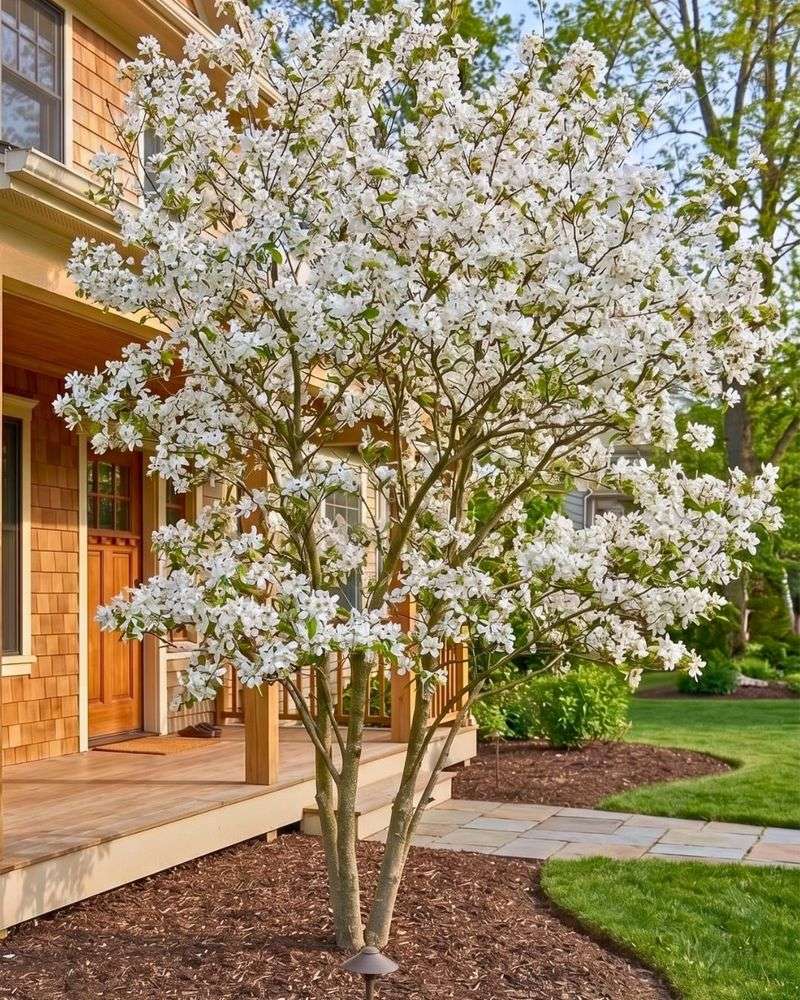
Many people picture a tidy little shrub. Serviceberry has other plans.
Penn State gives a typical height of 15 to 30 feet for the three Pennsylvania-native serviceberries it discusses.
It can grow as a multi-stemmed shrub or as a small tree, so it is not compact, and it is not right for every small yard. A tight foundation bed under a window is likely too small.
Give it open space, away from walls and power lines.
According to Penn State Extension, serviceberry does best in full sun to part shade. It also needs supplemental water during the first year and later when dry weather arrives.
Pennsylvania summers can swing from heavy thunderstorms to dry spells, so check the soil during those dry stretches.
Watch the soil, too. Penn State cautions that heavy clay can contribute to root rot.
Many southeastern Pennsylvania yards and parts of central and western Pennsylvania have clay or shale, so look for a spot where water drains instead of pooling.
As for feeding, the USDA plant guide says nitrogen fertilizer is not needed at planting or during the first year. So skip the fertilizer and put your effort into watering.
Walk the spot before you buy. If you can picture a small tree there in ten years, you are in good shape.
Know the common problems
Serviceberry is not trouble-free, and any plant guide that says so is skipping a chapter. Three concerns come up again and again: rust, fire blight, and hungry animals.
Rust is a fungal disease that leaves orange spots on leaves. Penn State Extension advises not planting serviceberry close to junipers, since juniper is part of that disease cycle.
If you already have junipers, choose a spot well away from them.
Fire blight is a bacterial disease that makes branch tips look scorched and bent. Penn State recommends pruning infected branches when the weather is dry and the plant is dormant.
Cut at least 4 inches below the canker, the sunken, damaged spot, and disinfect your tools frequently.
Notice what is not on the list. There is no casual spraying plan here.
The sources give pruning and smart placement, so stick with those.
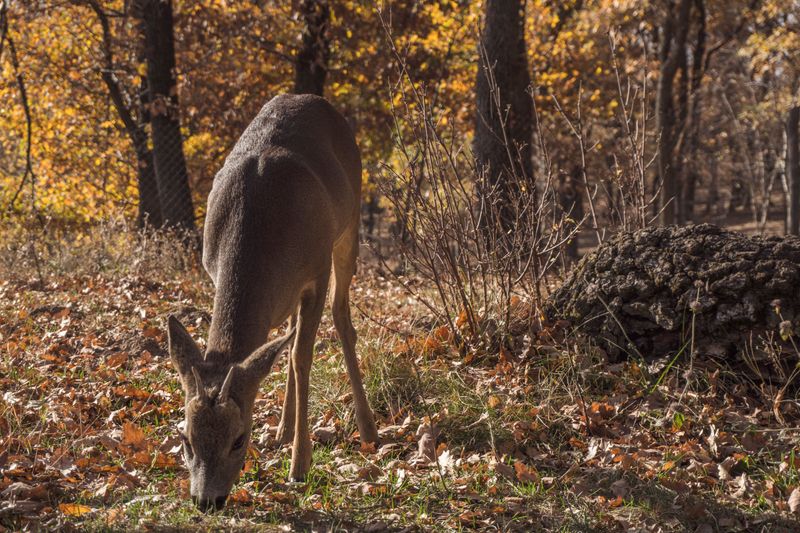
Then there are the browsers. The Pennsylvania Conservation Planting Guide notes that rabbits and deer browse serviceberry.
Young plants in deer country may need protection while they get established.
Knowing these problems up front is not discouraging. It is how you plant once and plant well.
Build on serviceberry with other plants
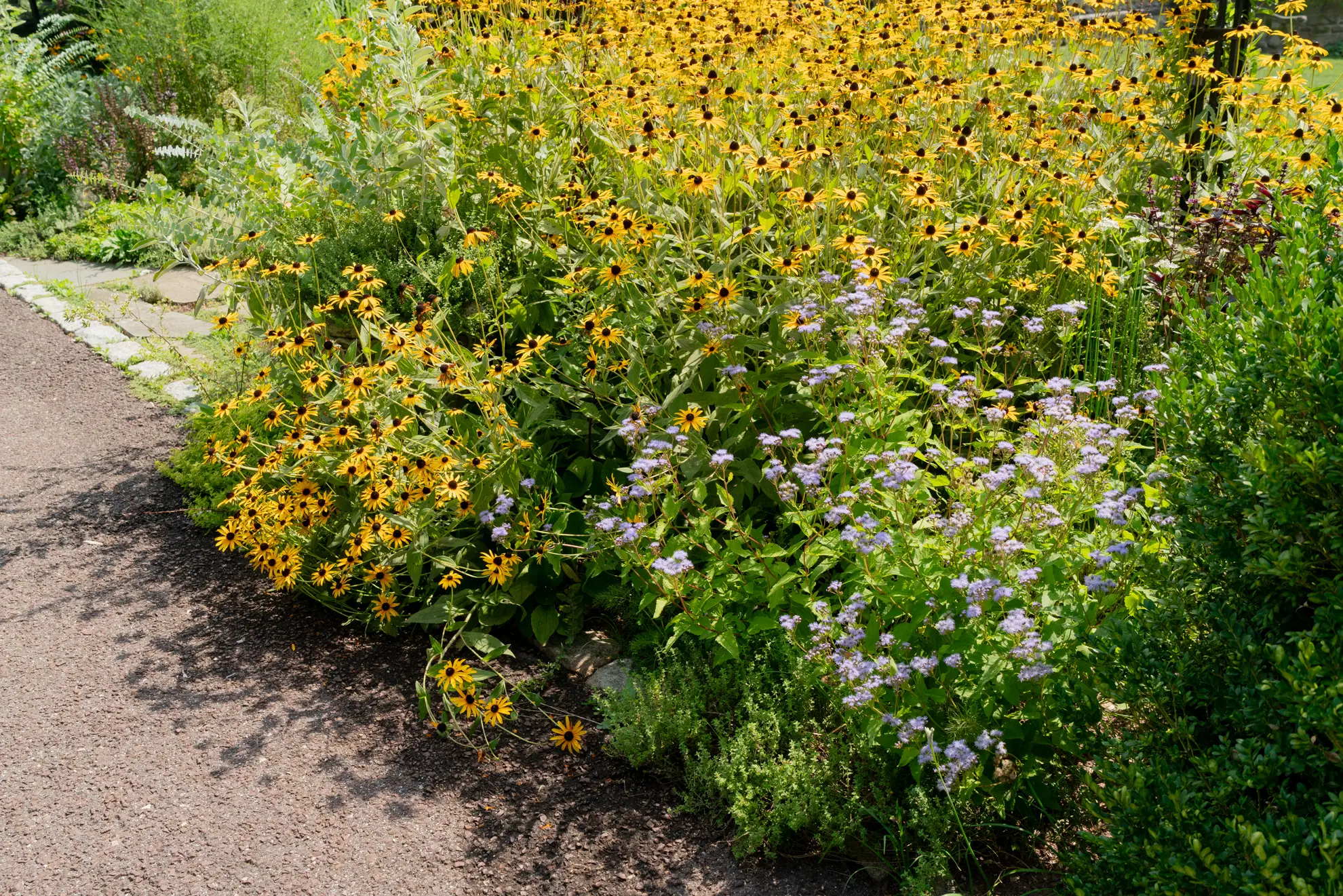
A single shrub, however good, is one layer of a bigger yard. Serviceberry gives early flowers and early-summer fruit, and then its big moments are over for the year.
Pollinators keep working long after that. Penn State Extension recommends a diversity of flowering plants with different bloom times so native bees have food across the growing season.
Serviceberry covers the opening. Others have to cover the middle and the end.
Bee balm and black-eyed Susan can carry summer. Native asters and goldenrod can finish the season in the fall.
Mixing them in around your serviceberry keeps something in flower for as long as possible.
Remember, too, that the fruit is seasonal. The Pennsylvania Conservation Planting Guide also rates other native shrubs high for wildlife food, so adding a second or third shrub spreads the benefit across more weeks.
So here is the plan. Pick a serviceberry species that suits your region, give it room for 15 to 30 feet, and surround it with plants that bloom after it.
Then wait for next April, when the white flowers open again.
