
The North Carolina Vine That Softens A Fence And Feeds Hummingbirds At The Same Time
Follow us on Google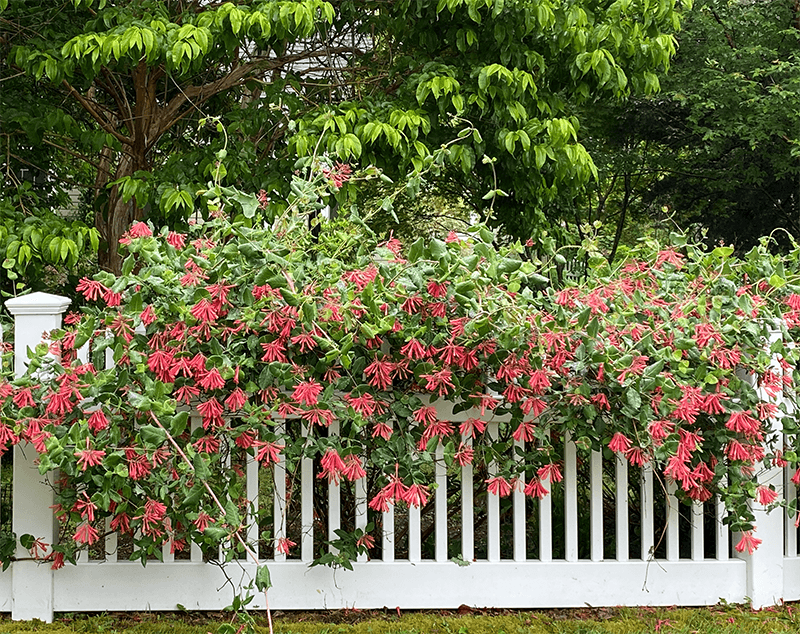
That weathered fence at the back of your yard does its job, but it does not exactly add beauty to the view from your porch.
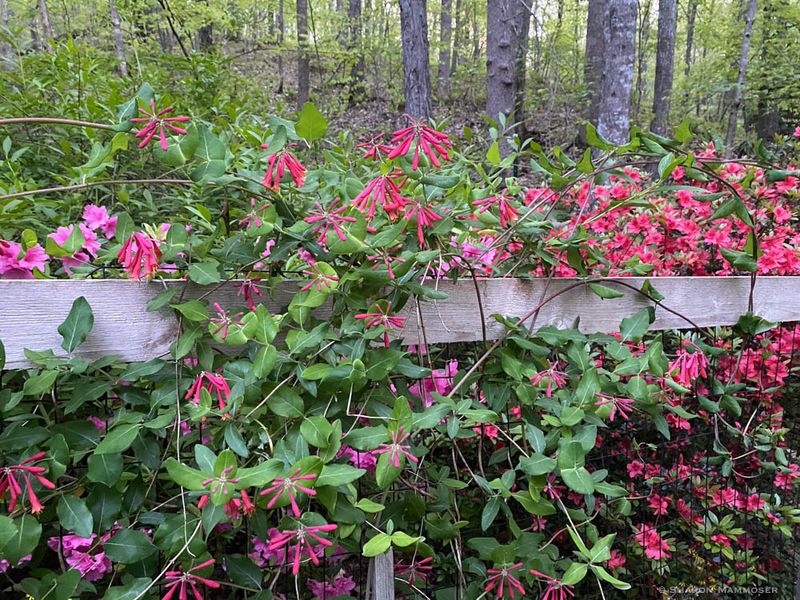
Coral honeysuckle, a native North Carolina vine, is one strong option for turning that bare structure into a flowering vertical backdrop while offering nectar to Ruby-throated Hummingbirds passing through.
Getting it right means buying the correct plant, giving it a sound support, and going in with realistic expectations about coverage and wildlife visits.
A Strong Native Option for a Softer Fence
Walk into almost any North Carolina garden center in spring and you will find a vine or two promising quick coverage and easy color.
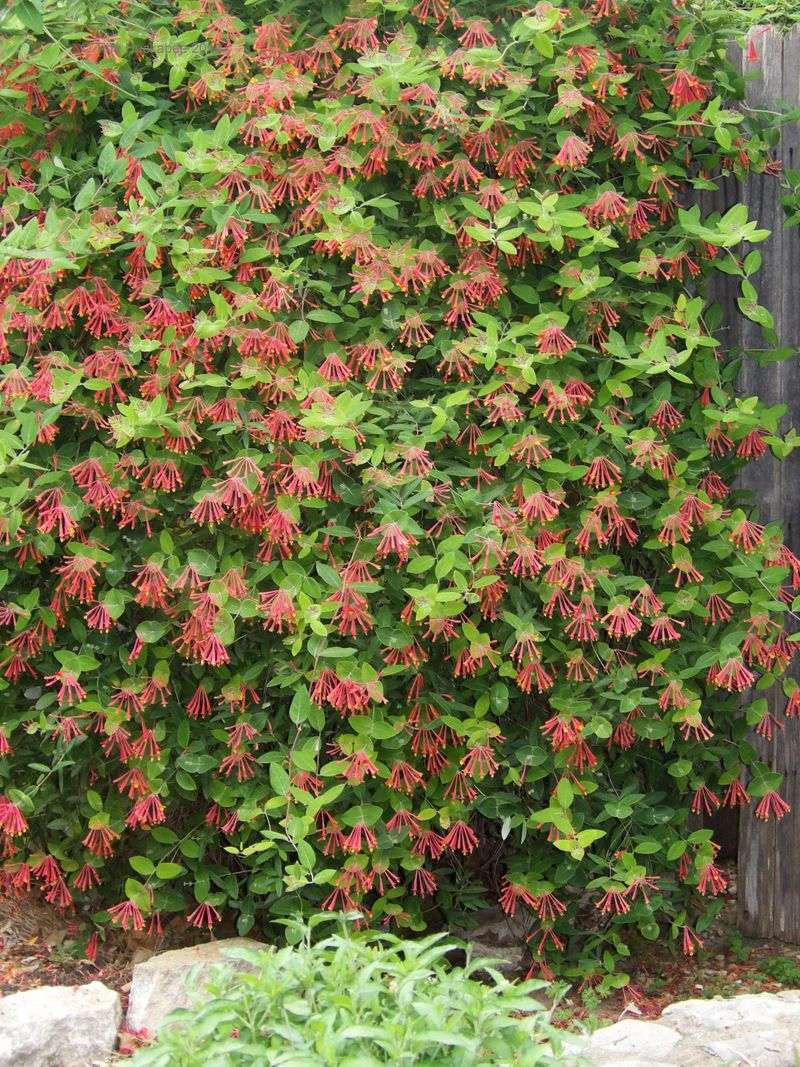
Coral honeysuckle, also sold as trumpet honeysuckle and known botanically as Lonicera sempervirens, is one well-supported choice for homeowners who want to soften an unattractive fence with something that belongs here.
It is native to the eastern United States, including North Carolina, and the NC State Extension Gardener Plant Toolbox lists it as a twining vine that can climb roughly 10 to 20 feet when given a proper support.
That 10-to-20-foot range is the realistic picture.
One plant can cover a modest section of fence beautifully, but it will not hide a 60-foot property line in a single growing season.
Treat it as a vertical accent that earns its place over a few years rather than a fast curtain.
Here is where the name gets tricky.
The word “honeysuckle” gets attached to more than one plant at the nursery, and the wrong one is genuinely a problem.
Japanese honeysuckle, Lonicera japonica, is a nonnative invasive vine native to eastern Asia that can crowd out native plants across the landscape.
The National Invasive Species Information Center documents its capacity to overtake native vegetation, so the distinction matters at the checkout counter.
Always read the botanical label and look specifically for Lonicera sempervirens before you load the car.
Coral honeysuckle twines around a support rather than gripping a surface directly, so the fence-softening promise depends entirely on giving it something sturdy to wrap around.
That part comes next, but the starting point is always the right plant with the right name on the tag.
Flowers That Offer Nectar to Visiting Hummingbirds
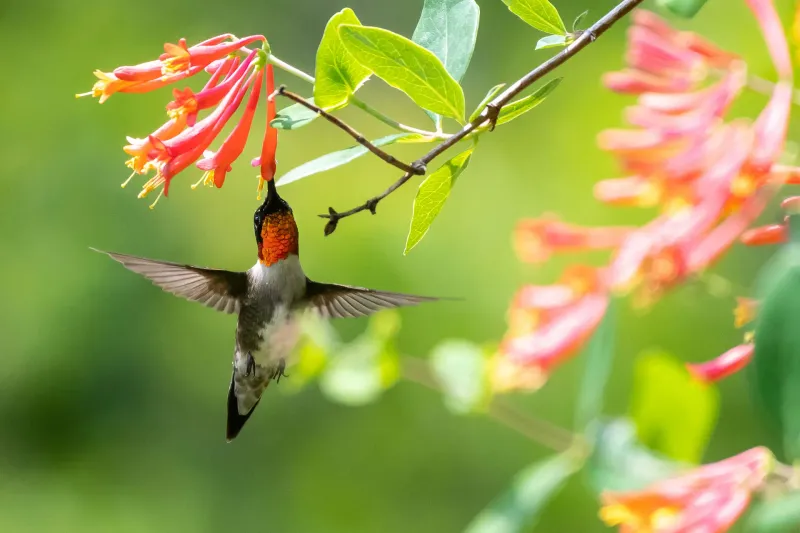
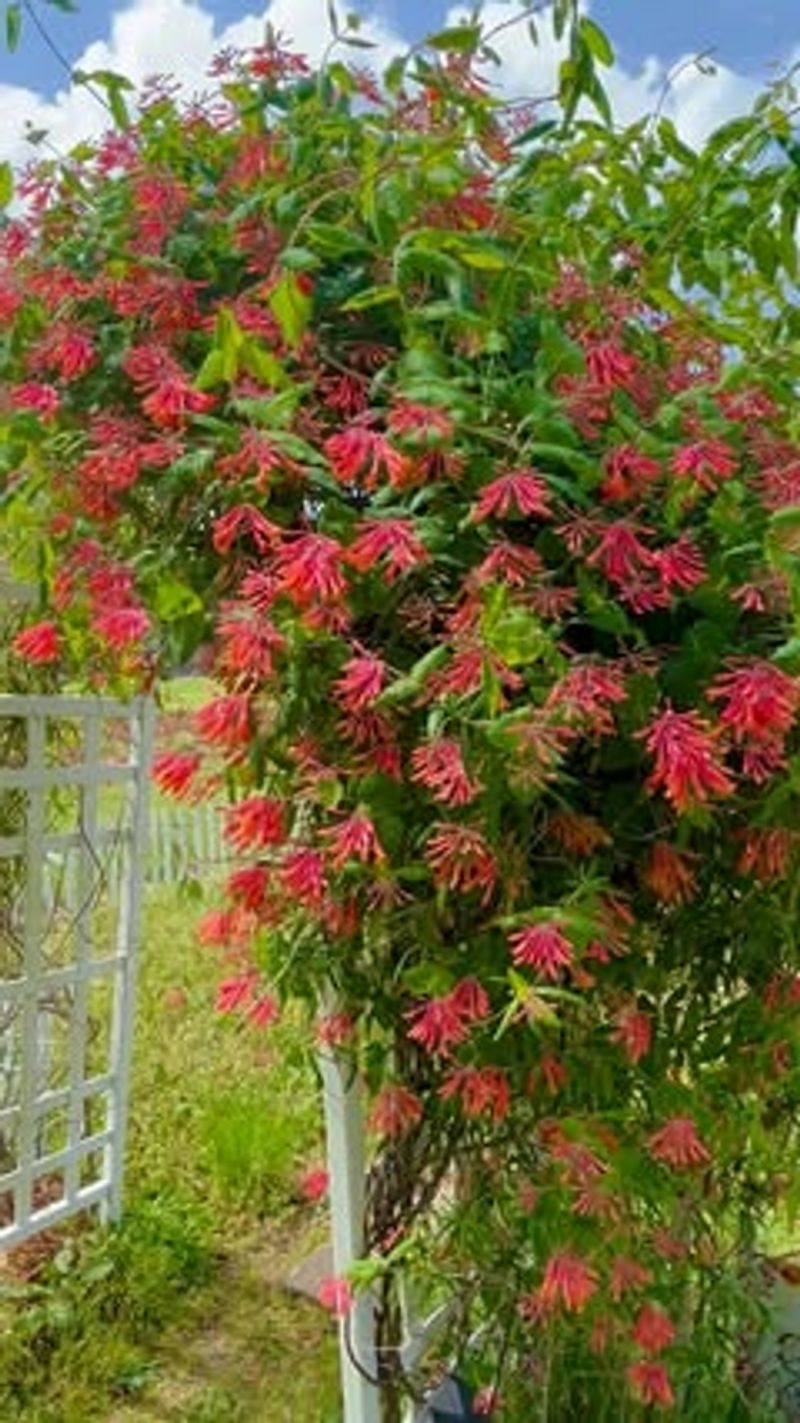
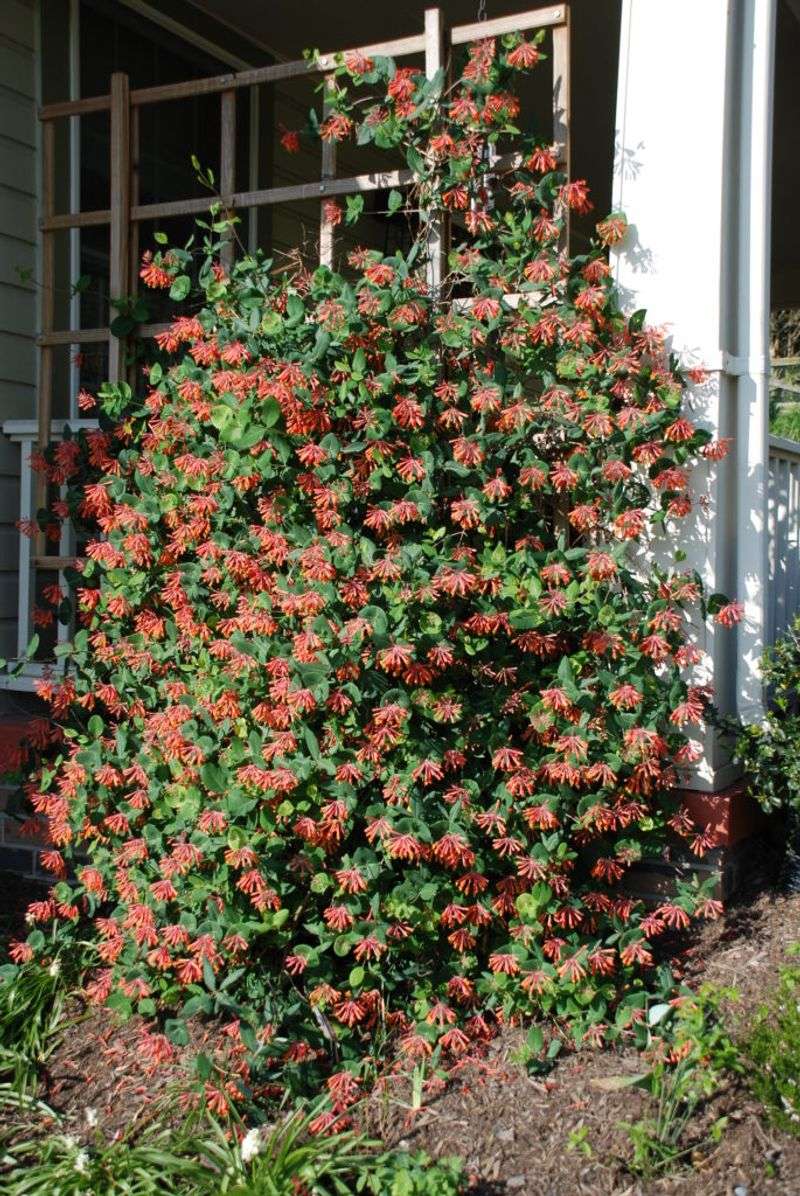
Coral honeysuckle blooms from spring into fall, producing clusters of long, slender, red-to-coral tubes that hang along the vine like a string of small lanterns.
That shape is not accidental from a wildlife perspective.
The NC State Extension plant profile confirms that the flowers attract hummingbirds, bees, butterflies, and moths, making the vine genuinely useful to a range of pollinators at once.
The hummingbird most likely to show up in a North Carolina yard is the Ruby-throated Hummingbird, the principal breeding hummingbird in eastern North America.
Coral honeysuckle can attract these birds when the vine is flowering, the yard has nearby habitat, and conditions align. “Can attract” is the honest framing here, not a guarantee.
Bird activity depends on your location, what else is blooming nearby, and whether your yard supports the insects and spiders hummingbirds also need.
More on that in a later section.
After the flowers fade, the vine produces small red berries that ripen in late summer and fall.
Those berries are a secondary wildlife benefit rather than the main event.
Audubon notes that fruit-eating birds may take coral honeysuckle berries, but birds can bypass them when higher-value fruit is available nearby.
Think of the berries as a quiet bonus, not a reason to plant the vine.
The flowers are the real payoff for hummingbirds and for you.
A fence line draped in coral-red blooms from May through September is a genuinely different thing to look at from your porch than bare boards, and a hummingbird hovering at the flowers a few feet away is the kind of moment that makes the whole project feel worth it.
Give the Twining Vine a Sound Support
Coral honeysuckle does not cling to a surface the way English ivy does.
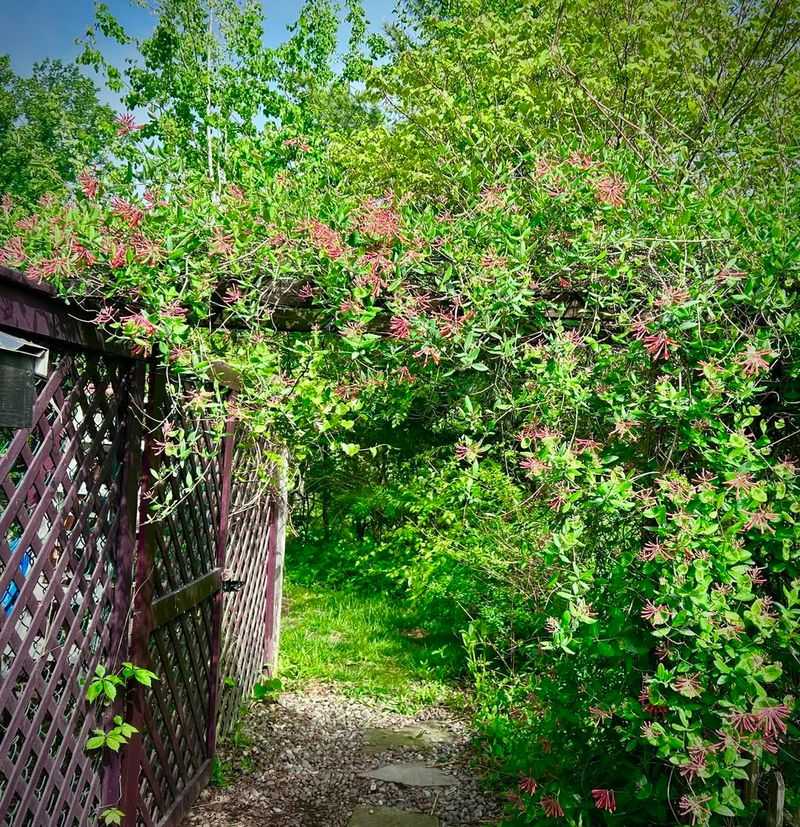
It twines, meaning the stems spiral around whatever they touch, so the plant needs something to wrap itself around rather than a flat wall to press against.
A sturdy trellis, a wire grid stretched between posts, an arbor, or a structurally sound fence all work well as long as the support can handle a mature plant that may reach 10 to 20 feet and carry some real weight after a few growing seasons.
University of Maryland Extension advises that large-maturing vines require sturdy, rot-resistant support, and that guidance applies directly here.
Before you plant anything, walk the fence line and check the posts, panels, and attachment points honestly.
Push on a few boards.
If the fence wobbles, leans, or shows soft spots from rot, fix it first or plan to install a separate trellis system that does not rely on the fence for structural strength.
A practical setup for an aging or lightweight fence is a trellis or wire panel mounted a few inches in front of the fence, attached securely to sound posts rather than to thin boards that can split.
NC State Extension confirms the need for structural support without prescribing one universal spacing distance, so let your fence’s actual condition guide the decision.
There is no single right gap between trellis and fence, just a gap that keeps the vine off deteriorating wood and gives air some room to move.
Avoid growing the vine directly against a house wall or siding.
The twining habit is harmless on a trellis but harder to manage against a building surface, and removing an established vine from siding is a much bigger project than inspecting your fence posts now.
Choose Sun, Drainage, and a Safe Location
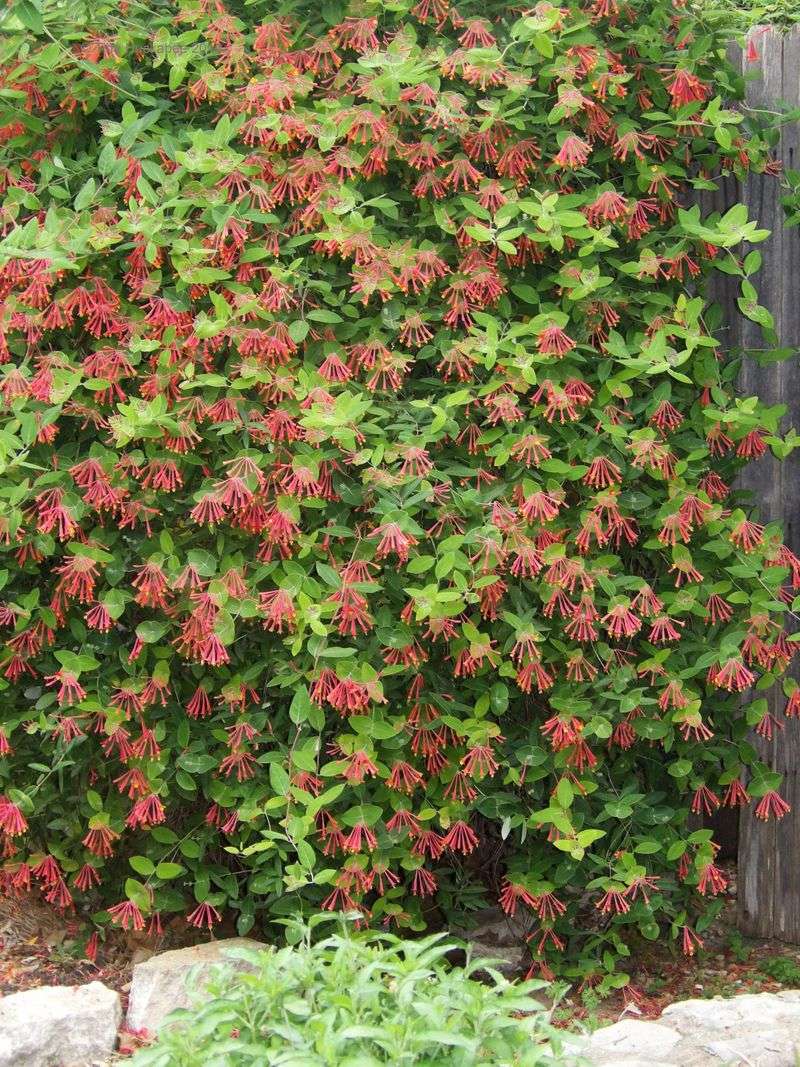
Sunlight is the single biggest factor in how well coral honeysuckle flowers for you.
NC State Extension defines full sun as at least 6 hours of direct sunlight per day, and coral honeysuckle performs best in those conditions.
The vine tolerates partial shade, but many Piedmont and Coastal Plain gardeners notice noticeably fewer blooms when the fence sits in afternoon shadow.
If you are choosing between two fence sections, pick the sunnier one.
Soil flexibility is one of the vine’s genuine strengths across North Carolina.
It handles clay, loam, and sandy coastal conditions reasonably well as long as drainage is adequate.
In the Coastal Plain, the plant’s salt tolerance can be useful near coastal properties, but salt tolerance does not mean the vine should sit where storm runoff or irrigation keeps the ground waterlogged.
Medium moisture with good drainage is the target.
Winter appearance is worth thinking through before you plant, especially if you are counting on the vine for year-round screening.
NC State’s plant profile explains that coral honeysuckle may remain evergreen in mild winter climates, but it can lose some or all of its leaves during colder winters.
Mountain gardeners and anyone in the Piedmont who has lived through a sharp cold snap should expect partial or complete leaf drop in tough winters rather than a reliable green screen all year.
Fire safety is a non-negotiable location factor if your property has any wildfire exposure.
NC State assigns coral honeysuckle a high flammability rating and advises against placing it within the defensible space closest to a home.
A fence along the back property line with open lawn between it and the house is a very different situation from a fence directly beside the garage or attached to a deck.
Locate the vine where its value is clear and the risk is managed.
Plant and Water It Through Establishment
Container-grown coral honeysuckle can go in the ground in any season, but late fall and early spring are generally the easier windows.
Roots have time to settle before North Carolina’s hottest weather arrives, and the soil tends to hold moisture more reliably than it does in July.
NC State Extension’s Woody Ornamentals handbook confirms that container-grown woody plants can be transplanted at other times, but those seasons simply require closer attention to watering.
Dig the hole about twice as wide as the container and roughly the same depth.
Set the plant so the top of the root ball sits level with the surrounding soil, backfill gently, and water deeply right away.
That first deep watering is not optional.
It settles the soil around the roots and gives the plant its best start.
After planting, judge future irrigation by what the soil and weather are actually doing rather than a fixed calendar schedule.
Sandy Coastal Plain soil dries out faster and may need water sooner after a rain.
Clay soil absorbs water slowly and can shed runoff before it soaks in, so slow, steady watering beats a quick splash.
The goal in both cases is moisture that reaches the root zone, not just the surface.
A 2-to-3-inch layer of mulch around the base of the plant conserves moisture and moderates soil temperature through a North Carolina summer.
Keep that mulch about 6 inches away from the crown and stems.
Mulch piled against the base traps moisture against the wood and invites rot, which is exactly the opposite of what you want from a plant you are trying to establish.
Maintain Flowers Without Overpromising Low Maintenance
NC State’s guidance on pruning coral honeysuckle is straightforward: prune after flowering rather than cutting the vine back in winter or early spring.
The practical job at pruning time is removing damaged stems, clearing any tangled growth that is pulling on the support, and trimming back sections that have run past where you want them.
NC State Extension also notes that excessive nitrogen can push leafy growth at the expense of flowers, so skip the heavy fertilizer applications if blooms are your goal.
Coverage expectations matter as much as pruning timing.
At a mature size of roughly 10 to 20 feet tall and 3 to 6 feet wide, one plant covers a real section of fence but will not fill a 40-foot run on its own.
A longer fence line may need two or three plants spaced to eventually meet, or a longer training period while you guide new growth along the support each season.
NC State lists the vine as rapid-growing and low-maintenance, and that is accurate in relative terms, but “low-maintenance” is not the same as no maintenance.
Aphids, powdery mildew, and leaf spot can all occur on coral honeysuckle.
Good air circulation around the vine helps, and watering at the soil line rather than overhead keeps foliage drier.
Avoiding unnecessary nitrogen reduces the flush of soft new growth that aphids particularly favor.
If you spot any of these problems early, adjusting those three practices is a reasonable first response before reaching for a spray.
Check the support structure at least once a year.
A vine that has been growing for three or four seasons adds real weight, and a post that was borderline sound at planting time may need reinforcing before the next storm season rolls through.
Build a Hummingbird-Friendly Yard Beyond One Vine
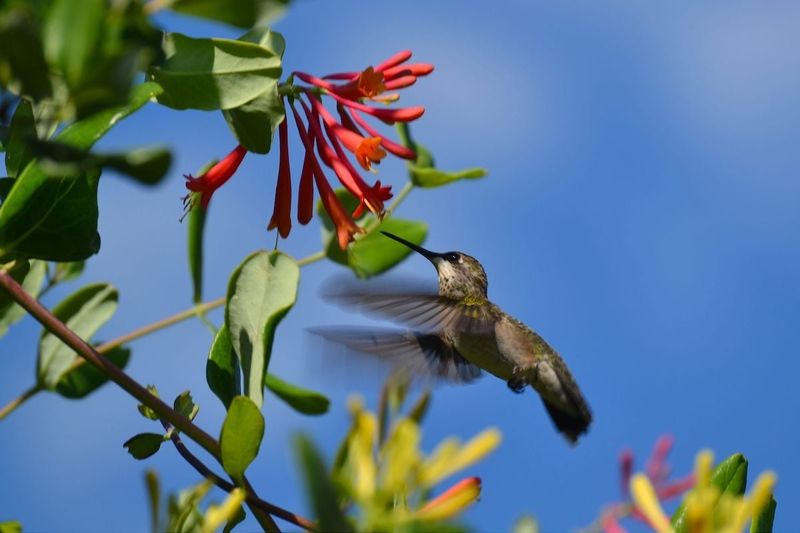
Coral honeysuckle offers nectar, and nectar matters to Ruby-throated Hummingbirds.
But nectar is only part of what these birds need.
Cornell Lab of Ornithology documents that Ruby-throated Hummingbirds eat insects and spiders regularly, relying on that protein for nutrition in ways that flower nectar alone cannot provide.
Mosquitoes, gnats, fruit flies, small caterpillars, and aphids are all on their menu.
One vine on a fence does not supply that part of their diet.
Broad insect-killing practices work against this.
A yard treated heavily with pesticides may have fewer of the small invertebrates hummingbirds hunt, which makes the yard less attractive to them even when the honeysuckle is in full bloom.
If you want hummingbirds around, keeping some tolerance for small insects in the garden is genuinely part of the equation.
Varied flowering plants extend the welcome mat across more of the season.
Native plants like cardinal flower, salvia, and native bee balm bloom at different times and offer additional nectar sources that can keep hummingbirds moving through the yard from spring into fall.
A single vine is one habitat layer, not a complete habitat.
Coral honeysuckle will not reduce mosquitoes, ticks, or Japanese beetles in your yard.
That promise goes beyond what the plant can deliver, and framing it that way sets up disappointment.
What the vine actually does well is provide a reliable nectar source during its bloom period, add vertical structure to the landscape, and offer a secondary berry resource for some fruit-eating birds later in the season.
Those are solid, real benefits for a North Carolina yard, and they are worth having on their own terms without asking the plant to do everything.
Use a Simple Checklist Before You Plant
Before the vine goes in the ground, run through a short decision sequence that catches the most common missteps.
First, confirm the botanical label reads Lonicera sempervirens.
If the tag says only “honeysuckle” or lists Lonicera japonica, set it back on the shelf.
NC State Extension and its companion honeysuckle profile both document the plant thoroughly if you want to compare what you are holding to a reliable description.
Second, inspect or install the support before planting day.
A fence that wobbles or shows rot needs reinforcement or a separate trellis system first.
Third, check the sun exposure at the chosen spot across the day.
Less than 6 hours of direct light usually means fewer flowers.
Fourth, think through winter honestly: if your yard sits in the Piedmont or mountains, expect partial or complete leaf drop in colder winters rather than year-round green coverage.
Fifth, consider fire safety if your property has any exposure to dry vegetation or wildfire risk.
Keep the vine out of the defensible space immediately surrounding the house.
Sixth, plan the planting window: late fall or early spring makes establishment easier, though NC State Extension’s Woody Ornamentals guidance confirms other seasons work with closer watering attention.
Seventh, mulch the base to 2 to 3 inches and keep it 6 inches from the crown.
Eighth, prune after the main flowering flush, not in winter.
A softened fence and a hummingbird pausing at the flowers are genuinely achievable outcomes here.
They are not guaranteed, and native status does not make the plant care-free.
But a vine planted in the right spot, on a sound support, with honest expectations, has a very good chance of delivering exactly what drew you to the idea in the first place.