
The North Carolina Native Sage Pollinators Keep Choosing All Summer Long
Follow us on Google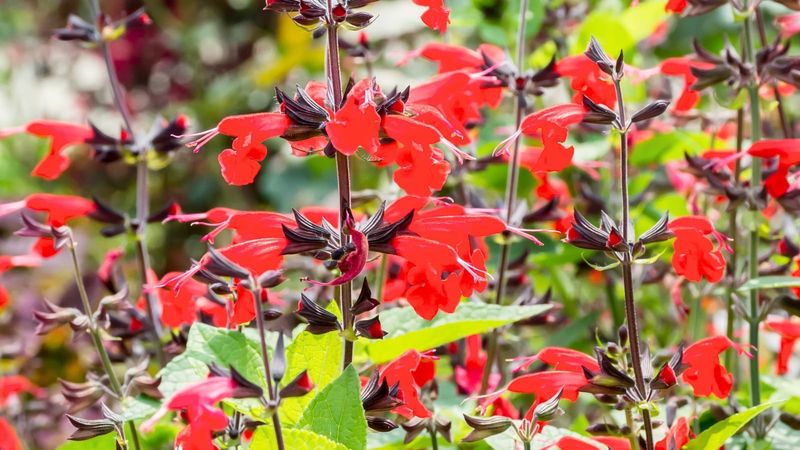
Walk outside on a July afternoon in North Carolina and you might catch a flash of red near the flower bed, a hummingbird hovering for a second before darting off.
That quick visit is the kind of thing that turns a homeowner into a plant evangelist.
Scarlet sage, Salvia coccinea, is a long-blooming native recognized in state resources, and when conditions are right, it can draw hummingbirds and butterflies from early summer right up to the first frost.
It is not a guaranteed wildlife magnet in every yard or every region, but as one piece of a thoughtful North Carolina garden, it earns its space.
A Long-Blooming Sage Worth Knowing
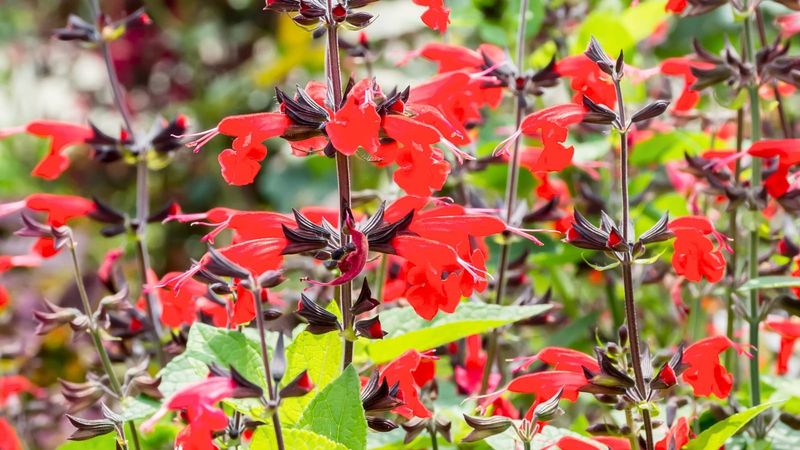
Fair warning before you plant a single seed: the idea that pollinators keep choosing any one plant continuously, all summer, in every yard, is a bit too tidy.
What the evidence actually supports is a long flowering season and documented visits from hummingbirds and butterflies, and that is still a genuinely impressive thing for one plant to deliver.
Scarlet sage, Salvia coccinea, goes by several names you may spot on nursery tags, including tropical sage, red sage, and blood sage.
NC State Extension describes scarlet sage as blooming continuously from early summer until the first frost and lists hummingbirds and butterflies as documented visitors.
That bloom window alone sets it apart from many summer perennials that peak and fade by August.
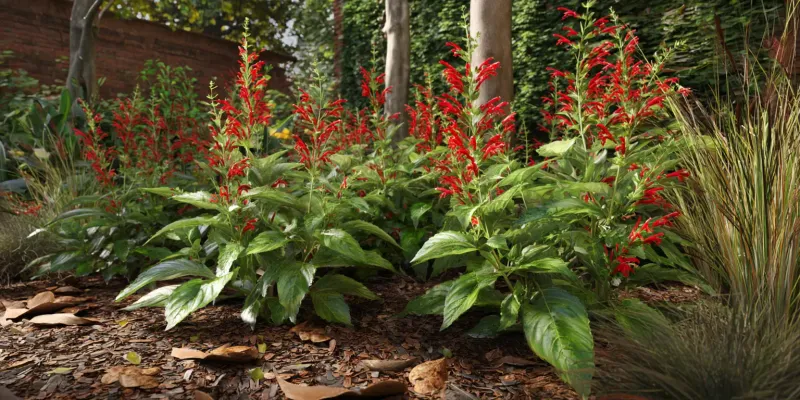
The flowers are typically a strong, clear red, though pink and white cultivated forms exist.
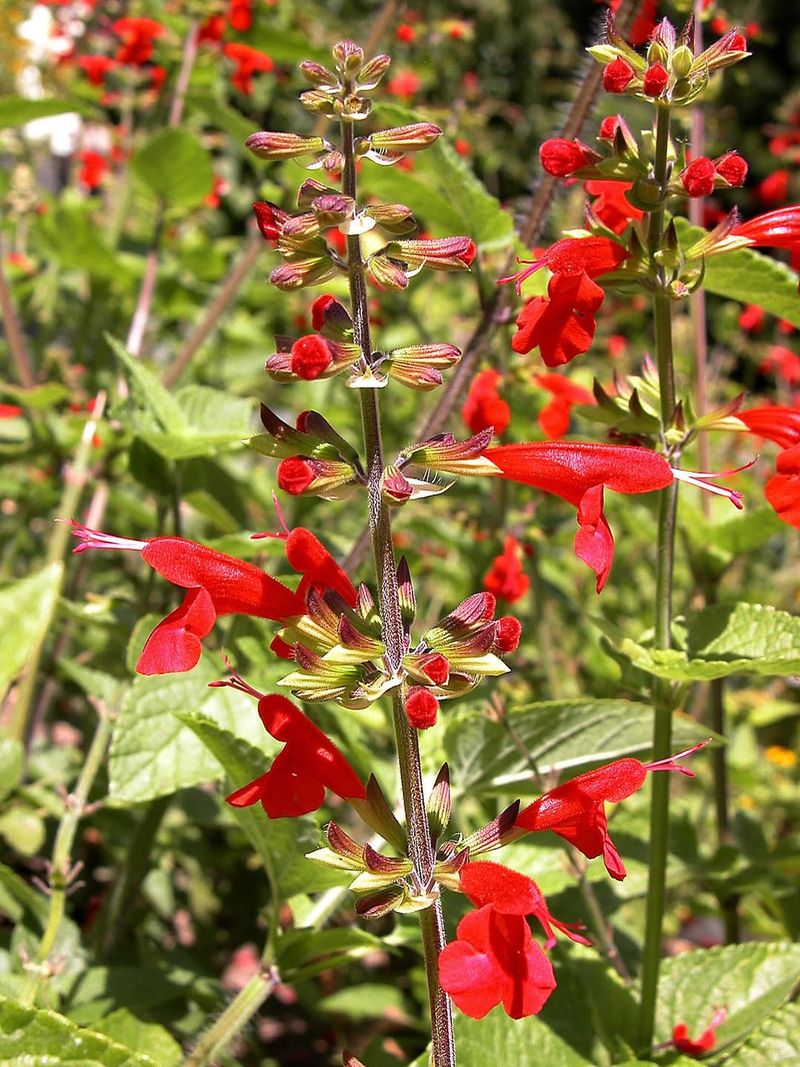
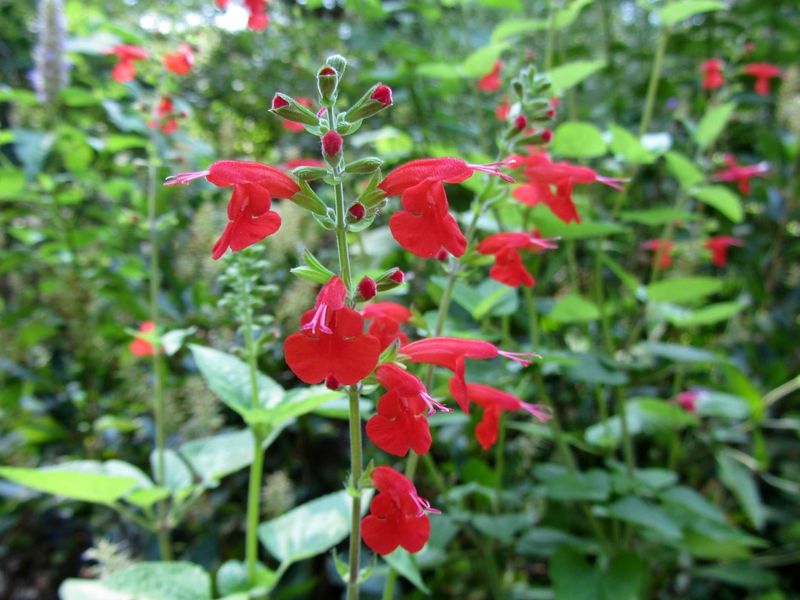
They appear in loose whorls along upright stems, and the tubular shape is a natural fit for the long bill of a ruby-throated hummingbird.
Butterflies work the blooms too, landing on the lower lip and reaching in.
The North Carolina Department of Transportation wildflower guide lists scarlet sage as native to North Carolina statewide, making it one useful option when you want a summer-blooming native with real wildlife credentials.
Just know that visits depend on weather, nearby habitat, and the local insect and bird community, so no single planting is a promise.
Why Its Flowers Invite Hummingbirds
Picture the plant from the outside in.
Scarlet sage grows on upright stems, usually reaching 1 to 3 feet tall, with flowers arranged in loose whorls spaced along the upper portion of each stem.
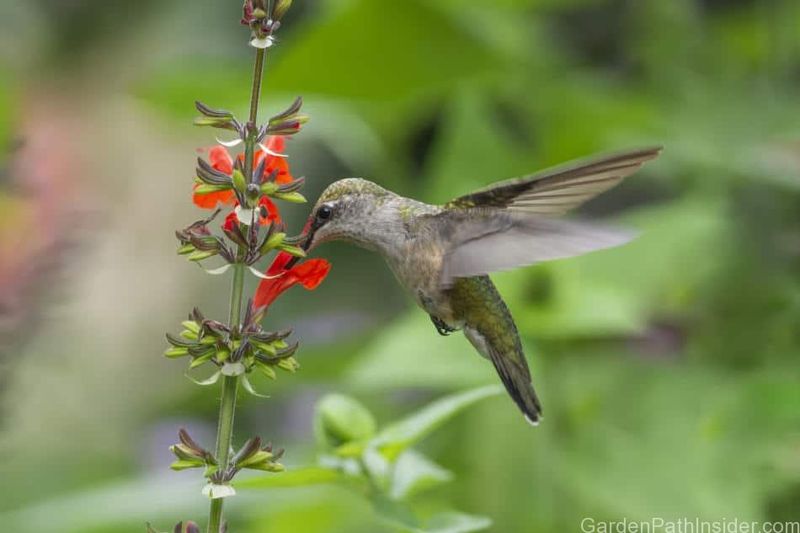
Each individual bloom is tubular and two-lipped, meaning it has a narrow throat that opens into an upper and lower section, almost like a small open mouth.
That tube shape is not accidental from a wildlife standpoint.
Hummingbirds hover in front of blooms and push their long bills straight into the flower throat to reach nectar, and the red color is one they reliably move toward.
NC State’s profile for Salvia coccinea specifically names hummingbirds and butterflies as the visitors you can expect, which matches what many Coastal Plain and Piedmont gardeners report seeing on warm afternoons.
Butterflies tend to land on the lower lip of the flower and probe inward.
They can absolutely be nectar-feeding visitors, and watching a swallowtail work a row of scarlet sage on a calm morning is a genuinely satisfying yard moment.
Here is where it gets a little more nuanced, though.
A visitor feeding at a flower is not the same as a visitor effectively moving pollen from one plant to another.
Research on floral syndromes across Salvia species shows that multiple visitor groups may appear at a plant while only some of them contribute meaningfully to seed production.
Watching a hummingbird at your scarlet sage is a real and lovely event, but it tells you about feeding behavior, not necessarily about pollination outcomes.
Your Region Changes The Outcome
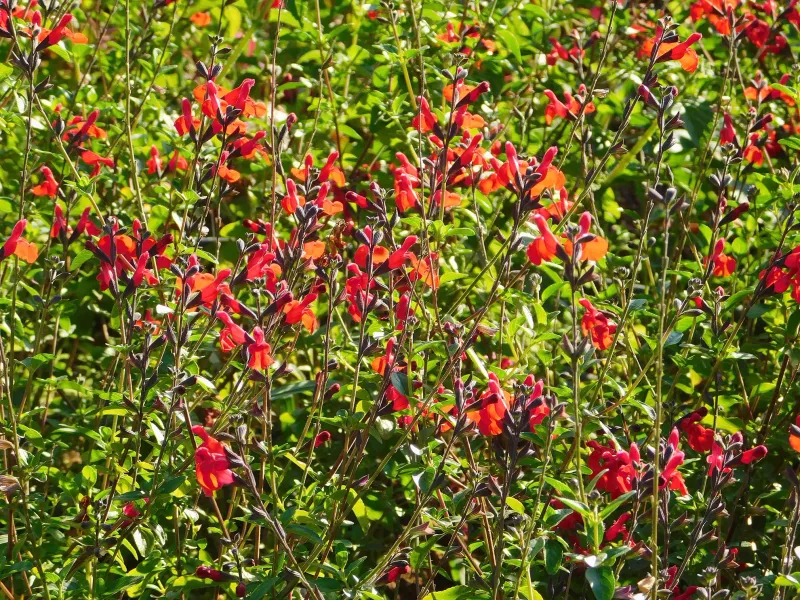
North Carolina covers a lot of ground, from sea-level barrier islands to mountain ridges above 6,000 feet, and a plant that thrives effortlessly in one part of the state may struggle or simply disappear in another.
Scarlet sage is a clear example of that regional variation.
NC State lists Salvia coccinea for the Coastal and Piedmont regions and assigns it to USDA hardiness zones 8a through 10b, describing it as perennial in warmer climates and annual where winter temperatures fall below freezing.
If you garden near Wilmington or on the Outer Banks, you have a reasonable chance of seeing it come back year after year.
If you are in the Piedmont red clay around Greensboro or the mountains near Boone, where temperatures can dip well below 32 degrees Fahrenheit for stretches in January, the honest expectation is a summer annual that may return from reseeding rather than a plant that survives winter in the ground.
The NCDOT wildflower guide takes a broader view and lists scarlet sage as native to North Carolina across the state, so it is recognized in official resources as a statewide native.
But recognized statewide and equally suited to every region are two different things, and the growing guidance points most clearly to warmer, lower-elevation sites.
One plant sometimes confused with scarlet sage in regional native plant conversations is lyreleaf sage, Salvia lyrata.
It is a genuine North Carolina native and a low-growing perennial that tolerates clay, partial shade, and drought after establishment, but its main bloom period runs from mid-spring to early summer.
The NC State butterflies guide lists its peak butterfly bloom window as April through May, so it is a strong early-season option, not a summer-long one.
The two plants serve different moments in the garden calendar.
Plant It Where Sun And Water Work Together
Giving scarlet sage the right spot from the start saves a lot of trouble later.
The plant does best in full sun to partial shade.
More direct sun generally means heavier flowering, so a south- or east-facing bed that gets strong morning and midday light is a good first choice.
Six hours of direct light is a common rule of thumb in home gardening, and it applies here as a reasonable starting point, though it is a general guide rather than a hard plant-specific requirement.
NC State’s plant profile for Salvia coccinea notes a preference for sandy, fertile soil, which maps naturally onto Coastal Plain conditions.
That does not mean Piedmont gardeners are out of luck.
Scarlet sage can handle clay soil if the site drains well, so amending heavy red clay with compost before planting, or choosing a raised bed or sloped spot where water moves through rather than pooling, gives the plant a fair start in trickier soils.
At maturity, expect a plant roughly 1 to 3 feet tall and 1 to 2.5 feet wide.
For home plantings, spacing transplants about 18 to 30 inches apart is a practical fit for that mature width, giving each plant room to fill out without crowding.
That spacing range is a reasonable inference from the documented mature dimensions rather than a published rule, so adjust slightly based on how your specific site performs.
Watering is where many gardeners make a small but meaningful mistake.
Scarlet sage tolerates heat and drought reasonably well, but it flowers more abundantly when you water deeply during dry spells rather than leaving it entirely on its own through a North Carolina August.
Let the soil dry between waterings, then soak it thoroughly.
Keeping the planting constantly wet is not the goal and can create root problems in heavier soils.
Use Reseeding To Shape The Planting
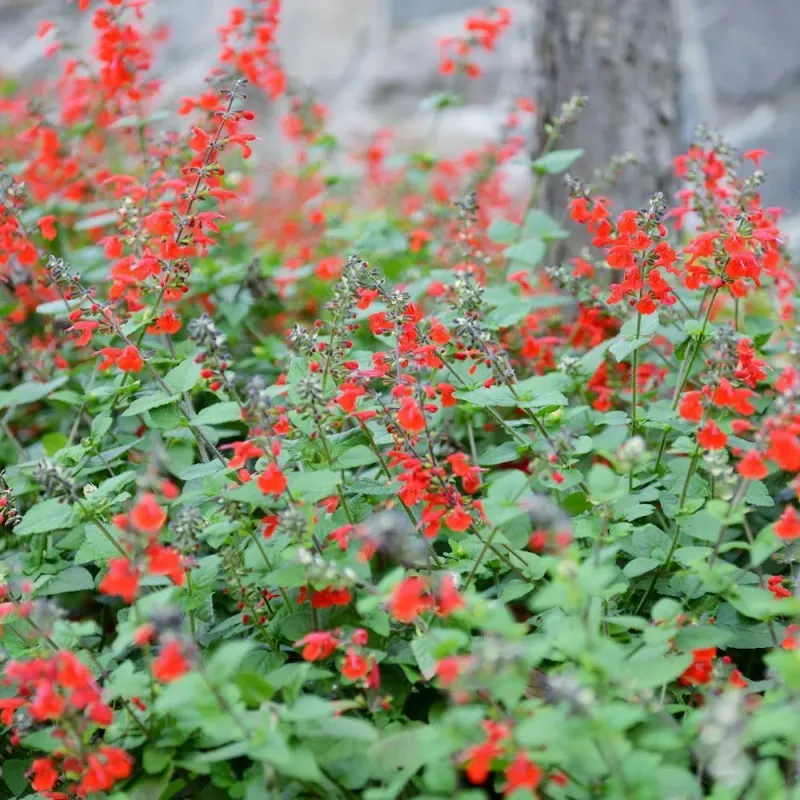
One of the more useful things scarlet sage does in a North Carolina garden is reseed on its own.
In areas where winter temperatures drop below freezing and the root crown does not survive, reseeding is actually how the plant returns the following summer, and many gardeners in the Piedmont and mountain foothills find it reliably shows up again without any extra effort.
The NC Native Plant Society’s profile for scarlet sage notes its easy reseeding habit as a practical feature worth working with rather than fighting.
If you want more plants next year, leave some of the spent flower stems in place through late summer and fall so the seed capsules can mature and drop.
If you want tighter control over where the plant spreads, cut stems before the seeds fully ripen.
Placement matters here too.
NC State describes scarlet sage as well-suited to borders, mass plantings, cottage gardens, pollinator beds, and walkway edges.
Grouping several plants together creates a more visible block of color and makes the patch easier for passing hummingbirds and butterflies to spot from a distance.
A single plant tucked in a corner can still attract visitors, but a cluster of 4 to 6 plants spread across a 6-foot stretch gives the planting more presence in the landscape.
That said, grouping plants improves the visual display and can make the area more noticeable to wildlife.
It does not guarantee more visits.
Pollinator Partnership guidance is clear that actual wildlife activity depends on weather, floral diversity, nearby habitat, and the local pollinator community, not on any single plant or planting size.
Check The Scientific Name Before You Buy
The garden center tag says scarlet sage.
You pick it up, bring it home, plant it, and wait for hummingbirds.
But there is a real chance the plant in that pot is not Salvia coccinea at all.
Two completely different plants share the common name scarlet sage.
Salvia coccinea is the North Carolina-recognized native with tubular red flowers and documented hummingbird and butterfly visits.
Salvia splendens is a species native to Brazil, widely sold as a bedding annual in big-box garden centers, and bred heavily for ornamental color.
NC State’s profile for Salvia splendens warns that many of its cultivated bedding varieties have little or no nectar, meaning they may look bright and full in a pot but offer almost nothing to the pollinators you are hoping to attract.
The fix is straightforward.
When you are at the nursery or ordering online, look for the scientific name Salvia coccinea on the label or in the plant description.
NC State’s Salvia coccinea profile is a free, reliable reference you can pull up on your phone before you buy.
Native plant nurseries and some independent garden centers are more likely to carry the true species than mass-market chains focused on bedding color.
Lyreleaf sage, Salvia lyrata, is another native you might encounter, and it is a genuinely useful low-growing perennial for North Carolina yards, especially in shadier or drier spots.
But it is a different plant with a different growth habit and a spring bloom window, not a summer-long bloomer.
Both are worth knowing, just not interchangeable.
Build A Garden That Extends Beyond Summer
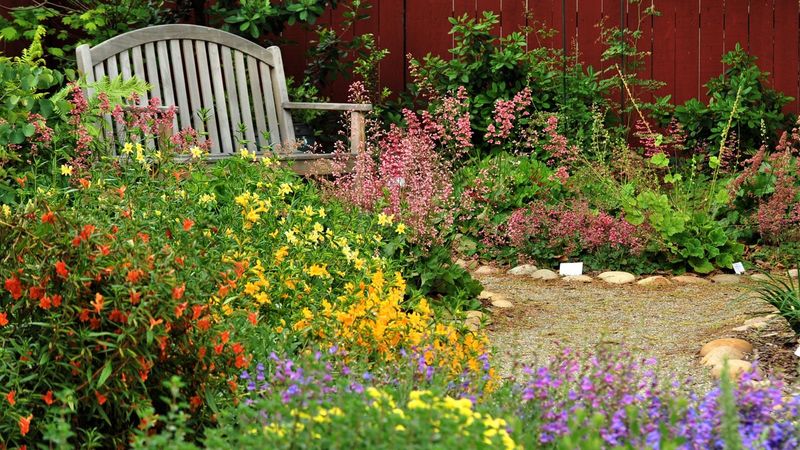
Scarlet sage can carry a lot of the summer nectar load in a North Carolina yard, but asking it to supply a complete pollinator habitat on its own is too much for any single plant.
The wildlife that visits your yard in June is not the same community you will see in September, and a garden that only blooms in midsummer leaves a lot of that community without support.
NC State’s landscaping for wildlife guide recommends choosing native plants that provide flowers, fruits, or seeds at different times of year, building a sequence of resources rather than a single peak season.
Think of scarlet sage as the summer layer in a longer story.
Pair it with spring bloomers like native violets or lyreleaf sage for early butterflies and bees, then bring in goldenrod, ironweed, and native asters for fall monarchs passing through on their way south.
Pollinator Partnership’s continuous bloom guidance makes the same point: a functioning pollinator garden needs nectar and pollen sources across spring, summer, and fall, not just a single strong performer in one season.
Milkweed supports monarch caterpillars.
Joe Pye weed draws late-summer swallowtails.
Native grasses and seed-bearing plants feed birds through winter.
Beyond bloom timing, a yard that genuinely supports wildlife also needs places for insects to nest, some leaf litter or bare ground for ground-nesting bees, water sources, and reduced pesticide pressure overall.
Scarlet sage is one lively, colorful piece of that picture.
It is a strong piece, but it works best surrounded by other layers that cover the gaps it cannot fill on its own.
Protect The Visitors You Want To See
Planting scarlet sage and then treating the surrounding garden with broad-spectrum insecticides is a fast way to undercut everything the plant is doing for you.
Protecting the hummingbirds and butterflies you want to see means being deliberate about what you apply, when, and where.
Start with the right diagnosis.
Native plants, including scarlet sage, can face pest pressure from insects, fungal issues, or browsing damage.
The first step is always to identify what is actually happening before reaching for any product.
NC State’s arthropod pest guidance consistently recommends identifying the problem first, then choosing the least hazardous effective response.
When a plant looks chewed but remains otherwise healthy and continues blooming, tolerating minor damage is often the right call.
If treatment is genuinely necessary, keep it away from blooming plants and active pollinators.
EPA pollinator protection guidance recommends following the product label exactly, avoiding applications to flowers in bloom, preventing drift onto nearby flowering plants, and observing any timing or bloom restrictions listed on the label.
University of Minnesota Extension research on pesticides and pollinators adds that systemic insecticides can persist in nectar and pollen for weeks or months after application, meaning the timing of a single treatment can affect visitors long after the spray has dried.
Do not spray blooming scarlet sage directly.
Do not spray nearby flowering weeds or ground covers while pollinators are actively working them.
Avoid windy conditions that carry product beyond the target area, and keep a buffer between any treated turf and your flowering ornamentals.
NC State’s wildlife landscaping guidance frames it well: reducing pesticide pressure is one of the most direct ways to support the visitors you are trying to attract.
Scarlet sage gives your yard a reliable summer bloom and a real chance at hummingbird visits, and a little careful stewardship is what keeps that chance alive.