
The North Carolina Native Plants That Can Support Eastern Box Turtles Already in Your Landscape
Follow us on Google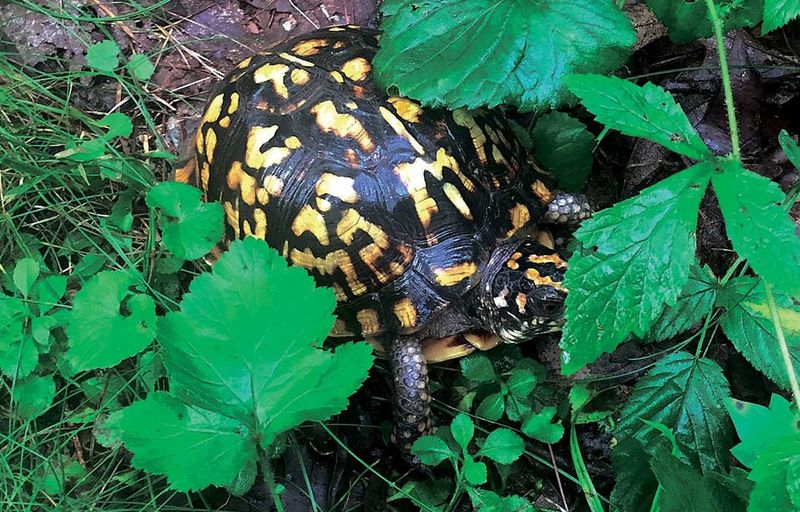
Walk out to your backyard on a warm June morning in North Carolina and you might find a domed shell moving slowly through the leaf litter near your fence line. Eastern box turtles have lived in Carolina neighborhoods, woodlands, and field edges for a long time, and a yard that gives them what they need can become part of their regular range.
No single plant pulls them in like a magnet, but thoughtful choices about what you grow and how you manage your yard can make a real difference for turtles already living nearby. Getting those choices right also means avoiding a few common mistakes that can hurt turtles without anyone realizing it.
Blackberry Supports an Edge—It Does Not Summon Turtles
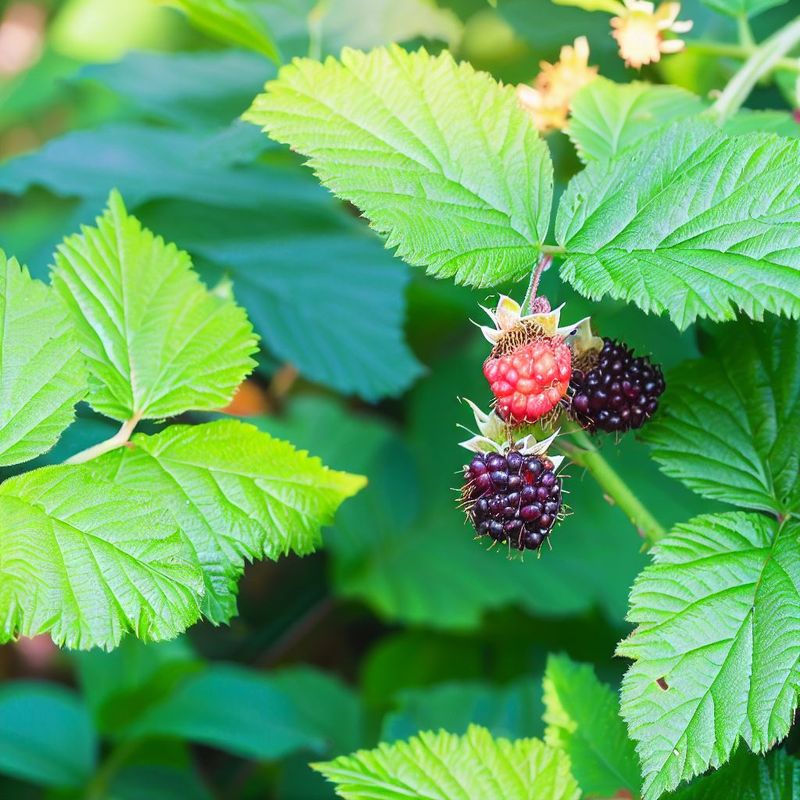
Rubus allegheniensis, the native blackberry most North Carolinians recognize from roadsides and field edges, turns up in almost every conversation about wildlife planting for a reason. NC State Extension’s Plant Toolbox identifies it as native to North Carolina, a soft-mast fruit source, and a bramble with genuine value for edge habitats.
That is a solid foundation, but it does not make blackberry a guaranteed turtle food or a species that will pull eastern box turtles into a yard from somewhere else.
What blackberry can do is contribute fruit and low arching canes to an edge planting where conditions suit it, which means full to partial sun, reasonable drainage, and room to spread. Where turtles already move through the surrounding landscape, that kind of structure adds one more reason for them to linger.
The evidence does not go further than that.
NC Wildlife is clear that habitat improvements may help where box turtles already occur nearby, but planting blackberry in a yard surrounded by pavement and mowed lawn will not cause turtles to colonize from a distance. The honest framing is this: blackberry can strengthen existing habitat, and existing habitat supports turtles that are already part of your neighborhood’s landscape.
That is a worthwhile goal, and it is the one this article is built around.
Build a Habitat Mosaic, Not a Single Sunny Patch
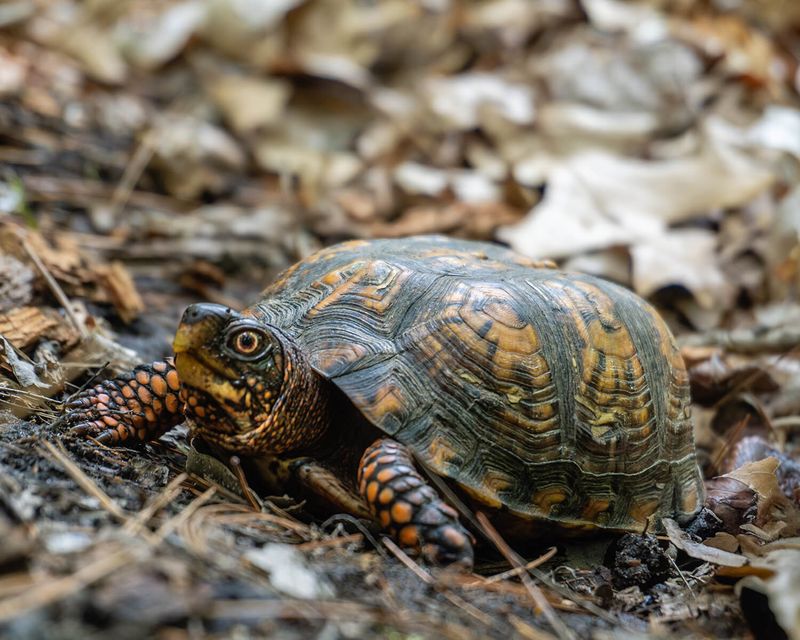
A lot of yard advice for box turtles gets boiled down to “give them a sunny spot with low plants nearby,” and while that image is not wrong, it leaves out most of what actually matters. Eastern box turtles, Terrapene carolina carolina, use a connected mosaic of habitats that can include shaded woodland, open ground, thickets, stream edges, wetland margins, and leaf-deep forest floor, often shifting between them across a single day.
Thermoregulation research on eastern box turtles found that they actively manage body temperature by moving between warm open areas and cooler shaded refuges, which means a yard with only full sun or only dense shade misses the point. Open ground may provide basking and nesting opportunities, but shade, ground moisture, and cover are equally necessary to prevent dangerous heat and water loss, especially during North Carolina’s muggy July and August afternoons.
A 2020 resource-selection study found that eastern box turtles chose locations with greater understory vegetation, low visual obstruction from ground level to about 10 inches up, bramble cover, coarse woody debris, and deeper leaf litter. That list describes a connected edge, not a manicured bed.
USGS spatial ecology findings reinforce that vegetation structure and landscape connectivity matter more than any single plant species.
For a North Carolina homeowner, the practical translation is this: a sunny opening beside native low cover, with a shaded corner and some undisturbed leaf litter nearby, gives a passing turtle far more reason to stay than a single planted row ever could. The goal is variety touching variety, not a formula.
Layer Native Plants Into a Connected Edge
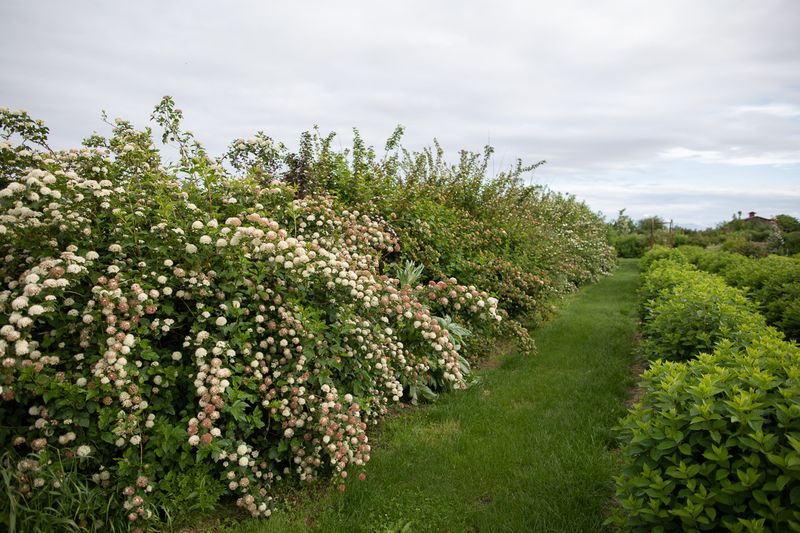
Blackberry works best when it is part of a layered edge rather than a standalone planting. Serviceberry (Amelanchier species) fruits early in spring, before most other native plants, and its small berries are eaten by a wide range of wildlife.
Highbush blueberry (Vaccinium corymbosum) offers fruit through summer and turns reliably red in fall. Native viburnums, including Viburnum nudum and Viburnum prunifolium, add late-season berries and dense branching that creates low cover through winter.
Pawpaw (Asimina triloba) deserves a mention because it is native to much of North Carolina and produces large, soft fruit in late summer and early fall. Before planting it near play areas, though, check NC State’s pawpaw profile for any site-specific safety notes, because some people experience skin irritation from the fruit pulp or leaves.
Native status alone does not make a plant universally safe for children, pets, or turtles, and that check matters before any new planting goes in.
NC State Extension’s wildlife landscaping guidance encourages retaining leaf litter alongside living plants, because the litter layer is where box turtles forage for invertebrates, shelter from midday heat, and sometimes overwinter. Inkberry (Ilex glabra) and yaupon holly (Ilex vomitoria) can fill gaps in the planting while tolerating wet or dry conditions depending on the site.
The NC State Extension Gardener Plant Toolbox lets you sort candidates by light, soil moisture, and region before you buy, which keeps the planting grounded in what will actually survive your specific yard rather than what looks good on a list.
Shape the Yard Around Cover and Moisture
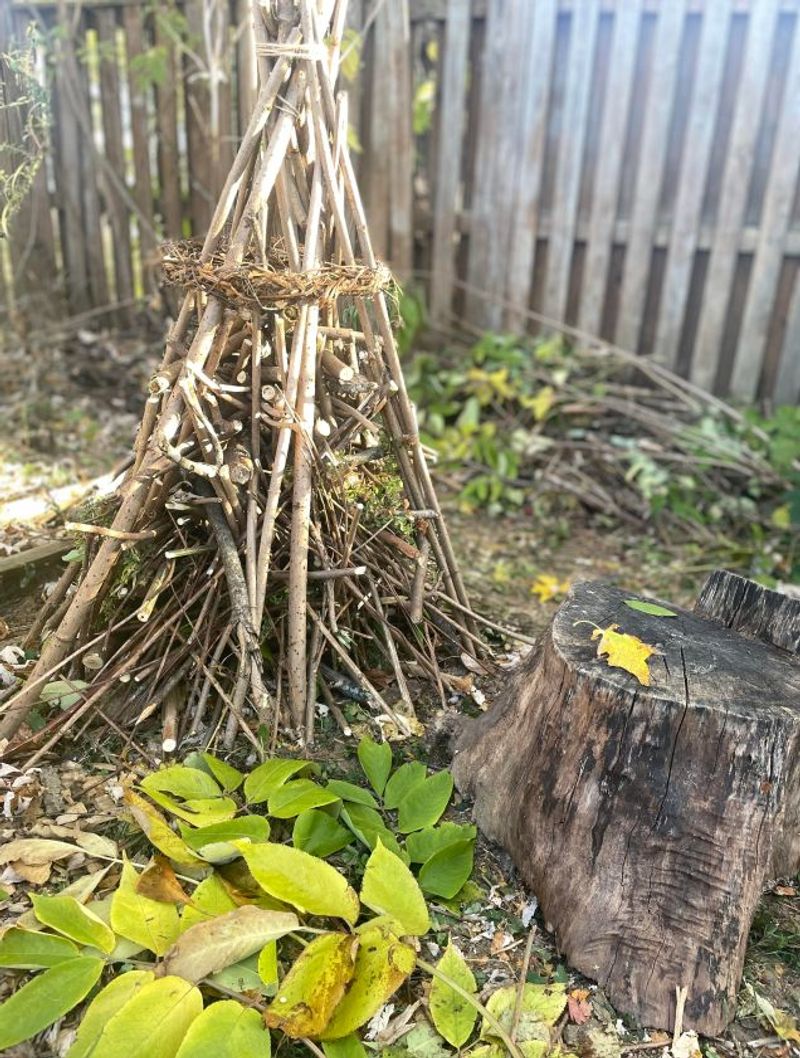
Picture one corner of your yard where the mower does not reach every week. A patch of native low shrubs, a fallen branch left where it landed, a shallow depression that holds rain for a day or two, and a layer of oak leaves from last fall.
That kind of corner costs almost nothing to create and checks several boxes that box turtles actually use.
NC State Extension recommends providing backyard reptiles with basking sites and shelter in the form of trees, shrubs, leaf litter, downed logs, and snags. The 2020 resource-selection research noted earlier found coarse woody debris and deep litter as positively selected features, meaning turtles were found in those spots more often than chance would predict.
A single untreated log beside a low shrub edge accomplishes more than a formal bed of mulched ornamentals.
Water is worth mentioning carefully. Box turtles are terrestrial animals, not aquatic ones, and a deep pond with steep sides creates a drowning hazard rather than a habitat benefit.
A shallow dish or a natural low spot that holds a few inches of water with easy entry and exit on all sides may help in some settings, especially during dry spells. Natural shade and ground moisture from retained leaf cover can be sufficient on their own, and not every yard needs an added water feature at all.
Do not invent rules about how many square feet of cover you need or how far the log should sit from the shrubs. NC Wildlife and the published research do not establish universal dimensions, and a yard that offers connected texture in whatever space it has is doing the right thing.
Match Plants to North Carolina Conditions
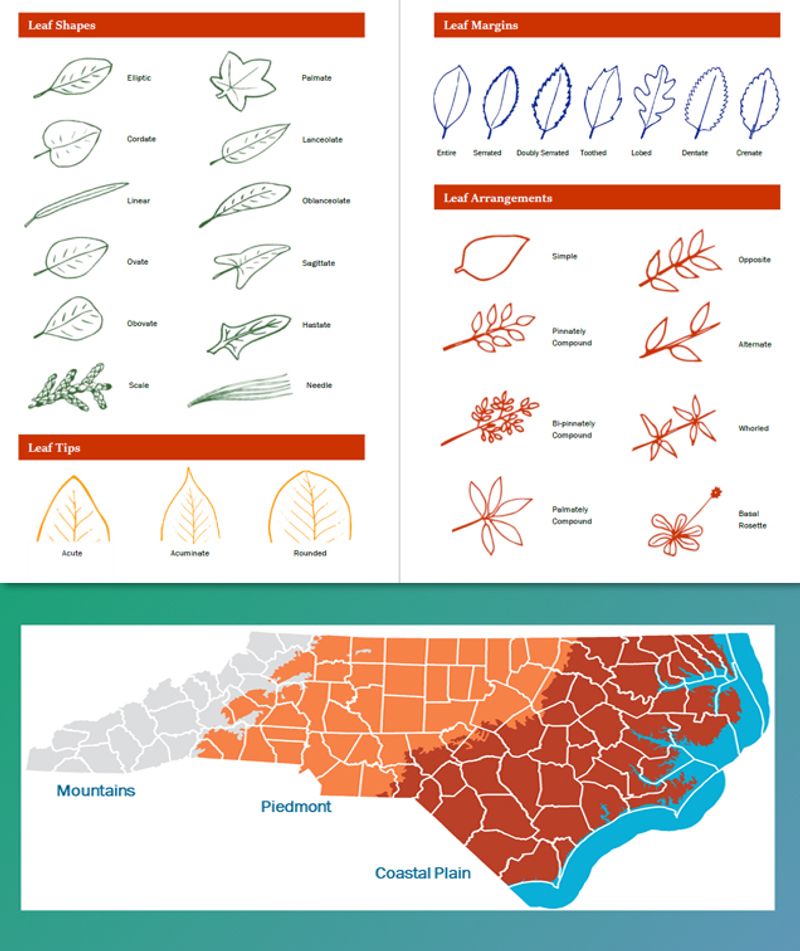
North Carolina runs from the Outer Banks to the Appalachians, and the same plant list does not work across that range. Highbush blueberry thrives in the acidic, moist soils of the Piedmont and mountains but may need more amendment in the sandy Coastal Plain.
Blackberry adapts broadly, but its growth habit and fruiting timing shift with elevation and soil. Pawpaw prefers moist bottomland soils and dappled shade, so it belongs near a low wet area rather than a dry ridge.
NC State Extension’s native landscaping guidance and the Extension Gardener Plant Toolbox both let you filter by region, light, and soil moisture, which is the right starting point before buying anything. Matching a plant to its site is what keeps it alive past the first summer, and a struggling plant in the wrong spot gives turtles nothing.
Regional variation in turtle behavior adds another reason to avoid one-size-fits-all advice. A study of North Carolina box turtle populations found that Sandhills turtles preferred bottomlands and areas near streams, while a nearby Coastal Plain population used upland areas more often and moved near streams only randomly.
Those are real differences within the same state, and they mean that the habitat you create should reflect what is actually around your property, not a generic template.
Plant safety is part of the selection process too. Before adding pawpaw or any unfamiliar native near a play area, check the NC State pawpaw profile for notes on skin sensitivity.
Not every native berry is automatically safe for children, pets, or turtles, and a quick species check takes two minutes.
Make Mowing and Chemicals Less Dangerous
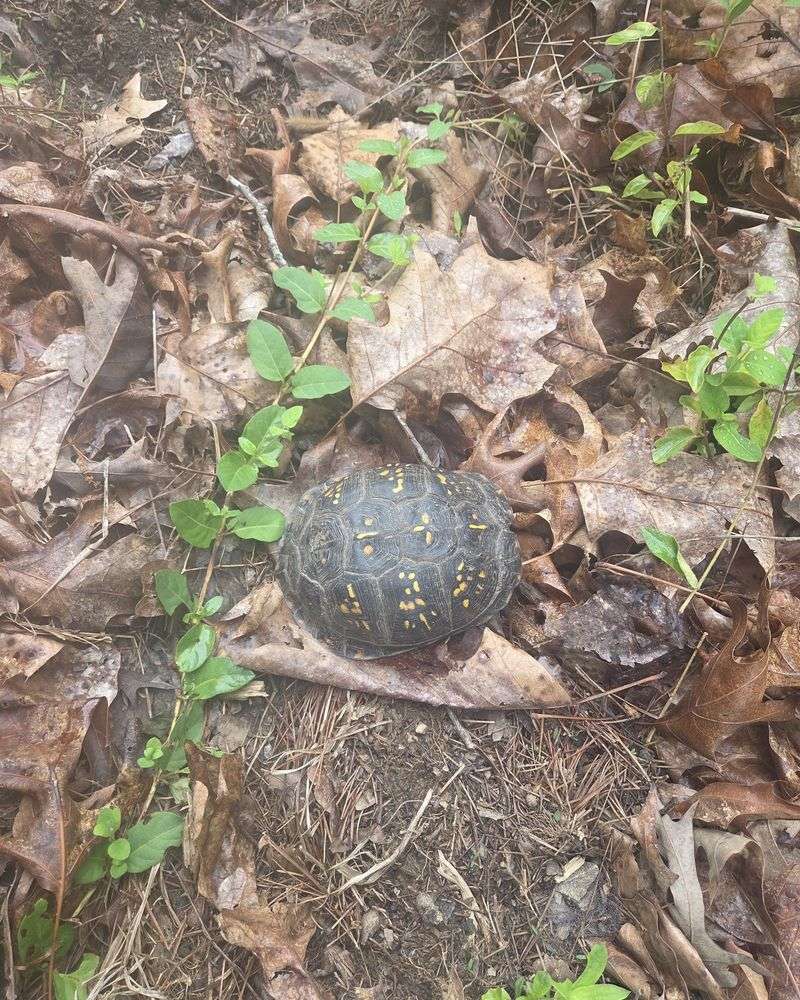
Here is where habitat work and yard care collide in the most concrete way. A box turtle resting under a shrub or inside a leaf pile is almost invisible to someone walking behind a mower, and the outcome of that meeting is not good.
A mortality study of three-toed box turtles at two Missouri sites found lawnmower injuries were among the documented causes of death. That research involved a different subspecies in a different state, so it does not give us a precise injury rate for eastern box turtles in North Carolina, but the mechanical reality is the same: a mower blade does not distinguish a turtle from a root.
Before mowing near any dense cover, leaf piles, fallen logs, or low shrubs, walk the area first. Avoid string-trimming blindly around the base of shrubs, brush piles, or stacked wood.
If a turtle is visible in the mowing path, wait for it to move on its own or gently redirect it without picking it up and carrying it away from its range.
Timing matters too. A New Hampshire habitat management guide recommends scheduling major ground disturbance during the inactive season, roughly November 1 through April 1, as a conservative precaution.
That is not a North Carolina law or an official state rule, but it reflects the logic that turtles in the leaf litter during winter are far less likely to be in the mowing path than turtles active from spring through fall.
Pesticides deserve the same careful thinking. EPA guidance on protecting wildlife from pesticides recommends using them only when necessary, treating only the affected area, following label directions exactly, and keeping products out of water.
Not every pesticide is lethal to turtles, but exposure can occur through soil, vegetation, water, and contaminated prey, so reducing unnecessary use near habitat areas is a straightforward protective step.
Leave a Wandering Turtle in Its Home Area
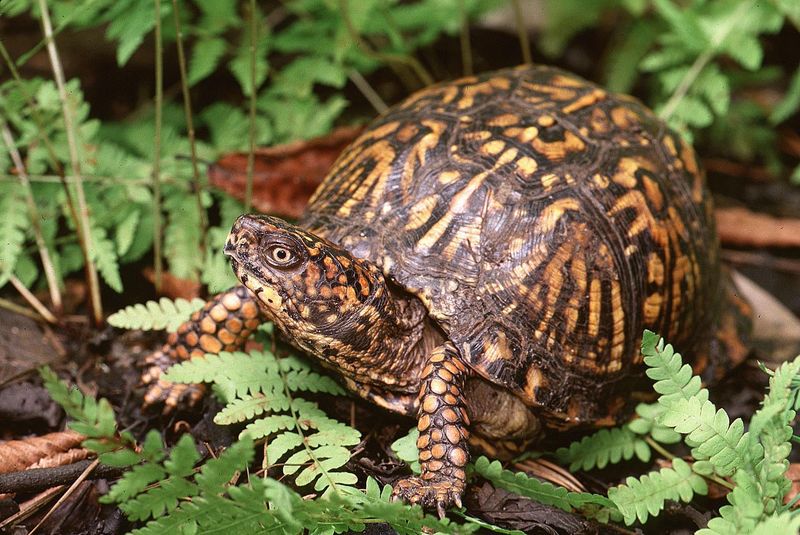
Finding a box turtle under your rosemary or crossing the patio on a rainy Tuesday is genuinely exciting, but the most helpful thing you can do is also the easiest: leave it alone. NC Wildlife explains that eastern box turtles typically occupy territories of less than 2 acres and have strong homing instincts that keep them oriented to a specific home range.
Moving a turtle, even to a place that looks like better habitat, can disorient it and cause it to spend weeks or months trying to return, crossing roads and encountering hazards along the way.
One appearance does not prove the turtle has moved in permanently. NC Wildlife’s species profile notes that box turtles are especially active in spring and fall and often move after summer rain events.
A turtle crossing your yard on a wet afternoon in July may be traveling through rather than settling down. Watch it, enjoy it, and let it go where it was already headed.
If a turtle is in a road and in immediate danger, carry it only to the side it was already moving toward. Crossing back to retrieve it or placing it in a different direction defeats the point of the rescue and may send it back into traffic.
Nest encounters need their own clear guidance. If you find what looks like a freshly disturbed patch of soil where a turtle was digging, you can protect it temporarily with a piece of chicken wire or hardware cloth staked loosely over the spot.
Remove the cover after the ground settles, generally within one to two weeks. Leaving a cover in place for months can trap hatchlings when they emerge, which turns a protective gesture into a serious problem.
NC Wildlife advises against indefinite nest covering for exactly that reason.
Let the Turtle Be Wildlife, Not Pest Control
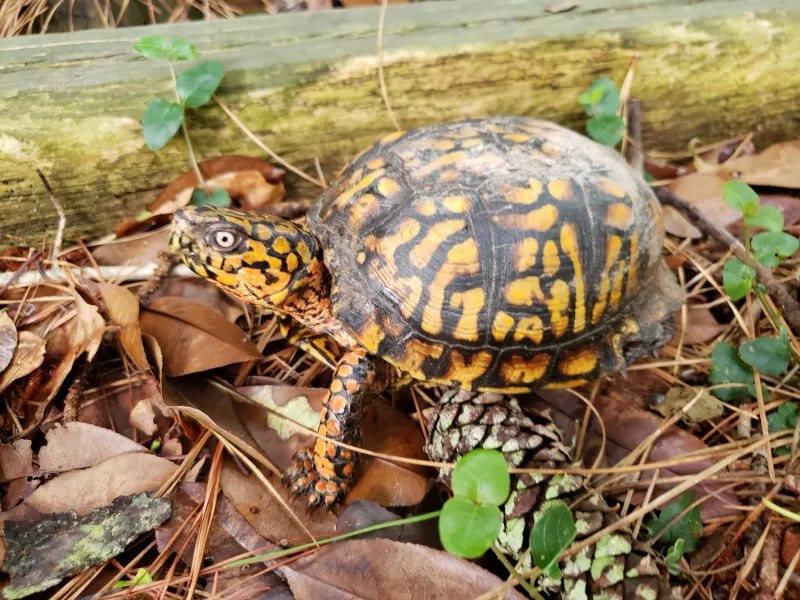
Box turtles eat a remarkably varied diet. The U.S.
Forest Service species review documents fruits, berries, fungi, roots, flowers, seeds, insects, snails, slugs, worms, and other animal matter as part of their recorded diet. That range is genuinely impressive, but it does not translate into meaningful control of ticks, mosquitoes, Japanese beetles, or other household pests.
A single turtle foraging through a Piedmont backyard is not a pest management strategy, and framing it as one sets up disappointment.
NC State Extension’s backyard reptile guidance focuses on habitat support rather than pest suppression, which is the right framing. A turtle in your yard is a sign that the habitat has enough of what it needs, not a replacement for tick checks after outdoor time, mosquito management around standing water, or keeping children and pets supervised near any wildlife.
Do not feed a wild turtle fruit, pet food, or produce. Feeding is not necessary, can make turtles less cautious around people and pets, and may draw other animals to the same spot.
NC Wildlife also discourages collecting, keeping, or buying wild box turtles; removing individuals from the landscape affects the local breeding population in ways that are hard to reverse.
The practical rule for coexistence is shorter than most people expect: preserve a sunny opening beside native low cover, protect the leaf litter and nearby shade, keep yard-care habits safer around dense growth, and let any turtle you find stay in its own North Carolina home range. A yard that does those things quietly becomes part of something larger than itself.