
The North Carolina Native Plant HOAs Keep Trying To Ban But Legally Cannot Touch
Follow us on Google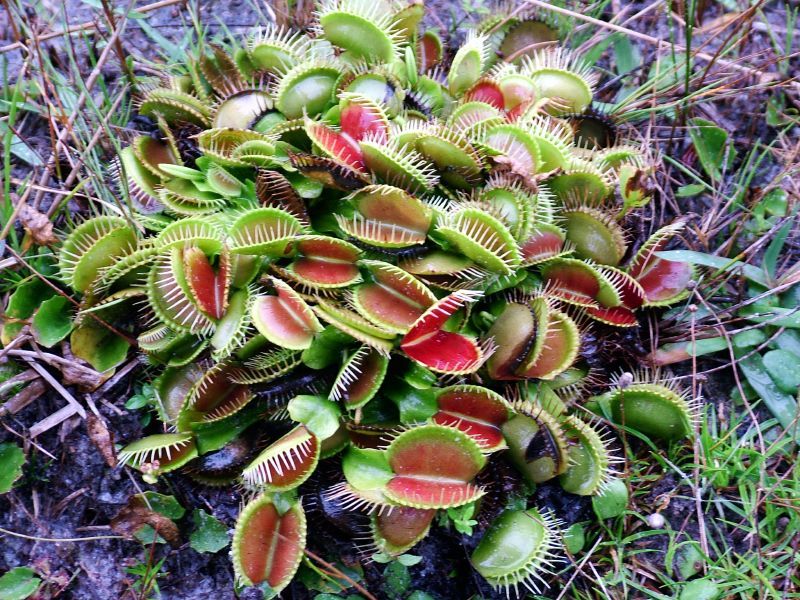
A story has been circulating in North Carolina neighborhoods that one specific native plant is so legally protected that no HOA can make you remove it. That claim sounds satisfying, especially if your board has ever handed you a violation notice about your yard.
But the real picture is more complicated, and understanding it could save you from a fine, a removal order, or a costly mistake. The plant most likely behind the rumor is the Venus flytrap, and while North Carolina law does protect it in important ways, those protections do not work the way most people think.
The Plant Behind the Rumor May Be a Venus Flytrap
Somewhere between a Facebook share and a neighborhood group chat, a story took hold: North Carolina has a native plant that HOAs keep trying to ban but legally cannot touch. The claim is satisfying.
It is also not quite accurate, and the plant most likely at the center of it is the Venus flytrap, Dionaea muscipula.
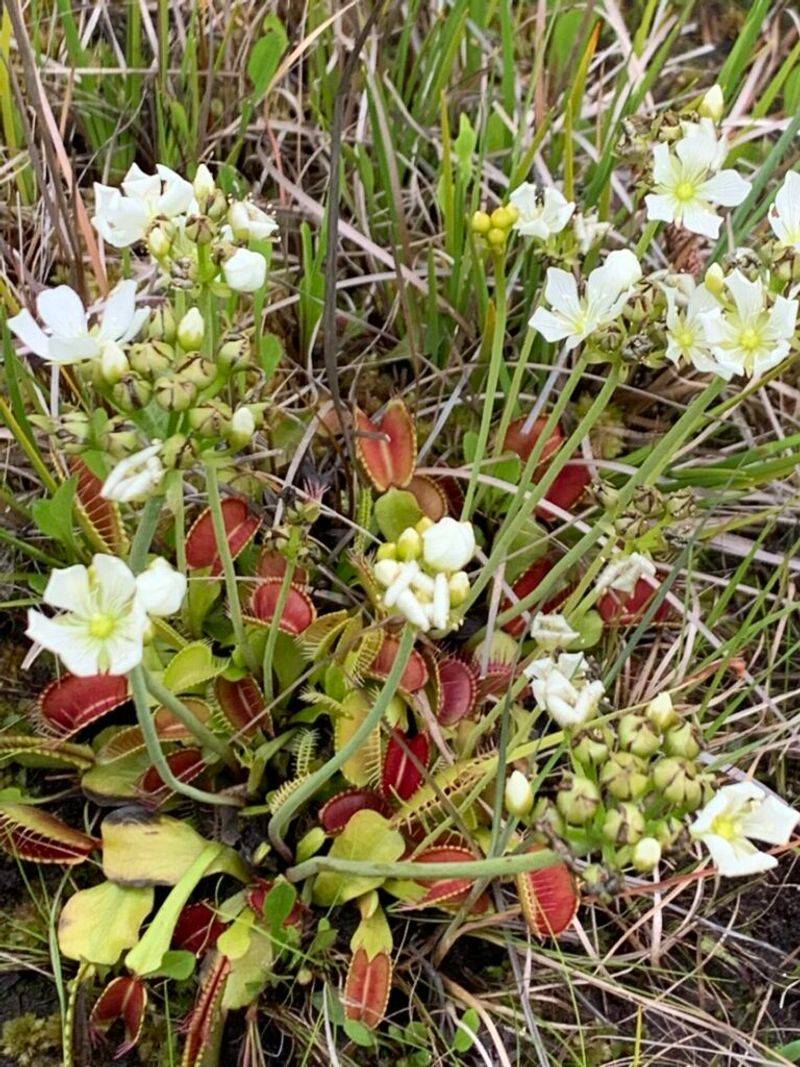
Here is what is genuinely true. North Carolina’s Department of Natural and Cultural Resources confirms that the Venus flytrap is native to a small slice of the Coastal Plain, mostly within about 75 miles of Wilmington.
It does not grow wild in the Piedmont, the Sandhills, or the mountains. If you live in Raleigh, Charlotte, or Asheville, this plant is not your local native in any practical sense.
North Carolina law does protect Venus flytraps from unauthorized taking and collection under Article 22 of Chapter 14 of the General Statutes, which makes it a felony to steal them from another person’s land or public property. That is real, meaningful protection.
But that criminal statute addresses poaching, not homeowner association landscaping rules.
As for growing one yourself, NC State Extension’s plant profile is clear that Venus flytraps need wet, acidic, nutrient-poor soil, full sun to partial shade, and rainwater or distilled water only. Tap water can kill them.
That makes a container bog garden far more realistic than replacing your front-yard turf with a flytrap meadow. The plant’s appeal is real.
Its HOA-shield reputation, though, is an unverified rumor built on a misreading of what plant-protection law actually does.
Protected from Poaching, Not Private Covenants

The phrase “protected plant” does a lot of heavy lifting in this rumor, and it is worth unpacking exactly what it means. North Carolina’s plant-conservation statutes regulate taking, collecting, selling, trading, propagating, and removing certain plants from land you do not own or from public property.
Article 22 of Chapter 14 of the General Statutes addresses that kind of unauthorized taking. It is designed to stop poachers, not to referee a dispute between a homeowner and a board of directors.
The North Carolina Department of Agriculture’s plant-conservation rules focus on the same categories: collection from wild populations, commercial trade, propagation for sale, and removal from property you do not control. None of those rules address whether a private HOA can require you to remove a planting from your own lot.
The Venus flytrap also carries a ceremonial honor. G.S. 145-22 designates it as the state’s official carnivorous plant.
That designation is meaningful as a cultural statement, but it creates no landscaping entitlement. A state symbol is not a zoning exemption.
So where should you actually start? Not with a social-media post or a landscaping handbook or a board email.
Under G.S. 47F-2-103, the declaration, bylaws, and articles of incorporation are the community’s legal foundation. Start there.
The conservation statutes and the private covenants are entirely separate legal systems, and confusing them is exactly how homeowners end up surprised by a fine.
The Recorded Declaration Sets the Starting Point

Before you plant anything that might raise a board’s eyebrows, you need the actual recorded declaration, not a summary, not a welcome packet, and not what a neighbor told you at the mailbox. North Carolina’s Planned Community Act at G.S. 47F-2-103 establishes that the declaration, bylaws, and articles of incorporation provide the community’s legal authority and are enforceable by their terms, unless they conflict with the Act itself.
That means the document recorded at the county Register of Deeds is the starting point, not the board’s current preferences or a landscaping handbook that may not reflect amendments.
Once you have that document in hand, read it with specific questions. Does it address lawns, landscaping, or plant selection?
Does it distinguish between front yards and rear yards? Does it require prior architectural review before any change?
Does it describe a maintenance or appearance standard, such as “neat and attractive,” without naming specific plants? Does it list prohibited uses or materials?
Amendments matter too. A declaration from 1988 may have been modified in 2014 or 2021, and those changes are what govern today.
Board-adopted rules can also add detail to the declaration’s framework, but they generally cannot exceed the authority the declaration grants. An email from the property manager is not a covenant.
A line item in a newsletter is not a bylaw.
The document-first approach does not guarantee a favorable answer. Some declarations are specific and clearly written.
Others are vague enough that interpretation becomes contested. Either way, you cannot evaluate the board’s position until you know what the governing documents actually say, and that is a step many homeowners skip.
Vague Landscaping Language Can Matter

Here is where it gets genuinely interesting for homeowners who are facing a board challenge based on fuzzy language. North Carolina courts treat restrictive covenants as contracts, which means the written and recorded text controls.
A 2023 North Carolina Court of Appeals decision confirms that restrictive covenants are enforceable when written, properly recorded, and consistent with public policy, and that ambiguities are generally resolved in favor of unrestricted land use. That last part matters.
If a covenant says “yards must be kept neat and attractive” but does not define neat, name prohibited plants, or require a specific turf type, a homeowner may have room to argue that a well-maintained native bed satisfies the standard. The argument is not guaranteed, but it is grounded in how North Carolina courts read these documents.
A covenant that clearly bans anything other than traditional turf grass is a different situation entirely.
Practical questions to ask as you read: Does the covenant name the plant you want to grow or explicitly prohibit a garden bed in that location? Does it require prior architectural approval before planting?
Does it treat the front yard differently from the rear? Has the board enforced this standard consistently against comparable yards, or is your situation the first time it has come up?
An older covenant is not automatically invalid. Age alone does not void a restriction.
But amendment history, enforcement patterns, and whether the board has overlooked similar plantings in other yards can all become relevant if a dispute reaches a formal hearing or legal challenge. None of this replaces an attorney’s review.
If you are facing an active fine or a removal order, the Planned Community Act framework gives associations real enforcement tools, and you should have qualified legal counsel before deciding how to respond.
The Drought Rule Protects Irrigation, Not Plant Choice

North Carolina does have a genuine, if narrow, protection related to landscaping, and it is worth knowing exactly what it covers. G.S. 47F-3-122 generally limits an HOA’s ability to require irrigation when the U.S.
Drought Monitor or state environmental authorities designate severe, extreme, or exceptional drought conditions and applicable government water-conservation measures are in place. During those qualifying conditions, the association generally cannot penalize you for not watering.
That protection applies to landscaping broadly, including lawns, trees, shrubbery, and ornamental or decorative plants. So if your board sends a violation notice because your grass turned brown during a state-designated severe drought and your municipality has restricted watering, that statute gives you a real argument.
What it does not do is authorize a pollinator garden, a meadow conversion, a rain garden, or a native plant bed that the covenant otherwise prohibits. The rule is about irrigation requirements during a specific, qualifying drought event.
It is not a general license to redesign your yard or replace turf with a planting your HOA has not approved.
Many Coastal Plain homeowners deal with sandy soil that drains fast and dries out quickly in summer heat. Piedmont gardeners know the red clay can crack in a dry August.
Those are real conditions that make the drought rule practically useful. But the statute’s usefulness is limited to the irrigation question.
Conflating “I do not have to water during a drought” with “I can plant whatever I want” is a mistake that can lead to a fine the statute does not actually cover. Keep those two arguments separate, and only reach for the drought rule when its specific conditions apply.
Put the HOA Challenge in Writing

Planting first and hoping the board does not notice is one of the riskier moves a homeowner can make. Under North Carolina’s Planned Community Act, associations may impose reasonable fines after notice and an opportunity to be heard for violations of the governing documents.
If the declaration also allows the association to recover attorney fees, an impulsive planting decision can turn into a significant expense, and you may be required to pay for removal on top of everything else.
A calmer approach starts with a written request to the board or management company. Ask for the exact covenant or rule the board says applies, the specific violation being cited, the required correction and timeline, the hearing procedure and appeal path, and the fine schedule.
Get all of that in writing before you respond to anything.
Then build a proposal. A defined garden bed is easier to defend than a yard-wide conversion.
Submit a scaled plan showing dimensions and placement, a plant list with mature heights and widths, edging and sightline details, a maintenance schedule, and a written commitment to keep the planting visually contained and orderly. Show the board what the finished garden will actually look like from the street.
Many boards respond better to a clear, bounded design than to a general argument about native plants.
Attend any hearing you are offered and bring copies of every document you have submitted. Keep every email, letter, and notice the board sends you.
The Planned Community Act gives the association real procedural authority, and the homeowner who shows up prepared, documented, and reasonable tends to fare better than the one who shows up angry. If the board denies the proposal and issues a fine, consult a North Carolina attorney before deciding on next steps.
House Bill 1212 Could Broaden Garden Protections

A bill moving through the North Carolina General Assembly could change the legal landscape for gardeners in planned communities, but as of August 13, 2026, it had not become law. House Bill 1212 would prohibit planned-community associations from limiting edible or pollinator gardens within a lot owner’s boundaries.
That would be a meaningful shift for homeowners who want to grow vegetables, herbs, or pollinator-friendly plantings that a board currently has authority to restrict.
The bill’s path so far has been slow. As of August 13, 2026, House Bill 1212 had only been referred to the House Rules, Calendar, and Operations Committee on May 5, 2026.
It had not passed either chamber or been signed into law. Use “proposed,” “pending,” or “if enacted” when describing it.
Do not treat it as current protection.
Even if the bill eventually passes, its scope matters. The text covers edible or pollinator gardens, not every native plant, landscaping style, or specialized planting such as a Venus flytrap bog garden.
A homeowner hoping the bill would protect a particular installation should read the actual bill text carefully and not assume broad coverage from the general concept.
For anyone planning a garden project that might draw board scrutiny, the bill’s status is worth monitoring. Check the General Assembly’s bill lookup page for current status before making any decisions based on what the bill might do.
Pending legislation is a reason for cautious optimism, not a reason to skip the approval process your HOA currently requires.
Grow a Flytrap Carefully and Ask First
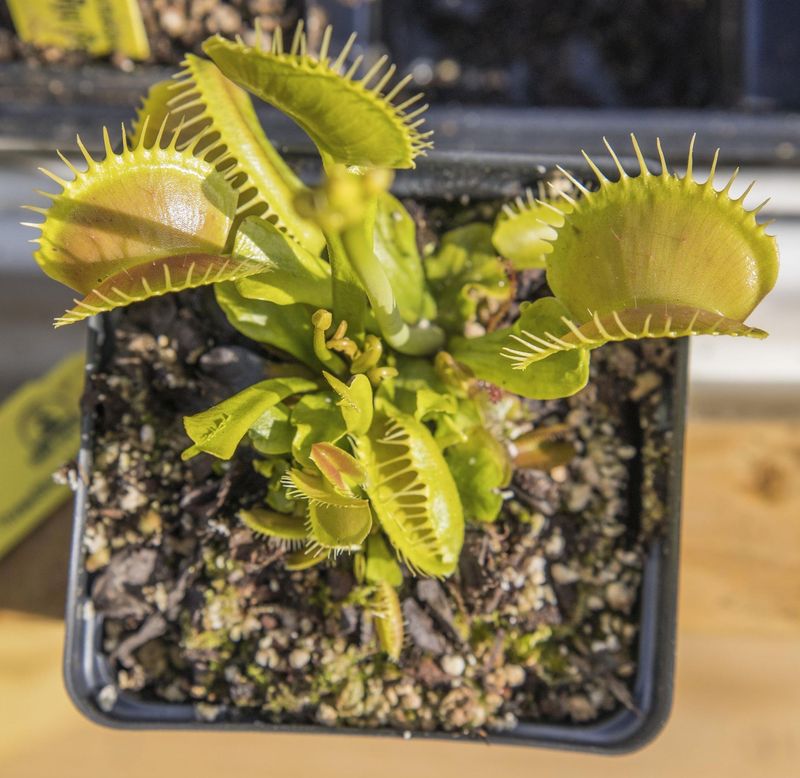
Growing a Venus flytrap at home is genuinely doable in North Carolina, especially along the Coastal Plain where the climate is closest to its natural range. But the plant has specific needs that make it a container or small bog garden project rather than a lawn substitute.
NC State Extension recommends wet, acidic, nutrient-poor soil, full sun to partial shade, and rainwater or distilled water only. Tap water, fertilizer, or standard potting mix can kill the plant within a season.
Winter hardiness is real but regional. NC State lists the Venus flytrap as hardy in USDA Zones 7 through 10, which covers most of the Piedmont and the entire coast, but mountain gardeners in Zones 6a and 6b should plan for container protection during cold snaps.
Climate suitability is useful information, but it does not change what your HOA documents say about your yard.
NC State Extension’s homeowner guide is clear that wild collection is illegal or tightly regulated. Buy nursery-propagated plants from a reputable seller.
Do not dig plants from public land, roadsides, nature preserves, or any property you do not own. North Carolina Department of Agriculture permit guidance explains that even on your own property, rules apply to propagation, relocation, sale, and giving plants away.
Verify those rules before you do anything beyond growing a purchased plant in a container.
Before placing a bog garden in a visible part of your yard, check your HOA documents using the process described earlier. A contained, well-defined planting on a patio or in a rear garden is a much easier conversation with a board than an unbounded front-yard installation.
The word “native” carries real meaning in ecology and conservation. In an HOA dispute, the exact covenant language, a clear design, and the correct legal rule matter more than the plant’s origin story.
A small bog garden, a nursery-grown plant, and a written approval request are the three things most likely to get you where you want to go.