
The North Carolina Native Goldenrods That Start Stealing The Show When Summer Beds Fade Out
Follow us on Google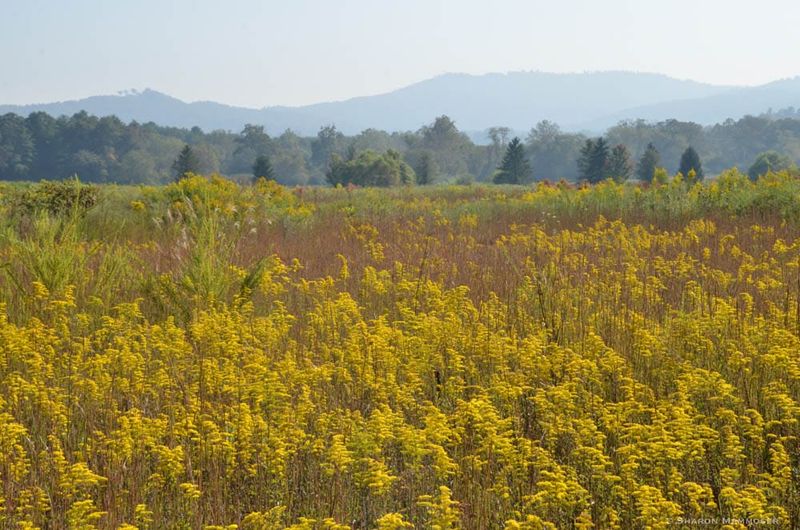
By late summer, most North Carolina flower beds start looking tired. The coneflowers are spent, the black-eyed Susans are winding down, and the garden needs something to carry it forward.
That is exactly when native goldenrods step up, flooding borders with bright yellow just as everything else is calling it quits. Understanding which species to choose and how to use them well can turn an awkward seasonal gap into one of the best moments in your yard.
Native goldenrods take the late-season handoff
Most yards in North Carolina hit a wall in August. The summer perennials that carried the garden since June begin to look ragged, and suddenly a bed that felt alive just weeks ago looks like it is running out of ideas.
Native goldenrods are built for exactly that moment, and the NC State Plant Toolbox lists multiple native Solidago species across the state, each with its own height, bloom period, spreading habit, and site preference.
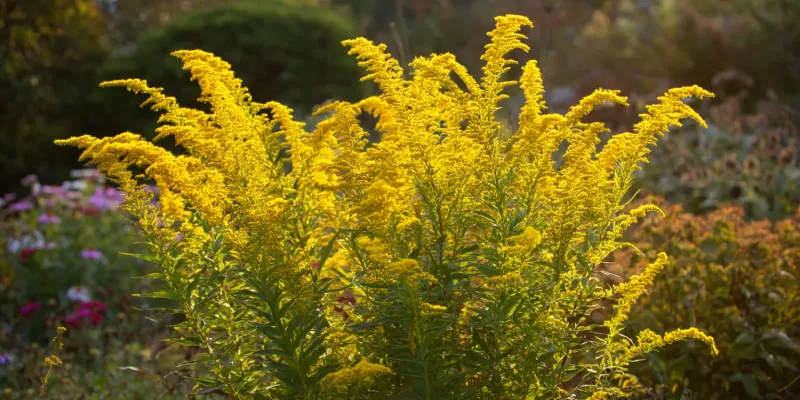
Two species stand out as practical starting points for most homeowners. Showy goldenrod (Solidago speciosa) produces dense, upright clusters of yellow flowers and is documented blooming from August through October.
Rough-leaved goldenrod (Solidago rugosa), sometimes called wrinkle-leaf goldenrod, follows close behind, opening in September and running into October. Other natives such as common goldenrod (Solidago canadensis) and seaside goldenrod (Solidago sempervirens) round out the group, but the right choice depends on your specific site rather than any single plant being universally best.
What makes these plants so visually effective in late summer is the contrast they create. While neighboring perennials are browning at the edges, goldenrod is just hitting its stride, throwing up tall wands of yellow that catch afternoon light and draw the eye across the whole bed.
NC State Extension describes showy goldenrod as a late-summer-to-early-fall plant that provides strong visual contrast in the garden. Bloom timing does shift with elevation, weather, and local conditions, so a mountain yard and a coastal yard may not follow the same schedule even with the same species.
Treating goldenrod as a group of related options rather than one singular plant is the key to using it well. Some species grow tall and upright; others stay compact and tolerate wet feet.
Matching the right Solidago to your site is what determines whether the late-season handoff actually works.
Choose a goldenrod by site, size, and spread
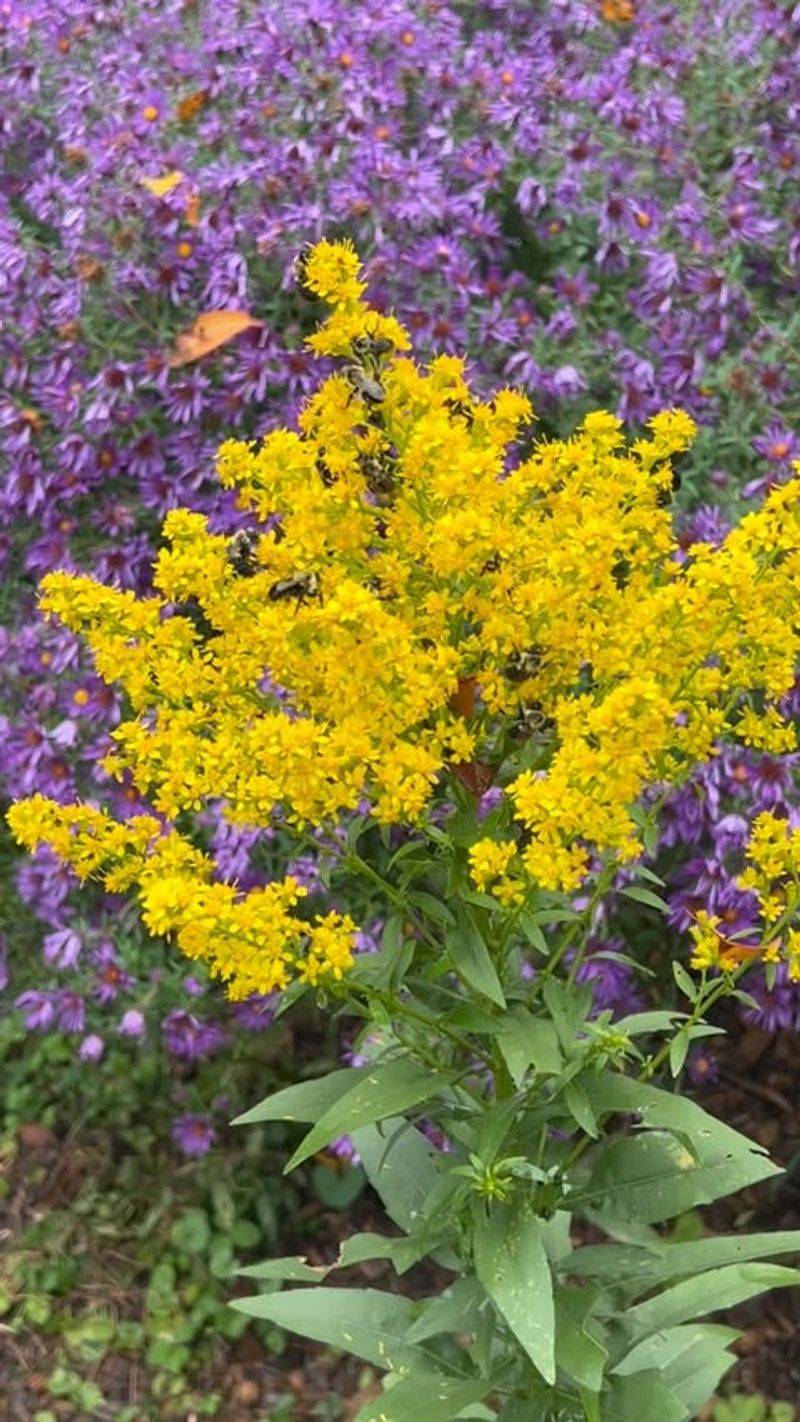
Picking up a plant labeled “goldenrod” at a nursery without checking the species is a bit like buying a shrub labeled “viburnum” and hoping it fits the corner you have in mind. The genus covers a wide range of sizes and habits, and two plants sold under the same common name can behave very differently once they are in the ground.
Showy goldenrod is one of the most useful options for a sunny residential border. NC State Extension documents showy goldenrod as reaching roughly 4 feet, tolerating drought and clay soil, and performing across all three of North Carolina’s regions: the Coastal Plain, the Piedmont, and the Mountains.
Its bloom window runs from August through October, making it one of the earlier goldenrods to open and one of the longer-blooming. The plant may naturalize over time and can benefit from division roughly every two years to keep it from crowding neighbors.
Rough-leaved goldenrod offers a slightly different profile. The NCDOT wildflower guide lists Solidago rugosa as a North Carolina native that grows 2 to 4 feet tall, thrives in full sun, and blooms in September and October.
It tends to spread through rhizomes and can colonize an area fairly quickly if it finds conditions it likes, so giving it defined space or a natural area where spreading is welcome makes maintenance easier.
Beyond these two, the NC State Extension Gardener Handbook recommends verifying the specific species or cultivar’s documented range and site requirements before planting. Focus on the factors that matter most: available sunlight, soil moisture, drainage, expected height, and how much room you can realistically give the plant.
Sticking to those documented details will serve you better than any general regional recommendation that skips the site-level specifics.
Its biggest payoff arrives after the summer nectar rush
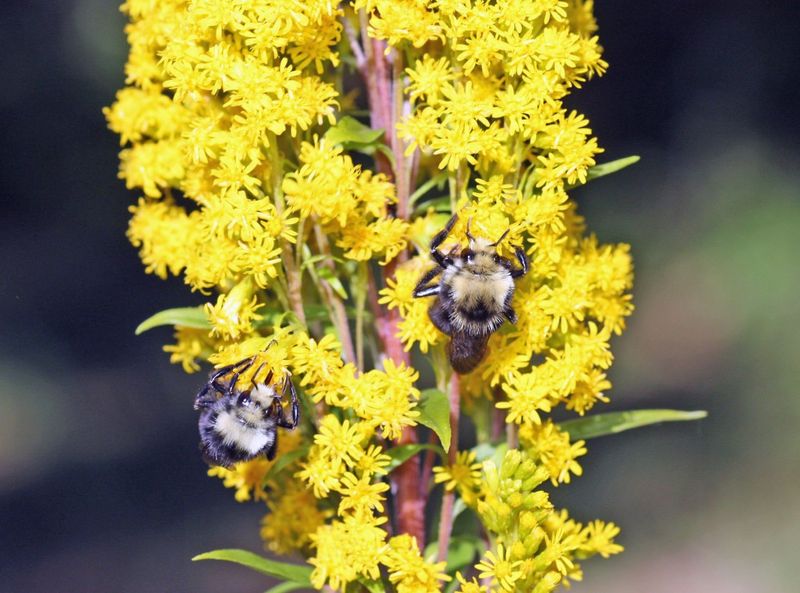
Color is the obvious reason to grow goldenrod in late summer, but the ecological payoff runs deeper than aesthetics. By the time showy goldenrod opens in August, most of the spring and early summer nectar plants have finished blooming.
Many bees, butterflies, and flies are still actively foraging and building energy reserves before cold weather arrives, and a yard without late-season flowers leaves them with very little to work with.
That gap is exactly what goldenrod fills. NC Cooperative Extension notes that goldenrods occupy a flowering niche between popular summer and fall nectar plants and provide nectar and pollen to large numbers of bees and flies preparing for winter.
The pollen is relatively protein-rich, which matters for native bees that are stocking larval cells or building fat reserves ahead of dormancy. Butterflies migrating through North Carolina in September and October also use goldenrod as a fuel stop.
Goldenrod’s wildlife value extends beyond insects. The NC State Plant Toolbox associates showy goldenrod and seaside goldenrod with bees, butterflies, and songbirds, and seed heads left standing into winter can attract seed-eating birds.
Specialized bees – including some that nest in the ground – depend almost entirely on goldenrod pollen during certain life stages.
None of that means one goldenrod planting transforms a yard into a complete wildlife habitat. NC State Extension recommends maintaining several native species in bloom during each season to create a more continuous food supply for pollinators.
Goldenrod plays a strong supporting role in that system, but it works best as one piece of a broader planting that includes spring bloomers, summer natives, and fall companions rather than carrying the entire habitat load on its own.
Give a sunny planting enough room to perform
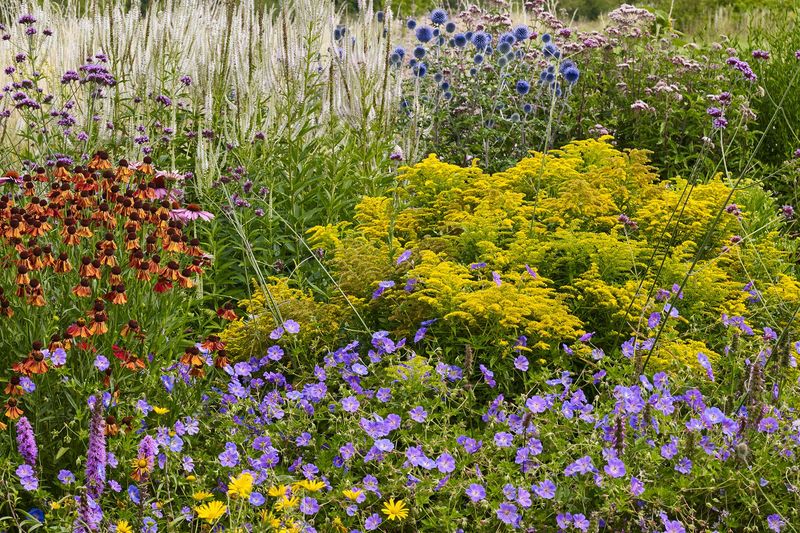
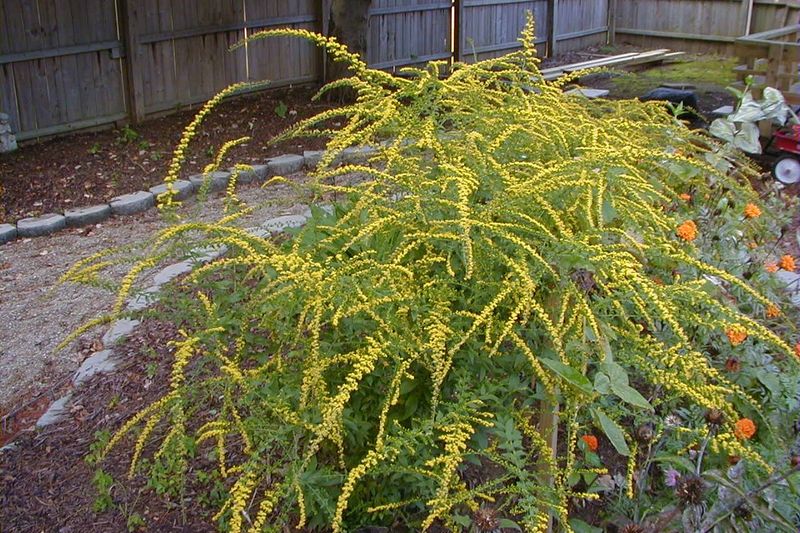
Goldenrod earns its place in a late-season bed partly because of height. Showy goldenrod reaching close to 4 feet creates a natural backdrop when shorter perennials in front have finished blooming, and that vertical layering is what gives a tired bed a second act rather than just a single remaining plant standing in a sea of brown.
NC State Extension suggests positioning showy goldenrod as a small drift at the back or middle of a sunny bed, with lower-growing plants placed in front to frame it. That arrangement works well in a typical residential border because it keeps the yellow flower wands visible from a distance while letting shorter natives or ornamental grasses anchor the foreground.
Think of it as designing for September the same way you design for June.
Sun and drainage are the two site factors that matter most for a sunny border planting. Showy goldenrod tolerates drought and clay soil, which is a real advantage in North Carolina’s Piedmont and Coastal Plain where summer heat bakes clay beds hard.
Iowa State Extension’s goldenrod guide notes that prairie-type goldenrods generally want full sun, while other species prefer part shade or consistently wet soils. Checking which category your chosen species falls into before planting saves a lot of corrective work later.
Give the planting enough space from the start. A drift of three to five plants spaced according to the species’ expected spread looks intentional and gives the plants room to develop their full flower display without immediately crowding neighboring perennials.
These layout suggestions reflect the plant’s documented height and flowering habit rather than a guaranteed design outcome, so adjust based on your specific bed size and what else you are growing nearby.
Manage spread without erasing habitat
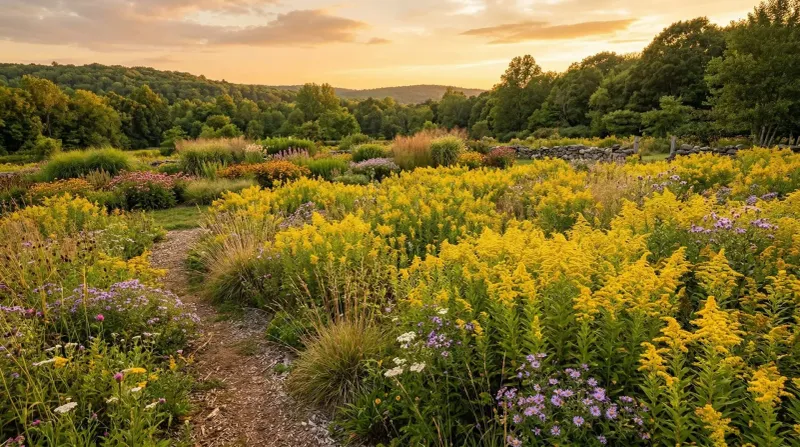
One of the most common complaints about goldenrod is that it takes over. That concern is not entirely unfounded, but it is also not a reason to avoid the plant.
It is a reason to plan for it honestly before it goes in the ground.
Some Solidago species spread through underground rhizomes and can expand their footprint steadily year after year. Others reseed freely when flower heads are left to mature.
NC State Extension notes that showy goldenrod may naturalize and recommends dividing it roughly every two years to manage its size. Iowa State Extension adds that spreading species generally benefit from division every two to three years.
Early spring, just as new growth emerges, is a practical time to dig and divide because the plant has not yet invested energy in flower stalks.
Calling native goldenrod invasive misses an important distinction. A plant that spreads and may need periodic management is not the same as a non-native invasive species that displaces native plant communities.
In a naturalized area, meadow edge, or rain garden where spreading is welcome, goldenrod’s tendency to fill space is an asset rather than a problem. The key is matching the plant’s habit to the space you are giving it.
Deadheading – removing spent flower heads before seeds mature – can encourage additional bloom in showy goldenrod and slows reseeding. At the same time, leaving some seed heads standing into late fall and winter provides structural interest in the garden and can attract seed-eating birds.
Neither approach is mandatory. If the bed is adjacent to a naturalized area where goldenrod spreading would be fine, leaving seed heads is a reasonable habitat choice.
If the bed is tightly managed and bordered by plants that cannot compete with a spreading clump, early deadheading and regular division keep everything in balance without eliminating the plant’s ecological value during its peak bloom period.
Goldenrod does not replace mosquito or tick protection
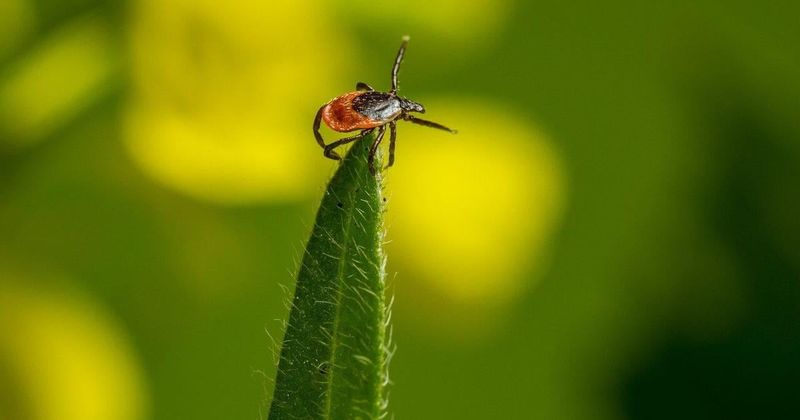
Goldenrod is a genuinely useful late-season plant, but it is not pest control. That distinction matters because the idea that certain plants can repel mosquitoes or reduce ticks circulates widely, and acting on that belief without separate protective measures can leave a family exposed during the exact time of year when tick and mosquito pressure is still real in North Carolina.
On mosquitoes, the evidence is straightforward. Iowa State Extension states that plants placed in a landscape do not reliably repel mosquitoes, and Penn State Extension explains that living plants do not release enough essential oils to work as effective repellents in an outdoor setting.
Goldenrod does not change that picture. The most effective mosquito reduction steps remain removing standing water, using EPA-registered repellents when spending time outdoors, and addressing any drainage issues that allow water to pool near the house.
Tick management is a separate conversation with its own evidence base. CDC tick prevention guidance focuses on clearing tall grass and brush near the home, removing leaf litter from recreational areas, creating a 3-foot wood-chip or gravel barrier between lawn and wooded edges, and keeping play areas away from woodland margins.
None of those recommendations involve goldenrod as a control strategy.
Here is where a coexistence model makes sense for a North Carolina yard. Maintain a clear, well-mowed zone around patios, play equipment, and sitting areas where your family spends the most time.
That zone can stay tidy and tick-barrier-friendly without eliminating habitat value from the rest of the property. Further out from the house, a more naturalized area with native goldenrods, grasses, and shrubs can support pollinators and wildlife without compromising the managed family-use zone.
The two goals can share the same yard as long as they occupy different parts of it.
Keep the allergy, firefly, and pet warnings in proportion
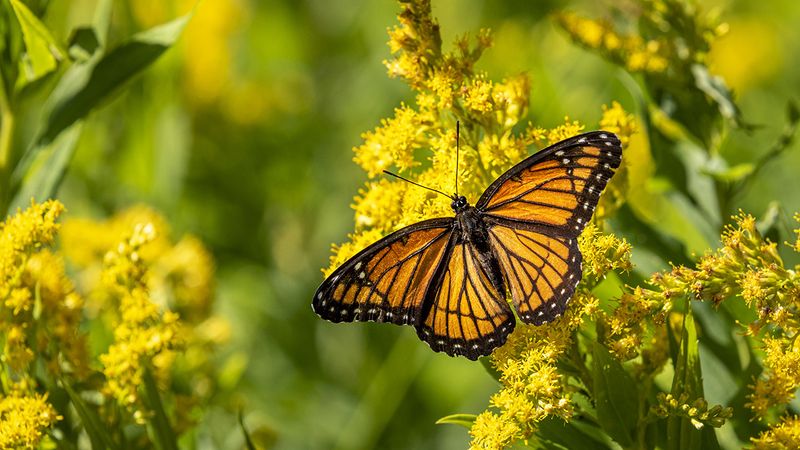
Three concerns come up regularly when goldenrod enters the conversation: fall allergies, firefly attraction, and pet safety. Each one deserves a clear answer rather than a blanket reassurance.
The allergy question is probably the most misunderstood. Goldenrod blooms in bright yellow right when fall hay fever peaks, so it takes the blame by association.
University of Vermont Extension points out that goldenrod pollen is relatively heavy and sticky, designed to travel by insect rather than by wind. University of Illinois Extension identifies wind-pollinated ragweed as the better-supported primary source of widespread late-summer and fall hay fever.
Ragweed blooms at the same time as goldenrod but releases clouds of lightweight pollen that travel long distances through the air. That said, individual sensitivities vary, and saying goldenrod cannot cause any reaction for any person would go further than the evidence supports.
On fireflies, goldenrod is not the mechanism. University of New Hampshire Extension ties firefly habitat to mowing height and frequency, leaf litter retention, suitable grasses and shrubs, reduced light pollution, and avoiding insect-targeting pesticides.
Goldenrod can be part of a habitat-friendly yard that supports fireflies, but the plant itself is not what brings them back. Reducing pesticide use and preserving habitat structure matter far more than any single plant species.
Pet safety requires the same specificity. The ASPCA cautions that its plant lists are not comprehensive and that ingesting plant material can still cause gastrointestinal upset even when a species does not appear on a toxicity list.
Confirm the exact botanical species with your nursery, and contact a veterinarian or animal poison control if a pet eats any part of the plant. Finally, avoid routine broad-spectrum insecticide spraying around blooming goldenrod.
It directly undermines the pollinator and firefly benefits that make the plant worth growing in the first place.
Make goldenrod one layer of a more usable yard
Pulling this together into a practical decision is straightforward once the pieces are in place. Choose a documented native goldenrod species whose height, sunlight, moisture, and drainage requirements match the spot you have available.
Give it enough room to develop over two to three seasons, and plan to divide it when the clump outgrows its space. Let the late bloom carry the bed visually while the rest of the garden winds down.
NC Cooperative Extension frames goldenrod as part of a broader seasonal planting strategy rather than a standalone solution, and that framing fits a North Carolina yard well. Pair it with spring natives, summer perennials, and fall companions so pollinators have resources across the whole growing season rather than just one late burst.
NC State Extension recommends this multi-season approach for supporting a continuous food supply and building genuine habitat value over time.
Keep the family-use zone near the house clear and well-maintained for tick and mosquito management, following CDC guidance on barriers and brush management. Let the outer areas of the yard carry more habitat structure, including goldenrod, native grasses, and leaf litter, where spreading and naturalization are welcome.
A yard divided that way gives you both: usable space close to the house and a living, buzzing outer zone that earns its keep every fall when the goldenrod opens and almost nothing else will.