
The Most Underrated North Carolina Native That Keeps Goldfinches Fed From Midsummer To Frost
Follow us on Google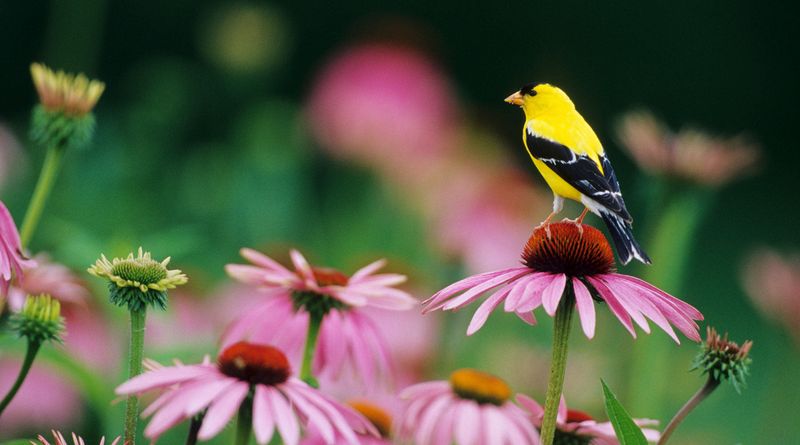
Pull a patio chair into the yard on a September afternoon and you might catch a flash of yellow clinging to a dried brown seed head, working it like a tiny acrobat. That bird is an American goldfinch, and the plant holding it up is eastern purple coneflower, Echinacea purpurea, one of the most useful North Carolina natives you can grow for fall bird feeding.
The headline on this article is a little bolder than the science fully supports, so here is the honest version: coneflower is one well-documented native seed source that can pull goldfinches into your yard, mainly in September and October, not a guaranteed nonstop feeding station from July through November. Plant it right, skip the fall cleanup on most heads, and pair it with a few companion natives, and you will have something genuinely worth watching.
A Reliable Native Option, Not A Miracle Goldfinch Plant
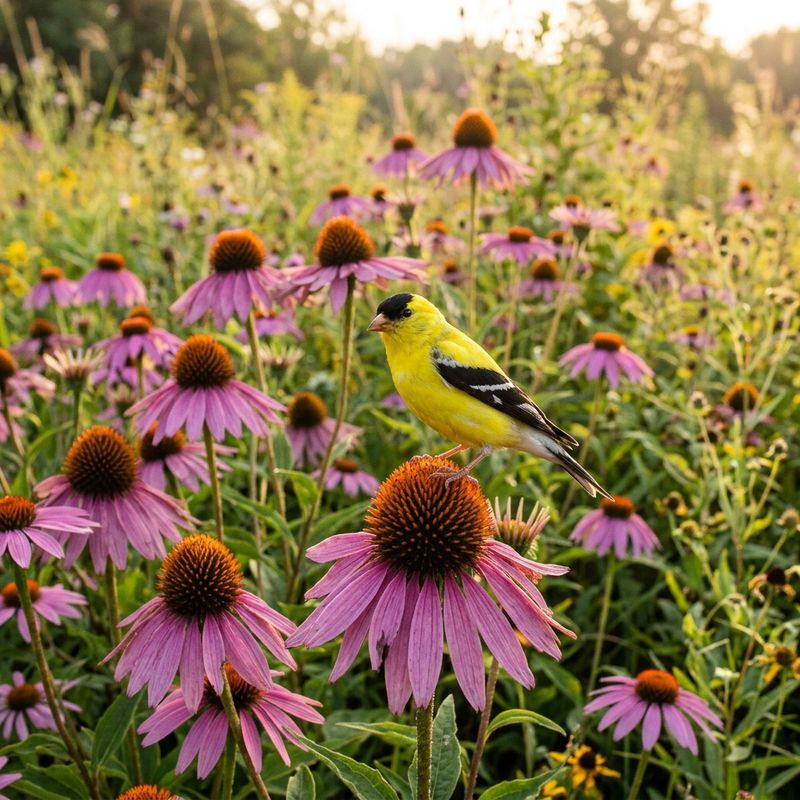
Eastern purple coneflower, Echinacea purpurea, grows across all of North Carolina, from the Blue Ridge foothills through the Piedmont’s red clay and down into the sandy Coastal Plain. It is a true native herbaceous perennial, not a transplant dressed up with a regional nickname, and NC State Extension’s plant database documents it as a bird-friendly seed source with a late-fall photograph of an American goldfinch feeding directly on the dried central cones.
That photograph matters because it is specific. Many plants get called bird-friendly in a general way.
Coneflower has the receipts for goldfinches in particular, and that makes it a reasonable starting point for any North Carolina homeowner who wants to add a seed plant that actually earns its space.
Here is where the honest framing comes in. The title of this article calls coneflower the most underrated native and implies it feeds goldfinches continuously from midsummer through frost.
Neither claim holds up completely. Audubon’s goldfinch profile makes clear that these birds use many seed sources, including thistles, native sunflowers, asters, grasses, and Rudbeckia, so no single plant is the whole answer.
And coneflower’s seed window is narrower than midsummer to frost suggests, something the next section covers in detail.
What coneflower genuinely offers is a combination of summer pollinator value and fall seed production in one native plant that tolerates the heat, humidity, and variable soils that define gardening across North Carolina. That is a solid seasonal contribution, and it is worth planting for exactly that reason, not because it solves everything on its own.
The Goldfinch Food Comes After The Bloom
All summer long, those purple petals are doing important work, just not for goldfinches. While coneflower blooms, typically from early summer into mid-fall, the open flowers are feeding bees and butterflies with nectar and pollen.
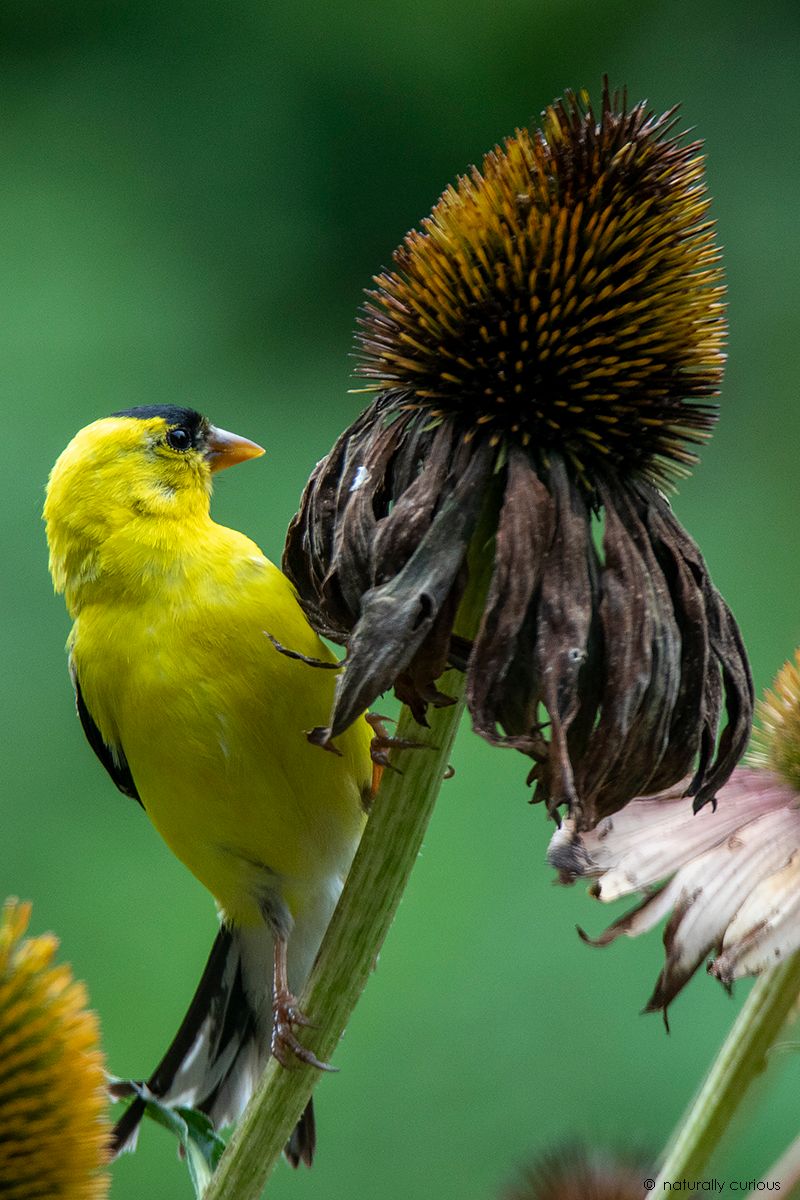
The goldfinch story begins later, when the petals drop and the spiky central cone matures, dries, and fills with small seeds the birds can actually reach.
NC State’s urban habitat guide for birds places purple coneflower’s seed availability mainly in September and October. That is a meaningful distinction from the midsummer-to-frost framing in this article’s headline.
In July and August, when the flowers look their showiest, goldfinches are not especially interested. They are waiting for those cones to ripen.
Think of it as a two-act plant. Act one runs through summer and belongs to the pollinators.
Act two starts in early fall, when the dried heads become small pantries that goldfinches work over methodically, gripping the cone and pulling seeds out with their bills. Audubon describes goldfinches as acrobatic foragers that cling to composite flower heads, which is exactly what a mature coneflower cone invites.
The practical consequence of this timing is straightforward. If you deadhead every spent bloom to keep the garden looking tidy, you are cutting off act two before it starts.
Removing the spent flowers in August means no seed heads in September. Many Piedmont gardeners make this mistake without realizing it, treating coneflower like a summer annual that needs constant grooming.
Leaving the flowers to mature and dry is not laziness, it is the whole point of growing this plant for birds.
Leave Most Seed Heads Standing
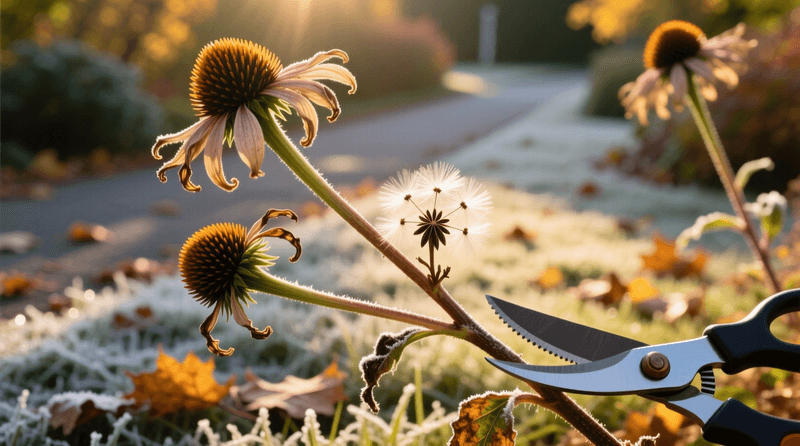
Skipping the fall cleanup on most of your coneflower patch is one of the highest-value, lowest-effort moves you can make for backyard wildlife. The National Wildlife Federation notes that dried flower heads and standing stalks provide food, shelter, and overwintering sites that disappear entirely when gardeners clear everything in October.
For goldfinches, accessible seed heads are the whole reason to grow coneflower in the first place.
NC State’s plant database adds another reason to keep the stems upright: stem-nesting bees may use the hollow stalks through winter. So leaving the plant standing serves birds in the fall and insects through the cold months, two benefits from one decision to put down the pruners.
That said, “leave it alone” does not mean “ignore it entirely.” A selective approach works better for most residential yards. Remove stems that are blocking a sidewalk, leaning against a fence, touching a structure, or falling across a path where someone could trip.
For everything else, let the heads stand. NC State’s native plants handbook suggests cutting dead stems back to about 12 to 24 inches rather than clearing the patch to the ground, which keeps the remaining stems upright and functional without leaving a tangled mess.
Near patios or play areas where a tidy look matters more, cut a few stems short and leave the rest. Think of it as a zone system: managed close to the house, relaxed further out.
Most of the seed heads stay. A few get trimmed for the household’s sake.
The goldfinches will work with whatever you leave standing, and even a small cluster of intact heads can draw birds in when the seeds are ripe.
Give Coneflower Sun And Well-Drained Soil
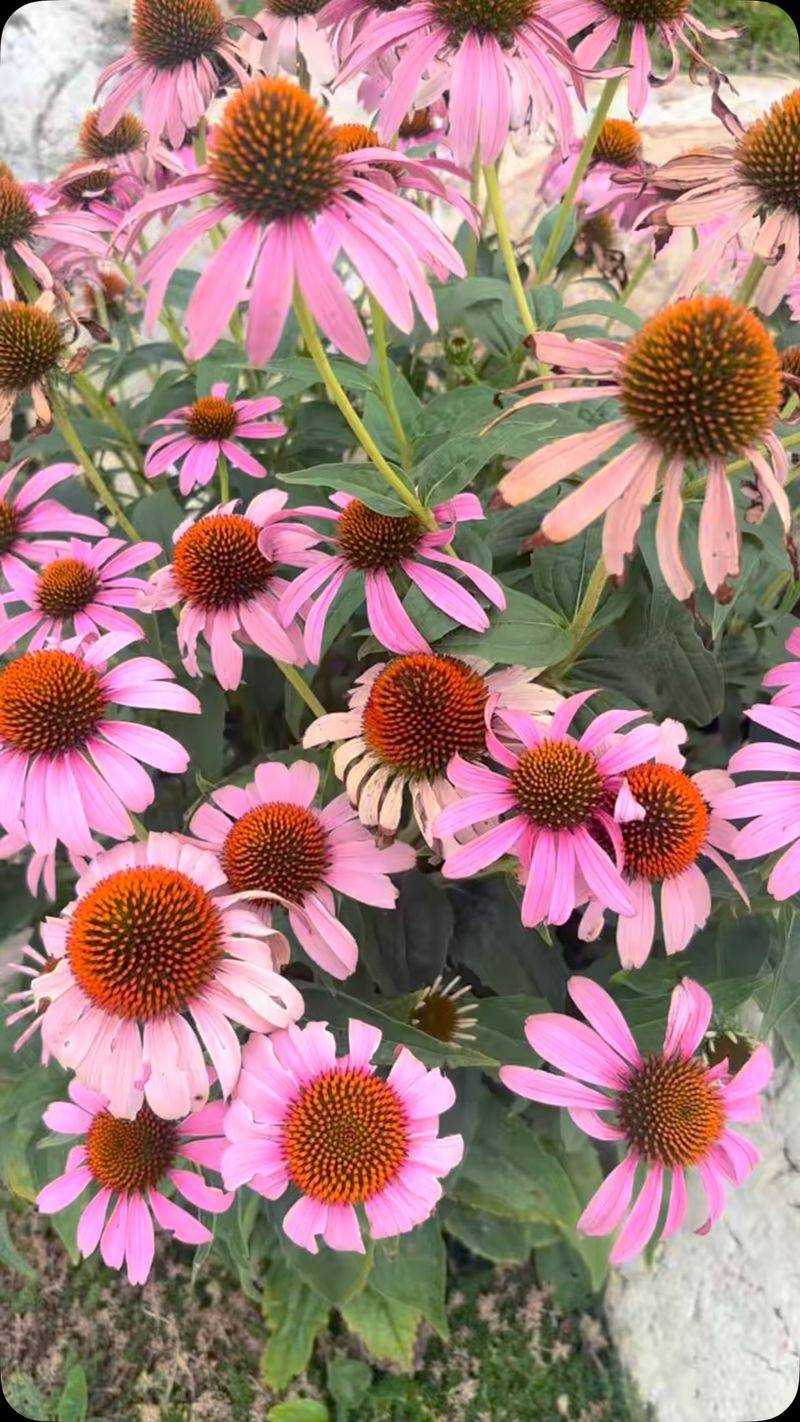
Sun is non-negotiable. Eastern purple coneflower wants at least six hours of direct sunlight each day, and a spot that gets more is generally better.
Shade can keep the plant alive but tends to produce leggy stems and fewer flowers, which means fewer seed heads come fall. A south- or east-facing bed that catches full morning and afternoon light is a good target across most of North Carolina.
Drainage matters just as much. NC State’s landscaping for wildlife guide points out that many native plants struggle not from poor soil but from sitting in water.
Coneflower is listed as tolerant of clay, loam, sand, shallow rocky soil, and even high organic matter, so the actual texture of your soil is less important than whether it drains. A spot that pools after rain for more than an hour or two is worth avoiding.
In the Piedmont, that often means working with red clay that compacts easily. You do not need to replace the soil entirely, but breaking up the top 10 to 12 inches and mixing in a little compost can improve drainage enough to give new plants a better start.
On the sandy Coastal Plain, drainage is usually fine, but the soil dries out fast, so consistent watering during the first season matters more than it does in heavier soils.
Mountain gardeners generally have cooler summers and better natural drainage on slopes, though exposed ridges can bring wind and frost earlier than the plant label suggests. Coastal sites introduce salt air, and while NC State lists coneflower as salt-resistant, a newly planted specimen right at the waterline needs more monitoring than one planted a few blocks inland.
Wherever you are in North Carolina, the establishment period is the critical window. Drought-tolerant once its roots are settled, a brand-new plant still needs regular watering through its first summer.
Plan on checking the soil every few days during July and August heat, and water deeply when the top inch or two feels dry.
Plant A Cluster Instead Of One Isolated Coneflower
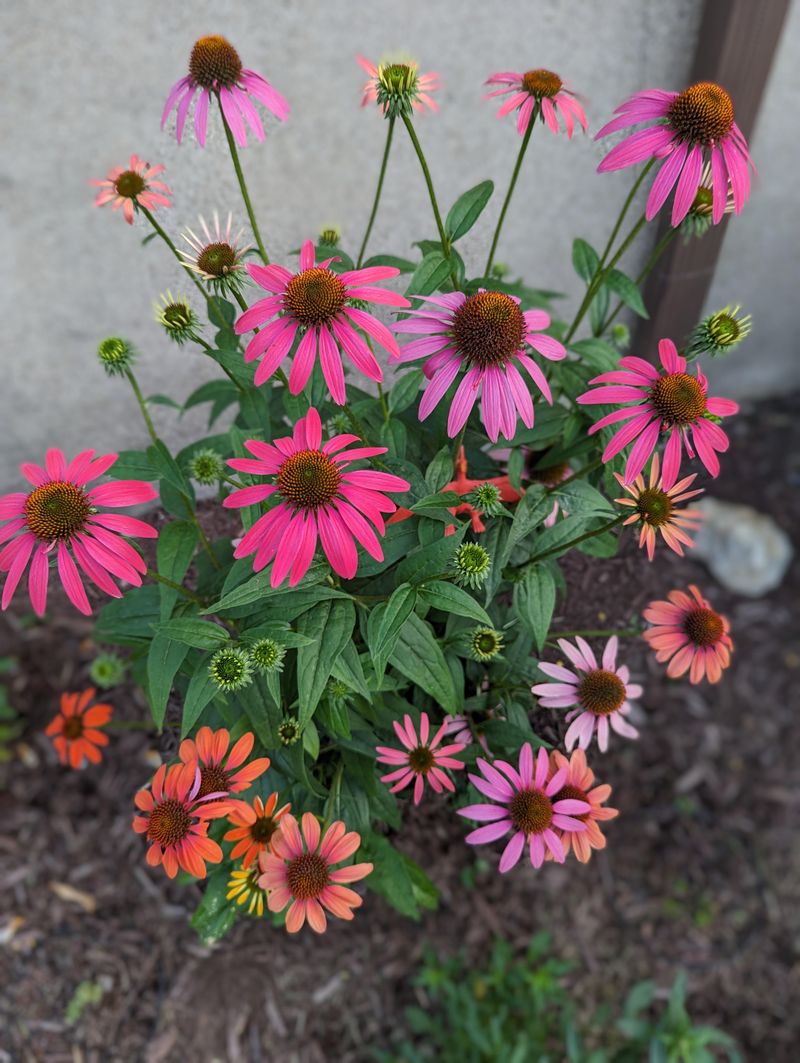
A single coneflower planted in the corner of a bed is not going to do much for goldfinches. One plant produces a handful of seed heads, and once a bird cleans those out, there is nothing left to return to.
A small cluster of three or more plants changes that equation by creating a patch with enough mature heads to draw birds back repeatedly through September and October.
NC State’s plant database describes the species as reaching 3 to 4 feet tall and 1 to 2 feet wide at maturity. For spacing, a range of roughly 12 inches to 3 feet between plants works depending on how quickly you want the bed to fill in and whether you are growing the straight species or a named selection.
Tighter spacing, around 12 to 18 inches, fills in faster and creates a denser seed patch. Wider spacing, closer to 2 to 3 feet, gives each plant more room to develop and makes the bed easier to manage long term.
Place the cluster where you can actually see it from a window, a porch chair, or wherever you spend time outside in the fall. Watching goldfinches work a seed head from 10 feet away is genuinely satisfying, and proximity to a viewing spot makes you more likely to notice when birds arrive.
Avoid planting directly against a fence or wall where the stems might lean and make cleanup harder.
Framing this as a bird guarantee would be misleading. A cluster of coneflowers creates a food opportunity, not a promise.
Whether goldfinches show up depends on local bird populations, what else is available nearby, and timing. But a patch of several plants with intact seed heads gives you a real chance, and that is more than a single isolated plant can offer.
Check The Label For Viable Seed
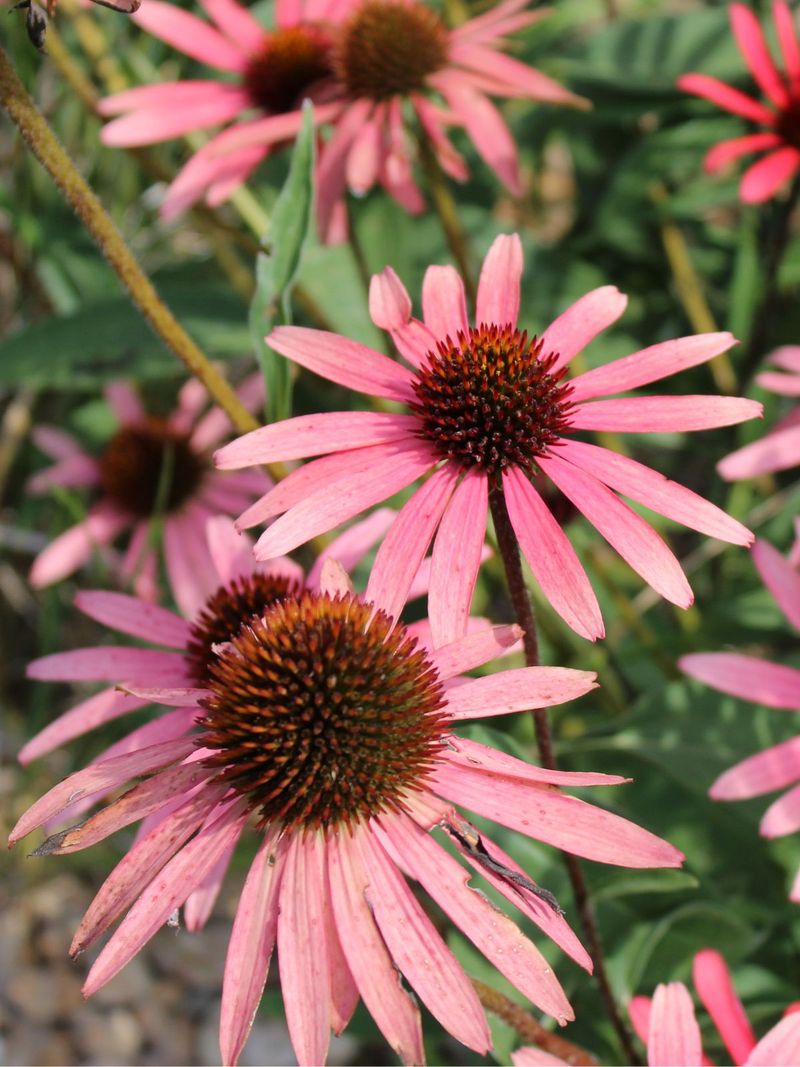
Walk into almost any North Carolina garden center in spring and you will find shelves of coneflowers in every color from white to deep red to orange. Most of them carry the word coneflower on the tag.
Not all of them will feed goldfinches.
NC State’s native plants handbook warns that sterile selections reduce the food resources available to pollinators and birds. Heavily hybridized cultivars and double-flowered forms, the ones with extra layers of petals packed around the center, often produce little or no viable seed.
A bird landing on one of those cones may find almost nothing worth eating.
The safest move is to look for the botanical name Echinacea purpurea on the label and, when you have the chance to ask, find out whether the selection produces viable seed. Straight species plants and selections specifically noted as seed-producing are your best options.
If the tag shows only a cultivar name with no species information, or if the flower looks more like a pompom than a daisy, treat it as a pollinator plant and not a bird-food plant until you know more.
It is also worth knowing that purple coneflower and orange coneflower are different plants entirely. Orange coneflower is Rudbeckia fulgida, a separate NC native with its own wildlife value and a seed window that NC State documents as running from August through November.
Both can support wildlife in a North Carolina yard. The direct goldfinch-feeding documentation in NC State’s database, including that fall photograph of a goldfinch on a seed head, is attached specifically to Echinacea purpurea.
Start there, then add Rudbeckia alongside it for a longer overlapping seed season.
Build A Longer Food Season With Other Natives
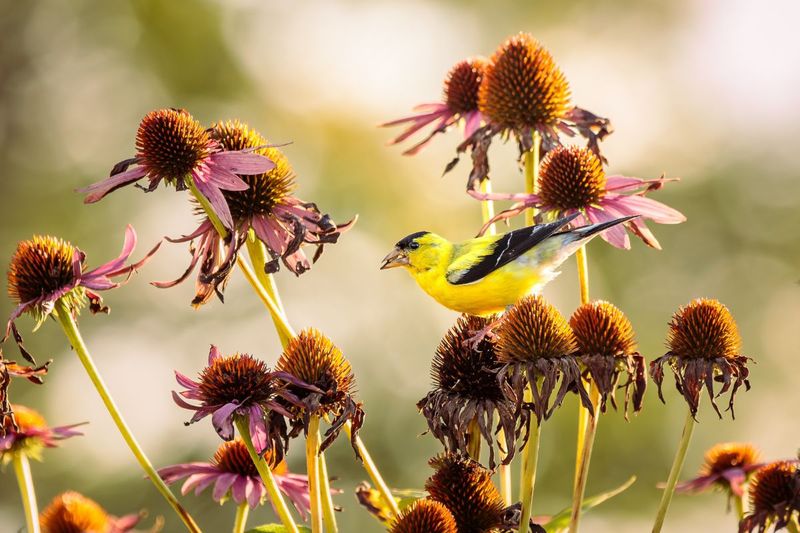
Coneflower does its best goldfinch work in September and October, and then the seed heads are spent. If that is the only native seed plant in your yard, the food opportunity ends there.
Pairing coneflower with a few complementary natives stretches the available season without requiring a major redesign.
NC State’s bird habitat guide documents specific seed availability windows for several North Carolina natives. Native sunflowers run from July through October, which overlaps with the tail end of coneflower’s bloom and bridges into its seed window.
Orange coneflower, Rudbeckia fulgida, holds seed from August through November. Native asters extend from August through February.
Native grasses carry seed from September through February. Goldenrod adds food from October through March.
Together, those plants create a rolling sequence that keeps something available well past the first frost.
Goldfinches will move between plants depending on what is ripe and accessible. Audubon notes that goldfinches forage across a wide range of seed sources, so a yard with several native seed plants is more likely to hold their attention across multiple weeks than a yard with only one option.
Local bird numbers, nearby habitat, weather, and whether the seed heads stay upright and reachable all affect how often you actually see birds working the plants.
The National Wildlife Federation’s seed and berries guidance frames the broader principle simply: a yard with multiple native seed sources across different seasons supports more wildlife more consistently than any single plant can. That is the honest version of what this article’s headline promises.
The action plan is manageable. Plant a cluster of three or more viable-seed Echinacea purpurea in full sun with good drainage.
Skip the fall cleanup on most of the heads. Add one or two companion natives, an aster, a native sunflower, or some goldenrod, chosen for their documented late-season seed windows.
Then watch what shows up. You will not control every variable, but you will have built something that gives goldfinches a genuine reason to stop.
That quiet yellow bird working a dried cone on a cool October morning is a small, real thing worth earning.