
The Meaning Behind Spotting A Great Egret Wading Through Your Florida Yard
Follow us on Google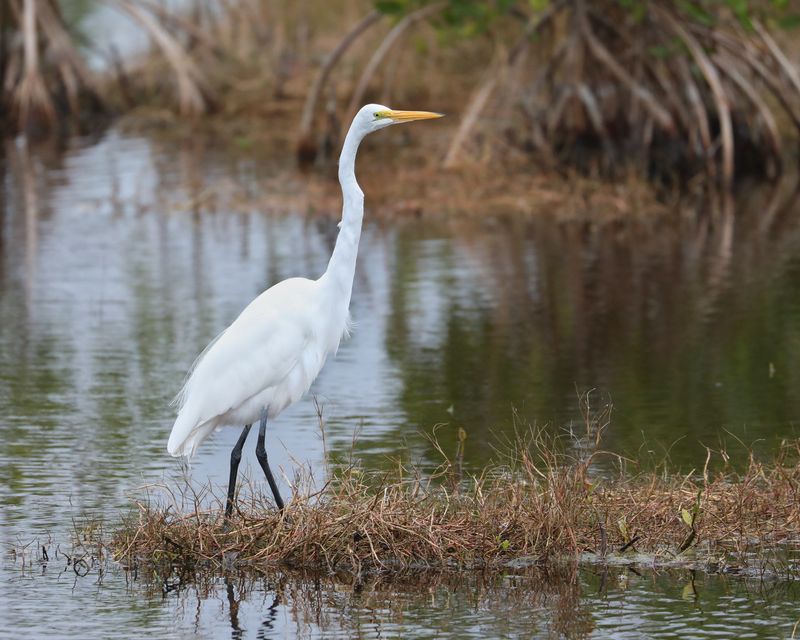
You step onto the back porch after a summer downpour and there it is, a tall white bird picking its way slowly across your soggy lawn like it owns the place.
That is almost certainly a Great Egret, and its visit is not random.
Florida’s wet season, its ditches, canals, retention ponds, and sudden afternoon storms all create the kind of soggy, prey-accessible conditions that pull wading birds into unexpected places.
Understanding what that bird is actually telling you, and what it is not, can help you make smarter decisions about your yard’s water, drainage, and wildlife.
That White Wader May Be A Great Egret
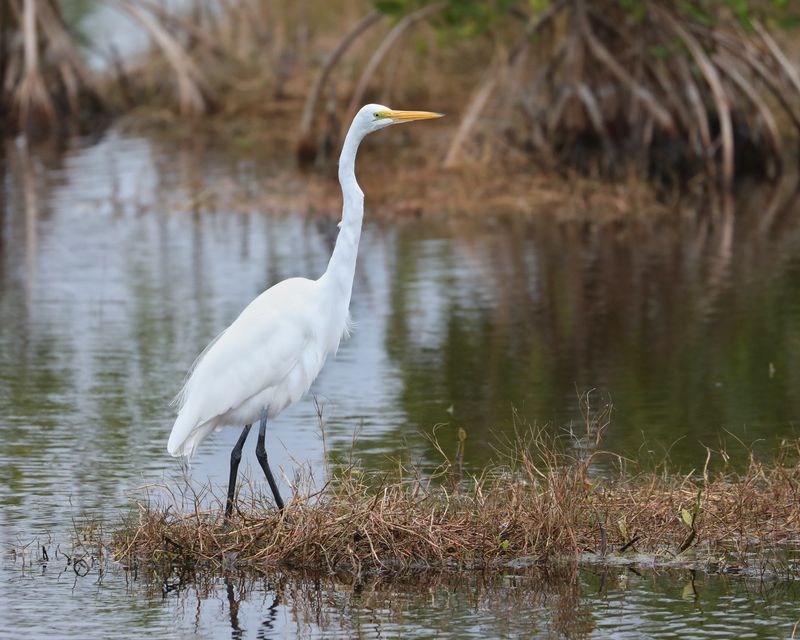
Standing nearly 3 feet tall in your yard, the bird moves with the unhurried patience of something that has done this a thousand times.
UF/IFAS Extension’s Great Egret profile describes the species as a large, all-white wading bird with black legs, a yellow to yellow-orange bill, and a long S-shaped neck.
Its wingspan stretches roughly 51.6 to 57.1 inches, wide enough to catch your eye when it lifts off above the fence line.
Before you read too much into the visit, confirm you are looking at the right bird.
The Snowy Egret is also white and also common in Florida, but it is noticeably smaller, carries a black bill, and has bright yellow feet that flash when it walks.
Cornell Lab’s Great Egret identification guide notes that Great Egrets have black legs all the way down, which is one of the fastest ways to tell them apart from a window or patio.
A Snowy Egret also tends to shuffle its feet and dart around while hunting, while the Great Egret stands still or moves in slow, deliberate steps.
Getting the identification right matters because the rest of this article is specifically about Great Egret behavior.
Attaching the wrong interpretation to a Snowy Egret visit, or to a Great Blue Heron passing through, will not give you accurate information about what your yard is offering.
Look for the tall, all-white body, the yellow-orange bill, and those long black legs before drawing any conclusions.
The bird is probably a hunter investigating an opportunity, not a signal of anything dramatic.
Your Wet Lawn May Offer A Temporary Foraging Opportunity
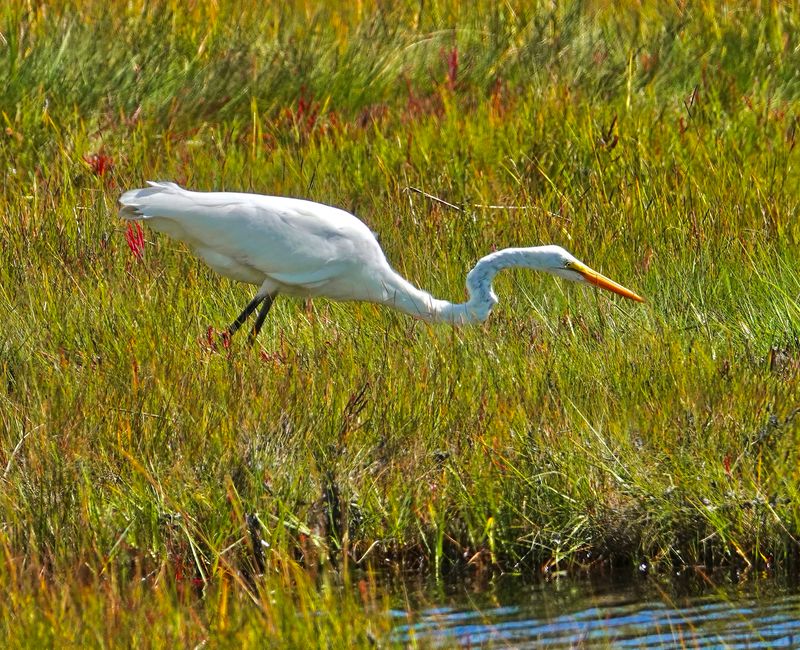
Rain soaks into low spots on a Florida lawn and the ground goes soft, and that shift in conditions can make your yard briefly interesting to a bird that spends its days looking for the easiest meal available.
Cornell Lab’s Great Egret life history page explains that the species hunts by standing still or wading slowly in shallow water, then striking fast with its bill when prey comes within range.
Wet, recently flooded ground can concentrate prey or make it easier to spot.
The possible menu is longer than most people expect.
Great Egrets may hunt small fish, frogs, crayfish, aquatic insects, grasshoppers, dragonflies, lizards, snakes, small mammals, shrimp, and other small animals.
So when you see one moving through damp grass, it may not be looking for fish at all.
It could be targeting a frog that moved into a shallow puddle, a lizard caught in the open, or an insect flushed out by waterlogged soil.
Here is where it gets tricky.
The bird may not be hunting exclusively in your yard.
Great Egrets commonly forage across a range of habitats, including ponds, ditches, marshes, canals, flooded fields, and stormwater areas.
Your lawn may simply be one stop on a longer route that connects to a drainage swale, a retention basin, or a neighborhood pond 200 feet away.
UF/IFAS research on wetland birds in urban landscapes confirms that Great Egrets use altered suburban and urban environments, including golf course ponds and developed drainage systems.
The plain-language read on your lawn visit is this: right now, wet conditions and accessible prey may be making your property worth a look.
That is a conditional clue about today, not a permanent rating of your yard’s wildlife value.
A Visit Is A Clue, Not A Water Test
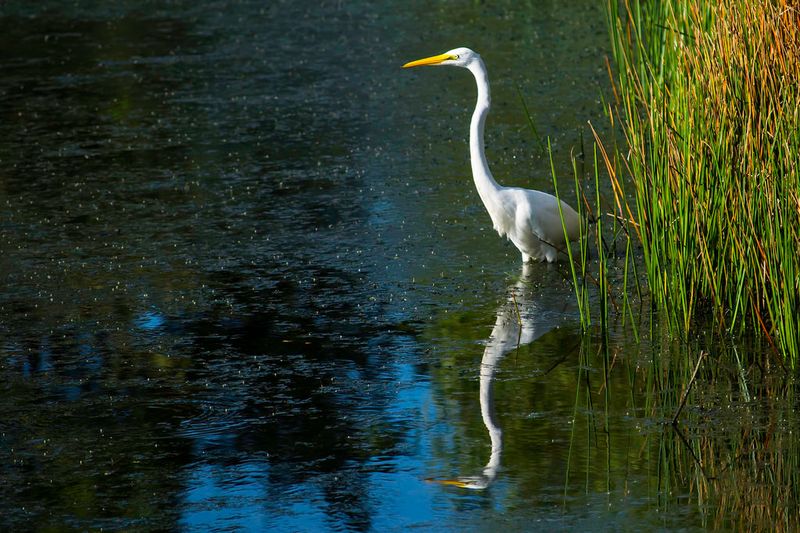
Seeing a Great Egret in your yard feels like a small vote of confidence from nature, and it can be tempting to take it as proof that your water is clean or your yard is doing something right.
Pull back from that conclusion a little.
The bird’s presence tells you that accessible prey and wet foraging conditions exist somewhere nearby right now.
It cannot measure water quality, pesticide levels, heavy metals, sewage-related contamination, or the overall health of your local ecosystem.
Massachusetts wildlife documentation on Great Egrets notes that egrets and other waterbirds can be exposed to contaminants in areas affected by agricultural or urban pollution.
A Great Egret foraging in a drainage ditch or stormwater pond is not certifying that water as safe.
The bird is adaptable, and adaptable often means willing to work in less-than-ideal conditions.
UF/IFAS research on urban wetland bird use shows that Great Egrets regularly use golf course ponds and developed suburban water features, which are far from pristine natural wetlands.
That adaptability is part of why the species has survived and even expanded into urban Florida landscapes.
But it also means you cannot treat a lawn visit as an ecological report card.
The sighting is genuinely worth noticing.
Something in or near your yard is providing a foraging opportunity at this moment, and that is interesting information.
Just keep the interpretation modest: the egret found conditions worth investigating today, and that is the extent of what it can tell you without a water sample or a biologist on site.
What Changed Around The Yard Today?
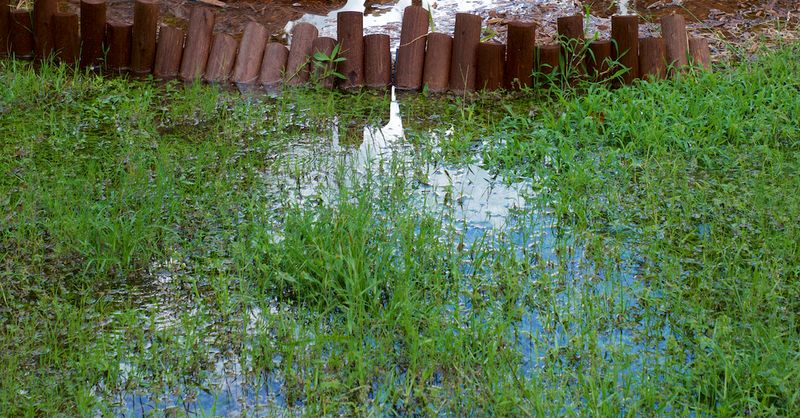
Most Great Egret visits to a Florida lawn are tied to something that changed recently, not to some permanent quality of the property.
Think back over the past 24 hours.
A heavy afternoon downpour is the most common trigger in Central and South Florida during the wet season, which runs roughly June through September.
A slow irrigation leak, a clogged drainage swale, or a low spot in the lawn that holds water for hours after rain can all create the shallow, prey-accessible conditions the bird is looking for.
A study on Great Egret habitat selection and foraging behavior in a temperate estuary found that water conditions and prey availability influence where the birds choose to forage.
That research focused on a coastal estuarine environment where tides play a role, so it does not map directly onto a Florida residential lawn.
Still, the broader principle holds: when water levels shift and prey becomes more accessible, egrets respond.
Cornell Lab confirms that shallow water and recently flooded ground can concentrate prey and make hunting more efficient.
Walk the yard and look for the obvious: standing water near the foundation, a swale that is not draining, a low area that stays wet for more than a day after rain.
Along the Gulf Coast and Atlantic Coast, proximity to tidal areas or connected canals can bring these birds into residential zones regularly.
In North Florida, a wet spring or a slow-draining sandy loam area may be the draw.
Correcting drainage problems protects your lawn and your foundation, and it also removes the kind of unmanaged standing water that breeds mosquitoes, regardless of whether a bird shows up.
Improve Habitat Without Creating A Mosquito Problem
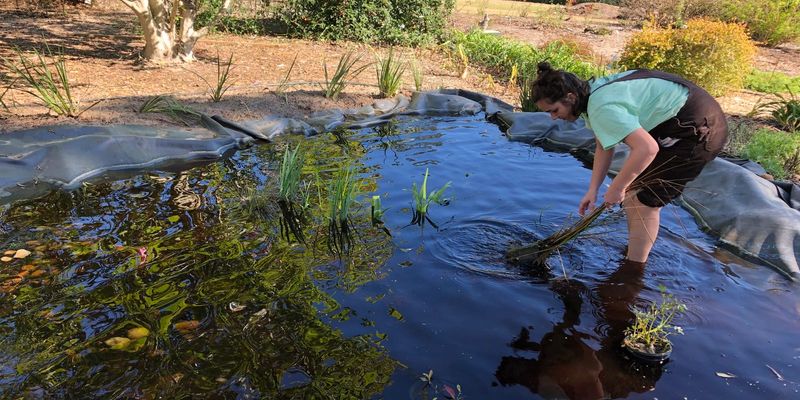
A Great Egret passing through does not mean you should flood the lawn or leave puddles sitting around the foundation.
What it may mean is that a few low-effort yard changes could make your property more genuinely useful to wildlife while keeping mosquito risk under control.
The difference between good habitat and a mosquito breeding ground is almost always maintenance.
UF/IFAS Extension in Osceola County recommends a 10-foot maintenance-free buffer around backyard ponds, with no mowing, fertilizing, or pesticide use in that zone.
Native plants in that buffer, such as muhly grass (Muhlenbergia capillaris) or Simpson’s stopper (Myrcianthes fragrans), slow runoff, filter nutrients, and give frogs and small wildlife a place to move without being exposed on open turf.
This kind of planted edge is genuinely different from just letting grass grow tall and wet.
Reduce the inputs that degrade nearby water.
Grass clippings washed into a pond or storm drain add nutrients that feed algae and reduce water clarity.
Pet waste carries bacteria and nitrogen.
Excess fertilizer applied to a lawn before a downpour can move quickly into drainage features, especially on the sandy soils common across much of Florida.
Cutting back on unnecessary fertilizer and pesticide applications near water is one of the most practical things a homeowner can do.
For water features you want to keep, freshness matters.
UF/IFAS guidance on providing water to wildlife recommends flushing or replacing birdbath water at least every 2 to 3 days during Florida’s summer to prevent mosquito larvae from developing.
A pump or small circulator in a larger water feature keeps water moving and discourages egg-laying.
For water that cannot be easily drained or circulated, UF/IFAS mosquito guidance recommends products containing Bacillus thuringiensis israelensis, commonly called Bti, applied exactly according to the label.
Wildlife, including egrets, cannot replace deliberate mosquito management.
Eliminate water with no habitat value: overturned containers, plant saucers, clogged gutters, old tires, and tarps collect enough rainwater in 4 to 5 days to produce mosquitoes, and no bird will solve that for you.
Let The Egret Investigate In Peace
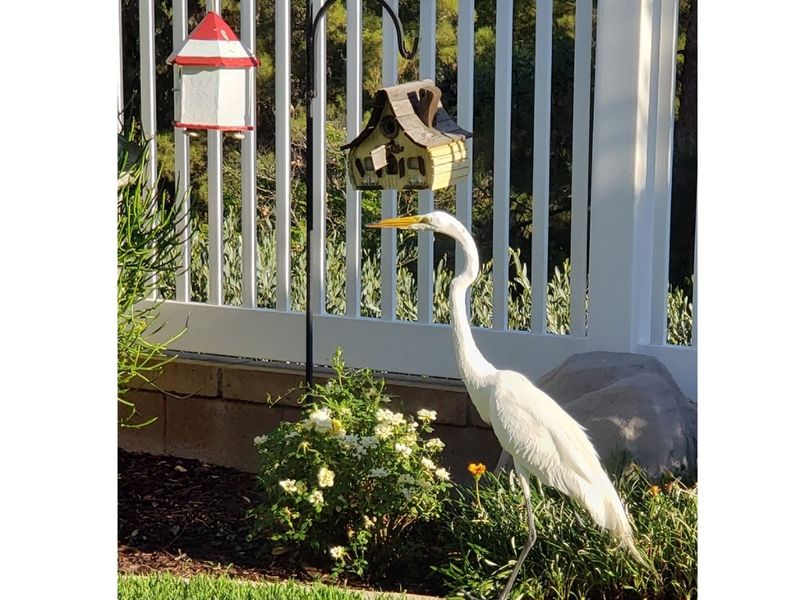
Most people’s instinct when a wild bird appears in the yard is either to get closer or to offer it something.
Both are worth resisting.
The best thing you can do for a Great Egret moving through your lawn is watch it from where you already are, keep any dogs leashed or inside, and let it finish whatever it came to do.
FWC guidance on bird disturbance recommends keeping at least 300 to 500 feet from concentrations of nesting or resting birds, including colonies, roosts, and posted wildlife areas.
That distance applies to groups and sensitive sites, not automatically to a single egret crossing a normal suburban lawn.
Still, giving the bird space, say 30 to 50 feet at minimum, keeps it calm and lets it behave naturally.
Do not offer food.
UF/IFAS research on why feeding water birds causes harm specifically lists herons and egrets as species that should not be fed.
Fish, meat, bread, pet food, and table scraps all create problems: the bird may return expecting a handout, lose its ability to hunt effectively, attract other birds that compete aggressively, and come into contact with hooks, fishing line, or other hazards near people.
Disease can also spread more easily where birds crowd together around a food source.
A Great Egret foraging in a yard does not mean it plans to nest there.
FWC notes that all native bird species in Florida receive protection under the federal Migratory Bird Treaty Act, and active nests with eggs or chicks carry additional legal protections.
If you ever find a nest on your property, contact FWC before doing anything near it.
A lawn visit, though, is just a lunch stop, and the bird will almost certainly move on within an hour or two.
The Best Meaning Is A Modest One
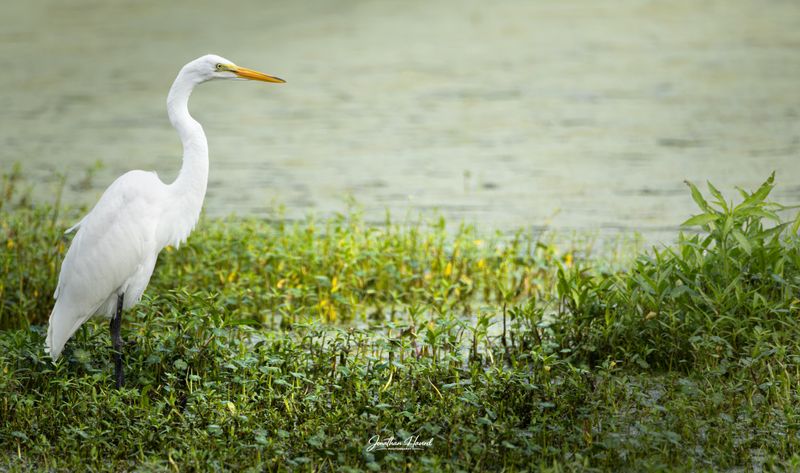
A Great Egret crossing your soggy Florida lawn is delivering a narrow piece of information.
Right now, today, conditions in or near your yard are wet enough and prey-accessible enough for a wading bird to consider investigating.
That is a real ecological clue, and it is worth paying attention to, as long as you do not ask it to mean more than it does.
Cornell Lab’s life history data makes clear that Great Egrets are highly adaptable foragers that move across a wide range of habitats, from pristine marshes to urban drainage ditches.
The bird visiting your yard may be using your lawn as one stop along a route that includes a canal, a retention pond, or a neighborhood stormwater basin.
UF/IFAS research on urban wetland bird use supports the idea that these birds follow opportunity across developed landscapes, not just natural ones.
Use the visit as a prompt to check the practical things: fix drainage problems, correct irrigation leaks, eliminate water with no habitat value, reduce fertilizer and pesticide runoff near any water features you want to keep, and maintain any intentional water feature so it stays fresh and mosquito-free.
Observe the bird from a comfortable distance and keep pets controlled until it moves on.
The egret is not grading your yard.
It spotted an opening, and it came to check.
That is actually a pretty good way to think about most things worth noticing in a Florida backyard.