
The Layered Florida Native Garden That Finally Coaxes Painted Buntings To The Yard
Follow us on Google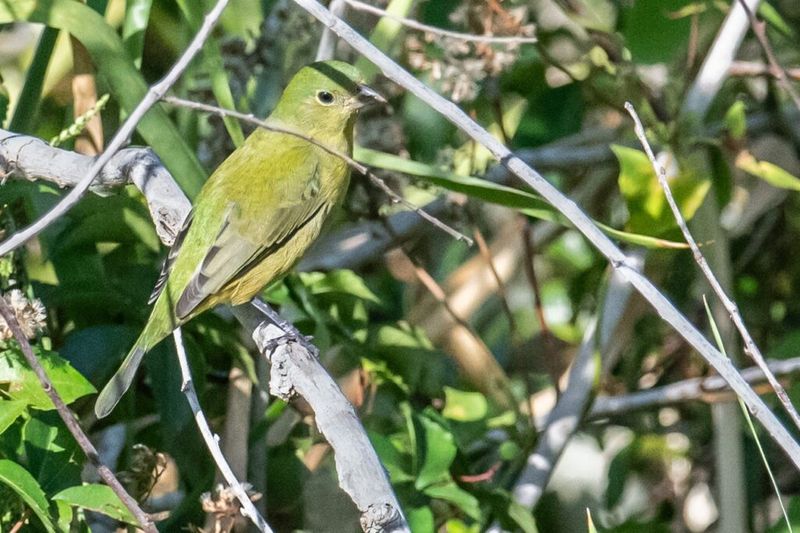
Painted buntings are among the most jaw-dropping birds in North America, and Florida is one of the few places where you can genuinely see them without buying a plane ticket.
The trick is not finding the right single plant.
It is building the right combination of food, cover, open ground, and a nearby perch that may improve your odds of a visit where these birds already occur or pass through.
Build A Semi-Open Edge, Not A Magic-Plant Garden
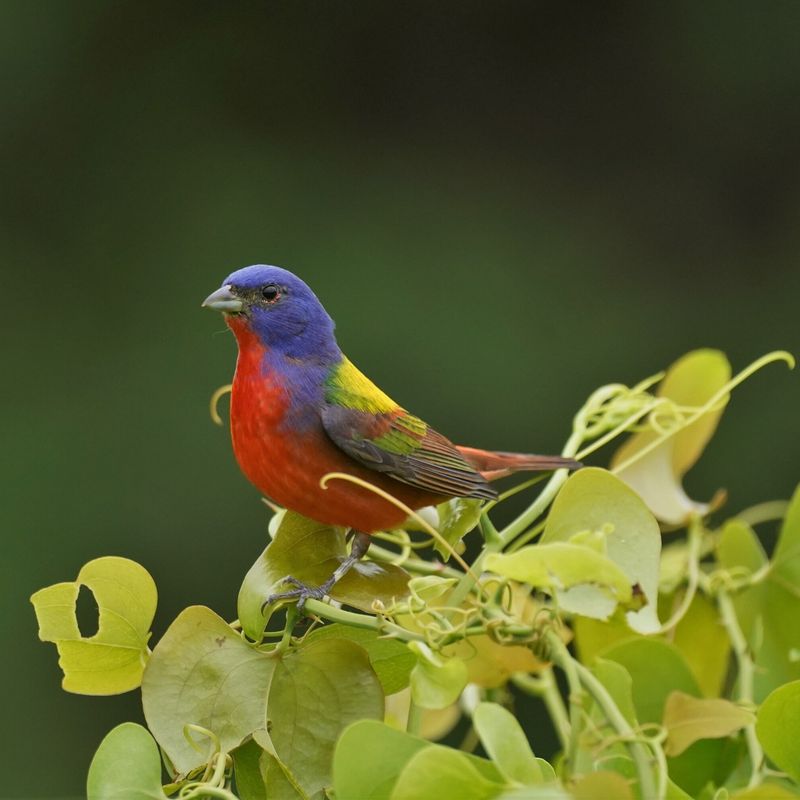
Most bird gardening advice puts one flashy plant at the center of the story, as if the right flower alone will pull a painted bunting out of thin air.
That is not how these birds work.
Florida Fish and Wildlife Conservation Commission habitat research describes painted buntings using coastal scrub, edges of oak hammocks, roadside thickets, uncultivated fields, abandoned citrus groves, and some urban areas.
The common thread is structure, not a single species.
What painted buntings actually need is a semi-open edge: a low seed layer they can forage through, accessible bare or lightly mulched ground, some shrubby cover nearby, and an elevated perch where a male can survey the area.
Cornell Lab describes the species as favoring semi-open areas with grasses, weeds, wildflowers, scattered shrubs or trees, and open ground for feeding.
A yard that imitates that arrangement may improve the chances of a visit where painted buntings already occur or pass through, and that qualifier matters.
No single Florida native plant or feeder guarantees a sighting.
Presence depends on local range, migration timing, habitat quality beyond your property line, predators, and regional population levels.
Think of your garden as offering four practical things: food from seed-producing plants, cover from shrubs and dense vegetation, open ground for foraging, and perching space above the action.
Cornell’s backyard bird habitat guidance supports structural diversity with ground cover beside shrubs and taller trees as the foundation, and that is a useful frame for everything that follows.
Let Florida Range And Season Set Expectations
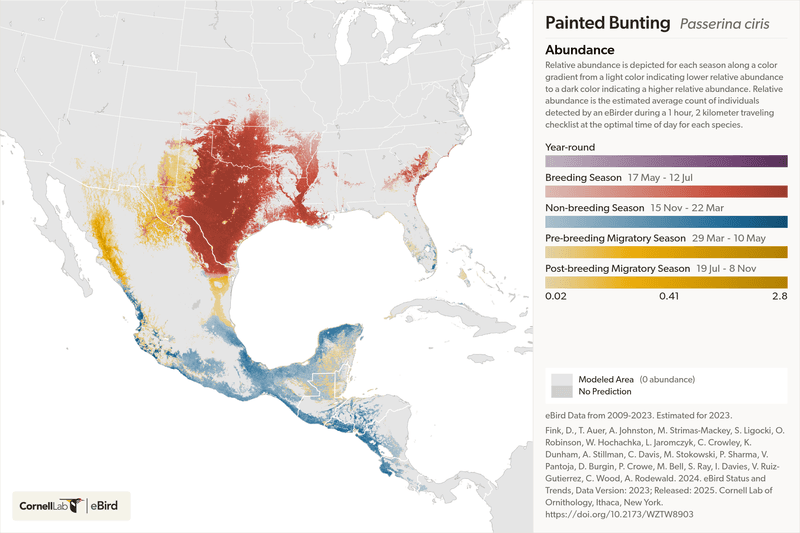
Florida is not one painted bunting habitat, and knowing where you live changes everything about what your yard can realistically offer.
FWC’s painted bunting species profile describes two distinct populations.
The western population reaches the Florida Panhandle, where winters can include genuine cold snaps and occasional hard freezes in areas like Pensacola or Tallahassee.
The eastern population breeds along the northeast Florida coast, south toward Cape Canaveral, and inland along the St. Johns River corridor.
Eastern birds winter in South Florida and the northern Caribbean, so a yard in Miami or Naples in January has a meaningfully different opportunity than one in Gainesville in June.
Central Florida sits between these zones and may see migrants moving through or the occasional winter visitor, but a yard there should not be planned as guaranteed breeding territory.
Along the Atlantic Coast from Jacksonville south, the picture changes again by season, with breeding birds present in spring and summer and wintering birds arriving later in the year.
The Gulf Coast, the Keys, and inland Central Florida all sit in different positions relative to these populations.
Before you spend money on plants, check recent local sightings through a resource like eBird or talk to your county’s birding community.
If painted buntings are not regularly reported within a few miles of your yard, treat your garden as stopover or supporting habitat rather than a destination.
That honest framing still makes the planting worthwhile, because a well-structured yard can serve many native birds even in seasons when painted buntings are absent.
Start With Ground-Level Seed And Feeding Space
Painted buntings are ground foragers for most of the year.
Cornell Lab’s painted bunting life history notes that they eat seeds the majority of the year and may pull seed-bearing stems down with one foot to reach the heads.
That behavior tells you exactly what the first layer of your garden needs to do: offer seed-producing plants low enough to reach and enough open ground between them to land and move around.
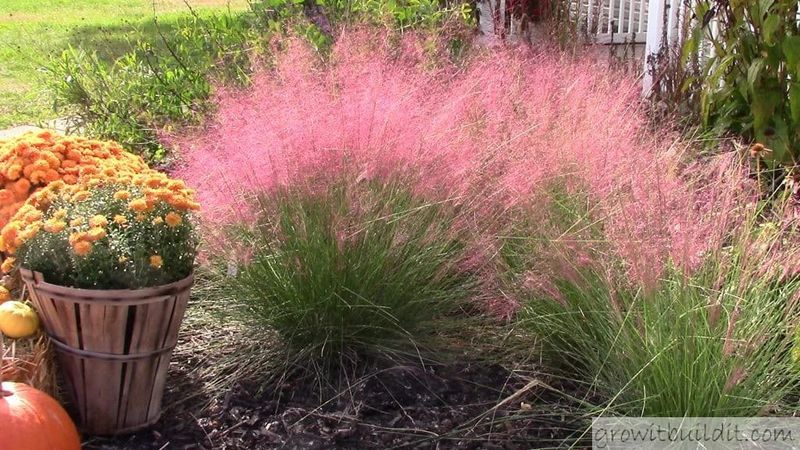
Pink muhly grass, Muhlenbergia capillaris, is a well-documented Florida native that fits this role structurally.
UF/IFAS Florida-Friendly Landscaping guidance supports it as a full-sun performer that tolerates both drought and occasional flooding, with plants typically spaced 24 to 36 inches apart in sandy or rocky soil.
The seed heads are real and accessible.
What the sources do not establish is a specific painted bunting preference for muhly grass over other seed sources, so present it as a structurally useful native, not a guaranteed lure.
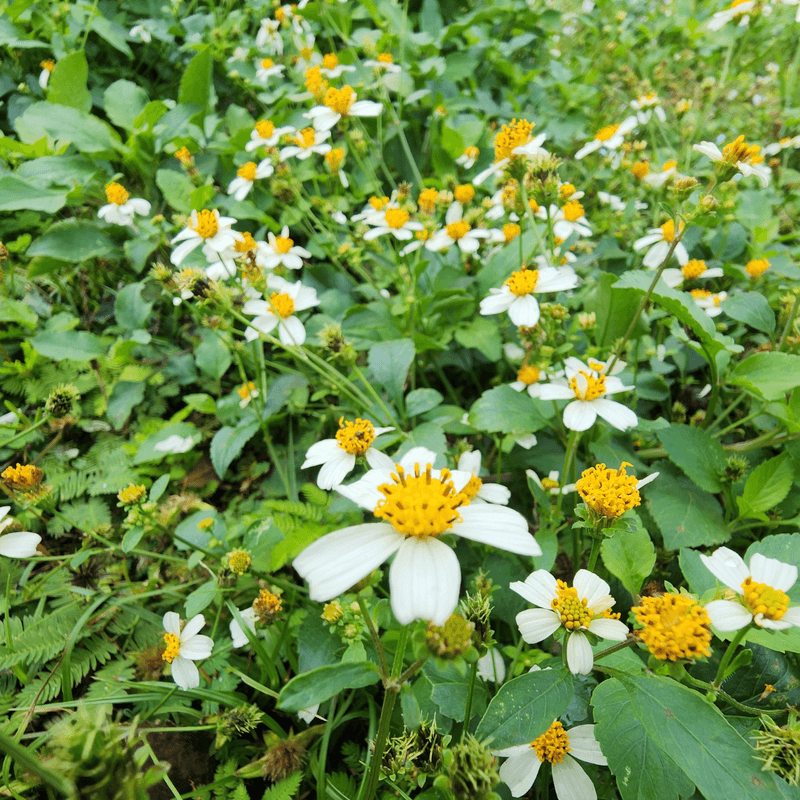
Native wildflowers like tickseed, Coreopsis spp., and blanket flower, Gaillardia pulchella, can add seed production to the low layer and support pollinators like gulf fritillaries and zebra longwings as a bonus.
Verify any plant’s suitability for your county before buying.
A plant listed as a Florida native may still be a poor fit for a coastal yard with salt spray, a wet low spot in Central Florida, or shallow limestone soil in the Keys.
Your county UF/IFAS Extension office can help you sort that out quickly, and that 20-minute call can save you from replacing dead plants after your first summer.
Add Cover Without Blocking The Ground
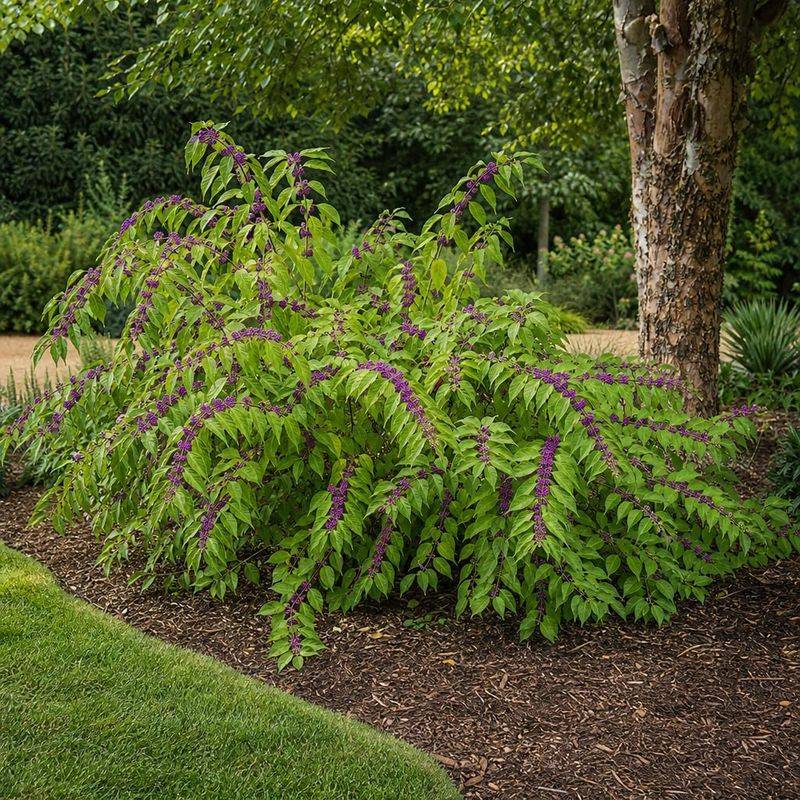
Cover is what turns a pretty plant bed into a place a bird actually trusts.
Painted buntings are not bold birds.
They want somewhere to disappear quickly if a hawk passes over, and a yard with only open lawn and a few ornamentals gives them nowhere to go.
But here is where it gets tricky: too much dense planting can actually work against you by cutting off access to the ground-level seed sources these birds depend on.
American beautyberry, Callicarpa americana, is a native shrub that earns its place in a Florida bird garden through structure and fruit.
UF/IFAS describes it as a fast-growing shrub reaching roughly 5 to 8 feet tall and wide, with purple-blue berries that can persist for several weeks after leaf drop.
Many birds eat those berries.
Painted buntings eat primarily seeds and insects, so beautyberry’s main job here is cover and general habitat value, not a proven painted bunting magnet.
Place it behind or to one side of your seed layer, not in front of it.
Cornell’s bird shelter guidance supports structural diversity, meaning you want some shrub density but also gaps where a bird can move through at ground level.
Match every shrub to your actual site conditions.
UF/IFAS cautions that light, drainage, soil type, salinity, moisture, and cold tolerance all matter, and these vary sharply across Florida.
A saw palmetto, Serenoa repens, that thrives on a sandy Gulf Coast lot may struggle in a poorly drained Central Florida backyard, and a shrub that looks great in a Gainesville garden may not survive a Keys winter warm enough to invite fungal problems.
Use A Nearby Perch To Finish The Habitat Structure
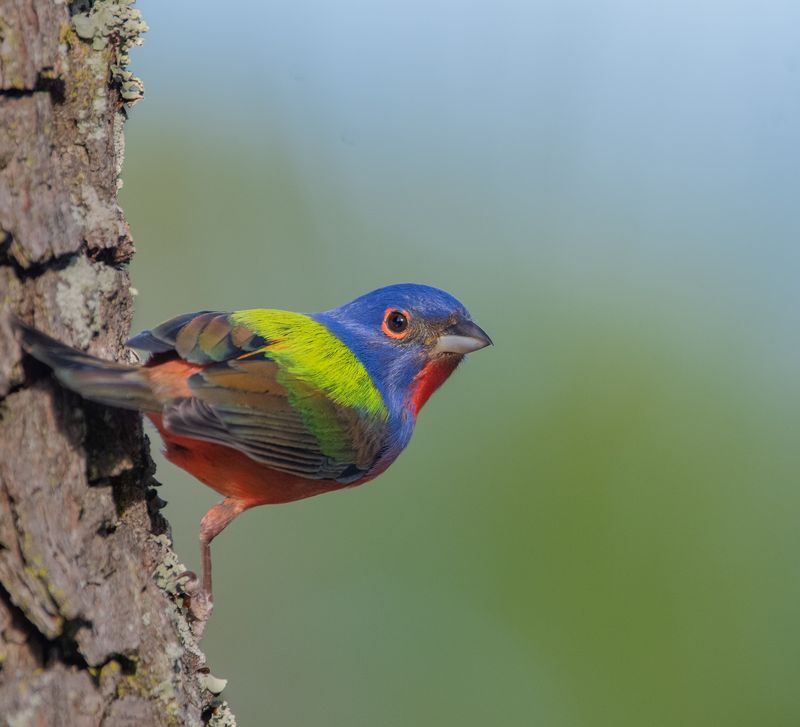
A male painted bunting needs somewhere to sit above the action.
That elevated spot is how he surveys feeding ground, watches for threats, and, during breeding season in northeast Florida or the Panhandle, announces his territory.
Without a perch nearby, even a well-planted yard can feel incomplete from the bird’s perspective.
A small live oak, Quercus virginiana, a native palm, a fence post, or even a sturdy dead snag can serve this function without turning your yard into a closed woodland.
The arrangement matters: put the low seed layer in front with open ground between clumps, shrubs behind or to one side, and the perch slightly apart so a bird sitting on it can see the feeding area clearly.
Cornell Lab reports that painted bunting nests are commonly placed about 3 to 6 feet above the ground, and FWC notes Florida nests usually occur within about 6 feet of the ground.
A perch does not guarantee nesting, but having one means you are not missing an element the birds use.
Keep scale and storm exposure in mind.
Along the Gulf Coast or Atlantic Coast, a large tree may need to handle salt spray and tropical storm winds from June through November.
In North Florida, cold hardiness matters for anything planted in USDA zone 8b.
Cornell’s habitat guidance supports using a mix of heights to create the structural diversity birds use, and even a fence rail or a 6-foot wooden post can fill the perch role in a small yard where a tree is not practical.
The goal is an open sightline from above to the ground below, not a canopy that shades out the seed layer you worked to establish.
Treat Supplemental Feeding As Optional
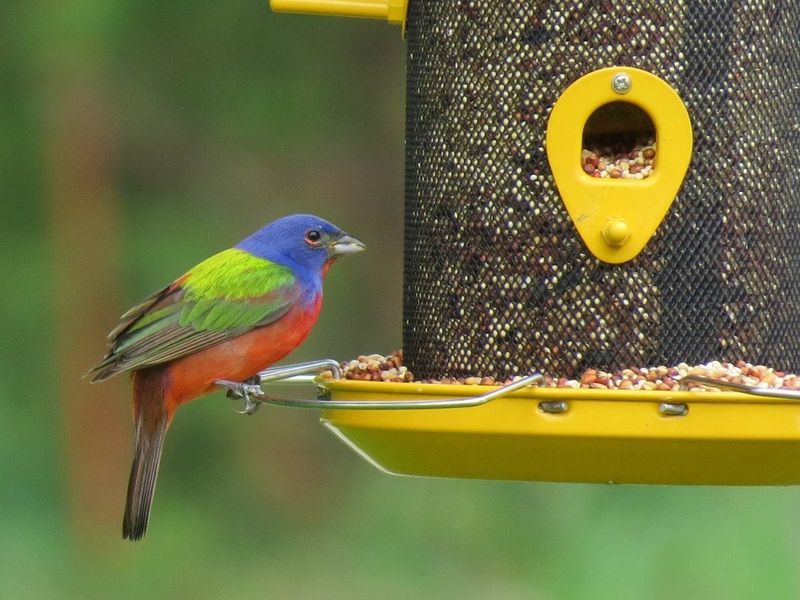
A feeder can make a painted bunting easier to observe if one is already using your yard.
What it cannot do is create a local population where the species is absent or replace the habitat structure the bird actually needs.
FWC states plainly that birds do not need supplemental feeding, and that framing is worth keeping in mind before you spend money on seed and equipment.
If you do want to try a feeder, match it to the bird’s behavior.
Painted buntings are ground foragers, so UF/IFAS recommends low platform feeders for ground-feeding species.
Offer small amounts at a time so seed does not sit long enough to get wet or moldy.
In Florida’s heat and humidity, that means cleaning the feeder at least every 2 weeks under normal conditions and more often during wet summer weather or heavy bird traffic.
Remove any wet or clumped seed immediately.
A moldy feeder can make birds sick, and a dirty one draws the wrong visitors.
Use only bird food sold for consumption.
FWC guidance on wildlife feeding and UF/IFAS both warn that red or pink dyed planting seed may contain fungicide and can be toxic to birds.
Do not scatter seed broadly on the ground, either, because that attracts rodents, raccoons, and other nuisance wildlife fast in a Florida yard.
Placement matters for safety.
FWC notes that free-ranging cats can kill birds at feeders and recommends keeping feeders away from dense underbrush where a cat could hide and ambush.
If nuisance wildlife or sick birds appear, stop feeding temporarily and reassess.
A feeder is a tool, not a commitment.
Add Clean Water And Protect The Insect Supply
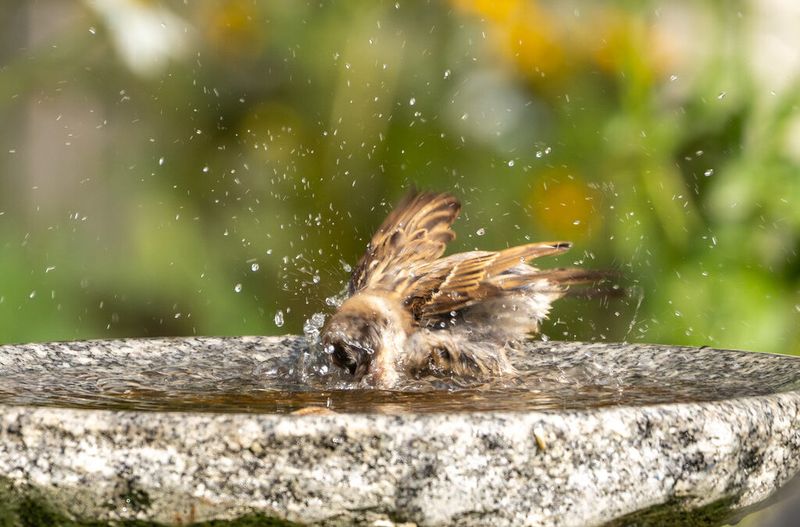
Water is one of the four things birds need alongside food, cover, and space, and a shallow birdbath is a practical way to offer it.
What water alone will not do is pull painted buntings into a yard that lacks habitat structure.
FWC’s wildlife habitat guidance treats food, water, cover, and space as separate needs that work together, not interchangeable substitutes for each other.
A birdbath is one piece, not the whole answer.
Keep the bath shallow, no more than about 2 inches deep at the center, and change the water every 2 to 3 days to prevent mosquito breeding.
Scrub the basin regularly and rinse it thoroughly after any bleach-based cleaning so residue does not harm birds.
Place it in a spot with some open sightlines so a bird can see approaching threats while it drinks or bathes.
The insect question is one many gardeners overlook.
Cornell Lab reports that painted buntings feed nestlings insects such as grasshoppers, beetles, caterpillars, bugs, spiders, snails, wasps, and flies during the breeding season.
A yard that eliminates insects with broad pesticide applications is a yard that removes a critical food source during the time breeding birds need it most.
Avoid spraying insecticides around seed-producing plants and accept that a functioning bird garden will have insects in it.
UF/IFAS cautions that even well-chosen native plants can face pests, fungal leaf spots, root rot, heat stress, and salt damage depending on site conditions.
A plant struggling in the wrong spot may need treatment, so scout regularly and deal with problems as they arise rather than applying broad preventive sprays that affect the whole garden ecosystem.
Check The Site, Watch The Seasons, And Keep The Promise Modest
Before you buy a single plant, spend 30 minutes walking your yard at different times of day.
Note where the sun hits from 9 a.m. to 3 p.m., where water pools after a heavy rain, whether salt spray reaches from a nearby coast, and whether your soil is sandy, compacted, or sitting on shallow limestone.
Those conditions will determine which plants actually survive and which ones you will be replacing after your first Florida summer.
Get specific help before you commit to a plant list.
Your county UF/IFAS Extension office can confirm which natives suit your exact zone and soil type.
The Florida Native Plant Society and regional plant databases offer searchable tools by county.
UF/IFAS advises matching each plant to its actual light, drainage, soil, salinity, and moisture conditions, and that advice genuinely changes from a Panhandle sandy loam yard to a South Florida yard with 6 inches of soil over rock.
Site-matched natives can reduce ongoing irrigation needs once established, but every new plant still needs appropriate watering through its first growing season, often 2 to 3 times per week for the first 4 to 8 weeks, then tapering as roots settle in.
Maintenance does not disappear, it just changes character over time.
Watch your yard across seasons before judging whether the design is working.
FWC notes that habitat loss and fragmentation remain real concerns for painted buntings, and your backyard planting is one small piece of a much larger picture.
A well-built yard can support visiting birds and contribute something real, but it cannot replace the protection of larger Florida scrub, coastal thickets, oak hammocks, and fallow fields that these birds depend on across the state.
That is the honest version of what a layered garden can do, and it is still worth doing.