
The Edible Texas Plants Homeowners Grow Along Driveways Instead Of Crape Myrtles
Follow us on Google
You step outside before breakfast and the patio already feels warm, the air still and heavy with the promise of another blazing Texas day.
You spot those ghostly white patches clinging to the crape myrtle’s bark again, spreading fast to the leaves.
Crape myrtles look pretty, but the bark scale and the yearly “crape murder” pruning wear a person down.
What if you swapped that headache for something truly Texan that hands you a sweet reward right along your driveway?
These ten edible natives are tough, beautiful, and built for our scorching summers and stubborn soils.
1. Mexican Plum Brings Early Spring Blooms And Sweet Summer Fruit
Picture clusters of fragrant white flowers along your driveway in late winter, a genuine signal that Texas cold snaps are finally behind you.
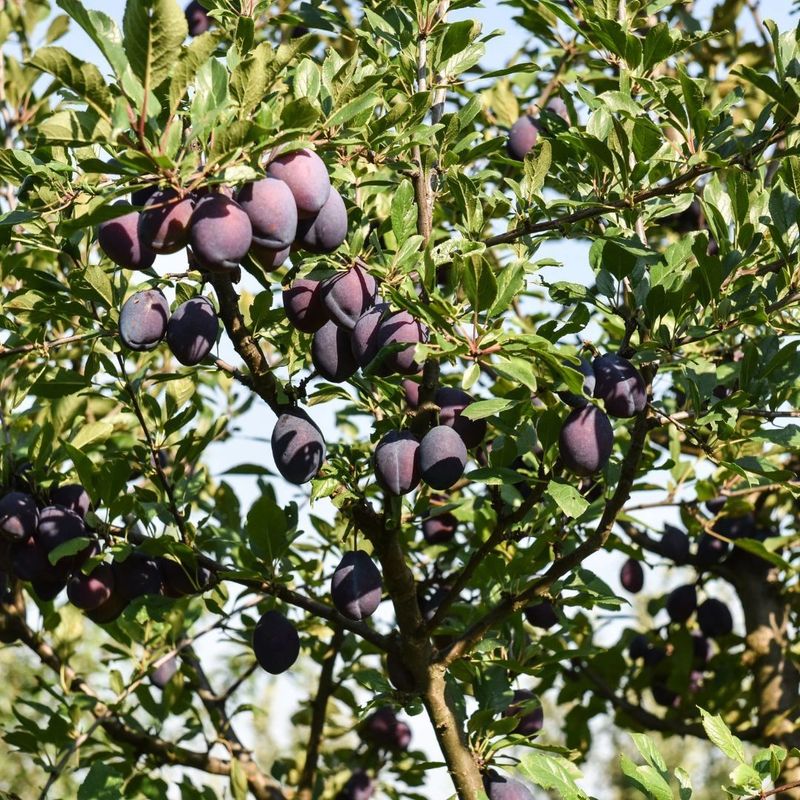
That is the gift of Mexican plum (Prunus mexicana), a small deciduous tree reaching 20 to 30 feet tall with a spread near 25 feet.
It is one of the earliest bloomers in Texas, sometimes as early as late February.
Bees swarm it for early nectar when little else is open.
Here is where it gets tricky.
By late summer the branches sag with dark purple-red plums, tart and juicy straight off the tree, though each hides a hard pit you cannot eat.
Those plums make genuinely good jam.
The catch is ripe fruit drops, so plan to harvest quick or expect a little cleanup on the concrete.
Water it regularly for about two years to settle the roots, then it shrugs off long dry stretches.
It handles blackland clay to sandy loam and prefers full sun to dappled shade.
You get spring perfume, summer sweetness, and a tree that behaves like a native because it is one.
2. Texas Persimmon Offers Unique Bark And Small Sweet Berries
Some plants earn their keep in winter, and Texas persimmon (Diospyros texana) is one of them.
Its smooth, peeling bark reveals shades of white, gray, and soft pink underneath, a living mosaic that glows when the leaves fall.
Often a multi-trunked shrub or small tree, it usually stays under 10 feet in most yards, though it can climb toward 40 feet given time.
This quiet hero genuinely thrives where Central and West Texas gardeners struggle, clinging to rocky limestone slopes and shallow, alkaline soil.
It asks for only modest water its first year, then largely tends itself.
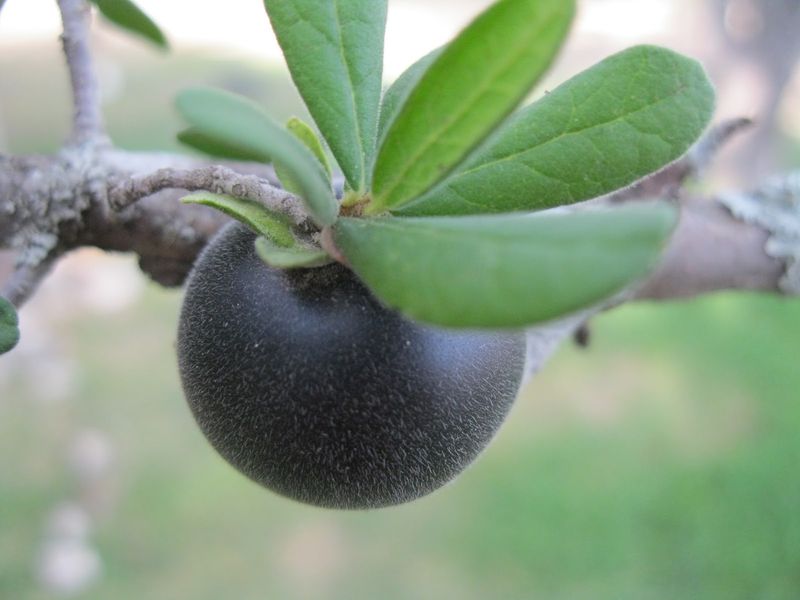
Female plants carry small, dime-sized black fruits that turn surprisingly sweet once fully ripe and soft.
Bite one too early and the astringency puckers your whole face, so patience pays.
Ripe fruit can stain light-colored driveways, so a quick harvest or a mindful spot keeps things clean.
Birds and small mammals treat it like a buffet.
For a plant that survives caliche and triple-digit heat while looking sculptural year round, this one is hard to beat.
3. Anacua Provides Fragrant Flowers And Abundant Edible Fruit
Rub an Anacua leaf and you will understand the nickname sandpaper tree.
Ehretia anacua wears rough leaves, but the rest of it is pure charm.
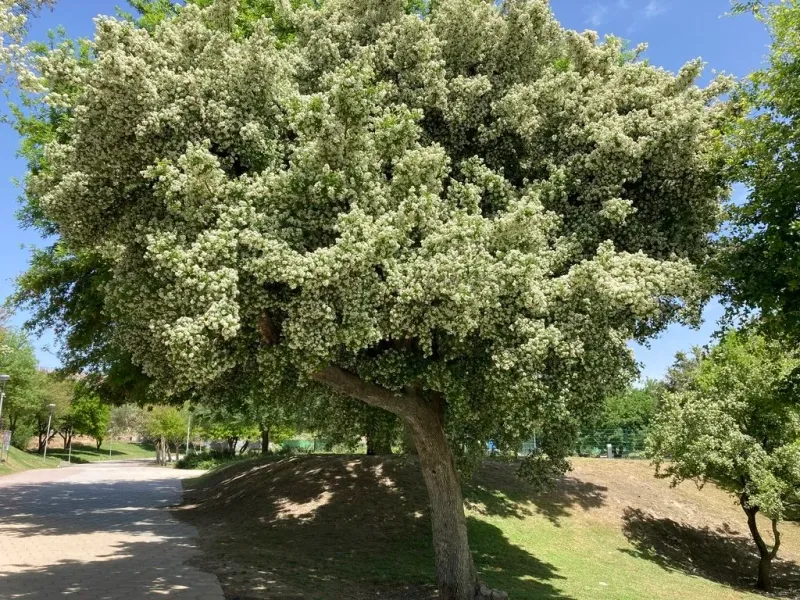
This evergreen to partly deciduous tree grows 20 to 50 feet tall and 20 to 30 feet wide, throwing dense shade that cools a driveway edge.
Come March, it erupts in fragrant white flowers so thick the whole crown looks dusted with snow.
Bees and butterflies pour in.
From April to June, clusters of small orange to dark yellow fruits ripen with a date-like flavor that turns into fine jelly.
Native to South and Central Texas, Anacua handles dry ground and alkaline, well-drained soil without complaint.
Give it steady water the first year, then it leans on rain and only wants help during a long dry spell.
Birds and small mammals feast, so the litter beneath is really nature clearing your table.
Keep it away from spots where dropping fruit could get slick.
For deep shade and edible bounty at once, Anacua earns its place.
4. Rusty Blackhaw Viburnum Offers Fall Color And Raisin-Like Berries
Fall color and a snack from the same plant sounds greedy, but Rusty Blackhaw Viburnum (Viburnum rufidulum) delivers both.
For East and Central Texas yards, few natives put on a better autumn show.
Grow it as a multi-stemmed shrub or train it into a small single-trunk tree at 10 to 20 feet, with a few reaching 30.
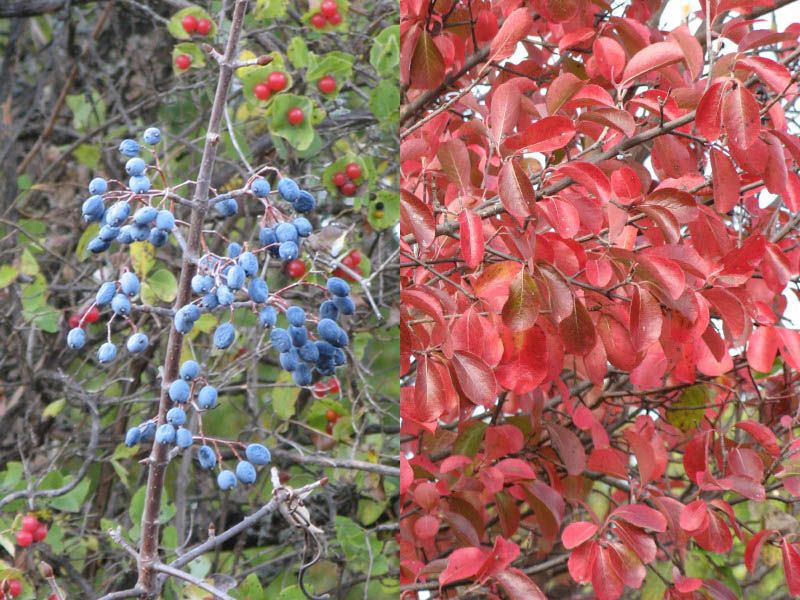
The glossy green leaves flare into maroon, red, orange, and purple as the season turns.
Spring brings creamy-white flowers, and fall follows with clusters of dark blue to black drupes.
The berries taste sweet, a lot like raisins, and you can even nibble them in late winter after they dry right on the branch.
Birds get to them fast, so your yard stays busy.
It adapts to sand, loam, or clay as long as drainage is decent, and it takes sun or part shade, with part sun often ideal.
If you want the tidy single-trunk look, snip the suckers at the base promptly.
Steady beauty, low fuss, sweet reward.
5. Possumhaw Viburnum Delivers Berries With A Striking Color Change
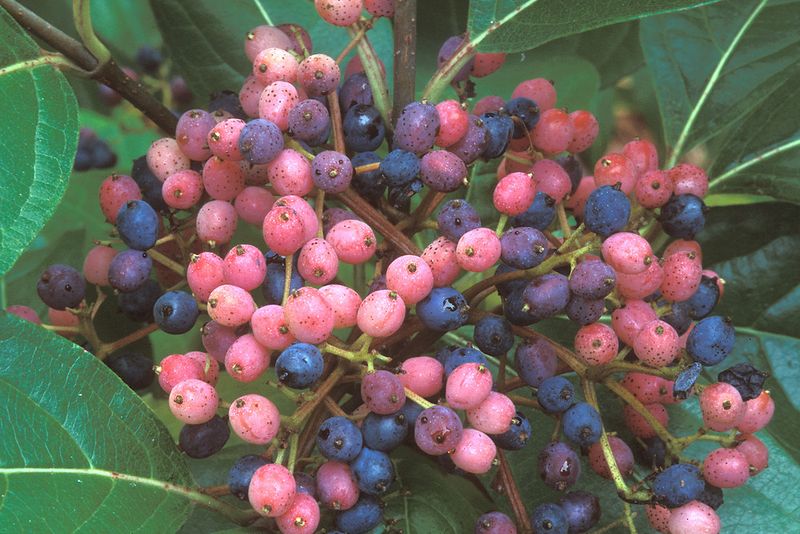
Most shrubs pick one berry color and stick with it.
Possumhaw Viburnum (Viburnum nudum) refuses to choose.
This adaptable deciduous shrub usually reaches 5 to 12 feet, sometimes stretching to 20, making a real statement along a drive.
Its glossy leaves shift into maroon, burgundy, and red-purple as fall arrives.
Early summer opens fragrant white flowers that pull in butterflies and bees.
Then the show turns theatrical.
As the berries ripen, a single cluster can hold light pink, deep pink, blue, and purplish-black all at once, like a gradient painted by hand.
The berries are edible but quite acidic, so most folks cook them into jam.
Songbirds, wild turkeys, and squirrels handle the rest.
Possumhaw takes full sun to part shade and tolerates a wide soil range, even moist to wet ground, while staying surprisingly heat and drought tough once settled.
Here is the practical part.
Plant at least two specimens so they cross-pollinate, and your berry crop rewards the effort.
Few plants change color this dramatically while still feeding your kitchen.
6. American Beautyberry Adds A Pop Of Purple And Edible Treats
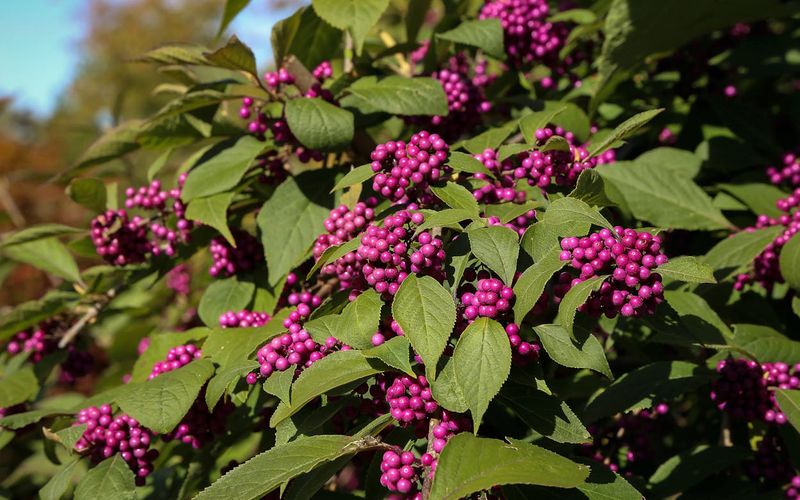
Nothing stops a neighbor mid-walk quite like American Beautyberry (Callicarpa americana) in September.
Its stems glow with beads of bright magenta to deep purple, wrapped tight along the branch like nature got carried away.
The shrub usually grows 3 to 5 feet tall and wide, though a happy one can top 8 feet.
It will not match a crape myrtle’s height, but plant it in a grouping or as a bold specimen and it holds its own along the driveway.
The berries are edible with a mild, slightly zesty flavor.
A few raw are fine, yet they truly shine cooked into jam, jelly, or even wine.
Leave plenty behind because cardinals, mockingbirds, and thrashers line up for them.
It is easygoing, favoring partial shade and a touch more moisture, though it takes sun if the soil stays damp.
Hardy from East Texas across to the Hill Country, it asks little and gives a lot.
Some gardeners also swear the crushed leaves help shoo mosquitoes off the porch, a nice bonus on a summer evening.
7. Turk’s Cap Brings Hummingbirds And Versatile Edible Parts
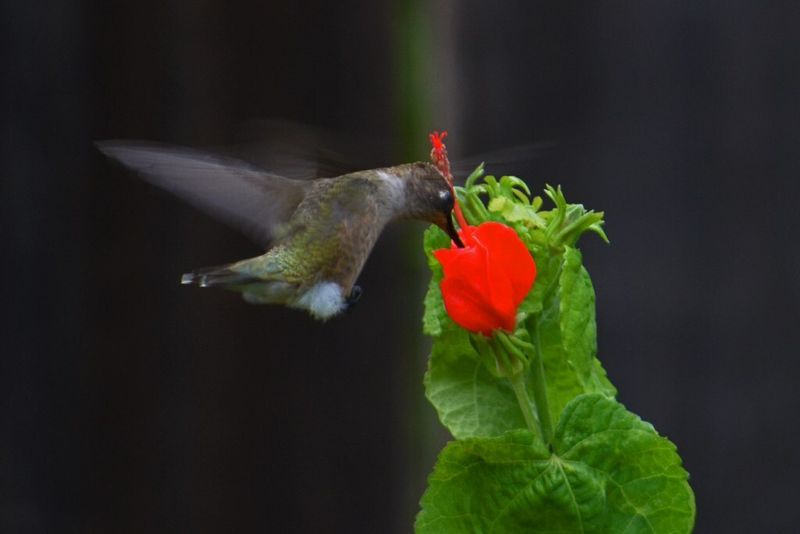
Watch a hummingbird zip a tight circle at dusk and odds are Turk’s Cap pulled it in.
Malvaviscus arboreus var. drummondii wears bright red, swirled flowers that never quite open, and hummingbirds and butterflies adore them from late spring through fall.
The perennial shrub usually holds at 2 to 3 feet tall and about 4 feet wide, though rich conditions push it toward 10.
What makes it a standout in an edible yard is how much of it you can actually eat.
Young tender leaves work raw in salads or cooked like spinach.
The nectar-loaded flowers taste sweet and brighten a tea or a plate.
By late summer, marble-sized red fruits appear, tasting like a mild, mealy apple, sometimes called Mexican apples, good raw, jammed, or dried.
It laughs at heat and drought once established and grows in sandy, clay, or limestone soil, sun or part shade.
It does spread by suckers, so cut it back to about 5 inches in late winter to keep the size in check and freshen the growth.
Energetic, generous, and genuinely Texas tough.
8. Agarita Guards The Driveway With Tart Red Berries
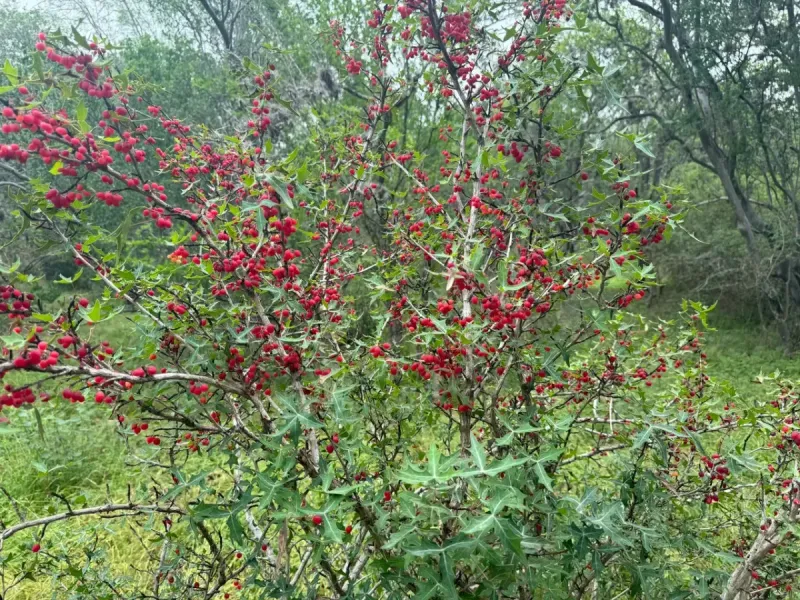
Brush against Agarita once and you will remember it.
Mahonia trifoliolata carries stiff, spiny, holly-like leaves that turn it into a living fence, which makes it a smart pick right along a driveway where you want a little barrier.
The blue-green foliage stays evergreen and gives the shrub a frosted look year round.
It usually grows 3 to 6 feet tall and wide, thriving on the shallow, alkaline, rocky soil of the Hill Country and West Texas where softer plants give up.
Yellow flowers open in late winter, some of the earliest food for bees, then bright red berries follow in spring.
The berries are tart and genuinely delicious, prized for jelly, pie, and even wine.
Harvesting takes a trick.
Lay a sheet under the bush and tap the branches so the ripe berries rain down, sparing your fingers from the spines.
It is extremely drought tolerant, needing only occasional deep water its first year.
For a tough, prickly guardian that pays you in ruby jelly, Agarita is hard to top.
9. Prickly Pear Turns Full Sun Into Fruit And Pads
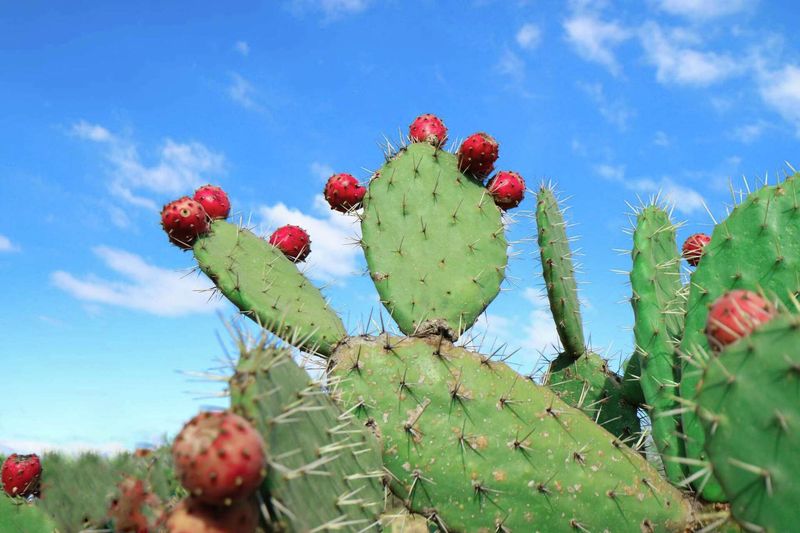
Blast a spot with all-day sun and reflected heat off the concrete and most plants sulk.
Prickly pear (Opuntia species) treats that same misery like a spa day.
This iconic Texas cactus thrives across South, Central, and West Texas, shrugging off long dry stretches and triple-digit afternoons that would fry a crape myrtle.
Depending on the type, it grows 3 to 6 feet tall and spreads into a sculptural cluster of flat green pads.
Two edible gifts come from one plant.
The young pads, called nopales, taste like a tangy green bean once you singe off the spines and cook them.
The red to purple fruit, called tuna, ripens in late summer into sweet, jewel-toned flesh perfect for jelly, syrup, or juice.
Handling is the honest catch.
Beyond the big spines sit tiny hair-like glochids that lodge in skin, so use tongs and thick gloves and singe or scrub before eating.
Plant it in well-drained soil and water it barely at all.
For a water bill that barely notices and a harvest that feels wild, prickly pear delivers.
10. What Else Actually Helps Your Driveway Oasis Thrive
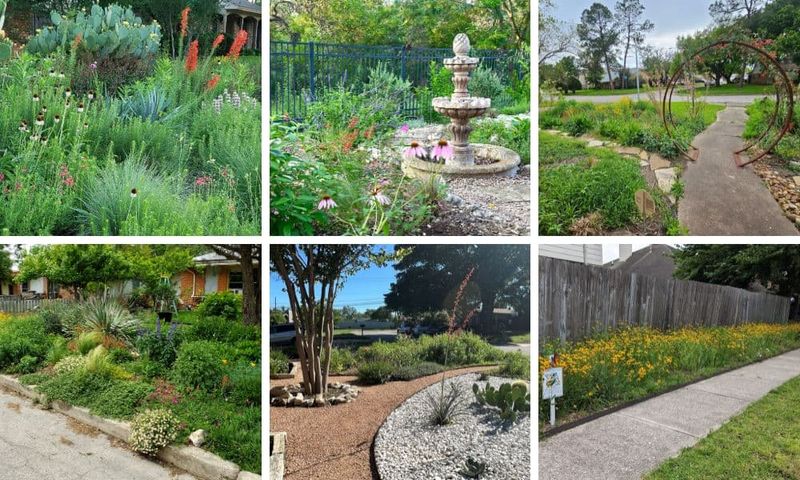
Picking resilient edible natives is a huge step toward a low-maintenance, productive yard.
But even these Texas heroes appreciate a little thought at planting, especially along a driveway edge that bakes in extra reflected heat.
Soil prep sets the tone.
For heavy blackland clay, work in compost to loosen drainage.
For sandy East Texas ground, compost helps hold moisture.
When you plant, dig a hole two to three times wider than the root ball but no deeper, a general rule Texas A&M AgriLife Extension recommends for trees and shrubs.
Deep watering is what actually settles roots.
For the first summer, water newly planted trees and shrubs two to three times a week, soaking down to 10 to 12 inches, then ease off as they mature.
Many of these plants later run on rain alone through long dry stretches.
Lay a 2- to 3-inch layer of native mulch, pulled a few inches back from the trunk so the bark can breathe.
It holds moisture and steadies soil temperature through the swings from hail to heat.
Do all that, and you are not just replacing a fussy crape myrtle.
You are growing a driveway that feeds the birds, the butterflies, and your own kitchen, one sweet Texas harvest at a time.