
The August Tomato Trick Pennsylvania Gardeners Wish They Had Tried Sooner
Follow us on Google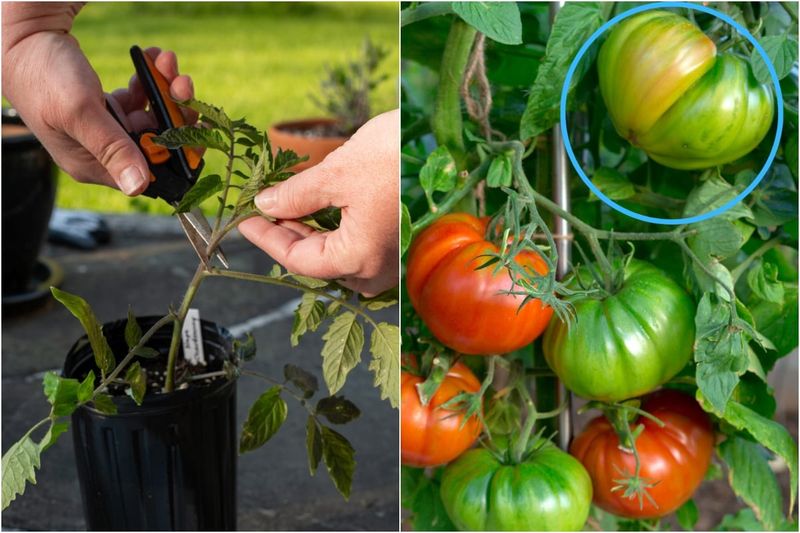
Late August, you step into the backyard and count the green tomatoes still clinging to the vine, and a familiar dread sets in: frost is coming, and they’re not ready.
A neighbor mentions she topped her plants weeks ago and her tomatoes are already turning red.
That one small move, timed right for your corner of Pennsylvania, can genuinely shift the odds in your favor before the season closes.
August Is Not Every Pennsylvania Gardener’s Deadline
Many gardeners across Pennsylvania read a headline like this one and reach for the pruners on August 1, no questions asked.
That instinct makes sense, but the timing is not the same in Altoona as it is in Philadelphia, and acting too early can cost you fruit you would have otherwise harvested.
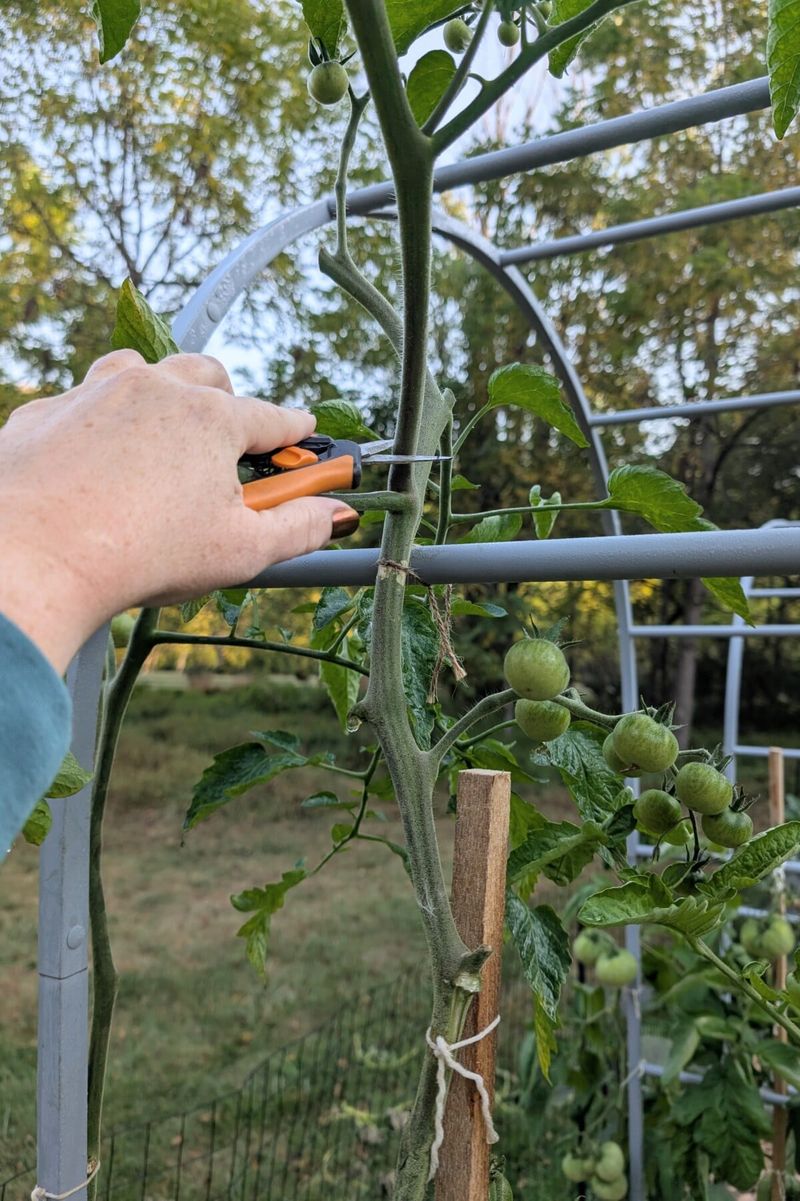
The late-season move the title is pointing toward is topping your indeterminate tomato plants and removing newly forming flowers roughly 4 to 6 weeks before your local average first frost.
Iowa State University Extension guidance on pruning tomatoes recommends this window specifically so that existing fruit has the best realistic chance to ripen before cold ends the season.
Topping limits terminal growth, and pairing it with flower removal reduces the plant’s investment in fruit that simply cannot develop and ripen in time.
That is the honest promise here: it may improve the odds that what is already on the plant finishes up.
It does not keep plants alive through a hard freeze or guarantee a bigger harvest than you would have gotten otherwise.
Pennsylvania’s frost dates make a statewide August deadline genuinely misleading.
Penn State Extension lists average first-frost dates of approximately October 4 in Altoona, October 23 in Pittsburgh, October 30 in Harrisburg, and November 17 in Philadelphia.
Count back 4 to 6 weeks from those dates and you get windows that range from late August in Altoona to early October in the Delaware Valley.
A gardener in the northern tier or at elevation in the Poconos may need to act even earlier than Altoona suggests.
So August is a real deadline for some Pennsylvania gardens, and a premature one for others.
Your local frost date is the number that actually matters.
Start there, not with the calendar month in a headline.
Identify the Plant Before You Prune
Before any pruner touches a stem, you need to know what kind of tomato plant you are working with.
Topping the wrong type can wipe out a big portion of your remaining harvest, and it happens more often than most gardeners expect.
Indeterminate tomatoes, sometimes called vining tomatoes, keep extending their main stems and setting new flower clusters right up until frost or severe stress shuts them down.
Common indeterminate varieties include Brandywine, Cherokee Purple, Sun Gold, and most beefsteak types.
Penn State Extension’s tomato production guide explains that indeterminate plants continue vegetative growth throughout the season, which is exactly why late-season topping can redirect the plant’s energy toward finishing existing fruit rather than starting new stems and flowers.
Determinate tomatoes, sometimes called bush tomatoes, are built differently.
They reach a genetically programmed size, set most of their flowers in a concentrated burst, and then taper off.
Roma, Celebrity, and Rutgers are common determinate types.
Oregon State University Extension notes that determinate plants produce a more concentrated crop on a shorter, bushier frame.
Topping one of these plants removes growing tips that were already part of a fixed flowering pattern, which can meaningfully reduce what you harvest.
Check the tag that came with your transplant, or look at the seed packet if you started from seed.
If the tag is long gone, look at the plant itself.
A sprawling, cage-busting plant still throwing new growth in August is almost certainly indeterminate.
A compact, tidy plant that seems to have stopped reaching is more likely determinate.
Iowa State Extension warns directly that topping determinate varieties can significantly cut yields.
When in doubt, skip the topping and focus on flower removal only.
Count Back From Your Local Frost Date
Forget August as a fixed rule.
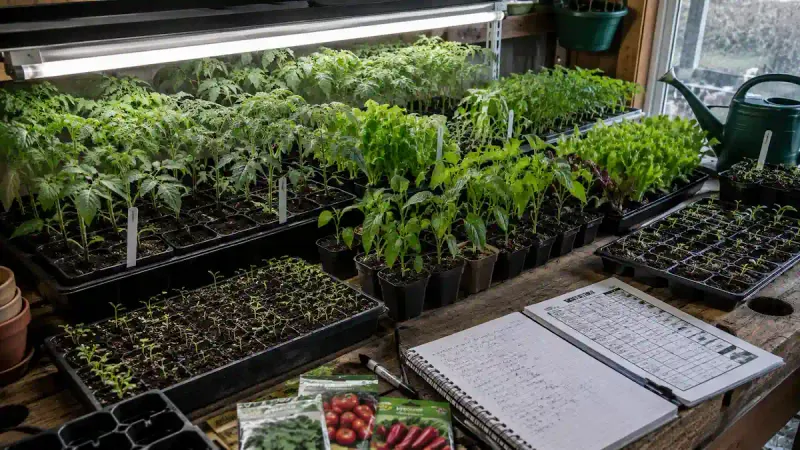
The move that actually works is counting backward from your own local average first-frost date and landing in a 4-to-6-week window that fits your specific garden.
Here is how to do it practically.
Find your local average first-frost date, either from Penn State Extension’s frost table or from a reliable weather service that gives historical averages for your county or zip code.
Then count back 4 to 6 weeks on a regular calendar.
That range is your topping window.
Iowa State University Extension places this timing at approximately 4 to 6 weeks before the average first frost, with flower removal beginning around the 4-week mark.
For a gardener near Altoona, where the average first frost falls around October 4, that puts the topping window in roughly late August to early September.
For a gardener in the Susquehanna Valley near Harrisburg, with an average first frost around October 30, the window slides to mid-September through early October.
Elevation and local terrain shift things further.
Gardens in the Allegheny Plateau or the Pocono highlands often see frost noticeably earlier than the nearest town’s official average, because cold air settles into low spots and valleys at night.
If your garden sits in a hollow or on a north-facing slope, lean toward the earlier end of the 4-to-6-week range.
An average frost date is a planning guide, not a guarantee.
Penn State Extension’s frost and critical temperatures resource makes clear that actual first-frost timing varies from year to year.
Watch local forecasts as September progresses, especially if you are gardening at higher elevation or in the northern tier.
A warm fall may give you a little extra time, but a cold snap in late September will not wait for the calendar to catch up.
Top the Main Stems and Remove Late Flowers
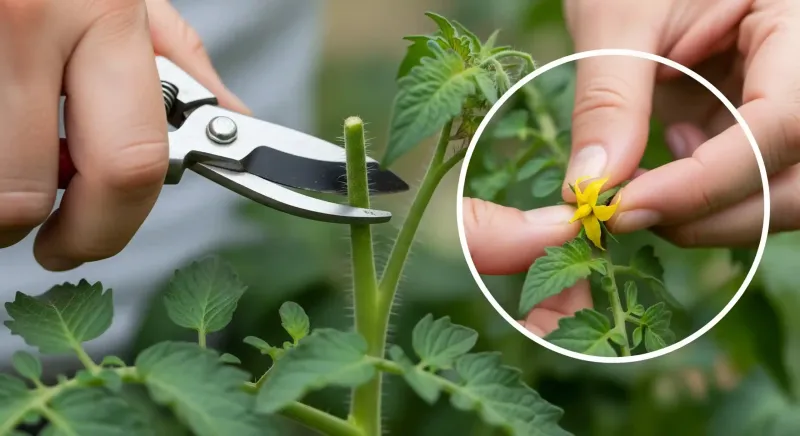
Once you know your window and you have confirmed the plant is indeterminate, the actual cut is simpler than most gardeners expect.
Find the main growing tip of each indeterminate stem, the soft, leafy end that is still reaching upward, and cut it cleanly just above a leaf node or a fruit cluster.
That is topping.
Iowa State University Extension recommends using clean, sharp pruners and making the cut just above a leaf or fruit cluster on each main stem.
Sharp, clean cuts heal better and reduce the chance of introducing disease.
If you have been dealing with any foliar issues, wipe the blades with a diluted bleach solution between plants.
Topping limits terminal growth on that stem, which means the plant stops sending resources toward extending that particular shoot.
It does not stop every side shoot on the whole plant, and it does not flip a physiological switch that guarantees ripening.
Think of it as removing the plant’s forward ambition on the main stem, not rewiring the whole system.
Flower removal is the second part of the equation, and Oregon State University Extension advises removing stem tips about one month before expected frost to stop new vegetative growth and support ripening of existing fruit.
Beginning about 4 weeks before your local frost date, pinch or snip off any new flower clusters as they appear.
A flower opening in late September in Harrisburg is not going to become a ripe tomato before November.
Removing it means the plant is not spending anything on a fruit that cannot finish.
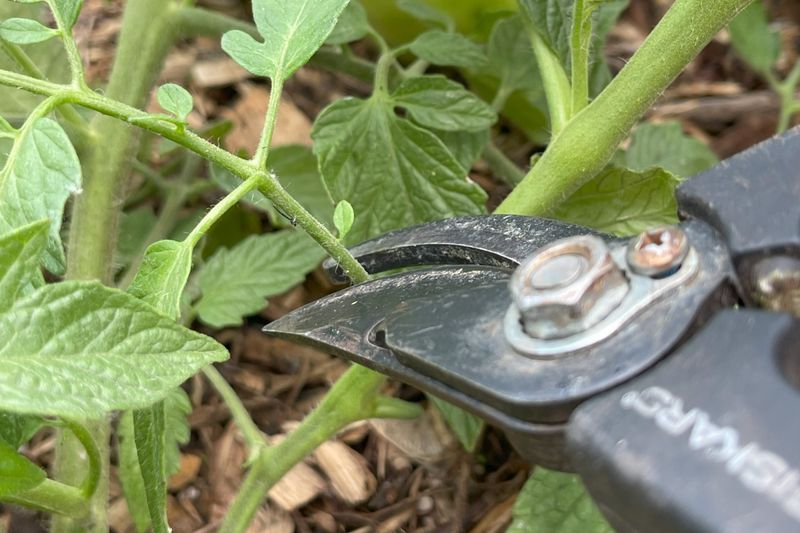
Do not confuse topping with stripping every sucker from the plant.
A sucker is a side shoot growing in the angle between a leaf and the main stem, and removing all of them is a different practice with its own tradeoffs.
The late-season move here is specifically about the main growing tip and newly appearing flowers, not a full defoliation or a sucker-removal campaign.
Leave the side structure that is already carrying fruit alone.
Keep Enough Leaf Cover for Ripening Fruit
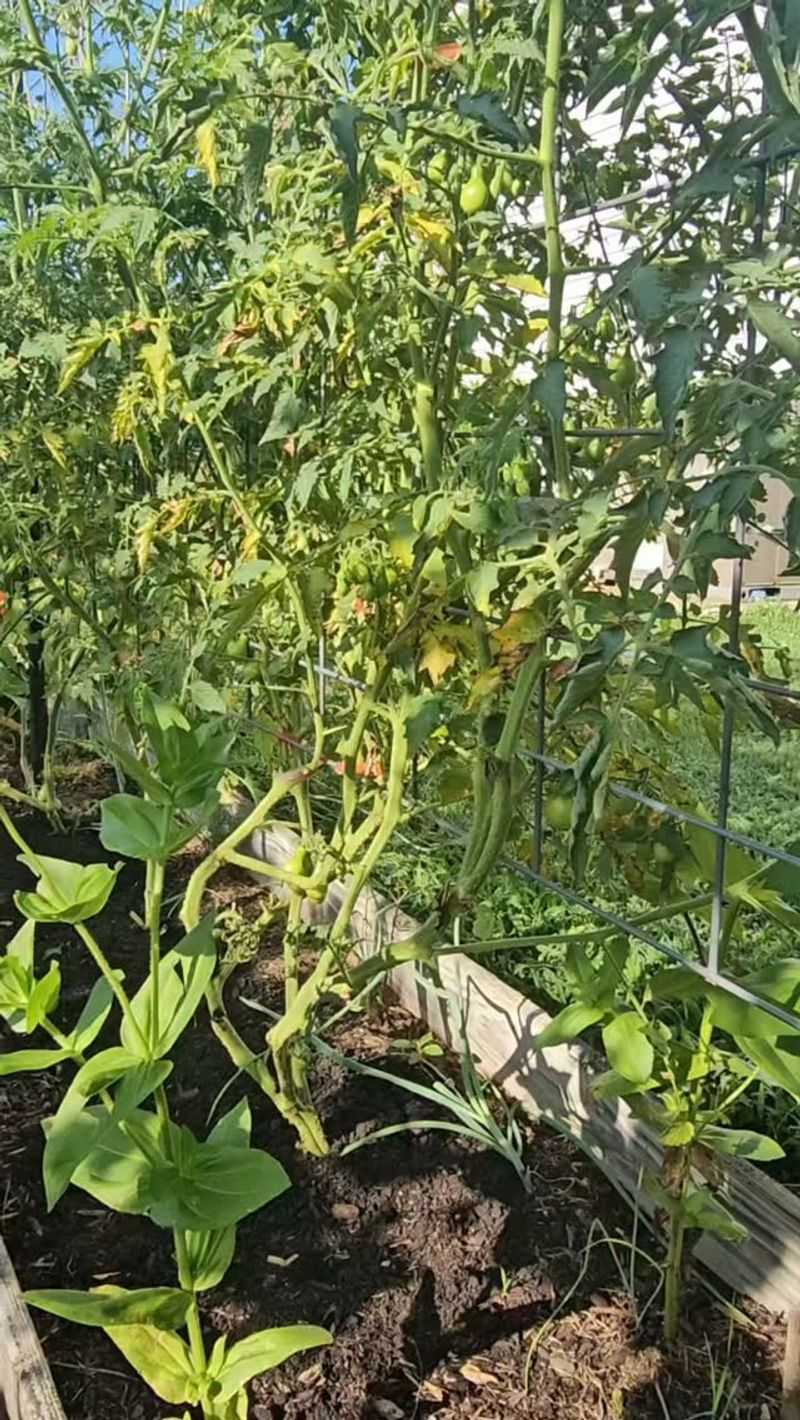
After topping, the temptation is to keep cutting.
More airflow, more light, faster ripening, the logic seems to follow.
But removing too much leaf cover creates a different problem, and it can actually slow down what you are trying to accomplish.
Healthy leaves are doing real work.
They power photosynthesis, which is how the plant produces the energy needed to ripen the fruit already on the vine.
They also shade developing tomatoes from direct afternoon sun, which matters on hot late-summer days when sunscald can turn a nearly ripe tomato into a soft, pale-patched disappointment.
Iowa State Extension advises leaving enough leaf canopy to protect tomatoes from intense sunlight after any pruning.
The goal is to remove what is diseased or blocking airflow, not to strip the plant bare in hopes of speeding things along.
Disease cleanup is where leaf removal makes the most sense, and it follows its own rules.
Penn State Extension’s guidance on tomato diseases recommends removing affected lower leaves at the first sign of early blight, starting with those within about 12 inches of the ground.
Infected material should go in the trash, not the compost pile, because composting does not reliably destroy the fungal spores.
Disinfect your clippers between plants using a solution of 1 part bleach to 9 parts water to avoid spreading the problem from one plant to another.
Penn State also notes that leaf removal during disease cleanup should stay under 20 percent of the plant’s total leaf mass.
That figure belongs specifically in the disease-management context, not as a general pruning target you should aim for every time you pick up the shears.
Routine topping of the main stem and disease cleanup of lower leaves are two separate tasks.
Keep them separate in your mind, and your plants will hold together well enough to finish ripening what is already there.
Support the Plant Without Forcing New Growth
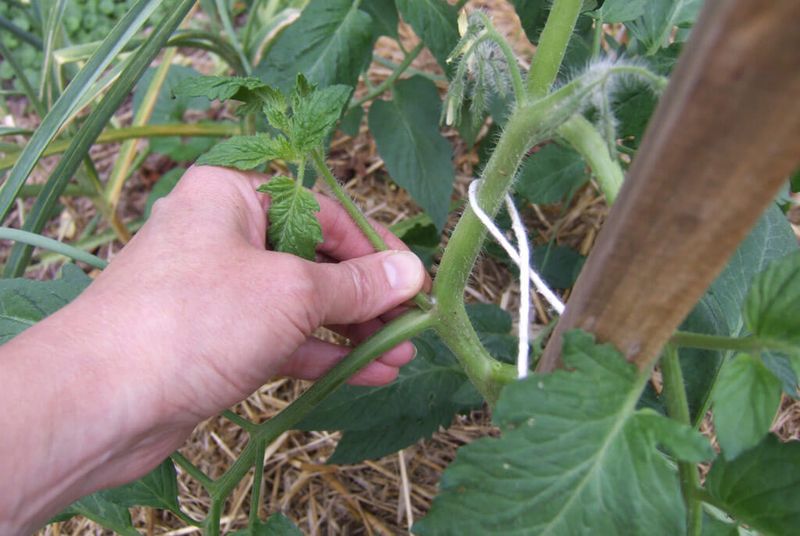
Topping is not the end of the job.
What you do in the weeks after the cut shapes whether the existing fruit actually finishes well or stalls out from stress.
One of the clearest cautions from extension guidance is to avoid topping plants that are already drought-stressed, diseased, or showing signs of nutrient deficiency.
Iowa State University Extension specifically recommends against topping stressed plants, advising that pruning be done during dry weather and followed by consistent moisture afterward.
A plant that is already struggling does not respond to topping the way a healthy plant does, and cutting a stressed plant can push it further into decline rather than redirecting it toward ripening.
Consistent soil moisture is the most useful thing you can do after topping.
Penn State Extension recommends approximately 1 to 1.5 inches of water per week, adjusted for actual rainfall, soil type, heat, drainage, and whether you are growing in containers or raised beds.
Pennsylvania’s late-summer rain pattern can be deceiving: a heavy thunderstorm may dump an inch of water in 30 minutes, but if the soil dries out again between storms, the plant is still experiencing drought stress between events.
Check soil moisture a few inches down before deciding whether to water.
Watering at soil level in the morning, rather than wetting the foliage, reduces fungal disease pressure.
Laying 2 to 3 inches of mulch around the base of each plant helps hold moisture between watering sessions and reduces soil splash that can spread disease to lower leaves.
Skip the heavy fertilizer after topping.
A sudden high-nitrogen push can encourage the plant to throw new vegetative growth instead of finishing fruit, which works against the whole point of the exercise.
Stick with whatever normal soil-test-based nutrition you have been using, keep moisture steady, and monitor the plants daily for disease as the season winds down.
Expect a Ripening Tradeoff, Then Bring In the Crop
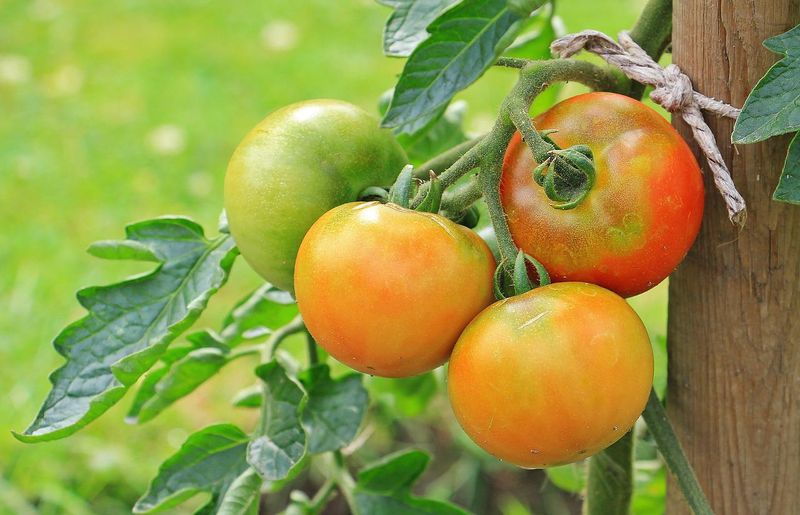
Topping indeterminate tomatoes in the late-season window can shift some of the plant’s attention toward ripening existing fruit, but it comes with real tradeoffs worth understanding before you make the cut.
Oregon State University research on tomato yield and pruning methods found that severe pruning and staking produced earlier ripening and somewhat larger individual fruit, but also reduced total yield per plant and increased the risk of cracking and blossom-end rot when moisture or nutrients were uneven.
Earlier ripening of what is on the plant is genuinely possible.
A bigger total harvest is not what this practice is designed to deliver.
If you go into it expecting more tomatoes, you may be disappointed.
If you go into it hoping the tomatoes already hanging on the vine actually turn red before a hard frost takes them, you have the right expectation.
When a frost warning appears on the forecast, knowing how to respond matters.
A light frost, temperatures hovering just below 32 degrees Fahrenheit for a few hours, is different from a hard freeze that drops into the mid-20s and stays there.
Iowa State Extension recommends removing or opening covers during the day and taking them off once temperatures rise above freezing to avoid overheating plants in sunlight.
A supported frost cloth or breathable garden cover can help during a light frost.
Sealed plastic touching foliage is not a good option, because it can overheat in sunlight and damage the very leaves you are counting on to finish ripening the crop.
For tomatoes that will not make it to full color on the vine, harvest the mature-green ones before a hard freeze arrives.
Iowa State Extension recommends picking firm, fully developed green tomatoes just before the first frost and storing them in a cool, dark location around 60 to 65 degrees Fahrenheit.
A mature-green tomato is fully sized with the deep green starting to lighten, sometimes showing a pale star at the blossom end.
University of Minnesota Extension notes that tomatoes picked very early, before any lightening appears, often ripen poorly indoors.
Pull the stems off before storage and check them every few days.
Many southeastern Pennsylvania gardeners are genuinely surprised how well a late-season mature-green tomato finishes on a basement shelf, and that quiet satisfaction is exactly what this whole late-season strategy is working toward.