
The 7 Florida Native Plants That Bring Zebra Longwings Back To A Quiet Butterfly Garden
Follow us on Google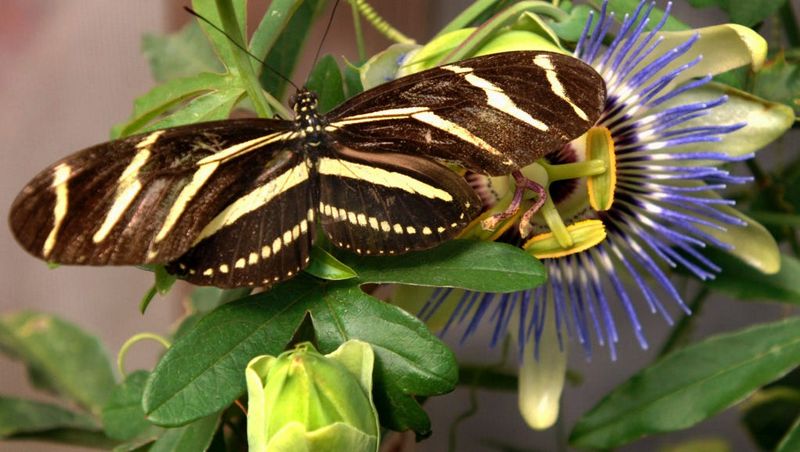
You step onto the back patio after breakfast, coffee in hand, and the yard is too still.
No striped wings drifting through the shade, no slow float over the flower beds like there used to be.
Somewhere along the way, the zebra longwings stopped visiting, and the garden got quiet.
Here is the good news.
Florida’s official state butterfly comes back fast when you give it the right native plants, and most of them are tough, cheap, and easy to grow.
Plant a few of these seven, and you will watch the shady corners fill up with wings again.
1. Corkystem Passionflower Welcomes Longwing Caterpillars To Feast
Skip this one and you skip the whole show.
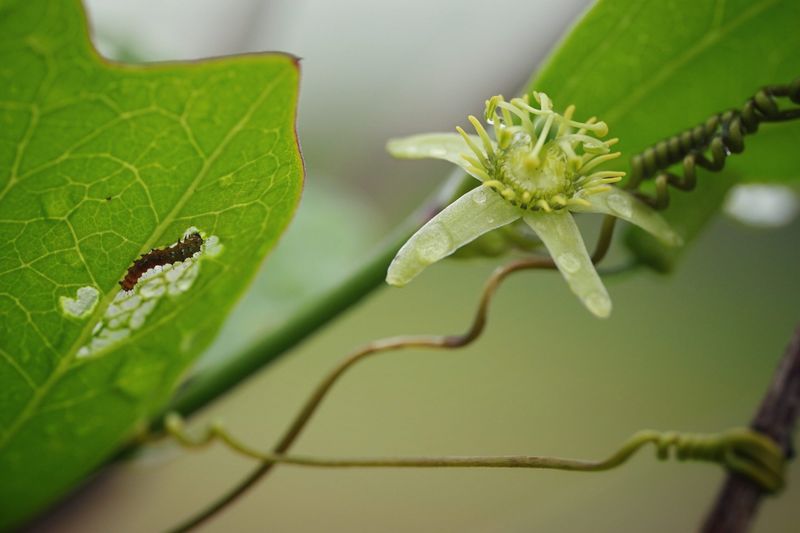
Zebra longwings lay their eggs on passionflower vines, and corkystem passionflower (Passiflora suberosa) is the quiet workhorse that gets the job done.
Many Central Florida gardeners have spotted the tiny yellow eggs tucked singly onto the new growth.
The flowers are small, only about a dime wide, followed by little dark berries that birds pick clean.
The stems turn corky as they age, which is where the name comes from.
But the real value is underneath, on the leaves the caterpillars need to survive.
Here is the part that fits the butterfly perfectly.
Corkystem prefers partial shade, and zebra longwings genuinely favor shadier spots for laying eggs because their dark wings soak up heat.
It grows in well drained sandy or loamy soil, and it even handles the shallow limestone soil of South Florida and the Keys.
Once settled in, it shrugs off drought, though it likes steady moisture.
As a vine it can run over 15 feet, or you can train it to a 3 to 4 foot trellis.
Gardeners in USDA Zones 8 through 11 will find it low fuss, but protect young plants if temperatures briefly dip below 30°F.
Leave that tender new growth alone.
That is exactly where the eggs go.
2. Purple Passionflower Draws Butterflies With Bold Blooms
Want a host plant that also stops people mid step?
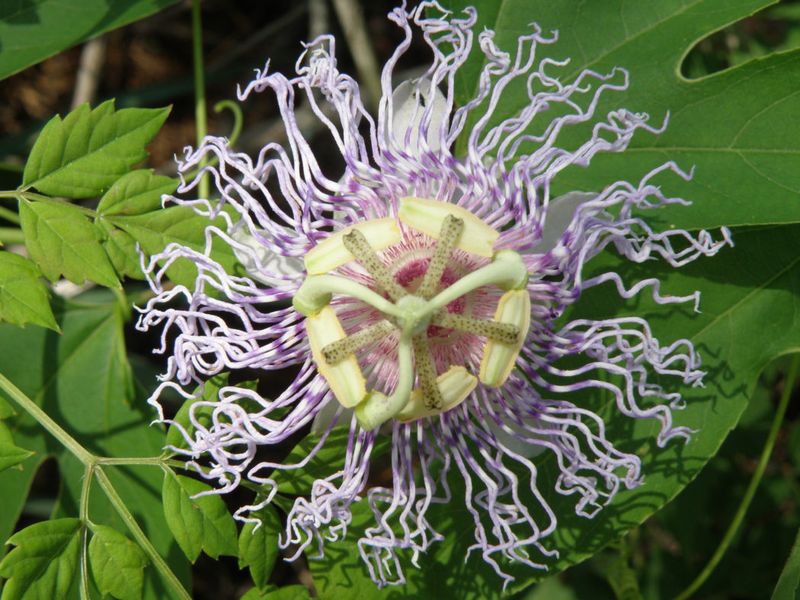
The purple passionflower, or maypop (Passiflora incarnata), throws out lavender blooms so intricate they look designed by someone with too much time on their hands.
Each flower runs 2.5 to 3 inches across, blooming spring through summer.
Those blooms feed the eyes and host three butterflies at once, zebra longwings, gulf fritillaries, and variegated fritillaries.
When the flowers fade, egg shaped fruits called maypops swell up in late summer and fall.
Maypop wants full sun for the heaviest flowering, though it tolerates a little shade.
It handles sandy, loamy, or calcareous Florida soils with a pH of 6.1 to 7.8.
Once established it takes drought well, a real plus through our long humid summers, but about 1 to 1.5 inches of water a week keeps it happiest when rain skips town.
Now here is where it gets tricky.
This vine spreads by underground rhizomes and suckers, sometimes racing 20 feet in a single season.
So give it a fence, a big trellis, or a large container to boss around.
It suits North, Central, and South Florida in USDA Zones 7B through 11, and feeding it two or three times a year keeps the growth strong.
Plant it, then stand back.
3. Yellow Passionflower Thrives In Shady Nooks
That damp shady corner where nothing seems to flower?
It might be the best real estate you have.
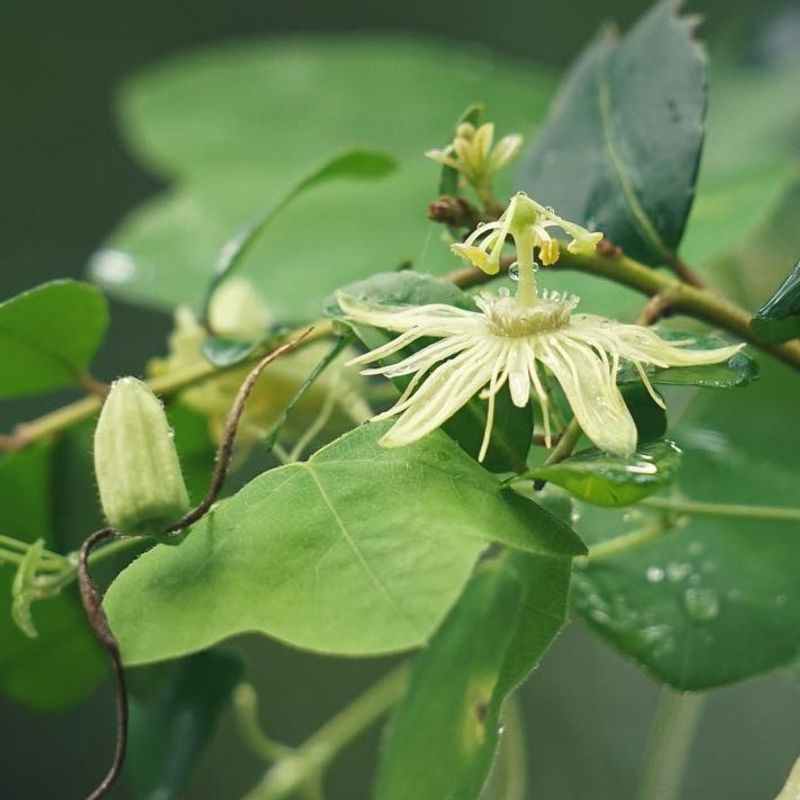
Yellow passionflower (Passiflora lutea) is a native host vine that zebra longwing caterpillars will happily settle into, and it actually likes the low light.
The flowers are small and yellowish green, nowhere near as flashy as their purple cousin, but they pull their weight ecologically.
You can tell it apart by the shallowly lobed leaves.
It blooms through summer and sets fruit in fall.
Out in the wild this vine grows in woodlands, thickets, and maritime forests across Florida, thriving where fuller sun would scorch other passionflowers.
It can look a little thin and puny at times, not the lush wall of leaves you get from a maypop.
But that modest habit is the point.
For a small yard, a shaded side bed, or a container tucked under a tree, yellow passionflower gives heat sensitive zebra longwings exactly the cool, dim nursery they prefer.
Their dark wings absorb a lot of heat, so shade is not a compromise for them, it is comfort.
Give this quiet vine a spot other plants reject, and you turn a dead zone into a butterfly nursery.
4. Firebush Ignites Your Garden With Nectar
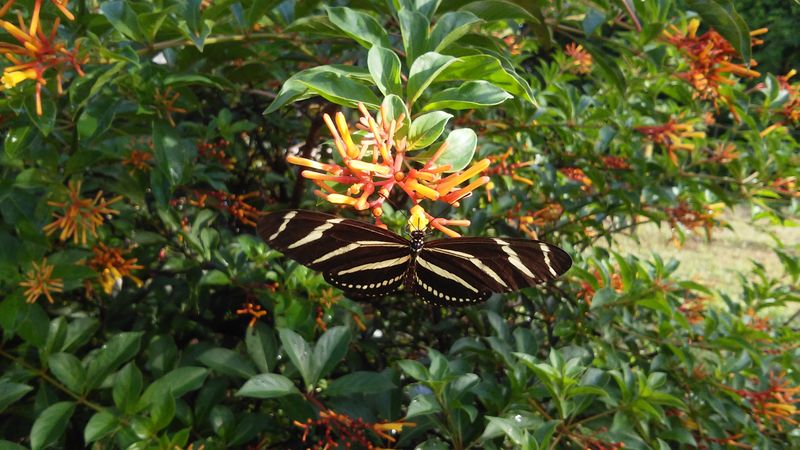
Grown caterpillars turn into adults that need serious fuel, and firebush (Hamelia patens) is the gas station.
Its orange red tubular flowers pull in zebra longwings, gulf fritillaries, and hummingbirds all at once.
The blooms keep coming from late spring until the first cold snap, or year round down in South Florida.
As a bonus, the berries ripen through amber, red, and black, feeding songbirds while the butterflies work the flowers.
It is a two for one deal that keeps the yard busy.
Firebush is a tough customer in USDA Zones 8 through 11.
It wants full sun, at least 6 hours a day, to show its best color.
Partial shade works but cuts the flowering back.
It takes a wide range of well drained soils and shrugs off heat and drought once established, which matters when our summer sun turns relentless.
Left alone it climbs 8 to 12 feet, up to 15 feet as a screen with support.
You can prune it smaller, but keep it at least 5 to 8 feet tall or you sacrifice blooms.
Gardeners along the Gulf and Atlantic Coasts get a bonus, moderate salt spray tolerance.
Plant one where you can watch it from the porch, and the evening flyover becomes a regular event.
5. Tropical Sage Offers Reliable, Year-Round Nectar
Some plants clock in and out.
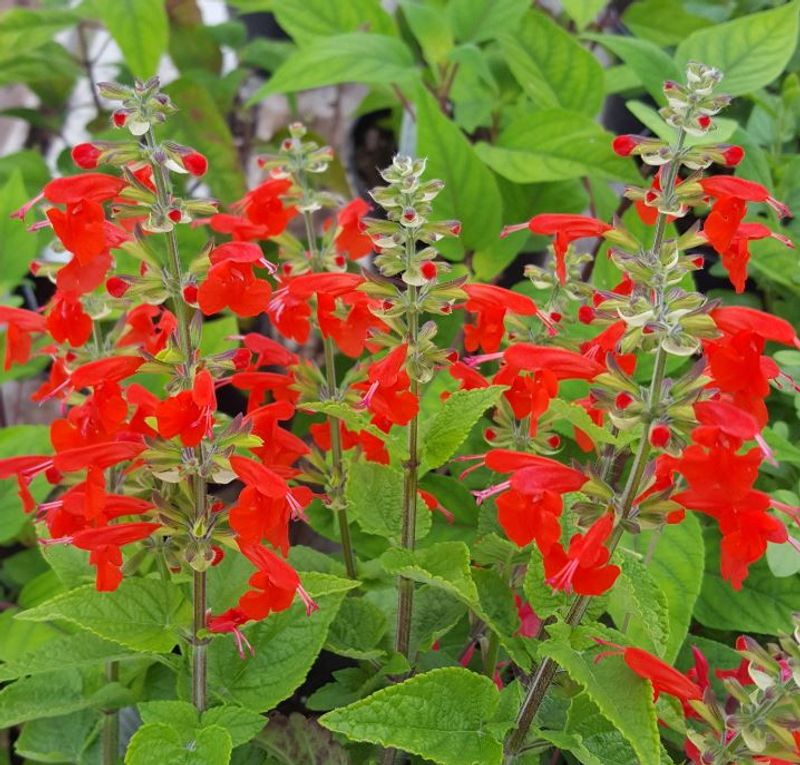
Tropical sage (Salvia coccinea) just never leaves.
Its slim tubular flowers, about 1 inch long in red, pink, or white, bloom nearly year round in the warmer parts of Florida, and zebra longwings work them steadily alongside hummingbirds and bees.
Crush a leaf and you get that aromatic mint family scent, and the stems are square, another mint family giveaway.
It is the kind of plant that quietly fills gaps between your showier bloomers.
Full sun brings the most flowers, though it takes partial shade fine.
Fair warning, in the brutal Central and South Florida afternoon heat it may wilt in full sun without regular water.
It likes well drained sandy to rich soil and is not picky about pH.
Once established it handles drought, which keeps the water bill honest during dry spells.
It grows 2 to 4 feet tall and 1 to 2 feet wide, taller if you never prune.
Space transplants 24 to 36 inches apart, and expect it to self seed generously in USDA Zones 7 through 11.
Thin the volunteers so they do not crowd.
One caution, its salt tolerance is minimal, so shelter it from coastal spray.
Plant a drift of it and the nectar never runs dry.
6. Blue Porterweed Provides Low-Growing Nectar
Not every nectar plant needs to tower over the bed.
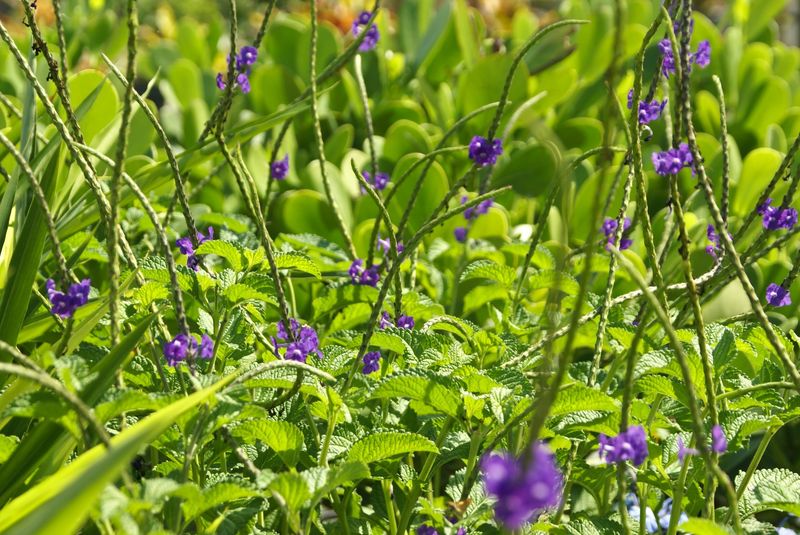
Blue porterweed (Stachytarpheta jamaicensis) hugs the ground and still works as a full blown butterfly magnet.
Zebra longwings, monarchs, and julias all drop in for its blue purple flowers, each spike lined with tiny blooms sporting a white eye.
Here is a little secret of nature.
Each individual flower opens for just one day.
On very cloudy days they may not open at all, since they take their cue from sunlight.
It doubles as a larval host for tropical buckeye caterpillars too.
Porterweed loves full sun or light shade and is genuinely unfussy about soil, handling sand, clay, loam, or calcareous ground, even poor spots.
Once established it is highly drought tolerant, a blessing through Florida’s dry stretches, but keep it watered while it settles in.
It grows 1 to 3 feet tall and 2 to 3 feet wide with a sprawling habit that makes fine native groundcover.
Space plants 2.5 to 3 feet apart to cover ground.
Best in USDA Zones 9B through 11 as a perennial, though in North Florida it may die back over winter and return in spring.
It is moderately salt tolerant, so coastal gardeners can use it too.
Tuck it along a path edge and the low blooms bring the butterflies down to eye level.
7. Coral Honeysuckle Offers Nectar And Shelter
To finish, give the butterflies a place to climb toward.
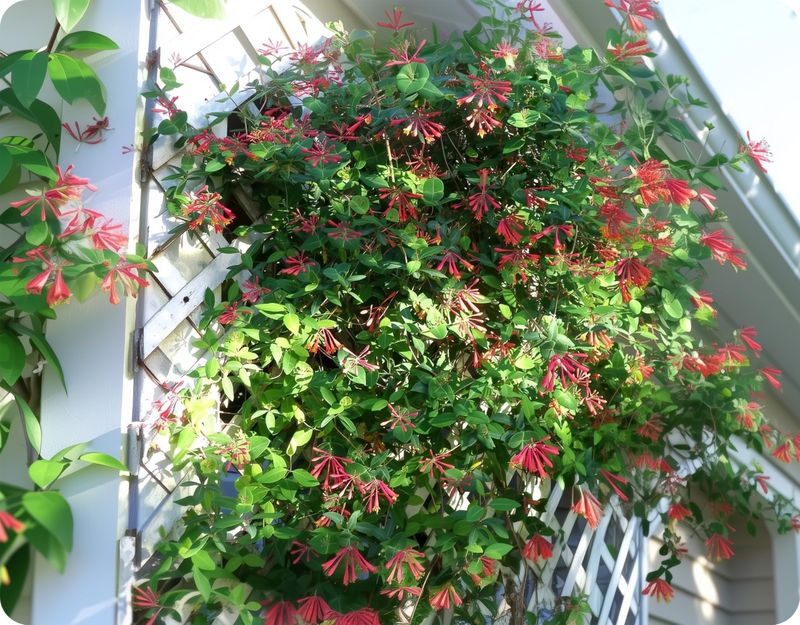
Coral honeysuckle (Lonicera sempervirens) sends up clusters of scarlet to reddish orange tubular flowers with yellow orange throats, and hummingbirds and butterflies cannot resist them.
The blooms show up on new growth from spring through summer, and in Central Florida they can appear year round, with some of the best flowering coming in winter when the yard needs it most.
Beyond nectar, it hosts spring azure and snowberry clearwing caterpillars, and the red berries feed songbirds after the flowers fade.
This woody vine wants full sun for the most flowers, at least 6 hours a day, though it takes partial shade with fewer blooms.
It adapts to well drained soils including sandy loam and rocky slopes, leans slightly acidic but tolerates mild alkalinity.
Avoid bone dry sand.
Once established it handles drought, but water it regularly while it roots in.
It runs 15 to 20 feet, perfect for a trellis, fence, or arbor, and it suits all of Florida in USDA Zones 4 through 10.
It stays mostly evergreen in Central and South Florida but may drop leaves during North Florida’s colder winters.
UF/IFAS Extension notes it needs only light pruning after flowering.
One limit, salt tolerance is low, so keep it back from direct coastal exposure.
Give it something to climb, and the garden finally feels alive again.