
That Patchy, Bald-Headed Bird At Your Feeder Right Now Is A Cardinal Molting, Not Dying
Follow us on Google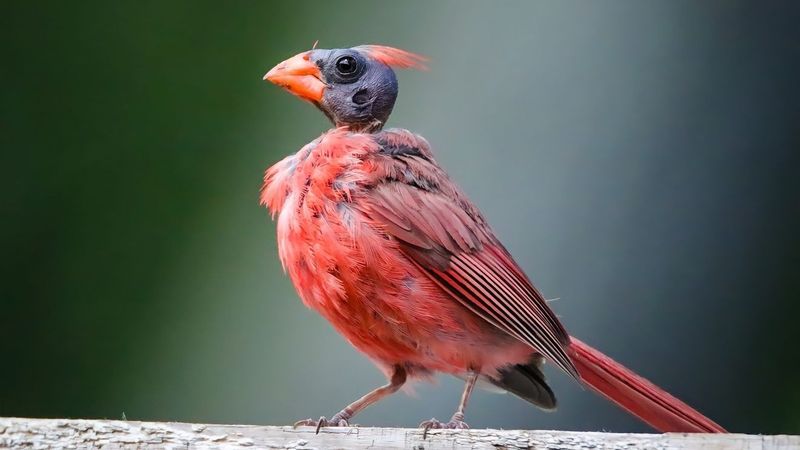
You spot a strange, naked-headed bird at your feeder and your stomach drops.
The brilliant red body is unmistakable, but where the crest used to be there is only dark, bare skin.
Before you reach for the phone to call a wildlife rescue, take a breath, because what you are probably watching is one of nature’s more startling but routine events.
A bald or patchy head on a cardinal-shaped bird during late summer or early fall is most often a sign of annual molt, not a death sentence, though a few warning signs are worth knowing before you walk away.
A Bald Head Often Signals Molt—But Not With Certainty
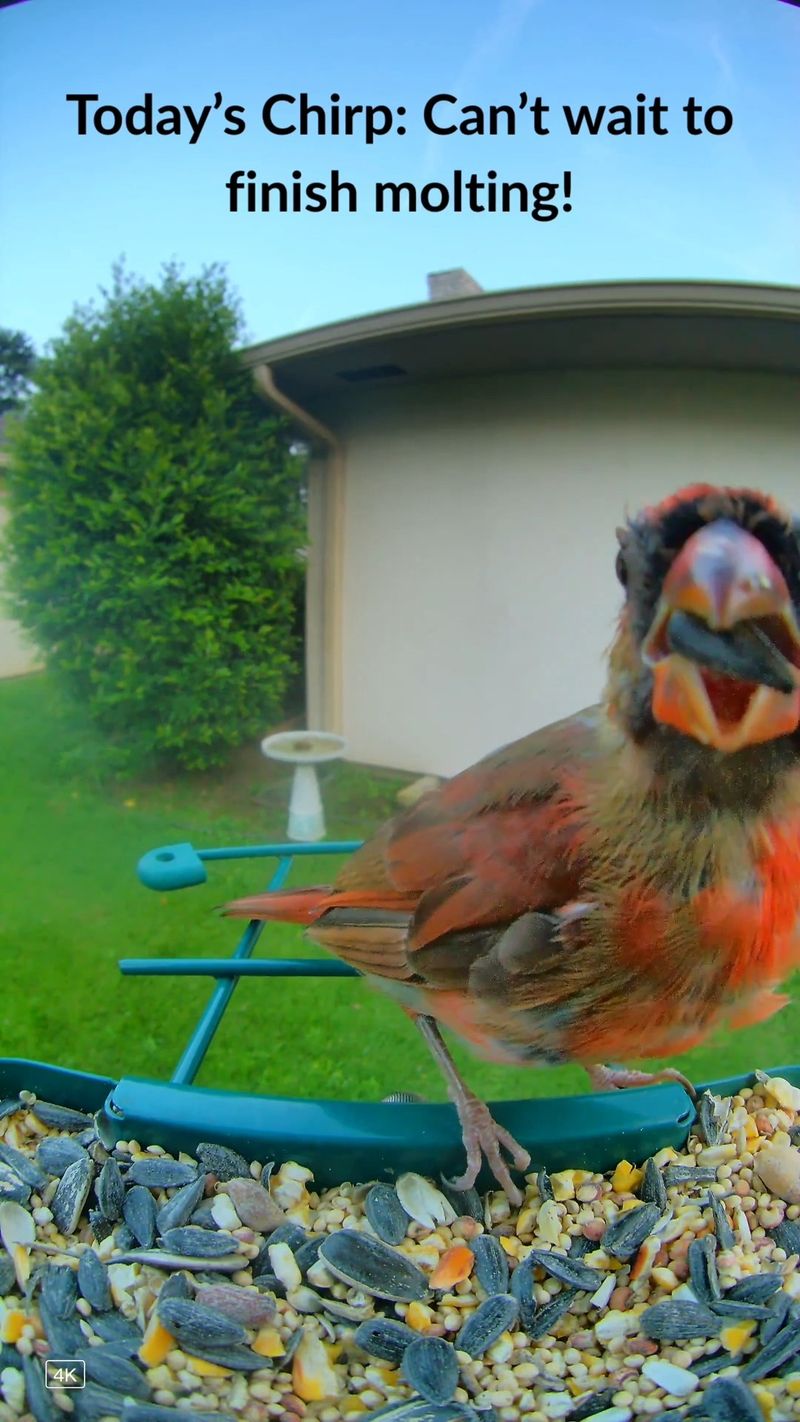
Spotting a featherless head on an otherwise familiar bird can stop you cold.
If the bird has a red body, a thick seed-cracking bill, and is visiting a backyard feeder somewhere in the eastern United States or parts of the Southwest, there is a reasonable chance you are looking at a Northern Cardinal, Cardinalis cardinalis, going through its annual molt.
Texas Parks and Wildlife and ornithologists at Cornell’s Lab of Ornithology both describe this bald-headed look as a recognized pattern in cardinals, particularly after the breeding season wraps up in late summer or early fall.
That said, a photograph or a quick glance cannot confirm the species, the cause of the feather loss, or whether the bird is healthy.
Molt is the leading explanation for a temporarily bald cardinal-shaped bird seen during this seasonal window, but it is not the only one.
Parasites, nutritional stress, environmental factors, injury, and illness can each produce feather loss, sometimes in ways that look nearly identical from across the yard.
The title of this article makes a confident claim, and the reassurance behind it is real: many bald-headed cardinals seen during the late-summer molt period are not in immediate danger.
But “not dying” is too absolute a promise for any observer to make from a distance.
A more useful frame is this: watch the bird’s behavior, note the season, and keep reading so you know exactly which signs would change the picture.
Cornell’s bald-bird guide puts it plainly: normal molt is the most likely explanation, but it is not the only one worth considering.
Why The Crest Can Vanish In A Burst
Feathers are built almost entirely from keratin, the same protein that makes up your fingernails.
Once a feather is damaged, it cannot repair itself the way skin can.
The only solution is to shed the old feather and grow a fresh one, which is exactly what molt accomplishes.
Cornell’s feather molt explainer describes this annual replacement as essential for flight, insulation, waterproofing, and the display coloring that cardinals depend on through the year.
Most birds lose and replace feathers in a staggered sequence so they are never left completely exposed or unable to fly.
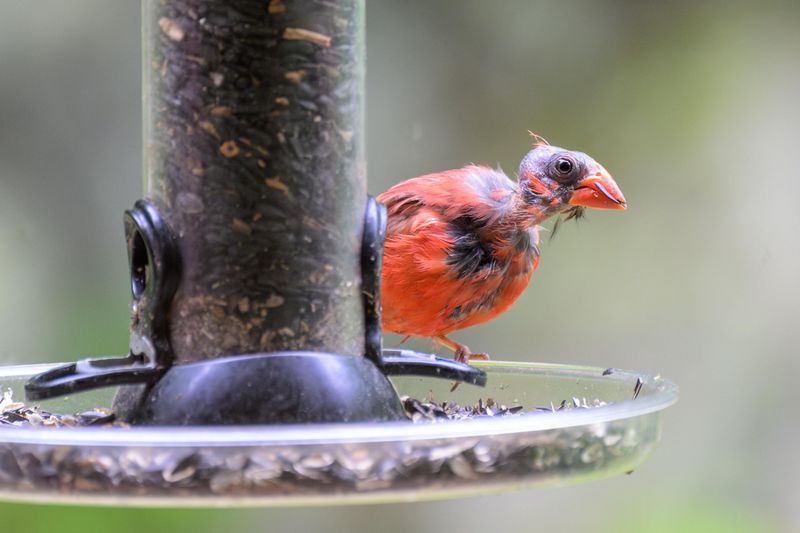
Cardinals appear to follow a different pattern on the head, sometimes shedding many or all of the small feathers there in a relatively short, synchronized burst rather than a gradual trickle.
The result is that exposed dark skin replaces what was a fully feathered red head almost overnight, and the bird’s signature pointed crest simply disappears for a while.
On a male, the contrast is especially jarring.
The body stays that deep, saturated red, but the head looks like something entirely different landed on top of it.
A female going through the same process may be less dramatic because her coloring is subtler, but the bare skin is equally visible up close.
What causes this synchronized head-feather drop is not fully settled in the scientific literature.
Some sources mention possible roles for feather mites, lice, nutritional factors, or environmental stress, while others treat it simply as an unusual but recognized molt pattern.
The honest answer is that the precise trigger remains an open question, so the article will not pin it on any single cause.
When Seasonal Timing Makes Molt More Likely
Timing is one of the most useful clues you have.
Northern Cardinals typically complete their breeding season by midsummer, and the annual complete molt that follows tends to fall in late summer and early fall.
Cornell notes that birds generally schedule molt around other energy demands, slotting it into a window when they are not simultaneously raising chicks or migrating.
For cardinals, that window often lands right around August and into September, which is why wildlife officials in states like Georgia and Texas report a reliable spike in concerned calls from backyard birders during those weeks.
Timing varies, though.
Individual birds do not follow a single national calendar, and geography plays a role.
A cardinal in Florida may finish breeding earlier than one in a cooler northern state.
Treating August as a guaranteed molt month for every cardinal in every yard would overstate the case.
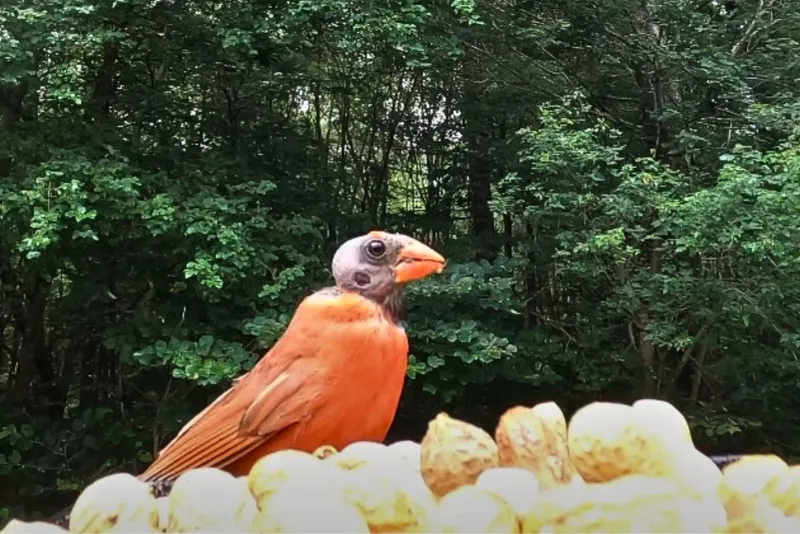
What you can reasonably say is that if you are seeing a bald-headed cardinal-shaped bird during the late-summer or early-fall period, the seasonal timing is consistent with normal annual molt.
Young cardinals add one more layer of complexity.
Juveniles undergo their first major plumage change, called the prebasic molt, which replaces their dull, streaky first feathers with adult or near-adult coloring.
During this transition, an immature bird can look patchy, uneven, or oddly colored in ways that may read as diseased to an unfamiliar observer.
A bird that remains alert, perches steadily, flies without trouble, and feeds normally is showing behavior consistent with a healthy molt, though those observations are reassuring evidence, not a guarantee of good health.
Texas Parks and Wildlife describes the bald appearance as temporary, with new feathers usually returning within a few weeks.
Use Feeders As Supplemental Resources, Not Treatments
Molt is genuinely energy-expensive.
Growing a full set of new feathers requires protein and calories, so a bird going through this process has real nutritional demands.
That fact has led some well-meaning backyard birders to pile on extra seed, hoping to speed the process along.
The sources do not support that approach.
No authoritative wildlife or ornithology organization has established a specific extra portion, a particular feeding schedule, or a seed-based cure for baldness or slow feather regrowth.
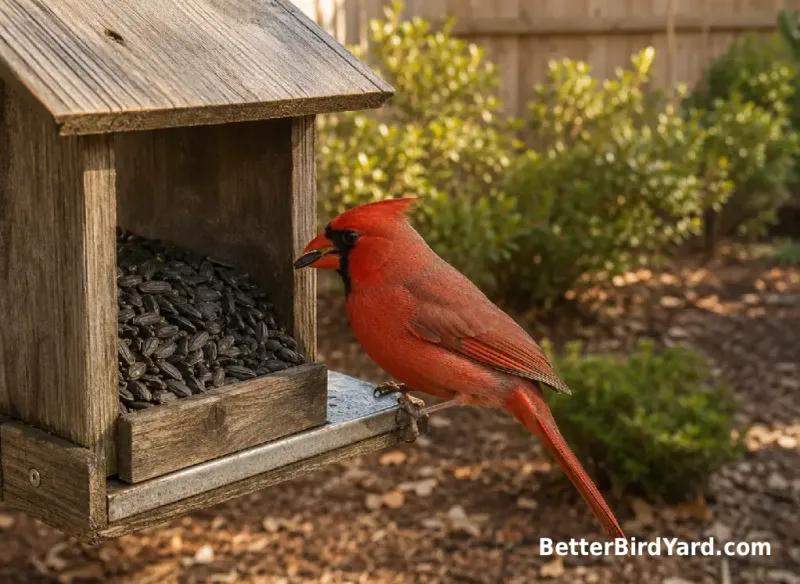
What you can do is keep suitable food consistently available if you already maintain a feeder.
Black-oil sunflower seed is a well-documented cardinal favorite, recognized by Cornell’s Northern Cardinal species account as a staple feeder offering.
But cardinals eat a much broader diet than sunflower seeds alone: berries, buds, weed seeds, grass seeds, and insects all appear on the menu through the year.
A feeder is supplemental support, not a hospital, and the bird was finding food long before your feeder existed.
Overloading a feeder trying to help one bird can actually work against you.
More seed means more birds crowding in, more spilled hulls on the ground, and a faster buildup of the moisture and waste that let bacteria and mold take hold.
Cornell’s molt guide supports providing reliable natural food access, not dramatically increasing supplemental portions.
Clean the feeder at least once a month, and more often if you notice sliminess, mold, or wet seed clumping.
Use a solution of one part household bleach to nine parts water, scrub all surfaces, rinse thoroughly, and let the feeder dry completely before refilling.
Do this cleaning outdoors and away from any kitchen food-preparation area, following CDC guidance on safe backyard wildlife practices.
Support The Yard Without Crowding The Birds
A feeder is only one piece of a bird-friendly yard.
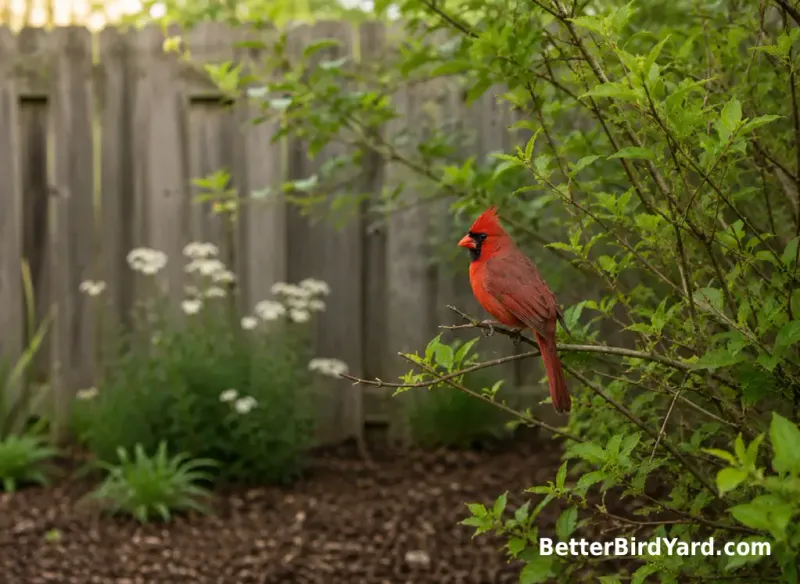
Cardinals where they occur, primarily across the eastern half of the United States and parts of the Southwest, rely on dense shrubs, thickets, and brushy edges for cover, nesting sites, and natural foraging.
Cornell’s species account notes that cardinals favor woodland edges, suburban gardens, and shrubby areas, so a yard with layered plantings and some wild corners genuinely suits them better than a manicured lawn with a single feeder post.
Clean water is another practical addition.
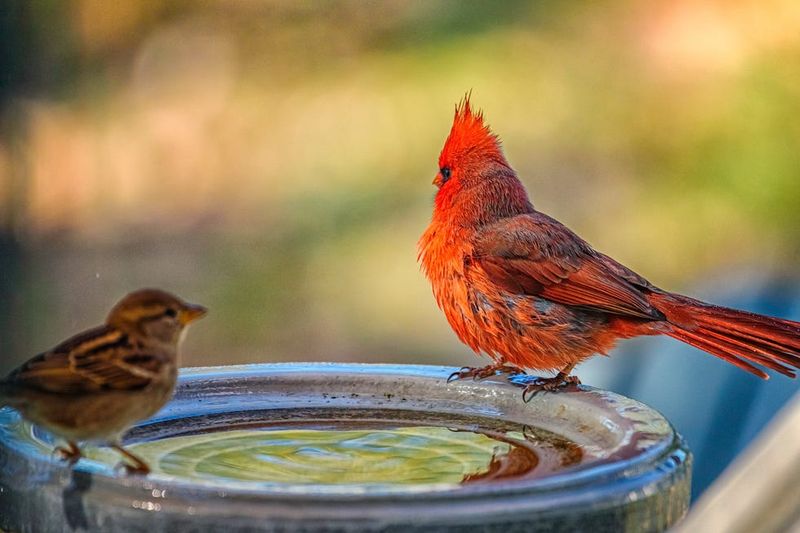
A shallow birdbath placed in a spot with nearby cover lets a bird drink and bathe without feeling exposed.
Per CDC guidance on backyard wildlife, birdbaths should be cleaned and refilled at least once a week, or sooner if the water looks cloudy or dirty.
Standing, stagnant water is a disease vector, so fresh water matters as much as the container itself.
Ground hygiene under feeders deserves equal attention.
Spilled seed, old hulls, droppings, and moldy food accumulate fast, and crowded or dirty feeding stations can accelerate the spread of disease among songbirds.
A 2023 CDC journal report linked a multistate Salmonella outbreak to wild songbirds, contaminated feeders, and direct or indirect contact with infected materials.
Rake or sweep under feeders regularly, keep pets away from areas where wild birds congregate, and wash your hands after any contact with feeders, baths, or spilled seed.
These steps protect your birds, your pets, and your household at the same time.
Signs That Point Beyond A Normal Molt
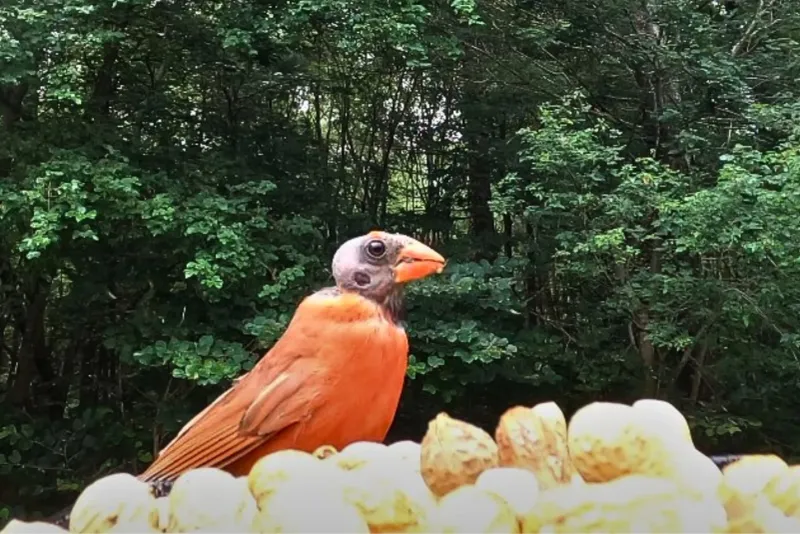
A clean, bare head on a bird that is moving around normally is the picture that fits seasonal molt.
The bird hops between branches, flies off at a noise, cracks seeds, and generally acts like every other cardinal at the feeder except for that startling naked scalp.
That combination of appearance and behavior is consistent with a normal molt, and you can reasonably watch from a distance and let the process run its course.
The picture changes when the feather loss comes with something else.
Cornell’s bald-bird resource identifies several signs that move beyond ordinary molt: crusting or swelling around the head, bleeding, open sores, abnormal skin growths, or discharge from the eyes or nostrils.
Add to that list severe lethargy, an inability to fly, trouble perching steadily, obvious injury, or feather loss that appears outside the late-summer and early-fall window with no clear seasonal explanation.
None of these signs diagnoses a specific disease on its own, but any one of them shifts the situation from “watch and wait” to “get expert help.”
The right next step in those cases is to contact a licensed wildlife rehabilitator or your state wildlife agency.
Do not attempt to capture the bird, handle it with bare hands, bathe it, apply any mite or lice treatment, or give it any medication.
Home treatment creates stress for the bird and potential disease exposure for you, and it is unlikely to help.
CDC guidance on wildlife contact is clear that sick or dead wild birds should not be touched without protection, and that the safest response is to observe from a distance and defer to trained professionals.
Your job is to notice the warning signs, not to fix them yourself.
The Safest Response Is Clean Support And Distance
The practical action plan here is shorter than the worry that prompted it.
Watch the bird from inside or from a comfortable distance on the porch.
Do not approach, corner, or attempt to catch it.
If you already maintain a feeder, keep it stocked with appropriate seed and cleaned on a regular schedule.
Provide fresh water in a clean bath.
Let the nearby shrubs and brush piles do their quiet work as cover and foraging habitat.
There is one exception to the “keep the feeder running” approach.
If you notice sick or dead birds in or around your yard, CDC guidance recommends removing feeders and birdbaths for at least two weeks.
Clean them outdoors using the diluted bleach solution described earlier, keep pets away from the area, and check your local wildlife agency’s website for any active disease alerts in your region.
Removing feeders temporarily during an outbreak is not abandoning the birds; it is preventing a feeding station from becoming a place where sick birds spread illness to healthy ones.
Once the two weeks pass and no further sick or dead birds appear, you can bring the cleaned feeders back.
Cornell’s molt resource describes the bald period as usually temporary, with feathers returning in about a week in some birds and over a few weeks in others.
Most of the time, the alarming naked-headed visitor at your feeder is simply in the middle of a feather renewal that has looked this dramatic for as long as cardinals have existed.
Careful, patient observation is what separates a normal molt from a situation that genuinely needs help.