
That Creeping White Flower In Your Pennsylvania Lawn Is A Useful Nonnative Worth Understanding
Follow us on Google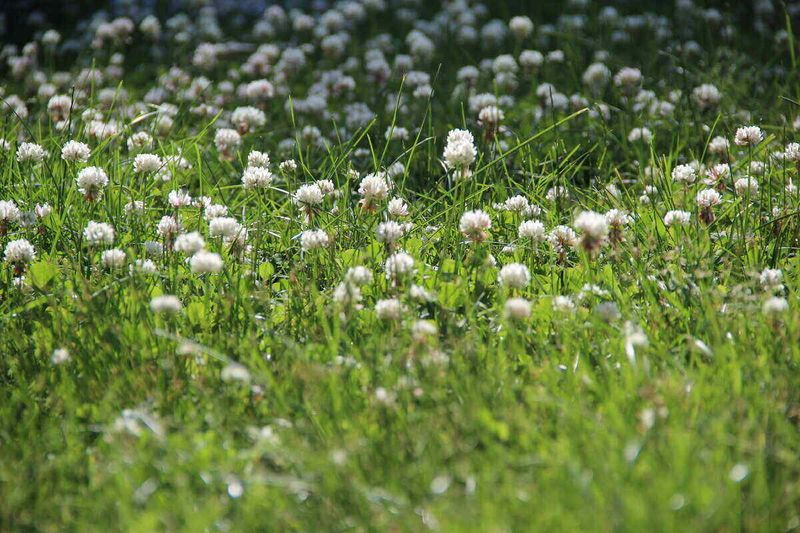
You step out onto your lawn on a May morning and notice it: a low, creeping plant with rounded white blooms spreading through your grass like it owns the place.
Before you reach for the weed killer, hold on.
That plant is most likely white clover, Trifolium repens, and it has an ecological resume that might change your mind.
It is not native to Pennsylvania, but it is genuinely useful, and knowing the difference matters for your lawn, your pollinators, and your next decision.
That Creeping White Flower Is Probably White Clover
Kneel down and take a close look at what is spreading across your grass.
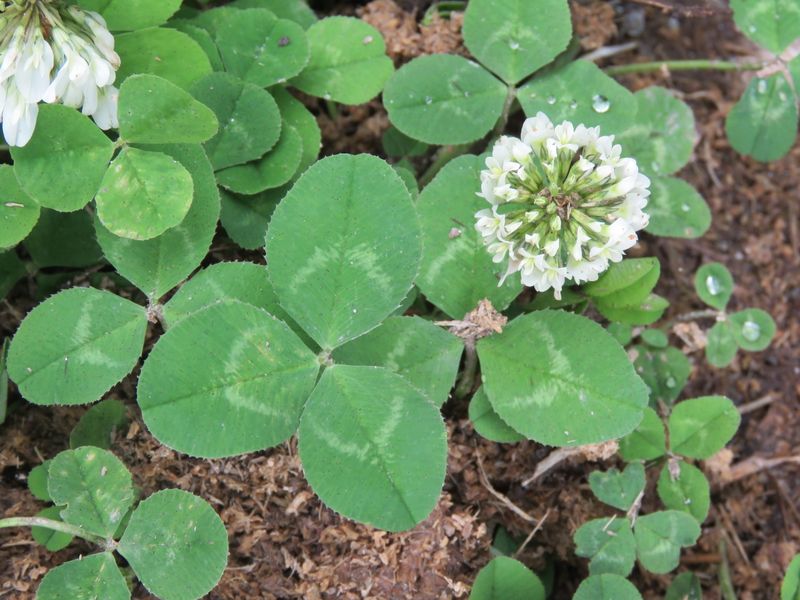
The plant you are most likely seeing is white clover, Trifolium repens, also called Dutch white clover, and Penn State Extension identifies it as one of the most common lawn weeds in Pennsylvania.
It earns that title by being genuinely good at living in turf.
The identification clues are hard to miss once you know them.
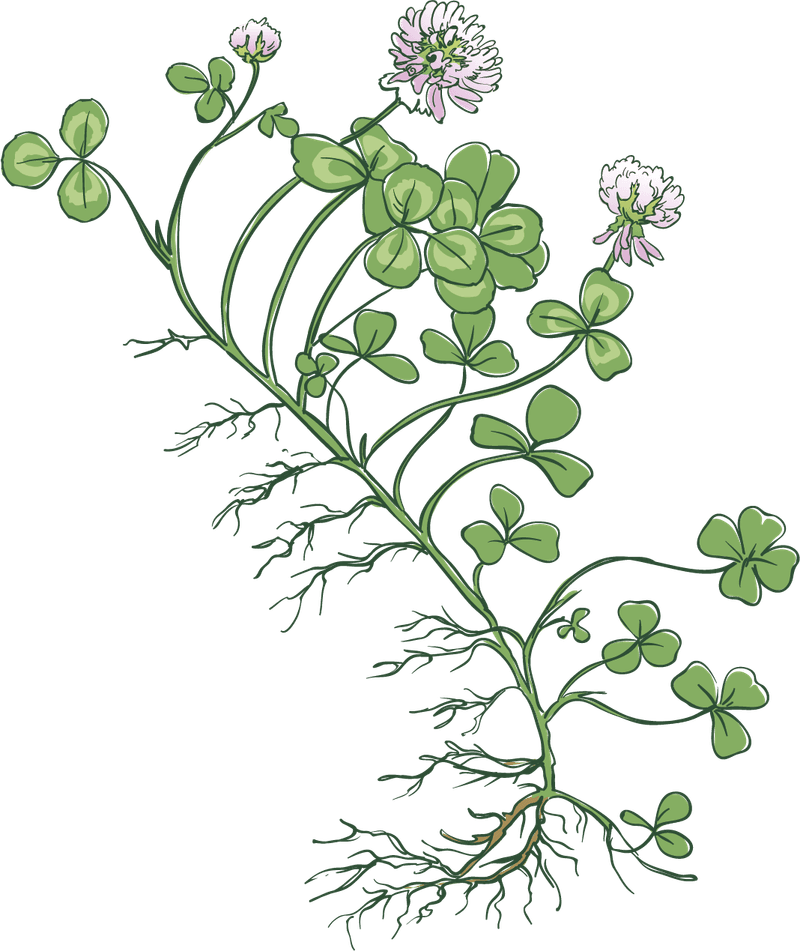
Each leaf has three rounded leaflets, usually a quarter to three-quarters of an inch across, and most carry a pale inverted-V watermark near the center.
The stems are smooth and prostrate, meaning they lie flat along the soil rather than standing upright, and they root at their joints as they creep outward.
The flower heads are rounded globes, white or faintly pinkish, roughly half to three-quarters of an inch wide, made up of many small individual flowers packed tightly together.
One common mix-up is worth clearing up right away.
White sweet clover, Melilotus alba, also produces white flowers, but it is a completely different plant.
Sweet clover grows 3 to 8 feet tall as a biennial and carries elongated, spike-like flower clusters rather than rounded heads.
University of Minnesota Extension notes it is treated as invasive in some settings.
If your white-flowered plant is low and creeping through the grass, it is almost certainly Trifolium repens, not sweet clover.
Keep that distinction in mind, because the rest of this article is about the low one.
It Is Useful, But It Is Not Native
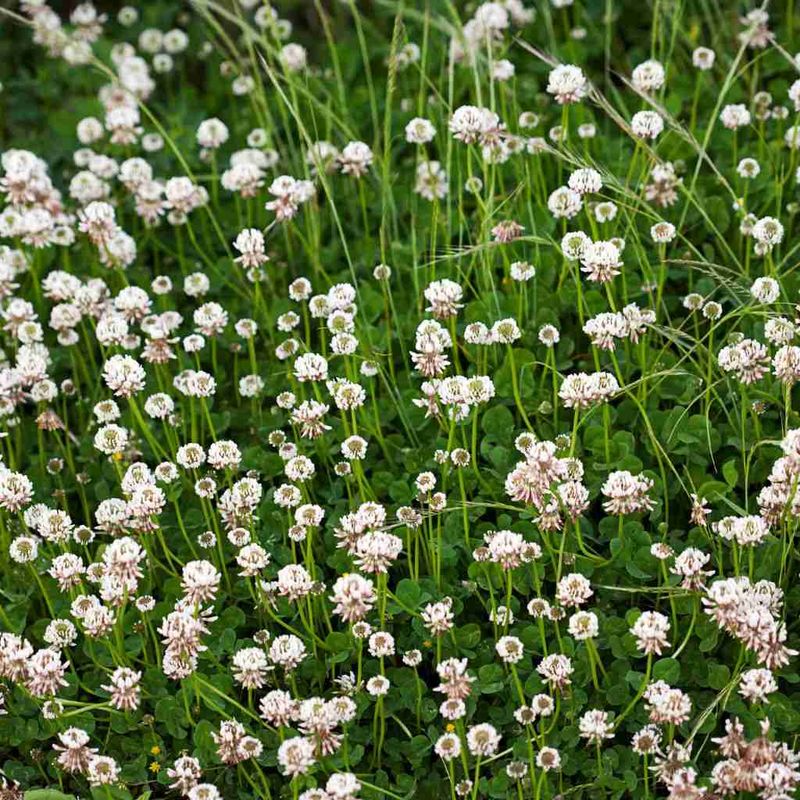
Here is where the article title needs a correction before anything else.
White clover is not a Pennsylvania native.
It is not a North American native.
Its origins trace to Europe, North Africa, and western Asia, and it arrived in the Americas alongside European settlers, carried intentionally as a forage and soil-improvement crop.
Pennsylvania’s Natural Heritage Program lists white clover as introduced, not native, and the Flora of Pennsylvania confirms the same nonnative status.
That distinction matters more than it might seem at first.
A plant can be naturalized, meaning it has established itself and reproduces on its own in a new region, without having the deep ecological relationships that native plants carry.
Native plants have co-evolved over thousands of years with local insects, fungi, birds, and other wildlife.
White clover has not.
Kew Science’s Plants of the World Online confirms its Eurasian origin, placing it firmly outside any claim of Pennsylvania nativity.
None of that means you have to remove it.
A homeowner can reasonably choose to tolerate a nonnative lawn plant when it provides genuine benefits and fits the site.
Useful, naturalized, and native describe three different things, and keeping white clover in a mixed lawn is a practical decision, not an ecological endorsement.
The honest framing is this: white clover is a nonnative that has made itself at home, and you get to decide whether that works for your yard.
Just do not call it native, because that word carries specific meaning that white clover does not earn.
White Clover Offers Real, Limited Benefits
Two benefits stand out from the research, and both are worth taking seriously without being overstated.
The first is nitrogen fixation.
White clover forms a symbiotic relationship with soil bacteria called Rhizobium, which live in nodules on the plant’s roots and convert atmospheric nitrogen into a form that plants can use.
Penn State Extension describes white clover as improving available nitrogen in forage mixtures, which gives you a sense of scale: it contributes to the nitrogen pool, but it does not replace a fertilizer program or eliminate the need for soil testing.
The second benefit is pollinator forage.
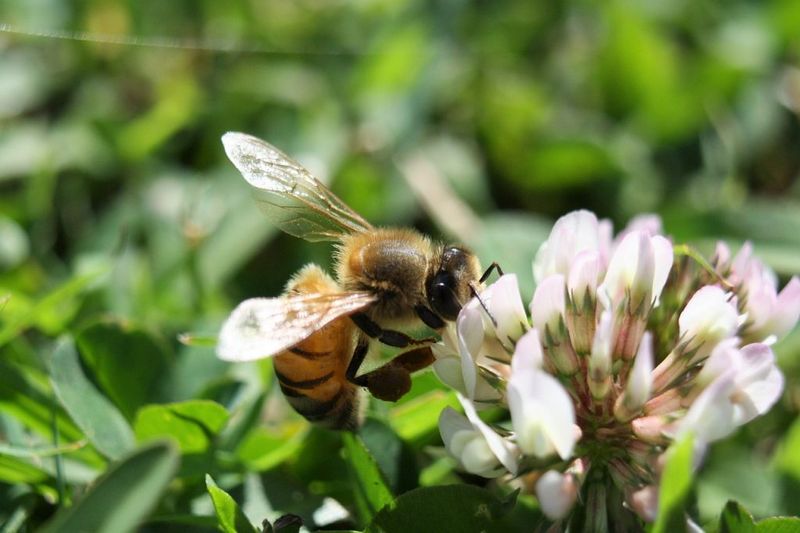
The rounded flower heads offer accessible nectar and pollen to a range of bee species, including honeybees, bumblebees, and smaller native bees.
A University of Minnesota lawn study found that 57 bee species used Dutch white clover in surveyed lawns.
That is a meaningful number, and it demonstrates real potential value.
But those findings come from Minneapolis, not Pennsylvania, so treat them as evidence of what clover can support rather than a guaranteed count for your Chester County or Centre County yard.
Pennsylvania hosts a diverse bee community, and Penn State’s overview of bees in Pennsylvania makes clear that pollinators need more than one food source to thrive.
A clover patch adds one useful layer of forage.
It does not create a complete pollinator garden, and it does not guarantee free fertilizer.
Think of it as a reliable supporting player in a mixed lawn, not a miracle fix you can set and forget.
Its Creeping Stems Explain The Spread
Mowing does not stop white clover the way it stops many upright weeds, and the reason is the stolon.
A stolon is a creeping stem that travels horizontally along the soil surface and roots at its joints as it goes.
Every rooted node becomes a new anchor point, so a single plant can spread outward 1 to 2 feet and keep growing even after the mower blade passes over it.
The growing points stay low enough to survive a standard mow height.
Left to grow, white clover reaches 3 to 12 inches tall and flowers from spring into fall, with peak bloom typically landing in late spring and early summer.
University of Minnesota Extension notes that it performs best in cool, moist conditions and prefers full sun to partial shade, which matches many Pennsylvania lawn situations from the Delaware Valley to the Susquehanna Valley during spring and early fall.
Clover tends to show up most visibly where turf is thin or nitrogen is limited, and Penn State’s indicator weed guidance treats its presence as a possible signal about lawn conditions.
But possible is the right word.
Penn State Extension also notes that white clover can appear in fertilized and partly shaded lawns, so its presence is a clue worth investigating, not a definitive diagnosis.
If you see it spreading steadily across a sunny, open patch of your yard, the stolons are doing exactly what they evolved to do.
A Mixed Lawn Can Keep The Upside
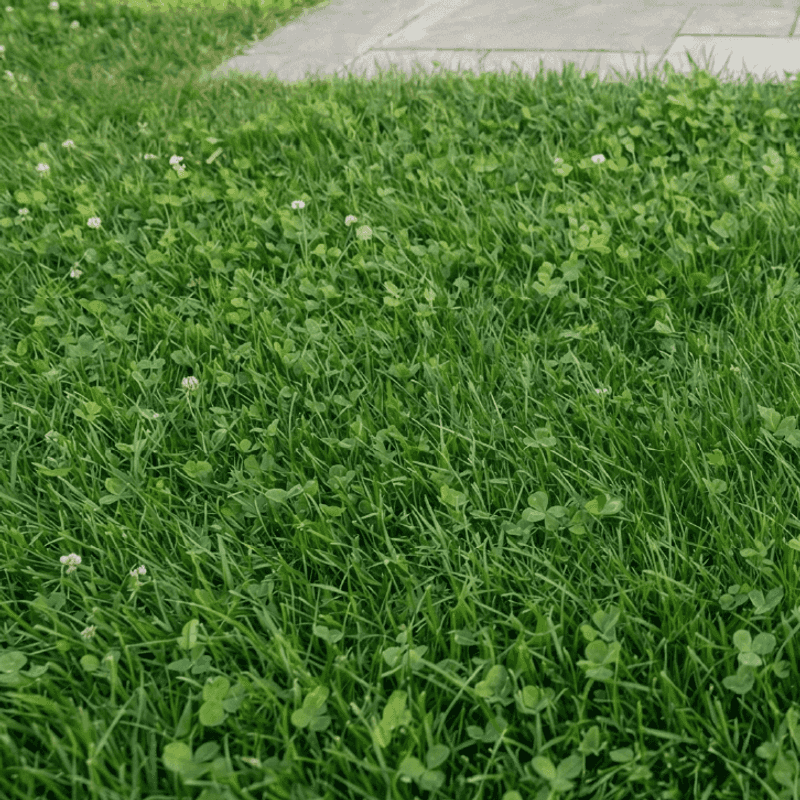
The most practical choice for most Pennsylvania homeowners is to tolerate existing clover patches in a mixed lawn rather than converting the entire yard to pure clover.
A mixed stand gives you living grass where you need it for foot traffic and appearance, while the clover patches contribute nitrogen and flowers in the spaces where they have already established.
You do not have to choose between a perfect grass lawn and a clover field.
Mowing height is the most important lever you have.
Penn State’s lawn guidance recommends mowing cool-season grasses at 2.5 to 3.5 inches for Kentucky bluegrass, perennial ryegrass, and fine fescues, and 3 to 3.5 inches for tall fescue.
Taller grass shades the bare soil between plants, making it harder for clover to establish new patches from seed while still allowing existing patches to coexist.
Dropping below 2 inches opens the door wider.
Penn State Extension and University of Minnesota Extension both connect thin, low-cut turf with heavier clover presence.
Soil testing before adding fertilizer or lime is a straightforward step that many Pennsylvania homeowners skip.
Penn State recommends a soil pH of roughly 6.0 to 7.2 for most cool-season turfgrasses, and applying lime or fertilizer without knowing your starting point can waste money or make conditions worse.
White clover has a shallow root system and little drought tolerance, so during a dry August in the central valleys or on sandy ground in the Poconos, its performance can decline noticeably.
Site conditions vary across Pennsylvania, so manage expectations accordingly.
Give Flowering Patches The Right Address
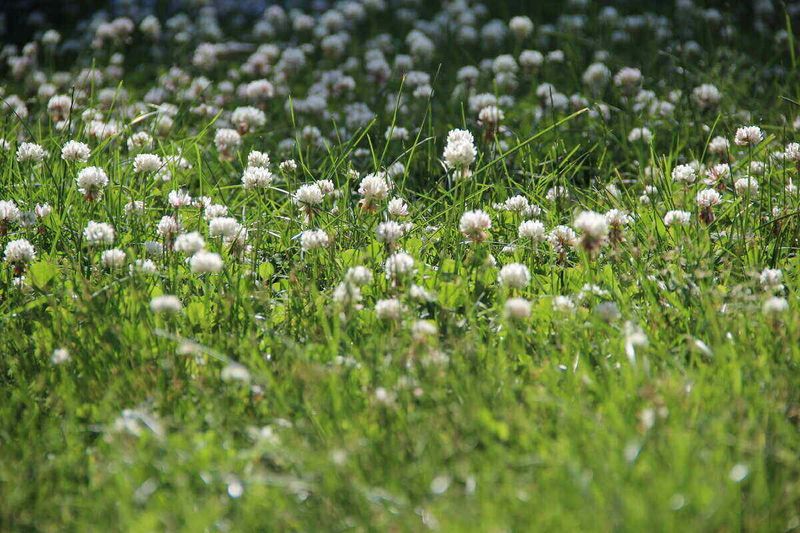
Location is everything when you decide to keep flowering clover.
A blooming patch in a low-traffic corner of the yard, away from the back patio and the spot where kids run barefoot, gives you the pollinator benefit without the safety concern.
Flowering clover attracts bees, and that is genuinely good for the bees.
But a flowering patch directly beside a play set or a main walkway is a different calculation, especially for anyone in the household with a bee-sting allergy.
Reducing mowing frequency in those low-traffic zones is the practical way to keep flowers going.
EPA’s guidance on protecting pollinators in your backyard recommends mowing every 2 to 3 weeks where feasible and using the highest practical mower setting in areas where you want flowering plants to bloom.
For the rest of the lawn where foot traffic is regular, mowing on your normal schedule at 3 inches keeps grass competitive and limits bloom without eliminating clover entirely.
That separation, flowers in one zone and managed turf in another, is a workable middle ground for most Pennsylvania yards.
If you decide to treat clover with herbicide, approach it carefully.
EPA pollinator protection guidance advises against applying pesticides to blooming plants when pollinators may be present.
Penn State specifically warns that clopyralid-containing products should not be used on residential lawns, even when those products appear on some nonresidential turf labels.
Penn State’s flowering lawn guidance and its white clover page both point toward label compliance and site-specific decisions rather than one-size-fits-all timing.
Read the product label, follow it exactly, and consult Penn State Extension or your county cooperative extension office if you are unsure which products are appropriate for your lawn type and location.
Pair Clover With A More Complete Habitat Plan
White clover earns its place in a mixed lawn, but it does not do everything.
Native plants carry ecological relationships that a low lawn plant simply cannot replicate.
Penn State’s guidance on conserving wild bees in Pennsylvania explains that native plants are adapted to local soils and weather and have co-evolved with regional insect communities over long timescales.
That history shows up as specialized relationships: certain native bees that can only gather pollen from specific native flowers, nesting support from native plant stems and leaf litter, and a succession of bloom times that carries pollinators from early spring through late fall.
A clover patch blooms well in late spring and early summer, but it does not cover the whole season.
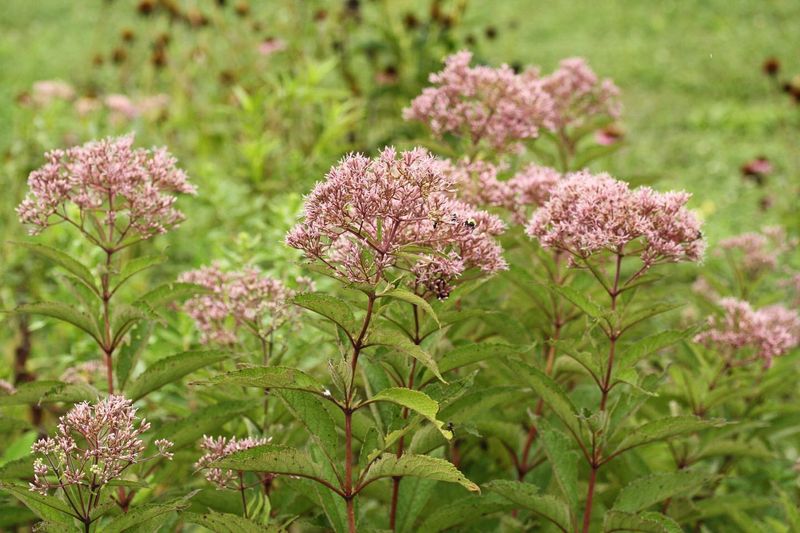
Adding Pennsylvania natives such as wild bergamot, Joe Pye weed (Eutrochium purpureum), black-eyed Susan (Rudbeckia hirta), native asters, and goldenrod extends the flowering window across the yard and supports a broader range of insects.
Penn State’s wild bee research in orchard settings reinforces that diverse plantings support more species and more specialized pollinators than any single plant can.
Even a small border of natives along a fence line or foundation adds habitat layers that clover alone cannot provide.
Keep the clover patch if it fits your lawn, your household, and your site conditions.
Pennsylvania’s diverse bee community can use the forage, and the nitrogen contribution does not hurt.
But treat it as one useful nonnative companion in a broader yard plan, not as a substitute for the native diversity that Pennsylvania pollinators genuinely depend on.
A lawn with clover and a border of natives is a better yard than a lawn with only one or the other.