
That Awkward Woodcock In Your Woods Sees Behind Its Own Head While Its Beak Is Buried
Follow us on Google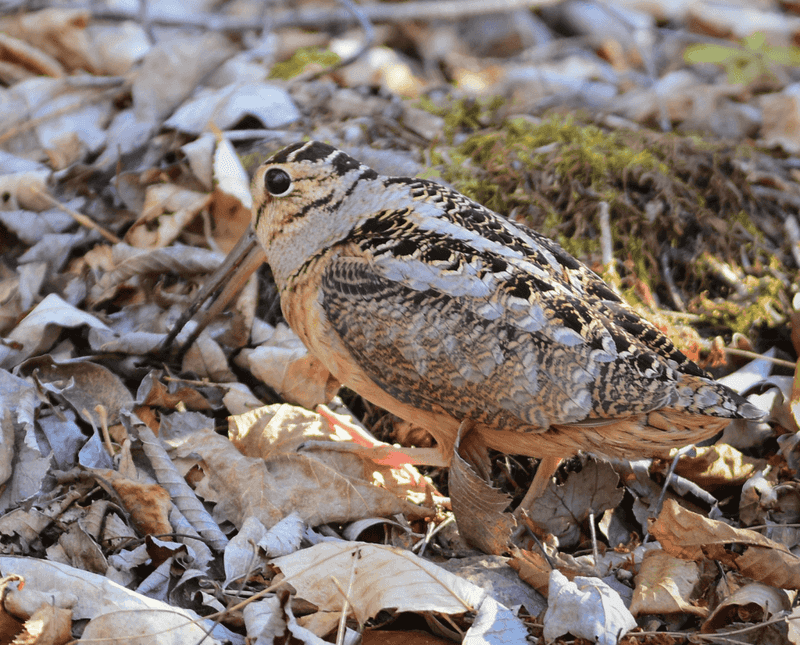
Something chunky and brown is standing at the edge of your yard, bill pointed at the ground, rocking back and forth like it forgot how to stand still.
Most people walk right past it, or mistake it for a fallen leaf or a pine cone with legs.
That bird is the American Woodcock, and it is carrying one of the stranger designs in all of North American wildlife.
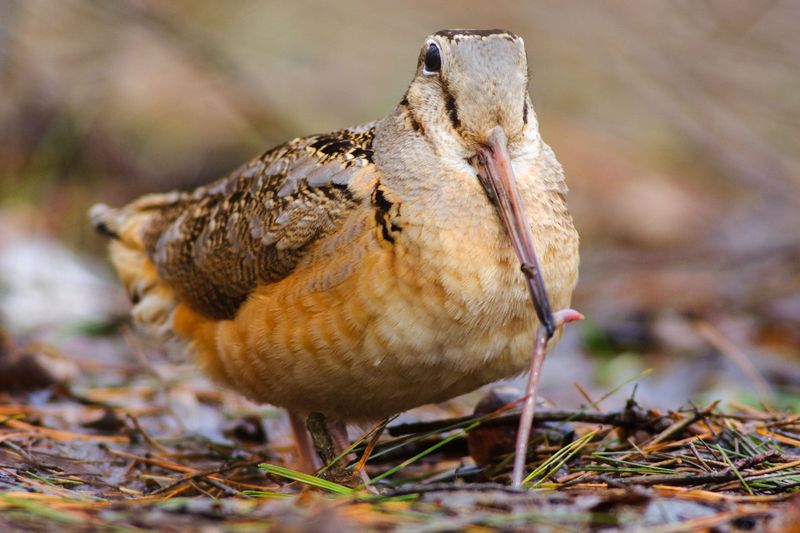
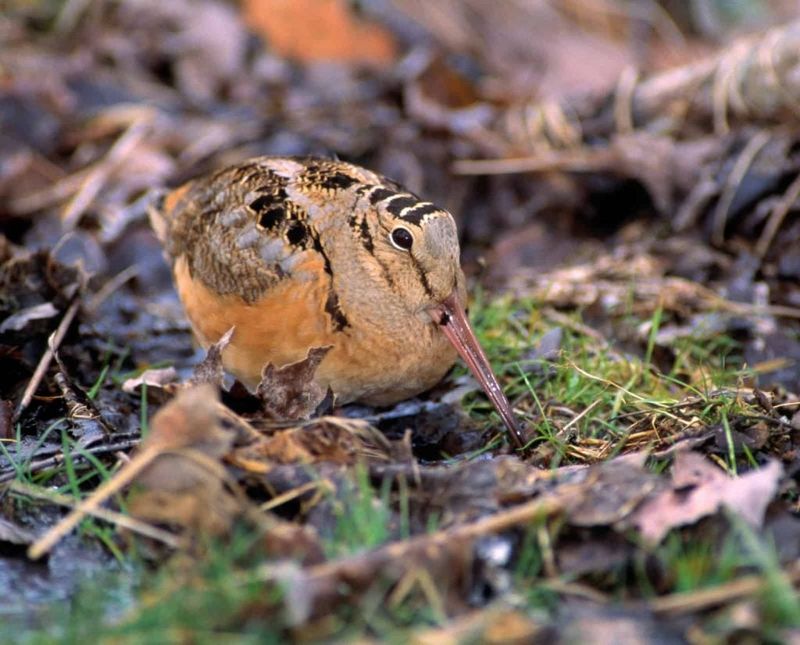
Its eyes sit so high and far back on its head that it can watch the sky above and the ground behind it at the same time its bill is buried in the dirt.
The Awkward Bird Is an American Woodcock
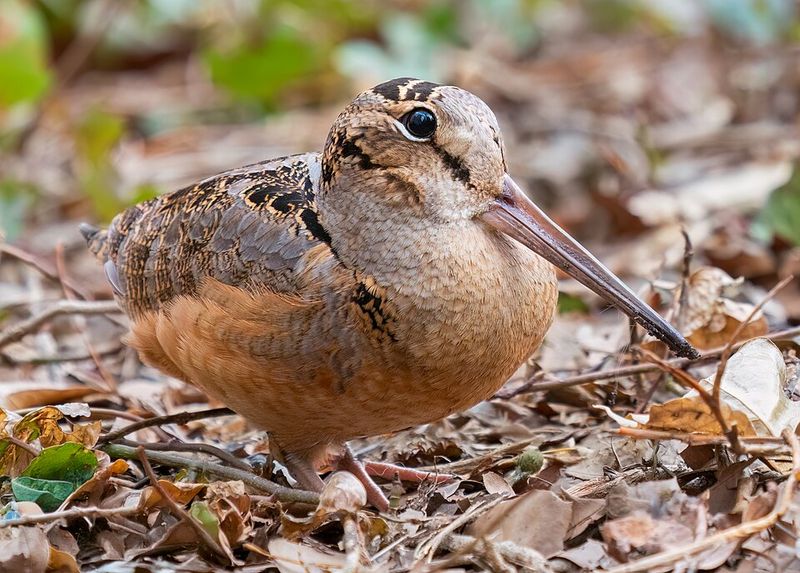
Squat, round, and dressed in dead-leaf colors, the American Woodcock, Scolopax minor, looks like something a child drew from memory after briefly glimpsing a real bird.
Adults run about 10 to 12 inches from bill tip to tail, with a plump body, short legs, and a rounded head that seems almost too large for the frame.
The mottled brown-and-buff pattern across the back and wings is so precise that a bird standing still in leaf litter can disappear from arm’s length.
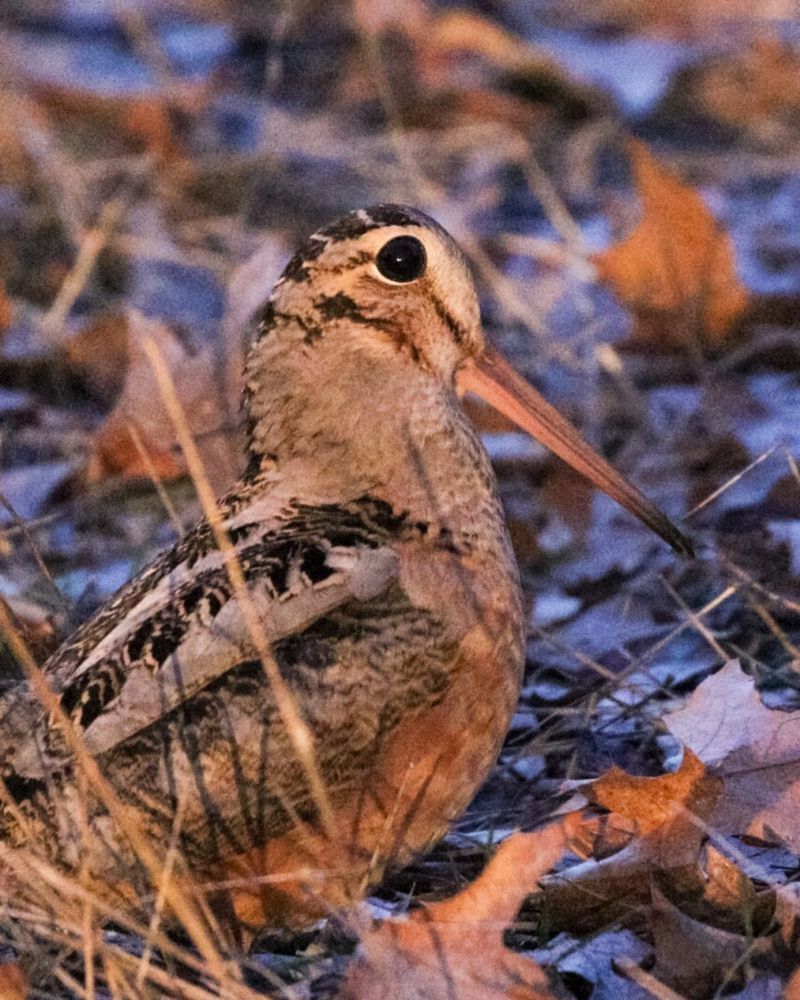
That face is the part people remember.
The eyes sit unusually high on the sides of the head, positioned far back toward the crown rather than forward near the bill.
National Park Service species notes describe the eyes as placed to give the bird an exceptionally wide view while it probes the ground, a design that reads as strange but works as a precise feeding tool.
Nothing about this face is accidental.
Many people assume woodcocks belong on a beach because the word “shorebird” is in their scientific family.
That assumption is wrong for this species.
Cornell Lab of Ornithology places the American Woodcock in damp edges, brushy yards, old fields, wet thickets, and moist low woodlands across eastern and central North America.
Sand and open mudflats are not its world.
Moist soil under young shrubs and saplings is.
Some people call it a timberdoodle, which is an older common name that still turns up in hunting and birding circles.
The scientific name, Scolopax minor, is the one that distinguishes it from its Eurasian cousin and pins down exactly which bird carries this remarkable anatomy.
What Does a Woodcock See?
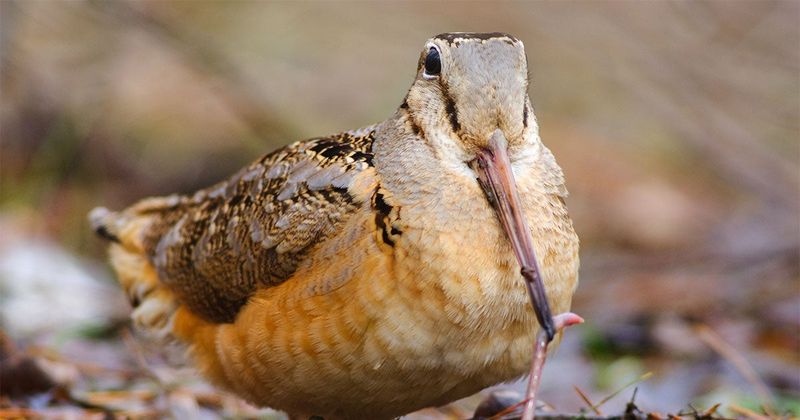
Picture a security camera mounted at the very back corner of a ceiling.
That is roughly where a woodcock’s eyes sit on its skull, and the comparison captures why the field of view is so wide.
Each eye faces almost directly sideways and slightly upward, covering a broad lateral sweep that includes space above and behind the head while the bird’s bill points toward the soil.
A peer-reviewed study on the closely related Eurasian Woodcock, Scolopax rusticola, measured panoramic horizontal visual coverage with no blind sector at the margins of the optical fields, and found a narrow binocular zone that extended behind the head as well as in front.
That study examined Eurasian birds, not American ones.
North American wildlife agencies describe the American Woodcock’s comparable anatomy as allowing it to monitor areas above, behind, and to the sides while feeding, but a direct field-of-view experiment measuring every degree of the American species has not been done to the same standard.
Wide coverage is not the same as sharp detail in every direction.
Each eye works mostly on its own, covering a large monocular field, meaning the bird sees a different scene through each eye rather than combining both into a single focused image the way humans do.
The binocular zone, where both eyes overlap and depth perception is strongest, is relatively narrow.
So the woodcock can detect movement across a very wide arc while its head is down, but it does not see every corner of that arc with equal clarity.
North Carolina Wildlife Resources Commission describes the arrangement as nearly panoramic, which is the right word for the coverage without overstating the sharpness.
Its Bill Finds What Its Eyes Cannot
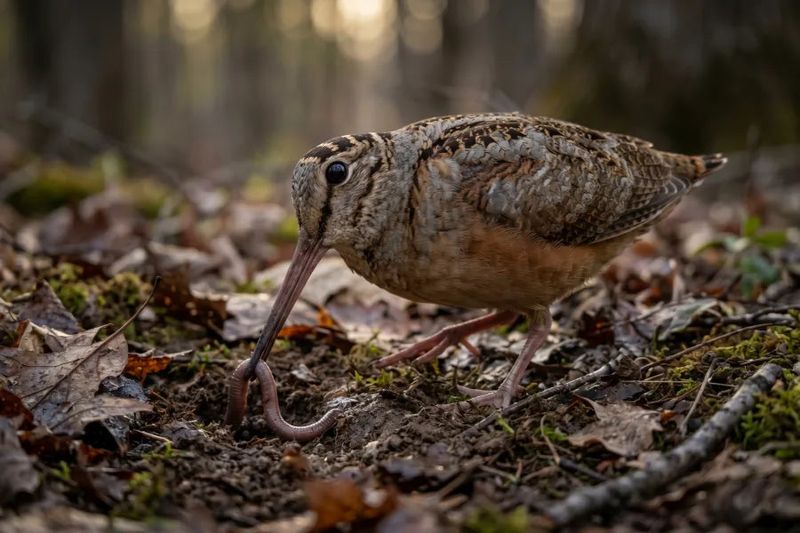
The bill is where the real work happens, and it operates almost entirely by feel.
At roughly 2.5 to 2.75 inches long, with females tending toward the longer end, the woodcock’s bill looks rigid but is not.
Research on bill-tip organs in shorebirds shows that woodcocks have dense sensory structures packed into the lower third of the bill, near the tip.
Those structures can detect pressure and movement through the soil, helping the bird locate prey without seeing it.
The tip itself can flex and open underground, which is the part that surprises most people.
Rather than spearing a worm and pulling it out, the bird can grip prey while the bill is still buried, using rough surfaces on the tongue and mandibles to hold a slippery catch.
Tactile cues, and possibly chemical ones, guide the process from start to finish.
The buried bill tip falls well outside the bird’s main visual field, so the eyes are not watching it.
The bill is doing its own sensing while the eyes watch the world above and behind.
Cornell Lab notes that woodcocks sometimes rock their bodies forward and back while foraging, and suggests that vibrations from this motion may prompt earthworms to move closer to the surface.
That is a reported observation, not a settled mechanism.
The rocking does happen, and the worm-movement idea is a reasonable suggestion, but the causal chain has not been pinned down as a universal rule.
What is clear is that the whole face, wide-set eyes above and sensory bill below, works as one integrated system, not two separate tools bolted onto the same bird.
Moist Brush Makes This Oddity Possible
Earthworms make up a substantial part of the woodcock’s diet, with some sources reporting figures above 75 to 80 percent depending on season and location.
But worms are not available in every patch of ground.
They concentrate near the surface in moist, loose soil, and pull deeper or go inactive when conditions dry out or freeze.
That single fact explains most of what a woodcock’s habitat looks like.
Cornell’s species overview places the American Woodcock in young, shrubby forests, old fields, forest edges, wet thickets, and moist low woodlands.
Those settings share loose, damp soil under canopy that is open enough to let in some light but dense enough to provide cover.
The bird also eats beetles, ants, flies, caterpillars, snails, spiders, and millipedes, so invertebrate diversity matters alongside worm availability.
A study of woodcock habitat usage in central Maine, reviewed in U.S.
Forest Service species notes, found that earthworm activity in that study area was associated with soil moisture from roughly 15 to 80 percent and soil temperatures from 50 to 64 degrees Fahrenheit.
Those are findings from one Maine breeding study, not universal targets for a backyard project.
The broader point is that dry, compacted, closely mowed lawn is the opposite of what this bird needs.
A tidy grass carpet with no leaf litter and no shrub border holds very little of what a woodcock is looking for.
Young saplings, brushy edges, damp low spots, and undisturbed leaf litter are the features that matter.
A Lawn Sighting Is Only One Clue
Finding a woodcock on your grass on a Tuesday morning is genuinely exciting, and it is also easy to overread.
A single bird on a lawn does not mean your yard has become prime woodcock habitat or that a resident bird has set up camp.
What it more likely means is that the bird was hungry, moving, or both.
Cornell’s life history account makes clear that range and seasonal behavior differ substantially between northern breeding areas and southern wintering grounds.
A bird you see in late March in Ohio may be migrating north.
One you see in November in Georgia may have just arrived from farther north for the winter.
Either bird may be using your lawn as a convenient rest stop because a nearby stream corridor, wet woods, or brushy field drew it close.
The yard itself may just be the easiest open ground to land on.
Pay attention to what surrounds the sighting.
Moisture, leaf litter, a wooded edge, a creek, an old field, or even an unmowed corner nearby can tell you more than the bird’s presence alone.
Time of day matters too.
A woodcock on your lawn at dawn or dusk during spring is more likely to be actively foraging or moving between feeding and roosting areas than one spotted mid-afternoon.
One sighting may point to suitable habitat or connectivity in the surrounding landscape, but it does not prove that your yard itself is functioning woodcock habitat.
That distinction keeps expectations honest and the wonder intact.
Dusk Is When the Woods Start Singing
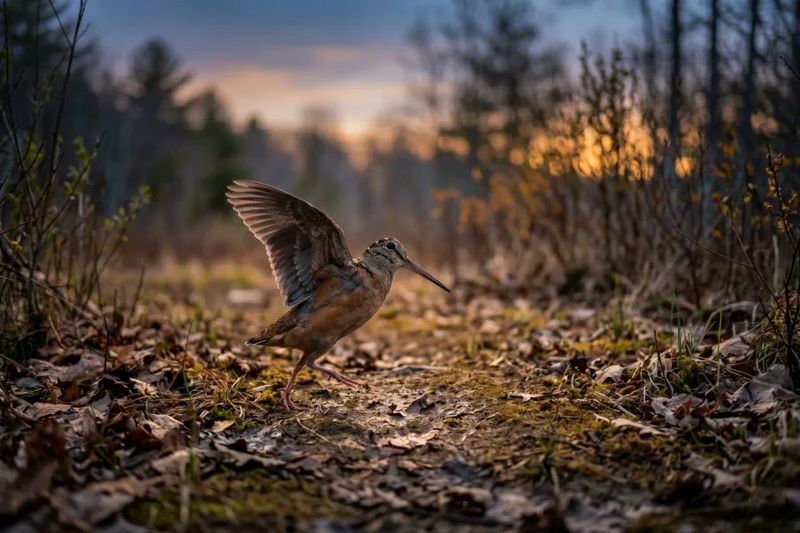
Spring evenings near brushy edges hold a small performance that most people have never witnessed.
About 20 to 30 minutes after sunset, when the light is nearly gone, a male woodcock walks into a small open area near young woods or a brushy field and begins calling.
The sound is a short, buzzy, nasal note, usually written as “peent,” repeated at roughly four-second intervals from the ground.
Then, without much warning, the bird launches straight up.
Maryland DNR describes the male’s spiraling courtship flight as reaching heights that can approach 50 to 100 yards above the ground, depending on conditions and the individual bird.
Wing feathers produce a twittering sound on the way up, and the bird descends in a zigzag while making liquid, chirping calls.
Then it lands near where it started and begins peenting again.
The whole sequence can repeat for 30 minutes or more on a good spring night, and dawn can bring another round.
Watching this from a distance is easy and costs nothing.
Find an open edge, a field corner, or an old orchard near brushy cover, arrive before last light, and stand still.
The peent call will locate the bird before you see it.
Avoid using a flashlight on the display area, moving toward the bird during the flight, or making noise that interrupts the sequence.
Sound and silhouette do the work here, and camouflage that hides this bird perfectly during the day becomes irrelevant against a darkening sky.
Give the Ground Room to Stay Wild
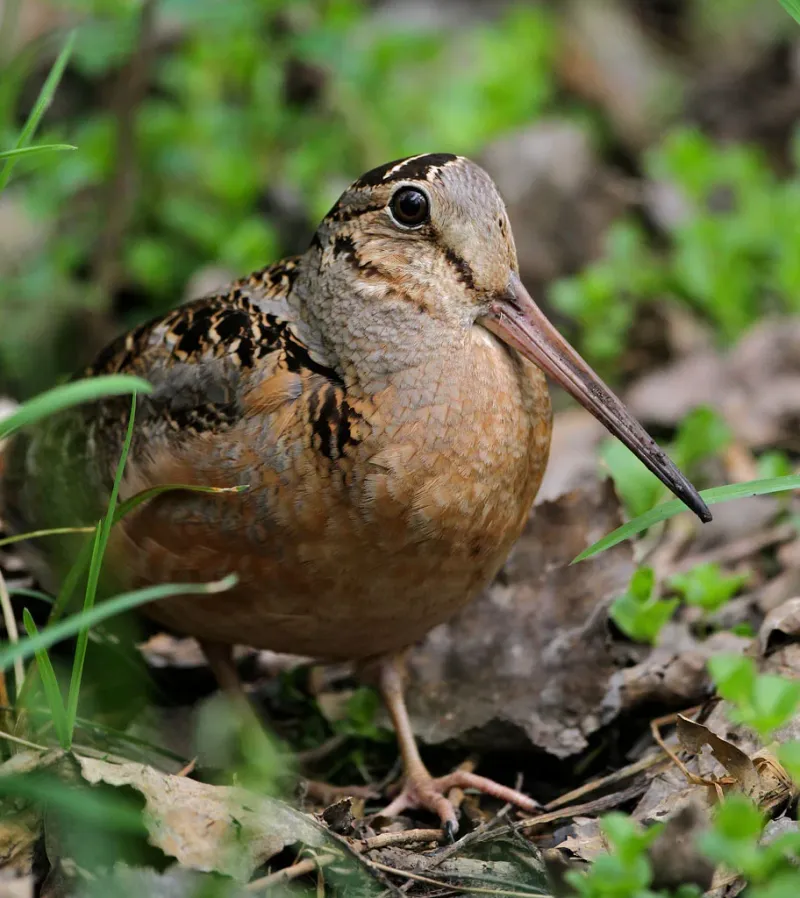
A healthy woodcock sitting quietly in your yard does not need your help.
Approaching it, offering food, or setting out water are all well-meaning impulses that can stress the bird or disrupt its behavior.
Leave it alone and watch from a distance.
If the bird appears visibly injured, cannot fly, or has an obvious wound, contact a licensed wildlife rehabilitator rather than handling it yourself.
Cornell’s wildlife hospital guidance advises against providing food or water to injured wildlife unless a professional instructs you to do so.
Ground nests are the bigger concern for most homeowners in spring.
Cornell describes woodcock nests as shallow depressions in leaf litter, roughly 5 inches across and about 1.5 inches deep, often at the base of a shrub or sapling.
A female sitting on eggs relies entirely on camouflage.
She may flush if approached too closely, and disturbance early in incubation raises the risk of nest abandonment.
Avoiding mowing, brush clearing, dog activity, and leaf-litter searching near a suspected nest is prudent wildlife protection, even when ordinary yard work is not automatically against the law in every circumstance.
The legal side is worth knowing.
The American Woodcock is a protected migratory bird under the Migratory Bird Treaty Act of 1918, and federal guidance indicates that unauthorized taking, possession, or destruction of protected migratory birds, active nests, or eggs may violate federal or state law.
State rules may add further requirements.
When in doubt about what is allowed near an active nest or injured bird, check with your state wildlife agency before acting.
What Else Actually Helps?
The most useful thing a homeowner can do for a woodcock is stop removing things.
Leaf litter, young shrubs, saplings at the yard edge, damp low spots, and brushy corners all hold value that a mowed-flat lawn does not.
Preserving what already exists is a more reliable step than adding anything new.
Reducing unnecessary insecticide use matters too.
Woodcocks eat soil invertebrates throughout their range, and pesticide residues can move through the food chain from earthworms and beetles to the birds that eat them.
U.S.
Forest Service species review notes flag pesticide exposure as a documented concern for the species.
Skipping a broadcast insecticide application in a damp yard corner is one layer of habitat support, not a guarantee of anything, but it removes a hazard that a foraging bird would otherwise face.
Larger habitat projects require more than a few backyard decisions.
Fish and Wildlife Service habitat work describes woodcock management as landscape-specific, seeking a mix of young forest, shrubby cover, moist feeding areas, and open display or roosting spaces.
Cutting trees indiscriminately to create “young forest” can cause more harm than good without a plan that fits the local landscape.
If you have acreage that borders wet woods or old fields, your state wildlife agency or the Natural Resources Conservation Service can offer guidance that fits your specific property.
Cornell reports population declines for the American Woodcock from 1966 through 2019, tied largely to loss of early-successional habitat.
A woodcock in your yard may be pointing to something worth protecting nearby.
That is the right way to read the sighting: not as proof that your yard is a woodcock sanctuary, but as a quiet sign that the landscape around you still has some wildness left in it.