
Stop Replanting Crispy Knock Out Roses And Grow These 8 Texas Shrubs That Bloom Far Longer
Follow us on Google
You step outside before breakfast and the patio already feels warm, the air thick with that familiar Texas summer humidity.
You glance at your rose bush, the one you planted with such hope, and there it is again: those crunchy, brown-edged leaves and faded blooms that quit before they open.
Many Texas gardeners share this struggle.
You want a yard that thrives, not just survives, without babysitting a plant that keeps giving up on you.
And Knock Out Roses, for all their reputation, often crisp out in our triple-digit heat, or worse, catch Rose Rosette Disease and have to come out entirely.
It is disheartening to replace plants that just cannot hack it.
But you have other options, shrubs that genuinely love our scorching sun and stubborn soils.
So stop replanting those crispy roses.
Here are 8 Texas shrubs that bloom far longer and make the whole yard feel alive.
1. Texas Sage Brings Silver Beauty And Purple Blooms
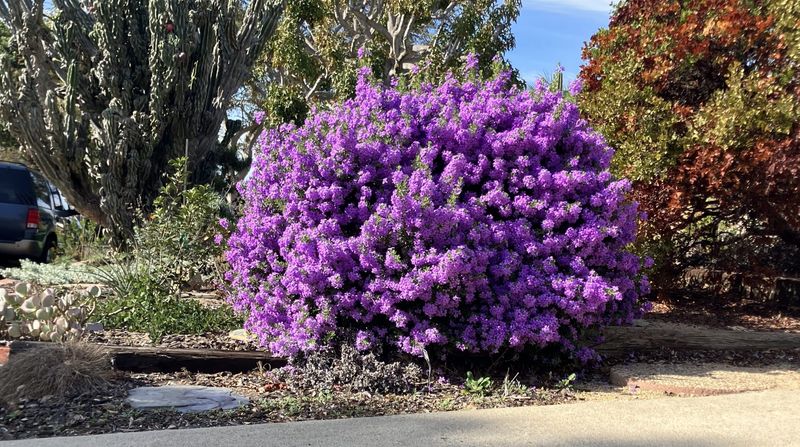
You might walk past a Texas sage and shrug it off as a nice silver-leafed bush.
Then, almost overnight after a good rain, it erupts into a wall of purple flowers.
Folks call it the Barometer Bush because it reads our weather so well.
Texas sage (Leucophyllum frutescens) handles the swings with real grace, and its silvery-gray leaves actually reflect some of the brutal sun, which helps the plant hold onto moisture.
That means less stress for it, and less worry for you.
Here is where it gets tricky.
Give it at least 6 to 8 hours of direct light and sharp, well-drained soil, the rocky or calcareous kind common across the Hill Country and West Texas.
The antagonist here is overwatering.
Too much moisture, especially in the heavy blackland clay of North and Central Texas, invites cotton root rot.
Prune lightly in early spring to keep its shape, and it will settle in around 8 feet tall and 6 feet wide.
From spring through autumn it throws periodic bursts of lavender flowers that bees and butterflies chase down.
You get a low-maintenance hero that shrugs off drought and rewards you every time the clouds roll in.
2. Esperanza Offers Golden Sunshine All Summer
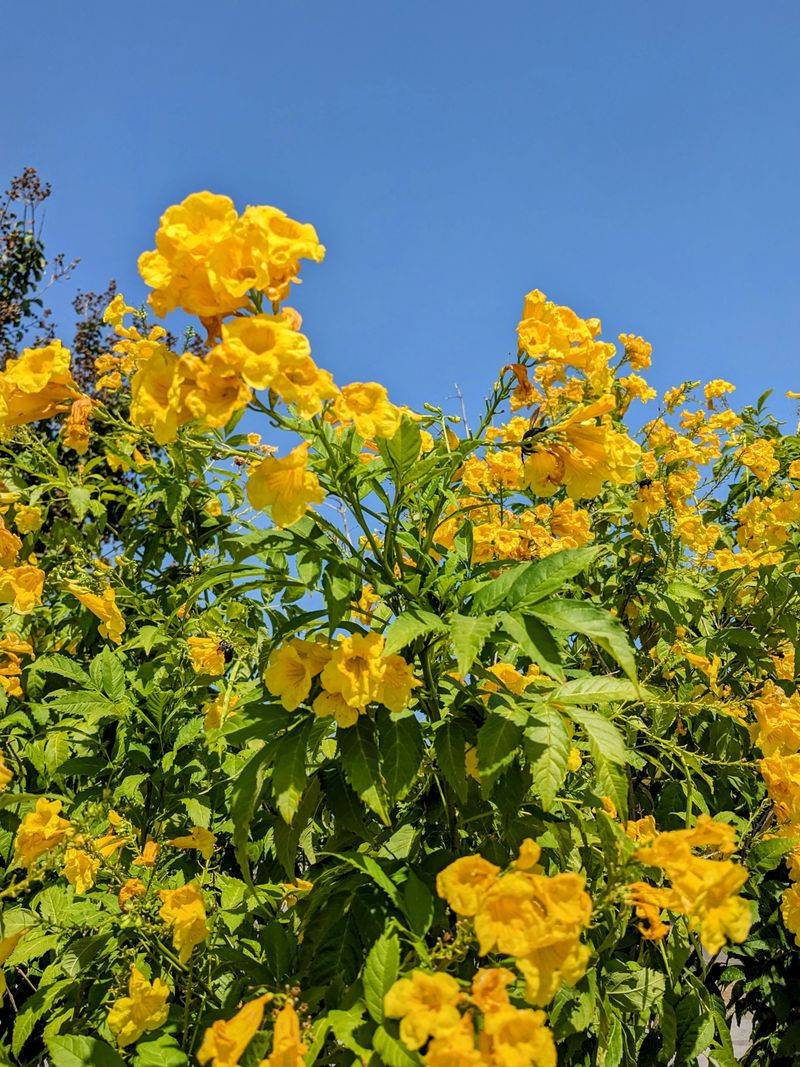
Picture your patio drenched in golden yellow all summer long, even when the thermometer climbs past 100 degrees.
That is the promise of Esperanza, and it keeps it.
Many Central Texas gardeners have watched this plant laugh off heat that sends everyone else indoors.
You may know it as Yellow Bells, and Esperanza (Tecoma stans) earns its Texas-tough name.
It is a sun worshipper, needing at least 6 hours of full sun to pump out clusters of trumpet-shaped blooms that pull in hummingbirds and butterflies.
The turn is simple.
Plant it in well-drained soil, where it handles everything from alkaline to acidic ground.
It is a fast grower, often hitting 4 to 6 feet tall and wide in one season.
Water deeply once a week during the hottest stretches and it will keep the show going.
Snip off the bean-like seed pods as they form.
That redirects the plant’s energy back into flowers instead of seeds, and it stays bushier for it.
Even if a rare hard freeze knocks it back, established roots usually bounce right back come spring.
It is like a jolt of sunshine that refuses to clock out.
3. Turk’s Cap Blooms Red In Shade Or Sun
Finding a flowering shrub for the shady corners of a Texas yard feels almost impossible.
Most color-makers demand blazing sun, and your shade stays stubbornly bare.
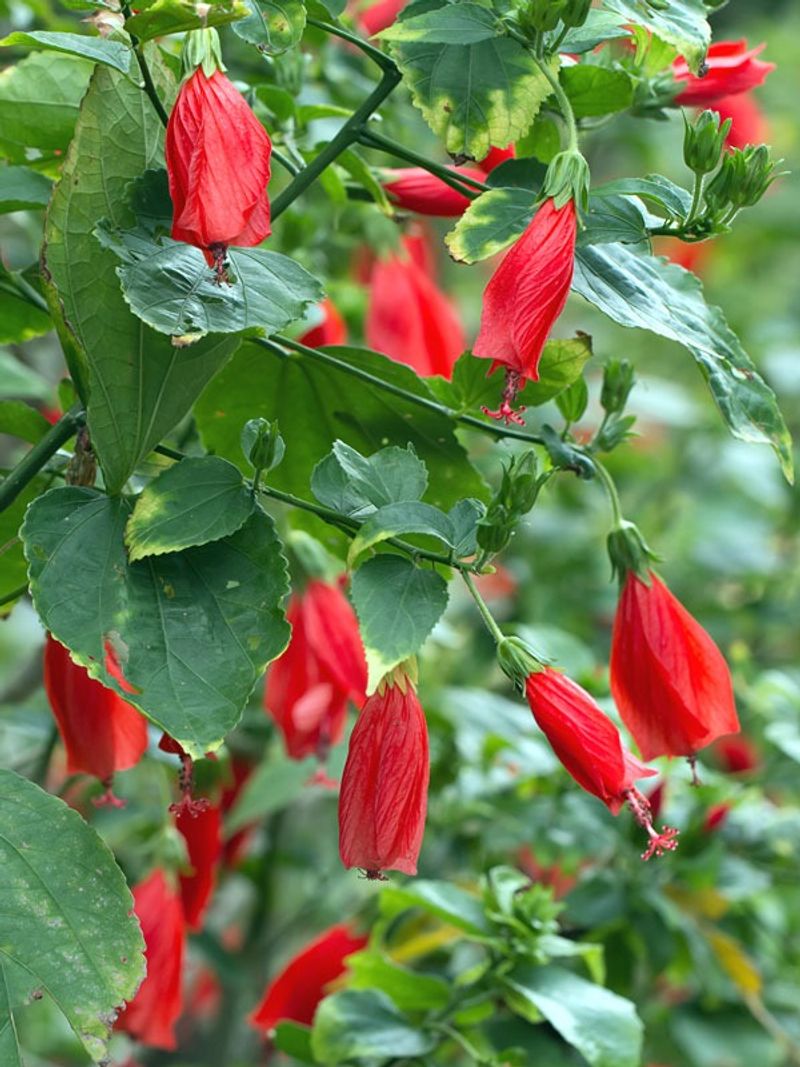
Turk’s Cap (Malvaviscus arboreus) is the quiet answer.
It blooms prolifically from late spring through fall, even in partial to full shade, though it does just as well in a sunny spot.
That kind of range is genuinely rare.
Its little closed, red hibiscus-like flowers spin like turbans, and they run from May all the way through November.
Hummingbirds, butterflies, and bees treat it like a corner diner.
And it is easygoing about soil, taking dry or moist ground whether it is sandy, loamy, or heavy clay.
Once established, it needs only occasional watering.
In colder parts of Texas it dies back to the ground in winter, then returns fast from the roots.
To keep it from getting leggy, prune it in early spring after the last frost, cutting back by a third to half, or even down to 6 inches for a fresh restart.
It can reach 6 to 10 feet tall and wide, so give it elbow room.
Suddenly that dead shady spot becomes the liveliest patch in the yard.
4. Mexican Bush Sage Delivers Purple Splendor Late In The Year
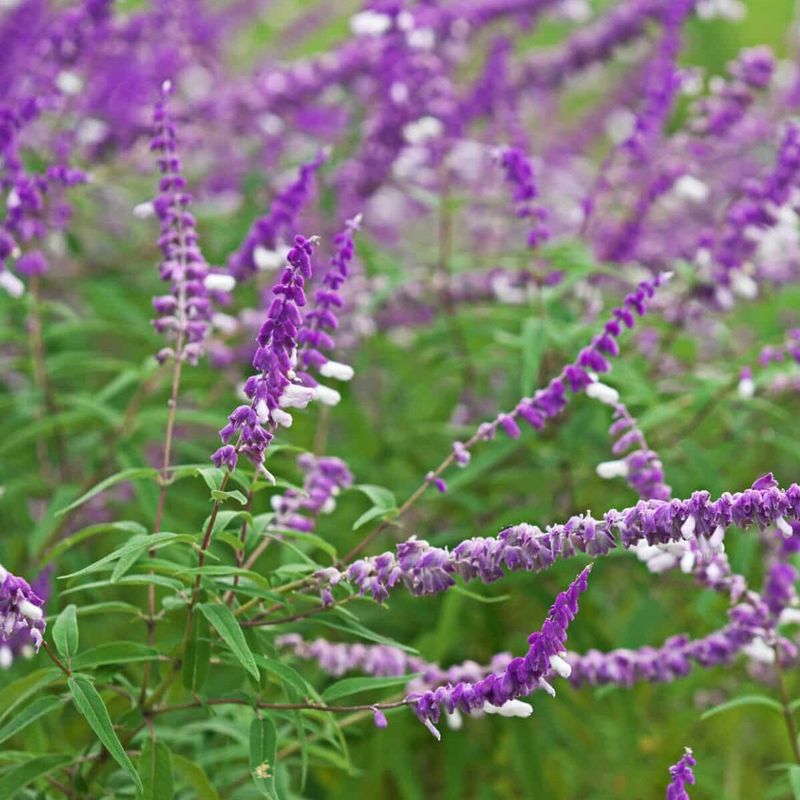
As summer’s intensity fades and most of the garden looks tired, Mexican bush sage steps up.
Its velvety purple spikes push out just when you need a lift, like the garden catching a second wind.
People are always surprised to see such a dramatic bloom cycle land so late.
Mexican bush sage (Salvia leucantha) throws its striking purple and white spikes from late summer through fall, often right up until the first hard frost.
Hummingbirds, butterflies, and bees swarm it, so it earns its keep as a pollinator anchor during the fall migration window.
It grows into a rounded mound, roughly 3 to 4 feet tall and 3 to 6 feet wide.
Plant it where it gets at least 6 hours of sun, with maybe a little afternoon relief.
Drainage matters most, so if you garden in heavy blackland clay, work in compost or sand before planting.
Once settled, it is genuinely drought-tolerant, happy with a deep soak every 2 weeks in long dry spells.
The one job that matters is a hard prune in late winter, usually around February in Central Texas, cutting it nearly to the ground.
Do that, and it comes back vigorous and loaded with blooms.
It is the plant that keeps your porch evenings colorful long after the roses would have quit.
5. Autumn Sage Provides Colorful Blooms From Spring To Frost
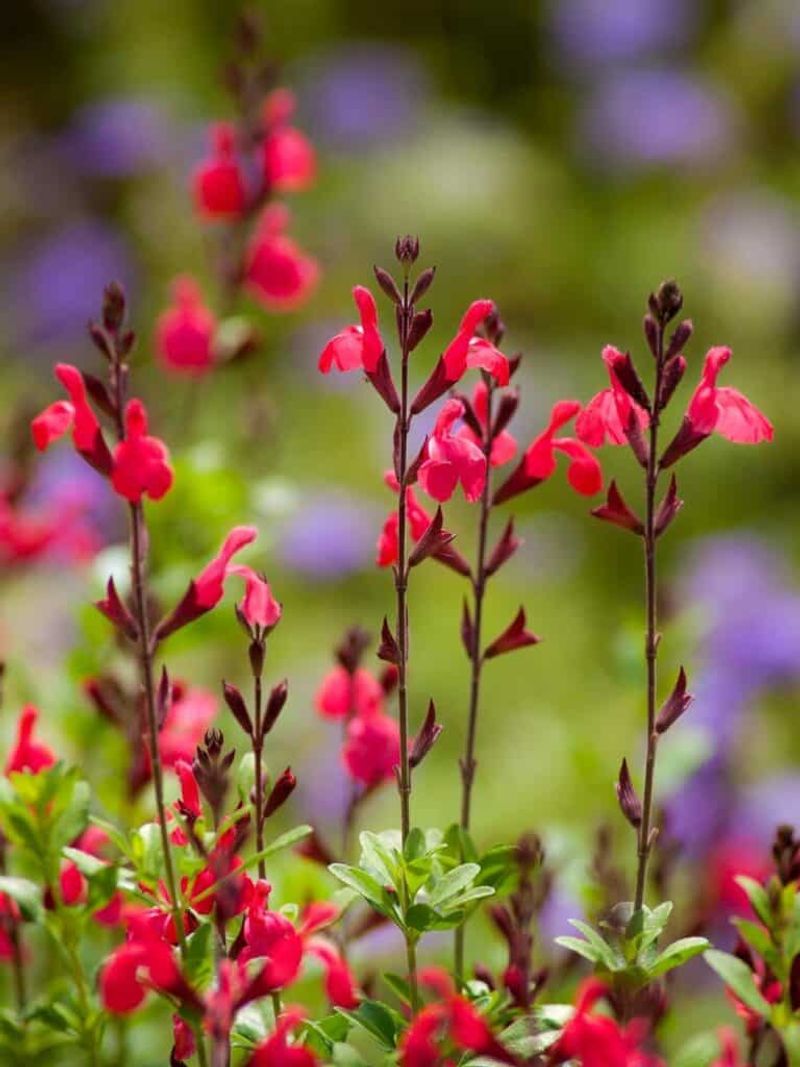
Look in a neighbor’s yard and you will spot autumn sage doing the same cheerful thing for months, small flowers popping from spring straight through the first cold snap.
It just keeps giving.
The trouble with most shrubs is they bloom in short bursts, then coast.
Autumn sage (Salvia greggii) refuses that pattern.
It flowers almost nonstop in reds, whites, pinks, oranges, and purples, each about 1 inch across, and hummingbirds absolutely adore it.
In much of Texas it stays evergreen year-round through zones 7 to 9.
It wants full sun, though a little afternoon shade helps in drier regions like West Texas where the light turns punishing.
But it demands sharp drainage, thriving in sandy or rocky ground, so unamended blackland clay can genuinely give it trouble.
Loosen and lighten that soil first.
Water deeply during extended dry spells, otherwise leave it alone, because it is highly drought-tolerant once rooted.
To keep the flowers coming, prune it back by a third to half in early spring, then lightly again in late summer after a heavy flush.
It settles around 2 to 3 feet tall and wide, a tidy little machine that turns your fence line into a hummingbird highway.
6. Flame Acanthus Ignites The Summer Landscape
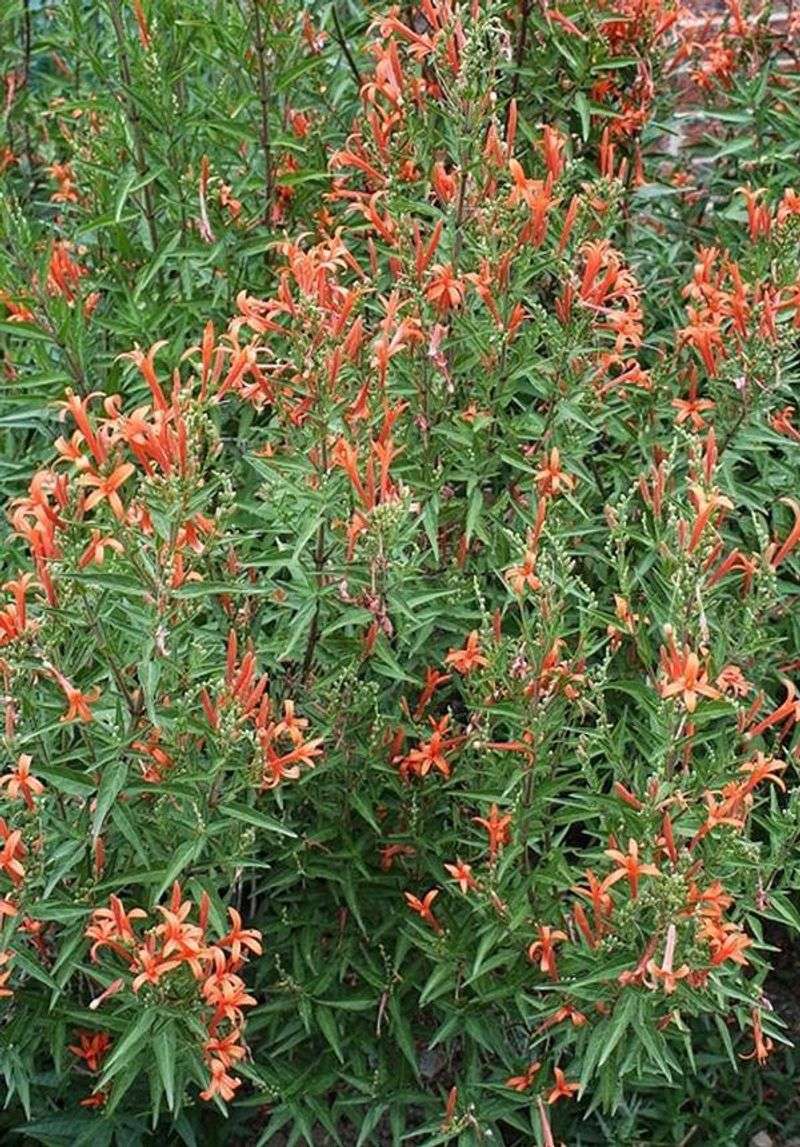
When the summer sun really starts to hammer down and other plants wilt, flame acanthus lights up.
Its red-orange blooms look like tiny torches glowing against the heat.
The surprise is that this native looks its best during our worst months.
Flame acanthus (Anisacanthus quadrifidus var. wrightii) is a deciduous shrub that bursts into long, slender, tubular flowers from midsummer through fall, roughly June through October.
Hummingbirds treat it like a personal buffet, which is why folks call it the Hummingbird Bush, and butterflies crowd in too.
It grows 3 to 6 feet tall and 3 to 4 feet wide, and it is remarkably unfussy.
Full sun to light shade suits it, and it takes poor, rocky, heavy clay, or limestone ground as long as water drains through.
It is extremely drought-tolerant, though a little supplemental water in long dry stretches nudges out more flowers.
In colder areas a hard freeze cuts it to the ground, but the roots are tough and it returns strong in spring.
Prune it hard, down to 3 to 6 inches, in late winter to force dense new growth and maximum bloom.
It is genuinely deer resistant too, which matters if the Hill Country herd treats your yard like a salad bar.
This one thrives exactly where softer plants surrender.
7. Texas Lantana Offers A Multitude Of Hues
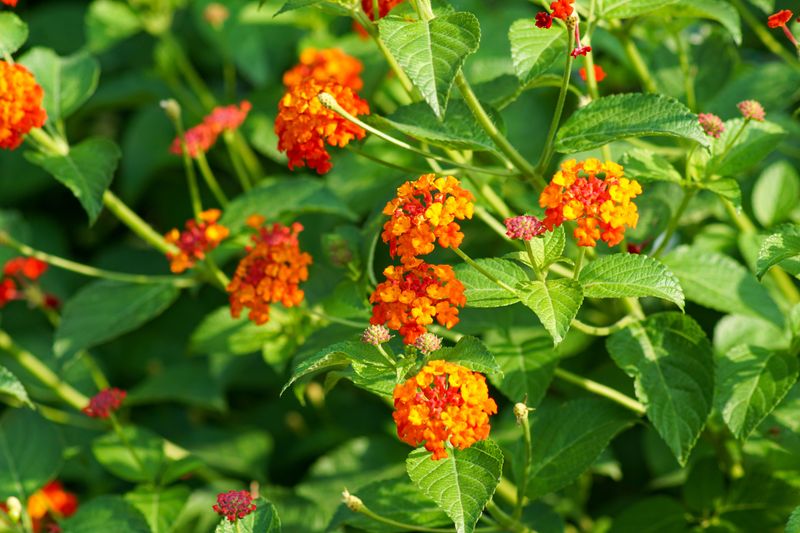
Want a shrub that simply refuses to stop making color.
Texas lantana rolls out clusters of yellow, orange, and red in a continuous wave for months.
Many gardeners along the Gulf Coast and in South Texas lean on this plant because it handles brutal conditions and still looks cheerful.
Here is the catch worth knowing: pick the native.
Texas lantana (Lantana urticoides) is the true native gem, distinct from the non-native hybrids crowding garden centers, and it blooms from spring to first frost, usually April through October.
Butterflies and birds pour in, and it is deer resistant on top of that.
It thrives in full sun and shrugs off heat, drought, and even salt spray, which is why it suits coastal yards so well.
It adapts to most well-drained soils, sandy included, and handles urban grit without complaint.
Expect it to reach up to 6 feet tall and wide.
Being deciduous, it drops its leaves in winter, which is the right time to prune it back and manage size.
One honest warning, parts of the plant are toxic if eaten, so take care around pets and small kids.
Handle that one detail and you get months of nonstop color for almost no effort.
8. Gregg’s Mistflower Creates A Butterfly Haven
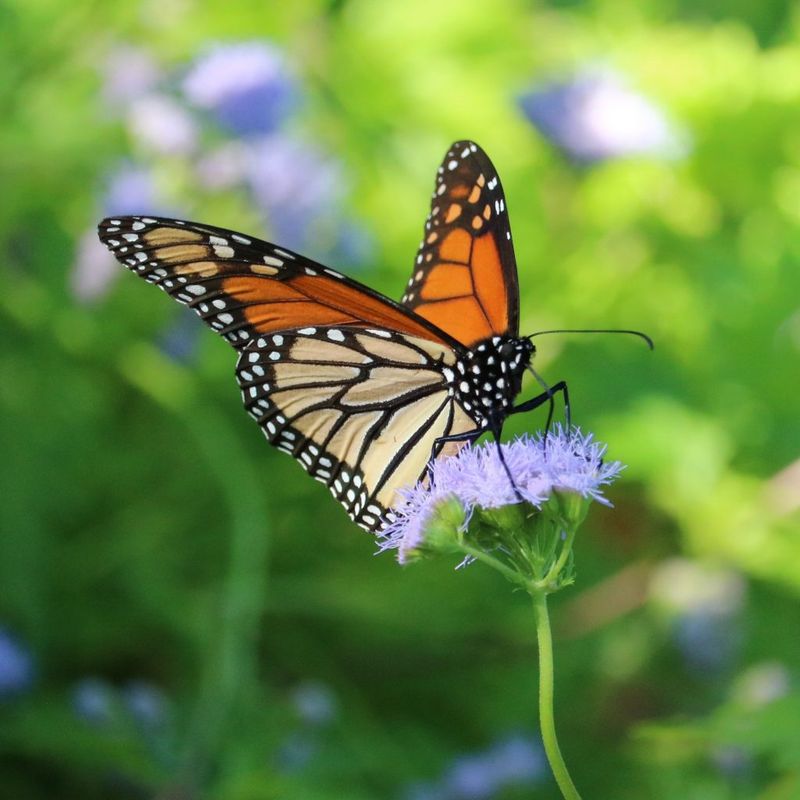
A patch of fuzzy lavender-blue flowers hums with butterflies in late summer and fall, Monarchs and Queens stacked on every bloom.
That is Gregg’s mistflower, and it is a living signal that the fall migration is underway.
It looks delicate, yet it is genuinely tough.
Gregg’s mistflower (Conoclinium greggii) is a perennial root hardy down to 0 degrees Fahrenheit, which means it works across a wide swath of Texas, even parts of the Panhandle.
Its misty clusters of powder-blue flowers offer nectar right when other blooms have called it quits, making it a real lifeline during the migration.
It prefers partial shade, especially morning sun with light afternoon cover, which stretches the bloom in hot spots, though it takes full sun too.
Give it well-drained ground, though it tolerates the clay common in Central Texas.
Keep it evenly moist its first year so the roots settle, then ease off, because it becomes drought-tolerant.
It stays low, about 1 to 2 feet tall, but it spreads by underground rhizomes, so treat it like a groundcover and space plants 18 to 24 inches apart.
Cut it to the ground in early spring for fresh growth.
Plant a drift of it and you will spend fall watching your yard turn into a butterfly rest stop, which is a quiet kind of pride.
Choosing these resilient, long-blooming shrubs means less worry about crispy leaves and more time enjoying a yard that genuinely feels alive.
Texas A&M AgriLife Extension has long pointed gardeners toward tough natives like these, and once they settle in, you will wonder why you fought those roses so long.